Order to Disclose Witnesses
What this document covers
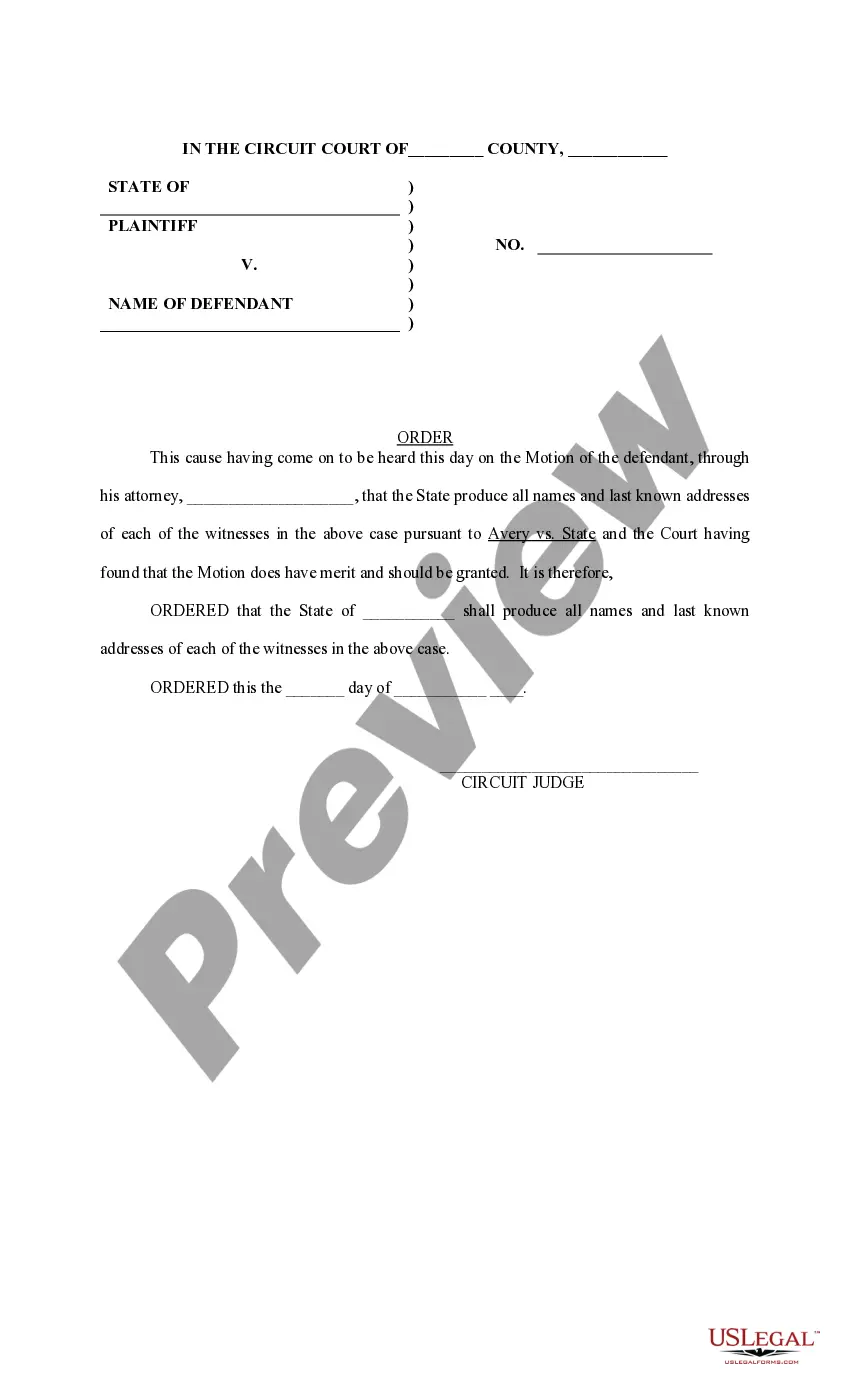
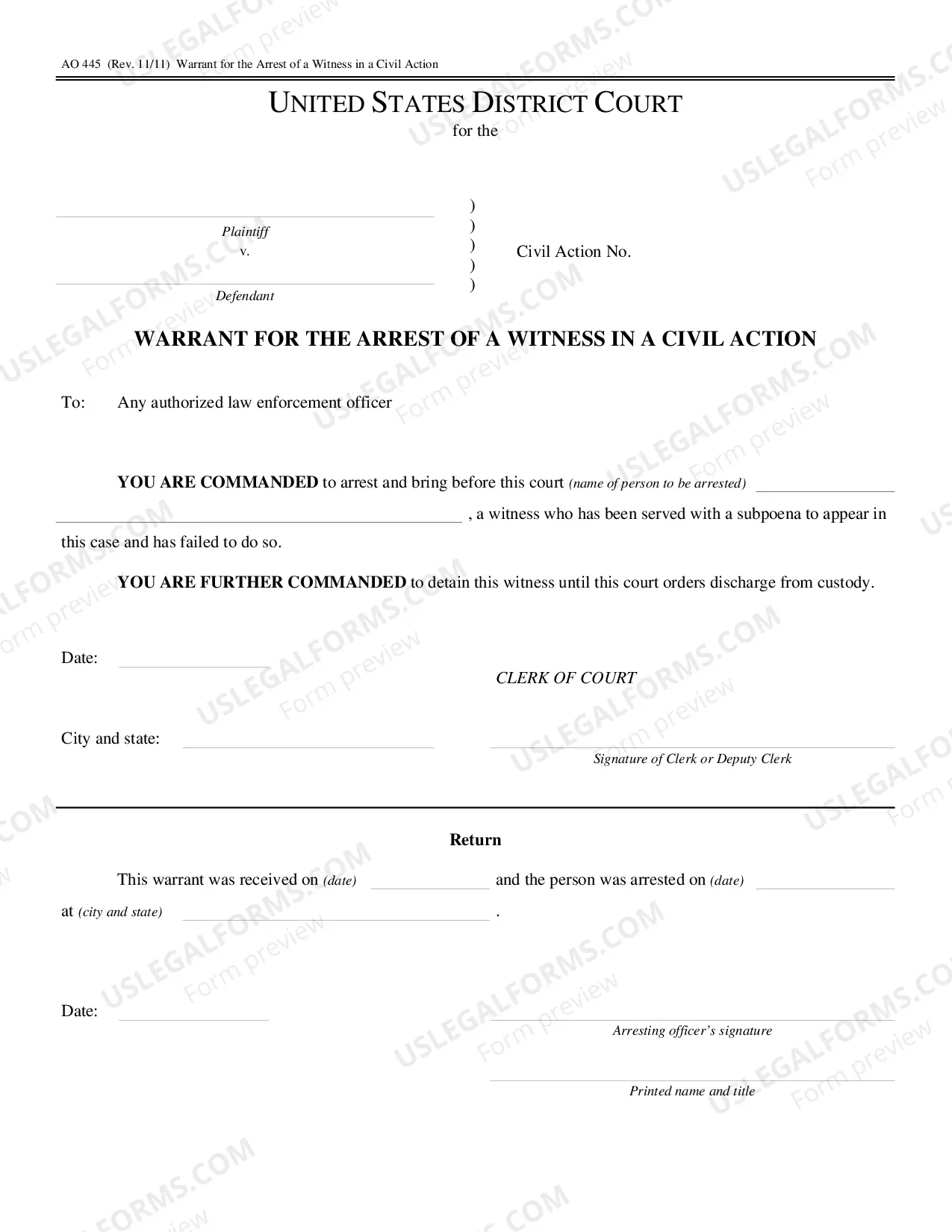
The Order to Disclose Witnesses is a legal document used by a defendant to request the names and addresses of each of the state's witnesses in a criminal case. This form serves as a critical tool in preparing for trial, ensuring that defendants are aware of all individuals who may testify against them. It is essential to distinguish this form from other discovery requests, as it specifically focuses on witness disclosure.
Main sections of this form
- Heading indicating the type of order.
- Blank space for the state to be filled in.
- Section requiring the state to produce names and last known addresses of witnesses.
- Signature line for the Circuit Judge.
- Date field for the order issuance.
When to use this document
This form should be used when a defendant wants to obtain a list of witnesses that the prosecution intends to call during a trial. It is typically filed during the pre-trial phase to ensure that defendants can effectively prepare their defense strategies by knowing the witnesses and potentially investigating their backgrounds or testimonies.
Who needs this form
- Defendants in a criminal case.
- Defense attorneys representing clients in court.
- Individuals seeking to gather witness information for trial preparation.
Completing this form step by step
- Fill in the name of the state in the designated space.
- Specify the case in which the witnesses are involved.
- Complete the date of the order issuance.
- Obtain the signature of the Circuit Judge.
- Ensure all information is accurate and legible before submission.
Does this document require notarization?
This form does not typically require notarization unless specified by local law. Always check local regulations to ensure compliance.
Get your form ready online
Our built-in tools help you complete, sign, share, and store your documents in one place.
Make edits, fill in missing information, and update formatting in US Legal Forms—just like you would in MS Word.
Download a copy, print it, send it by email, or mail it via USPS—whatever works best for your next step.
Sign and collect signatures with our SignNow integration. Send to multiple recipients, set reminders, and more. Go Premium to unlock E-Sign.
If this form requires notarization, complete it online through a secure video call—no need to meet a notary in person or wait for an appointment.
We protect your documents and personal data by following strict security and privacy standards.

Make edits, fill in missing information, and update formatting in US Legal Forms—just like you would in MS Word.

Download a copy, print it, send it by email, or mail it via USPS—whatever works best for your next step.

Sign and collect signatures with our SignNow integration. Send to multiple recipients, set reminders, and more. Go Premium to unlock E-Sign.

If this form requires notarization, complete it online through a secure video call—no need to meet a notary in person or wait for an appointment.

We protect your documents and personal data by following strict security and privacy standards.
Avoid these common issues
- Failing to complete the name of the state.
- Leaving case details blank or incomplete.
- Not including the date of the order.
- Submitting the form without the required judgeâs signature.
Why use this form online
- Convenience of downloading and completing the form at any time.
- Easy editing and customization according to specific needs.
- Access to reliable, attorney-drafted templates that comply with legal standards.
Main things to remember
- An Order to Disclose Witnesses is essential for Defendants preparing for trial.
- Filling out this form correctly ensures legal access to witness information.
- Use online forms for convenience and professional guidance.
Looking for another form?









Form popularity
FAQ
FRCP 26 a 1 Initial Disclosures The names and contact information of any party who may have knowledge of or access to discoverable information or evidence that could support or contradict the fundamental claims of a case.
Here are partial examples of the kinds of information defendants routinely must disclose: Federal courts. Upon demand by the prosecutor, the defense must give written notice of intent to offer any alibi defense and reveal the names, addresses, and telephone numbers of the alibi witnesses.
That disclosure is accomplished through a methodical process called "discovery." Discovery takes three basic forms: written discovery, document production and depositions.
A party must make the initial disclosures at or within 14 days after the parties' Rule 26(f) conference unless a different time is set by stipulation or court order, or unless a party objects during the conference that initial disclosures are not appropriate in this action and states the objection in the proposed
Initial disclosures are a requirement under the federal legislation and must include: (1) the names, addresses, and phone numbers of individuals who contributed to the discovery, (2) a duplicate description of all related paperwork, compilation of all information pertaining to the invention, and publicly owned tangible
Lerman notes that the American Law Institute's Restatement of the Law Governing Lawyers makes no distinction between physical and documentary evidence. Likewise, ABA Model Rule 3.4 states that a lawyer may not unlawfully alter, destroy or conceal a document or other material having potential evidentiary value.
Yes, the defense can call a prosecution witness. Many times, a witness will have valuable things to say that the prosecution doesn't want to be heard. It's up to you to make sure to ask the right questions so that the person tells the entire story.
14. Section 34 of the 2003 Act inserted section 6C into the Criminal Procedure and Investigations Act 1996, requiring the defence to give the prosecutor and the court advance details ie name, address and date of birth of any witnesses they intend to call at a trial.
In criminal cases, defendants often are ordered not to have contact with any witnesses while the case is pending. Even if the court does not forbid contact, this is a best practice because contact can lead to accusations of witness tampering, whether or not tampering actually occurred.