Sale and Leaseback Agreement for Commercial Building
Understanding this form
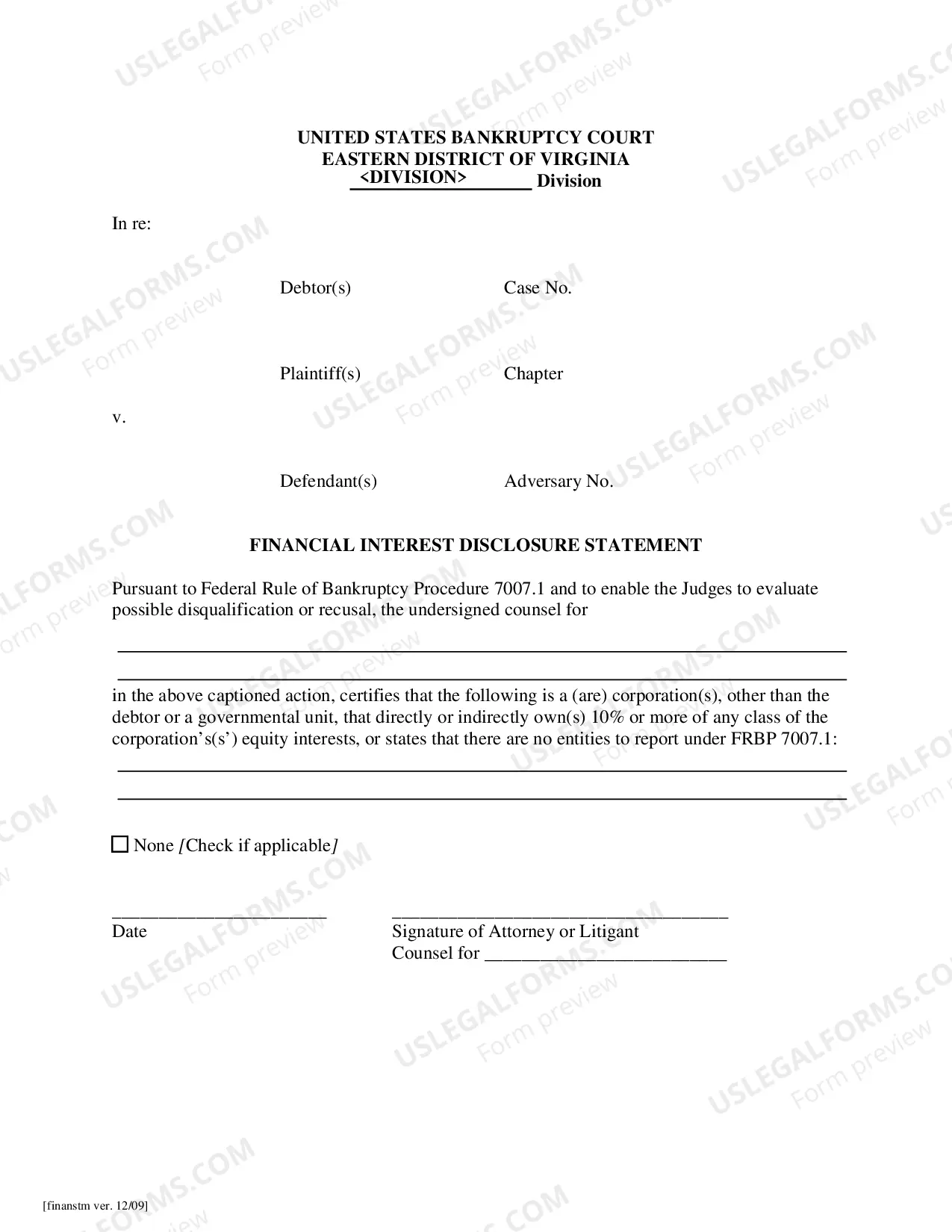
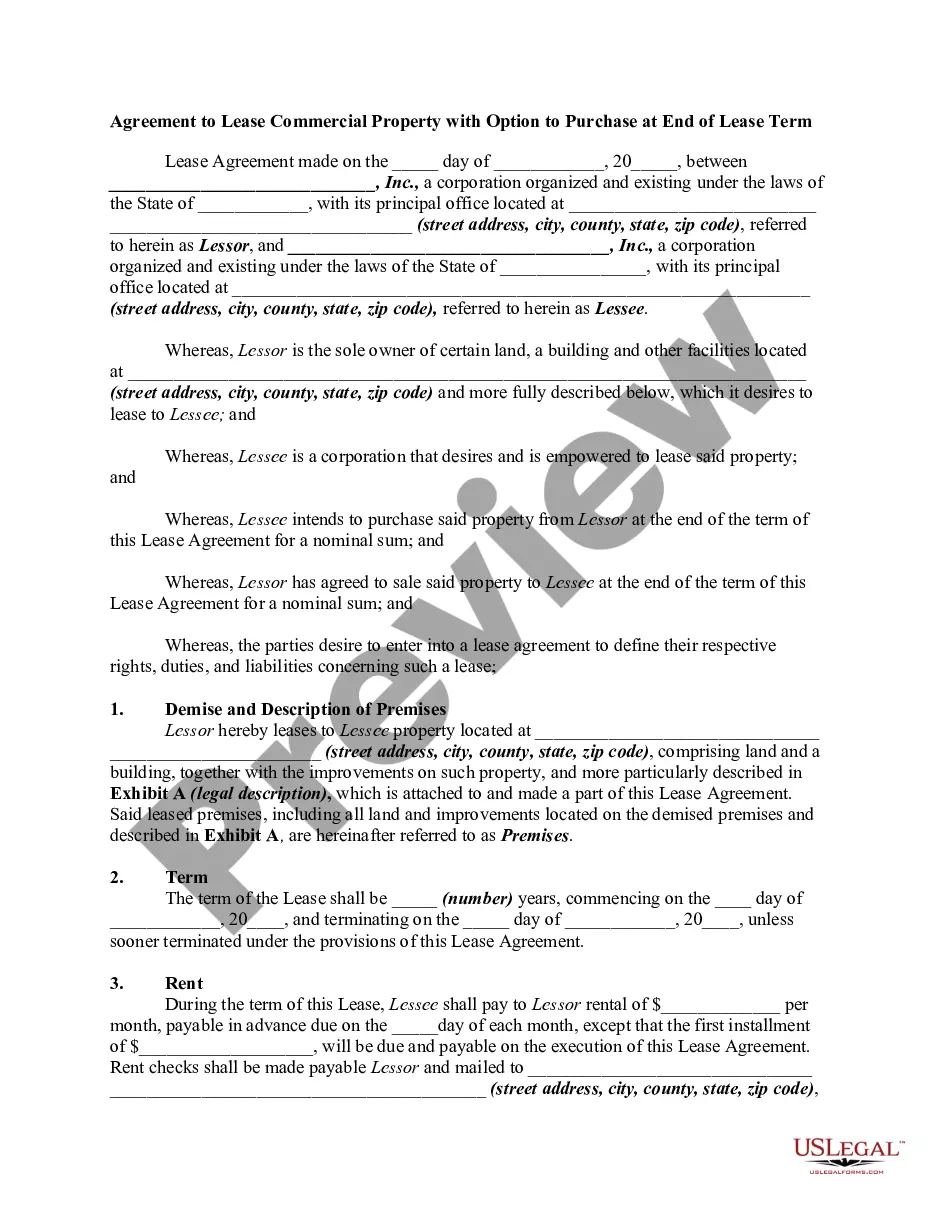
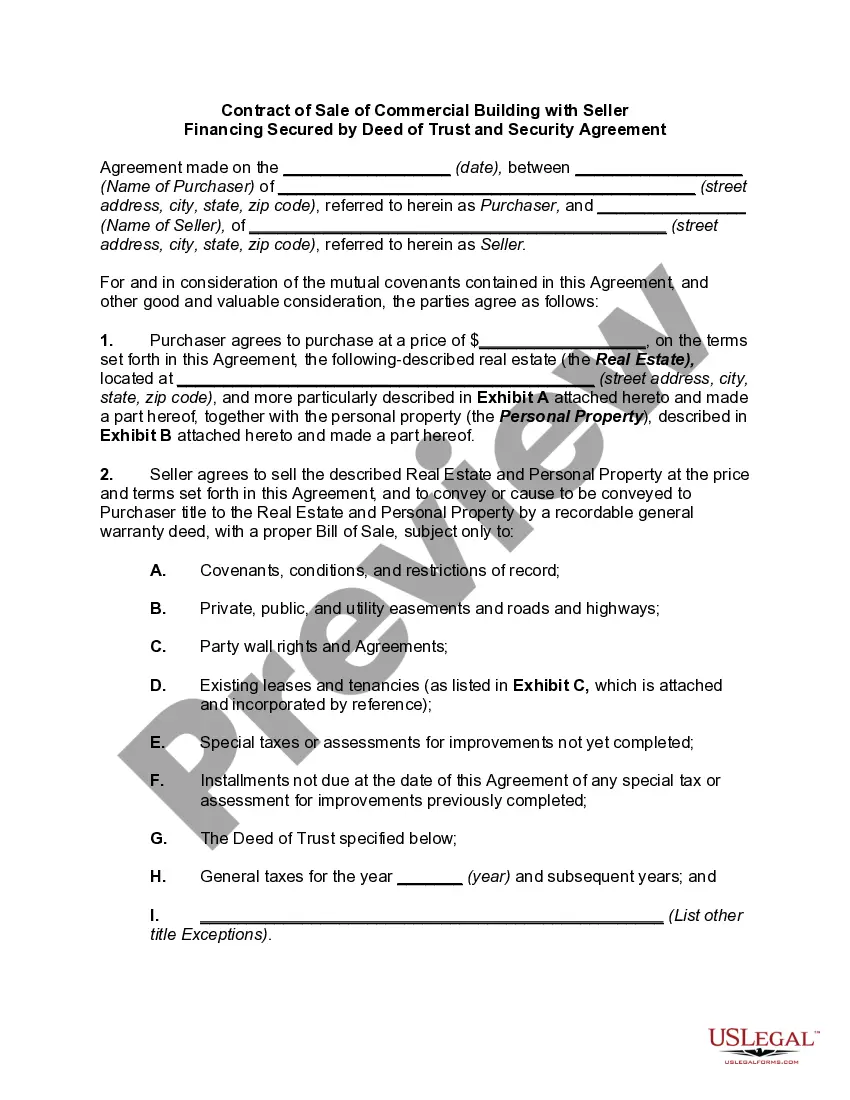
A Sale and Leaseback Agreement for a Commercial Building is a legal document used when one party sells a commercial property to another and then immediately leases it back. This arrangement allows the seller to maintain operational control of the property while freeing up capital that would otherwise be tied up in real estate. Unlike typical sale agreements, this form combines transaction and leasing aspects into one cohesive contract, making it unique and specialized for commercial property transactions.
Main sections of this form
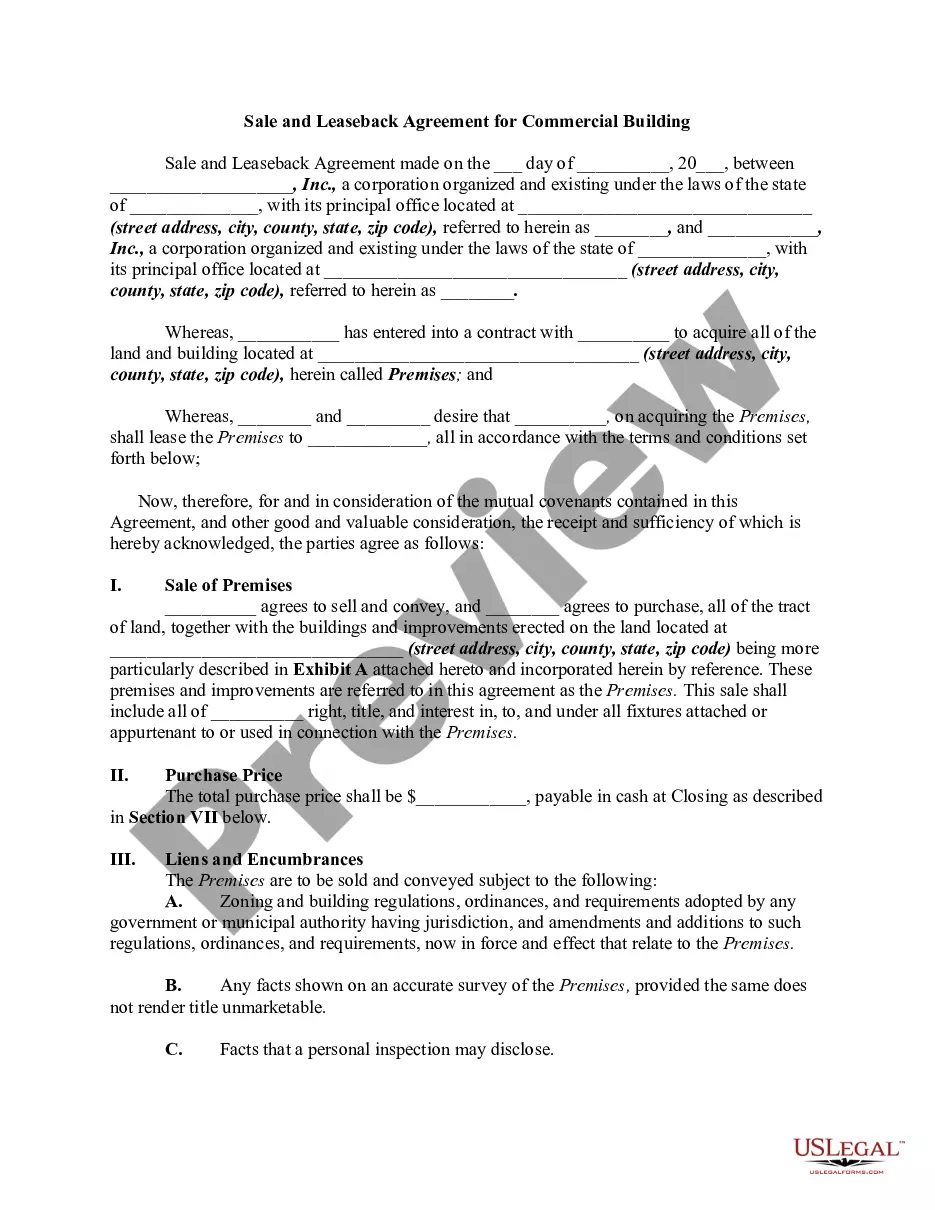
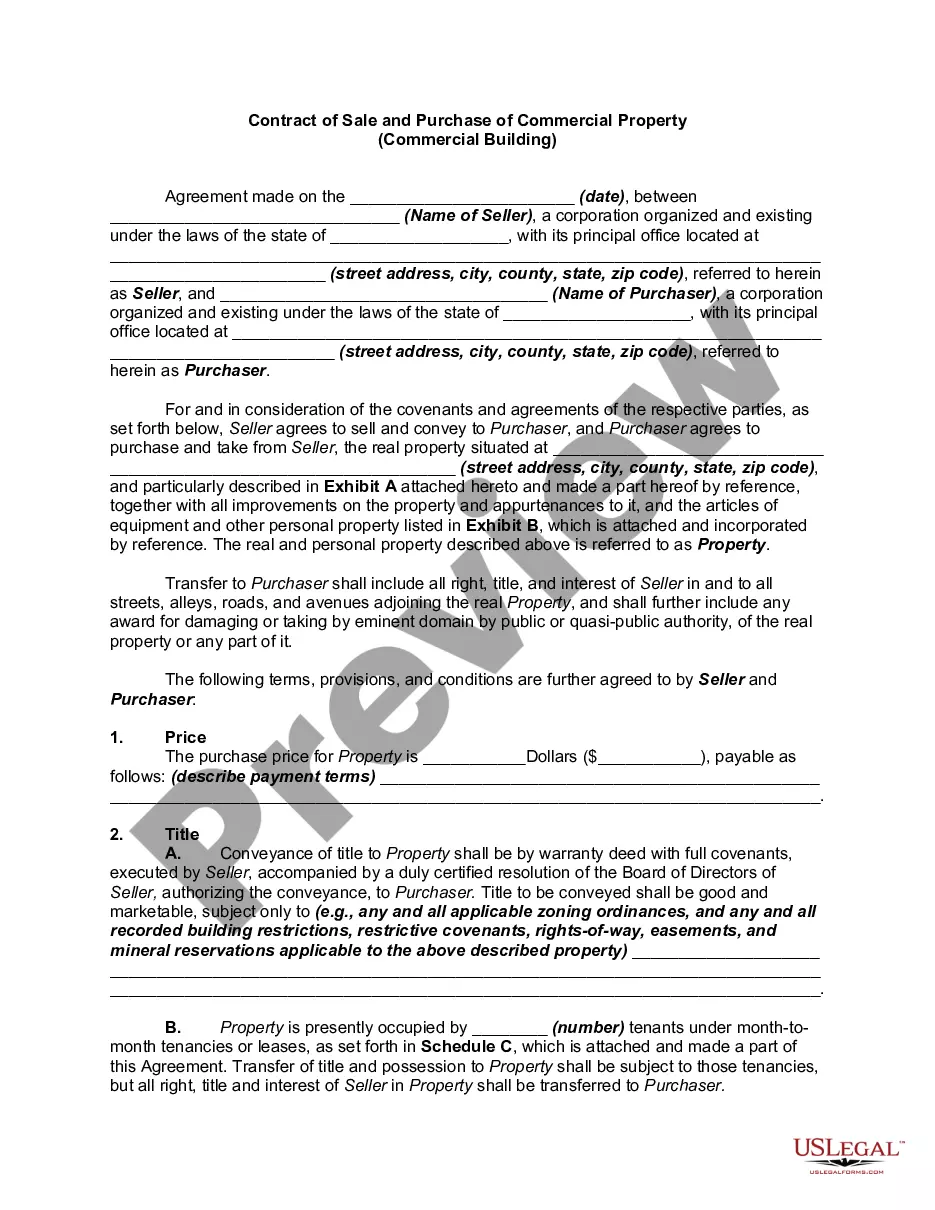
- Sale Provision: Details of the property being sold, including legal descriptions and attached fixtures.
- Purchase Price: The total amount due for the property at closing.
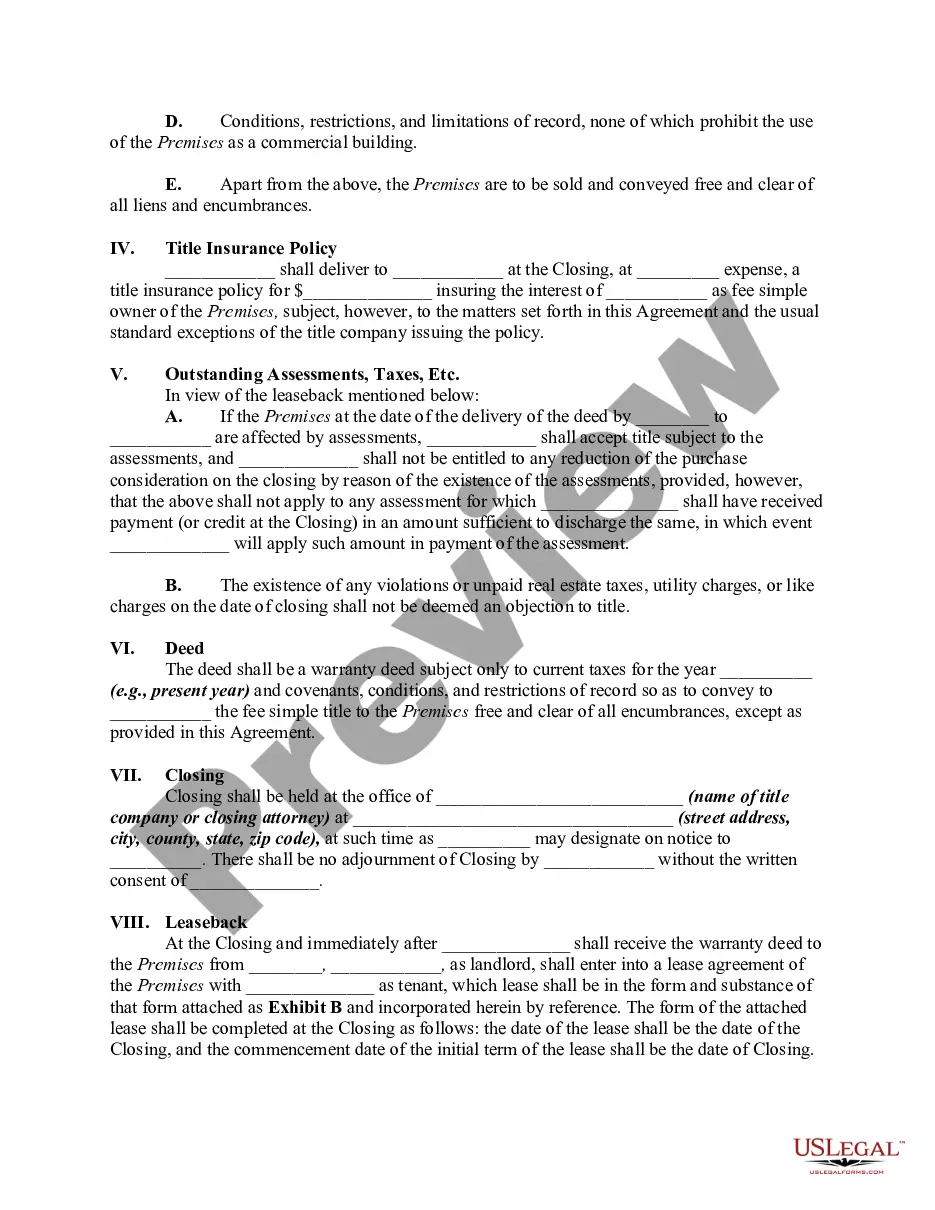
- Liens and Encumbrances: Outlines any potential legal claims or restrictions on the property.
- Leaseback Terms: Conditions under which the seller will lease the property back from the buyer post-sale.
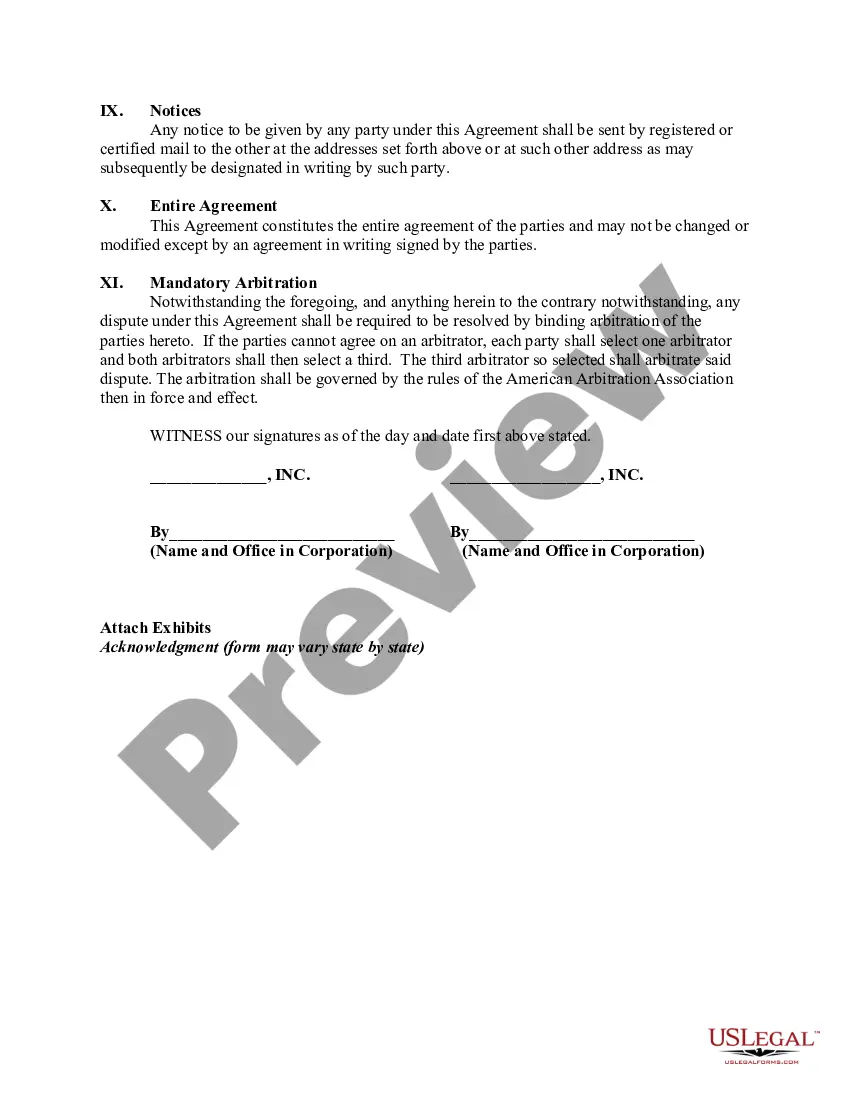
- Closing Details: Specifies when and where the closing will take place, along with procedures.
When to use this form
This form is suitable for business owners looking to sell their commercial property while remaining in control of the premises. It can be effectively used when a business needs capital for expansion or to increase liquidity but still requires a facility to operate. Additionally, this agreement may be employed during financial reorganizations where asset management plays a crucial role.
Intended users of this form
- Commercial property owners looking to liquidate assets.
- Investors interested in acquiring properties while providing leasing solutions.
- Business entities involved in real estate transactions requiring short-term leasing arrangements.
- Legal professionals drafting agreements for commercial real estate clients.
Instructions for completing this form
- Identify the parties involved, including their full names and addresses.
- Specify the property being sold and leased, including its legal description.
- Enter the purchase price of the property and stipulate payment methods.
- Detail any liens or encumbrances that may exist on the property.
- Complete the terms of the leaseback arrangement, including duration and rental rate.
Does this form need to be notarized?
This form must be notarized to be legally valid. US Legal Forms provides secure online notarization powered by Notarize, allowing you to complete the process through a verified video call.
Get your form ready online
Our built-in tools help you complete, sign, share, and store your documents in one place.
Make edits, fill in missing information, and update formatting in US Legal Forms—just like you would in MS Word.
Download a copy, print it, send it by email, or mail it via USPS—whatever works best for your next step.
Sign and collect signatures with our SignNow integration. Send to multiple recipients, set reminders, and more. Go Premium to unlock E-Sign.
If this form requires notarization, complete it online through a secure video call—no need to meet a notary in person or wait for an appointment.
We protect your documents and personal data by following strict security and privacy standards.

Make edits, fill in missing information, and update formatting in US Legal Forms—just like you would in MS Word.

Download a copy, print it, send it by email, or mail it via USPS—whatever works best for your next step.

Sign and collect signatures with our SignNow integration. Send to multiple recipients, set reminders, and more. Go Premium to unlock E-Sign.

If this form requires notarization, complete it online through a secure video call—no need to meet a notary in person or wait for an appointment.

We protect your documents and personal data by following strict security and privacy standards.
Common mistakes to avoid
- Neglecting to provide complete property descriptions.
- Omitting terms related to the leaseback arrangement.
- Failing to ensure both parties sign the agreement.
- Not addressing any existing liens on the property adequately.
Benefits of using this form online
- Convenience of downloading and filling out the form at your own pace.
- Ability to edit and customize the agreement according to your needs.
- Access to attorney-drafted templates ensuring legal compliance.
- Instantly accessible, eliminating the need for in-person meetings.
Legal use & context
The Sale and Leaseback Agreement is legally binding and must be executed correctly to ensure that both parties adhere to the terms outlined. It is important to ensure that the agreement reflects all negotiated terms to avoid future disputes. Understanding legal obligations and rights is crucial when entering this type of agreement.
What to keep in mind
- This agreement allows for the sale of commercial property with a simultaneous leaseback.
- It is beneficial for maintaining cash flow while retaining property usage.
- All parties must clearly understand the terms of the leaseback to avoid conflicts.
- Local laws may dictate specific requirements; always confirm before use.
Looking for another form?


Form popularity
FAQ
Name the parties. A simple rental agreement form needs to name the parties signing the lease and where they live. Describe the premises. Define the term of the lease. Set how much rent is owed. Assign a security deposit amount. Finalize the lease.
Compare the difference between the sale price of the asset and its fair value. Compare the present value of the lease payments and the present value of market rental payments. This can include an estimation of any variable lease payments reasonably expected to be made.
As long as the contract spells out specific details and both parties have signed that they agree to the contract's terms, a handwritten contract is legally binding and enforceable in court.
The Introduction. The beginning of the lease agreement should contain the name of the landlord and tenant, as well as a statement of the agreement into which they are entering. Rent. Deposit. Taxes. Property Insurance. Utilities and Amenities. Remodeling and Improvements. Repairs and Maintenance.
Investors usually buy sale-leaseback properties on the basis of their returns. To calculate the return on a sale leaseback, called a capitalization rate, you divide the annual income by the price. For example, a property that has annual rental income of $175,000 and costs $2,000,000 has an 8.75 percent cap rate.
Name the parties. A simple rental agreement form needs to name the parties signing the lease and where they live. Describe the premises. Define the term of the lease. Set how much rent is owed. Assign a security deposit amount. Finalize the lease.
Capital For Growth: The key benefit to a seller engaged in a sale-leaseback transaction is the ability to convert illiquid equity to spendable cash.
Compare the difference between the sale price of the asset and its fair value. Compare the present value of the lease payments and the present value of market rental payments. This can include an estimation of any variable lease payments reasonably expected to be made.
In a sale-leaseback, sometimes called a sale-and-leaseback, you can sell an asset you own to a leasing company or lender and then lease it back from them. This is how sale-leasebacks usually work in commercial real estate, where companies often use them to free up capital that's tied up in a real estate investment.