Buy Sell Agreement Between Co-Owners of Real Property
What this document covers
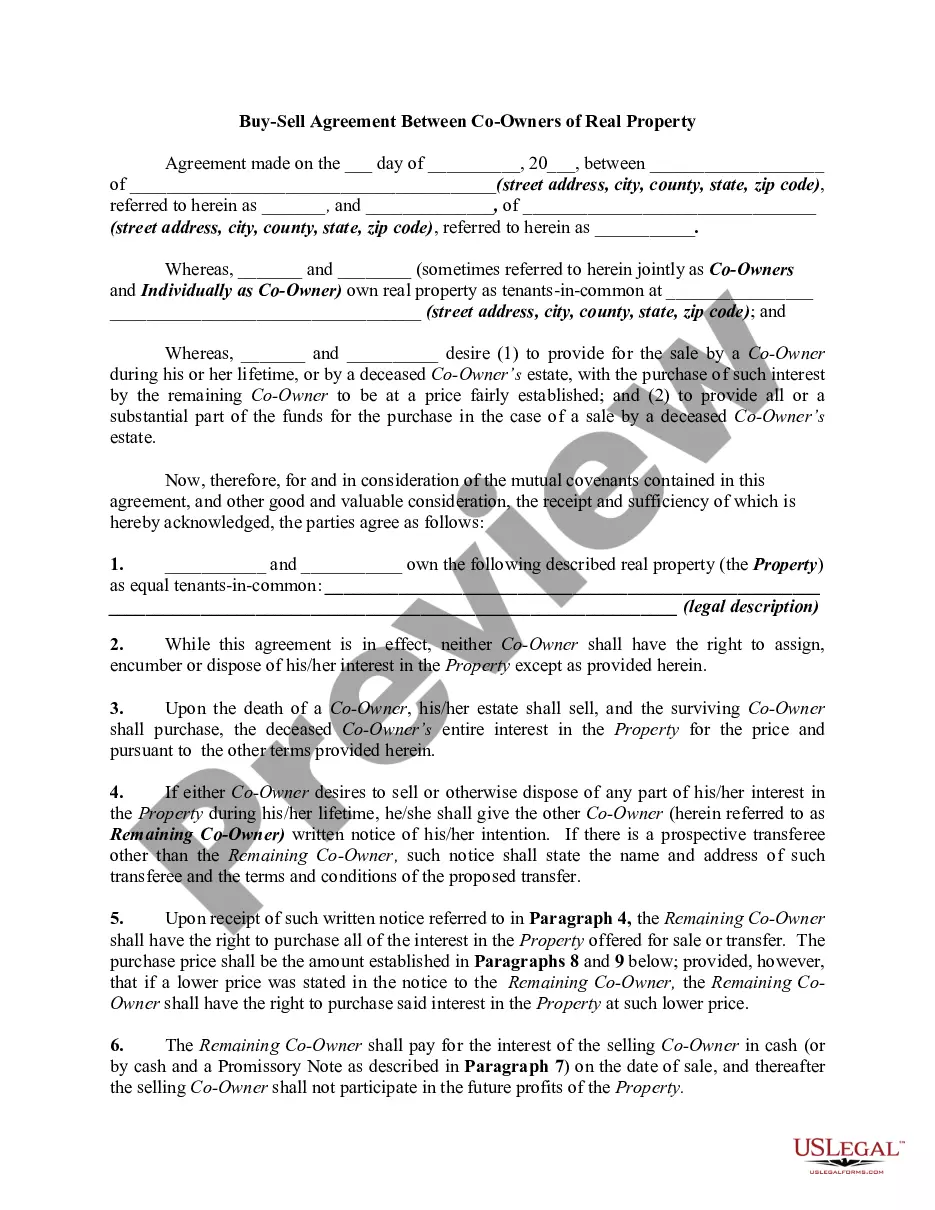
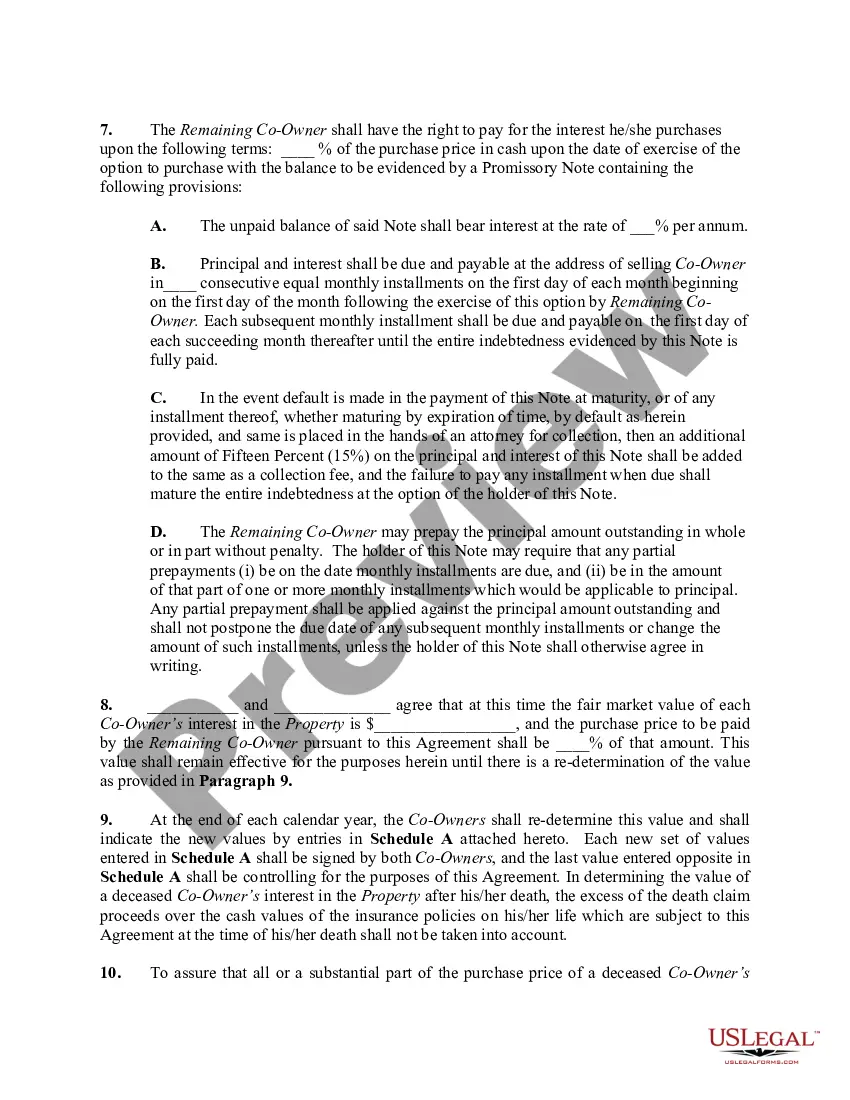
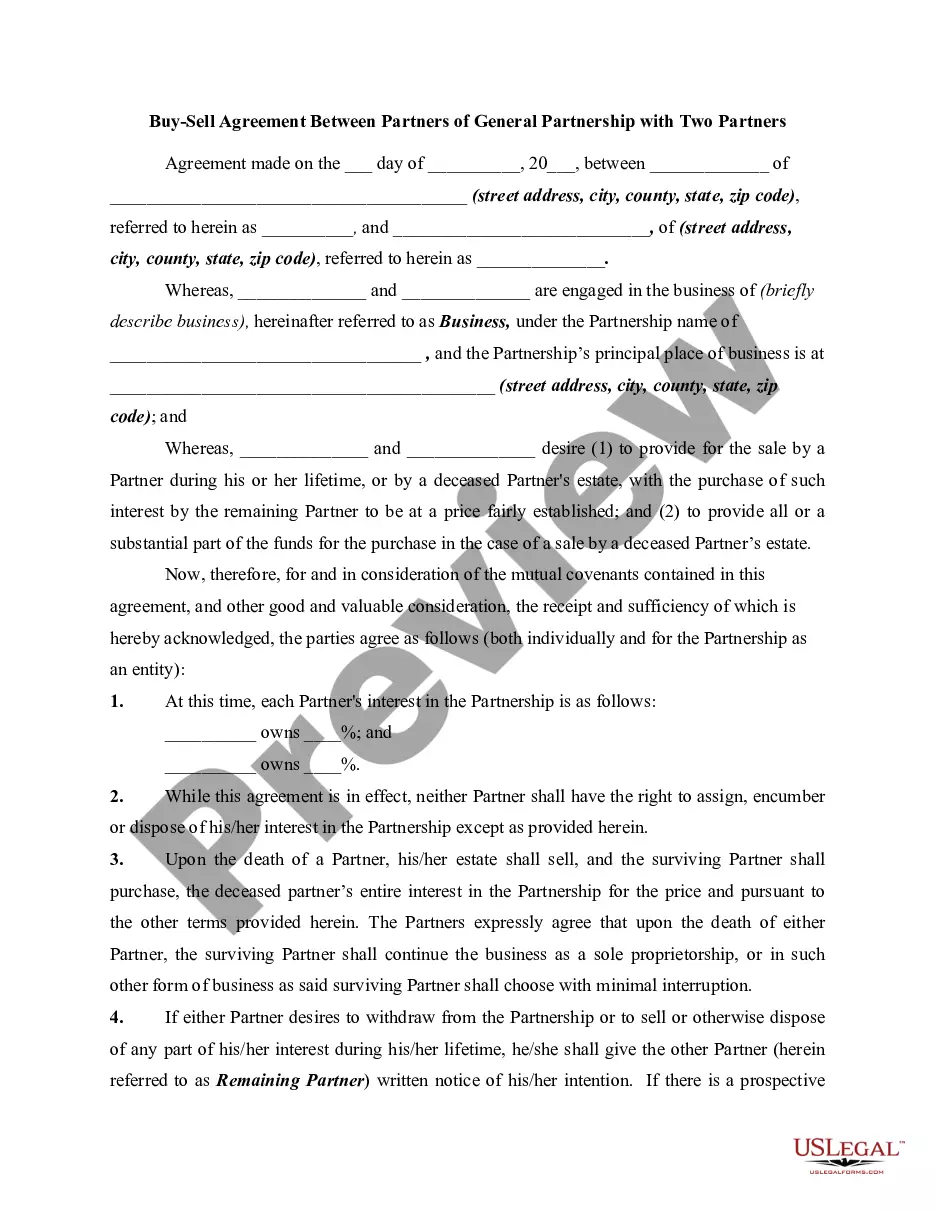
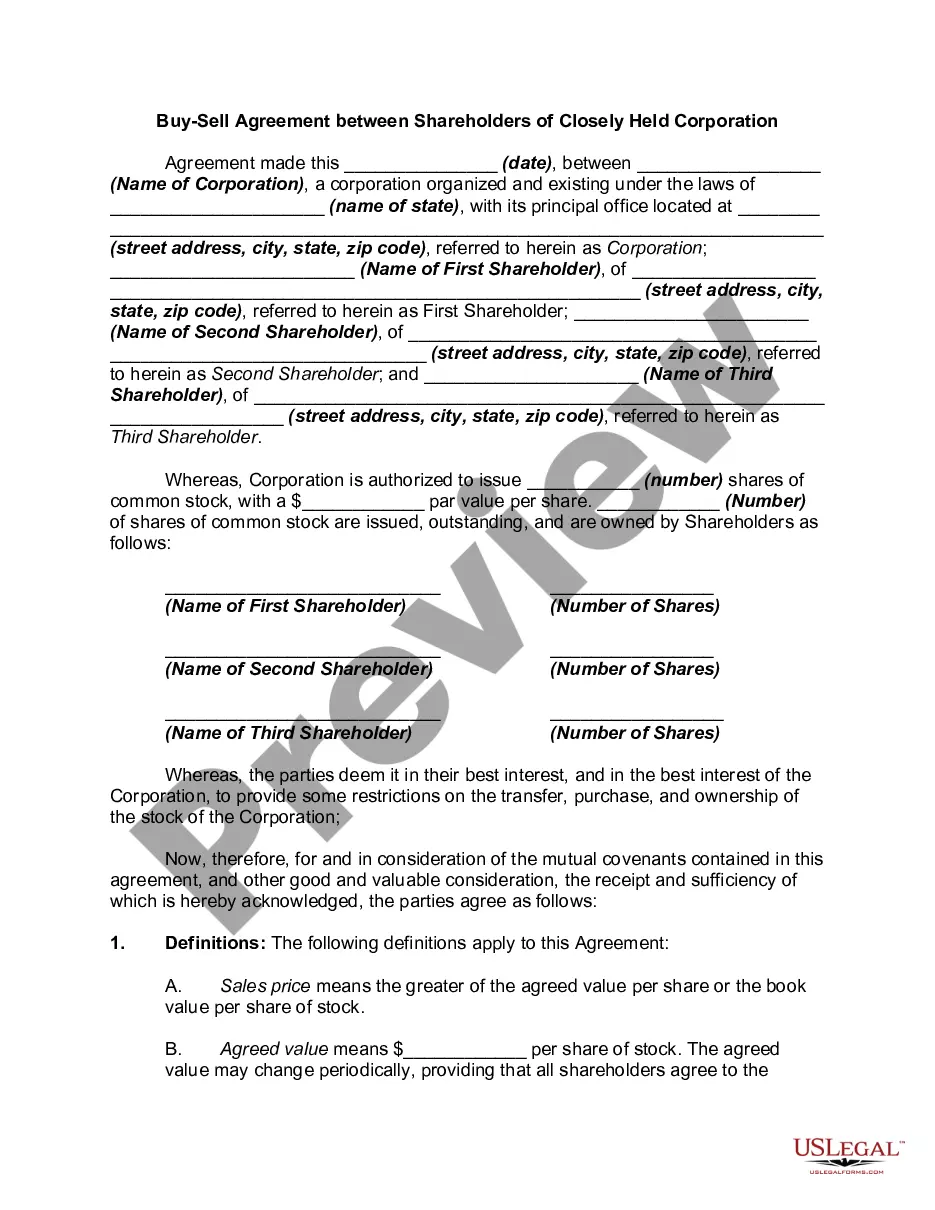
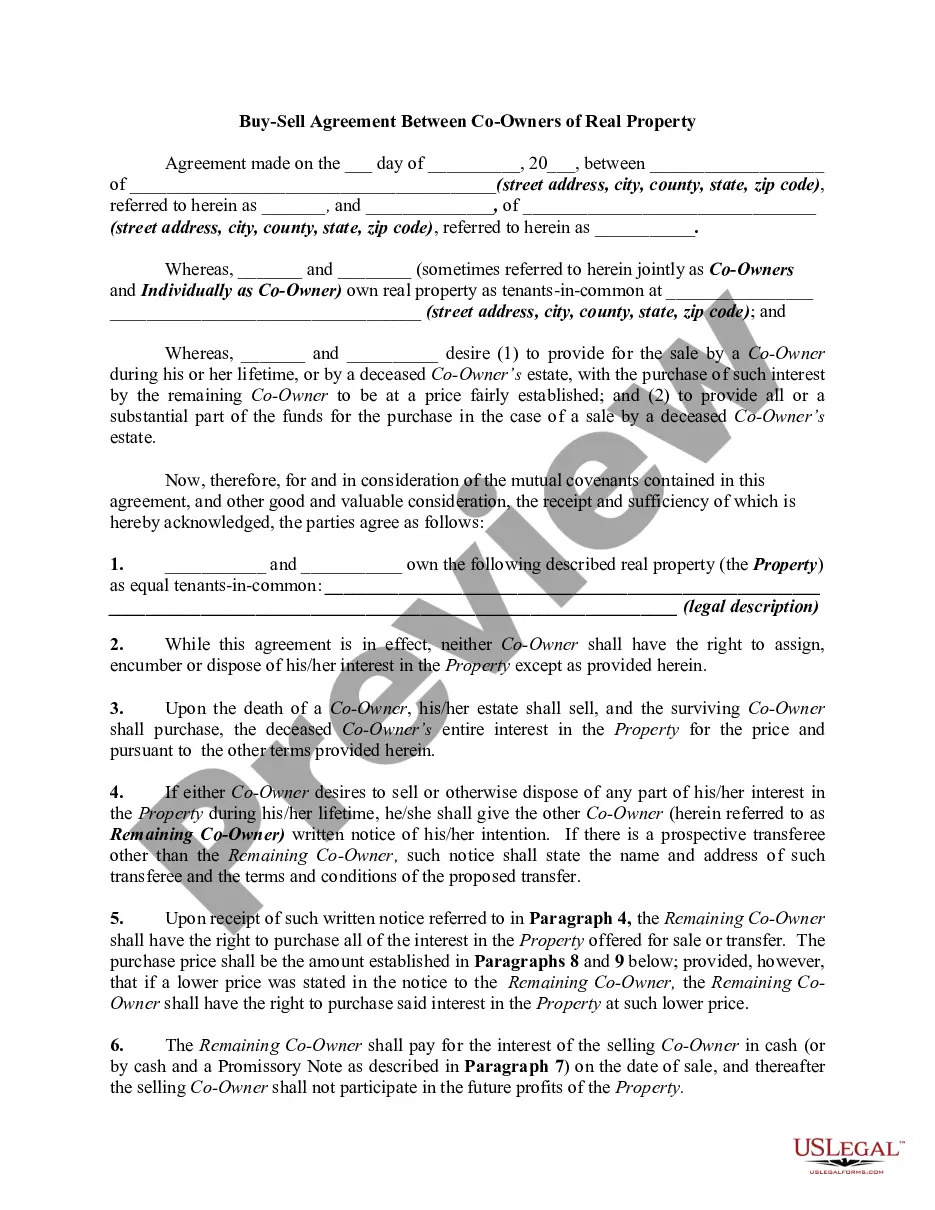
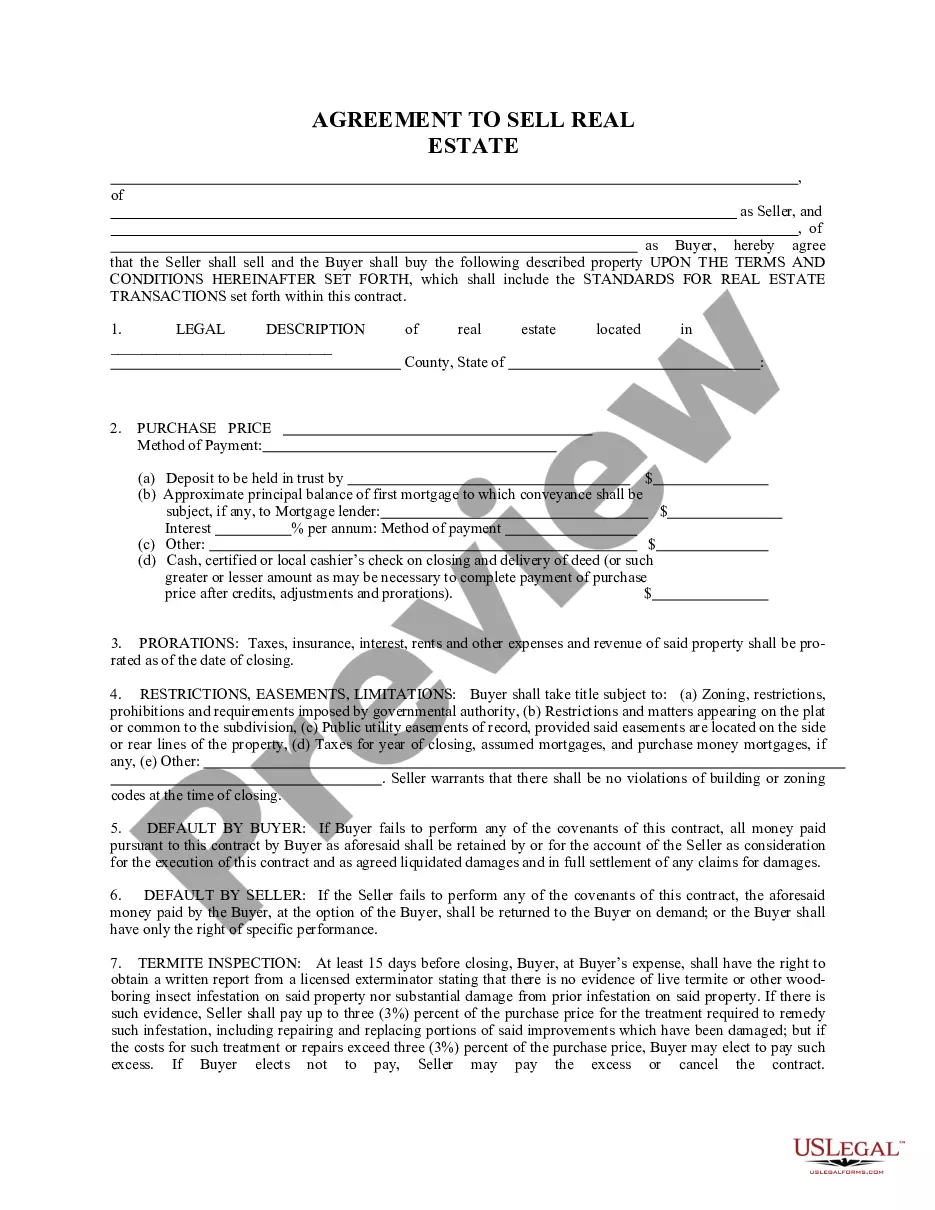
The Buy Sell Agreement Between Co-Owners of Real Property is a legal document that establishes terms for co-owners of rental property to manage the sale of their interests. It provides guidelines for situations where a co-owner wishes to sell their share during their lifetime or following their death. This agreement helps ensure a smooth transfer of property rights, distinguishing it from other property management agreements by focusing specifically on buyout situations between co-owners.
What’s included in this form
- Identification of co-owners and property details.
- Terms for selling a co-owner's interest during life and after death.
- Provisions for determining the sale price of the property interest.
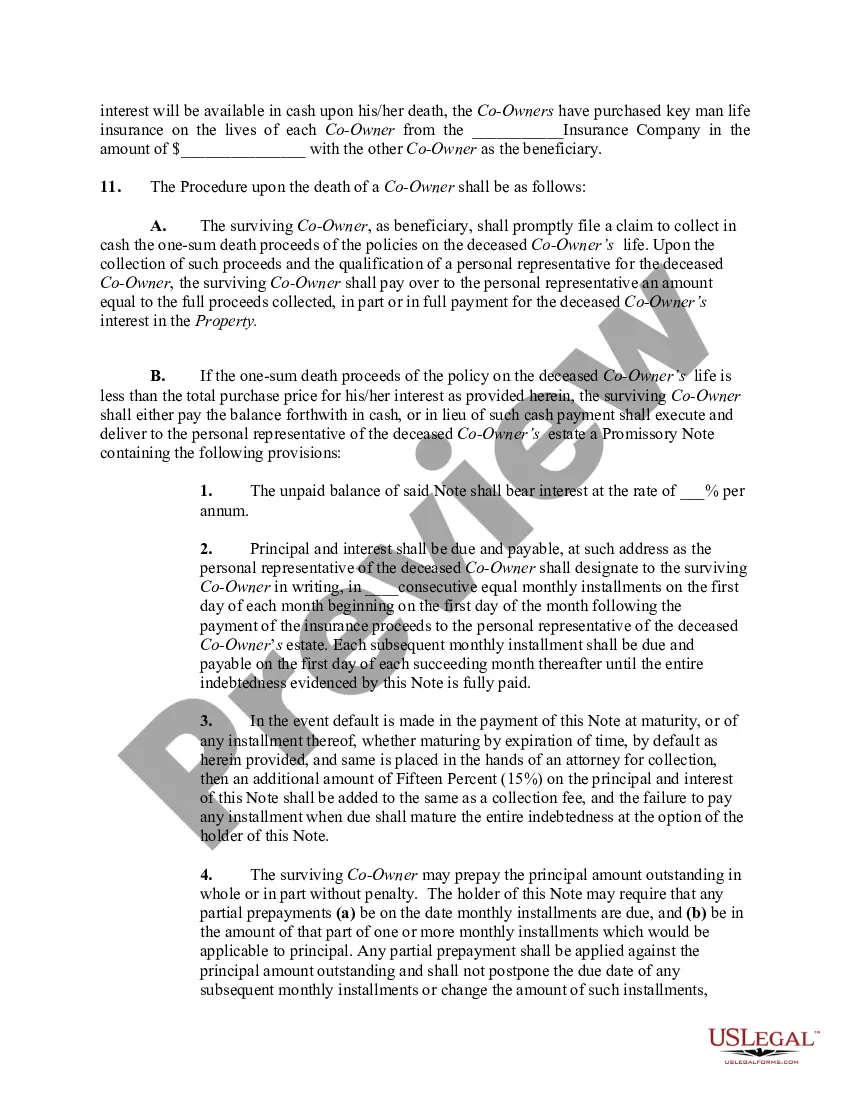
- Payment options, including cash and promissory notes.
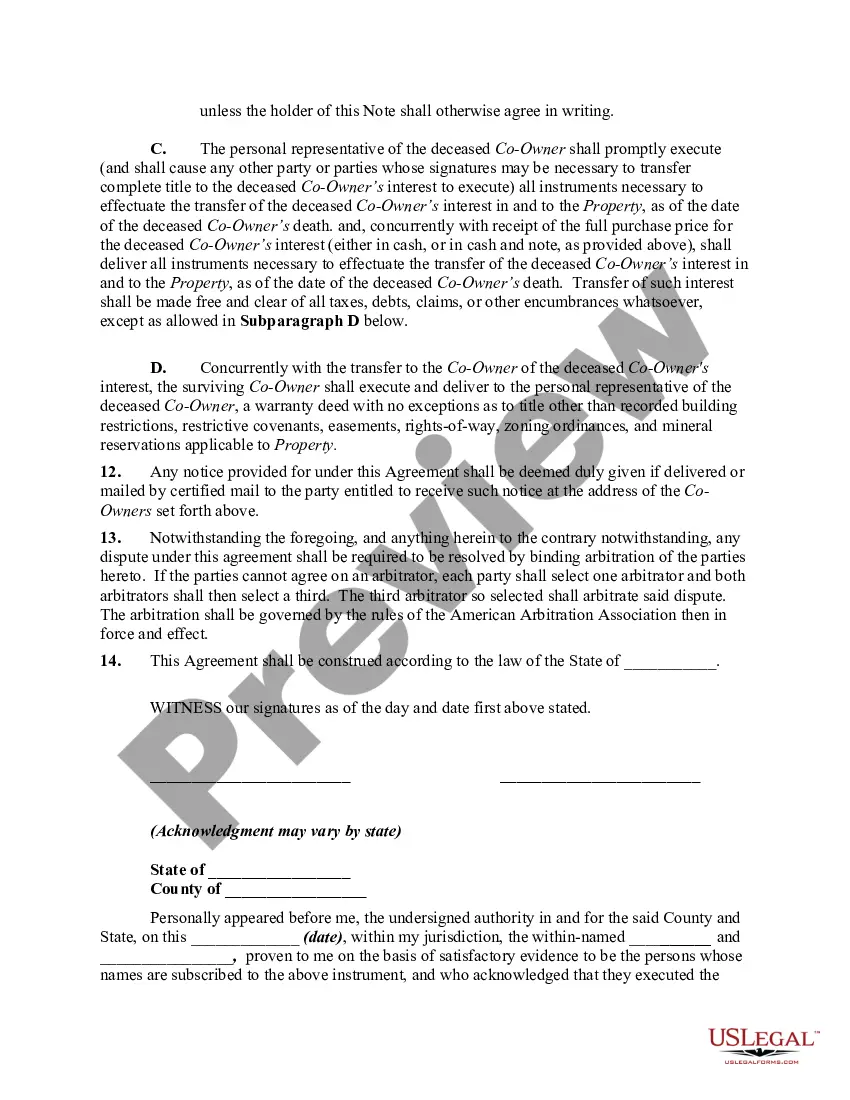
- Clauses on arbitration for dispute resolution.
- Insurance requirements to cover a co-owner's interest upon death.

Situations where this form applies
This agreement should be used when two or more individuals jointly own real estate and want to clarify terms regarding the sale of one co-owner's interest. It is particularly important in situations involving the death of a co-owner, ensuring that remaining co-owners have the first opportunity to buy out the deceased's share. This form is valuable for estate planning and property management.
Intended users of this form
- Individuals who co-own rental property.
- Persons involved in estate planning that includes shared real estate.
- Legal representatives managing the interests of deceased co-owners.
Steps to complete this form
- Identify the co-owners by entering their full names and addresses.
- Specify the details and legal description of the property.
- Outline the terms for sale, including price and payment structure.
- Decide on insurance provisions to cover the interests of co-owners.
- Have all co-owners sign the agreement and ensure it is notarized, if required.
Does this form need to be notarized?
This document requires notarization to meet legal standards. US Legal Forms provides secure online notarization powered by Notarize, allowing you to complete the process through a verified video call, available 24/7.
Get your form ready online
Our built-in tools help you complete, sign, share, and store your documents in one place.
Make edits, fill in missing information, and update formatting in US Legal Forms—just like you would in MS Word.
Download a copy, print it, send it by email, or mail it via USPS—whatever works best for your next step.
Sign and collect signatures with our SignNow integration. Send to multiple recipients, set reminders, and more. Go Premium to unlock E-Sign.
If this form requires notarization, complete it online through a secure video call—no need to meet a notary in person or wait for an appointment.
We protect your documents and personal data by following strict security and privacy standards.

Make edits, fill in missing information, and update formatting in US Legal Forms—just like you would in MS Word.

Download a copy, print it, send it by email, or mail it via USPS—whatever works best for your next step.

Sign and collect signatures with our SignNow integration. Send to multiple recipients, set reminders, and more. Go Premium to unlock E-Sign.

If this form requires notarization, complete it online through a secure video call—no need to meet a notary in person or wait for an appointment.

We protect your documents and personal data by following strict security and privacy standards.
Common mistakes to avoid
- Failing to accurately describe the property involved.
- Not specifying payment terms clearly.
- Neglecting to update the fair market value regularly.
- Omitting signatures or not obtaining notarization when necessary.
Advantages of online completion
- Convenient access to the form at any time.
- Ability to easily edit and customize the document to fit your specific needs.
- Reliable templates drafted by licensed attorneys to ensure compliance.
Main things to remember
- This agreement protects the interests of co-owners when one party wishes to sell or passes away.
- Clearly defined terms help prevent disputes and misunderstandings.
- Valuation and purchase price agreements ensure fairness in transactions.
Looking for another form?

Form popularity
FAQ
Split ownership costs fairly until the house sells until the property sells. The amount owed by each party is typically split by the percentage of ownership. If you own 50%, and your two co-owners each own 25%, then you'll need to cover half of all housing expenses while your co-owners split the remainder.
True ownership Both names can be on the title of the home without being on the mortgage.In the event you opt for two names on the title and only one on the mortgage, both of you are owners. The person who signed the mortgage, however, is the one obligated to pay off the loan.
You can file a complaint for partition, asking the court to sever your joint ownership, which would allow you to get your money out of the property. A court can order your partner to buy you out, or vice versa, under some circumstances. This might happen if one of you clearly can afford to do so, but the other cannot.
In the event that both you and the co-owner of your home would like to get rid of your property without any fuss, you have the option of a partition sale which means that the court will take care of your property sale for you.
According to the Transfer of Property Act, every co-owner has a proprietary right of the entire property. The sale has to be made with the consent of all co-owners. But if there is an agreement that gives the co-owners exclusive rights to certain parts/portions of the property, a co-owner can sell his portion.
When this is the case, the legal owner intending to sell the property can make an application to a court for an order for sale. Upon the granting of the order for sale by the court, the legal owner can force for the sale of the jointly owned property.
Yes. Many lenders allow two families to combine their respective incomes in order to jointly purchase a house. Both households will need to meet the minimum qualifying loan requirements, which may vary lender to lender. Lenders may also require both families to hold equal ownership rights of the house.
A: You can sell all or a part of any interest in real estate that you own unless you are restricted by an agreement not to.One such method is where the co-owners sign an agreement giving the other owners the right of first refusal if another owner wants to sell the property.
You can file a complaint for partition, asking the court to sever your joint ownership, which would allow you to get your money out of the property. A court can order your partner to buy you out, or vice versa, under some circumstances. This might happen if one of you clearly can afford to do so, but the other cannot.