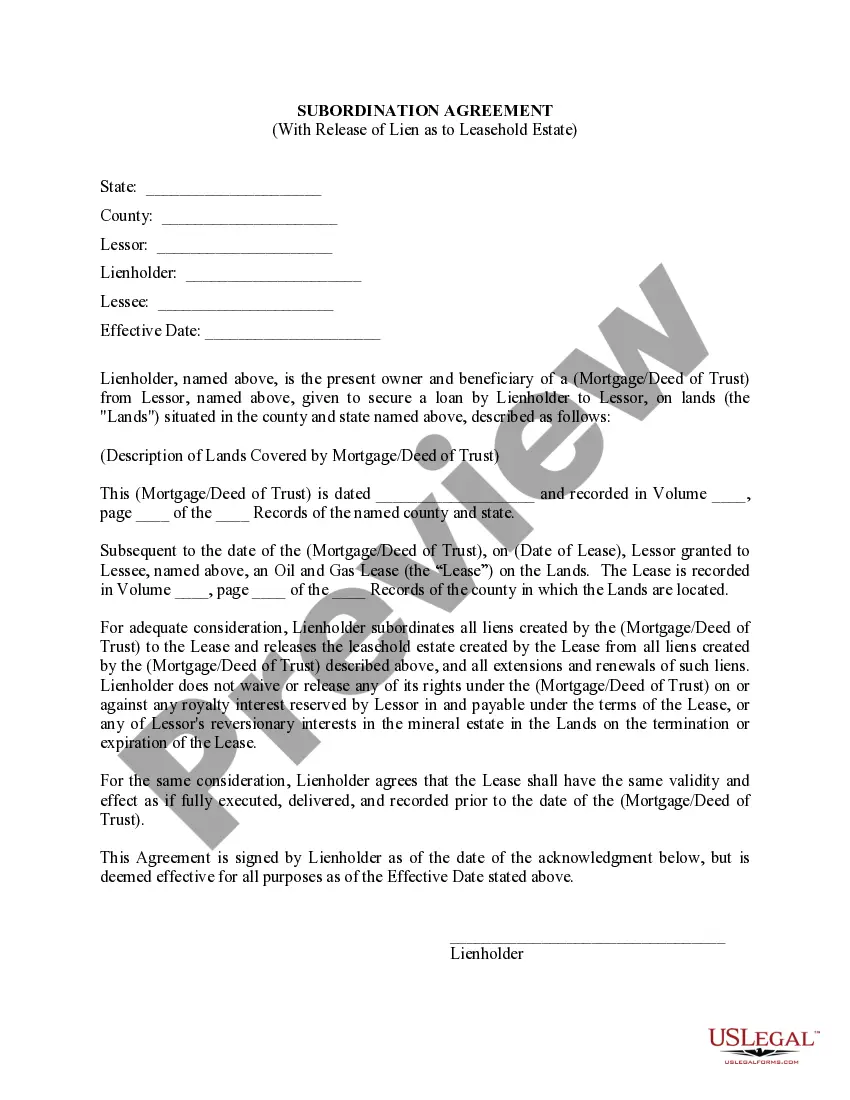
Judgment of Conviction and Sentence
About this form
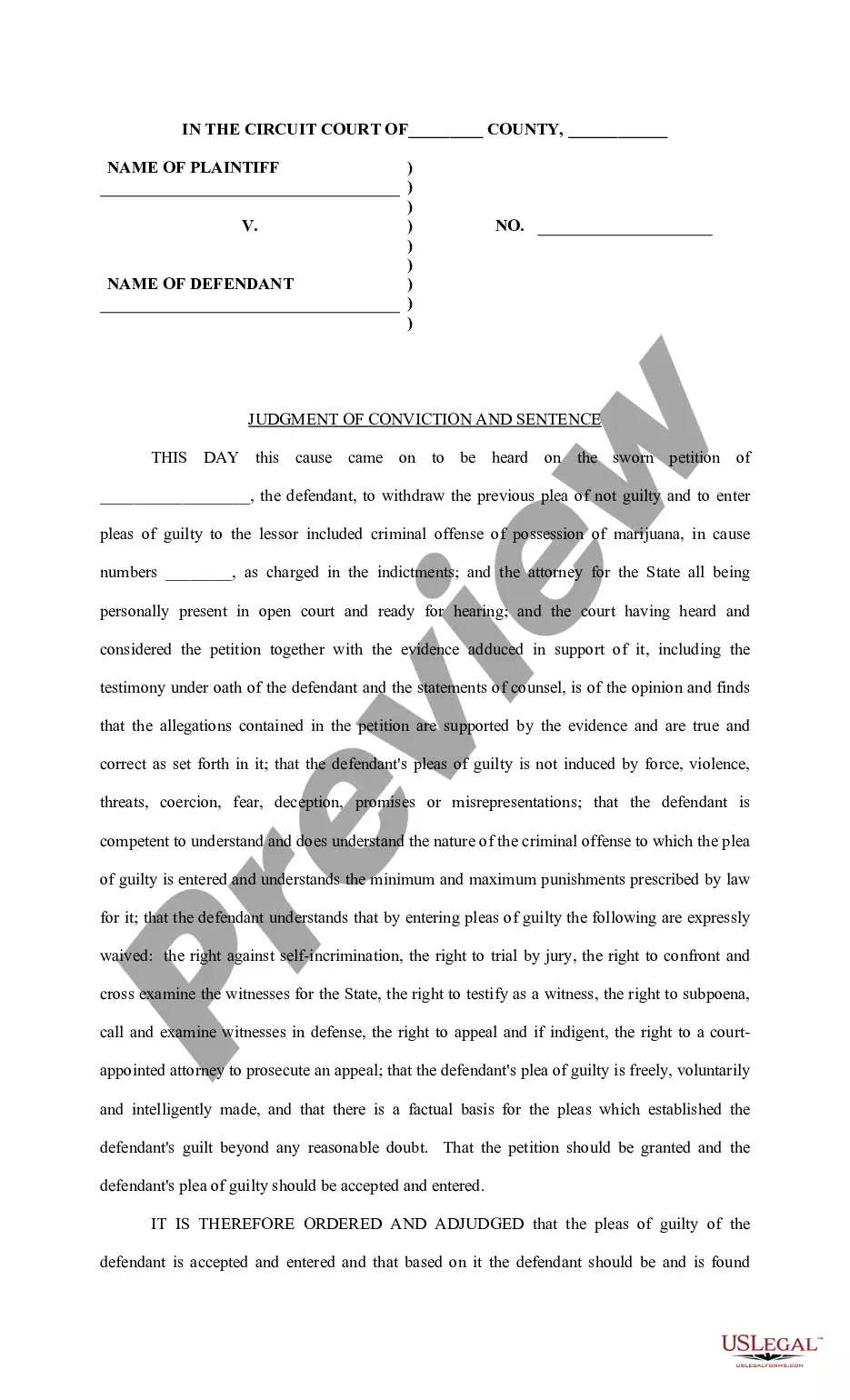
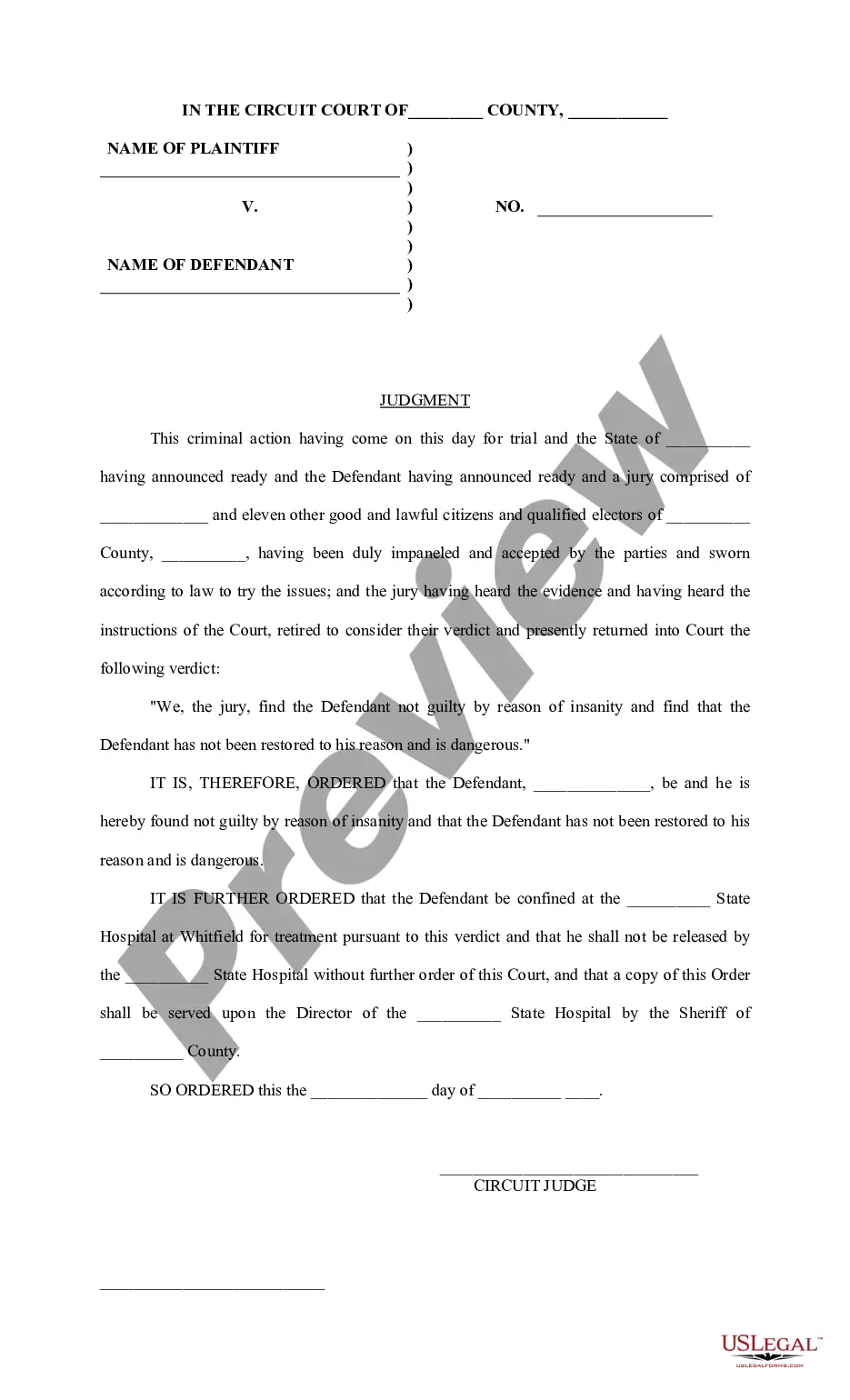
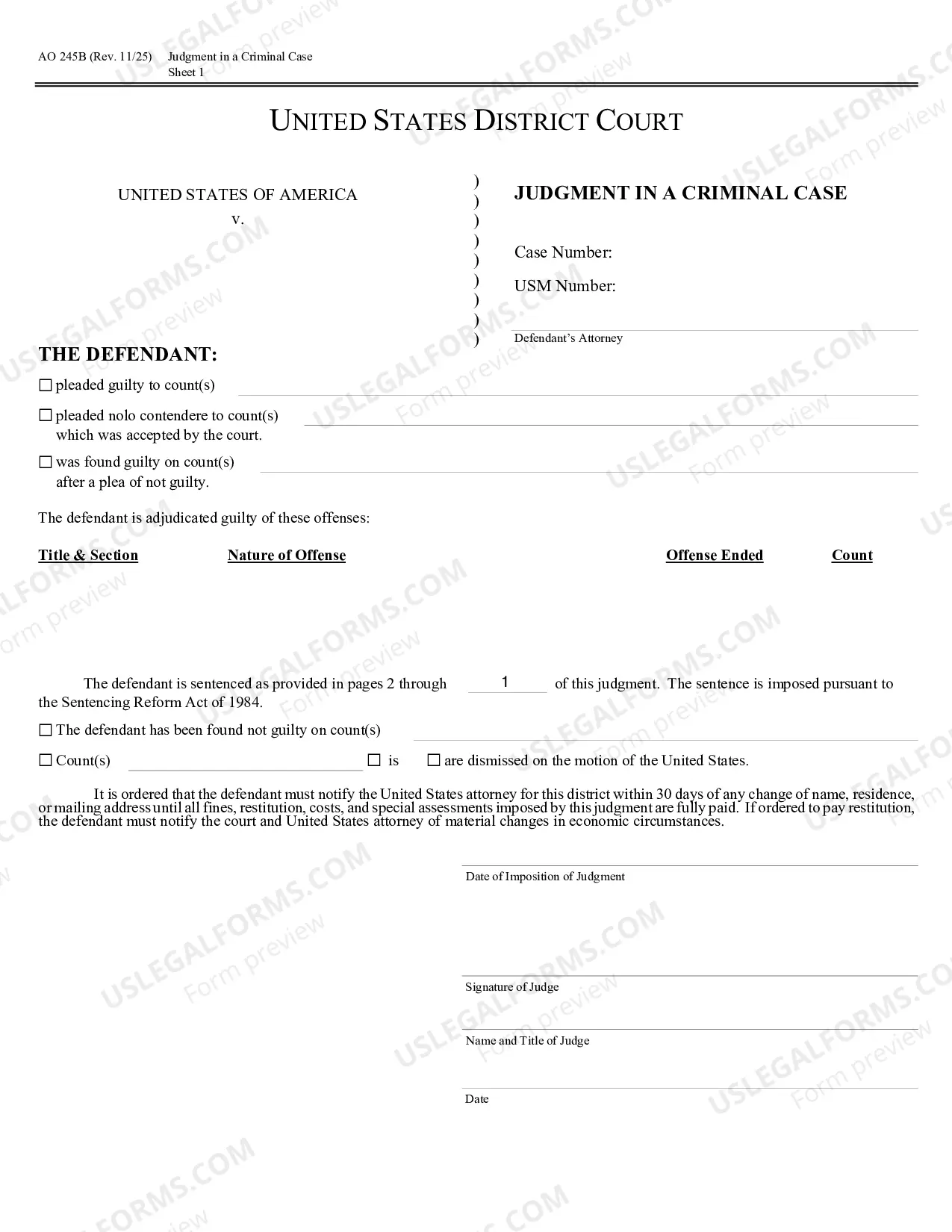
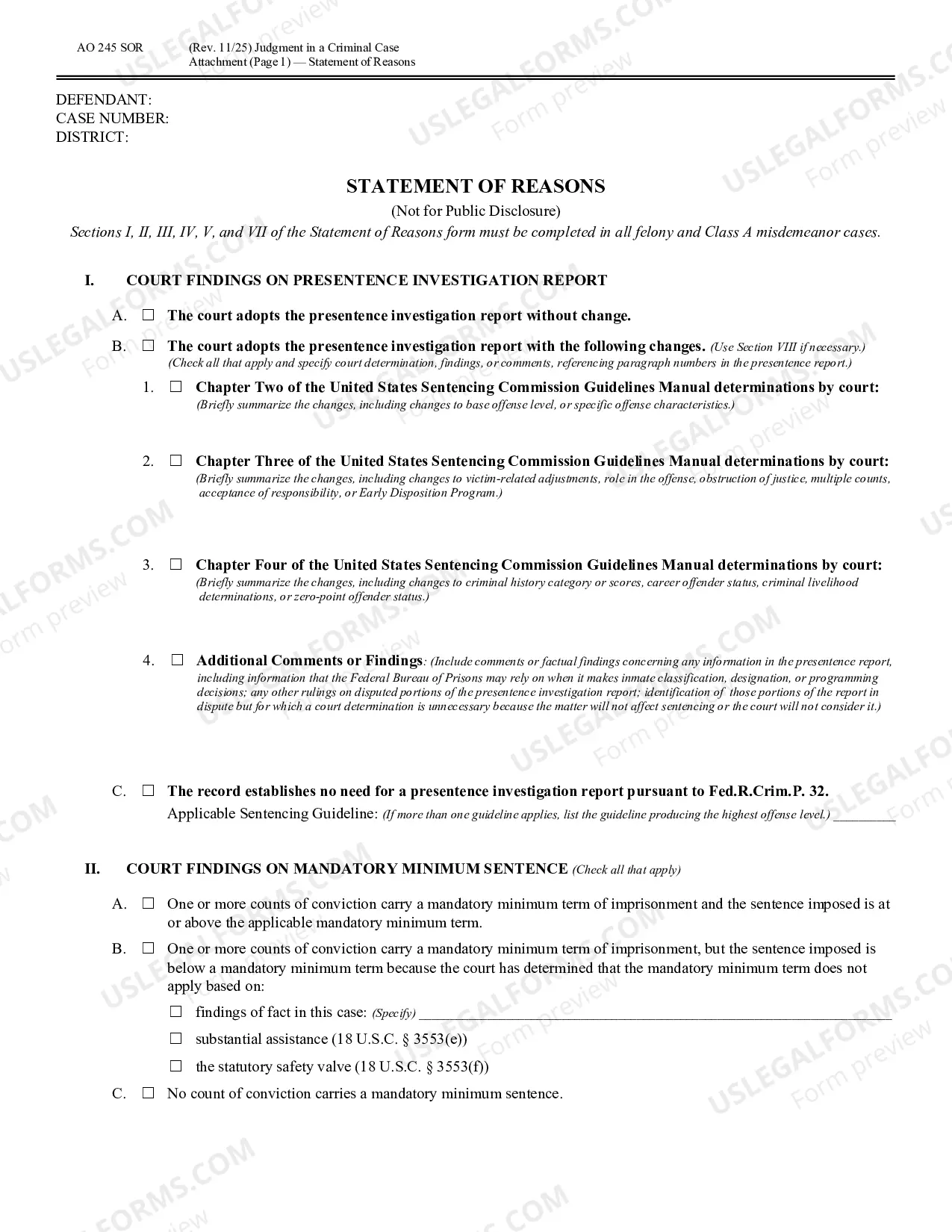
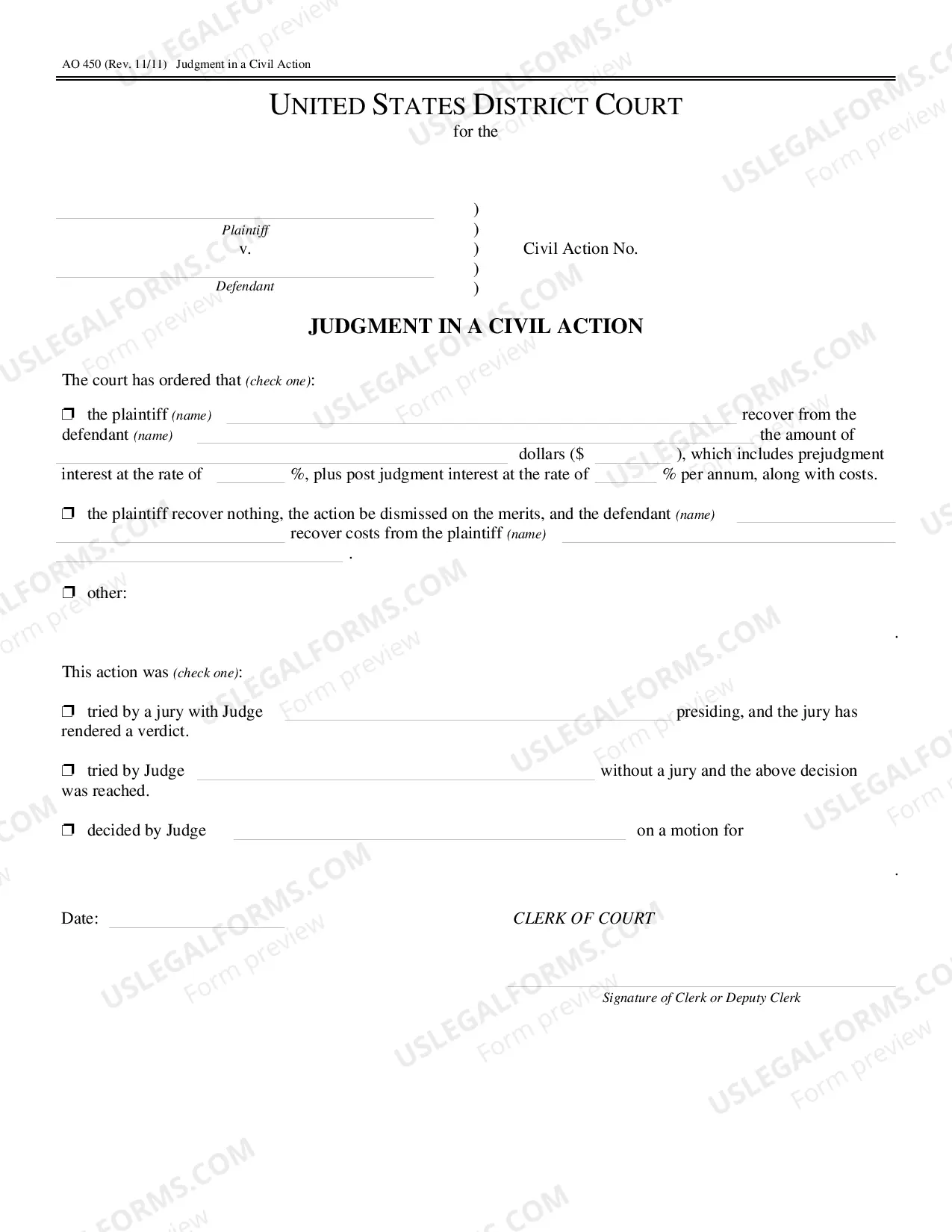
The Judgment of Conviction and Sentence is a legal document used when a defendant wishes to change their plea from not guilty to guilty for a lesser charge. This form is essential in legal proceedings for formally documenting the acceptance of a guilty plea and outlining the sentence imposed by the court. Unlike other criminal forms, this particular judgment specifically addresses the plea change and the resulting sentencing.
Form components explained
- Acceptance of guilty plea by the defendant.
- Specification of the charges for which the plea is accepted.
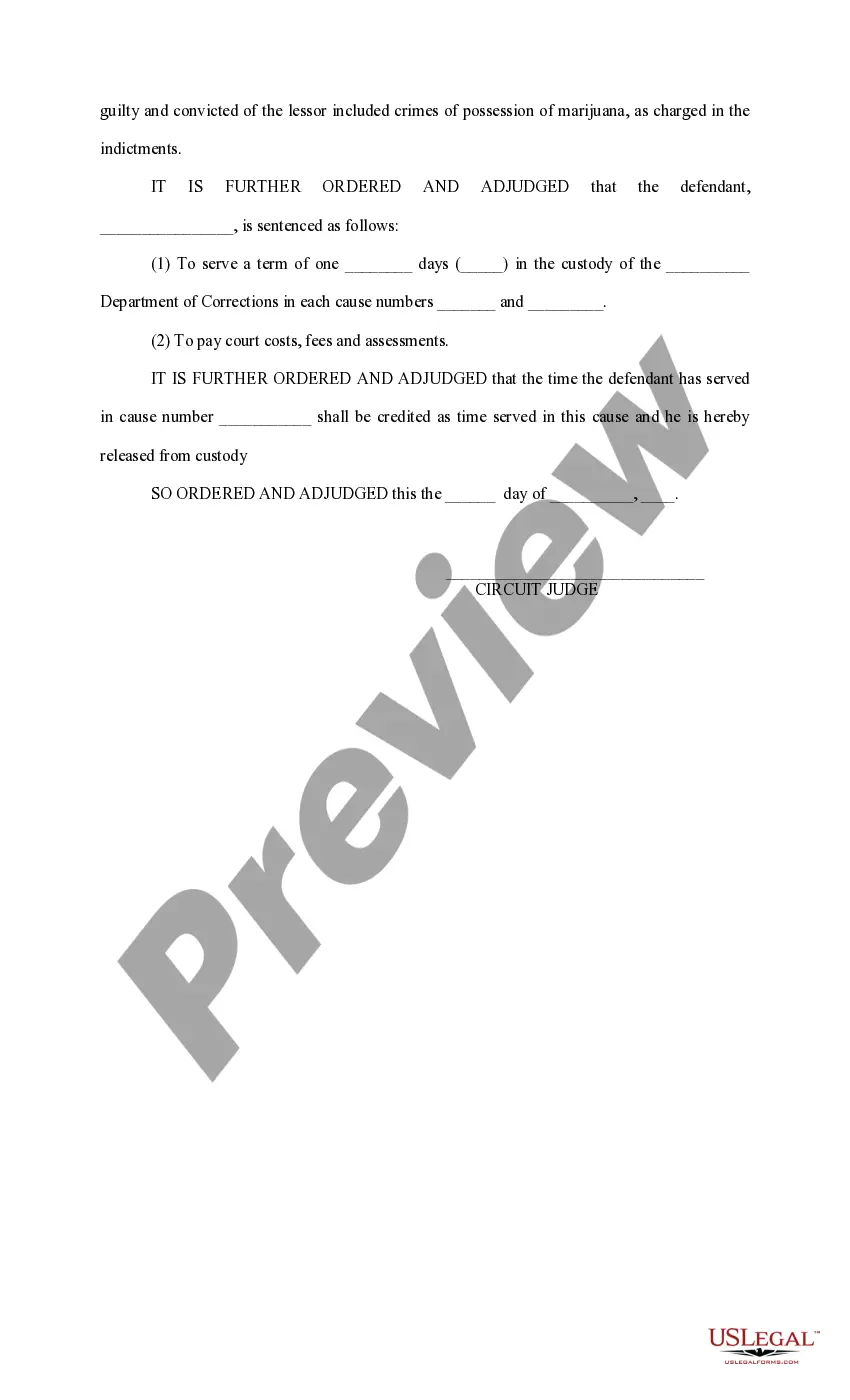
- Details regarding the sentence, including duration and type of custody.
- Instructions for payment of court costs and fees.
- Provisions for crediting time served toward the sentence.
Situations where this form applies
This form should be used when an individual has decided to plead guilty to a lesser charge in a criminal case. Typical scenarios include situations where a defendant seeks a plea bargain or wishes to take responsibility for their actions to receive a lighter sentence. It is important to use this form when formalizing the change of plea in court.
Who can use this document
The following individuals may need to use this form:
- Defendants who are changing their plea from not guilty to guilty.
- Individuals facing lesser charges related to their original indictment.
- Legal representatives or attorneys assisting clients with plea changes.
How to prepare this document
- Enter the defendant's name where specified.
- Identify the lesser charge to which the plea is being entered.
- Detail the length of the sentence in days and the relevant correctional facility.
- Include any applicable court costs and assessments.
- Sign and date the form as required, and ensure that the judge's signature is obtained.
Notarization requirements for this form
This form does not typically require notarization unless specified by local law. Ensure you check local requirements to confirm whether notarization is necessary in your jurisdiction.
Get your form ready online
Our built-in tools help you complete, sign, share, and store your documents in one place.
Make edits, fill in missing information, and update formatting in US Legal Forms—just like you would in MS Word.
Download a copy, print it, send it by email, or mail it via USPS—whatever works best for your next step.
Sign and collect signatures with our SignNow integration. Send to multiple recipients, set reminders, and more. Go Premium to unlock E-Sign.
If this form requires notarization, complete it online through a secure video call—no need to meet a notary in person or wait for an appointment.
We protect your documents and personal data by following strict security and privacy standards.

Make edits, fill in missing information, and update formatting in US Legal Forms—just like you would in MS Word.

Download a copy, print it, send it by email, or mail it via USPS—whatever works best for your next step.

Sign and collect signatures with our SignNow integration. Send to multiple recipients, set reminders, and more. Go Premium to unlock E-Sign.

If this form requires notarization, complete it online through a secure video call—no need to meet a notary in person or wait for an appointment.

We protect your documents and personal data by following strict security and privacy standards.
Typical mistakes to avoid
- Failing to provide complete information about the charges.
- Not specifying the correct length of the sentence.
- Omitting required signatures, especially from the judge.
- Submitting the form without checking for compliance with local laws.
Benefits of using this form online
- Convenient access to legally vetted templates anytime.
- Editable forms that allow for customization to individual needs.
- Reliable resources drafted by licensed attorneys for accurate compliance.
Legal use & context
- This form officially records the defendant's guilty plea and the terms of the sentence.
- It is typically recognized as a binding legal document in court proceedings.
- Having this document ensures that all parties understand the terms of the conviction and sentencing.
Key takeaways
- The Judgment of Conviction and Sentence is crucial for formalizing a guilty plea.
- Fill out all sections completely to avoid errors that could delay the process.
- Check for any additional local rules that may affect the use of this form.
Looking for another form?






Form popularity
FAQ
After Sentencing: Once the judge imposes sentence, defendants may ask the judge to rule on collateral matters. Those being sentenced to federal prison may ask the judge to resolve three matters:Those with sentences of less than 10 years may request time to get their affairs in order and report to prison voluntarily.
When sentenced, the convicted criminal is issued a formal judgment that usually pronounces the punishment, which often includes time in prison or fines. The convict can appeal the sentence, but a sentence usually takes effect while appeals occur.
Previous convictions may simply disentitle repeat offenders to first offender mitigation and then fail to aggravate (progressive loss of mitigation). Alternatively, prior convictions may be used to continuously increase the severity of sentence (cumulative sentencing).
If the defendant is convicted in a criminal case, the judge will set a date for sentencing. Before that time, a pre-sentence investigation will take place to help the judge determine the appropriate sentence from the range of possible sentences set out in the statutes.
A few months after the defendant is found guilty, they return to court to be sentenced. The judge receives guidance and assistance from several sources in order to sentence a defendant. Congress has established minimum and maximum punishments for many crimes which the judge uses to craft a sentence.
Judgment of conviction Add to list Share. Definitions of judgment of conviction. noun. (criminal law) a final judgment of guilty in a criminal case and the punishment that is imposed. synonyms: condemnation, conviction, sentence.
If you've been convicted at trial or you've taken a plea agreement in a felony criminal case then the last hearing that will conclude your case is called a Judgment and Sentencing Hearing.So, when a determination of guilt is made, a Judge has to decide how to sentence a defendant.
The guilty plea is one stage; the sentencing is the final stage and when the actual "conviction" enters.However, sentencing is usually when the offense is treated as a "conviction" and the person is sentenced for the offense. Occasionally, a judge will sentence a person on the same day as a plea.
If you've been convicted at trial or you've taken a plea agreement in a felony criminal case then the last hearing that will conclude your case is called a Judgment and Sentencing Hearing.If a defendant goes to trial and is found guilty, either by a jury or a judge in a bench trial, that is the determination of guilt.