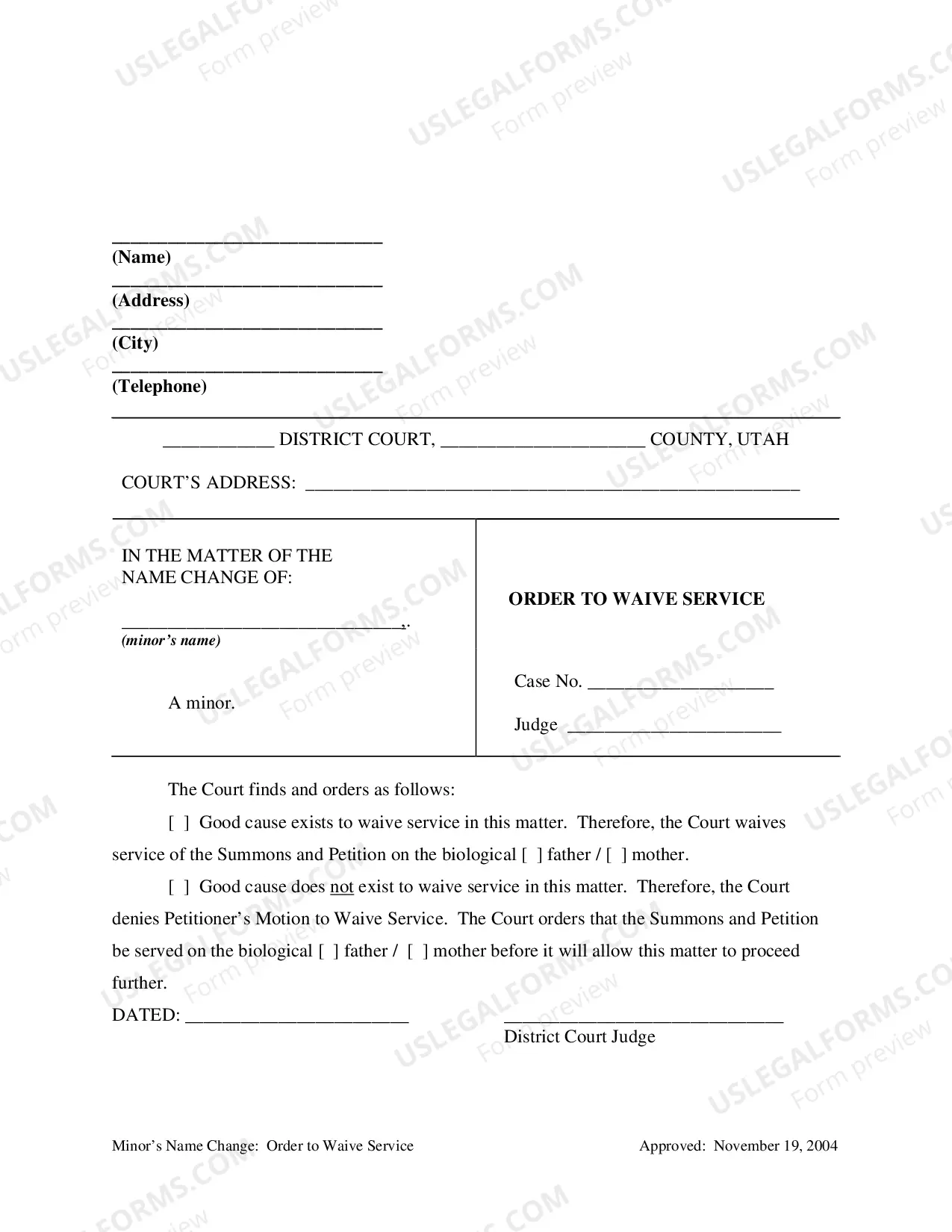
Release and Waiver of Liability for Using Salvage Yard
What is this form?
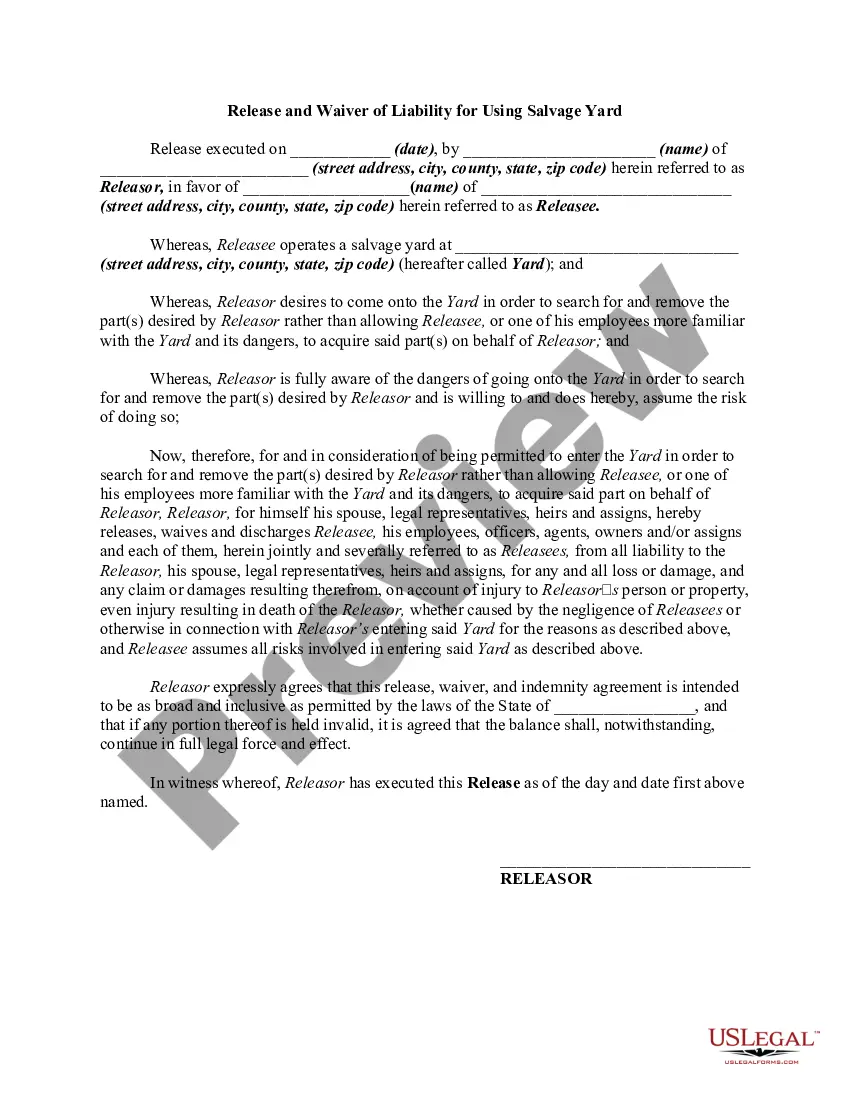
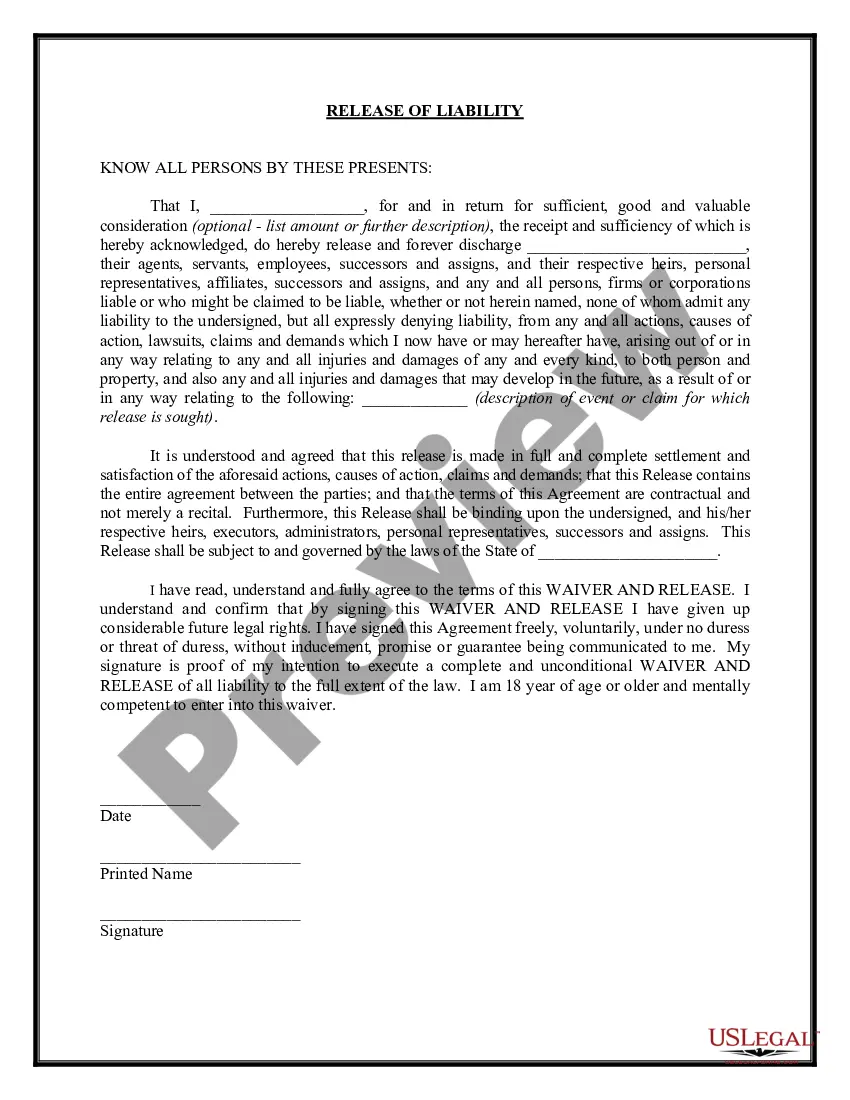
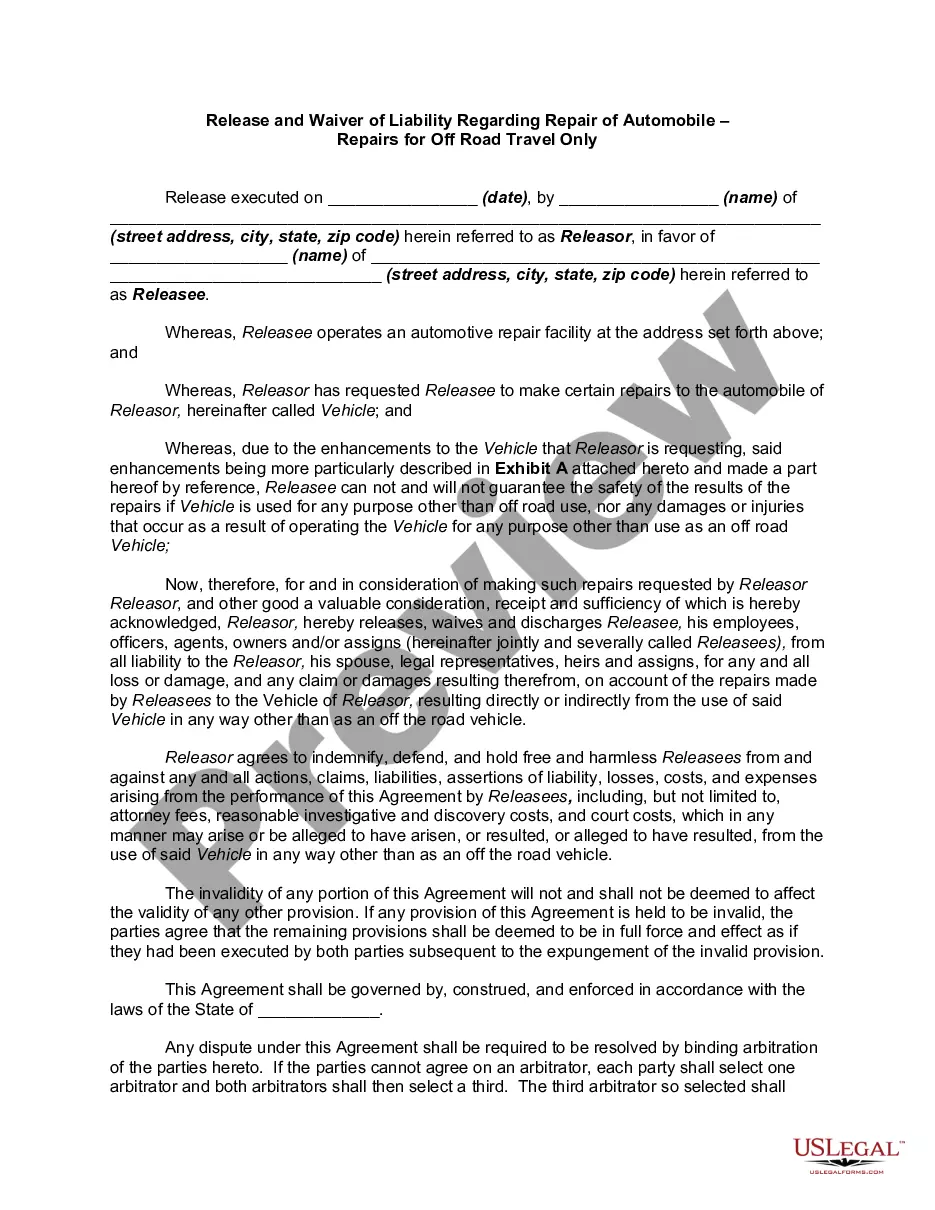
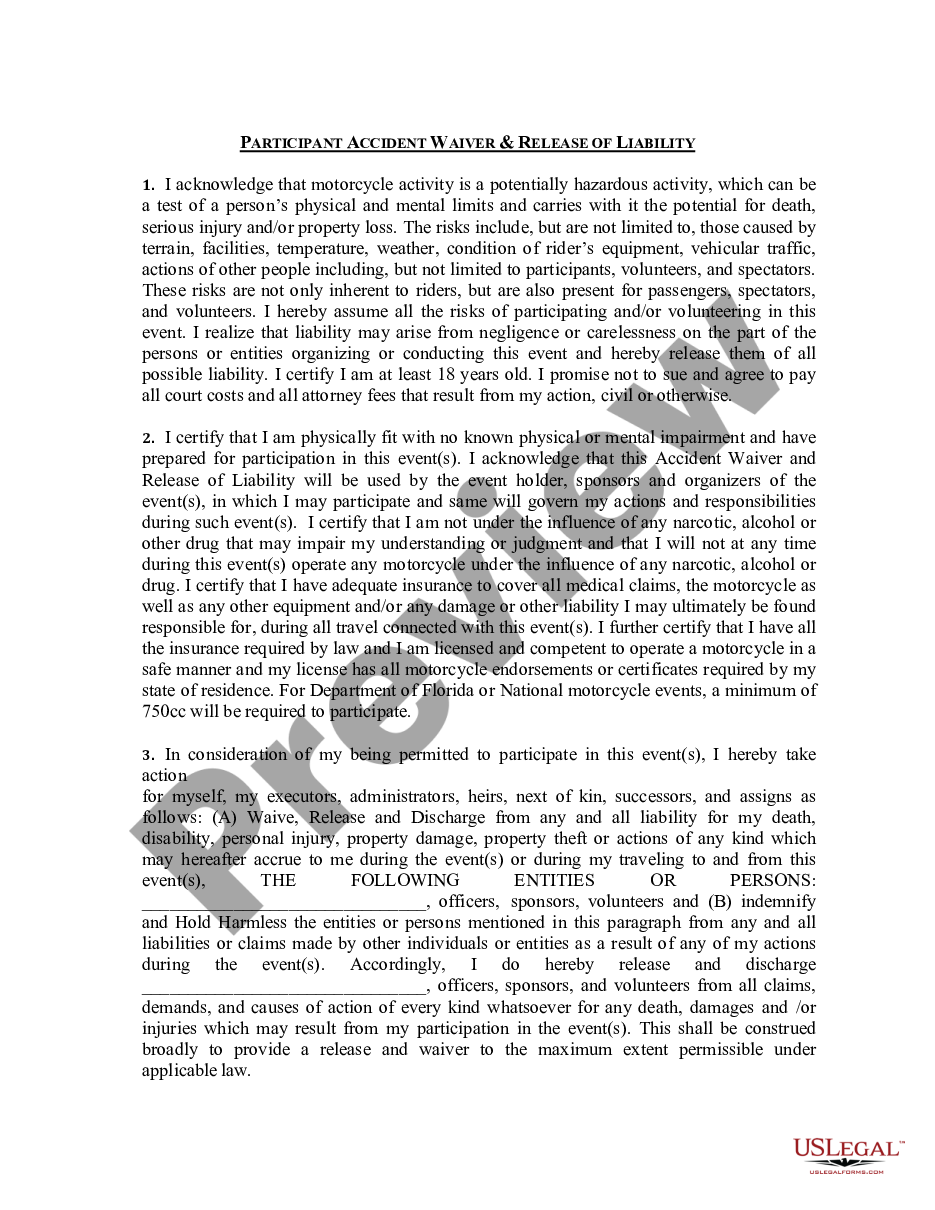
The Release and Waiver of Liability for Using Salvage Yard is a legal document that allows a customer, referred to as the Releasor, to enter a salvage yard at their own risk. This form sets forth the understanding that the Releasor accepts the inherent dangers of searching for and removing items from the yard, thereby releasing the operator and employees, referred to as the Releasee, from any liability related to injuries or damages incurred during the visit. This form is distinct from general release forms as it specifically pertains to salvage yard activities and their associated risks.
Main sections of this form
- Date of execution, which confirms when the release is signed.
- Name and address of the Releasor (the individual providing the release).
- Name and address of the Releasee (the operator of the salvage yard).
- Description of the salvage yard's location.
- Clauses detailing the assumption of risk and release of liability for any injuries or damages.
- Agreement that the release is intended to be as broad as legally permissible.
- Signature of the Releasor to validate the agreement.
When this form is needed
This form should be used when an individual wants to visit a salvage yard to search for and collect vehicle parts or other materials. It is essential when the owner of the salvage yard wishes to limit their liability for any injuries or damages that may occur as a result of a customerâs actions while on the property. Common situations include automotive repairs, restoration projects, or hobbyist searches for specific parts.
Who should use this form
- Individuals planning to visit a salvage yard.
- Anyone searching for specific vehicle parts or materials on the premises.
- Operators of salvage yards looking to protect themselves from potential legal claims.
- Individuals who understand the risks involved in entering a salvage yard.
How to complete this form
- Enter the date of execution at the top of the document.
- Fill in the name and address of the Releasor.
- Provide the name and address of the Releasee.
- Specify the location of the salvage yard in the designated section.
- Read through the release clauses carefully before signing.
- Sign and date the form to finalize the release agreement.
Does this form need to be notarized?
This form does not typically require notarization unless specified by local law. It is advisable to check regional legal requirements to confirm if notarization is necessary for your state.
Get your form ready online
Our built-in tools help you complete, sign, share, and store your documents in one place.
Make edits, fill in missing information, and update formatting in US Legal Forms—just like you would in MS Word.
Download a copy, print it, send it by email, or mail it via USPS—whatever works best for your next step.
Sign and collect signatures with our SignNow integration. Send to multiple recipients, set reminders, and more. Go Premium to unlock E-Sign.
If this form requires notarization, complete it online through a secure video call—no need to meet a notary in person or wait for an appointment.
We protect your documents and personal data by following strict security and privacy standards.

Make edits, fill in missing information, and update formatting in US Legal Forms—just like you would in MS Word.

Download a copy, print it, send it by email, or mail it via USPS—whatever works best for your next step.

Sign and collect signatures with our SignNow integration. Send to multiple recipients, set reminders, and more. Go Premium to unlock E-Sign.

If this form requires notarization, complete it online through a secure video call—no need to meet a notary in person or wait for an appointment.

We protect your documents and personal data by following strict security and privacy standards.
Common mistakes to avoid
- Not signing the form, which invalidates the release.
- Failing to enter the correct addresses of both parties.
- Overlooking the requirement to read the risk clauses before signing.
- Neglecting to specify the location of the salvage yard accurately.
Benefits of completing this form online
- Convenience of easily downloading the form at any time.
- Ability to customize the document for specific needs.
- Quick access to legal templates without the need for an attorney.
- Reliability of having a form drafted by licensed attorneys, ensuring legal validity.
Legal use & context
- This form serves to protect the Releasee from legal claims arising from injuries sustained by the Releasor while on the property.
- It is intended to be enforceable to the fullest extent permitted by state laws, ensuring that both parties understand their rights and responsibilities.
- The Releasor assumes all risks related to their visit, thus reducing liability for the Releasee.
What to keep in mind
- The form allows individuals to access salvage yards while limiting liability for the yard owners.
- It is essential to understand the risks before signing the waiver.
- Always ensure that the completed form meets any state-specific requirements to maintain legal validity.
Looking for another form?







Form popularity
FAQ
Get help. Writing a waiver should not be complicated. Use the correct structure. Proper formatting. Include a subject line. Include a caution! Talk about the activity risks. Do not forget an assumption of risk. Hold harmless.
200bStart the letter off with a clear explanation regarding your request. For instance, explain that you're requesting certain fees or charges to be waived or to be released from a previous engagement. Communicate any supporting or relative dates, names of parties, monetary figures, or venues as facts.
Salvage yards place a high value on old vehicles because the vehicle can be broken down into auto parts that resold. Therefore, salvage yards purchase cars at a much higher price than scrap metal yards. When cars arrive at our salvage yard, we drain out all the fluids and place the vehicle in the yard.
Identify the releasor. Describe the photo, image, likeness, or video. Address any payment the model receives for the release. Address royalties. Address whether the model has the ability to revoke their authorization. The parties sign and date the release.
In California, a liability waiver must be clear, unambiguous, and explicit. In other words, waivers cannot be printed in faded ink, in small font, on the back of a paper, or in an otherwise ambiguous form. If the waiver that you sign is not represented clearly, it may not hold up in the event of a lawsuit.
Standard Releases and Volunteer Acknowledgment. Standard standard releases and the standard volunteer acknowledgment are documents that have been approved for use by the President, appropriate Vice President, and the Office of the General Counsel.
The General Release is a broad release from all possible civil claims resulting from a dispute. Since the Releasing Party is giving up all known and unknown claims against the other party, care should be taken to ensure that the Releasor is fully aware of their rights.
The standard talent release form is designed for the purpose of an individual to grant full permission to have images of their likeness and the sound of their voice to be recorded on audio or video and used at the user's discretion and without payment, other compensation or legal repercussion to the grantee.