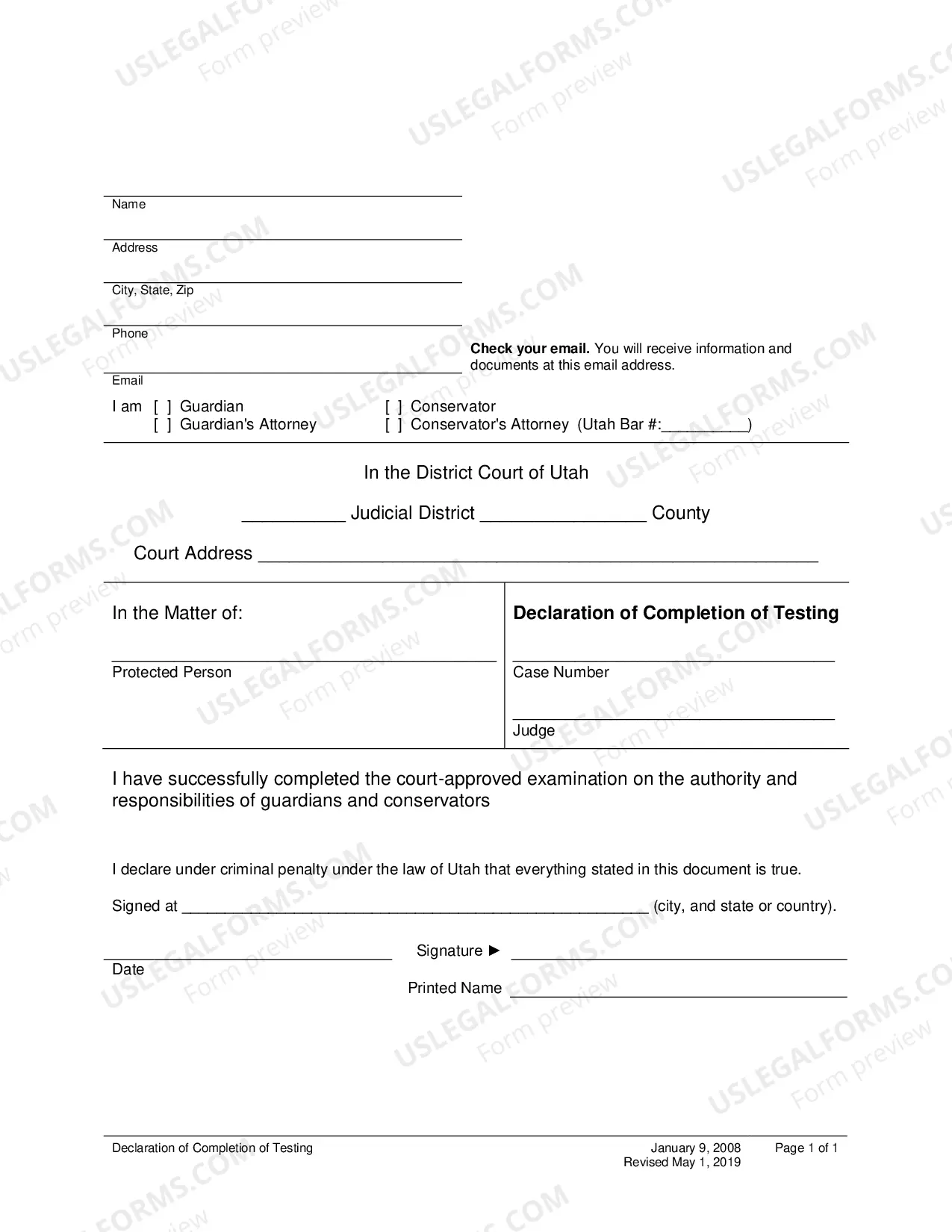
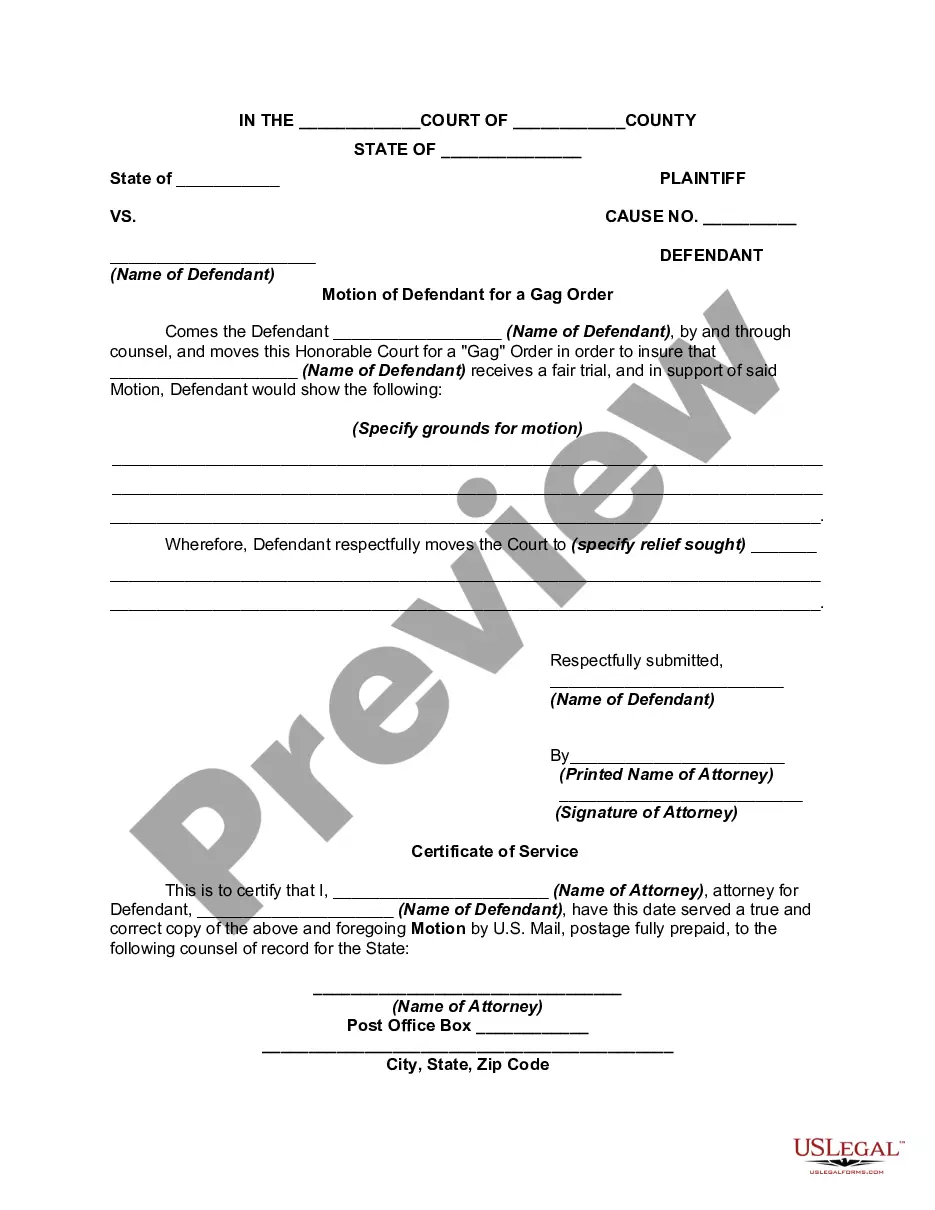
Motion to Sequester Jurors Prior to and During the Trial of this Case
Overview of this form
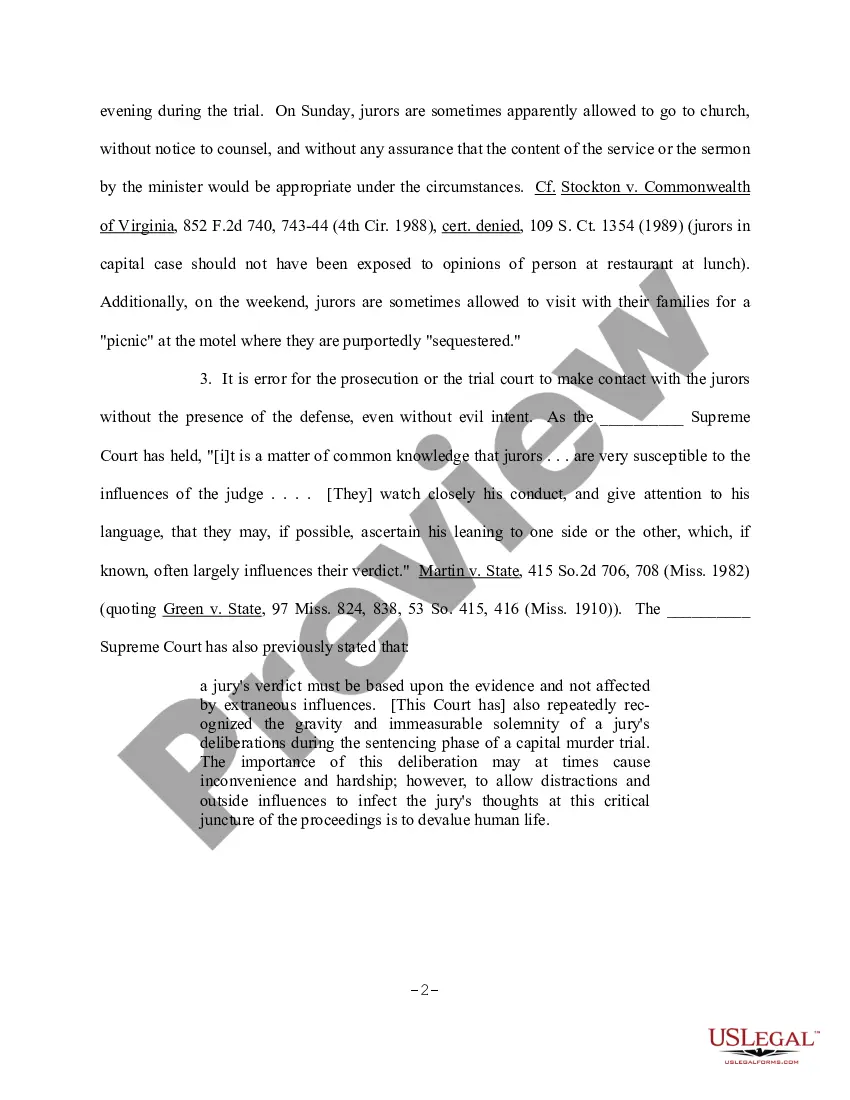
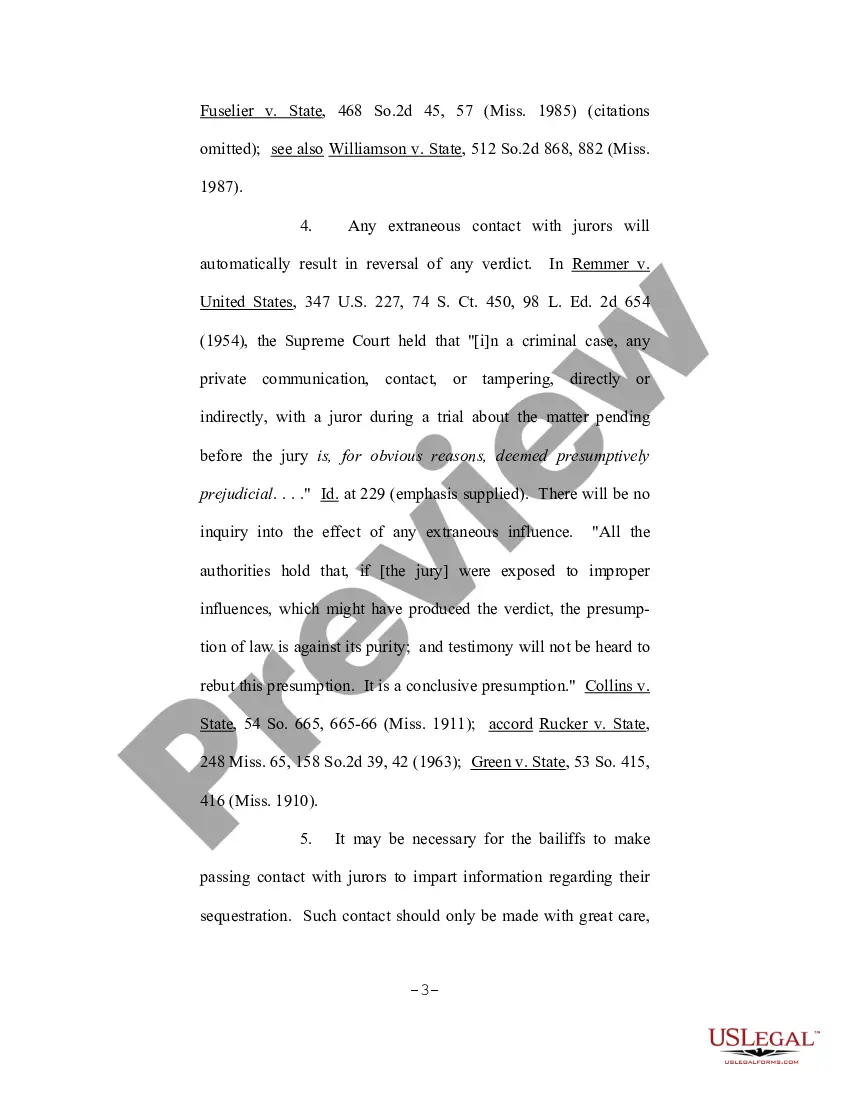
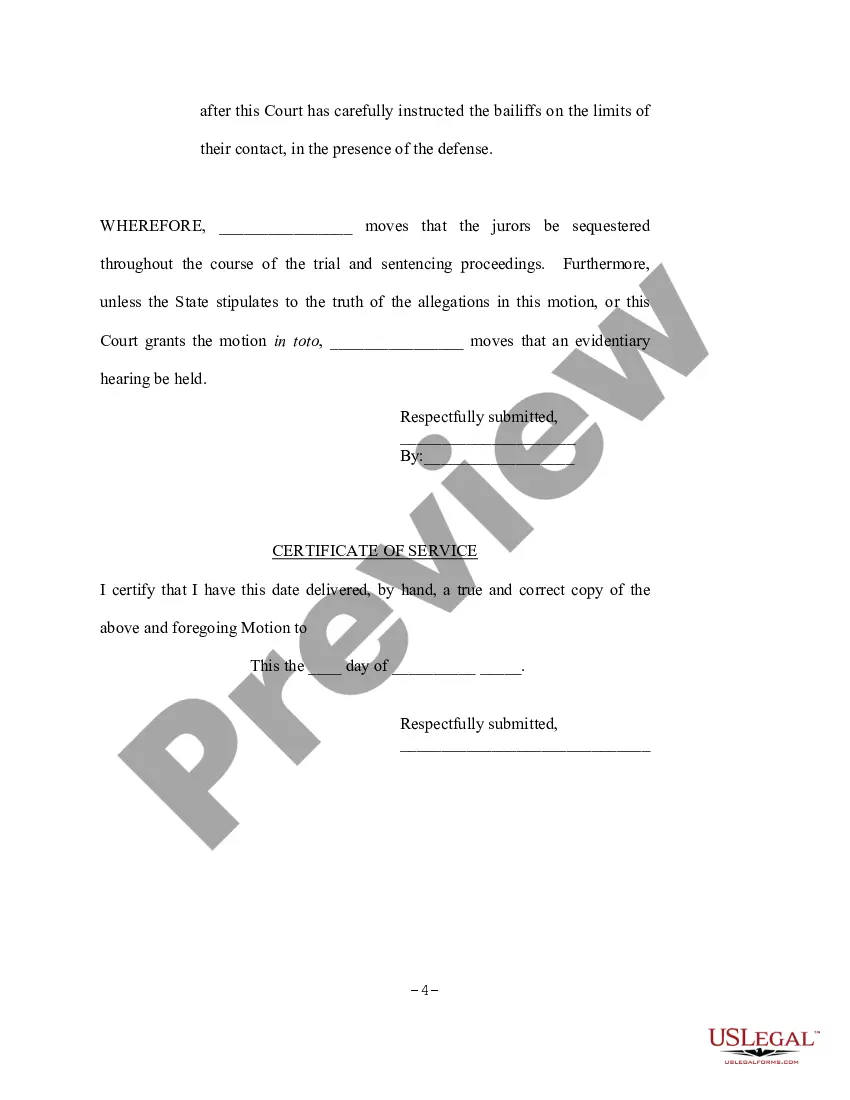
The Motion to Sequester Jurors Prior to and During the Trial of this Case is a formal request made to a court to isolate jurors from outside influences during a trial. This motion aims to ensure that jurors make their decisions based solely on the evidence presented in court, maintaining the integrity of the judicial process. Unlike other legal motions, this one specifically addresses concerns related to jury discussions and external pressures which can compromise a fair trial.
What’s included in this form
- Identification of the moving party and their counsel.
- Reference to constitutional amendments supporting the motion.
- Explanation of the potential issues affecting jury impartiality.
- Request for the sequestering of jurors during the trial.
- Provision for an evidentiary hearing if allegations are disputed.
- Certification of service confirming delivery to relevant parties.
Common use cases
This form should be used in scenarios involving capital trials or any case where there is a significant concern that jurors may be influenced by discussions among themselves or external factors. It is particularly relevant when previous trials have indicated jurors may have been improperly exposed to outside information that could affect their impartiality. By filing this motion, a defendant seeks to safeguard their right to a fair trial.
Who needs this form
- Defense attorneys representing clients in criminal trials.
- Individuals charged with serious offenses, especially capital cases.
- Legal practitioners concerned with the integrity of jury decisions.
How to complete this form
- Identify the moving party by entering their name in the appropriate section.
- Specify the constitutional references that support the request in the designated fields.
- Provide a detailed explanation of past issues related to juror exposure and bias.
- Clearly articulate the request for jurors to be sequestered during trial proceedings.
- Ensure all signatures are completed and the certificate of service is properly filled out.
Does this document require notarization?
Notarization is not commonly needed for this form. However, certain documents or local rules may make it necessary. Our notarization service, powered by Notarize, allows you to finalize it securely online anytime, day or night.
Get your form ready online
Our built-in tools help you complete, sign, share, and store your documents in one place.
Make edits, fill in missing information, and update formatting in US Legal Forms—just like you would in MS Word.
Download a copy, print it, send it by email, or mail it via USPS—whatever works best for your next step.
Sign and collect signatures with our SignNow integration. Send to multiple recipients, set reminders, and more. Go Premium to unlock E-Sign.
If this form requires notarization, complete it online through a secure video call—no need to meet a notary in person or wait for an appointment.
We protect your documents and personal data by following strict security and privacy standards.

Make edits, fill in missing information, and update formatting in US Legal Forms—just like you would in MS Word.

Download a copy, print it, send it by email, or mail it via USPS—whatever works best for your next step.

Sign and collect signatures with our SignNow integration. Send to multiple recipients, set reminders, and more. Go Premium to unlock E-Sign.

If this form requires notarization, complete it online through a secure video call—no need to meet a notary in person or wait for an appointment.

We protect your documents and personal data by following strict security and privacy standards.
Avoid these common issues
- Failing to properly cite supporting constitutional amendments.
- Not providing adequate justification for the need for sequestration.
- Omitting signatures from required parties.
- Not checking for state-specific procedural requirements before submission.
Advantages of online completion
- Immediate access to a reliable legal template drafted by licensed attorneys.
- Downloadable format allows for easy editing and customization to suit specific case needs.
- Convenient online access ensures that you can complete the form at your own pace.
Legal use & context
- This motion is essential for maintaining fairness in jury trials, especially in high-stakes cases.
- The courts generally recognize the importance of juror seclusion to preserve the integrity of the verdict.
- Failure to sequester jurors when needed can result in a mistrial or appealable issues.
Quick recap
- The Motion to Sequester Jurors is vital for ensuring an impartial jury.
- Complete the form carefully, providing all necessary details and supporting evidence.
- Consult local rules to ensure compliance with jurisdiction-specific requirements.
Looking for another form?


Form popularity
FAQ
When the selection of the jury is completed, the jurors take the following oath: "Do you, and each of you, understand and agree that you will well and truly try the cause now pending before this court, and a true verdict render according only to the evidence presented to you and to the instructions of the court?"
Trial Stage - seating of the jury, testimony on behalf of the plaintiffs and testimony on behalf of the defendants. Post Trial - concluding arguments, judge's charge to the jury, jury deliberations, announcement of judgment, motions for new trial or appeal.
Step 7 (Execution of judgment) Step 6 (Judgment) Step 6 (Verdict) Step 5 (Instructions to the Jury) Step 4 (Closing Arguments) Step 3 (Introduction Of Evidence) Step 2 (Opening statemant. Step 1 ( Selecting Jury)
Step 7 (Execution of judgment)Step 6 (Judgment)Step 6 (Verdict)Step 5 (Instructions to the Jury)Step 4 (Closing Arguments)Step 3 (Introduction Of Evidence)Step 2 (Opening statemant.Step 1 ( Selecting Jury)
Sequestering a jury means separating jurors from other people. That includes keeping the jury away from outside influence like media or current events that could have an effect on their verdict.
French for "to speak the truth." The process through which potential jurors from the venire are questioned by either the judge or a lawyer to determine their suitability for jury service. Also the preliminary questioning of witnesses (especially experts) to determine their competence to testify.
The trial is a structured process where the facts of a case are presented to a jury, and they decide if the defendant is guilty or not guilty of the charge offered. During trial, the prosecutor uses witnesses and evidence to prove to the jury that the defendant committed the crime(s).
Verdict: The official decision or finding of the jury which is reported to the court. Voir dire: Means "to speak the truth" in French. It refers to the examination of prospective jurors by the judge and attorneys to determine whether the individuals are qualified to serve on a jury in a particular case.