Motion for Juror Summonses to Be Served by Mail
What is this form?
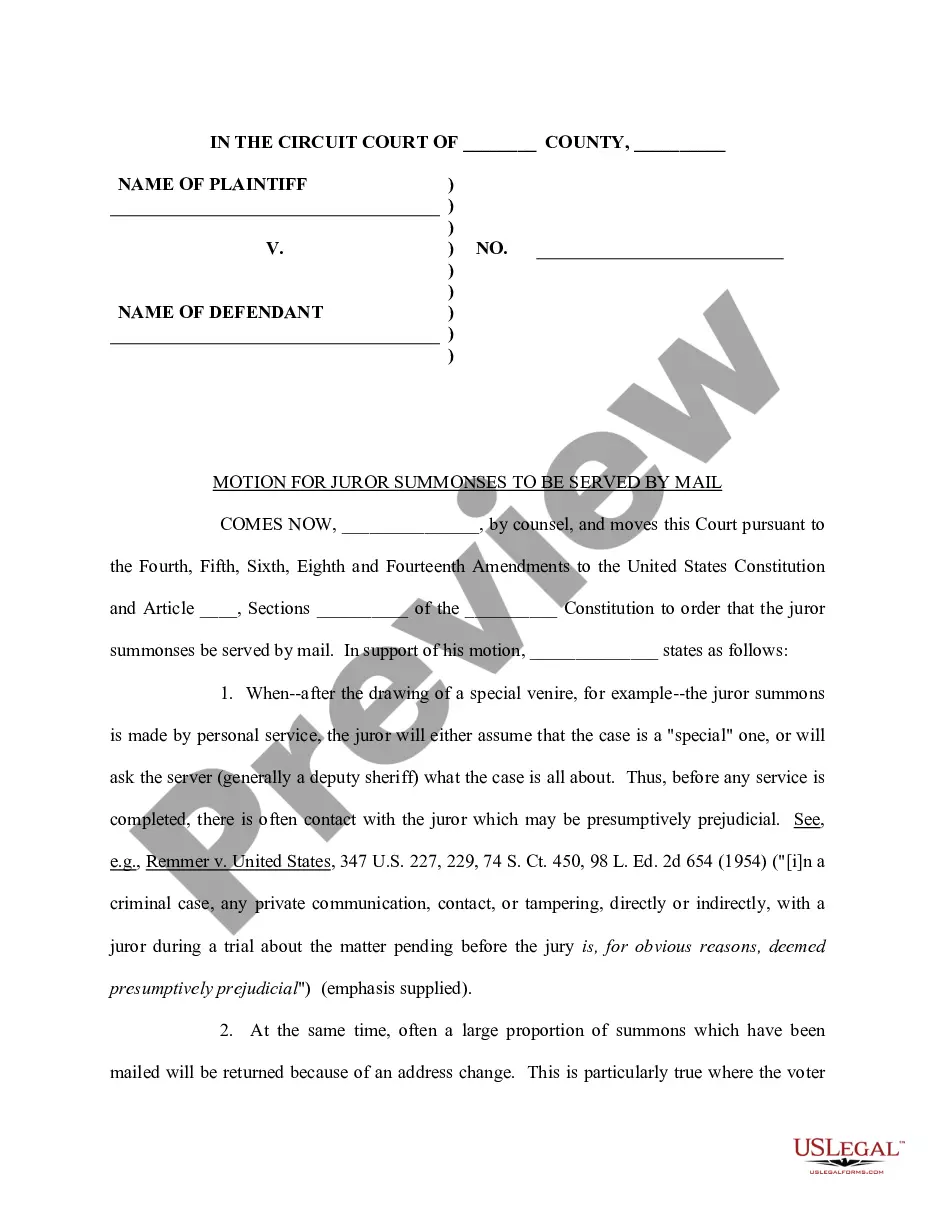
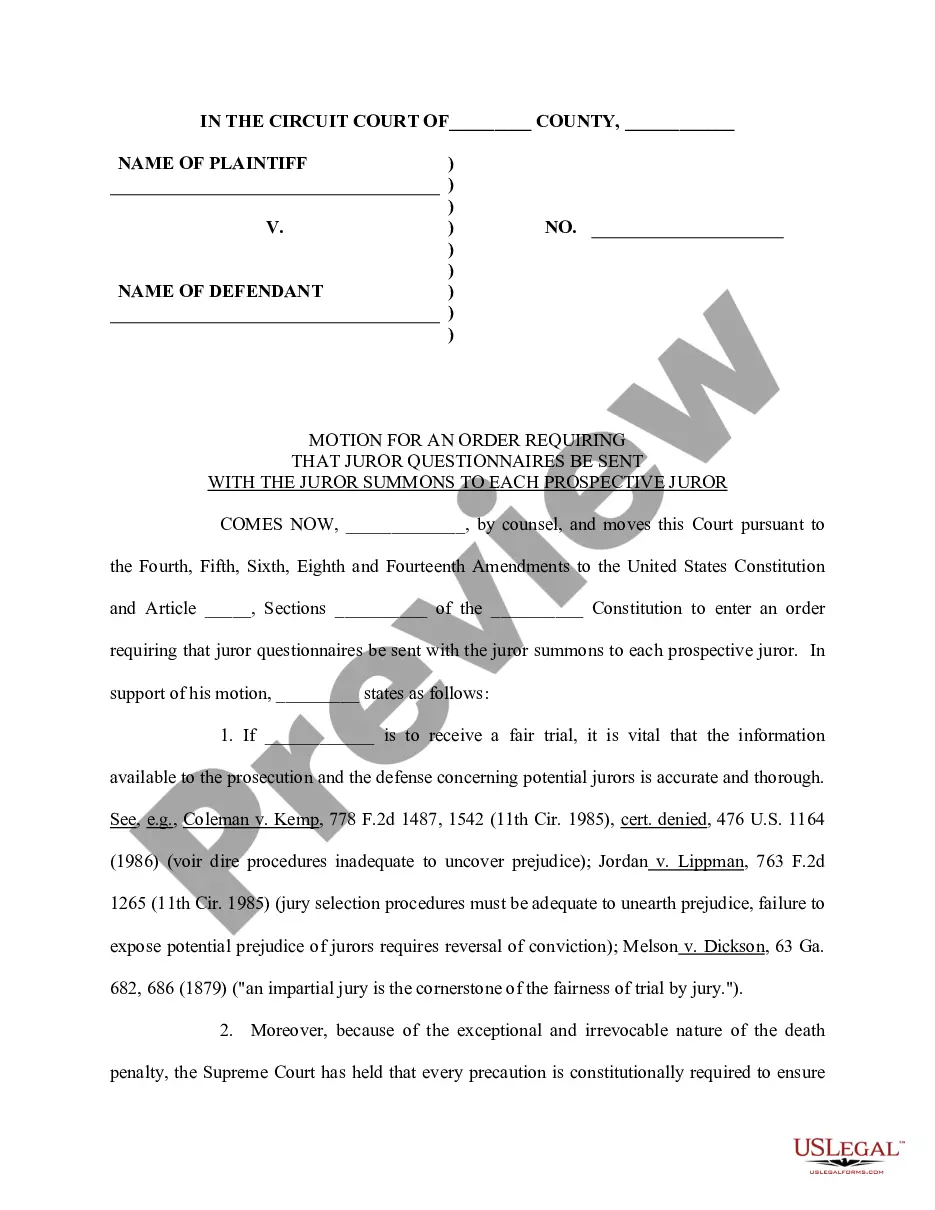
The Motion for Juror Summonses to Be Served by Mail is a legal document designed to request that jury summonses be sent via mail rather than being personally delivered by law enforcement. This motion argues that personal contact during the service may lead to prejudicial assumptions about the case, thus potentially compromising the jury's impartiality. By opting for mail delivery, it seeks to minimize any potential bias related to how jurors are selected and contacted, ensuring a fairer process for all parties involved.
Main sections of this form
- Introduction stating the request and legal grounds for mail service.
- Arguments highlighting potential prejudicial impacts of personal service.
- Explanation of issues related to non-delivery due to incorrect addresses.
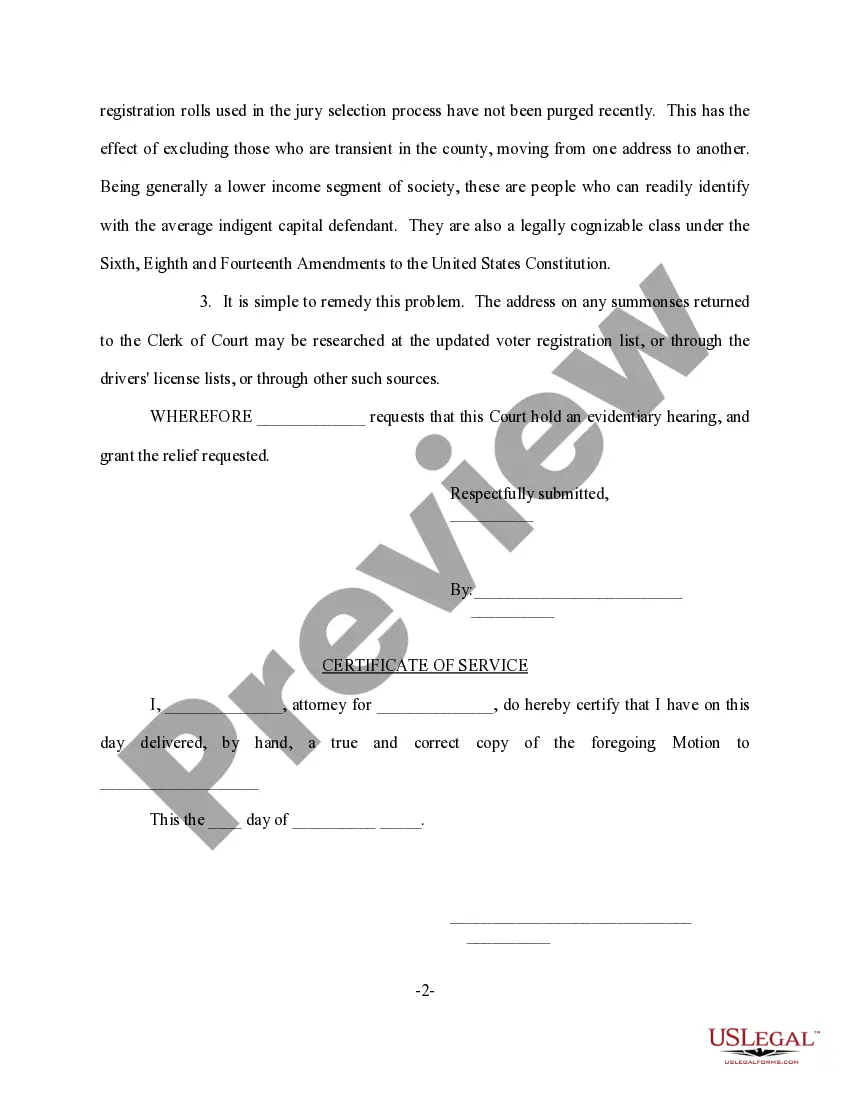
- Request for an evidentiary hearing by the court.
- Certification of service to confirm delivery of the motion to relevant parties.

Situations where this form applies
This motion is particularly useful in situations where there may be concerns about juror impartiality due to the manner in which jury summonses are served. It is applicable after the drawing of a special venire, especially when you want to ensure that potential jurors do not receive information about the case through personal contact. If you anticipate issues regarding the delivery of summonses, such as returns due to address changes, this form can help mitigate those challenges.
Who can use this document
- Attorneys representing defendants in criminal cases.
- Legal representatives involved in jury selection processes.
- Individuals concerned about the impartiality of jurors in their cases.
Instructions for completing this form
- Identify the names of the parties involved in the motion.
- Provide a clear statement requesting that jury summonses be served by mail.
- Outline the legal rationale for the request, including references to applicable laws or precedents.
- Include any necessary supporting information, such as issues with address accuracy.
- Sign the motion and include a certificate of service for proof of delivery to relevant parties.
Does this document require notarization?
This form usually doesn’t need to be notarized. However, local laws or specific transactions may require it. Our online notarization service, powered by Notarize, lets you complete it remotely through a secure video session, available 24/7.
Get your form ready online
Our built-in tools help you complete, sign, share, and store your documents in one place.
Make edits, fill in missing information, and update formatting in US Legal Forms—just like you would in MS Word.
Download a copy, print it, send it by email, or mail it via USPS—whatever works best for your next step.
Sign and collect signatures with our SignNow integration. Send to multiple recipients, set reminders, and more. Go Premium to unlock E-Sign.
If this form requires notarization, complete it online through a secure video call—no need to meet a notary in person or wait for an appointment.
We protect your documents and personal data by following strict security and privacy standards.

Make edits, fill in missing information, and update formatting in US Legal Forms—just like you would in MS Word.

Download a copy, print it, send it by email, or mail it via USPS—whatever works best for your next step.

Sign and collect signatures with our SignNow integration. Send to multiple recipients, set reminders, and more. Go Premium to unlock E-Sign.

If this form requires notarization, complete it online through a secure video call—no need to meet a notary in person or wait for an appointment.

We protect your documents and personal data by following strict security and privacy standards.
Mistakes to watch out for
- Failing to properly state the legal basis for the request.
- Not including a certificate of service.
- Overlooking local court rules that may affect the submission process.
Why complete this form online
- Easily customizable to fit specific case details and jurisdictions.
- Convenient access to download and complete the form at your own pace.
- Drafted by licensed attorneys, ensuring the document meets legal standards.
Legal use & context
- This motion is often used in jurisdictions where personal service may influence jurors' views of the case.
- Understanding the rights of defendants and the importance of impartial juries is essential when using this form.
Main things to remember
- The motion requests jury summonses to be delivered by mail to ensure impartiality.
- It addresses potential issues of prejudicial contact with jurors.
- It is adaptable for use across different jurisdictions while addressing specific local needs.
Looking for another form?



Form popularity
FAQ
Personal Service. Send a Letter. Search for a Phone Number or Address. Use Social Media. Pay for a Person Search. Consider Contacting Others. Search Property Records. Use Another Address.
Send a letter to the person's last address. Go to the local post office covering the area for the person's last known address. Call "411" for the city or cities where you think the person may live or work. Search free online telephone directories.
Introduction. If you need to file civil court forms and documents in the NSW Local, District or Supreme Court, you can do this online via the Online Registry website. Alternatively, you can mail your documentation, or visit a court registry and deliver it in person.
In the majority of states, you can serve papers by sending them to the defendant via certified mail with a return receipt requested. In some states, service by certified (or registered) mail is one among several ways you may serve papers.Normally, the court clerk does the mailing for you and charges a small fee.
Service by Email Part 6, Rule 23 of the Civil Procedure Rules says:the fax number, e-mail address or other electronic identification to which it must be sent; That means that delivery or sending court documents by email is not service, unless the other party expressly consents to it.
If you don't have the Defendant's address, but know where they are you can still sue and serve them. What you ideally can do is hire a process server and give them as much informatoin on the Defendant as possible. If they can find the defendant and serve them with your filed lawsuit then service is satisifed.
The lawsuit could be for any bad debt that you may owe. If you want to know what it is you should call the court in the county where you live and ask to speak to the civil court clerk. They will be able to tell you who is suing you.
How to Serve Someone Court Papers if You Don't Have an Address. Hire a professional firm to trace and serve the court papers in accordance with any special instructions. Provide as much information as possible. Last known address, social media profiles, and details of close friends and relatives.
In some cases the court may attempt service of process via first class post, which they will use to send the paperwork to the last known address of the person being served. If you are not able to locate the person's address, you may still be able to have the individual served with the necessary documents.