Sample Letter Notifying Client of Incorporation Status
About this form
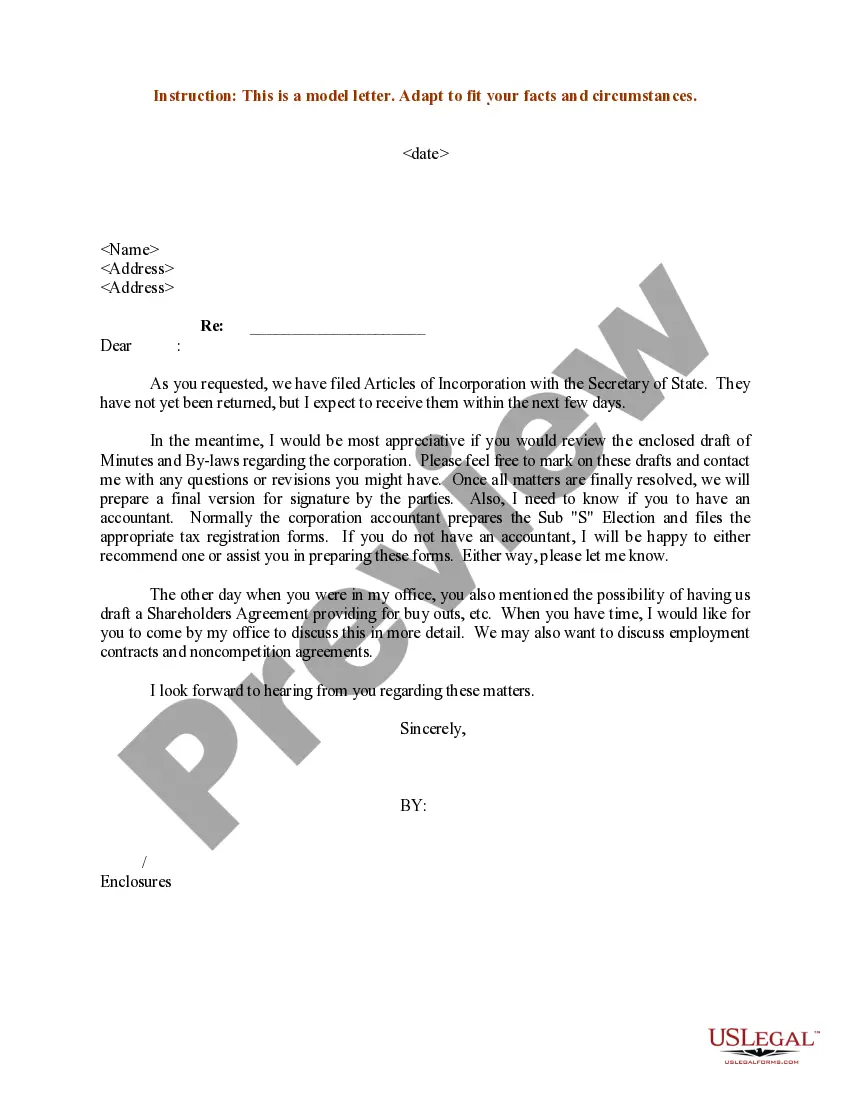
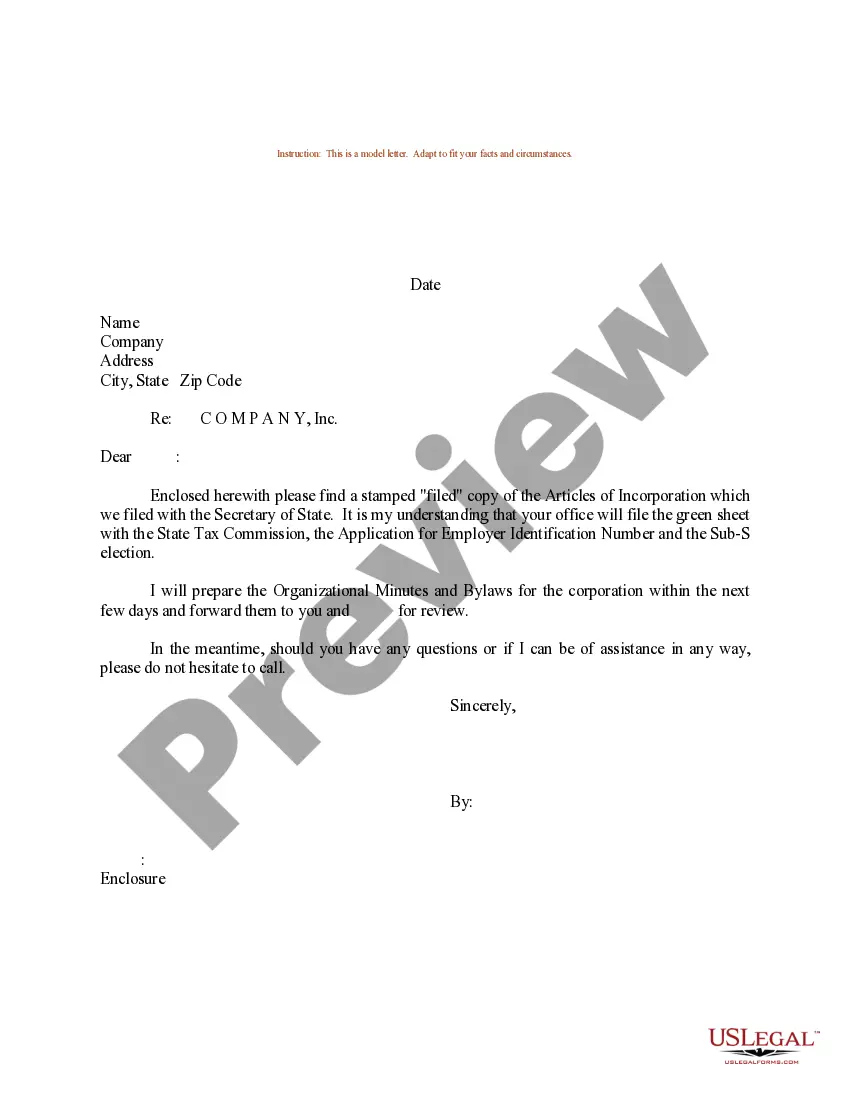
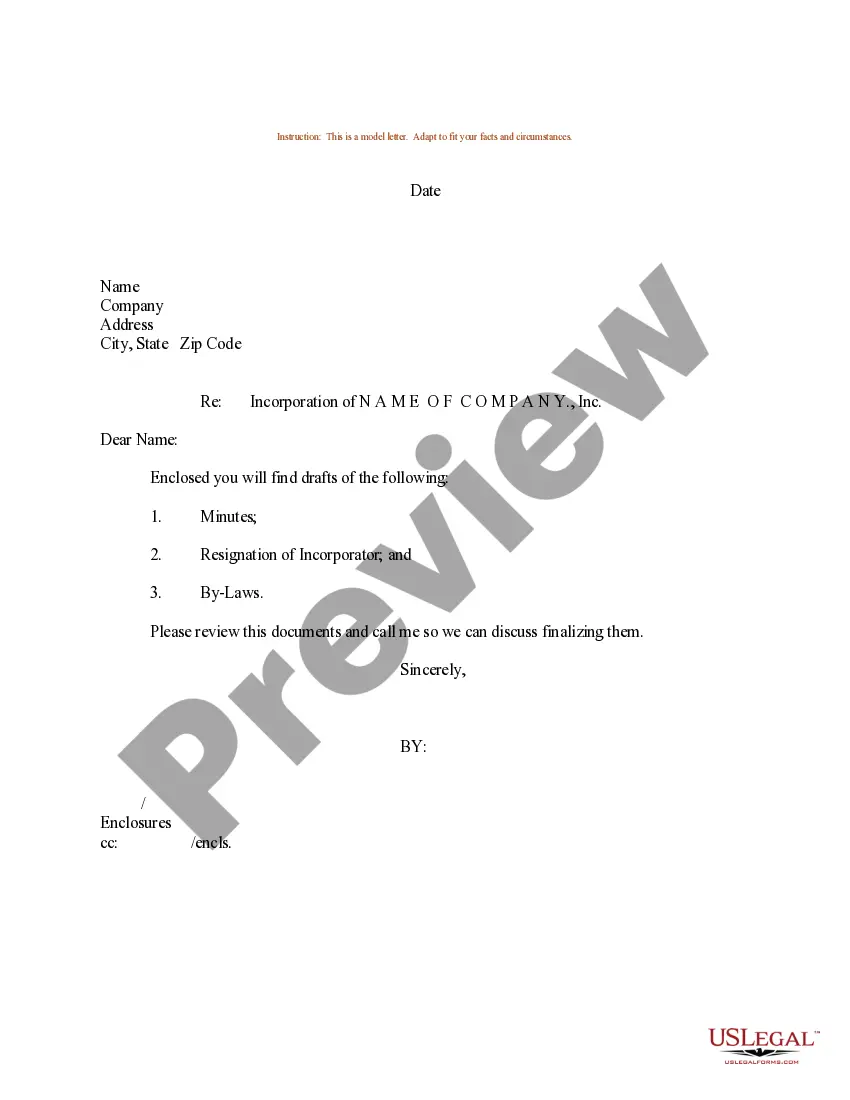
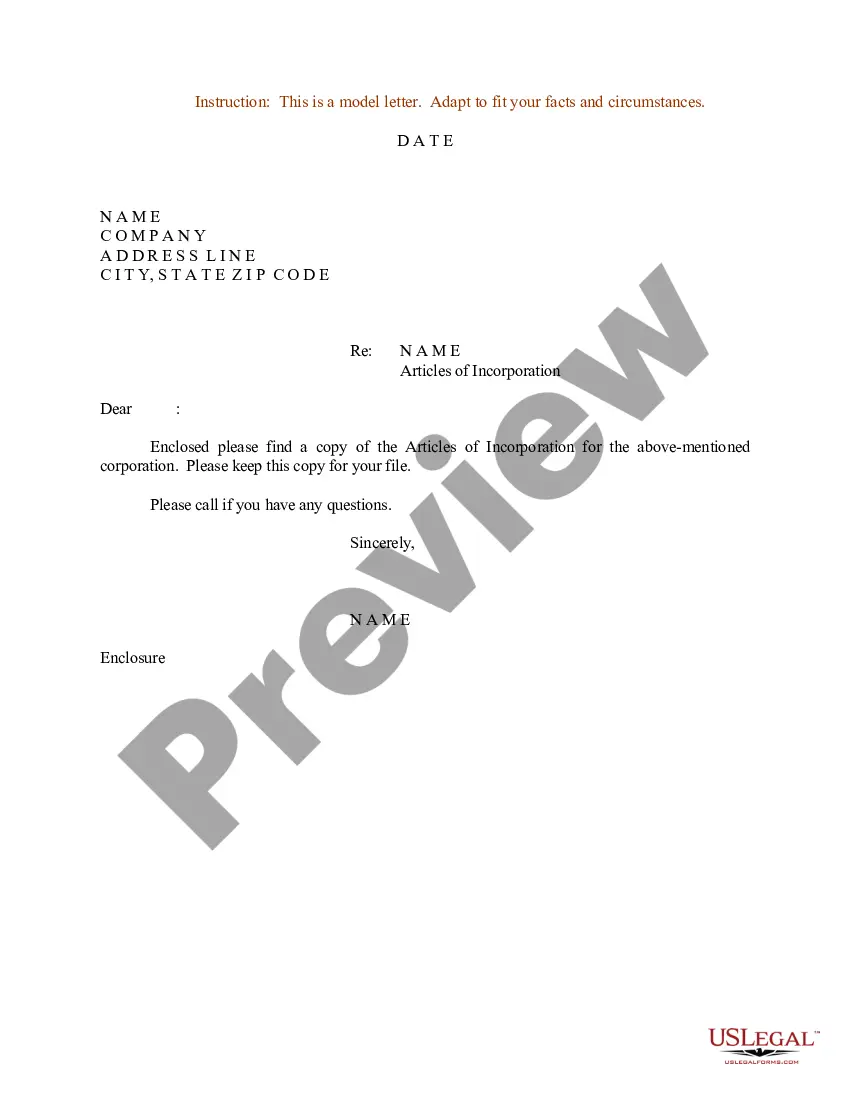
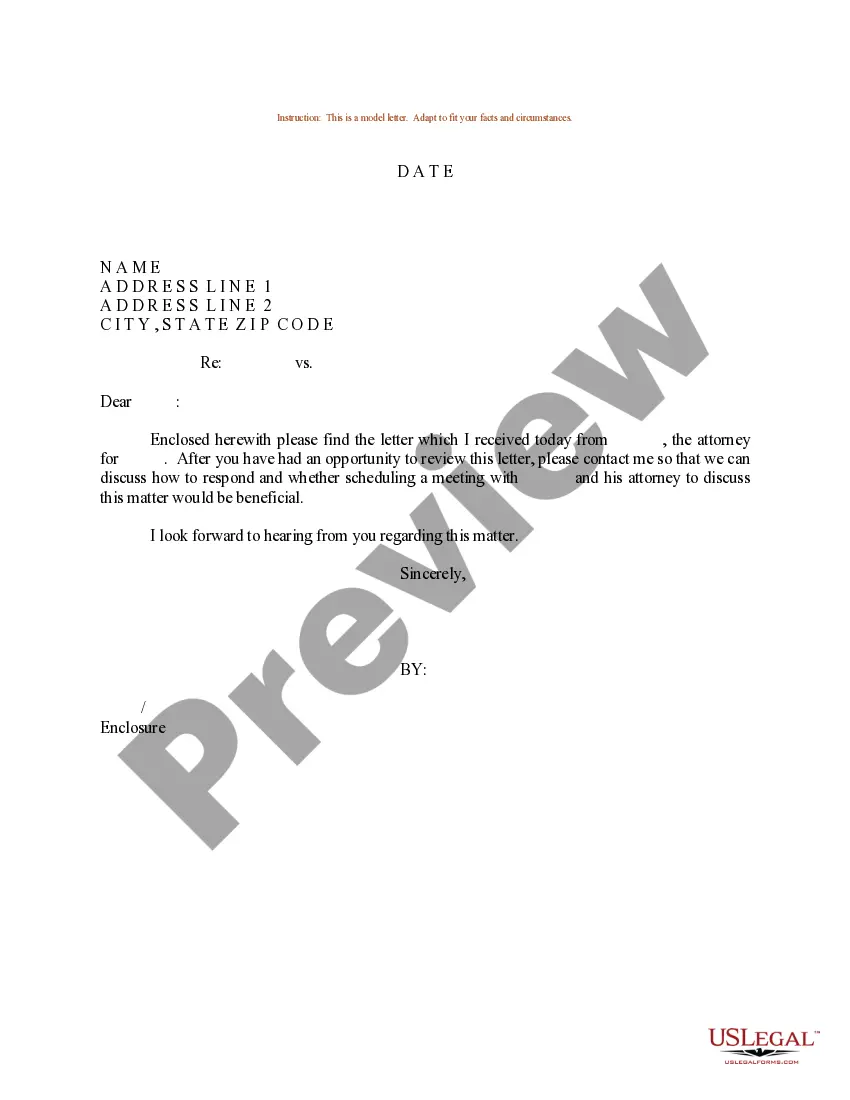
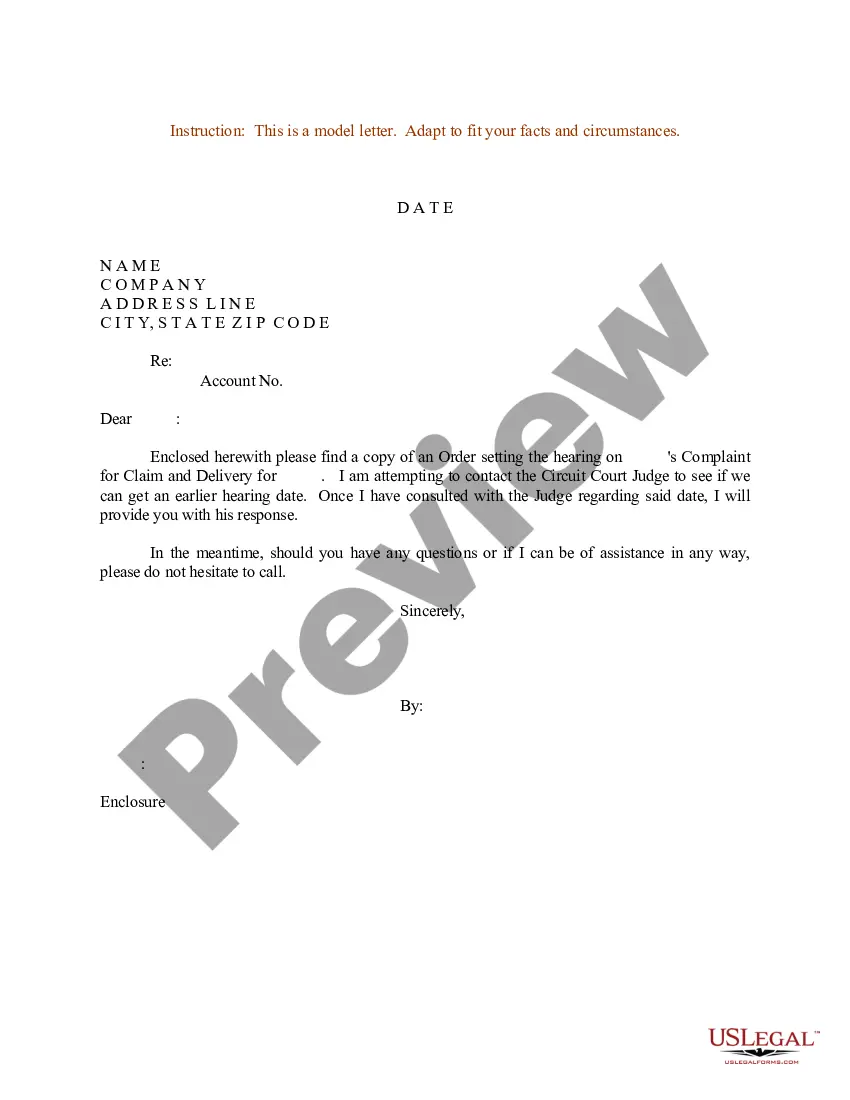
The Sample Letter Notifying Client of Incorporation Status is a communication template intended for businesses to inform clients about the progress of their incorporation process. This form outlines pertinent details regarding the incorporation status and includes reminders for the client about necessary documents and upcoming tasks. Unlike generic correspondence, this letter is specifically tailored for legal and corporate contexts, ensuring clarity and professionalism.
Key components of this form
- Client notification regarding incorporation status
- Request for feedback on draft Minutes and By-laws
- Inquiry about the client's accountant for tax purposes
- Proposal for a meeting to discuss additional legal needs
- Closing remarks expressing anticipation for the client's response
Situations where this form applies
This form is useful when you need to update a client on the status of their incorporation. Use it to keep clients informed about important legal documents, request their input, or discuss additional legal services required for their business. It is especially relevant after initial meetings about incorporating a business entity, such as a corporation.
Who this form is for
- Corporate attorneys managing client incorporations
- Business advisors guiding clients through the incorporation process
- Clients who have recently initiated incorporation proceedings and need updates
- New business owners seeking clarity on their incorporation status
Completing this form step by step
- Begin with the date and the recipient's contact information.
- Clearly state the purpose of the letter concerning the incorporation status.
- Include an invitation for the client to review enclosed drafts, such as Minutes and By-laws.
- Ask specific questions regarding the client's accountant and their tax registration requirements.
- Propose a meeting to discuss any additional agreements or contracts needed.
- Conclude the letter with a professional closing and signature.
Does this form need to be notarized?
In most cases, this form does not require notarization. However, some jurisdictions or signing circumstances might. US Legal Forms offers online notarization powered by Notarize, accessible 24/7 for a quick, remote process.
Get your form ready online
Our built-in tools help you complete, sign, share, and store your documents in one place.
Make edits, fill in missing information, and update formatting in US Legal Forms—just like you would in MS Word.
Download a copy, print it, send it by email, or mail it via USPS—whatever works best for your next step.
Sign and collect signatures with our SignNow integration. Send to multiple recipients, set reminders, and more. Go Premium to unlock E-Sign.
If this form requires notarization, complete it online through a secure video call—no need to meet a notary in person or wait for an appointment.
We protect your documents and personal data by following strict security and privacy standards.

Make edits, fill in missing information, and update formatting in US Legal Forms—just like you would in MS Word.

Download a copy, print it, send it by email, or mail it via USPS—whatever works best for your next step.

Sign and collect signatures with our SignNow integration. Send to multiple recipients, set reminders, and more. Go Premium to unlock E-Sign.

If this form requires notarization, complete it online through a secure video call—no need to meet a notary in person or wait for an appointment.

We protect your documents and personal data by following strict security and privacy standards.
Common mistakes
- Failing to customize the form for specific client details, such as names and contact information.
- Neglecting to include all necessary enclosures when sending the letter.
- Omitting important follow-up questions that could delay the process.
- Using overly complex language that may confuse the client.
Why complete this form online
- Convenient access to tailored content that saves time in drafting legal correspondence.
- Easy editability to suit specific client situations and preferences.
- Reliability in providing legally sound language drafted by licensed attorneys.
Legal use & context
- This letter serves as an official record of communication between the attorney and the client.
- It helps establish clear expectations regarding the incorporation timeline and the client's responsibilities.
- Failure to provide adequate updates may affect client satisfaction and business relationships.
Looking for another form?

Form popularity
FAQ
Write Your Letter Step-by-Step. State the issue and your stance. State the reason for your opinion and why the reader should agree with it. If you haven't stated it yet, let the reader know what action you hope he or she will take. Close with a final call to action.
Write the date and your recipient's name, company, and address. Choose a professional greeting, like Dear,. Craft a compelling introduction. State your intent in the letter's body text. End your letter with a strong call-to-action. Choose a professional closing, like Sincerely,.
Clear. Use simple, plain English. No jargon. Credible. Make sure there are no typos and all the provided information is correct. Answered. Answer all the questions that have been asked (and any that may come after). Tone. Using the right tone, that fits the reader (or customer) and the reason you're contacting them.
I wish to tell you that2026 I am pleased to inform you that2026 You might also find it useful to know that2026 I wish to provide you with2026 It might be interesting for you to know that2026
1Address of the sender.2Date of writing a letter.3Address of receiver.4Salutation/Greeting.5Body of the letter.6Conclusion.7Signature of the sender.
Begin with a greeting. Thank the recipient. State your purpose. Add your closing remarks. End with a closing.
Respond specifically to the issues brought up by the customer. Provide a specific apology that acknowledges any mistakes on your end. State exactly what you intend to do (or have already done) to make it right. Propose how you will improve the customer's experience in the future.
Start with Dear and the person's title and name. Say what the problem is first. Then, give more details. Make it short and clear. Just include the most important information. Say Thank you for your understanding at the end. It shows that you hope the reader will understand your problems.
Write down what you are complaining about exactly. Include the necessary supporting factors such as your account of what happened, verbal exchanges, and even documents and records if applicable. Express what action you want taken in relation to the complaint that you have made. End in a positive and genial tone.