Complaint in Federal Court for Wrongful Disclosure and Use of Trade Secrets For Damages and Injunctive Relief
About this form
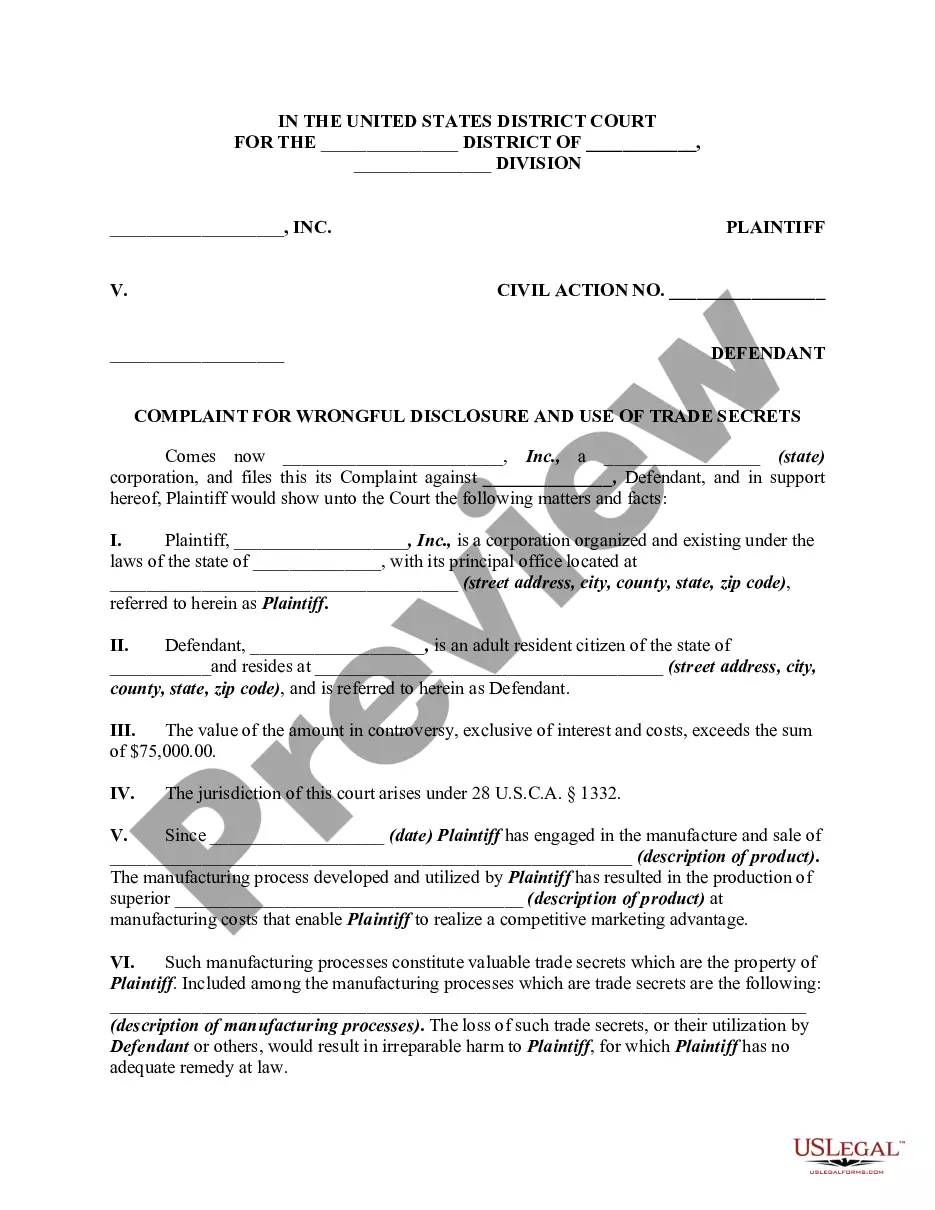
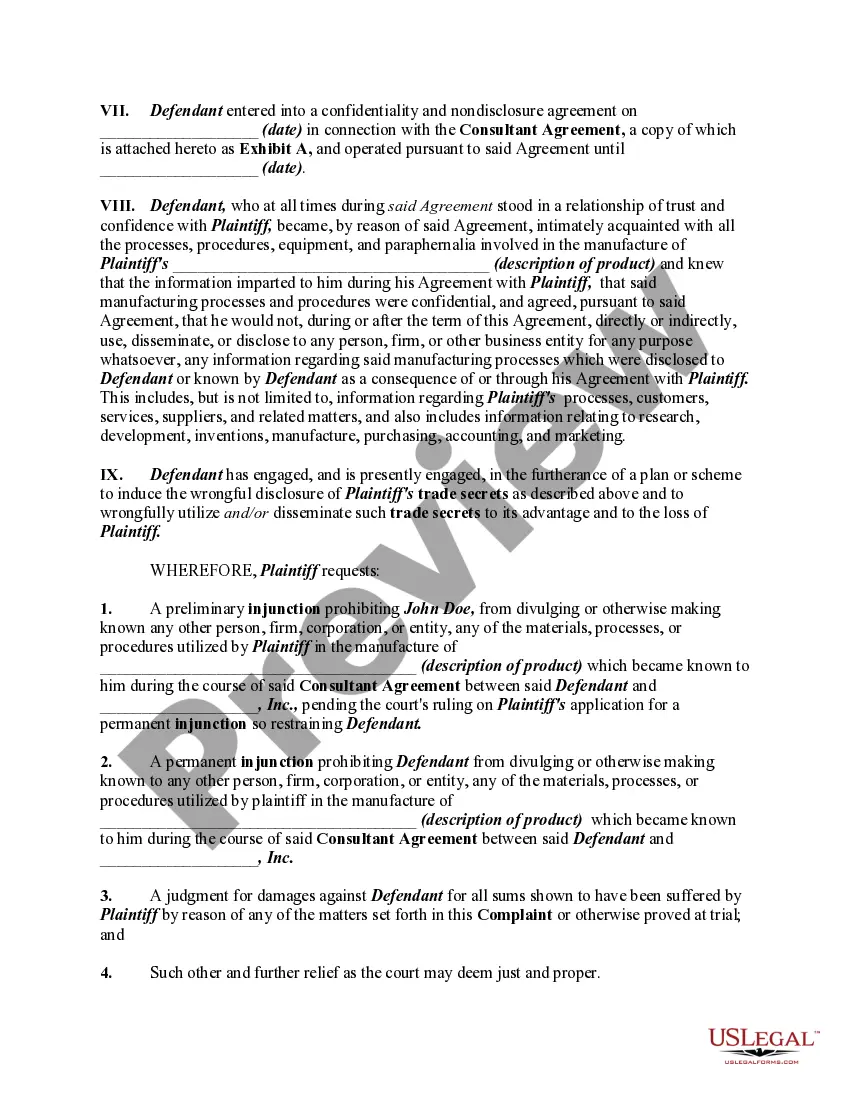
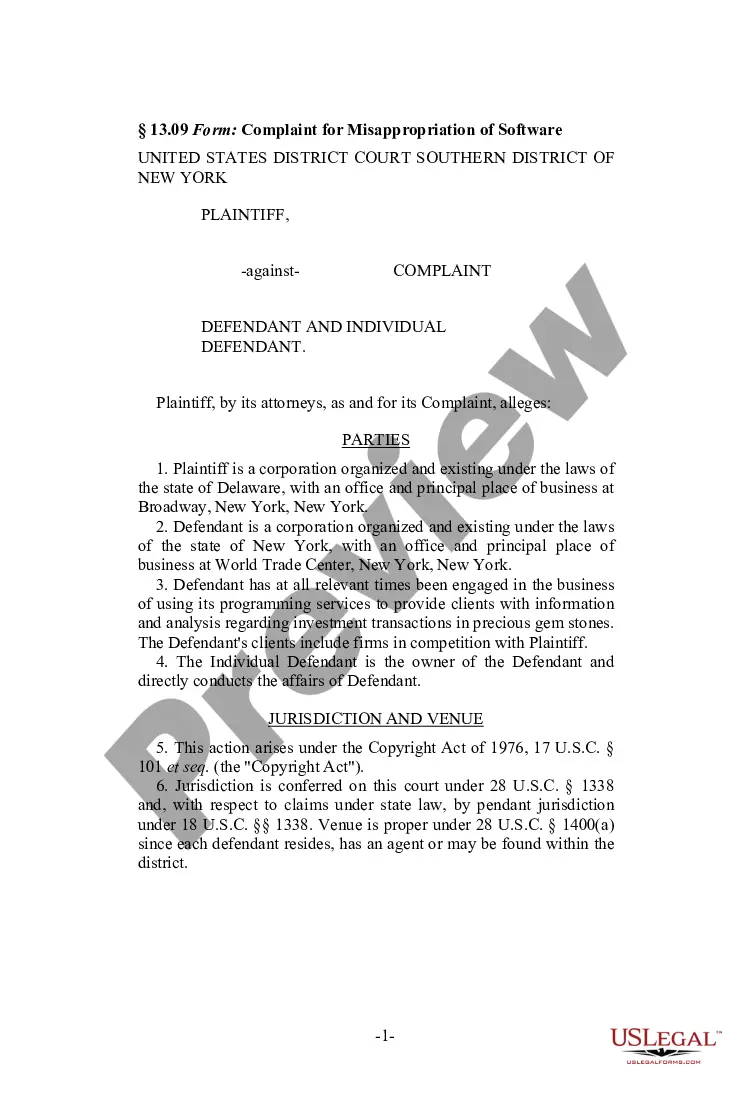
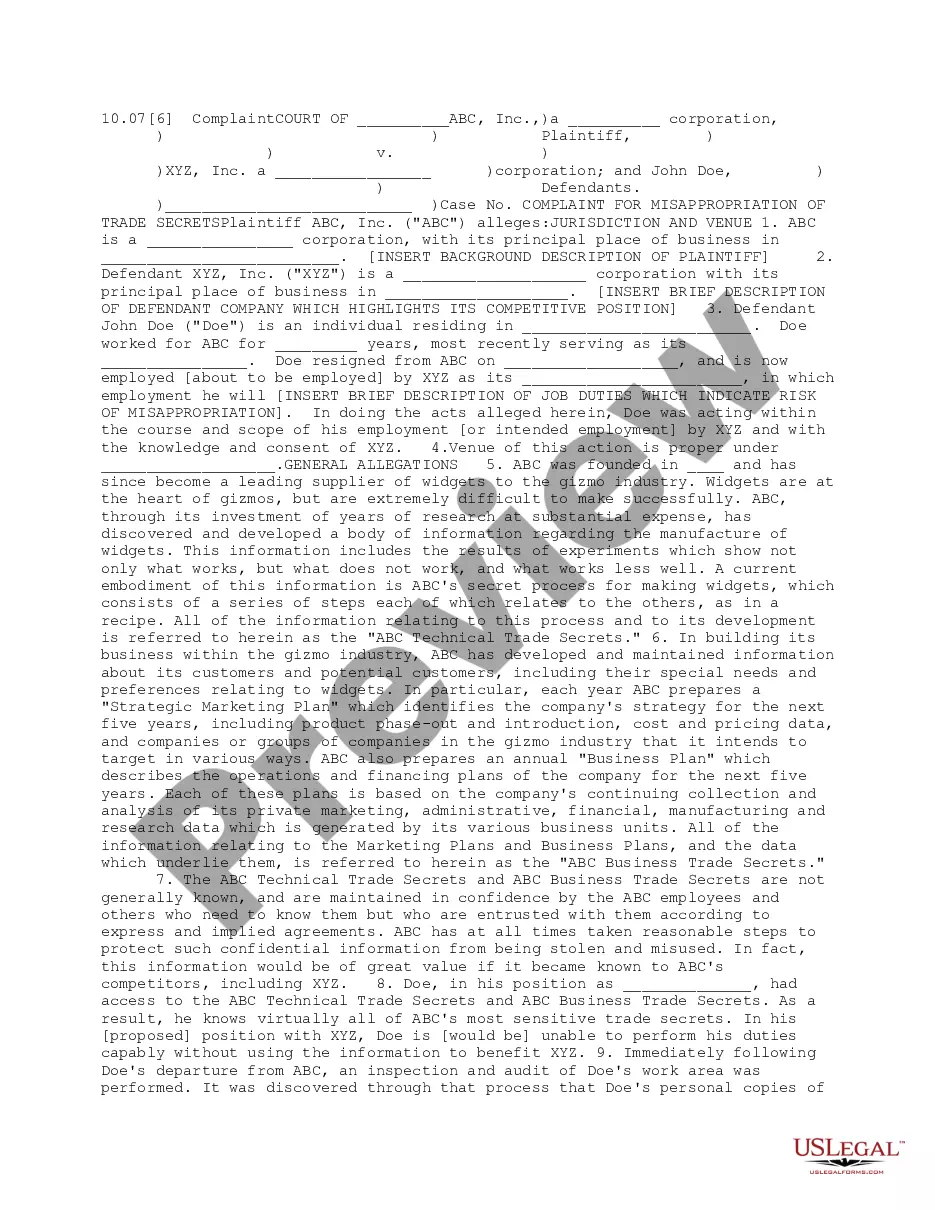
The Complaint in Federal Court for Wrongful Disclosure and Use of Trade Secrets is a legal document used to initiate a lawsuit against an individual or entity for misusing confidential business information. This form specifically addresses cases involving the unauthorized disclosure and use of trade secrets and seeks both monetary damages and injunctive relief. It serves a distinct purpose compared to other types of legal complaints, as it focuses specifically on protecting proprietary information and competitive advantage in a business context.
Form components explained
- Identification of the plaintiff and defendant, including addresses.
- Statement of jurisdiction based on the amount in controversy and applicable laws.
- Description of the plaintiff's products and the confidential manufacturing processes that are considered trade secrets.
- Allegations outlining the defendant's breach of confidentiality and nondisclosure agreements.
- Requests for remedies, including preliminary and permanent injunctions, as well as monetary damages.


Situations where this form applies
This form should be used when a business has suffered from the wrongful disclosure or use of its trade secrets by a former consultant or employee. It is applicable in situations where the disclosed information provides a competitive advantage and its misuse could lead to significant financial loss or reputational damage. Common scenarios include a consultant sharing proprietary manufacturing processes after their agreement has ended or an employee utilizing confidential client lists for personal gain.
Who can use this document
- Business owners who believe their trade secrets have been unlawfully disclosed or used.
- Corporate legal teams addressing breaches of confidentiality agreements.
- Consultants or independent contractors with access to proprietary information who are seeking legal recourse.
- Attorneys representing clients in intellectual property disputes related to trade secrets.
Steps to complete this form
- Identify the plaintiff and defendant by entering their full names and addresses in the designated fields.
- Specify the federal district court where the complaint will be filed.
- Clearly state the jurisdiction by providing the relevant details about the amount in controversy.
- Describe the trade secrets involved, including what makes them valuable and confidential.
- Detail the defendant's actions that led to the alleged wrongful disclosure.
- Include a list of specific requests for legal remedies, including injunctions and damages.
Is notarization required?
This form usually doesn’t need to be notarized. However, local laws or specific transactions may require it. Our online notarization service, powered by Notarize, lets you complete it remotely through a secure video session, available 24/7.
Get your form ready online
Our built-in tools help you complete, sign, share, and store your documents in one place.
Make edits, fill in missing information, and update formatting in US Legal Forms—just like you would in MS Word.
Download a copy, print it, send it by email, or mail it via USPS—whatever works best for your next step.
Sign and collect signatures with our SignNow integration. Send to multiple recipients, set reminders, and more. Go Premium to unlock E-Sign.
If this form requires notarization, complete it online through a secure video call—no need to meet a notary in person or wait for an appointment.
We protect your documents and personal data by following strict security and privacy standards.

Make edits, fill in missing information, and update formatting in US Legal Forms—just like you would in MS Word.

Download a copy, print it, send it by email, or mail it via USPS—whatever works best for your next step.

Sign and collect signatures with our SignNow integration. Send to multiple recipients, set reminders, and more. Go Premium to unlock E-Sign.

If this form requires notarization, complete it online through a secure video call—no need to meet a notary in person or wait for an appointment.

We protect your documents and personal data by following strict security and privacy standards.
Common mistakes
- Failing to provide adequate detail about the trade secrets in question.
- Not including all necessary parties involved in the lawsuit.
- Omitting dates relevant to the confidentiality agreement and actions taken by the defendant.
- Submitting the form without proper jurisdictional information.
Why complete this form online
- Convenience of filling out the form from anywhere, at any time.
- Editable templates allow for easy updates and customization to suit specific legal needs.
- Access to forms drafted by licensed attorneys ensures accuracy and comprehensiveness.
- Reduced costs compared to hiring a lawyer for initial draft processes.
Looking for another form?
Form popularity
FAQ
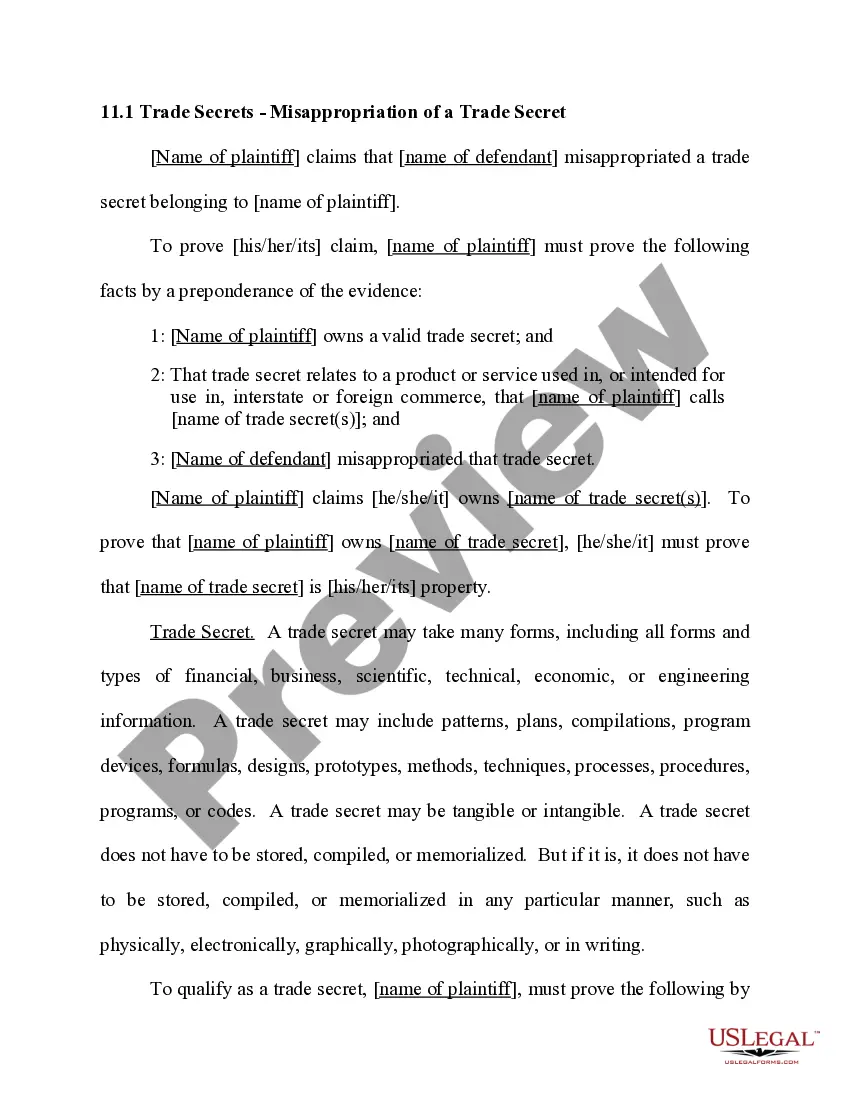
Trade Secrets. Under the Uniform Trade Secrets Act (UTSA), a trade secret is defined as information that derives independent economic value because it is not generally known or readily ascertainable, and it is the subject of efforts to maintain secrecy.
Under federal and state law, owners of trade secrets may sue to protect the trade secret from misappropriation. Money damages are available as are various levels of injunctive relief.Legally, trade secrets are also protected under state and federal tort law.
For instance, in order to get a conviction for misappropriation of funds in federal court, the government must prove the following elements of the crime beyond a reasonable doubt: You had access to the funds, but not ownership of them; You knowingly and intentionally took the money or intended to take the money; and.
"Misappropriation " means: (i) acquisition of a trade secret of another by a person who knows or has reason to know that the trade secret was acquired by improper means; or (ii) disclosure or use of a trade secret of another without express or implied consent by a person who (A) used improper means to acquire knowledge
To be legally considered a trade secret in the United States, a company must make a reasonable effort in concealing the information from the public; the secret must intrinsically have economic value, and the trade secret must contain information.Unlike a patent, a trade secret is not publicly known.
Notably, California has a statutory provision, albeit buried in its code of civil procedure, that requires a plaintiff to disclose its trade secrets with reasonable particularity before it can obtain discovery from defendants.
Some factors to be considered in determining whether given information is one's trade secret are: (1) the extent to which the information is known outside of his business; (2) the extent to which it is known by employees and others involved in his business; (3) the extent of measures taken by him to guard the secrecy
The plaintiff in a trade-secret case lawsuit must prove three facts: (1) it has some valuable business information that it has kept secret; (2) the information is not generally known; and (3) the defendant has used that secret. A defendant may attack each showing, but some attacks are better than others.