List of Causes of Action
What this document covers
The List of Causes of Action is a comprehensive document that outlines various legal claims that can be initiated against a tortfeasor. This form serves as a useful reference for individuals looking to understand the types of lawsuits they may pursue based on civil rights violations, personal injuries, and other legal grievances. Unlike general legal forms, this document specifically categorizes causes of action, making it easier for users to identify the appropriate legal paths for their situations.
Main sections of this form
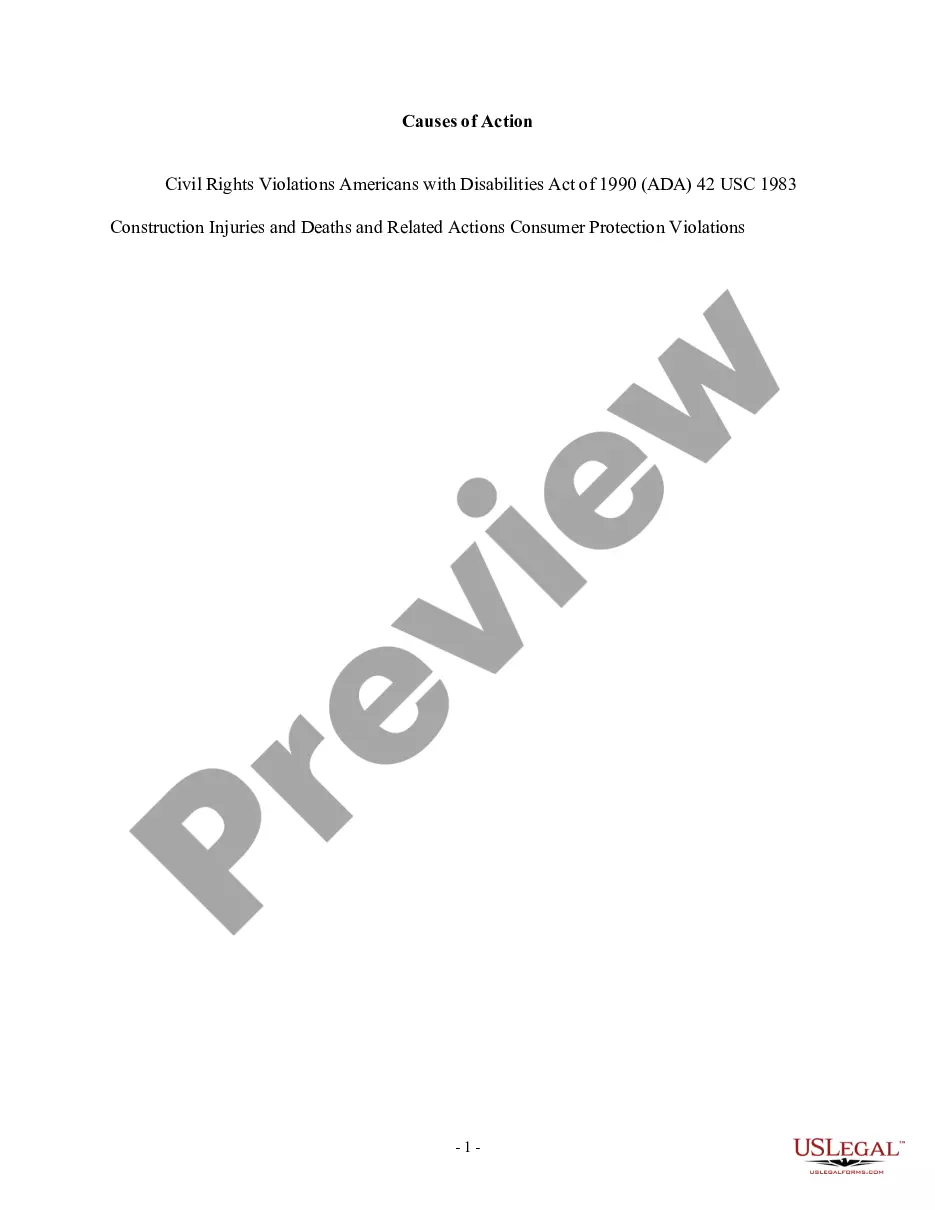
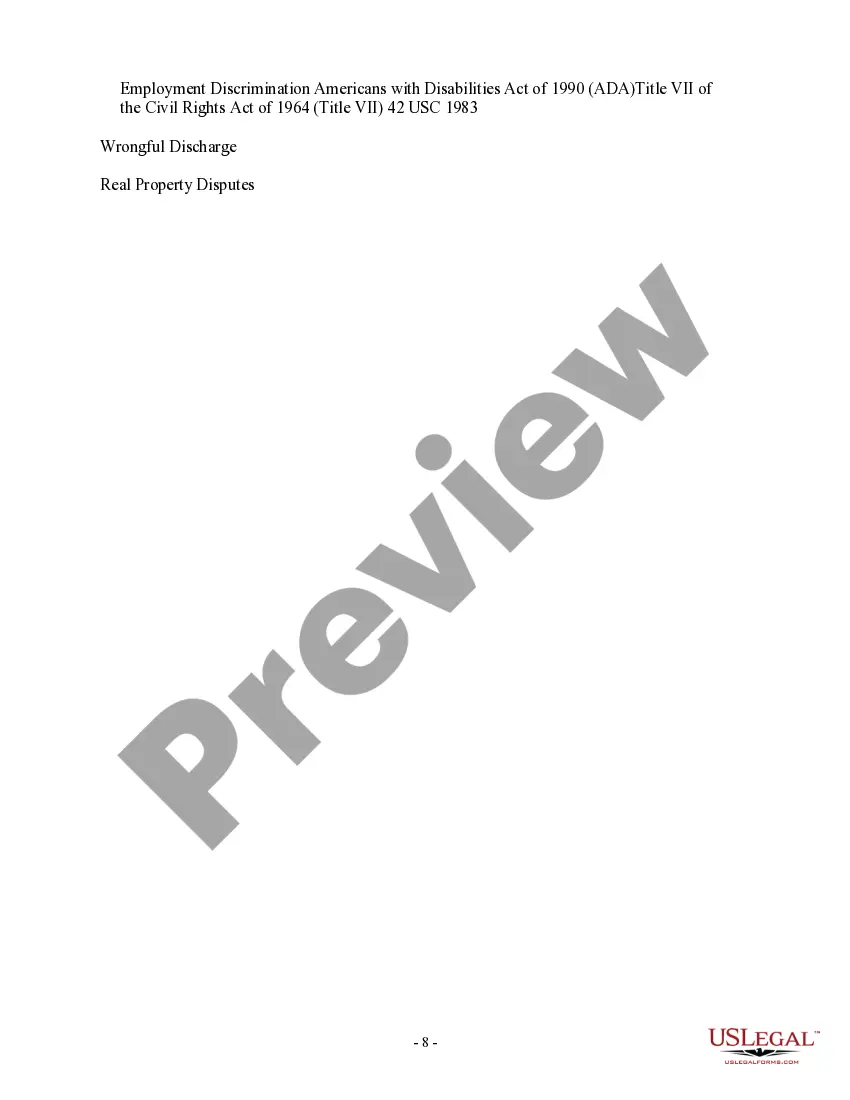
- Civil rights and discrimination claims, including violations of the Americans with Disabilities Act.
- Negligence claims related to vehicle accidents, construction injuries, and premises liability.
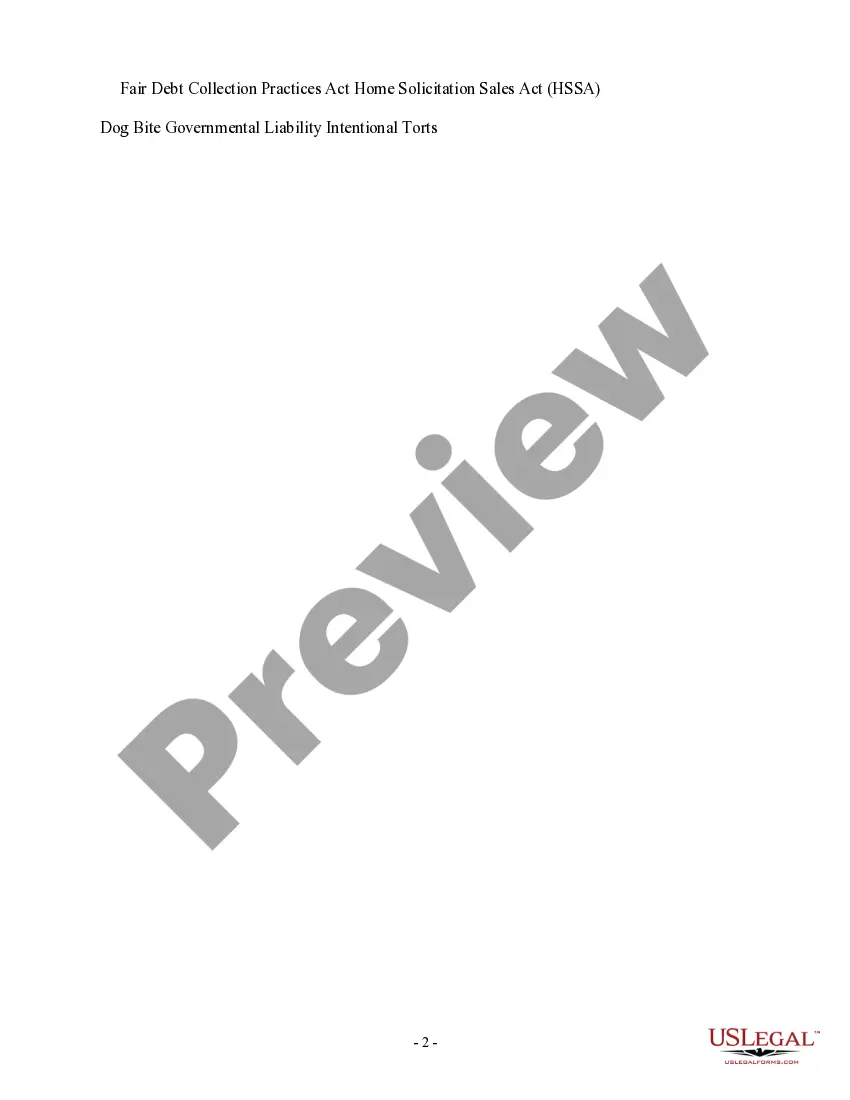
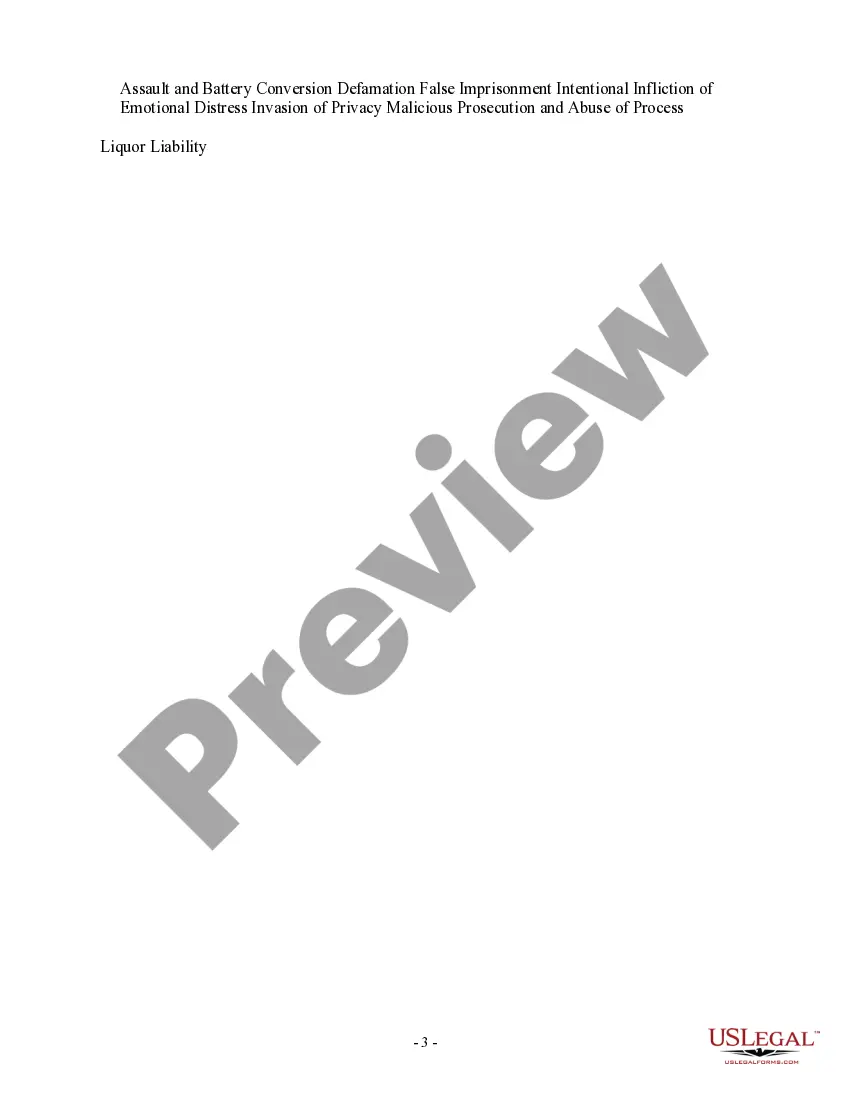
- Intentional torts, such as assault and battery, defamation, and false imprisonment.
- Business-related disputes involving breach of contract, fraud, and misappropriation of trade secrets.
- Claims related to product liability and professional malpractice across various professions.
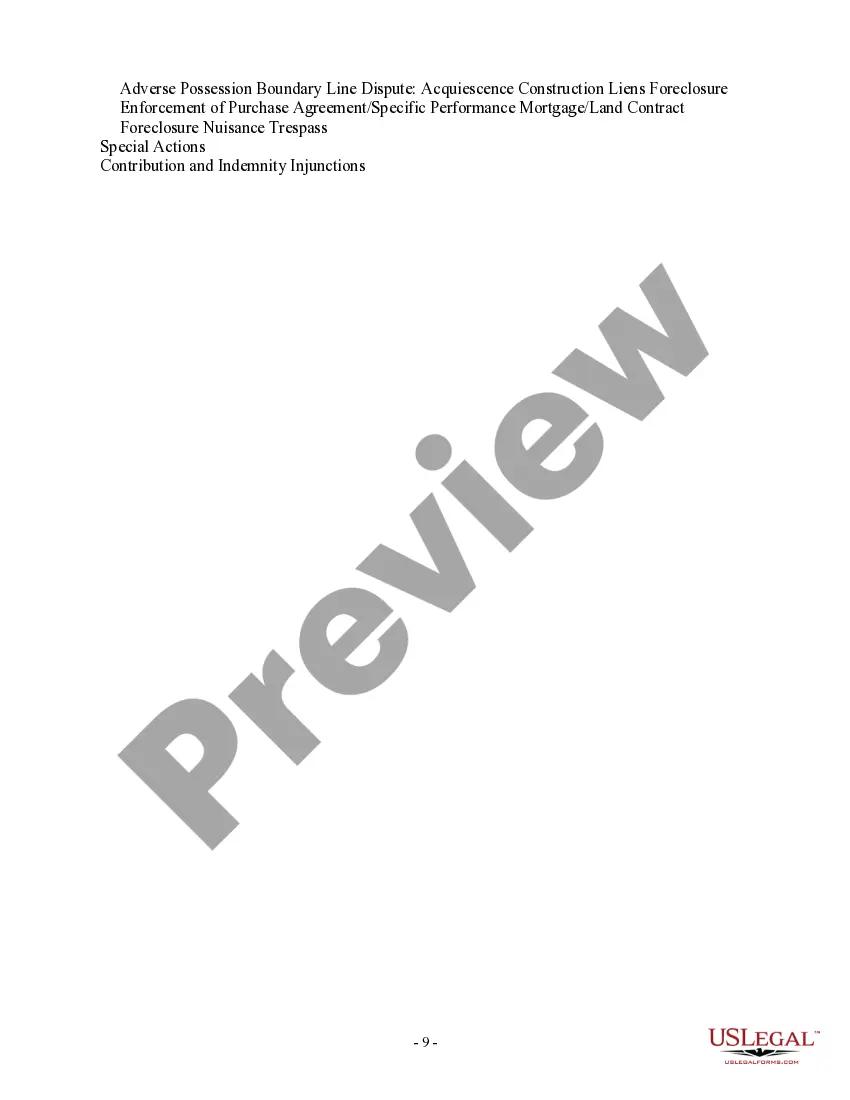
- Real property disputes, including nuisance, trespass, and foreclosure actions.
Situations where this form applies
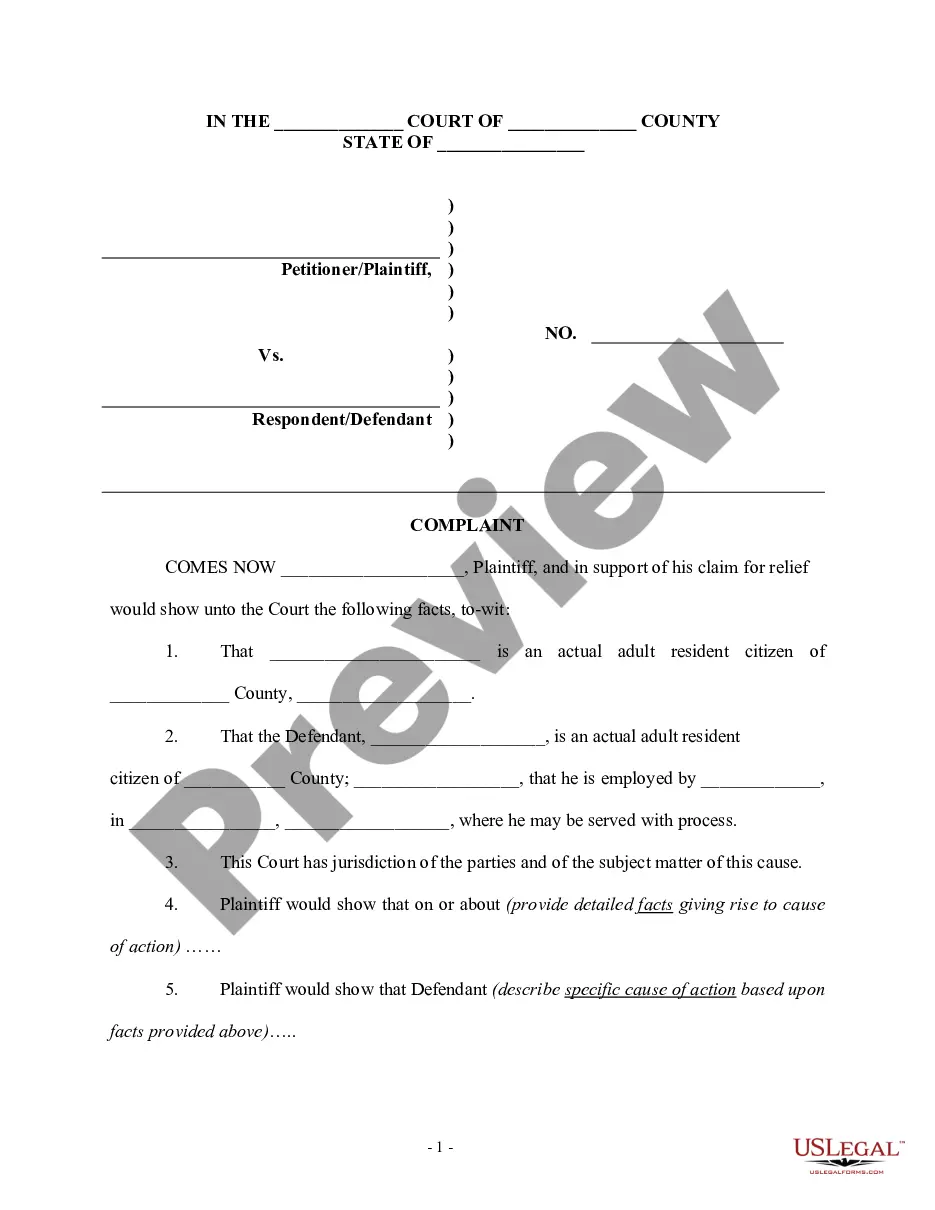
This form should be utilized when you need to identify and articulate the specific legal claims relevant to your situation. It is particularly useful in scenarios involving personal injuries, business disputes, civil rights violations, or real estate conflicts. Additionally, this form can help in drafting complaints and initiating lawsuits by providing a clear outline of potential causes of action.
Who needs this form
- Individuals considering legal action against another party for damages or legal violations.
- Attorneys seeking structured outlines for client cases.
- Business owners involved in disputes requiring formal legal claims.
- Victims of civil rights violations or personal injuries looking to assert their legal rights.
Steps to complete this form
- Identify the type of claim you wish to pursue from the list provided.
- Gather all relevant information and evidence related to your claim.
- Clearly articulate the facts of your case and how they relate to the selected cause of action.
- Complete any additional relevant sections as required by local law or court rules.
- Review the completed form for accuracy and clarity before submission.
Notarization requirements for this form
In most cases, this form does not require notarization. However, some jurisdictions or signing circumstances might. US Legal Forms offers online notarization powered by Notarize, accessible 24/7 for a quick, remote process.
Get your form ready online
Our built-in tools help you complete, sign, share, and store your documents in one place.
Make edits, fill in missing information, and update formatting in US Legal Forms—just like you would in MS Word.
Download a copy, print it, send it by email, or mail it via USPS—whatever works best for your next step.
Sign and collect signatures with our SignNow integration. Send to multiple recipients, set reminders, and more. Go Premium to unlock E-Sign.
If this form requires notarization, complete it online through a secure video call—no need to meet a notary in person or wait for an appointment.
We protect your documents and personal data by following strict security and privacy standards.

Make edits, fill in missing information, and update formatting in US Legal Forms—just like you would in MS Word.

Download a copy, print it, send it by email, or mail it via USPS—whatever works best for your next step.

Sign and collect signatures with our SignNow integration. Send to multiple recipients, set reminders, and more. Go Premium to unlock E-Sign.

If this form requires notarization, complete it online through a secure video call—no need to meet a notary in person or wait for an appointment.

We protect your documents and personal data by following strict security and privacy standards.
Typical mistakes to avoid
- Failing to select the proper cause of action that aligns with the situation.
- Neglecting to provide adequate evidence or details to support claims.
- Using legal jargon that may confuse rather than clarify the claim.
- Not checking for jurisdictional requirements that may affect the claims process.
Why use this form online
- Convenience of downloading and filling out forms from anywhere at any time.
- Editability allows for modifications as new information arises.
- Access to forms drafted by licensed attorneys ensures accuracy and relevance.
- Quick retrieval of necessary legal information without needing to consult extensive legal texts.
Looking for another form?
Form popularity
FAQ
In order to establish negligence, you must be able to prove four elements: a duty, a breach of that duty, causation and damages.
N. the basis of a lawsuit founded on legal grounds and alleged facts which, if proved, would constitute all the "elements" required by statute.In many lawsuits there are several causes of action stated separately, such as fraud, breach of contract, and debt, or negligence and intentional destruction of property.
Some of the most commonly cited causes of action include: Breach of contract. Fraud. Torts (battery, assault, negligence, intentional or negligent infliction of emotional distress, slander, invasion of privacy)
Just taking from the context you have given, it sounds like a claim is a cause of action that has already been filed in a court. A cause of action would just be something that the statute of limitations is running on and has not been filed yet. Cause of action is used in Fed Court.
The fact or combination of facts that gives a person the right to seek judicial redress or relief against another. Also, the legal theory forming the basis of a lawsuit. The cause of action is the heart of the complaint, which is the Pleading that initiates a lawsuit.
Examples: to have a cause of action for breach of contract there must have been an offer of acceptance; for a tort (civil wrong) there must have been negligence or intentional wrongdoing and failure to perform; for libel there must have been an untruth published which is particularly harmful; and in all cases there
The term Cause of Action refers to a set of facts or allegations that make up the grounds for filing a lawsuit.To pursue a cause of action, a plaintiff pleads or alleges facts in a plaint, the pleading that initiates a lawsuit.
Federal causes of action relate to a party's right to take legal action due to a violation of its legal rights. This is different from the general term cause of action. In federal litigation, a party only has cause of action if it has a recognized statutory or constitutional right to sue for a violation.