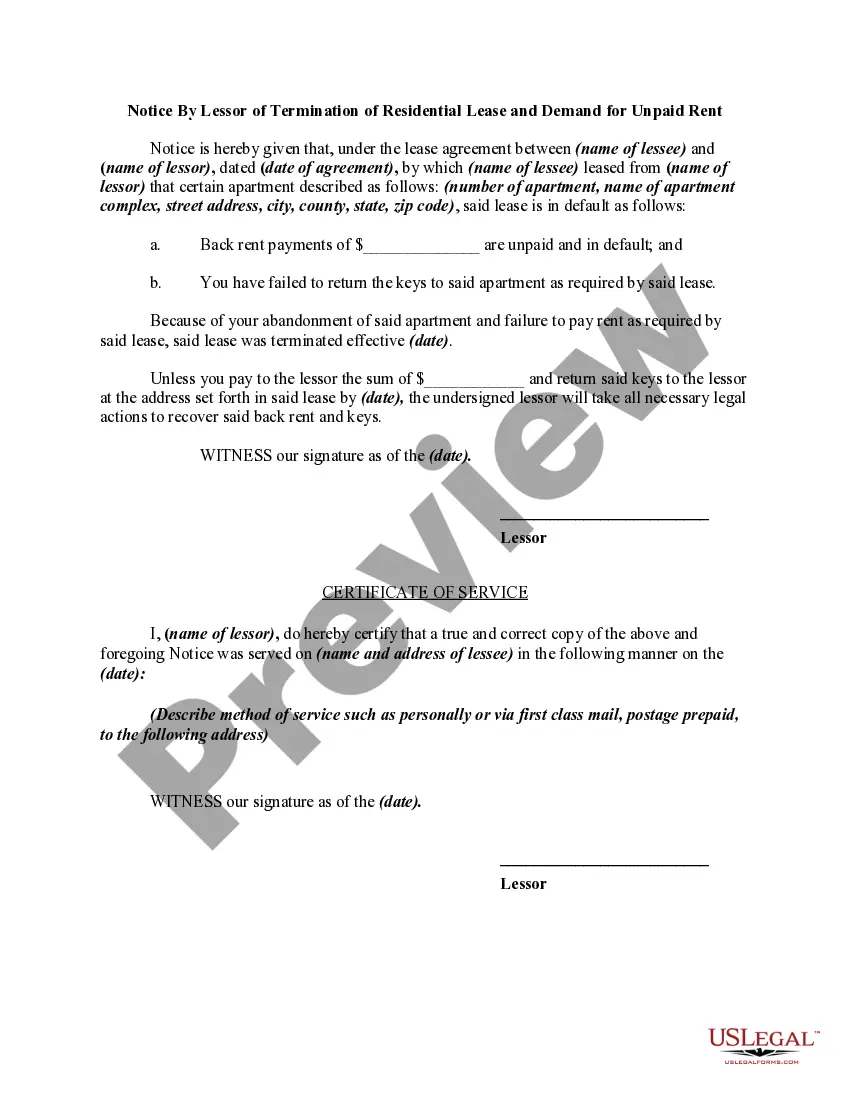
Notice by Lessor of Termination of Residential Lease and Demand for Unpaid Rent
Understanding this form
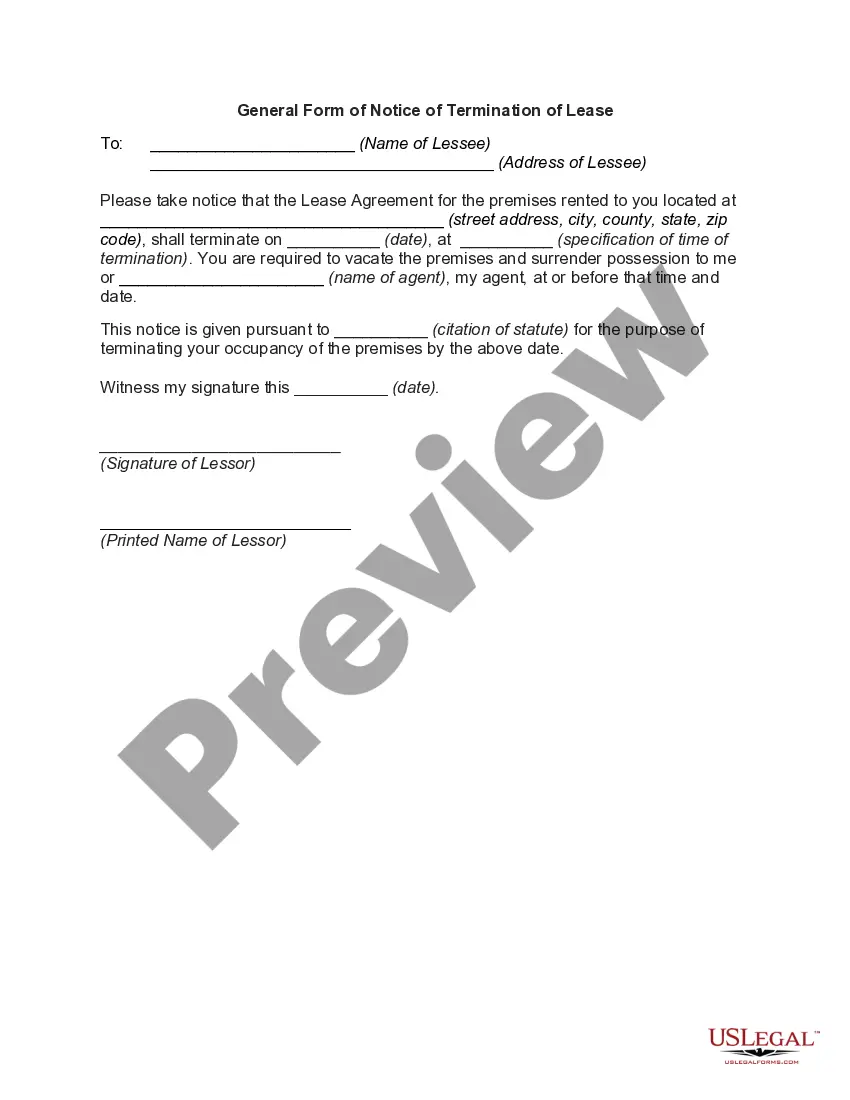
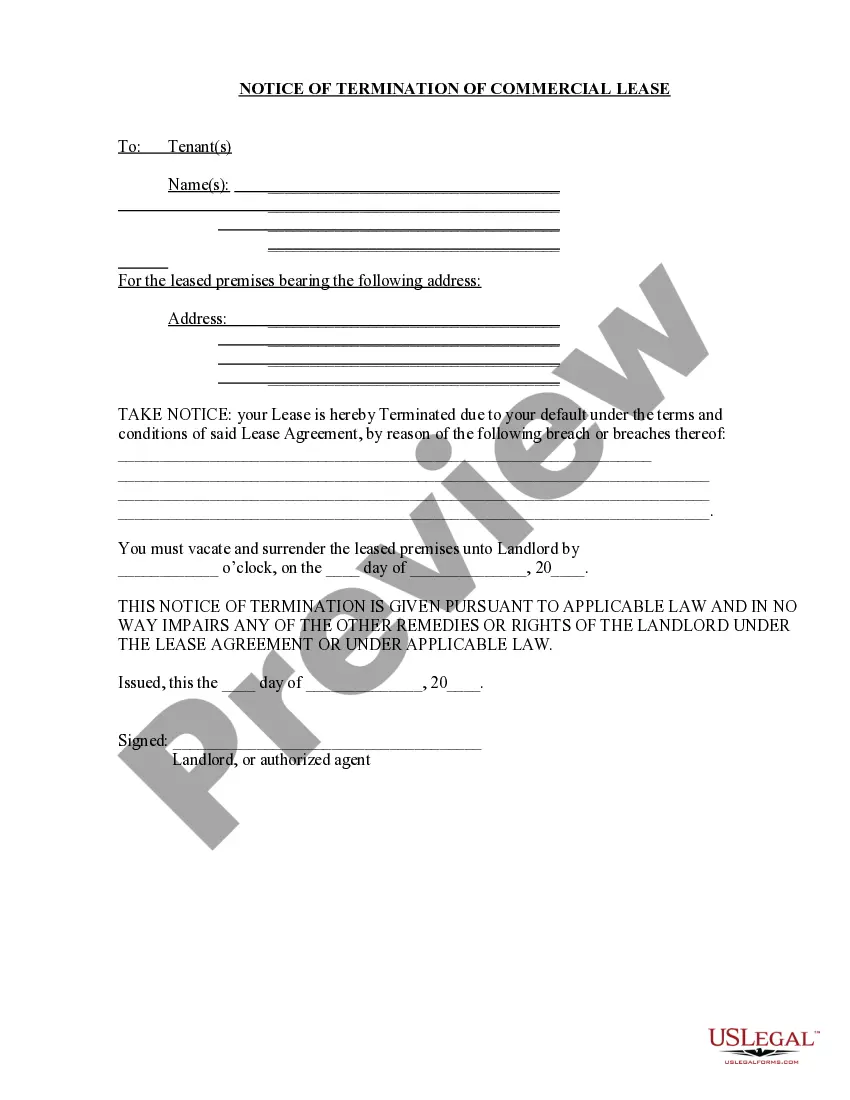
The Notice by Lessor of Termination of Residential Lease and Demand for Unpaid Rent is a legal document used by landlords to inform tenants that their lease has been terminated due to defaults, such as non-payment of rent. This form outlines the reasons for termination, specifies unpaid amounts, and sets a deadline for the tenant to remedy the situation. It serves as a formal notice, which is essential for further legal actions if necessary, differentiating it from less formal communication methods.
Key components of this form
- The names and addresses of both the lessor and lessee.
- The date of the original lease agreement.
- A description of the leased property, including its address.
- A clear statement of the defaults, including unpaid rent and other lease violations.
- The effective date of lease termination.
- A demand for payment and returning of keys by a specific date.
- A certificate of service confirming how the notice was delivered to the tenant.

Situations where this form applies
This form should be used when a tenant has failed to fulfill their obligations under a residential lease, particularly in cases of unpaid rent or failure to vacate the property. It is crucial for landlords to formally document these infractions, especially when they intend to take legal action to recover owed amounts.
Intended users of this form
- Landlords or lessors who have tenants that are in default of rent payments.
- Property management companies acting on behalf of landlords.
- Individuals leasing residential property to tenants.
Instructions for completing this form
- Identify the parties involved by entering the names and addresses of both the lessor and lessee.
- Specify the date of the original lease agreement.
- Describe the rental property, including the address and apartment details.
- Clearly state the reasons for the lease termination, including any unpaid amounts and specific violations.
- Enter the effective date of termination and the deadline for payment and key return.
- Sign the document and ensure it is properly served to the tenant.
Is notarization required?
This form does not typically require notarization to be legally valid. However, some jurisdictions or document types may still require it. US Legal Forms provides secure online notarization powered by Notarize, available 24/7 for added convenience.
Get your form ready online
Our built-in tools help you complete, sign, share, and store your documents in one place.
Make edits, fill in missing information, and update formatting in US Legal Forms—just like you would in MS Word.
Download a copy, print it, send it by email, or mail it via USPS—whatever works best for your next step.
Sign and collect signatures with our SignNow integration. Send to multiple recipients, set reminders, and more. Go Premium to unlock E-Sign.
If this form requires notarization, complete it online through a secure video call—no need to meet a notary in person or wait for an appointment.
We protect your documents and personal data by following strict security and privacy standards.

Make edits, fill in missing information, and update formatting in US Legal Forms—just like you would in MS Word.

Download a copy, print it, send it by email, or mail it via USPS—whatever works best for your next step.

Sign and collect signatures with our SignNow integration. Send to multiple recipients, set reminders, and more. Go Premium to unlock E-Sign.

If this form requires notarization, complete it online through a secure video call—no need to meet a notary in person or wait for an appointment.

We protect your documents and personal data by following strict security and privacy standards.
Common mistakes to avoid
- Failing to correctly identify the parties involved, leading to confusion.
- Omitting key details of the default, which may weaken the case in future legal actions.
- Not specifying a clear deadline for resolution, making enforcement difficult.
- Incorrectly serving the notice, which can invalidate the process.
Why use this form online
- Easy to access and download from anywhere, saving time and effort.
- Editable templates allow landlords to customize the notice for their specific situation.
- Provides peace of mind knowing the form is drafted by licensed attorneys and compliant with legal standards.
Legal use & context
- This notice serves as a legal document to evidence the landlord's intent to terminate the lease.
- Proper completion and delivery of this form can protect landlords from potential legal disputes.
- Understanding the implications of lease termination can help tenants address issues proactively.
Key takeaways
- The notice is a crucial document for landlords dealing with tenant defaults.
- It outlines specific obligations and consequences for tenants.
- Understanding how to properly complete and serve this form can prevent legal issues.
Looking for another form?

Form popularity
FAQ
Dear your landlord or property manager's name, I am writing to inform you I will be vacating my rental unit on date you intend to vacate. This letter meets the 30-day notice requirement outlined in my lease agreement.
A landlord can serve a three-day notice on the tenant in one of three ways: by personal service, by substituted service, or by posting and mailing. The landlord, the landlord's agent, or anyone over 18 can serve a notice on a tenant.
Handing it to the tenant or landlord in person. handing it to somebody aged 16 or over at the tenant's or landlord's residential or business address. personally putting it in the tenant's or landlord's letterbox, in an envelope addressed to them.
Explain the Situation Tell your tenant in straightforward terms what the problem is, and explain that they cannot stay on the property any longer. Describe the Consequences Calmly explain that they will be evicted with necessary court orders if they remain on the property.
Dear (Name of landlord or manager), This letter constitutes my written (number of days' notice that you need to give based on your lease agreement)-day notice that I will be moving out of my apartment on (date), the end of my current lease. I am leaving because (new job, rent increase, etc.)
Give the landlord/agent a written termination notice and vacate move out and return the keys according to your notice, and/or. apply to the NSW Civil & Administrative Tribunal (NCAT) for a termination order.
Step 1: Mention the Reason for Giving a Notice. Step 2: Use Formal Language. Step 3: Mention the Date for Vacating. Step 4: Address the Formalities to Be Taken Care Of. Step 5: Proofread the Letter.
Declare a Constructive Eviction. Point Out Landlord Breaches to Reduce Your Debt. Landlords Have a Duty to Mitigate Their Damages. Consequences for Breaking Your Lease. Look for These Clauses in Your Lease. Your Landlord May Have a Duty to Mitigate. Declare a Constructive Eviction.
Dear (Name of landlord or manager), This letter constitutes my written (number of days' notice that you need to give based on your lease agreement)-day notice that I will be moving out of my apartment on (date), the end of my current lease. I am leaving because (new job, rent increase, etc.)