Letter Agreement Between Known Imposter and Victim to Work Out Repayment Plan
About this form
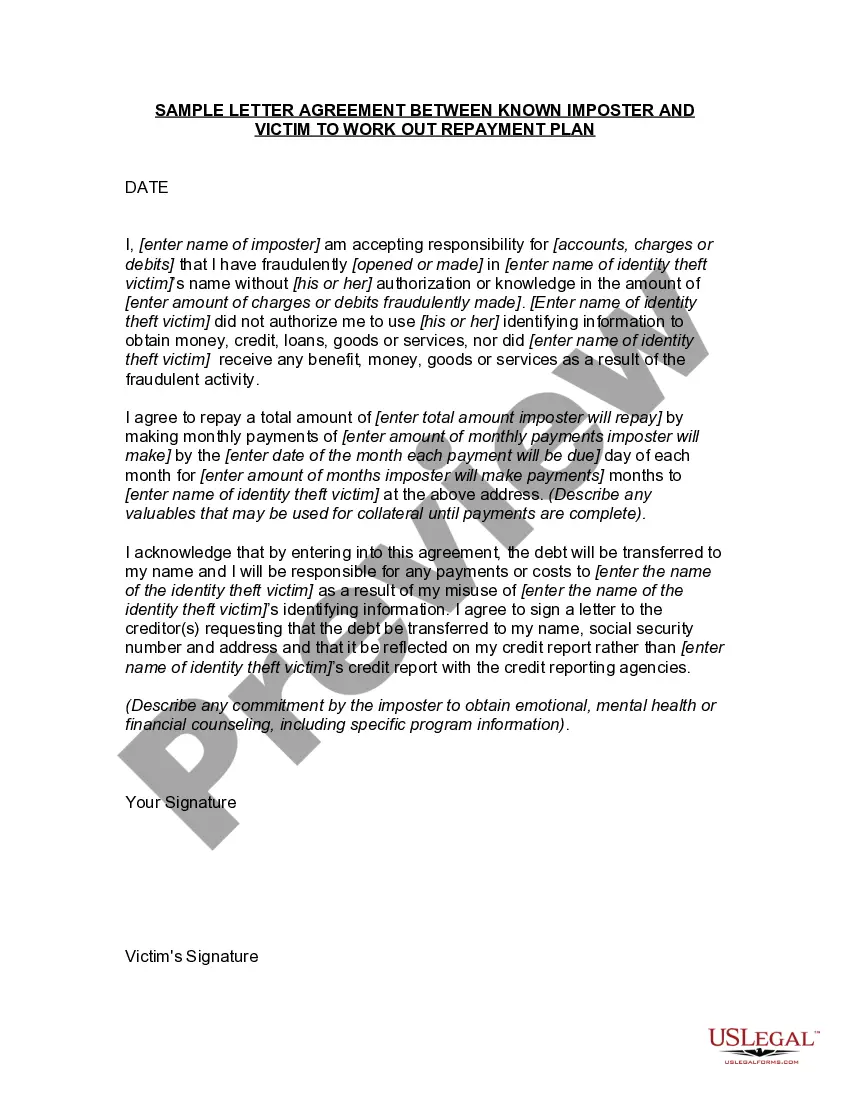
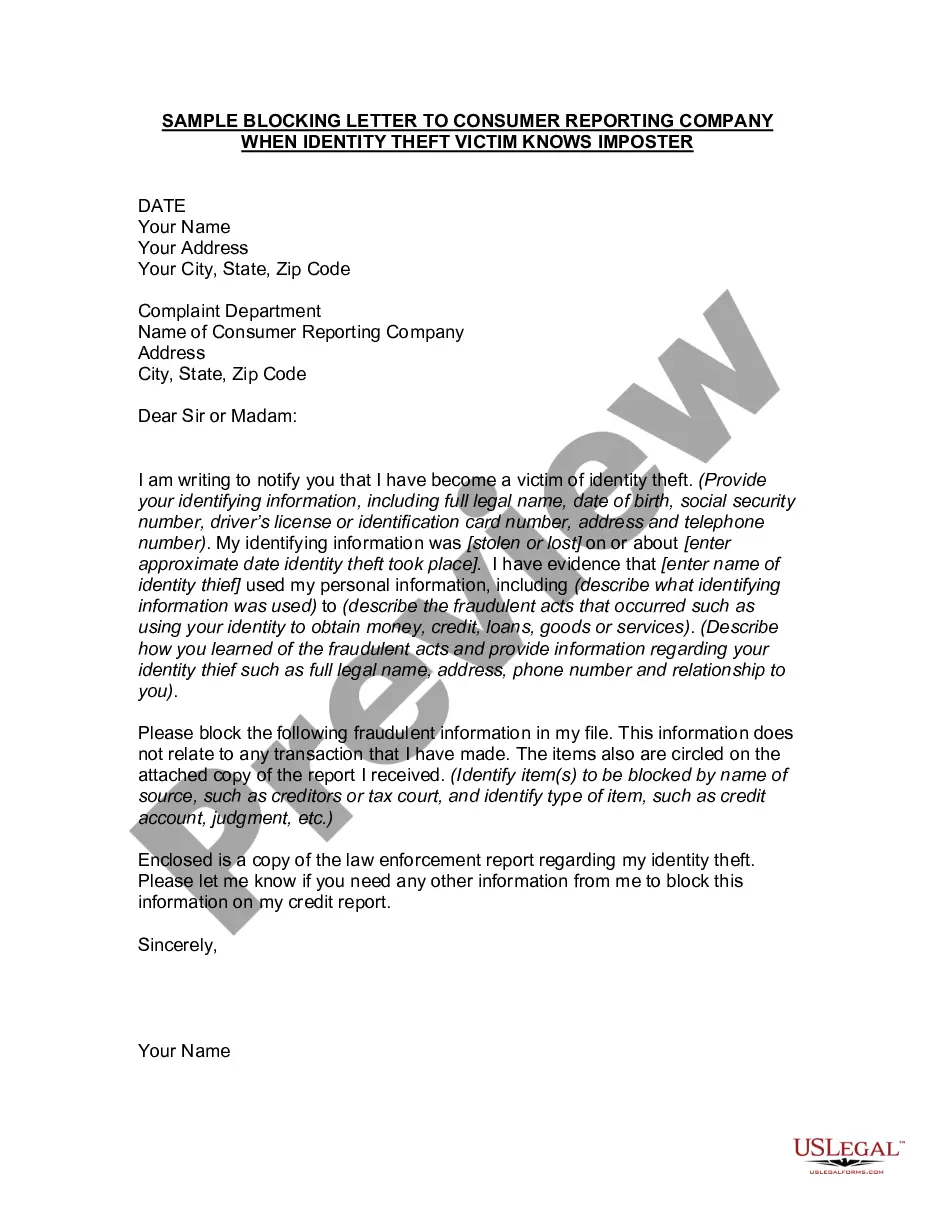
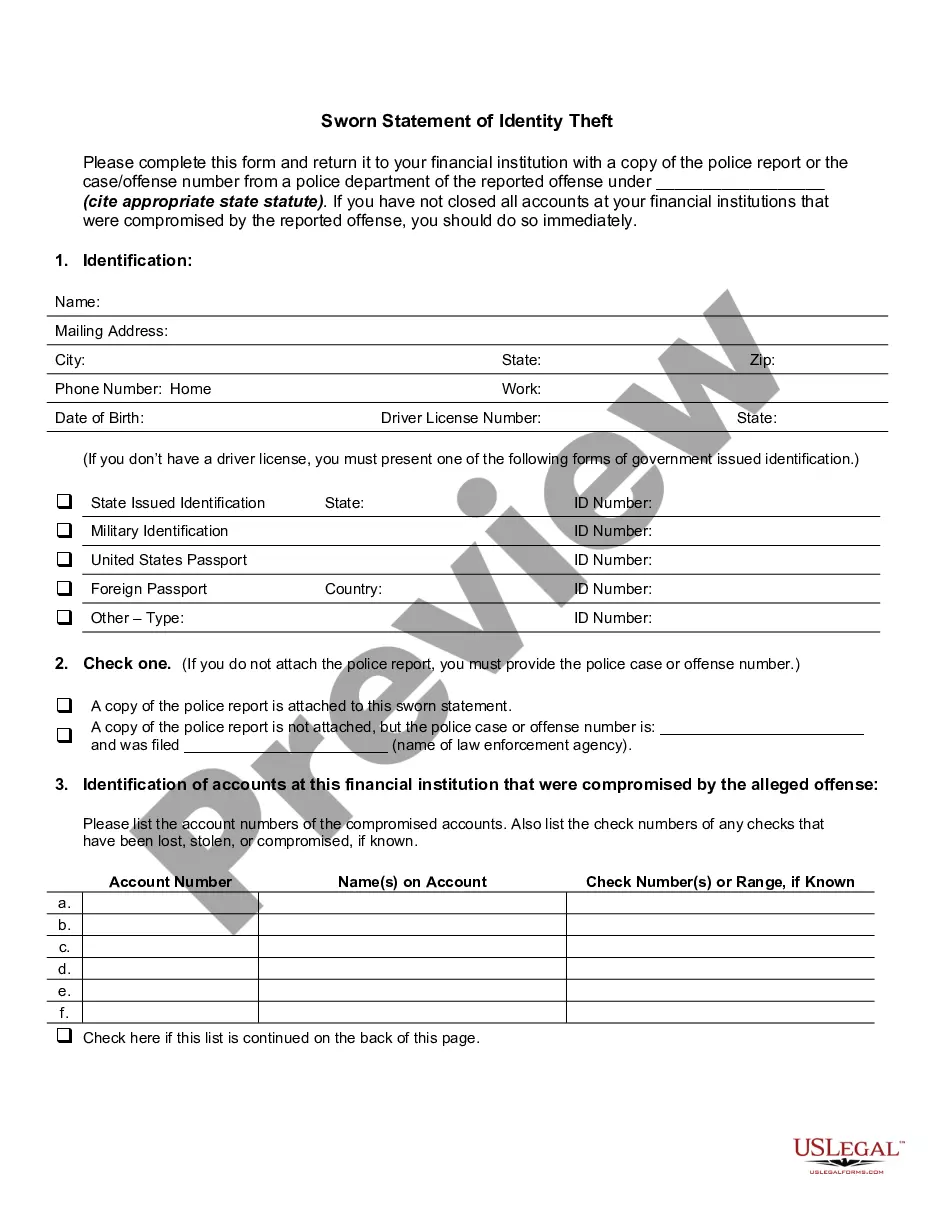
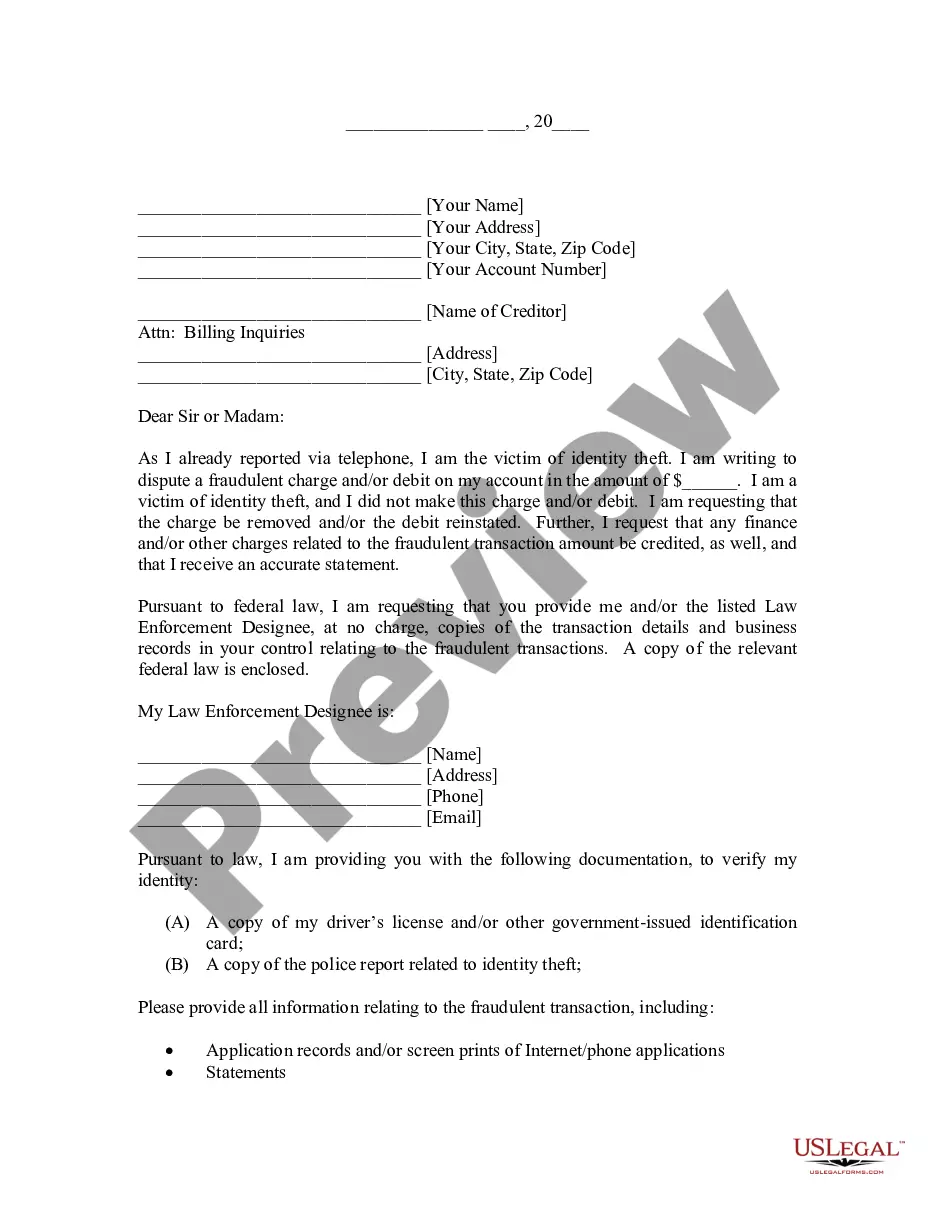
The Letter Agreement Between Known Imposter and Victim to Work Out Repayment Plan is a legal document that allows an identity theft victim and the known imposter to agree on the responsibility for fraudulent debts. This form clearly outlines the financial obligations of the imposter and confirms the victimâs lack of consent regarding identity misuse. Unlike other agreements, this letter is specifically tailored for situations involving identity theft, enabling the parties to create a structured repayment plan and address credit reporting changes directly with creditors.
Form components explained
- Identification of the imposter and identity theft victim.
- Details of the fraudulent charges and amounts involved.
- Agreement on a repayment plan including monthly payment amounts and due dates.
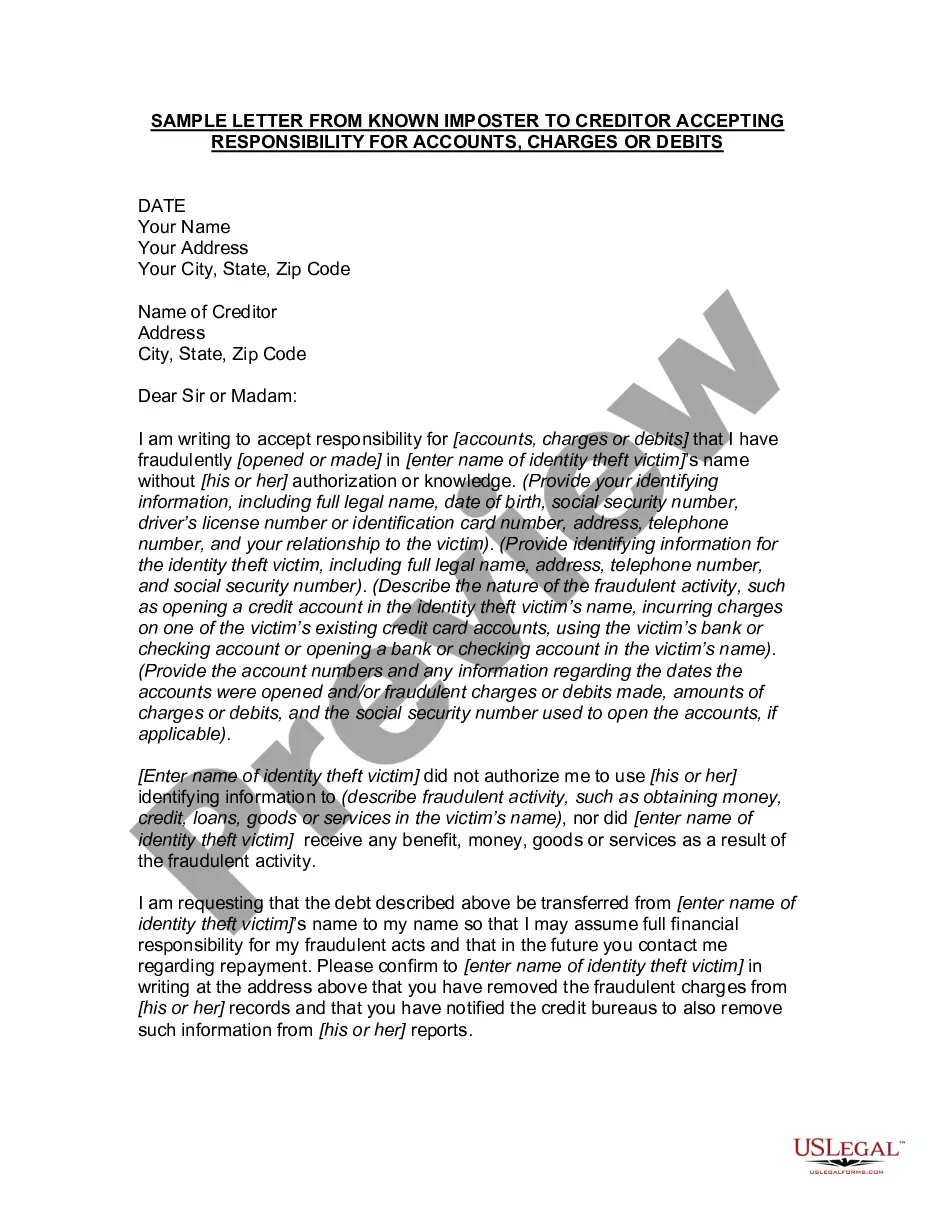
- Commitment by the imposter to sign a letter to creditors for debt transfer and credit reporting changes.
- Potential collateral details as security until payments are completed.
- Agreement by the imposter to undergo counseling, if applicable.
When this form is needed
This form should be used when an individual has been a victim of identity theft and has identified the imposter who used their information. It is appropriate in cases where the imposter agrees to take responsibility for the fraudulent debts and wishes to establish a repayment plan with the victim. The agreement also serves to rectify credit reporting issues stemming from the unauthorized use of the victim's identity.
Who this form is for
- Identity theft victims seeking recovery of losses due to fraudulent activity.
- Individuals who have been identified as the imposter and wish to take responsibility for their actions.
- Both parties looking to create a structured repayment plan to resolve outstanding debts.
Instructions for completing this form
- Identify the parties involved by entering the names of the imposter and the victim.
- Detail the fraudulent charges including amounts, specifying what was incurred without authorization.
- Agree on the monthly payment amount and the schedule for repayments, including how many months payments will last.
- Describe any collateral being offered until the debts are fully repaid.
- Include commitments for letters to creditors and any counseling the imposter agrees to undertake.
- Obtain signatures from both the imposter and the victim to finalize the agreement.
Does this form need to be notarized?
This form does not typically require notarization unless specified by local law. However, obtaining notarization can add an extra layer of authenticity to the agreement, documenting that both parties verified their identities during the signing process.
Get your form ready online
Our built-in tools help you complete, sign, share, and store your documents in one place.
Make edits, fill in missing information, and update formatting in US Legal Forms—just like you would in MS Word.
Download a copy, print it, send it by email, or mail it via USPS—whatever works best for your next step.
Sign and collect signatures with our SignNow integration. Send to multiple recipients, set reminders, and more. Go Premium to unlock E-Sign.
If this form requires notarization, complete it online through a secure video call—no need to meet a notary in person or wait for an appointment.
We protect your documents and personal data by following strict security and privacy standards.

Make edits, fill in missing information, and update formatting in US Legal Forms—just like you would in MS Word.

Download a copy, print it, send it by email, or mail it via USPS—whatever works best for your next step.

Sign and collect signatures with our SignNow integration. Send to multiple recipients, set reminders, and more. Go Premium to unlock E-Sign.

If this form requires notarization, complete it online through a secure video call—no need to meet a notary in person or wait for an appointment.

We protect your documents and personal data by following strict security and privacy standards.
Avoid these common issues
- Not accurately identifying all fraudulent debts.
- Failing to specify the full repayment plan details, including timeline and payment amounts.
- Overlooking the signature requirements for both parties.
- Neglecting to include any agreed-upon collateral or counseling commitments.
Benefits of completing this form online
- Convenience of downloading and completing the form from anywhere.
- Editability, allowing you to fill in specific details easily.
- Reliability, ensuring that the form is prepared by licensed attorneys to meet legal standards.
Legal use & context
- This agreement serves as a legally binding document that outlines the terms of repayment for fraudulent debts.
- It can be presented to creditors to establish the imposter's responsibility for the debts in question.
- Although not a substitute for legal action, this form can aid in resolving disputes regarding debt liability.
What to keep in mind
- The form is crucial for documenting agreements related to identity theft and fraudulent debt responsibility.
- Both the victim and the imposter must understand and agree to all terms laid out in the agreement.
- Using this form can facilitate communication with creditors and help victims mitigate financial damage.
Looking for another form?


Form popularity
FAQ
It's a one-stop resource managed by the Federal Trade Commission, the nation's consumer protection agency. You can also call 1-877-IDTHEFT (1-877-438-4338); TTY 1-866-653-4261. or call 1-800-908-4490. Also, you should file an online complaint with the Internet Crime Complaint Center (IC3) at www.ic3.gov.
If you did not receive an IRS notice but believe you've been the victim of identity theft, contact the IRS Identity Protection Specialized Unit at 800-908-4490 right away so we can take steps to secure your tax account and match your SSN or ITIN. Also, fill out the IRS Identity Theft Affidavit, Form 14039 PDF.
Step 1: Call the companies where you know fraud occurred. Call the fraud department. Step 2: Place a fraud alert and get your credit reports. Place a free, one-year fraud alert by contacting one of the three credit bureaus. Step 3: Report identity theft to the FTC.
Check your credit card statements and bank account. If you notice any suspicious activity, alert your bank or credit union right away. Run a credit report. U.S. citizens are entitled to a free one every 12 months. Monitor your finances closely.
File a claim with your identity theft insurance, if applicable. Notify companies of your stolen identity. File a report with the Federal Trade Commission. Contact your local police department. Place a fraud alert on your credit reports. Freeze your credit. Sign up for a credit monitoring service, if offered.
For victims of identity theft who have previously been in contact with the IRS and have not achieved a resolution to their case, you may contact the IRS Identity Protection Specialized Unit, toll-free, at 800-908-4490.
After we successfully verify your identity, we'll process your tax return. It may take up to 9 weeks to receive your refund or credit any overpayment to your account.
If you are the victim of income tax identity theft, it still takes an average of 278 days to resolve your claim and get your refund although the IRS routinely tells taxpayers that they can expect their claims to be resolved within a still too long 180 days.
Complete a paper return. File Form 14039. File a police report. File a report with the Federal Trade Commission. Request a copy of the fraudulent return. Check your credit reports and account statements.