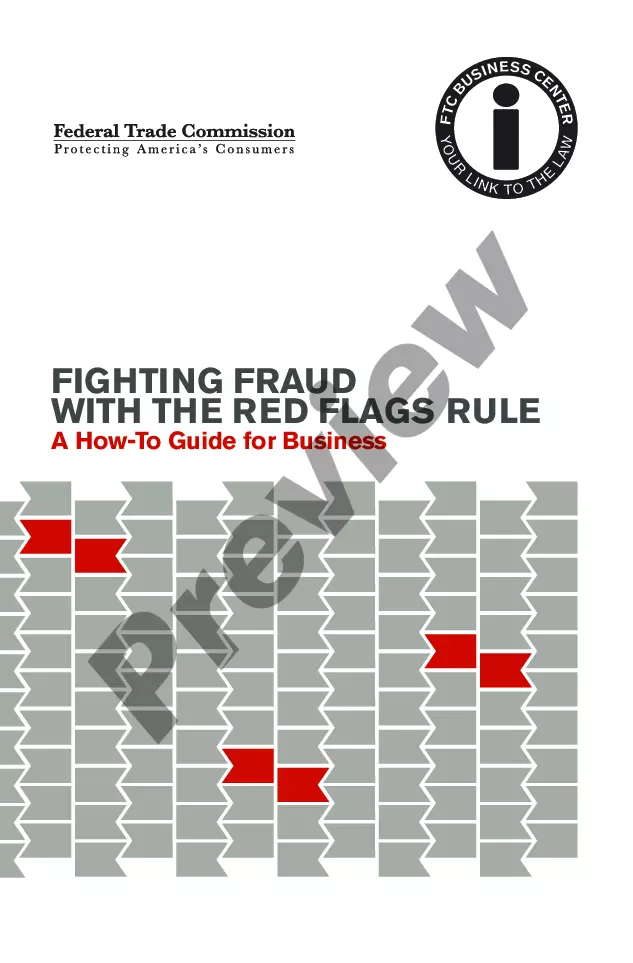
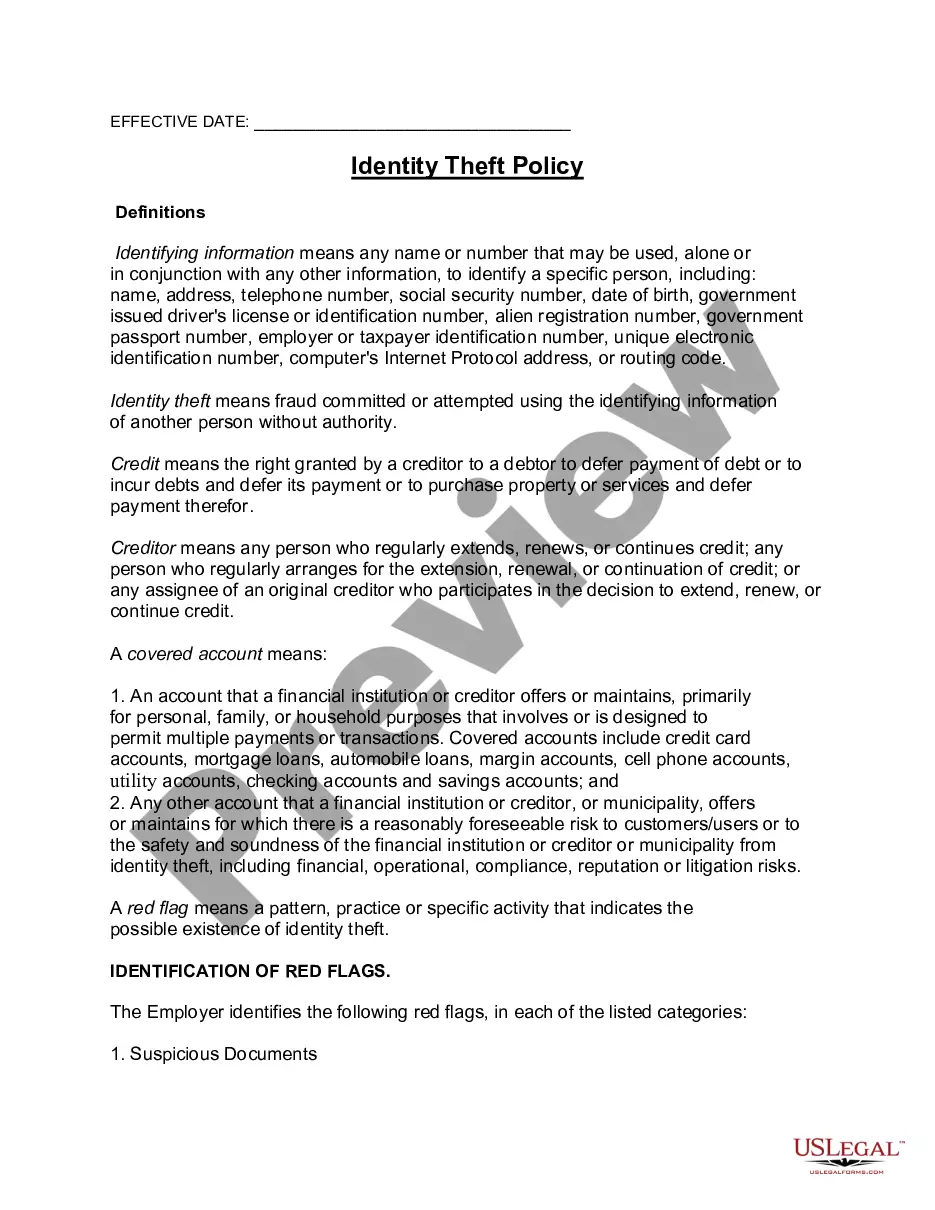
Guide for Protecting Deceased Persons from Identity Theft
What is this form?
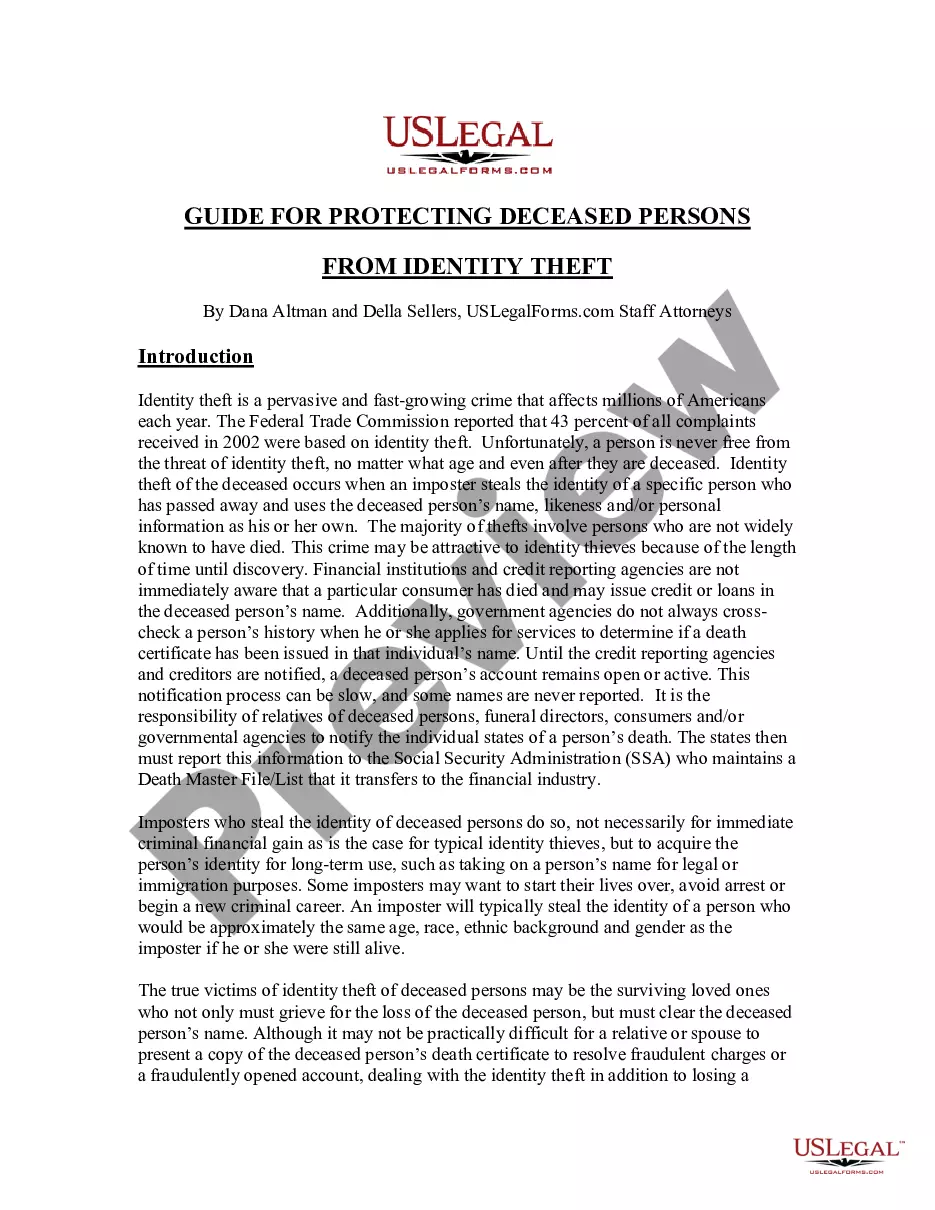
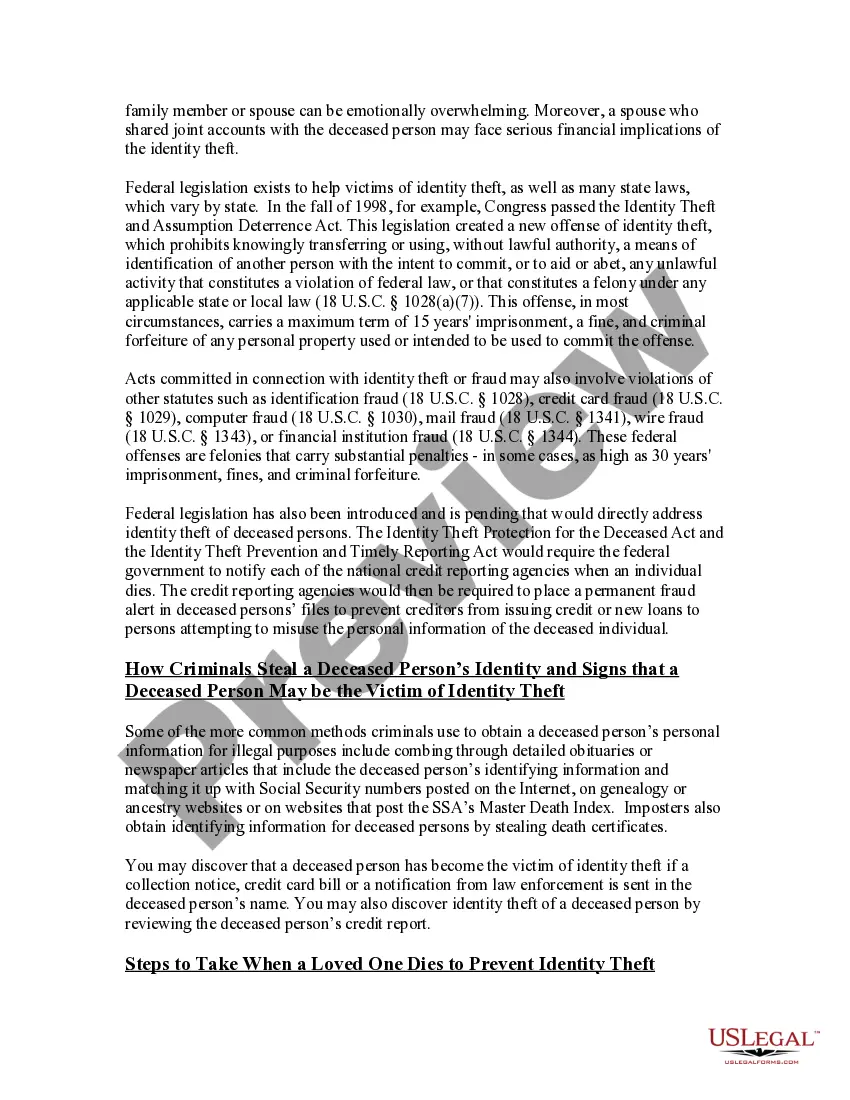
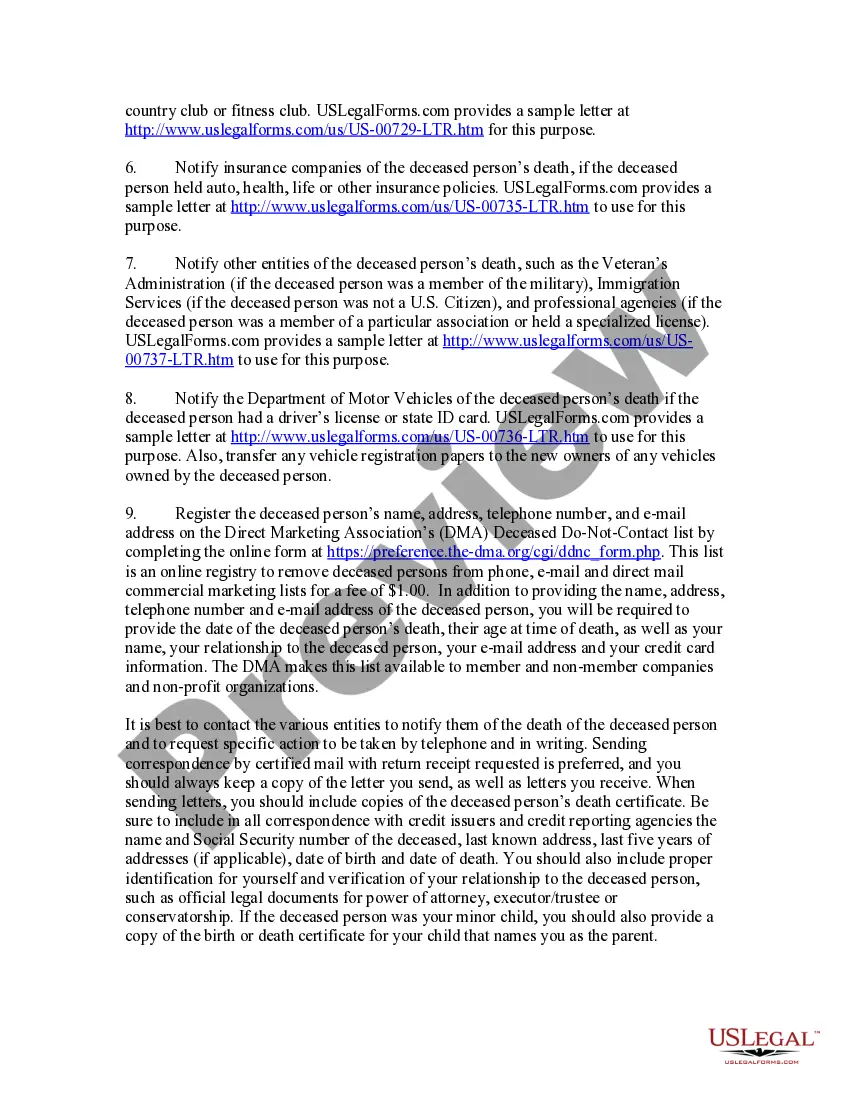
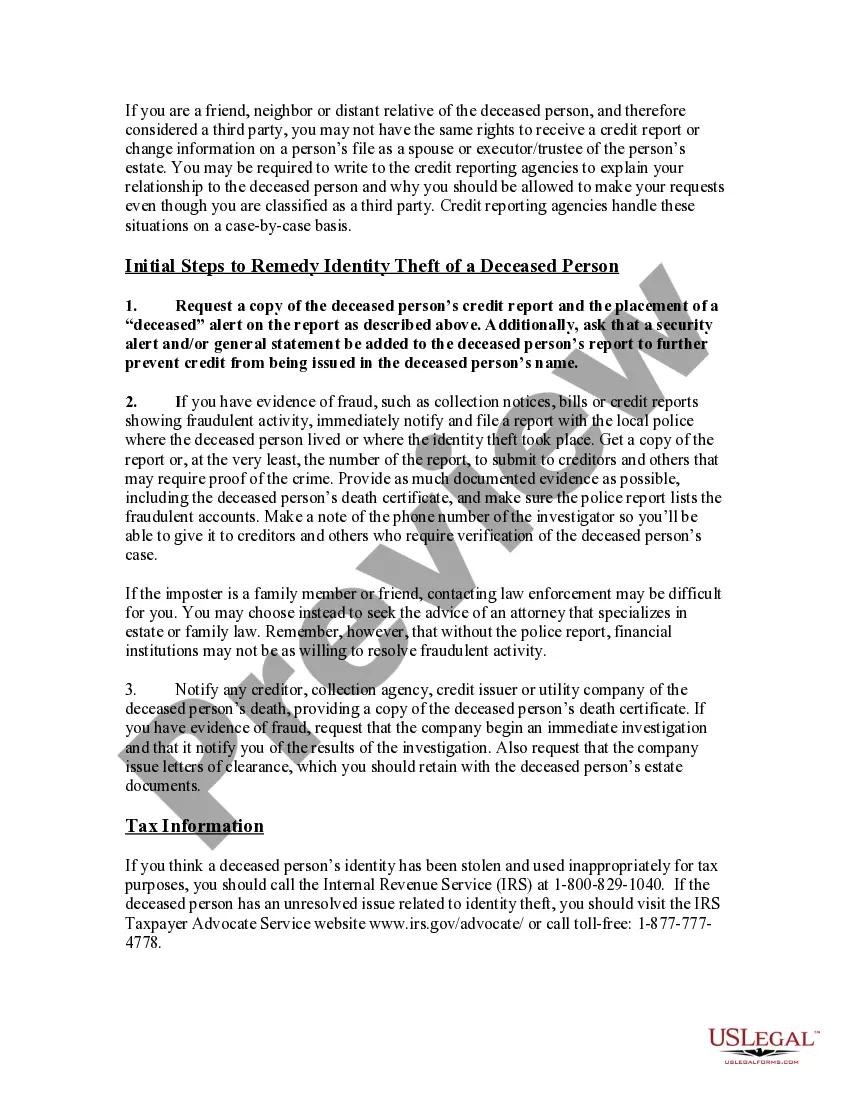
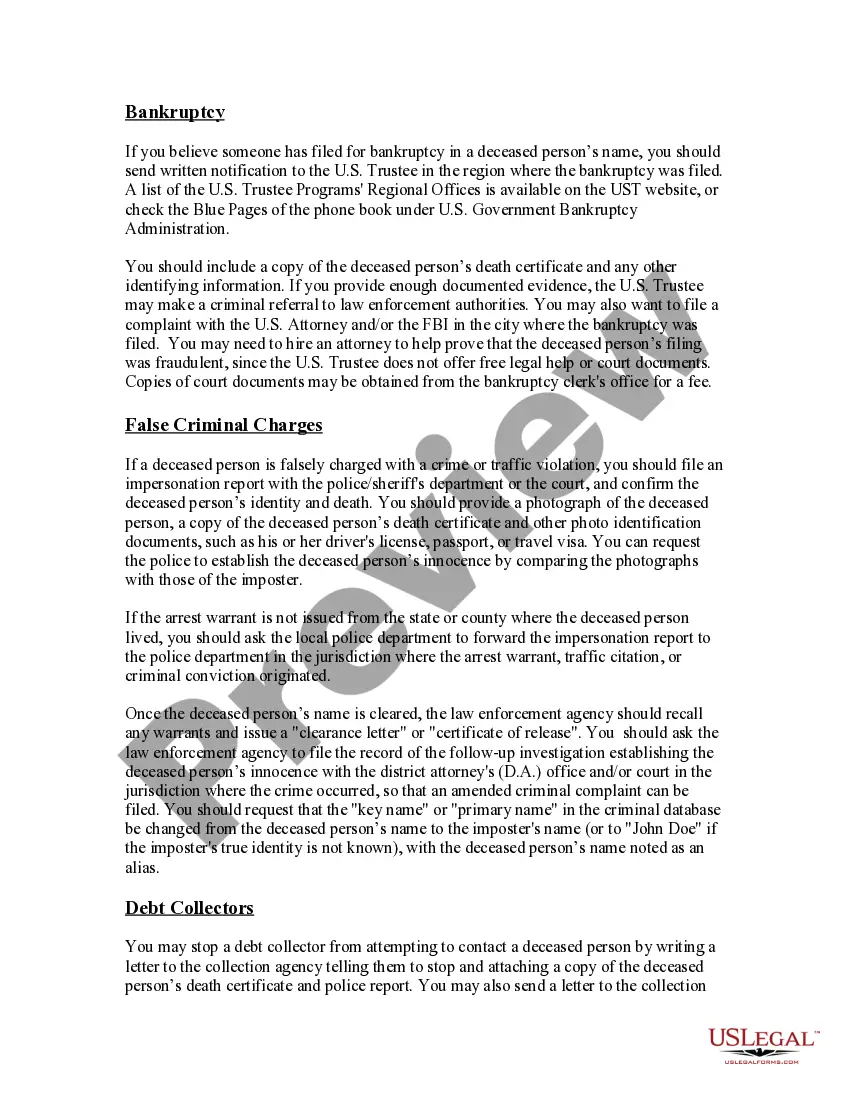
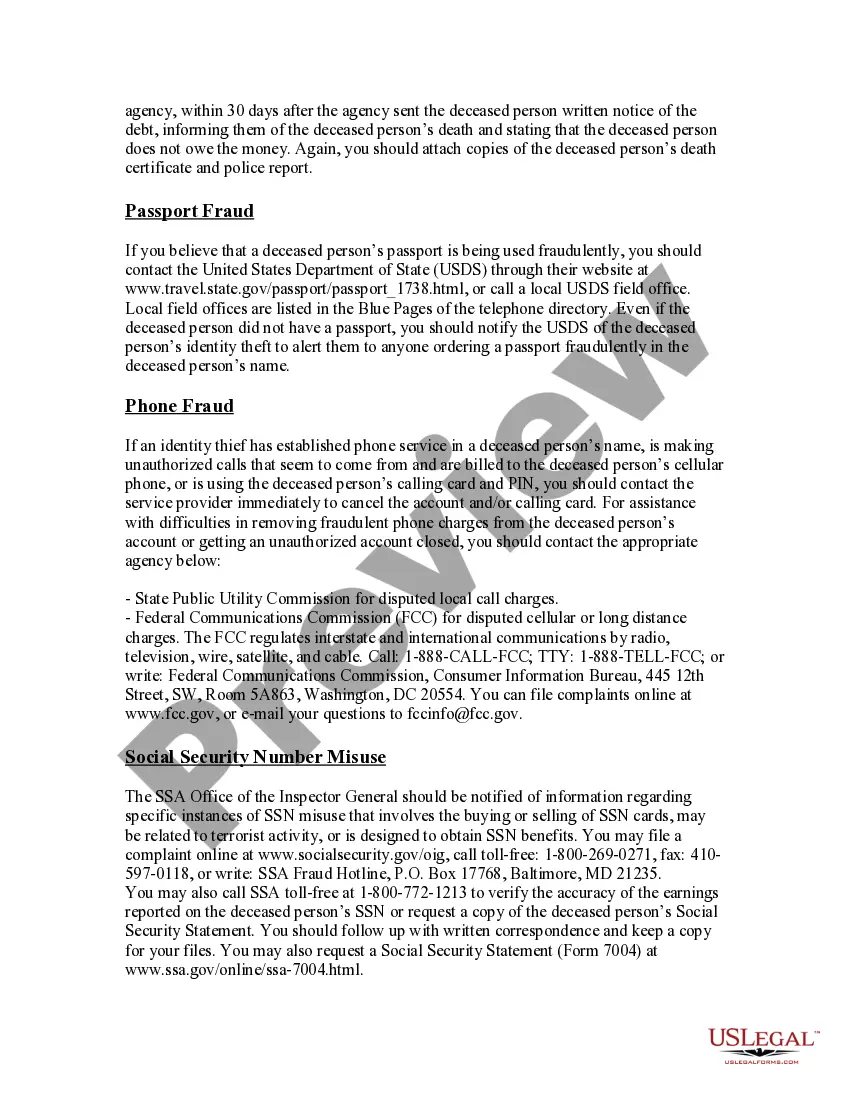
The Guide for Protecting Deceased Persons from Identity Theft is designed to help you safeguard an individual's personal information after they have passed away. This guide outlines the steps to protect against identity theft and provides resources for dealing with creditors, credit reporting agencies, and law enforcement if the deceased person's identity is compromised. By using this guide, you can ensure that the deceased's identifying information is managed appropriately, minimizing the risk of identity theft in a sensitive time.
Form components explained
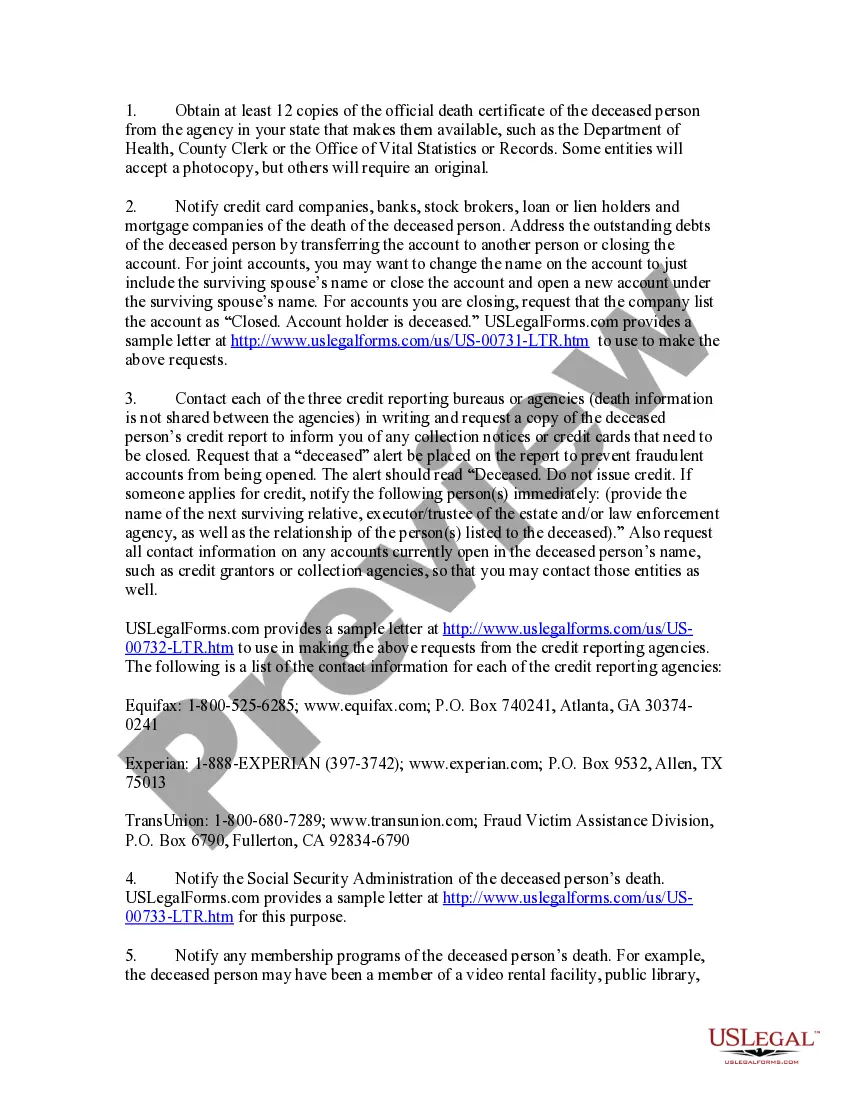
- Steps to obtain official copies of the death certificate.
- Instructions for notifying banks, credit card companies, and creditors of the death.
- Guidelines for requesting credit reports and placing alerts to prevent fraud.
- Contact information for major credit reporting agencies.
- Resources for reporting identity theft and fraudulent activity.
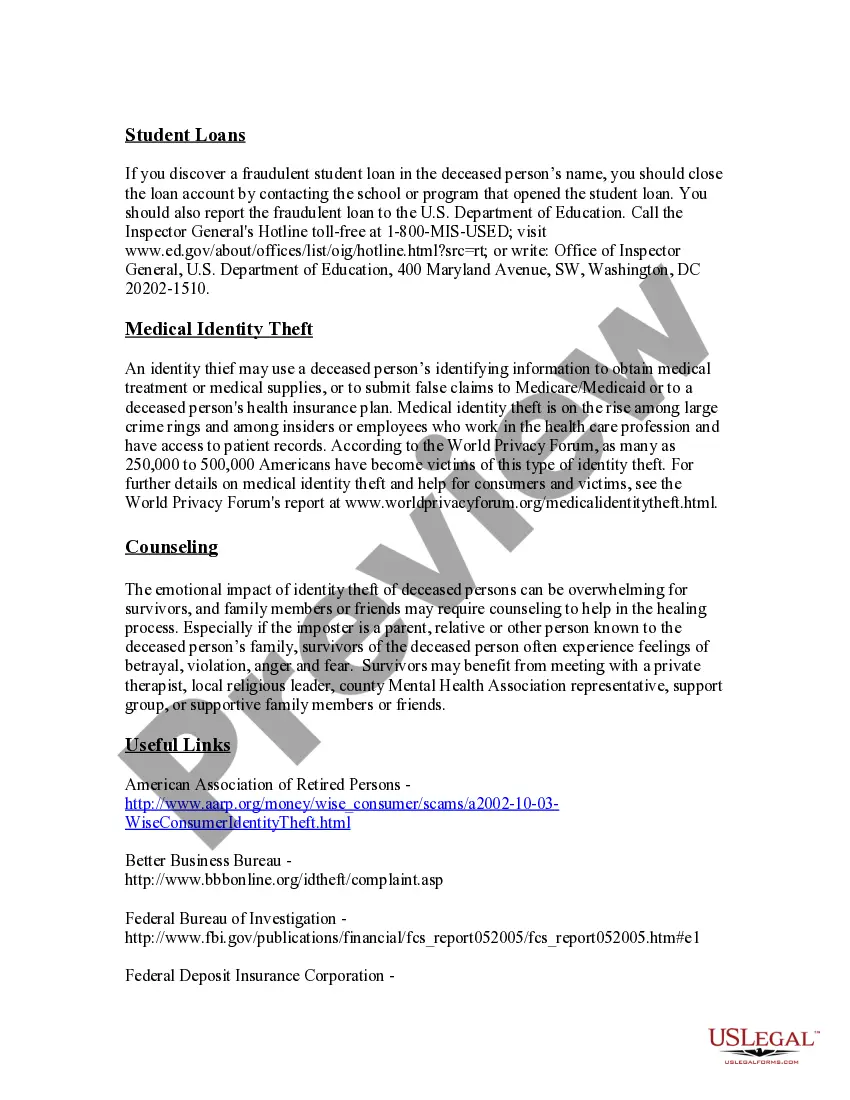
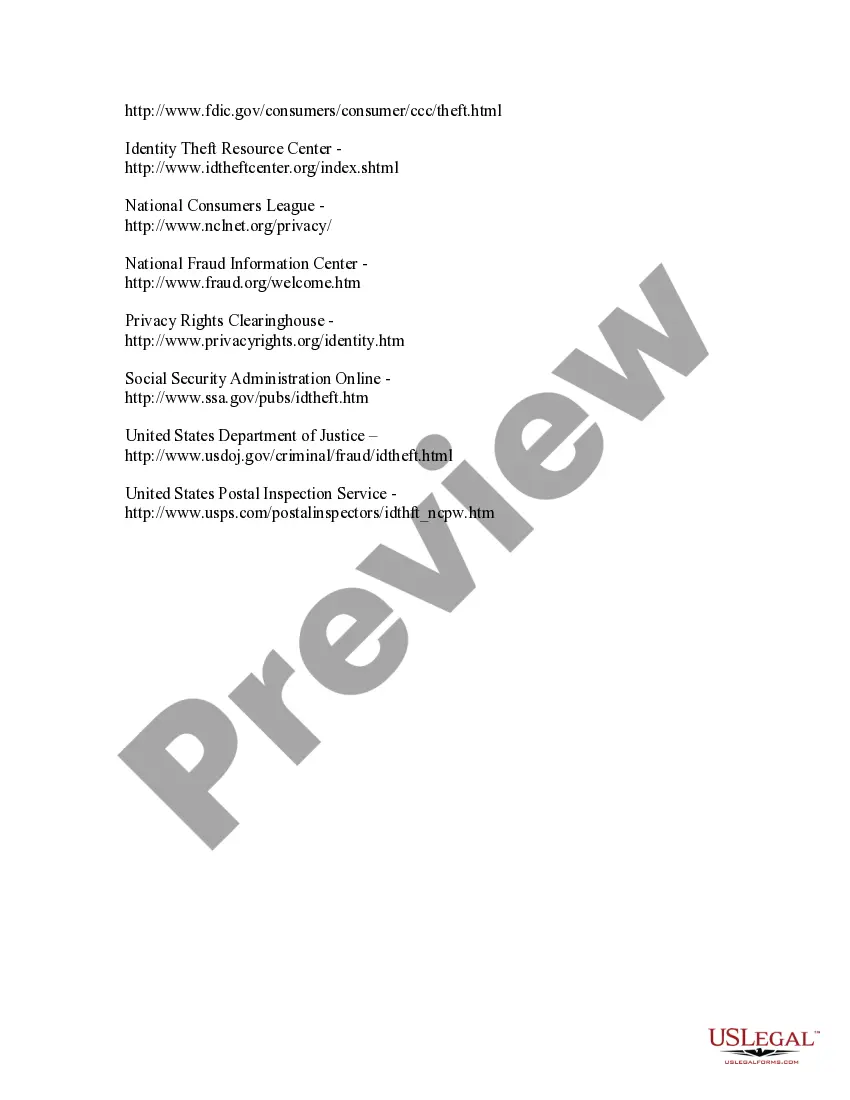
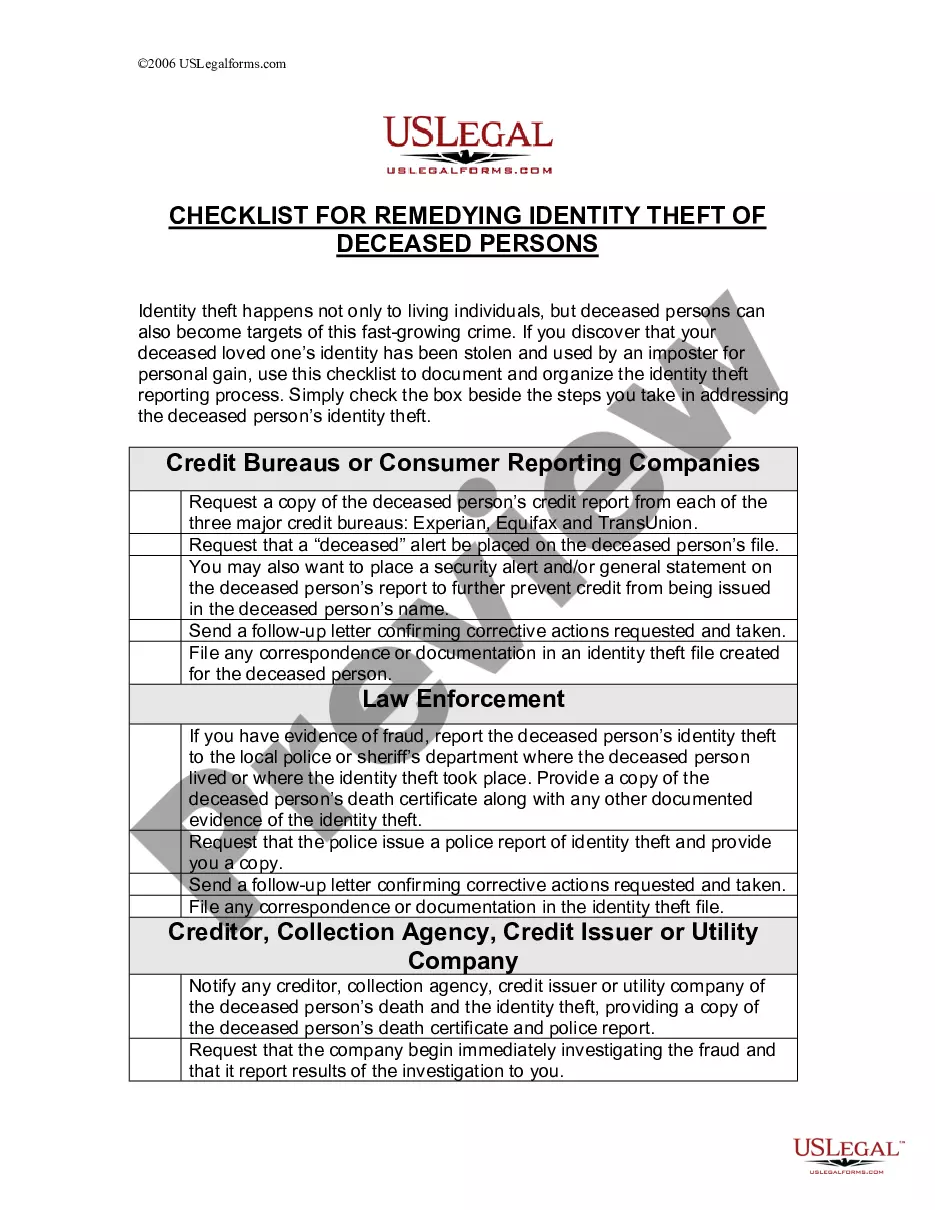
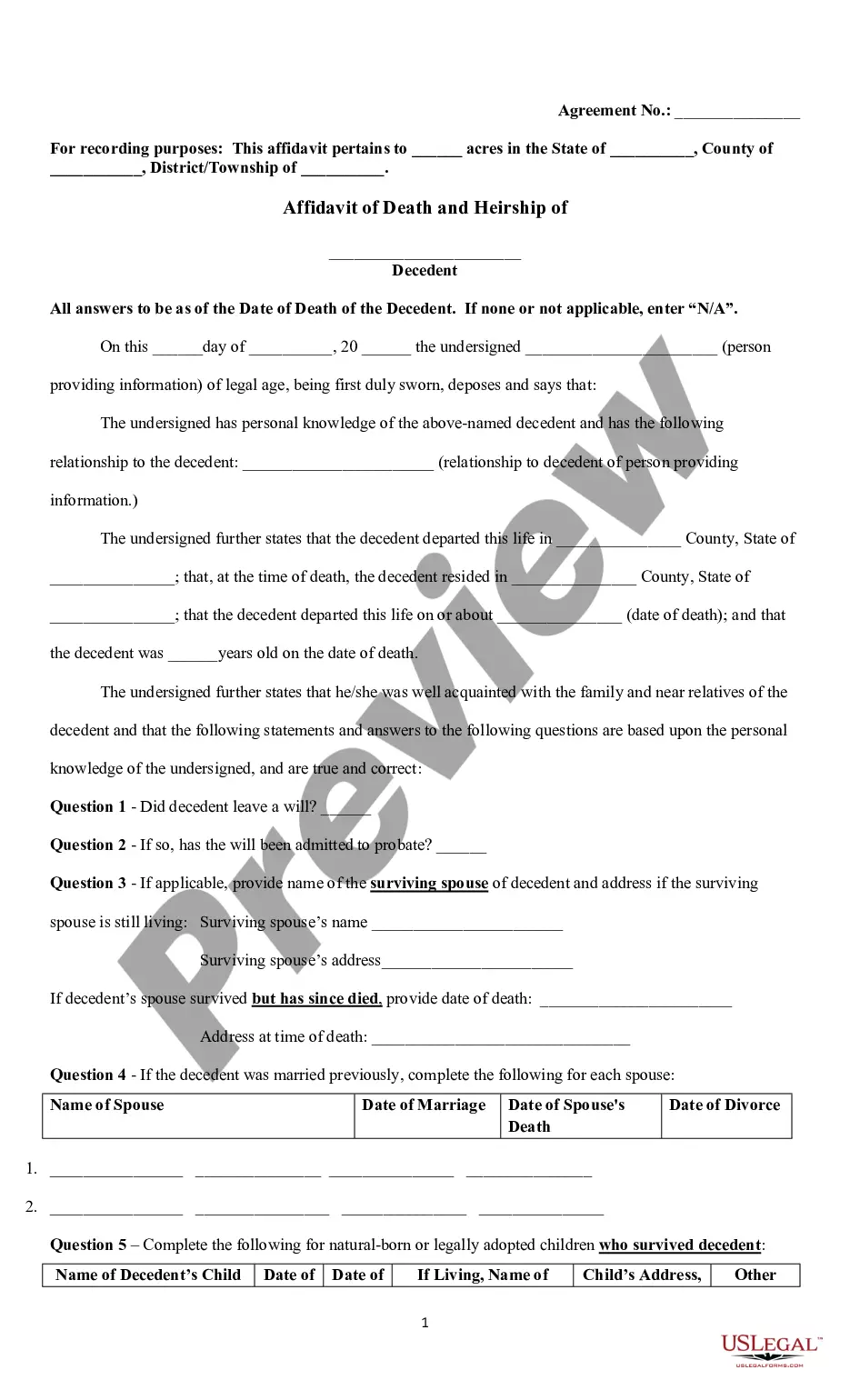
Situations where this form applies
This guide is applicable when a loved one has passed away, and you suspect their identity may be at risk of theft. Use this guide if you have received suspicious notices in their name or if you want to take proactive steps to prevent identity theft from occurring after their death. It is also relevant for managing affairs related to their estate and ensuring that creditors are notified properly.
Who needs this form
- Family members or close relatives of deceased individuals.
- Executors or administrators of an estate.
- Funeral directors overseeing the deceased's affairs.
- Any individual responsible for managing the financial matters of a deceased person.
How to complete this form
- Obtain multiple copies of the official death certificate of the deceased.
- Notify financial institutions and creditors of the death by sending them a copy of the death certificate.
- Request a copy of the deceased person's credit report from each of the three major credit bureaus.
- Place a fraud alert on the deceasedâs credit report to prevent unauthorized credit issuance.
- Contact the Social Security Administration to report the death and prevent misuse of the deceasedâs Social Security number.
Does this document require notarization?
This form does not typically require notarization unless specified by local law. However, when sending notifications, including to financial institutions or credit bureaus, it is advisable to use certified mail for tracking purposes.
Get your form ready online
Our built-in tools help you complete, sign, share, and store your documents in one place.
Make edits, fill in missing information, and update formatting in US Legal Forms—just like you would in MS Word.
Download a copy, print it, send it by email, or mail it via USPS—whatever works best for your next step.
Sign and collect signatures with our SignNow integration. Send to multiple recipients, set reminders, and more. Go Premium to unlock E-Sign.
If this form requires notarization, complete it online through a secure video call—no need to meet a notary in person or wait for an appointment.
We protect your documents and personal data by following strict security and privacy standards.

Make edits, fill in missing information, and update formatting in US Legal Forms—just like you would in MS Word.

Download a copy, print it, send it by email, or mail it via USPS—whatever works best for your next step.

Sign and collect signatures with our SignNow integration. Send to multiple recipients, set reminders, and more. Go Premium to unlock E-Sign.

If this form requires notarization, complete it online through a secure video call—no need to meet a notary in person or wait for an appointment.

We protect your documents and personal data by following strict security and privacy standards.
Common mistakes
- Failing to obtain enough copies of the death certificate for all necessary notifications.
- Not notifying all relevant entities promptly about the death.
- Overlooking the need to review the deceasedâs credit report for any unauthorized accounts.
- Neglecting to request a fraud alert on the deceased's credit file.
Advantages of online completion
- Easy access to legal guidelines provided by licensed attorneys.
- Ability to download and print forms for immediate use.
- Convenience of completing necessary steps from home.
- Access to samples and templates for letters needed to notify third parties.
Legal use & context
- This guide is a non-exclusive resource that highlights necessary actions to take after a loved one's death to prevent identity theft.
- It provides information based on current laws regarding identity theft as they pertain to deceased individuals.
- While this guide offers comprehensive steps, legal advice may be necessary depending on specific circumstances.
Quick recap
- Identity theft can affect deceased persons, making vigilance essential for their surviving loved ones.
- Immediate notification of relevant institutions is critical to secure the deceasedâs identity.
- The use of this guide can streamline the process of managing affairs after a loved one dies.
Looking for another form?


Form popularity
FAQ
69 percent reported feelings of fear related to personal financial safety. 60 percent reported anxiety. 42 percent reported fearing for the financial security of family members. 8 percent reported feeling suicidal.
Freeze your credit. Safeguard your Social Security number. Be alert to phishing and spoofing. Use strong passwords and add an authentication step. Use alerts. Watch your mailbox. Shred, shred, shred. Use a digital wallet.
The four types of identity theft include medical, criminal, financial and child identity theft.
Q20: Are Social Security numbers reused after a person dies? A: No. We do not reassign a Social Security number (SSN) after the number holder's death.
Place a Fraud Alert on Your Credit Report. Freeze Your Credit Report. Order Your Free Credit Reports. Buy Your Credit Reports. Monitor Your Accounts Online. Enroll in Credit Monitoring. Keep Your Social Security Number Safe. Pick Up Your Check Order.
Limit the amount of personal information you share about the deceased in newspaper and online obituaries. Notify the Social Security Administration of the death. Send the IRS a copy of the death certificate so that the agency can note that the person is deceased.
Keep your mail safe. Read your account statements. Check your credit reports. Shred! Store personal documents at home. Be wary of unknown phone calls and emails. Create difficult logins and passwords. Use one credit card for online shopping.
The Social Security Administration (www.ssa.gov) does not reappoint a Social Security number to someone else after the original owner's death. The SSA estimates that there are enough new number combinations to last well into the next SEVERAL generations.
Identity thieves can strike even after death. An identity thief's use of a deceased person's Social Security number may create problems for family members.The Social Security Administration (SSA) maintains a national file of reported deaths for the purpose of paying appropriate benefits.