Release by Passenger in Favor of Aircraft Pilot and / or Aircraft Owner
About this form
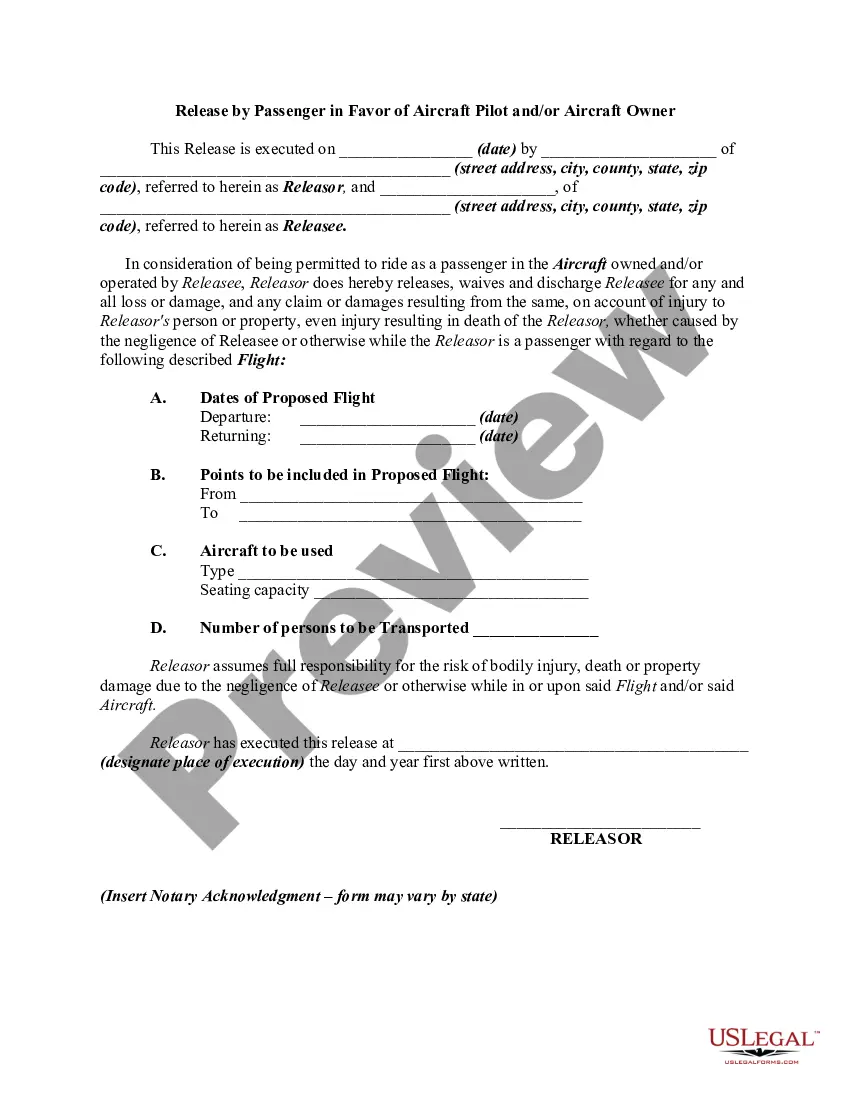
The Release by Passenger in Favor of Aircraft Pilot and/or Aircraft Owner is a legal document that allows a passenger to release a pilot or aircraft owner from liability while they participate in a flight at no charge. This form provides protection to the pilot and owner against claims arising from injuries or damages that may occur during the flight, differentiating it from standard liability waivers by specifically focusing on aerial travel.
Form components explained
- Date of execution to identify when the release is signed.
- Details of the Releasor (the passenger), including name and address.
- Information about the Releasee (the pilot or aircraft owner), including name and address.
- Flight details: dates and points of departure and arrival.
- Type of aircraft and its seating capacity.
- Number of passengers being transported.
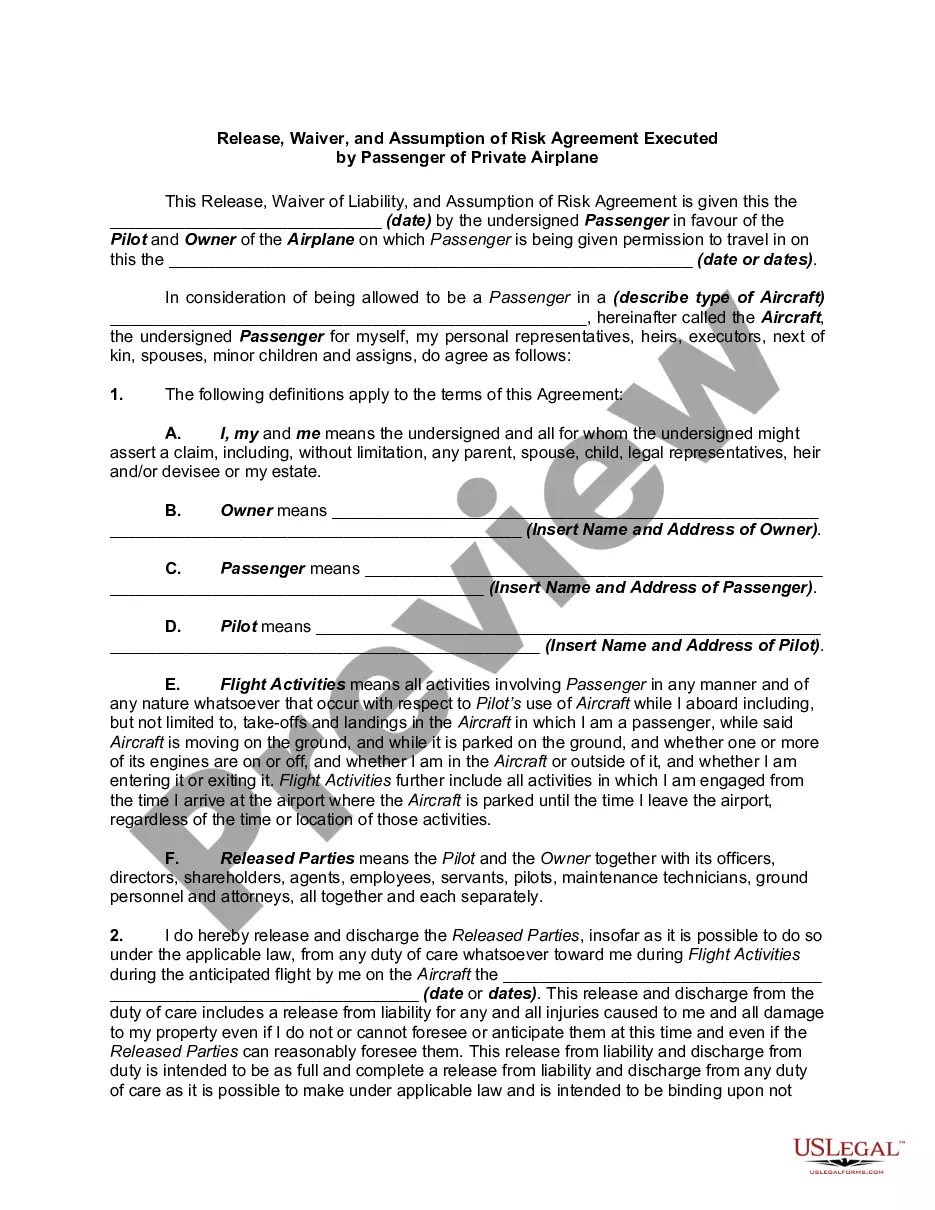
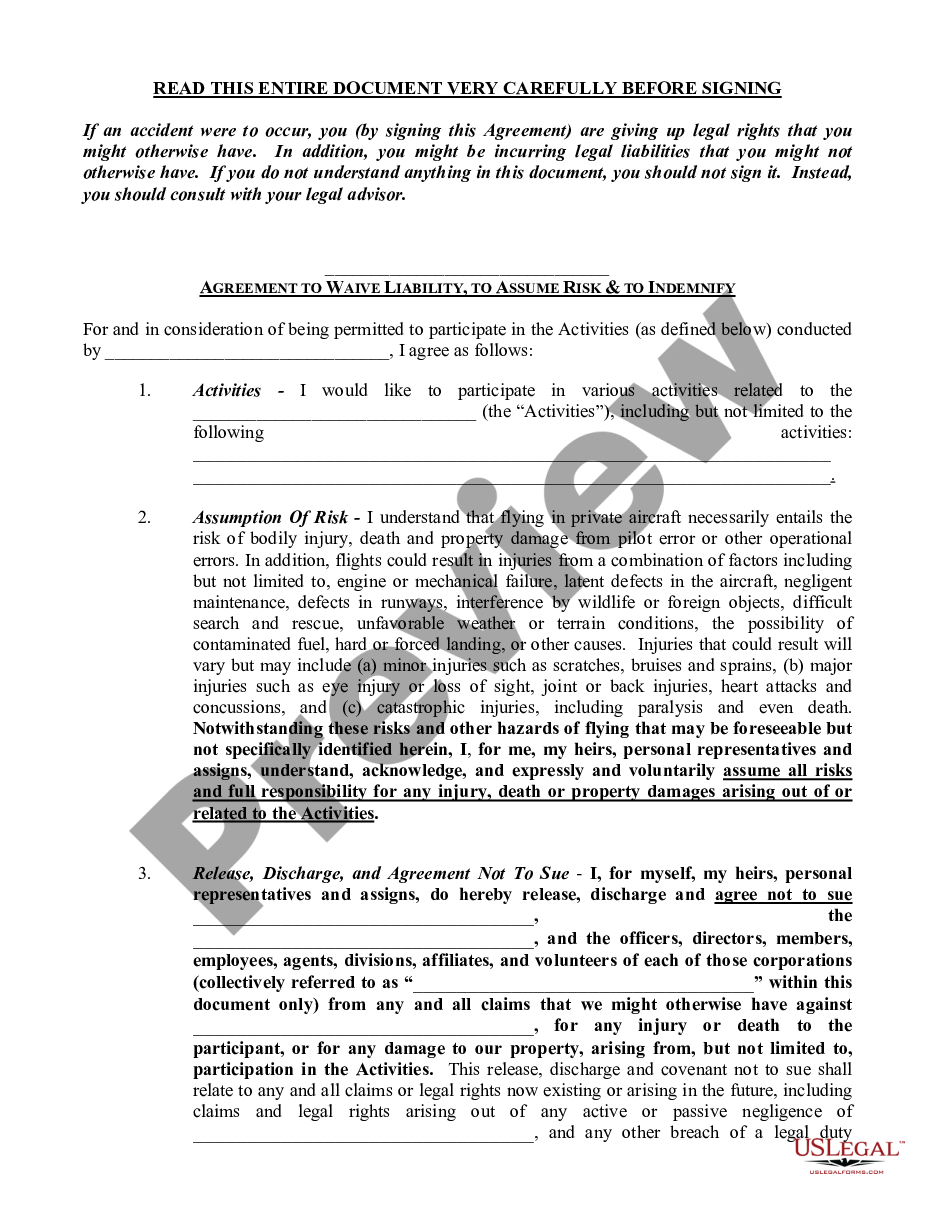
- Acknowledgment of risk and assumption of full responsibility for any injuries or damages.
- Signature of the Releasor.
- Notary acknowledgment section if required.
When this form is needed
This form should be used when a passenger is invited to join a flight operated by a pilot or owned by an individual, particularly when there is no payment involved. It is essential in scenarios where the pilot or owner may want to mitigate liability for potential accidents or injuries that could occur during the flight. The release protects the pilot and owner and ensures that passengers acknowledge and accept the inherent risks associated with flying.
Who should use this form
This form is intended for:
- Pilots offering free rides to passengers.
- Aircraft owners allowing passengers on their aircraft without compensation.
- Passengers who want to legally acknowledge and accept the risk involved in flying.
- Individuals involved in aviation activities where liability concerns may arise.
How to complete this form
- Identify the parties involved by entering the names and addresses of the Releasor and Releasee.
- Enter the date the release is executed.
- Provide detailed information about the proposed flight, including dates and locations of departure and arrival.
- Specify the type of aircraft and its seating capacity.
- Indicate the number of passengers who will be transported.
- The Releasor should sign the document and have it notarized as necessary.
Is notarization required?
This document requires notarization to meet legal standards. US Legal Forms provides secure online notarization powered by Notarize, allowing you to complete the process through a verified video call, available 24/7.
Get your form ready online
Our built-in tools help you complete, sign, share, and store your documents in one place.
Make edits, fill in missing information, and update formatting in US Legal Forms—just like you would in MS Word.
Download a copy, print it, send it by email, or mail it via USPS—whatever works best for your next step.
Sign and collect signatures with our SignNow integration. Send to multiple recipients, set reminders, and more. Go Premium to unlock E-Sign.
If this form requires notarization, complete it online through a secure video call—no need to meet a notary in person or wait for an appointment.
We protect your documents and personal data by following strict security and privacy standards.
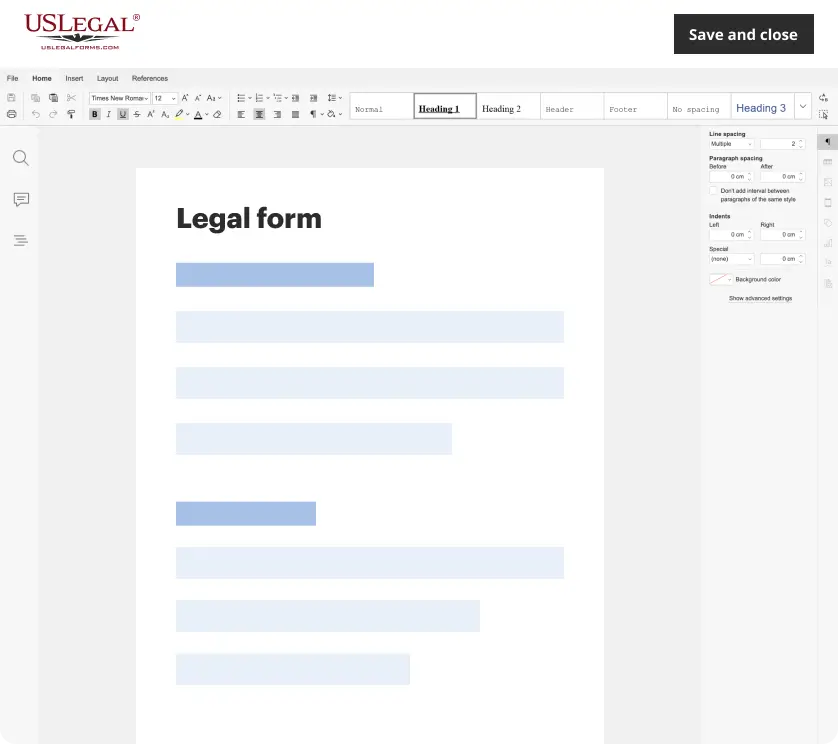
Make edits, fill in missing information, and update formatting in US Legal Forms—just like you would in MS Word.
Download a copy, print it, send it by email, or mail it via USPS—whatever works best for your next step.
Sign and collect signatures with our SignNow integration. Send to multiple recipients, set reminders, and more. Go Premium to unlock E-Sign.
If this form requires notarization, complete it online through a secure video call—no need to meet a notary in person or wait for an appointment.
We protect your documents and personal data by following strict security and privacy standards.
Common mistakes to avoid
- Failing to include all necessary details about the flight and participants.
- Not signing or dating the form, which can invalidate the release.
- Overlooking local legal requirements for liability waivers.
- Not having the document notarized when required by state law.
Benefits of using this form online
- Convenient access to a legally vetted template that simplifies the process of creation.
- Editability allows customization to meet specific needs without starting from scratch.
- Reliable formatting ensures the document adheres to legal standards required in your jurisdiction.
Legal use & context
- This release serves to limit the liability of pilots and owners during voluntary flights.
- It is legally enforceable, provided it meets state-specific requirements.
- While this form reduces potential legal risks, it does not waive liability for gross negligence or willful misconduct.
Main things to remember
- This form releases pilots and aircraft owners from liability while transporting passengers without charge.
- It is crucial for passengers to understand and accept the risks involved in air travel.
- Ensure all details are accurately filled out and the form is signed and notarized as necessary for legal validity.
Looking for another form?
Form popularity
FAQ
An aircraft cabin is the section of an aircraft in which passengers travel. Most modern commercial aircraft are pressurized, as cruising altitudes are high enough such that the surrounding atmosphere is too thin for passengers and crew to breathe.
Basic Solo Privileges Any solo flight, whether local or cross-country, requires two basic endorsements identified in FAR 61.87: A make and model endorsement on the student pilot certificate, which never expires; and. A make and model endorsement in the logbook that's valid for 90 days.
The letters stand for the documents that must be carried aboard an airplane. They are an airworthiness certificate, registration certificate, operating limitations, and weight and balance information.
The airplane has six main partsfuselage, wings, stabilizer (or tail plane), rudder, one or more engines, and landing gear. The fuselage is the main body of the machine, customarily streamlined in form. It usually contains control equipment, and space for passengers and cargo.
CIGAR or CIGARS is a mnemonic that refers to a pre-takeoff checklist performed by general aviation pilots.
Make Sure You're Eligible. Make sure you meet the eligibility requirements outlined in the regulations. Pass a Third-Class Aviation Medical Exam. Obtain an aviation medical certificate. Find an Instructor. Take the FAA Written Exam. Start Flying. Take the Checkride (FAA Practical Exam) Get Your License.
Thank you. To indicate the landing clearance or final approach, the Captain will either make the following announcement and/or blink the No Smoking sign. Flight attendants, prepare for landing please. Cabin crew, please take your seats for landing.
There is no way an airplane can stop in mid air while flying. Reasons being, if the flight is not moving forward, it would experience stall as the wings can't find enough lift to keep the airplane up and to fly.
The pilots sit in the cockpit at the front of the fuselage. Passengers and cargo are carried in the rear of the fuselage. Some aircraft carry fuel in the fuselage; others carry the fuel in the wings.