Letter Notifying Postal Authorities of Identity Theft of Minor
What is this form?
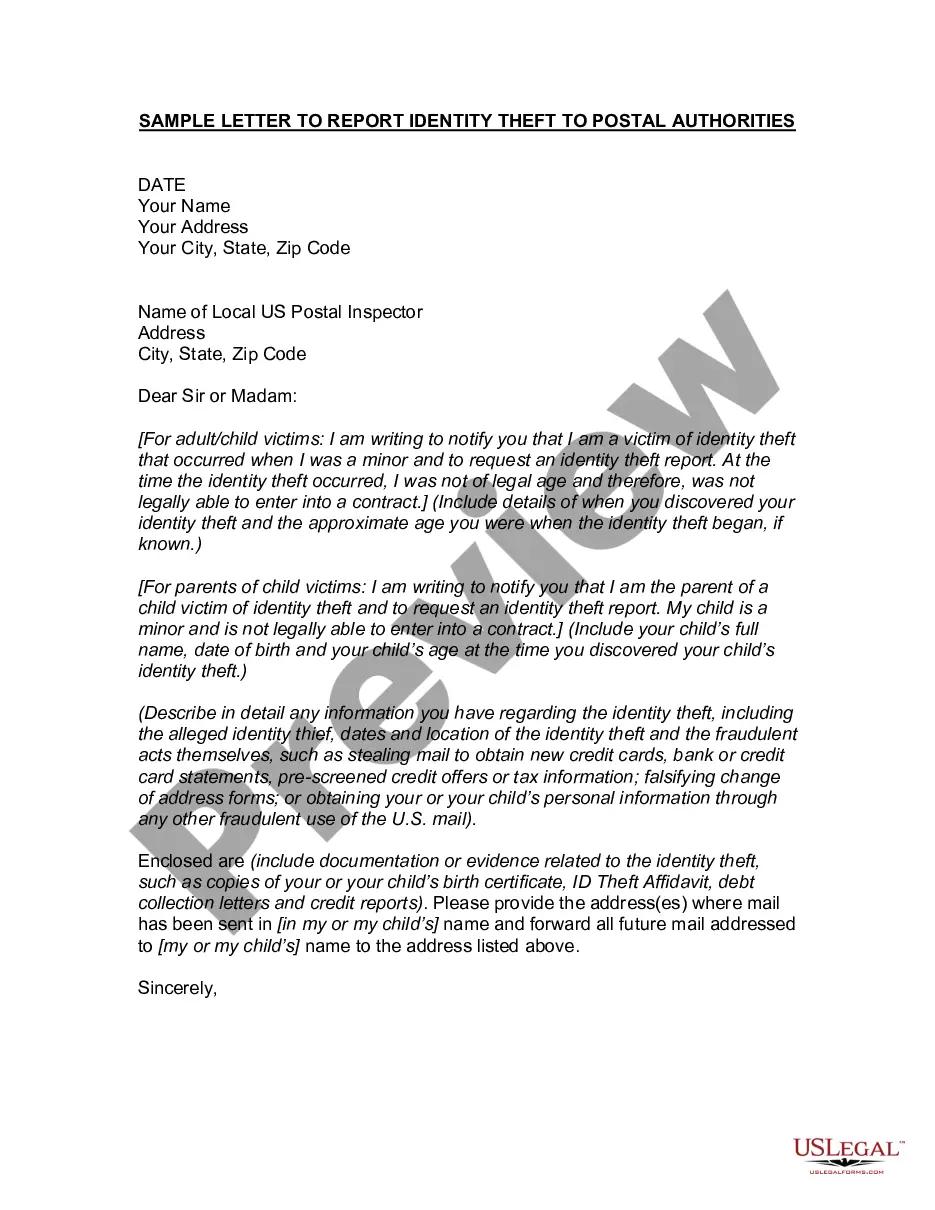
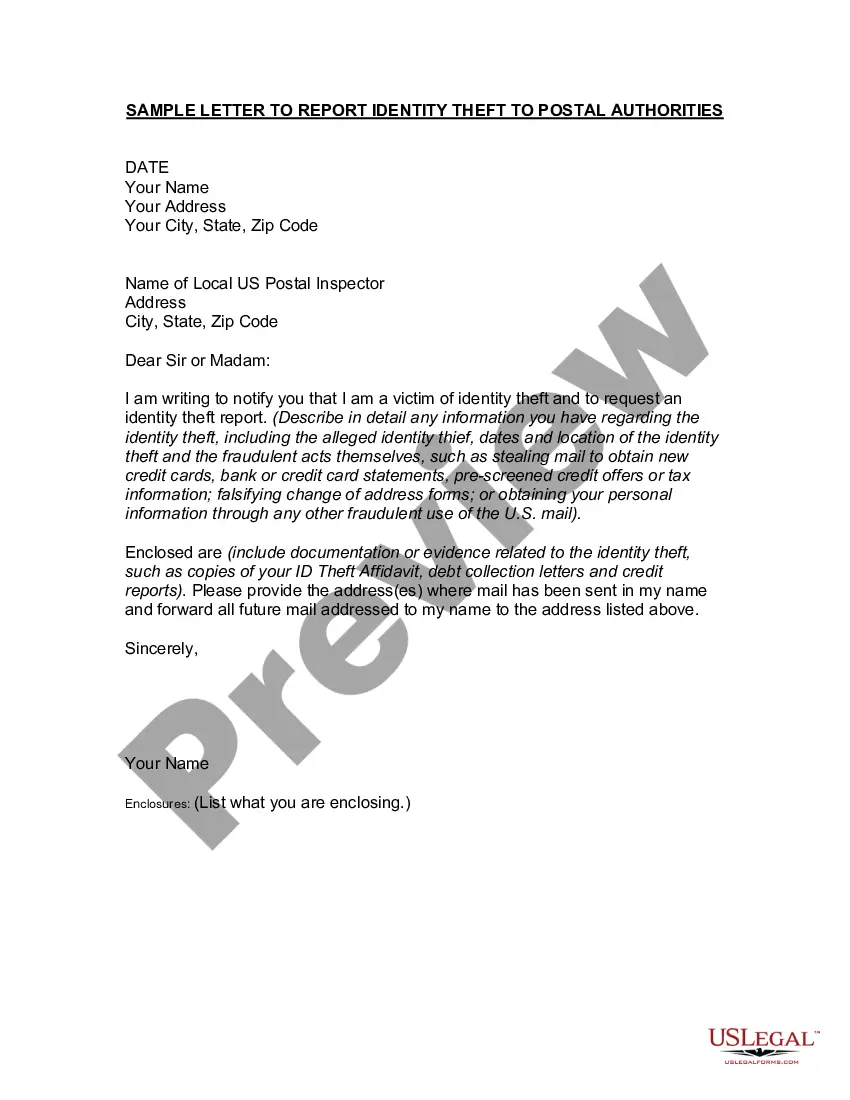
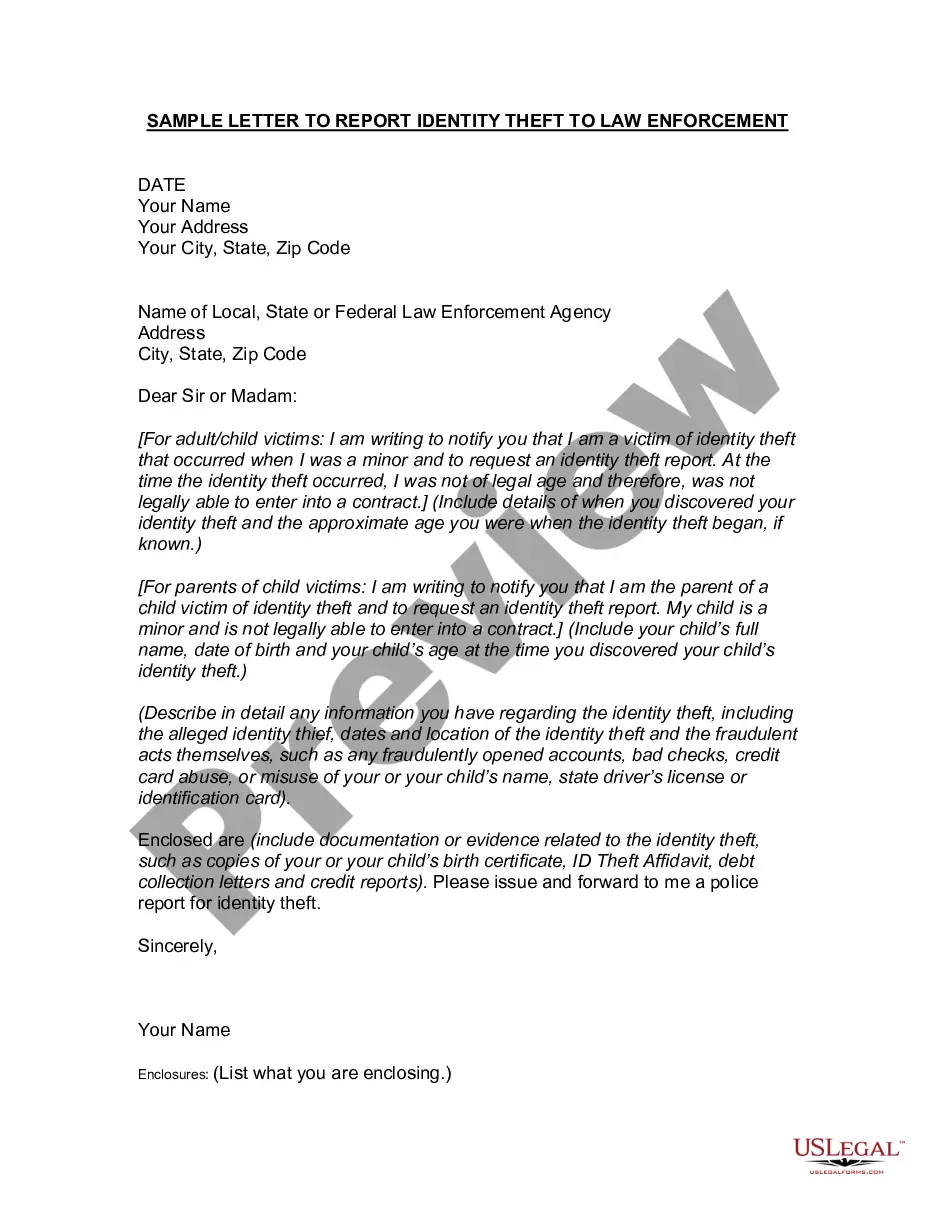
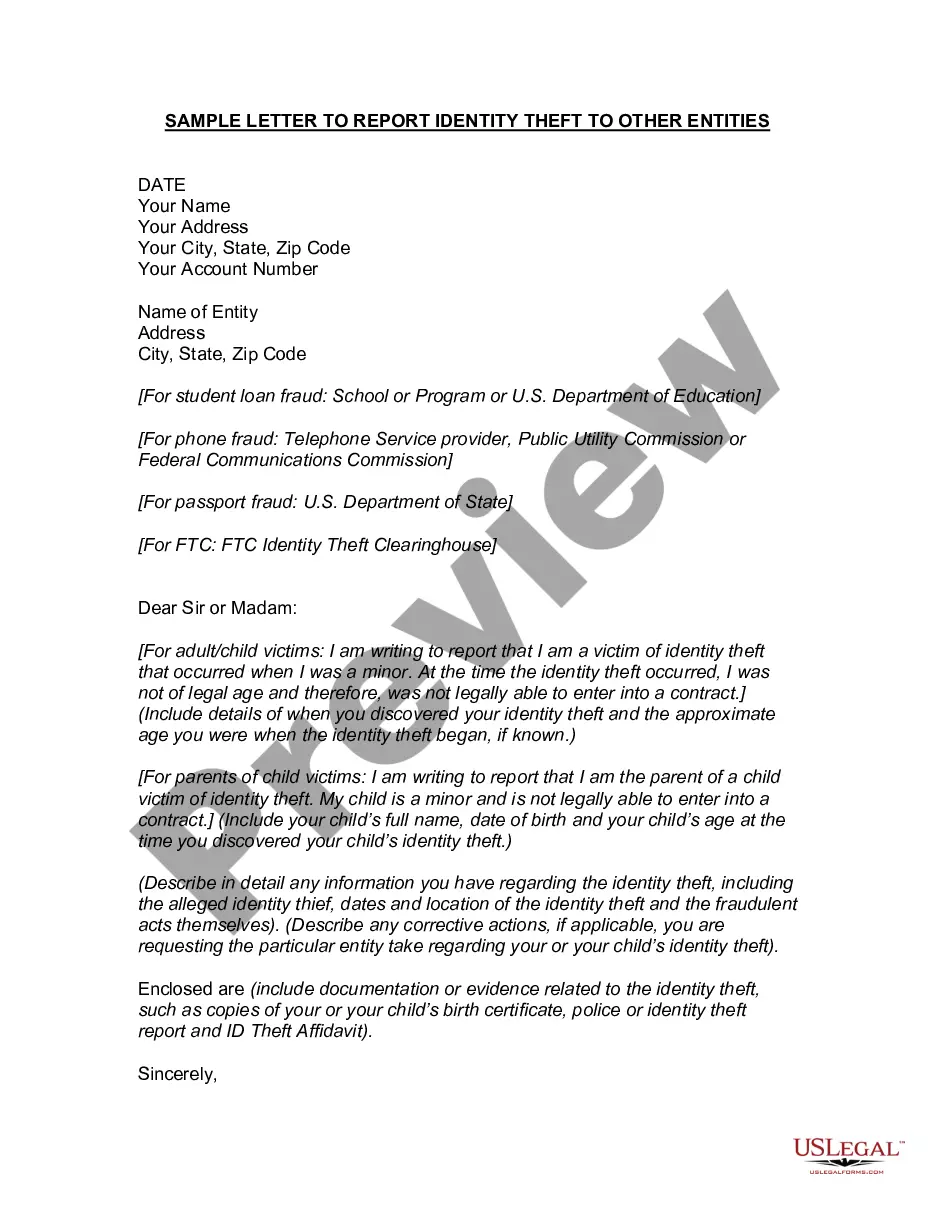
The Letter Notifying Postal Authorities of Identity Theft of Minor is a formal notification document used by a minor or their parent to inform the local U.S. Postal Inspector of identity theft involving the minor's identity and the use of U.S. mail. It requests an identity theft report and seeks information about mail sent in the minor's name, as well as the forwarding of all future mail to the minor's current address. This letter is a crucial step in addressing identity theft specifically for minors, distinguishing it from general identity theft notifications which may not involve minors.
Form components explained
- Date of the letter.
- Your name and address.
- Name and address of the local U.S. Postal Inspector.
- Description of the identity theft incident.
- Details about the minor affected, including their full name and date of birth.
- Request for evidence of where mail was sent in the minor's name.
- List of enclosures providing supporting documentation.

When this form is needed
This form should be used when a minor or their parents discover that the minor's identity has been misused, particularly in connection with U.S. postal services. Situations may include receiving bills or credit reports under the minorâs name, noticing unauthorized changes in address, or finding evidence of identity fraud using the minorâs personal information.
Intended users of this form
- Parents or guardians of minor children who suspect identity theft.
- Minors who are aware of their identity being stolen and wish to file a report.
- Legal representatives acting on behalf of the minor in identity theft cases.
Steps to complete this form
- Fill in the date at the top of the letter.
- Provide your full name and address in the designated fields.
- Identify the local U.S. Postal Inspector's name and address.
- Detail the circumstances of the identity theft, including timeframes and the minor's information.
- Include copies of supporting documents that prove identity theft.
- Sign the letter and list any enclosed documents.
Notarization guidance
This form does not typically require notarization unless specified by local law. However, verifying any specific state requirements is advisable to ensure proper compliance.
Get your form ready online
Our built-in tools help you complete, sign, share, and store your documents in one place.
Make edits, fill in missing information, and update formatting in US Legal Forms—just like you would in MS Word.
Download a copy, print it, send it by email, or mail it via USPS—whatever works best for your next step.
Sign and collect signatures with our SignNow integration. Send to multiple recipients, set reminders, and more. Go Premium to unlock E-Sign.
If this form requires notarization, complete it online through a secure video call—no need to meet a notary in person or wait for an appointment.
We protect your documents and personal data by following strict security and privacy standards.

Make edits, fill in missing information, and update formatting in US Legal Forms—just like you would in MS Word.

Download a copy, print it, send it by email, or mail it via USPS—whatever works best for your next step.

Sign and collect signatures with our SignNow integration. Send to multiple recipients, set reminders, and more. Go Premium to unlock E-Sign.

If this form requires notarization, complete it online through a secure video call—no need to meet a notary in person or wait for an appointment.

We protect your documents and personal data by following strict security and privacy standards.
Mistakes to watch out for
- Failure to provide complete details of the identity theft incident.
- Not including necessary documentation as evidence.
- Leaving out the minor's information or parental details in the letter.
- Sending the letter to the wrong postal inspector or office.
Why complete this form online
- Convenience of accessing and completing the form from home.
- Editability to customize the form according to specific situations.
- Download and print capabilities for local submission.
Summary of main points
- The form is essential for notifying the Postal Inspector about identity theft involving a minor.
- Filling it out accurately helps secure an identity theft report and aids in the resolution process.
- Always include supporting documentation to strengthen your case.
Looking for another form?
Form popularity
FAQ
Ask it to put a fraud alert on your credit report. The credit bureau you contact will then contact the other two credit bureaus. Placing a fraud alert is free. Be sure the credit bureaus have your current contact information so they can get in touch with you.
Check for a credit report to see if your child's information is being misused. If it is, visit IdentityTheft.gov to report and recover from identity theft. Many school forms require personal and, sometimes, sensitive information. Find out how your child's information is collected, used, stored, and thrown away.
Contact one credit bureau. Ask it to put a fraud alert on your credit report. The credit bureau will explain that you can get a free credit report and other rights you have. Mark your calendar. The fraud alert stays on your report for one year.
Personal and account documents are also a common target of mail theft for the same reason. Such post allows an identity thief to get your birth date, Social Security Number, phone, driver's license number, username, and passwords. Basically, identity thieves may target any direct mail that includes personal details.
Contact one of the three credit reporting agencies (Transunion, Equifax, or Experian). After a few days, check with the other two credit bureaus to verify that they've received the fraud alert as well.
Under California law, you can report identity theft to your local police department. Ask the police to issue a police report of identity theft. Give the police as much information on the theft as possible. One way to do this is to provide copies of your credit reports showing the items related to identity theft.
Contact Companies Where Fraud Occurred. Contact the Credit Bureaus. Consider a Child Credit Freeze. Report Identity Theft to the FTC. Find Out Who Has Access to Your Child's Personal Information. Pay Attention to Forms from School. Read the Notices from Your Child's School.
How to Freeze Your Credit for Free. You'll want to place a free credit freeze on all three of your credit reports, including from Experian, Equifax and TransUnion. That said, the process can vary from agency to agency. With Experian, you can visit the Experian Freeze Center and request it online or call 888-397-3742.
The FTC does not investigate or prosecute individual identity theft cases. The FTC enters the complaints into its Consumer Sentinel Network and makes them available to enforcement agencies throughout the country for their investigations.