Shareholder Agreement to Sell Stock to Other Shareholder
Understanding this form
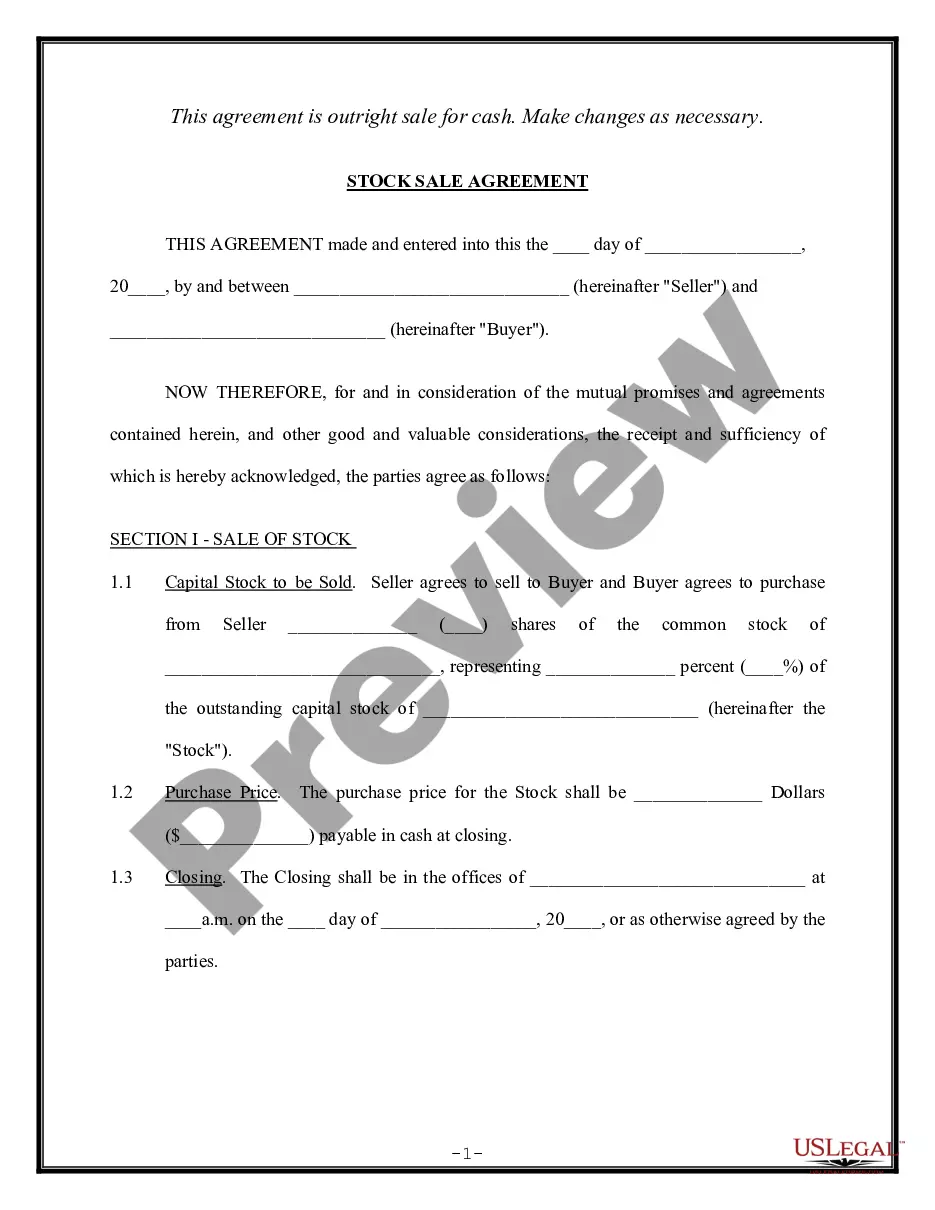
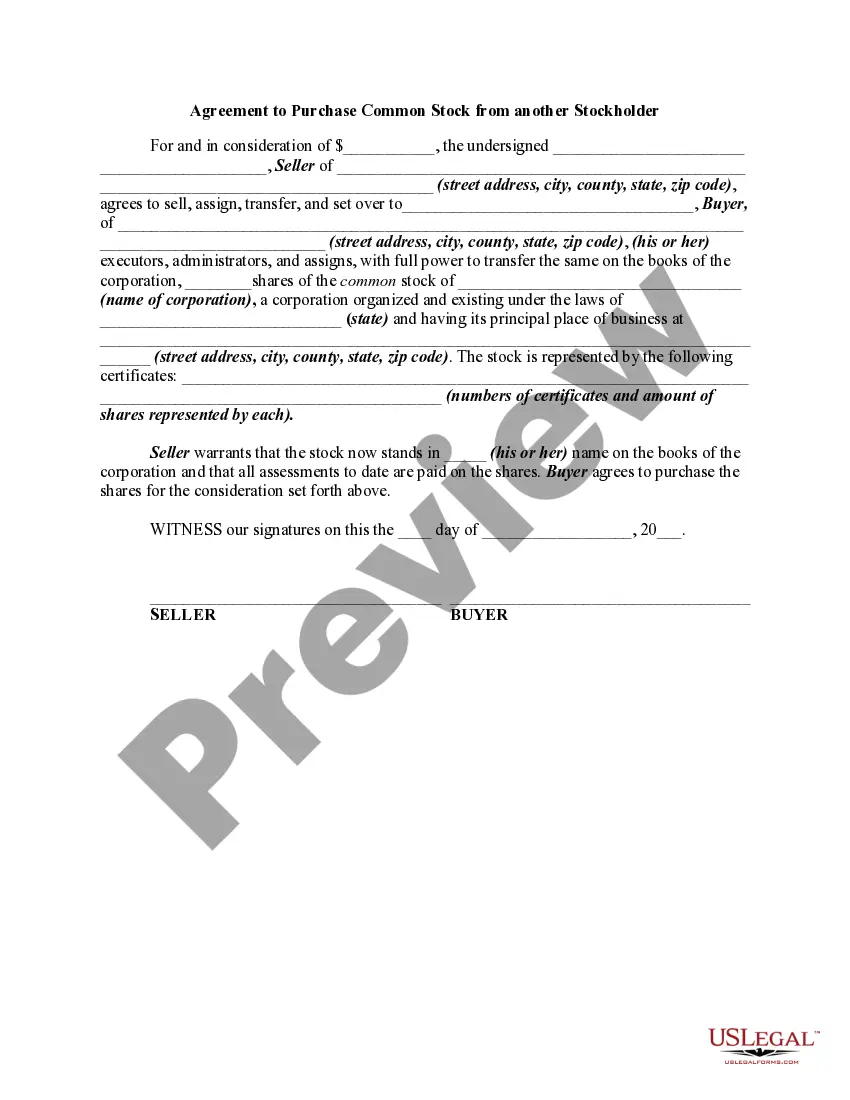
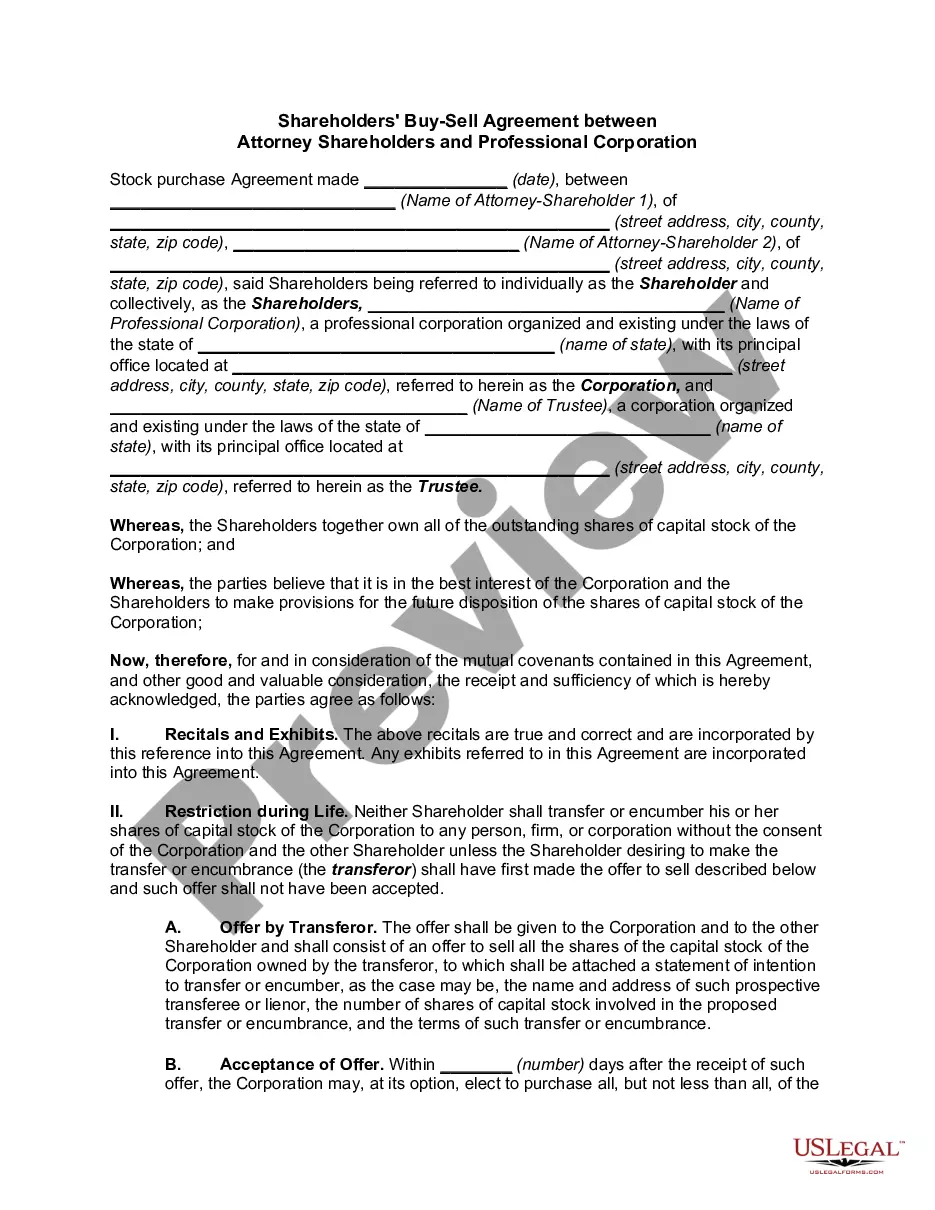
This form is a Shareholder Agreement to Sell Stock to Other Shareholder, specifically a Stock Sale Agreement. It formalizes the sale of shares of common stock between shareholders, outlining the rights and obligations of both the seller and the buyer. This agreement is crucial for maintaining clarity and legality in transactions involving shareholder stock transfers, distinguishing it from other corporate agreements that may not focus solely on stock sales.
Key components of this form
- Details of the parties involved, including seller and buyer information.
- Specific number of shares to be sold and percentage ownership represented.
- Agreed purchase price and payment terms, generally payable in cash.
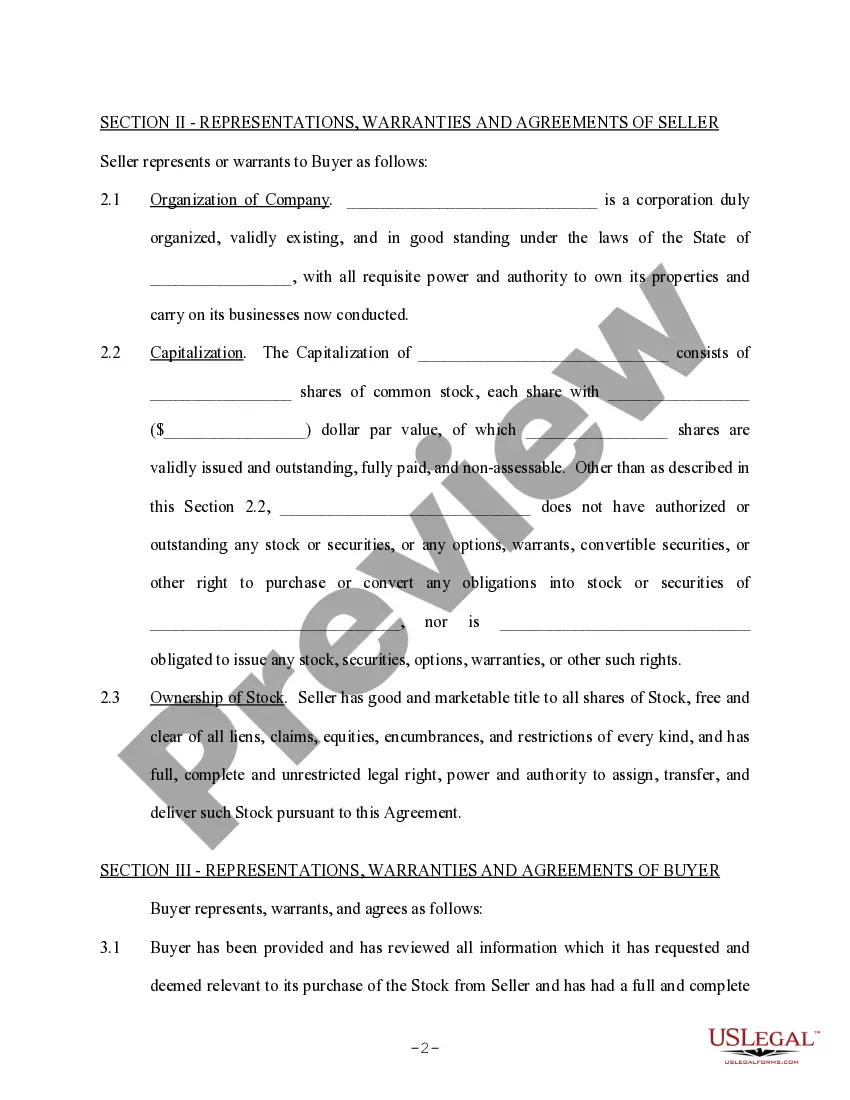
- Representations and warranties made by both the seller and buyer regarding the stock and its ownership.
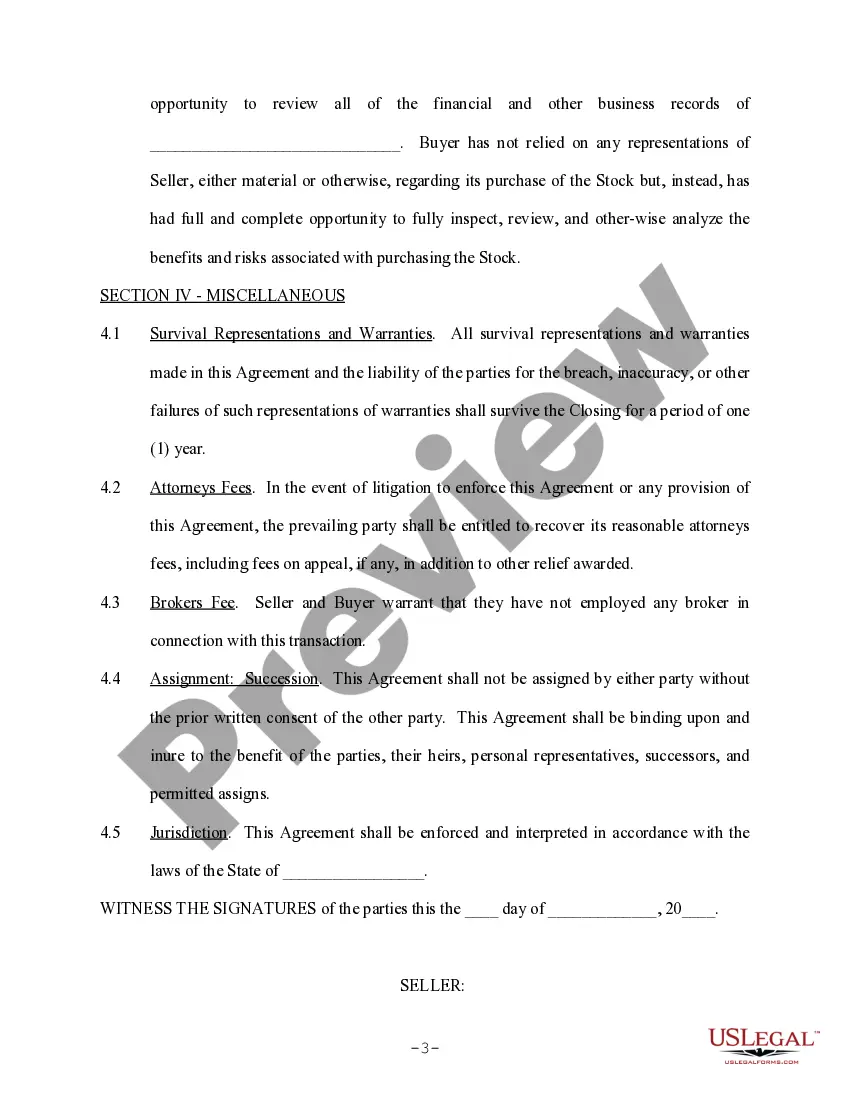
- Provisions for closing the sale, including date, location, and obligations.

When this form is needed
This form is used when a shareholder wishes to sell their shares to another existing shareholder. It's essential in scenarios such as an owner wanting to exit a business or when shareholders need to adjust their ownership stakes. This agreement helps prevent disputes and clarifies each party's rights within the transaction.
Who can use this document
- Shareholders looking to sell their stock to another shareholder in the company.
- Business owners seeking to formalize the process of stock transactions.
- Individuals involved in private companies who need clear records of stock sales.
Instructions for completing this form
- Identify and enter the names of the seller and buyer in the designated spaces.
- Specify the total number of shares being sold and the percentage of ownership they represent.
- Fill in the agreed purchase price for the shares.
- Set the closing date and location for the transaction.
- Both parties must review, then sign and date the agreement.
Notarization guidance
This form does not typically require notarization unless specified by local law. However, having it notarized can provide an additional layer of verification and security in transactions.
Get your form ready online
Our built-in tools help you complete, sign, share, and store your documents in one place.
Make edits, fill in missing information, and update formatting in US Legal Forms—just like you would in MS Word.
Download a copy, print it, send it by email, or mail it via USPS—whatever works best for your next step.
Sign and collect signatures with our SignNow integration. Send to multiple recipients, set reminders, and more. Go Premium to unlock E-Sign.
If this form requires notarization, complete it online through a secure video call—no need to meet a notary in person or wait for an appointment.
We protect your documents and personal data by following strict security and privacy standards.

Make edits, fill in missing information, and update formatting in US Legal Forms—just like you would in MS Word.

Download a copy, print it, send it by email, or mail it via USPS—whatever works best for your next step.

Sign and collect signatures with our SignNow integration. Send to multiple recipients, set reminders, and more. Go Premium to unlock E-Sign.

If this form requires notarization, complete it online through a secure video call—no need to meet a notary in person or wait for an appointment.

We protect your documents and personal data by following strict security and privacy standards.
Common mistakes
- Failing to clearly specify the number of shares and their value.
- Not including accurate representations and warranties, leading to potential disputes.
- Leaving out signatures or crucial dates, which can invalidate the agreement.
Benefits of completing this form online
- Convenience of accessing and completing the form from home or your business.
- The ability to edit and customize the document as needed before printing.
- Reliability of having a document created based on templates drafted by licensed attorneys.
Main things to remember
- This form is essential for formalizing stock sales between current shareholders.
- Key elements include the identification of parties, stock details, and closing procedures.
- Proper completion helps avoid disputes and ensures clarity in all transactions.
Looking for another form?





Form popularity
FAQ
Major Shareholder Exit When a major shareholder sells a large number of shares, it may cause the value of the company's stock to fall, because stock prices are determined by the supply and demand for the stock and the sale of a large number of shares creates a sudden increase in supply.
A shareholder can sell or give away shares to anyone unless the company's articles impose an effective restriction, or the shareholder has agreed not to transfer them or to deal with them in some other way in a binding contract.
The answer is usually no, but there are vital exceptions. Shareholders have an ownership interest in the company whose stock they own, and companies can't generally take away that ownership.The two most common are when a company gets acquired and when it has an agreement among shareholders calling for forced sales.
This is because a shareholders agreement is a contract between the shareholders and as such any action taken in breach of it may lead to a right to claim damages, but will usually not affect the legal validity of the act complained of.
In general, shareholders can only be forced to give up or sell shares if the articles of association or some contractual agreement include this requirement. In practice, private companies often have suitable articles or contracts so that the remaining owner-managers retain control if an individual leaves the company.
Sales of minority shares in closely-held corporations will generally be at a discount, but it's still necessary to make a reasonable offer, or else the minority shareholder will simply refuse it. If we can't come to an agreement, there's no simple way to compel the minority shareholder to sell.
Is a shareholders agreement legally binding? Once a shareholders agreement has been signed it should be legally binding, provided that it complies with the usual 4 aspects of a contract: offer, acceptance, consideration and an intention to create legal relations.
Introduction. Step 1: Decide on the issues the agreement should cover. Step 2: Identify the interests of shareholders. Step 3: Identify shareholder value. Step 4: Identify who will make decisions - shareholders or directors. Step 5: Decide how voting power of shareholders should add up. Further information and documents.
This is where a shareholders agreement comes in.Without such restrictions, a shareholder can freely sell his shares, which might result in the remaining shareholders being in business with someone they do not know or approve of; the ability to force certain shareholders to sell their shares to the others.