Auction of Real Property Agreement
What is this form?
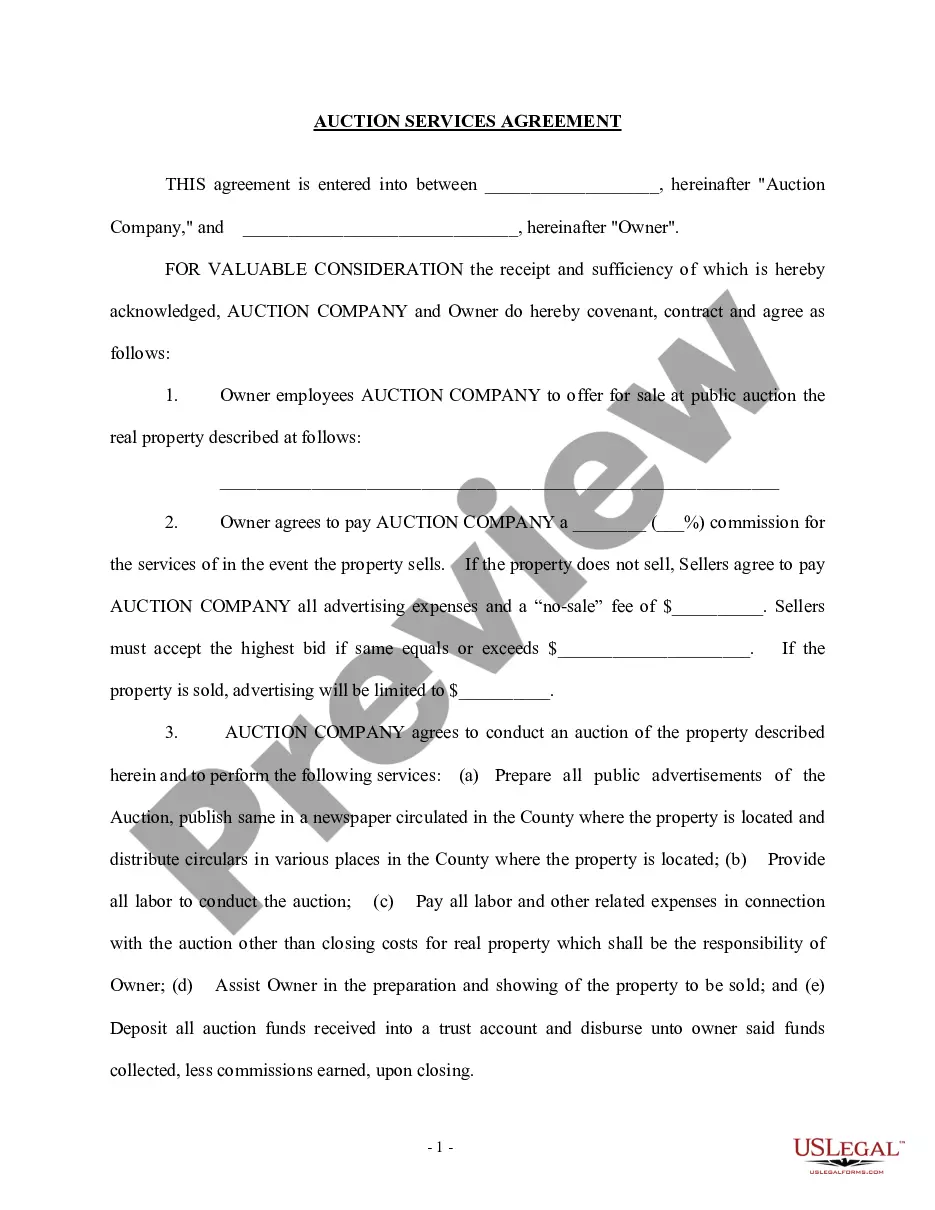
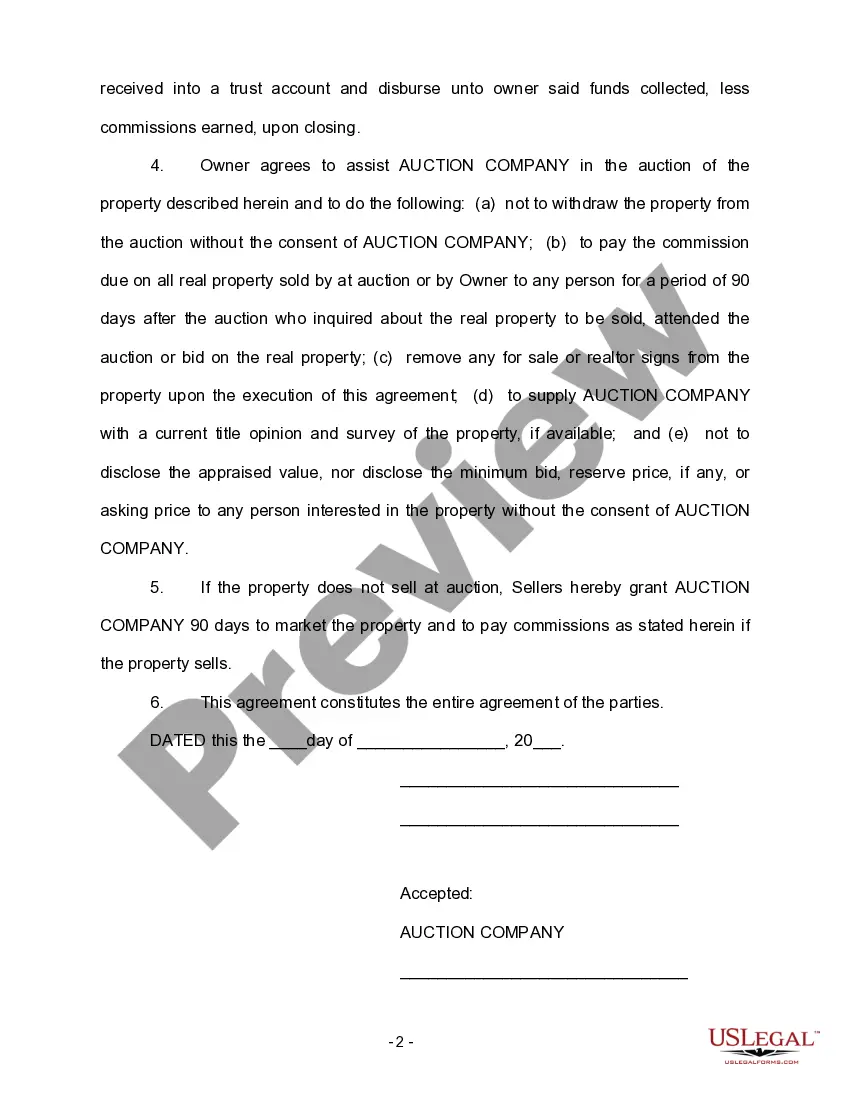
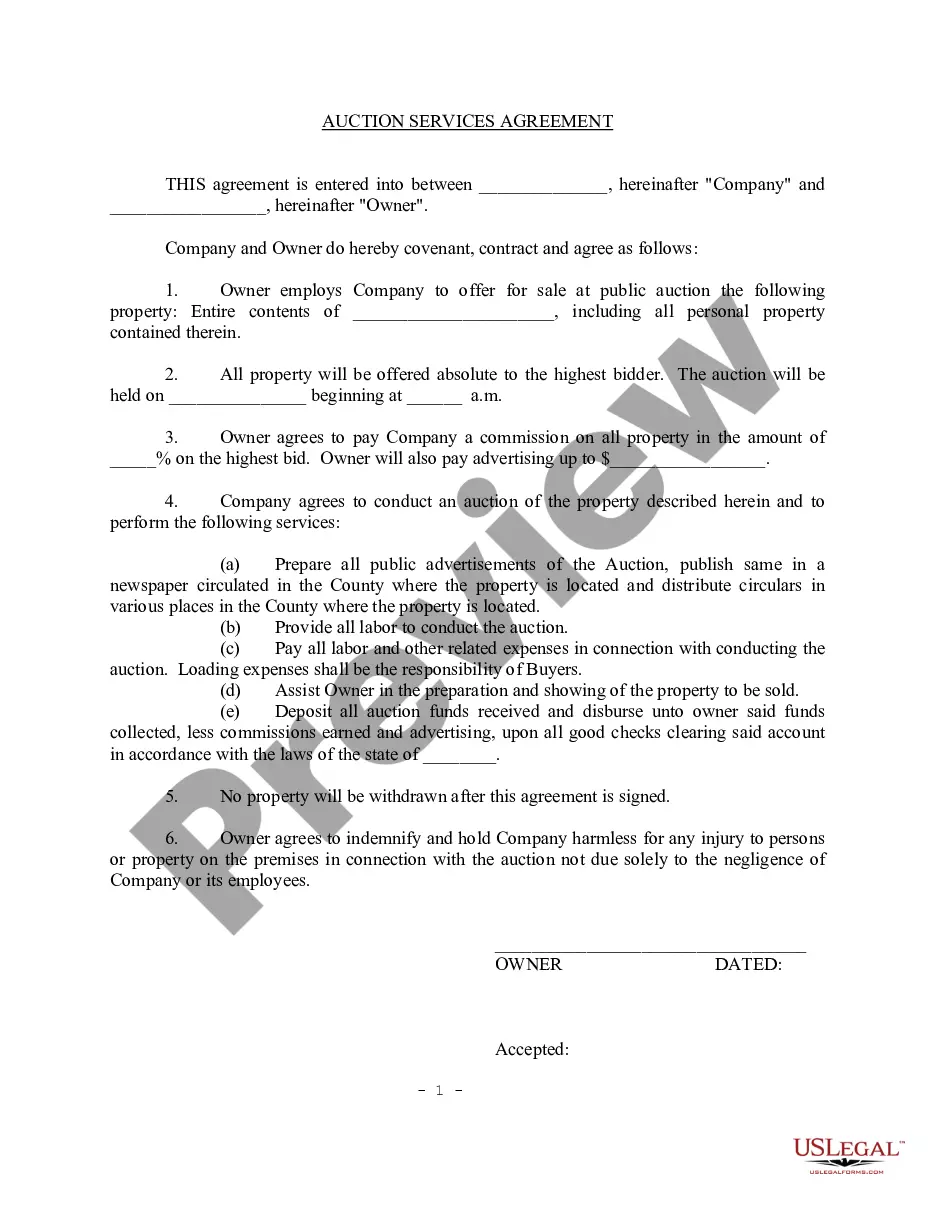
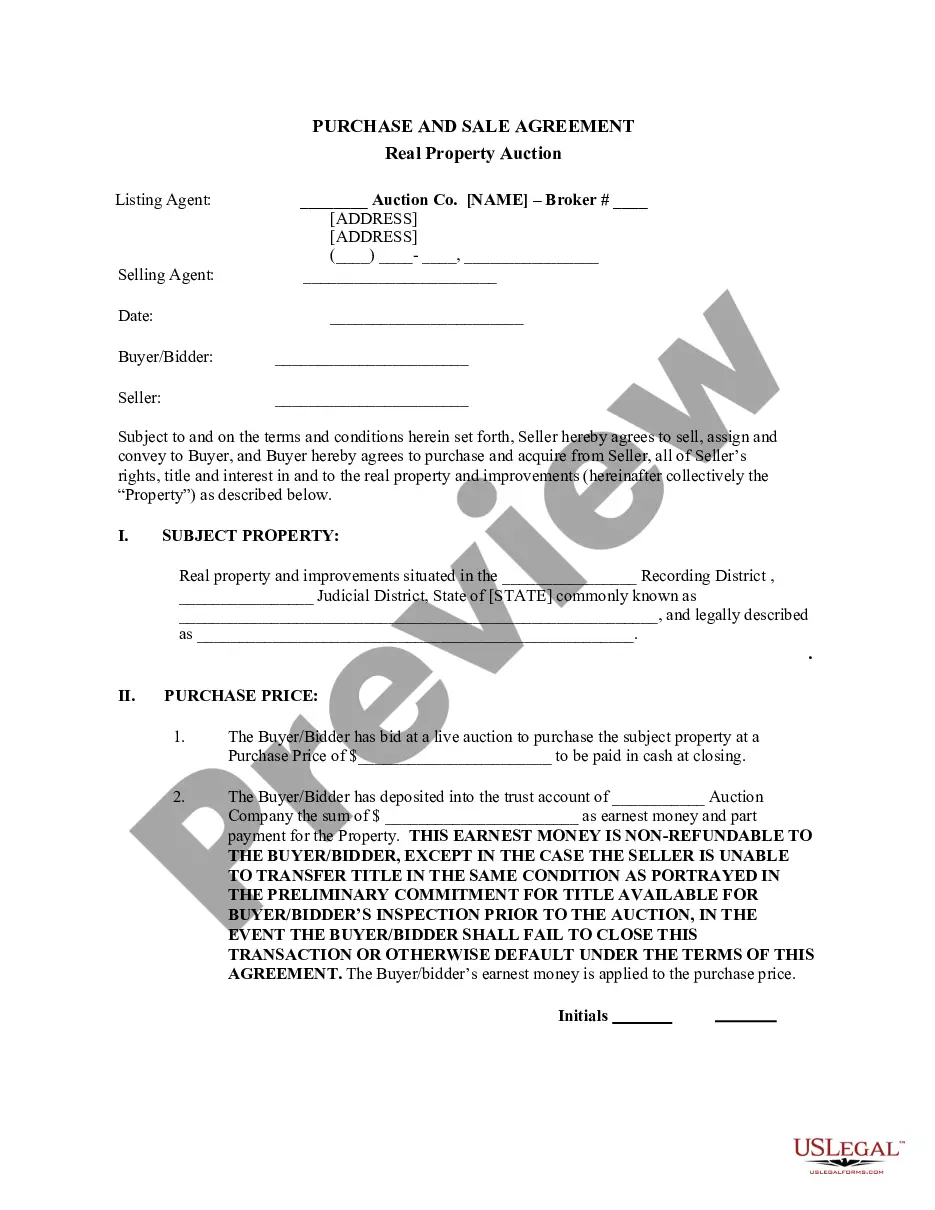
The Auction of Real Property Agreement is a legally binding contract between a property owner and an auction company. This form outlines the terms under which the auction company will sell the specified property at a public auction. Unlike other sales agreements, this document specifically focuses on the auction process, detailing commission structures, advertising obligations, and the responsibilities of both parties. It helps ensure that all parties are clear about their roles and the terms of the sale, paving the way for a transparent auction process.
What’s included in this form
- Identification of the auction company and owner.
- Description of the real property to be auctioned.
- Commission structure, including fees if the property does not sell.
- Responsibilities of the auction company, including advertisement and auction management.
- Obligations of the owner, including exclusivity and providing necessary documents.
- Provisions for adjusting terms if the sale does not proceed.
When this form is needed
You should use the Auction of Real Property Agreement when you want to sell real estate through a public auction. This agreement is beneficial if you are unsure about the selling process, need assistance marketing the property, or aim to reach a broad audience of potential buyers. It is particularly useful when seeking a swift sale or when conventional sales methods may not attract sufficient interest.
Intended users of this form
This agreement is suitable for:
- Property owners looking to sell real estate through an auction.
- Individuals who prefer to work with a professional auction company.
- Real estate agents who facilitate auctions on behalf of sellers.
- Anyone interested in leveraging the auction method for quick property sales.
Steps to complete this form
- Identify the parties involved: fill in the names of the auction company and the property owner.
- Specify the property: clearly describe the real estate to be auctioned.
- Insert the commission structure: include the percentage or fixed amount the auction company will receive if the property sells.
- Determine advertising details: note how and where the property will be marketed.
- Ensure both parties sign and date the document to validate the agreement.
Notarization guidance
This document requires notarization to meet legal standards. US Legal Forms provides secure online notarization powered by Notarize, allowing you to complete the process through a verified video call, available 24/7.
Get your form ready online
Our built-in tools help you complete, sign, share, and store your documents in one place.
Make edits, fill in missing information, and update formatting in US Legal Forms—just like you would in MS Word.
Download a copy, print it, send it by email, or mail it via USPS—whatever works best for your next step.
Sign and collect signatures with our SignNow integration. Send to multiple recipients, set reminders, and more. Go Premium to unlock E-Sign.
If this form requires notarization, complete it online through a secure video call—no need to meet a notary in person or wait for an appointment.
We protect your documents and personal data by following strict security and privacy standards.

Make edits, fill in missing information, and update formatting in US Legal Forms—just like you would in MS Word.

Download a copy, print it, send it by email, or mail it via USPS—whatever works best for your next step.

Sign and collect signatures with our SignNow integration. Send to multiple recipients, set reminders, and more. Go Premium to unlock E-Sign.

If this form requires notarization, complete it online through a secure video call—no need to meet a notary in person or wait for an appointment.

We protect your documents and personal data by following strict security and privacy standards.
Typical mistakes to avoid
- Failing to clearly describe the property can lead to confusion during the auction.
- Not specifying the advertising plan may result in inadequate exposure for the property.
- Overlooking to sign and date the agreement, making it unenforceable.
- Ignoring state-specific regulations that could affect the auction process.
Benefits of using this form online
- Convenience of downloading and completing the form at your own pace.
- Editable templates that allow for customization to fit specific needs.
- Access to professionally drafted forms to ensure legal soundness.
- Quick turnaround time in preparing necessary documentation for an auction.
Key takeaways
- The Auction of Real Property Agreement is essential for structuring the sale of property at auction.
- Clear terms in the agreement protect both the auction company and the owner.
- Ensure compliance with local auction laws to avoid potential issues.
- Using this form online provides ease of access and reliability.
Looking for another form?




Form popularity
FAQ
How much does selling at auction cost? You should expect to pay your auctioneer around 2.5% of the price you get for the property and you also need to find out if there will be advertising costs. You will also need to pay a solicitor to help with the legal side prior to the auction and on the day.
An auction is usually a process of buying and selling goods or services by offering them up for bid, taking bids, and then selling the item to the highest bidder or buying the item from the lowest bidder.Participants bid openly against one another, with each subsequent bid required to be higher than the previous bid.
1 Goods Sold in Lots. In an auction sale, there can be many goods up for sale of many kinds. 2 Completion of Sale. The sale is complete when the auctioneer says it is complete. 3 Seller may Reserve Right to Bid. 4 Sale Not Notified. 5 Reserve Price. 6 Pretend Bidding. 7 No Credit.
Each registered bidder is given a bidder card with a number that is used to identify all participants.The bidders then call out their bids, with each bid being higher than the subsequent bid. The bidders lift up their bidder card to announce their bid price so the auctioneer can identify who is making the bid.
Is the sale legally binding? Yes, all the in-room and online auction properties are sold on an 'unconditional' basis. This means that the property has legally exchanged contracts on the fall of the gavel/end of the online auction.
Should a successful bidder choose not to pay, an auctioneer has every legal right to seek payment for purchased items, including canceling the sale and reoffering the property without reserve. Typically a defaulted lot is either reoffered or returned to the consignor, but can be tainted to the marketplace.
1 Goods Sold in Lots. In an auction sale, there can be many goods up for sale of many kinds. 2 Completion of Sale. The sale is complete when the auctioneer says it is complete. 3 Seller may Reserve Right to Bid. 4 Sale Not Notified. 5 Reserve Price. 6 Pretend Bidding. 7 No Credit.
Generally, an auction is complete when the bid is accepted. A binding contract is created by the auction. The seller can also set a reserve price in advance. If the final bid does not reach the reserve price, the property remains unsold.
When it comes to Internet auctions, things become a little more complex. If the seller is a private individual, then as long as the goods are as described, you have no recourse the rest of the Sale of Goods Act doesn't apply. However, some sales on auction sites aren't auctions at all.