Lease of Machinery for use in Manufacturing
Understanding this form
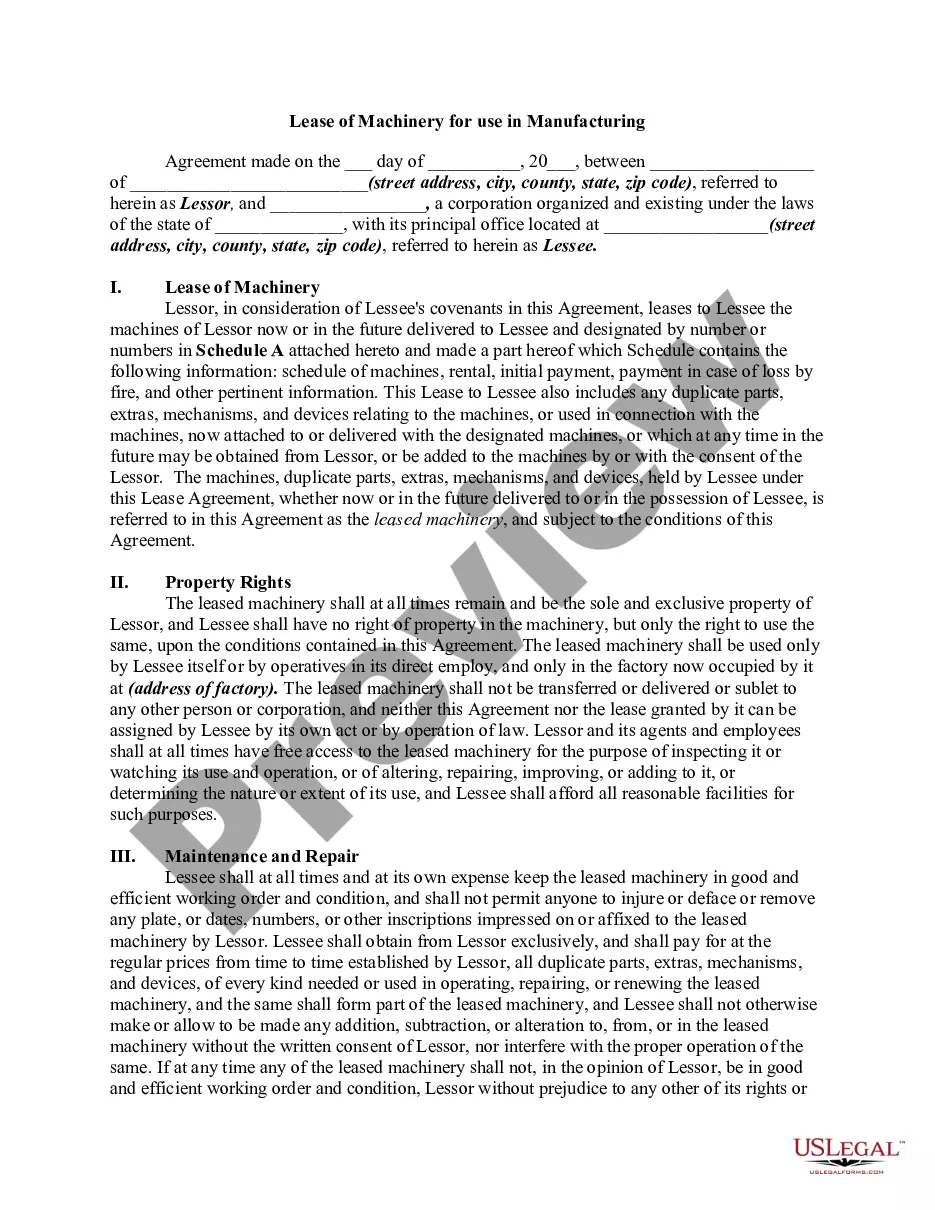
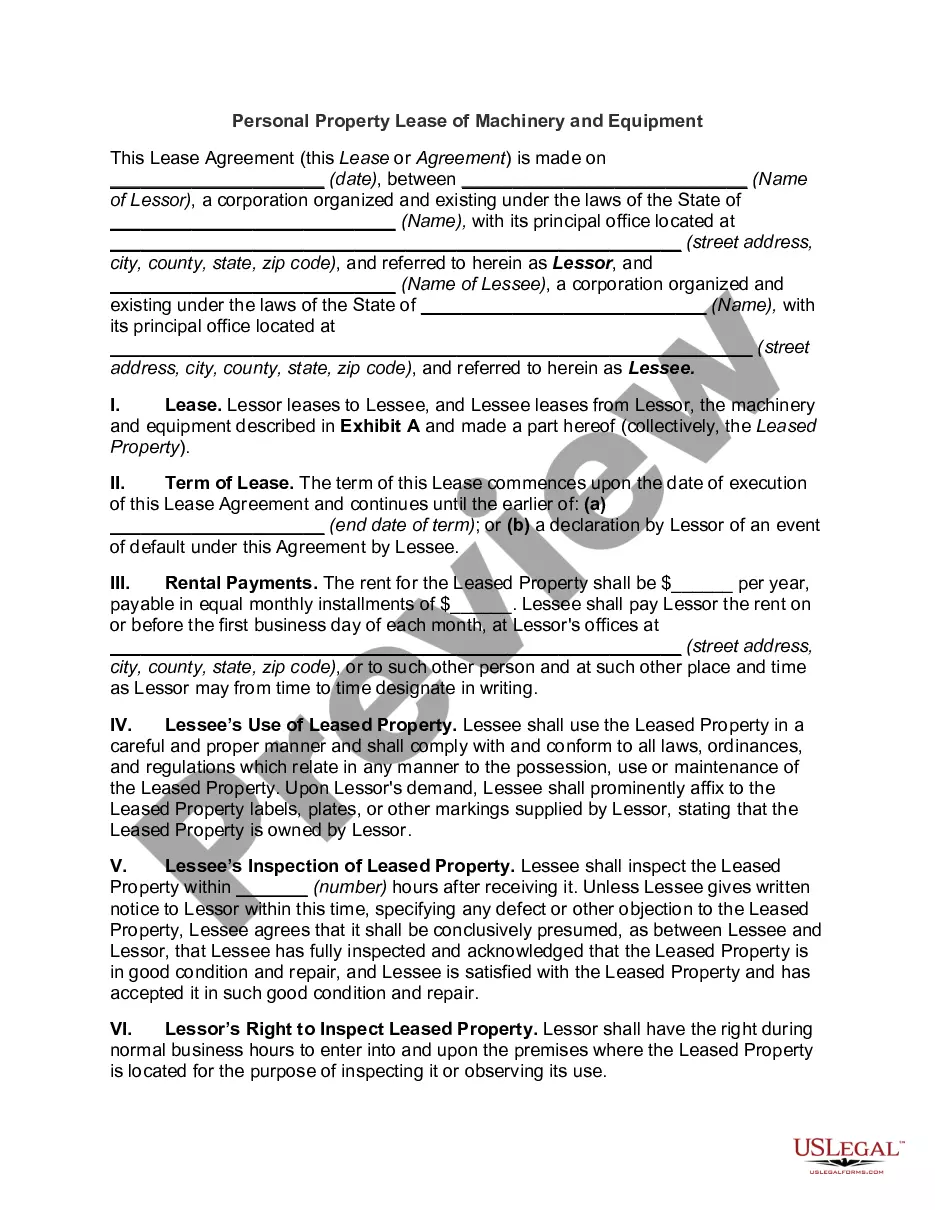
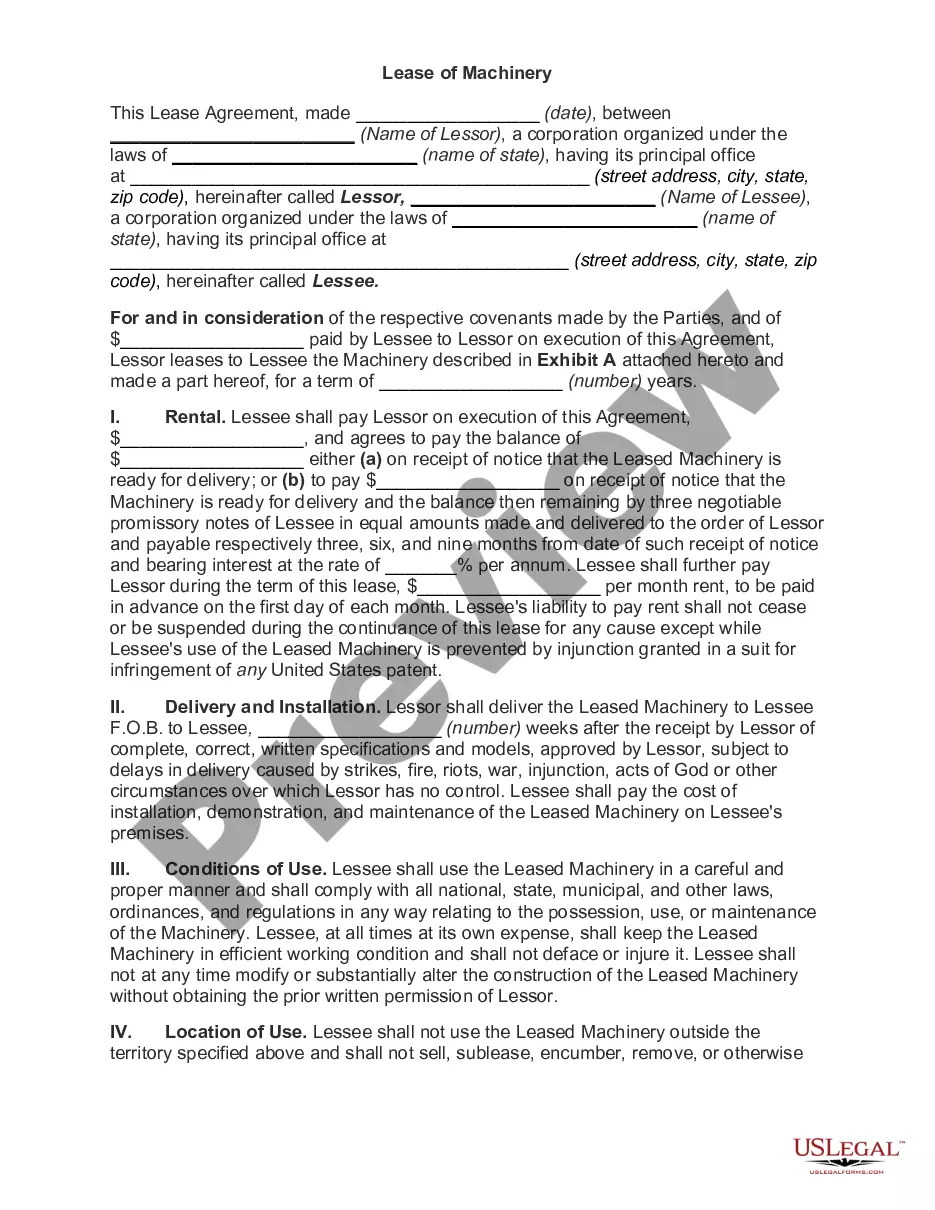
The Lease of Machinery for use in Manufacturing is a legal document that establishes the terms under which one party (the Lessor) allows another party (the Lessee) to use machinery for manufacturing purposes. This form is essential for businesses that wish to lease expensive machinery while ensuring that ownership remains with the Lessor. Unlike a purchase agreement, this lease maintains the Lessor's rights over the machinery, specifying usage, maintenance, and liability terms.
Key components of this form
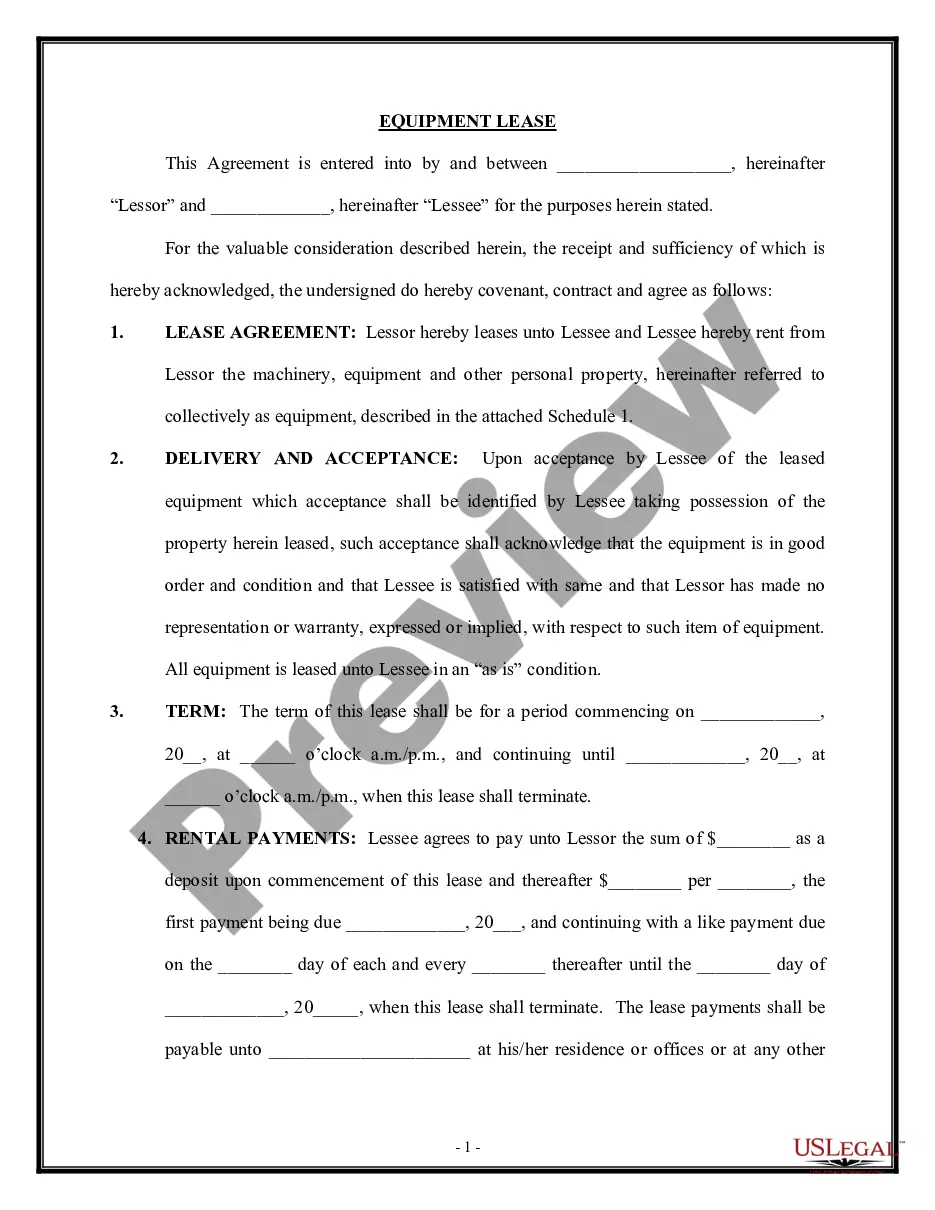
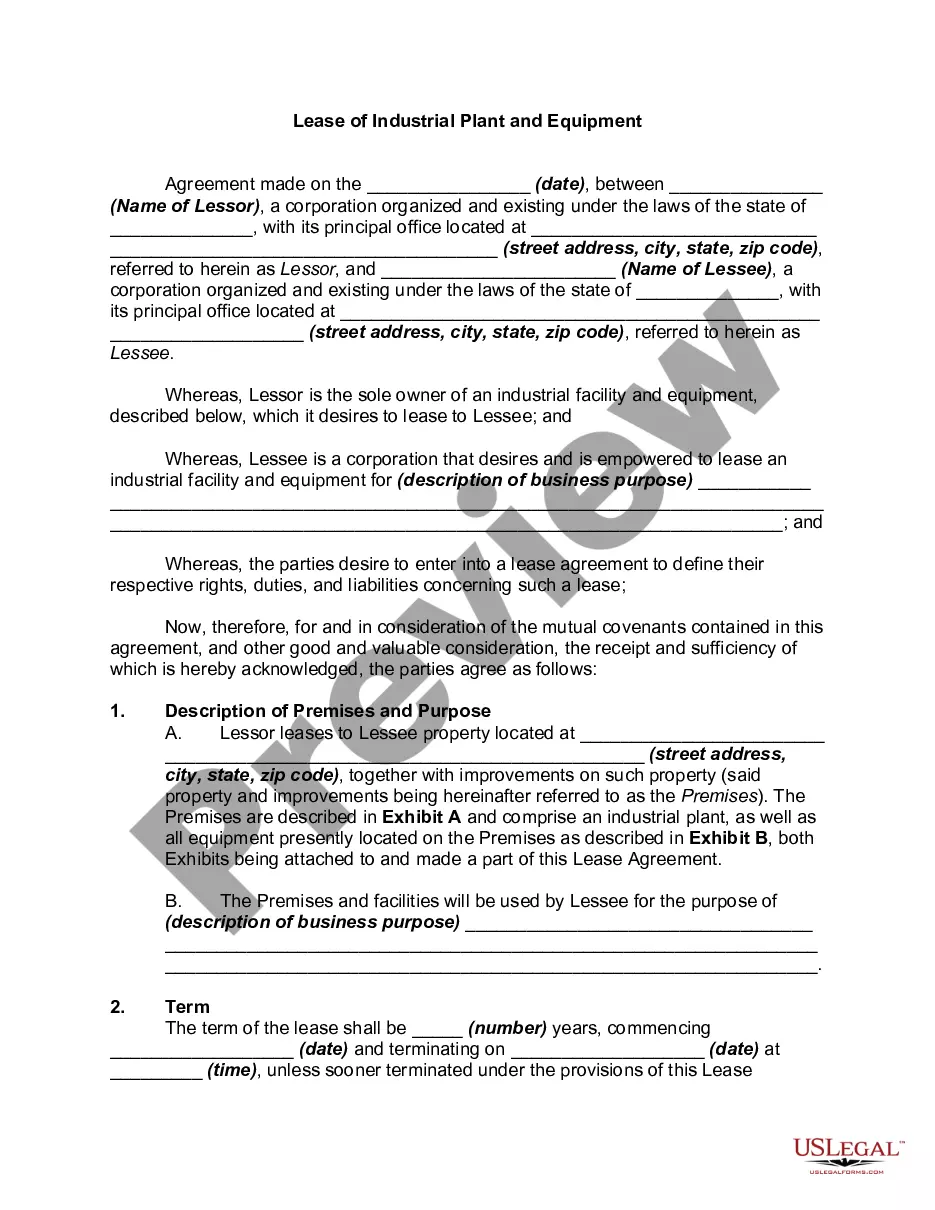
- Identification of the Lessor and Lessee, including their physical addresses.
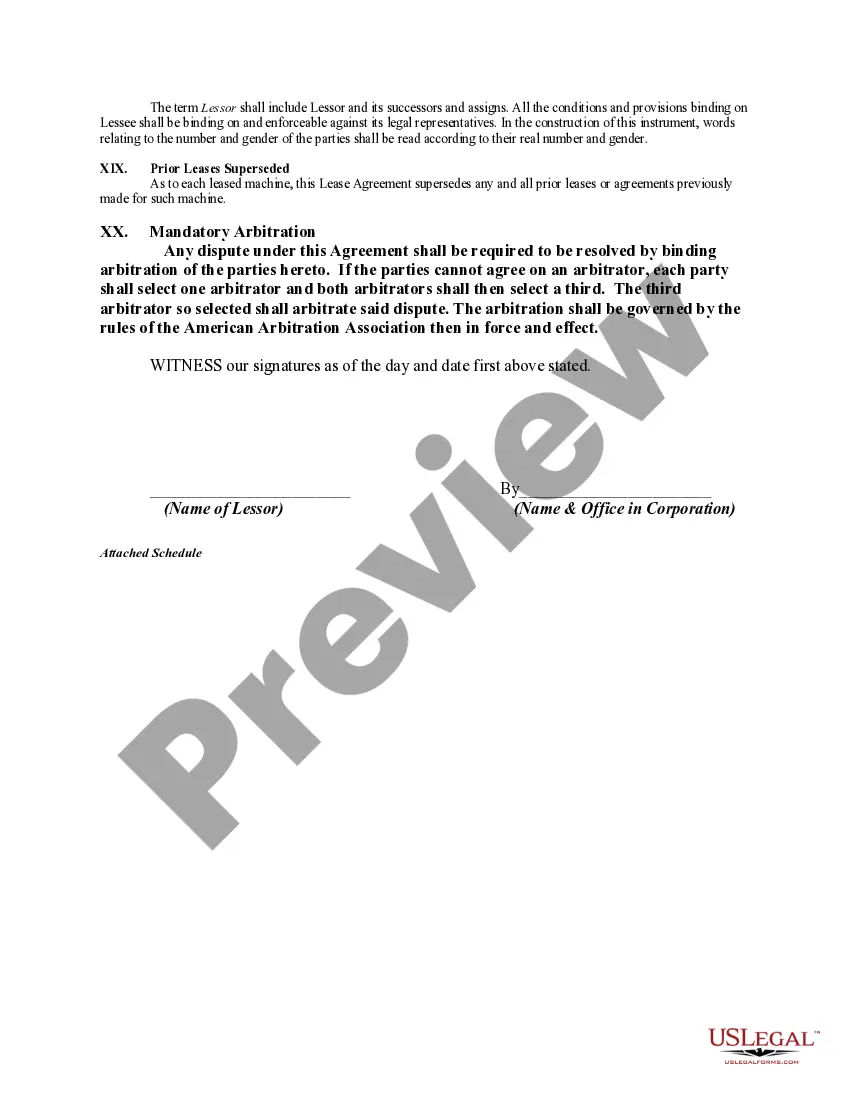
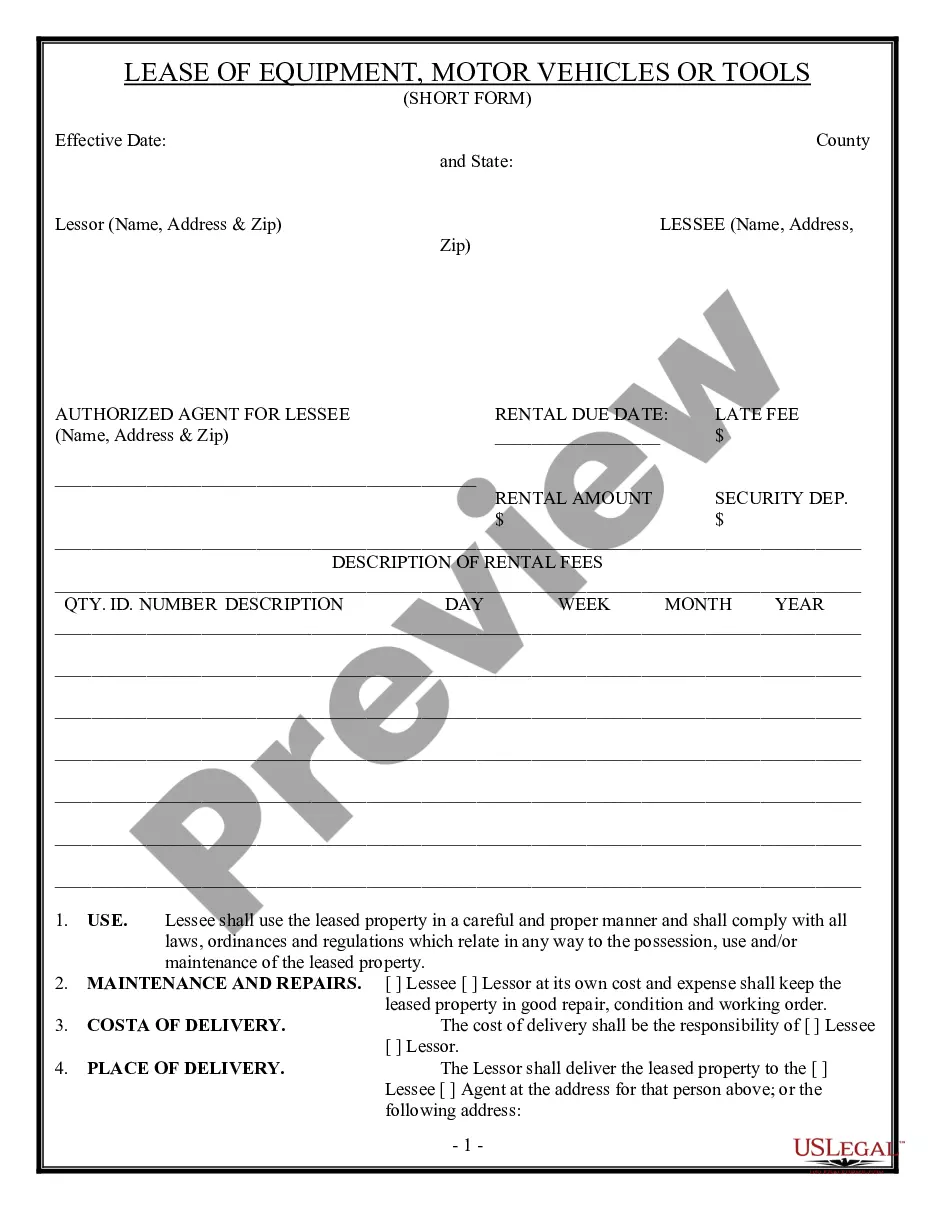
- Details of the machinery being leased, including identification numbers and a schedule of machines.
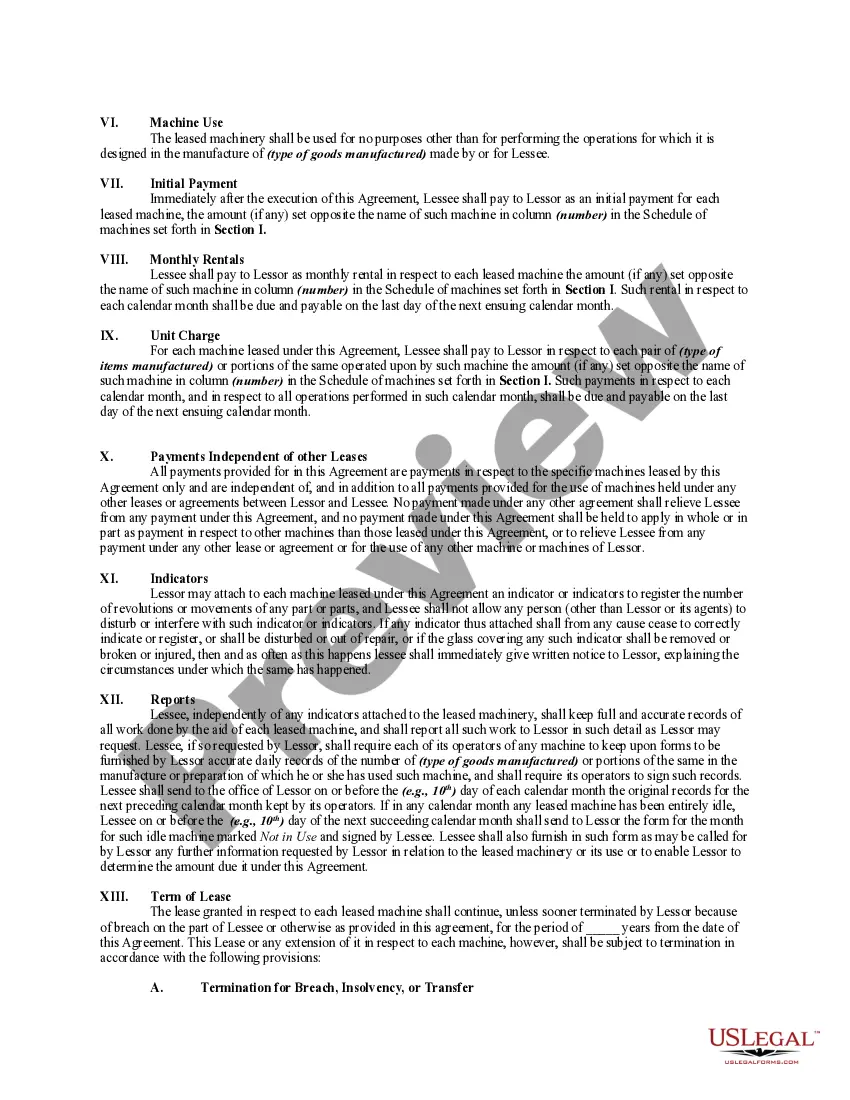
- Payment terms, including initial payment and monthly rental rates.
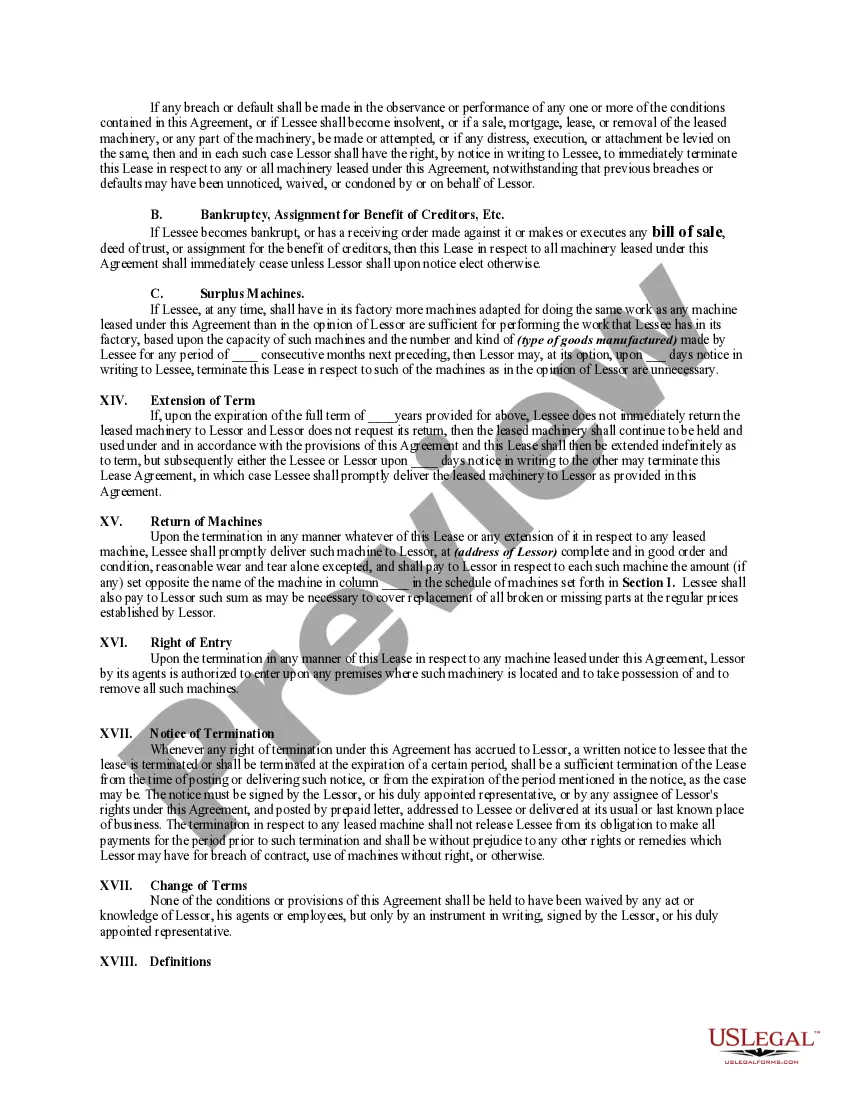
- Lease term, conditions for termination, and consequences of breach.
- Liability and risk clauses, outlining responsibilities for maintenance and damage.
Situations where this form applies
This lease form should be used when a business intends to rent machinery to support its manufacturing operations. It is particularly relevant when the machinery is expensive and requires careful management and maintenance. Utilization of this form ensures clear communication of both parties' rights and responsibilities and outlines the financial implications of the lease.
Who can use this document
- Manufacturers seeking to lease machinery instead of purchasing it outright.
- Business owners looking for a structured agreement to define the use of leasing machinery.
- Corporations or LLCs that require sophisticated equipment without incurring large upfront costs.
Steps to complete this form
- Identify the parties involved by filling in the names and addresses of the Lessor and Lessee.
- Specify the machinery being leased by detailing the identification numbers and including a schedule as needed.
- Enter payment terms, including the initial payment and monthly rental amounts for each piece of machinery.
- Outline the lease duration and any conditions for termination or breach of contract.
- Ensure the form is signed and dated by both parties to finalize the agreement.
Notarization requirements for this form
This form does not typically require notarization to be legally valid. However, some jurisdictions or document types may still require it. US Legal Forms provides secure online notarization powered by Notarize, available 24/7 for added convenience.
Get your form ready online
Our built-in tools help you complete, sign, share, and store your documents in one place.
Make edits, fill in missing information, and update formatting in US Legal Forms—just like you would in MS Word.
Download a copy, print it, send it by email, or mail it via USPS—whatever works best for your next step.
Sign and collect signatures with our SignNow integration. Send to multiple recipients, set reminders, and more. Go Premium to unlock E-Sign.
If this form requires notarization, complete it online through a secure video call—no need to meet a notary in person or wait for an appointment.
We protect your documents and personal data by following strict security and privacy standards.

Make edits, fill in missing information, and update formatting in US Legal Forms—just like you would in MS Word.

Download a copy, print it, send it by email, or mail it via USPS—whatever works best for your next step.

Sign and collect signatures with our SignNow integration. Send to multiple recipients, set reminders, and more. Go Premium to unlock E-Sign.

If this form requires notarization, complete it online through a secure video call—no need to meet a notary in person or wait for an appointment.

We protect your documents and personal data by following strict security and privacy standards.
Common mistakes
- Failing to include all machinery in the schedule, leading to confusion on what is leased.
- Not specifying payment amounts clearly, which can cause disputes over rental fees.
- Neglecting to outline conditions for maintenance and repair, thereby creating liabilities.
- Missing signatures or dates, which may render the lease invalid.
Why use this form online
- Immediate access to a professionally drafted lease that caters to manufacturing needs.
- Easy customization to fit specific machinery and terms relevant to your business.
- Secure downloading and storage options for important legal documents.
Legal use & context
- This form is enforceable under contract law, laying out clear expectations between parties.
- Non-compliance may result in lease termination and potential financial liabilities.
- It is advisable to review applicable state laws regarding machinery leasing agreements.
Looking for another form?
Form popularity
FAQ
Accounting Treatment Of Leased Asset The lease payments also include interest, and the lessee needs to record it separately. For instance, if in a lease payment of $1000, $200 is for the interest expense, then $800 would be a debit to the capital lease liability account and $200 to the interest account.
There are two main types of leases that can be used to purchase used equipment: Operating leases and Capitol Finance leases. Operating Lease This type of lease offers the lowest payment in any kind of financing scheme.There's also a tax advantage because the equipment is both considered an asset and a liability.
Assets being leased are not recorded on the company's balance sheet; they are expensed on the income statement. So, they affect both operating and net income.
Unlike an outright purchase or equipment secured through a standard loan, equipment under an operating lease cannot be listed as capital. It's accounted for as a rental expense. This provides two specific financial advantages: Equipment is not recorded as an asset or liability.
The equipment account is debited by the present value of the minimum lease payments and the lease liability account is the difference between the value of the equipment and cash paid at the beginning of the year. Depreciation expense must be recorded for the equipment that is leased.
The equipment account is debited by the present value of the minimum lease payments and the lease liability account is the difference between the value of the equipment and cash paid at the beginning of the year. Depreciation expense must be recorded for the equipment that is leased.
A lessee must capitalize a leased asset if the lease contract entered into satisfies at least one of the four criteria published by the Financial Accounting Standards Board (FASB). An asset should be capitalized if:The lease runs for 75% or more of the asset's useful life.