Agreement for Purchase and Sale of Restaurant including Bar Business, Liquor License and Real Estate, with Purchase to Finance Part of Purchase Price
Understanding this form
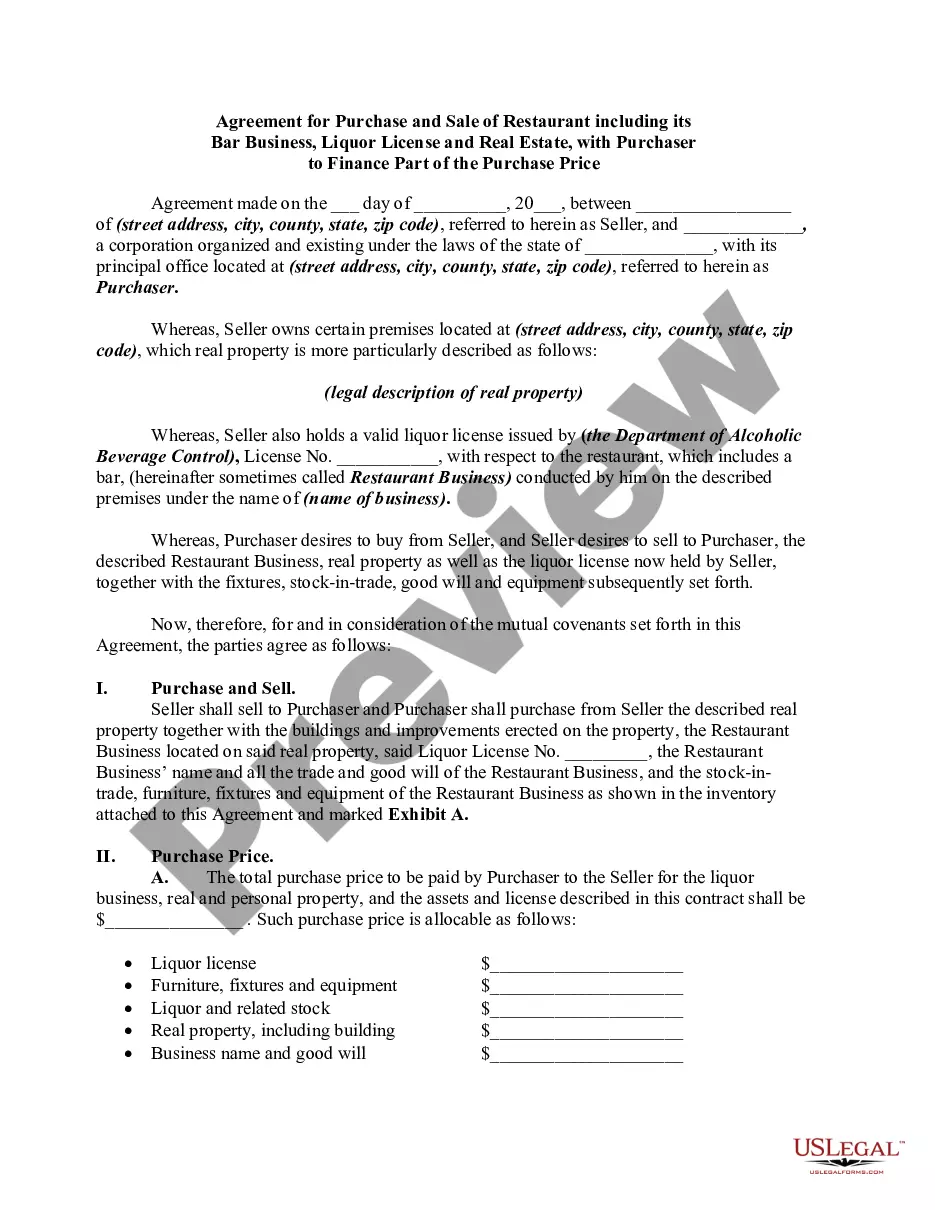
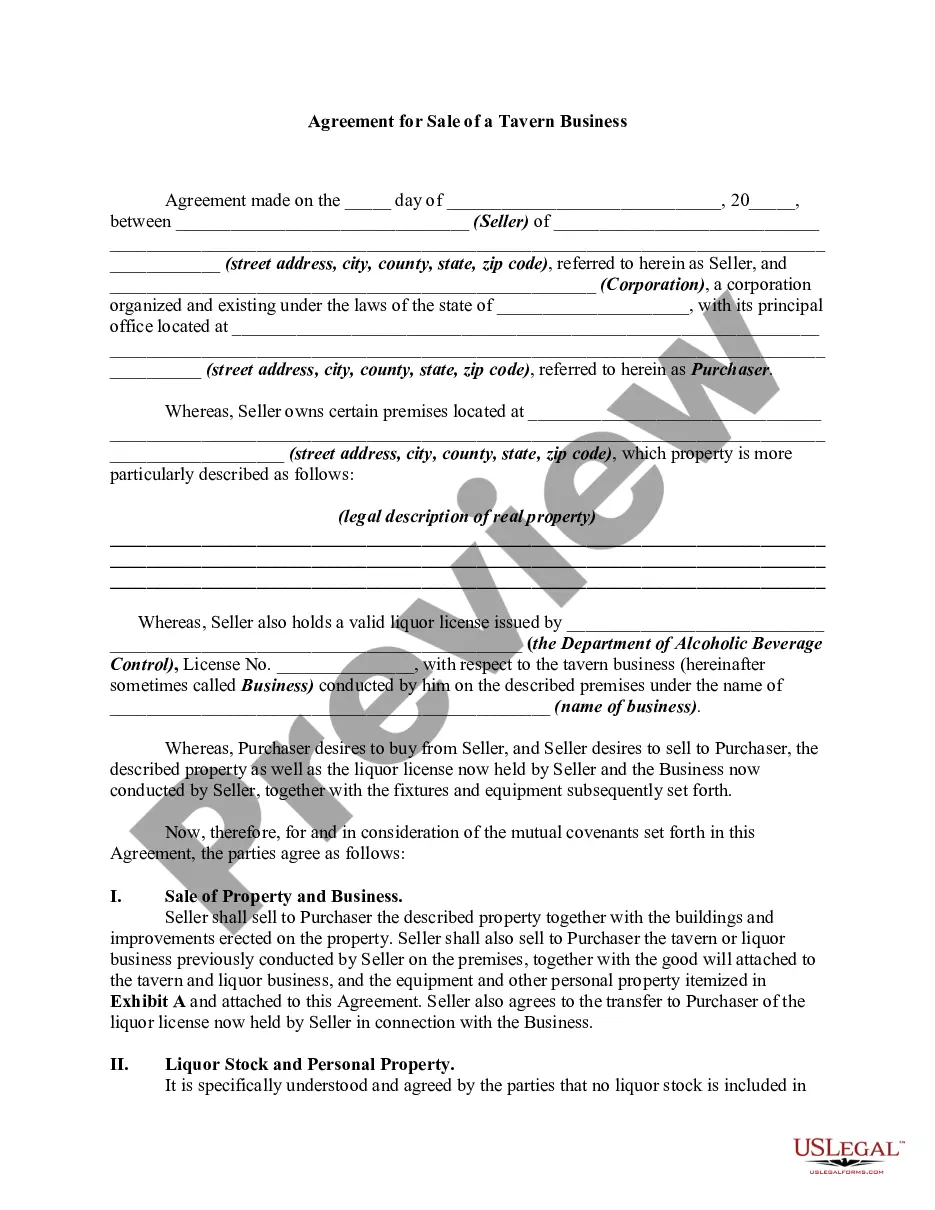
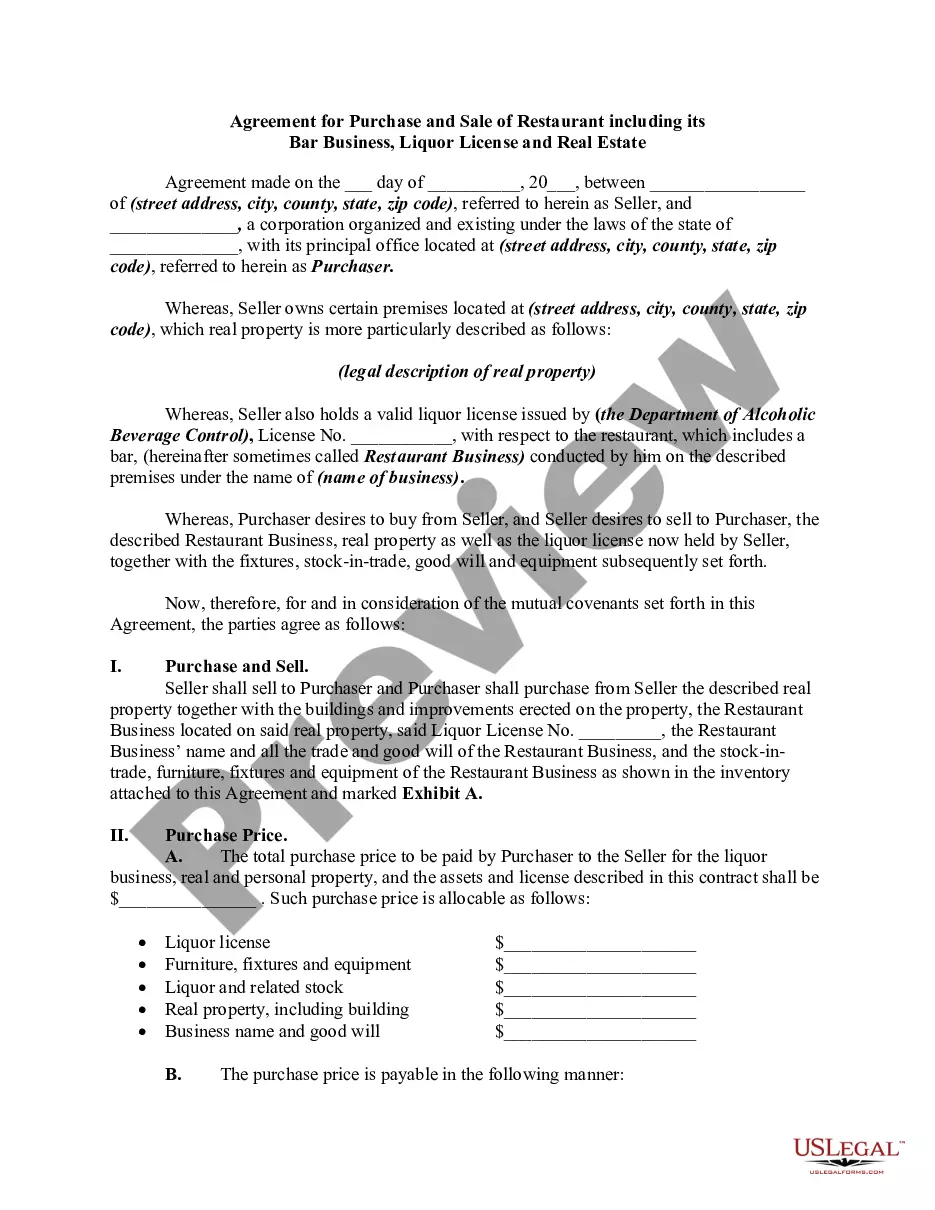
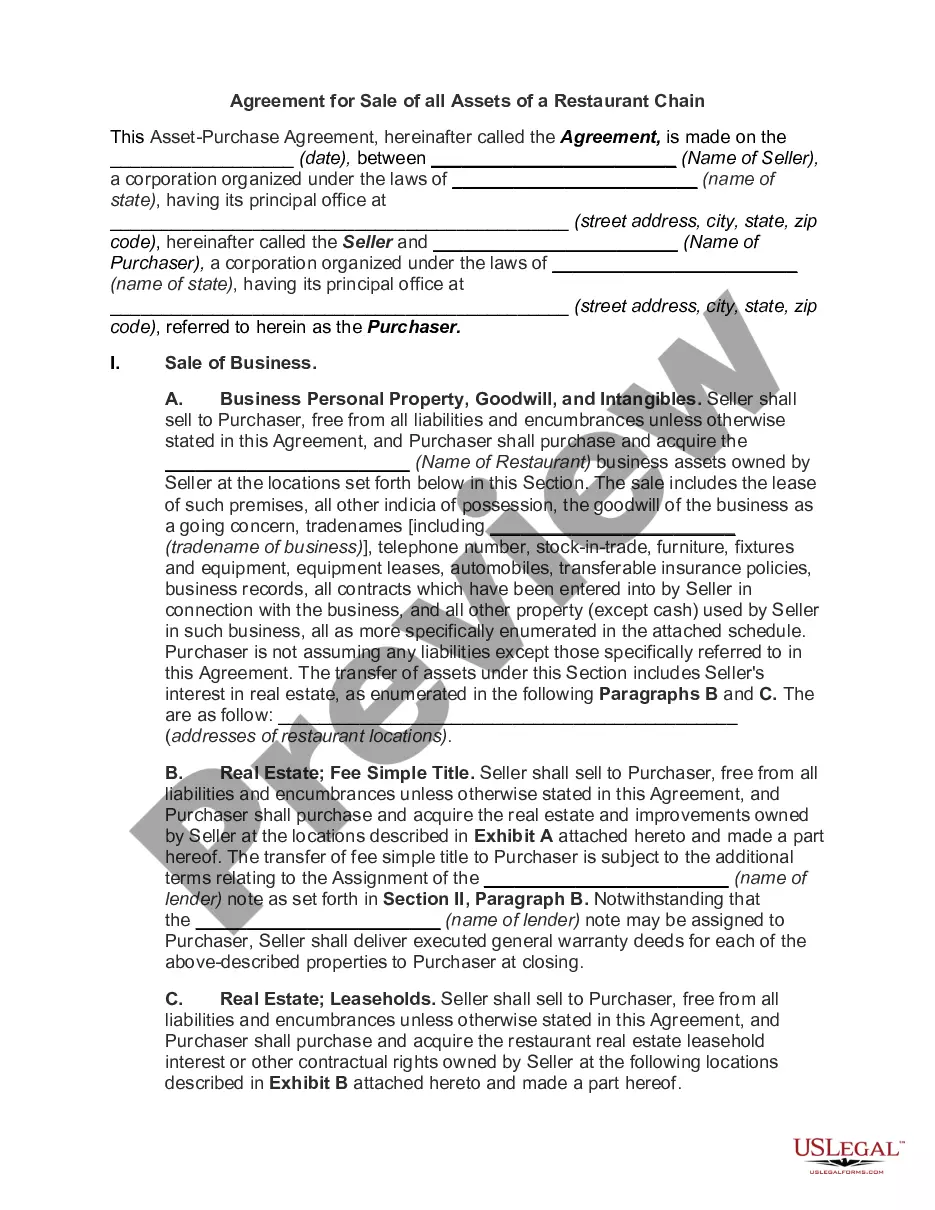
The Agreement for Purchase and Sale of Restaurant including Bar Business, Liquor License and Real Estate, with Purchase to Finance Part of Purchase Price is a legal document used when buying a restaurant business together with its liquor license and real estate. This agreement is crucial as it outlines the terms of the sale, including the purchase price and financing arrangements through a promissory note secured by a mortgage or deed of trust. It ensures that both the seller and the purchaser clearly understand their obligations and the details of the transaction, setting it apart from other real estate or business sale forms.
Main sections of this form
- Details of the parties involved: Identifies the seller and purchaser, including their addresses.
- Description of the property: Includes the address and legal description of the restaurant and real estate.
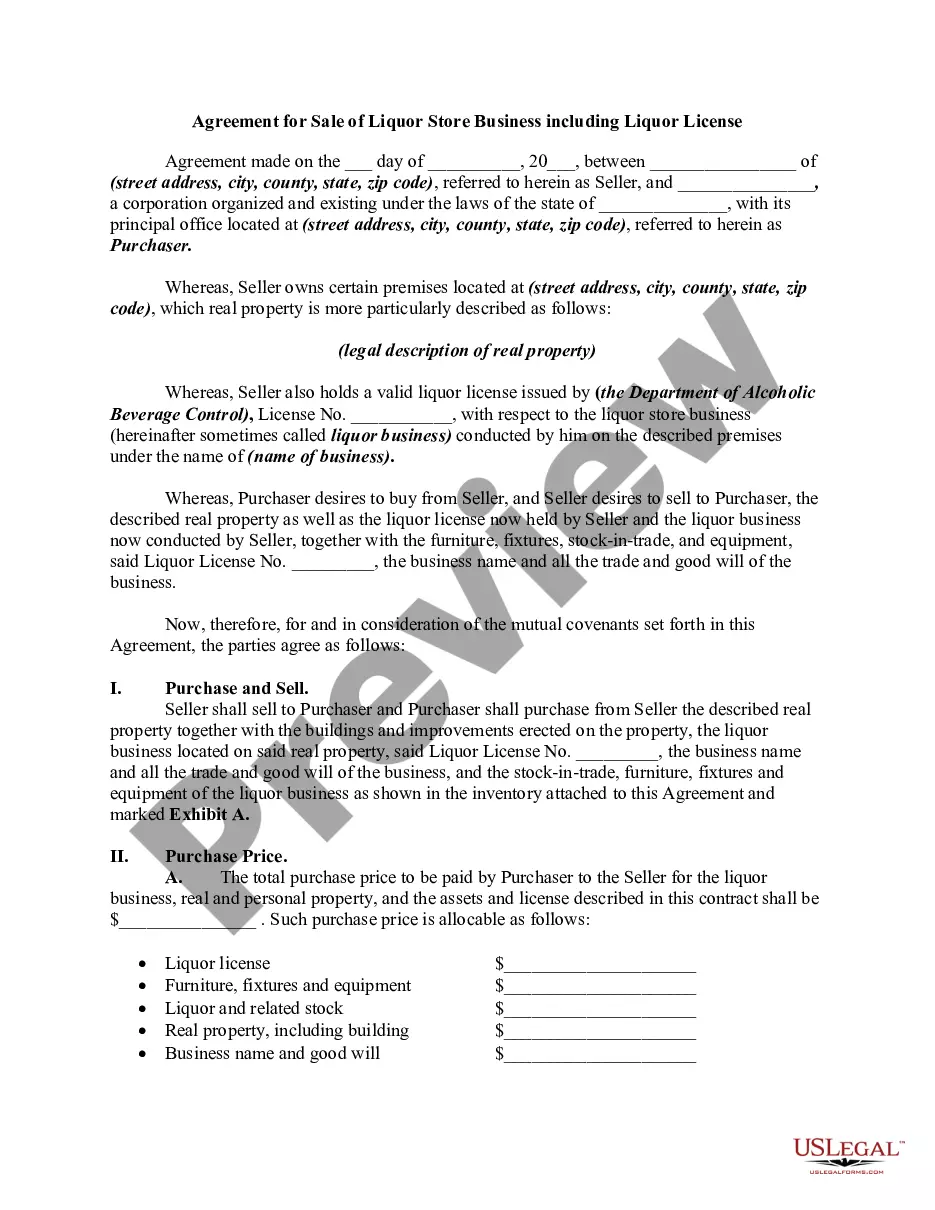
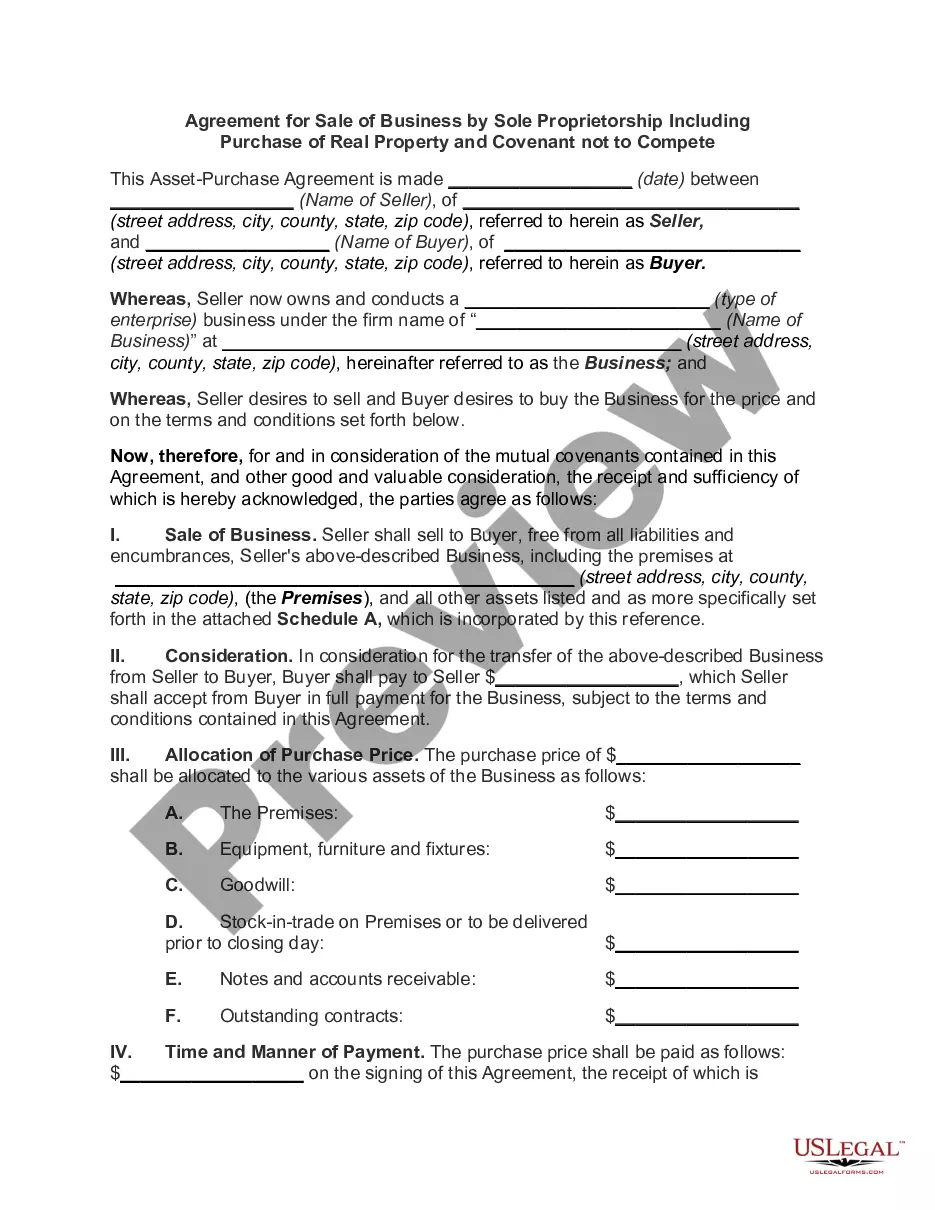
- Purchase price allocation: Breaks down the total purchase price among business assets, real estate, and the liquor license.
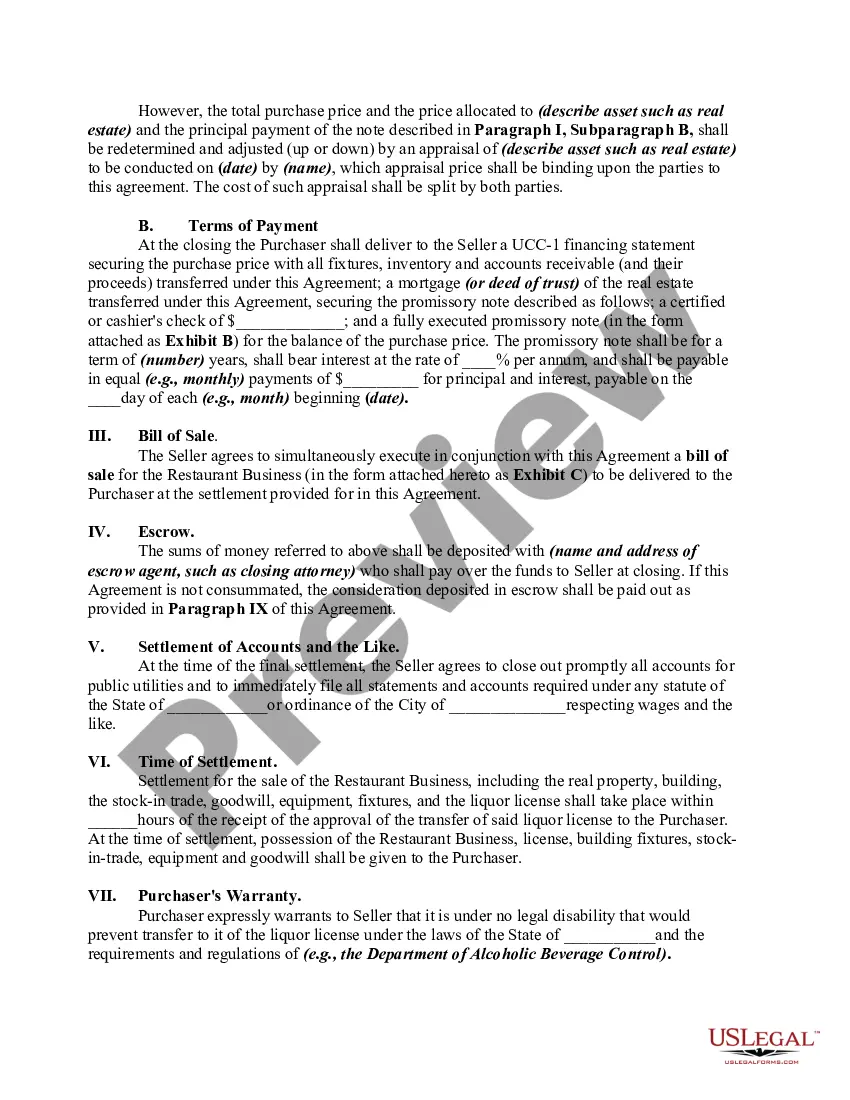
- Terms of payment: Specifies payment method and timeline, including any promissory notes and escrow arrangements.
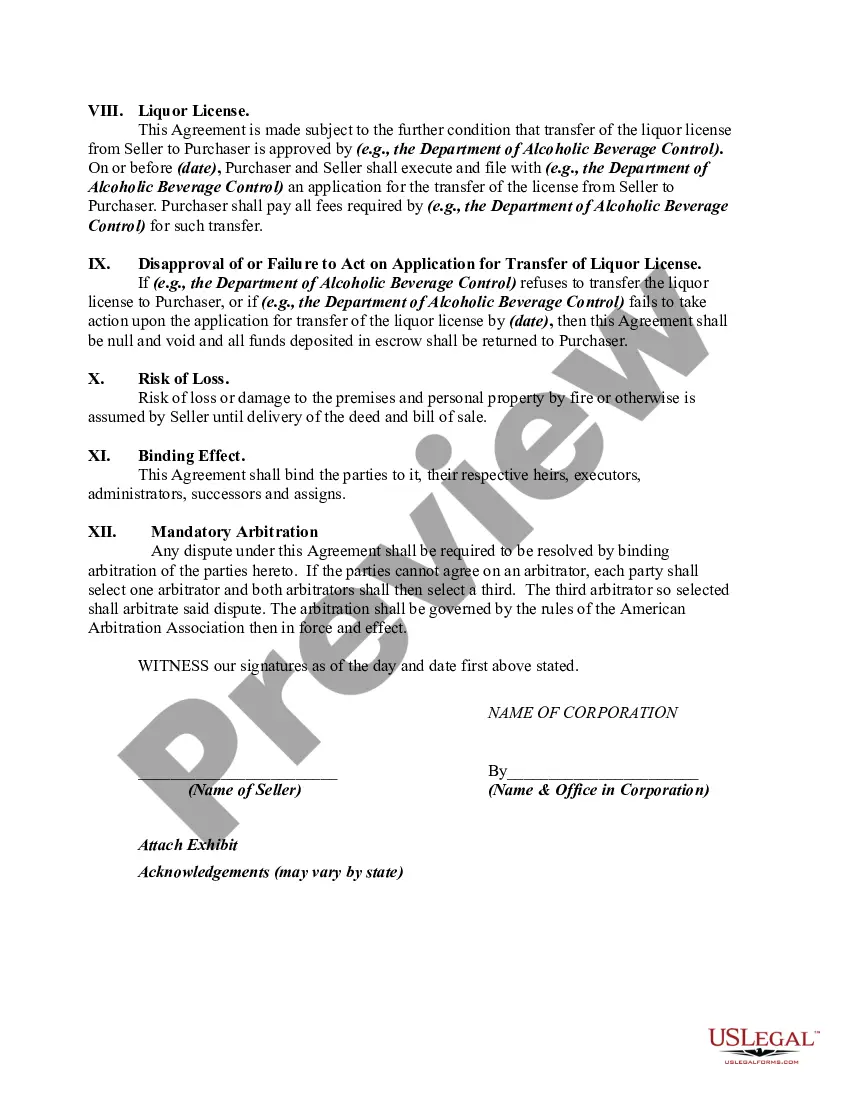
- Liquor license transfer: Outlines conditions for transferring the liquor license from seller to purchaser.
- Risk of loss clause: Details who assumes risk until the transfer of ownership is complete.
When to use this form
This form is essential when you are looking to purchase a restaurant that includes a bar, liquor license, and associated real estate. It is ideal for business buyers who wish to acquire not only the physical property but also the operational business assets and licenses. Use this agreement when negotiating terms that involve financing part of the purchase price, ensuring that all legal and financial details are correctly documented.
Who can use this document
- Prospective purchasers of restaurants that operate with a liquor license.
- Business entities such as corporations looking to expand their operations by acquiring existing restaurant and bar businesses.
- Sellers of restaurant and bar businesses seeking to ensure a legally binding agreement that includes financing terms.
- Individuals or entities needing a formalized structure for negotiating the terms of a restaurant sale.
How to prepare this document
- Identify the seller and purchaser, entering their legal names and addresses.
- Provide the legal description of the restaurant property being sold.
- Detail the liquor license information and any associated business assets being included in the sale.
- Specify the total purchase price and breakdown, allocating costs to all included assets.
- Include terms of payment and sign before a witness or notary if required by local law.
Notarization guidance
This form must be notarized to be legally valid. US Legal Forms provides secure online notarization powered by Notarize, allowing you to complete the process through a verified video call.
Get your form ready online
Our built-in tools help you complete, sign, share, and store your documents in one place.
Make edits, fill in missing information, and update formatting in US Legal Forms—just like you would in MS Word.
Download a copy, print it, send it by email, or mail it via USPS—whatever works best for your next step.
Sign and collect signatures with our SignNow integration. Send to multiple recipients, set reminders, and more. Go Premium to unlock E-Sign.
If this form requires notarization, complete it online through a secure video call—no need to meet a notary in person or wait for an appointment.
We protect your documents and personal data by following strict security and privacy standards.

Make edits, fill in missing information, and update formatting in US Legal Forms—just like you would in MS Word.

Download a copy, print it, send it by email, or mail it via USPS—whatever works best for your next step.

Sign and collect signatures with our SignNow integration. Send to multiple recipients, set reminders, and more. Go Premium to unlock E-Sign.

If this form requires notarization, complete it online through a secure video call—no need to meet a notary in person or wait for an appointment.

We protect your documents and personal data by following strict security and privacy standards.
Common mistakes
- Failing to accurately describe the real property and business assets.
- Not specifying the detailed terms of financing and payment methods.
- Omitting conditions related to the transfer of the liquor license.
- Neglecting to get required approvals from local liquor control authorities.
- Forgetting to sign and date the agreement before a witness or notary if necessary.
Advantages of online completion
- Convenience of instant access to professional legal templates tailored for restaurant sales.
- Editability to customize the form to meet specific needs and circumstances.
- Reliability, as these forms are drafted by licensed attorneys with appropriate legal language.
- Time savings by streamlining the process of drafting legal documents for business transactions.
Looking for another form?

Form popularity
FAQ
This form is a multi-asset real estate and business purchase agreement used to buy a restaurant that includes the bar operation, liquor license, and real estate. It sets the purchase price, payment terms, and financing through a promissory note secured by a mortgage or deed of trust. Use it when the buyer wants to finance part of the price and acquire all assets.
This form is a real estate purchase and sale agreement that also covers the sale of a restaurant and its liquor license and bar business. It describes the property and business assets, provides a purchase price allocation among assets, sets terms of payment (including any promissory note), and includes liquor license transfer provisions and a risk-of-loss clause until ownership passes.
To be enforceable, contracts generally require offer, acceptance, consideration, and a lawful purpose with the parties’ intent to be bound. This form supports those elements by naming the seller and purchaser, describing the restaurant property and assets, and setting the purchase price and financing terms, including a promissory note and security.
Four core contract principles are mutual assent, consideration, capacity, and legality. This form supports them by documenting who is selling and buying, the scope of the deal (restaurant, bar, liquor license, and real estate), the price and payment terms, and transfer mechanics, including financing security, to create a binding, enforceable agreement.
Common mistakes in sale agreements include missing or inaccurate party information, vague asset descriptions, unclear purchase price allocation, incomplete financing terms, and failure to address liquor license transfer or risk of loss. This form mitigates those issues by clearly listing parties, property and asset descriptions, a structured price allocation, defined payment terms, liquor license transfer, and the risk-of-loss clause.
It bundles the restaurant business with the bar operation, liquor license, and real estate, and provides for partial financing of the purchase price via a promissory note secured by a mortgage or deed of trust. It also includes liquor license transfer provisions and a risk-of-loss clause, plus explicit purchase price allocation.