Waiver and Release from Liability for Personal Injuries Sustained in Art School or Class
What this document covers
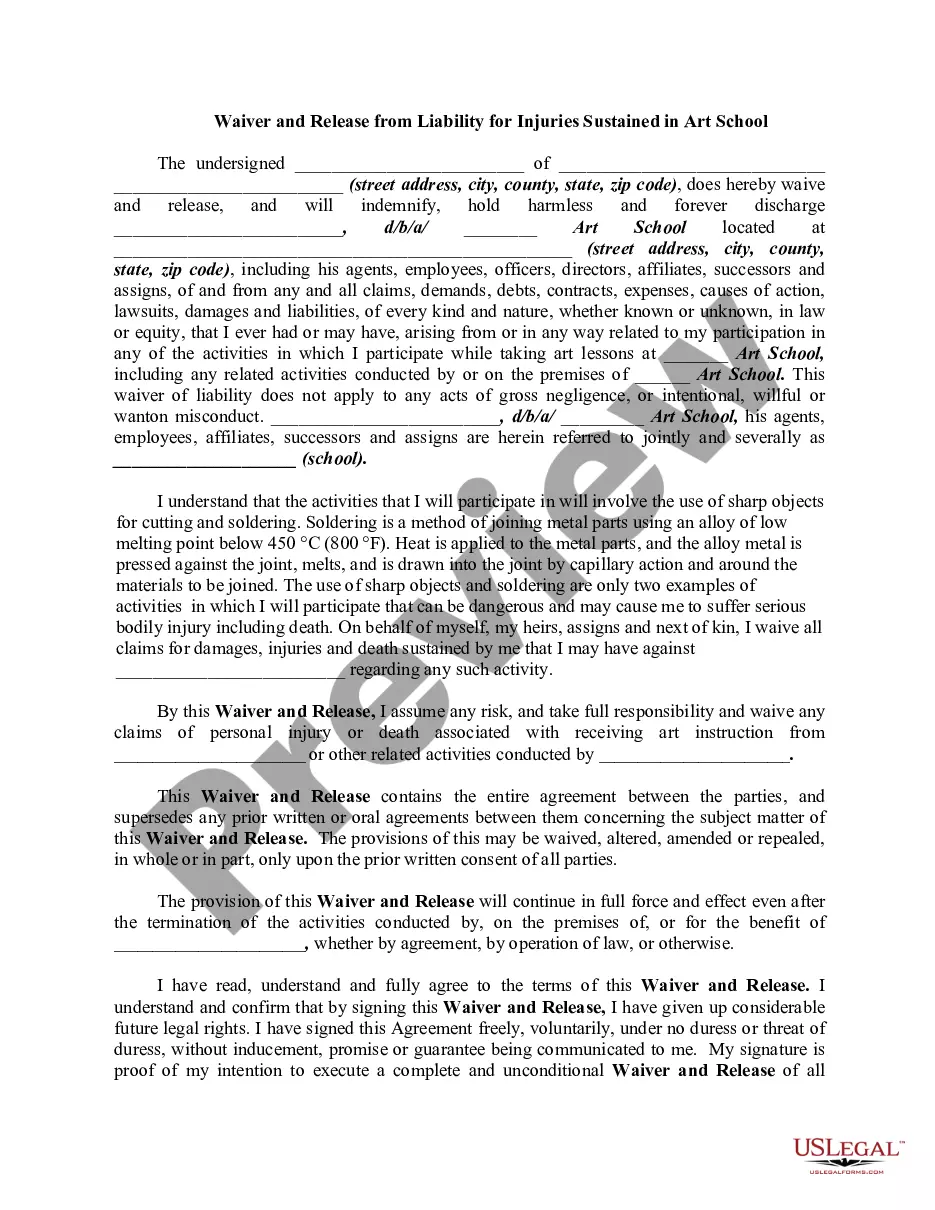
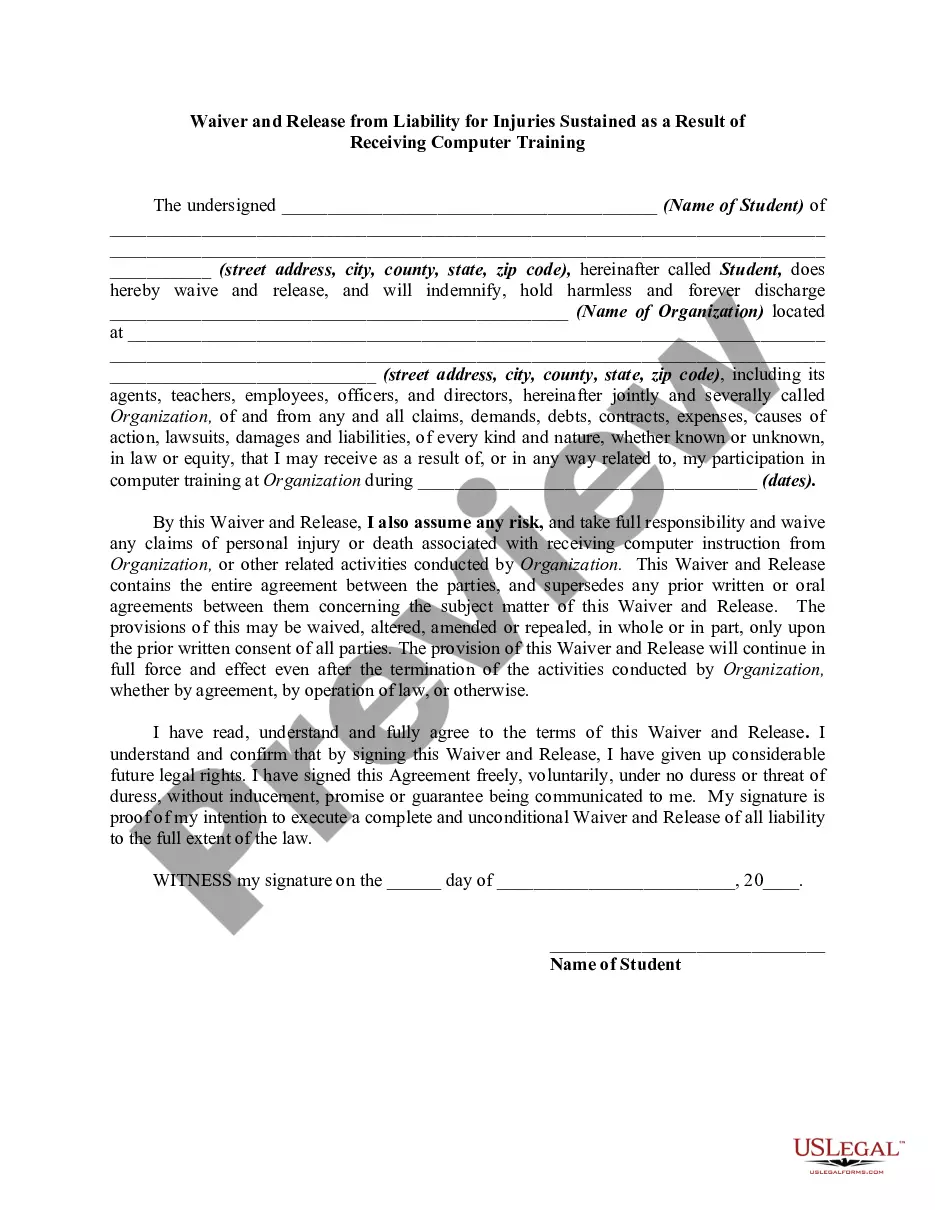
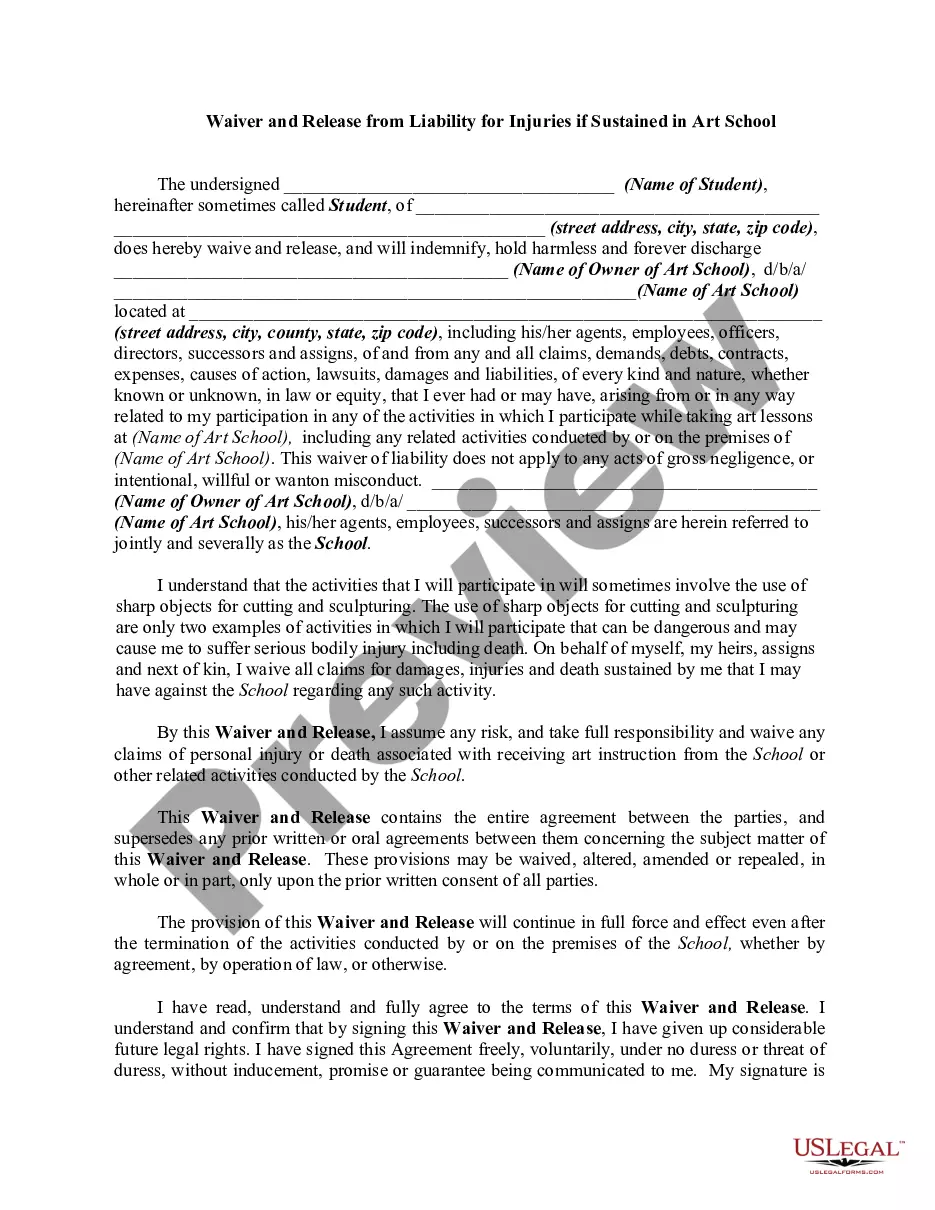
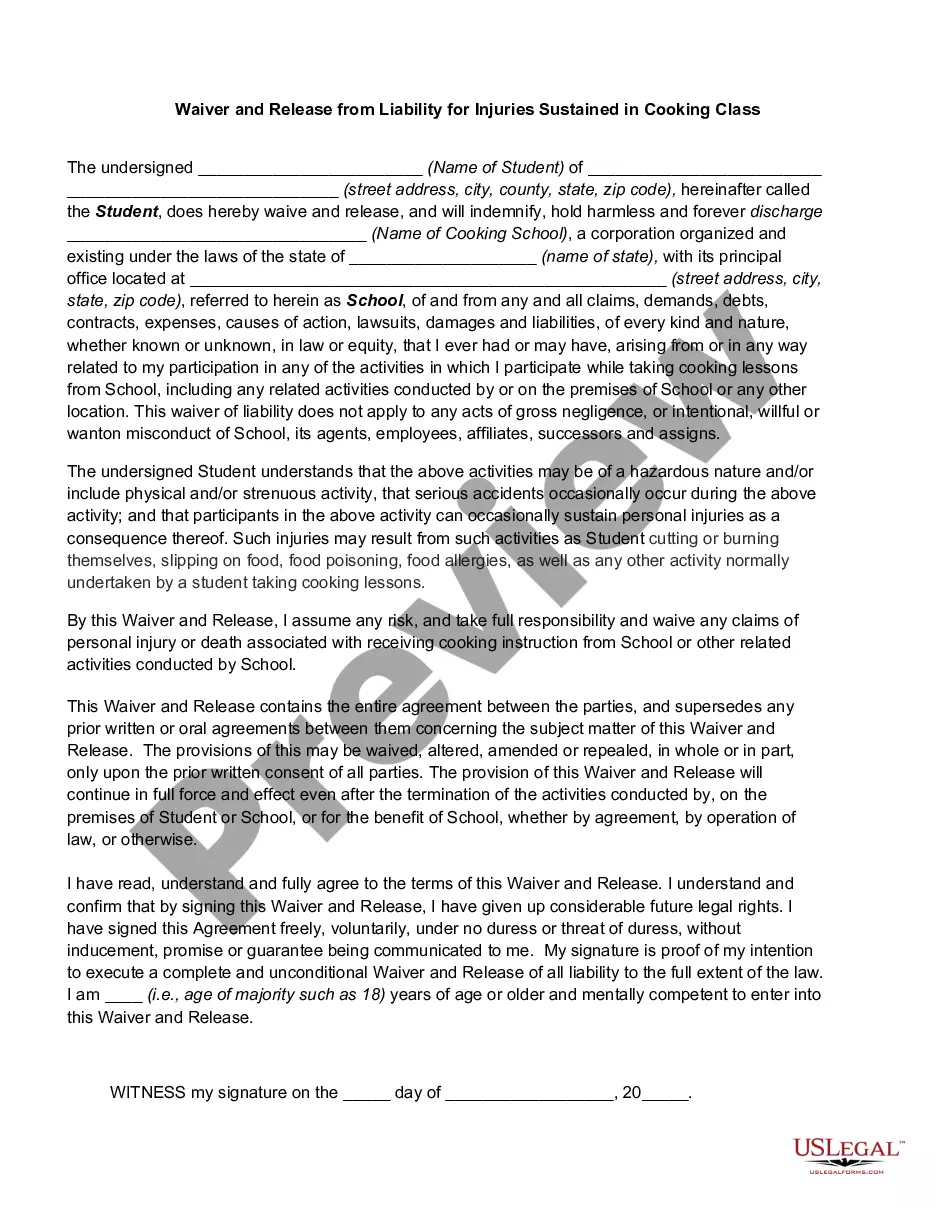
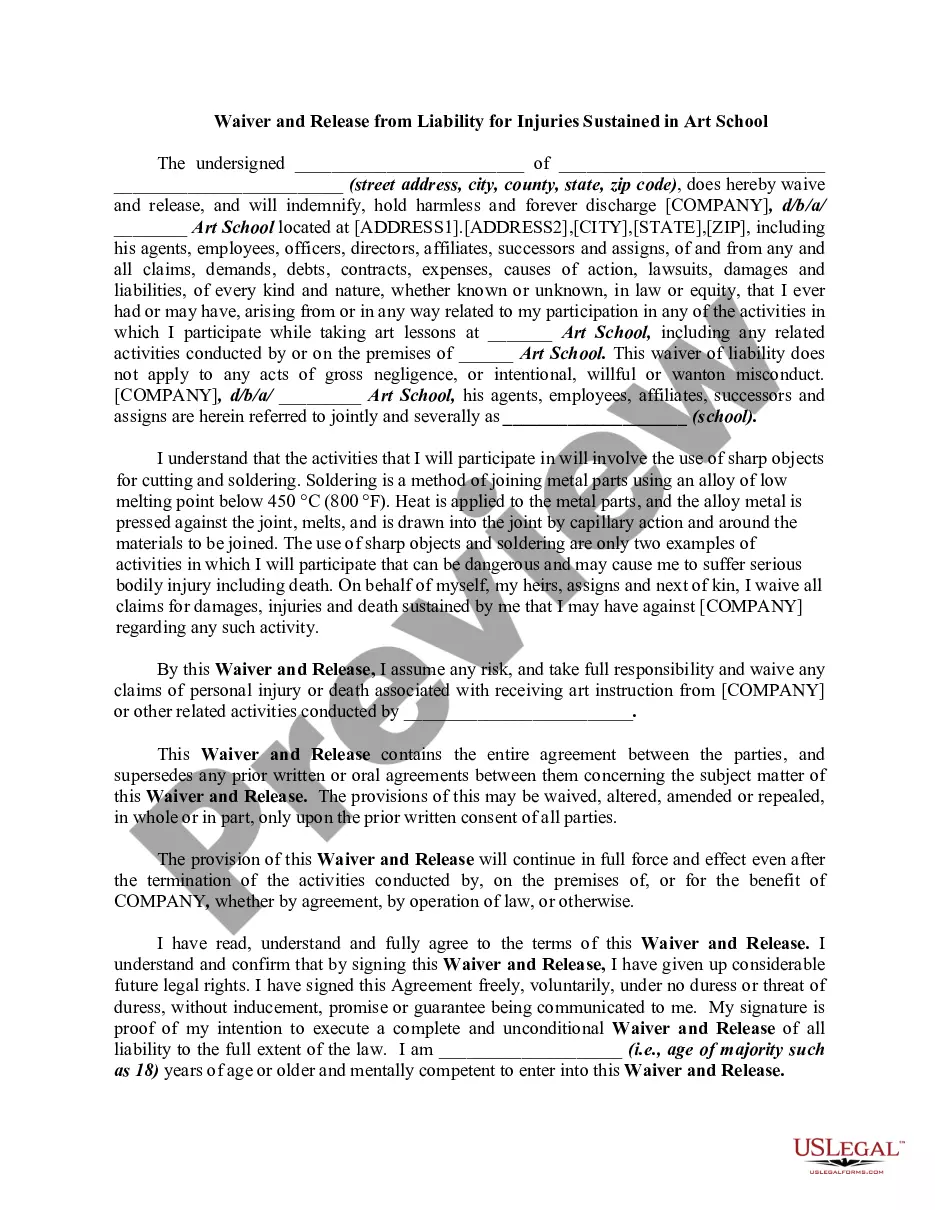
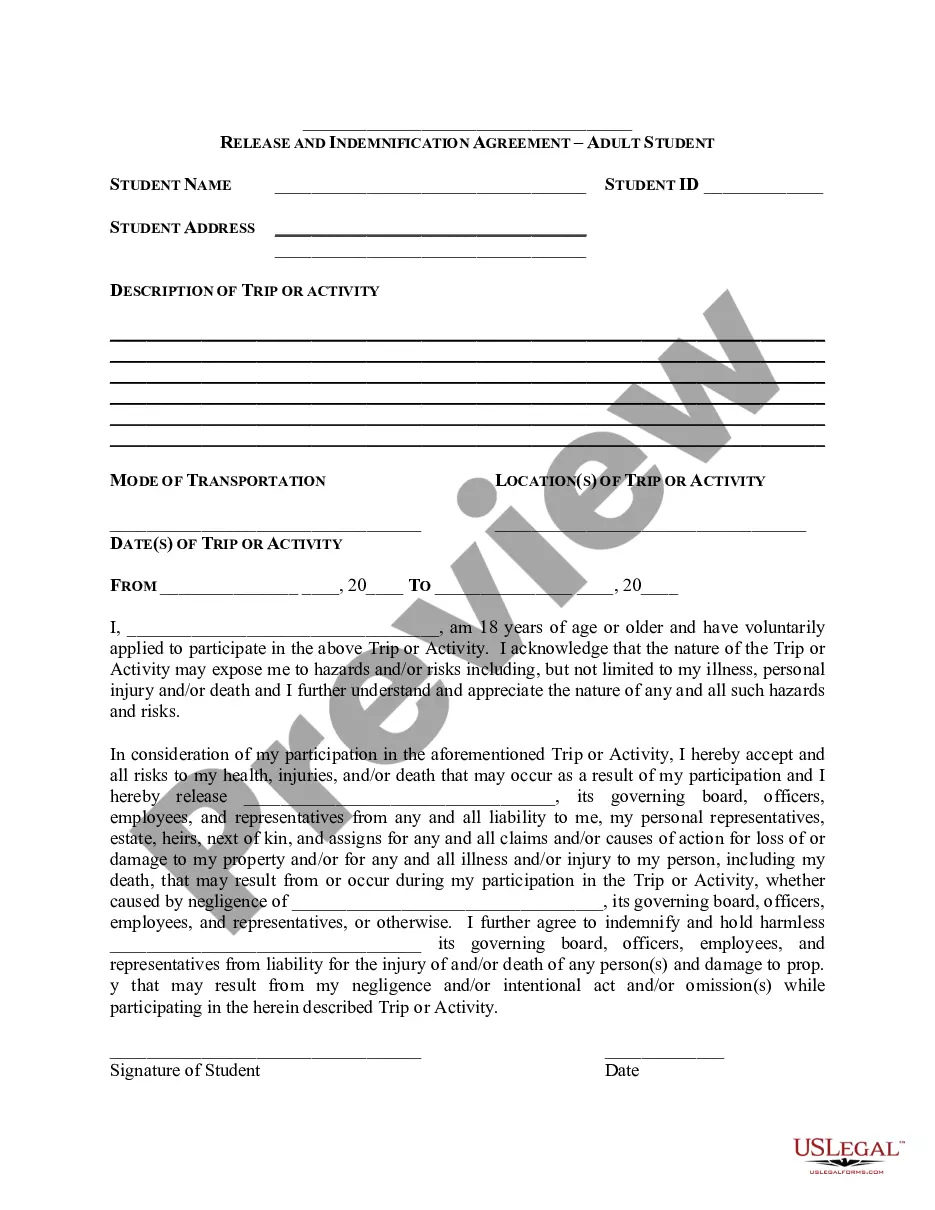
The Waiver and Release from Liability for Personal Injuries Sustained in Art School or Class is a legal document that students sign to release an art school from liability for any injuries that may occur during instruction. This form is crucial for art schools and instructors to mitigate risk associated with hands-on activities, distinguishing it from typical liability waivers by focusing specifically on art-related educational environments and the potential risks involved in such activities.
What’s included in this form
- The names and addresses of the student and art school.
- A clear statement waiving the school's liability for personal injuries.
- A description of the activities that may involve risks, such as using sharp objects and soldering.
- A clause regarding gross negligence and intentional misconduct.
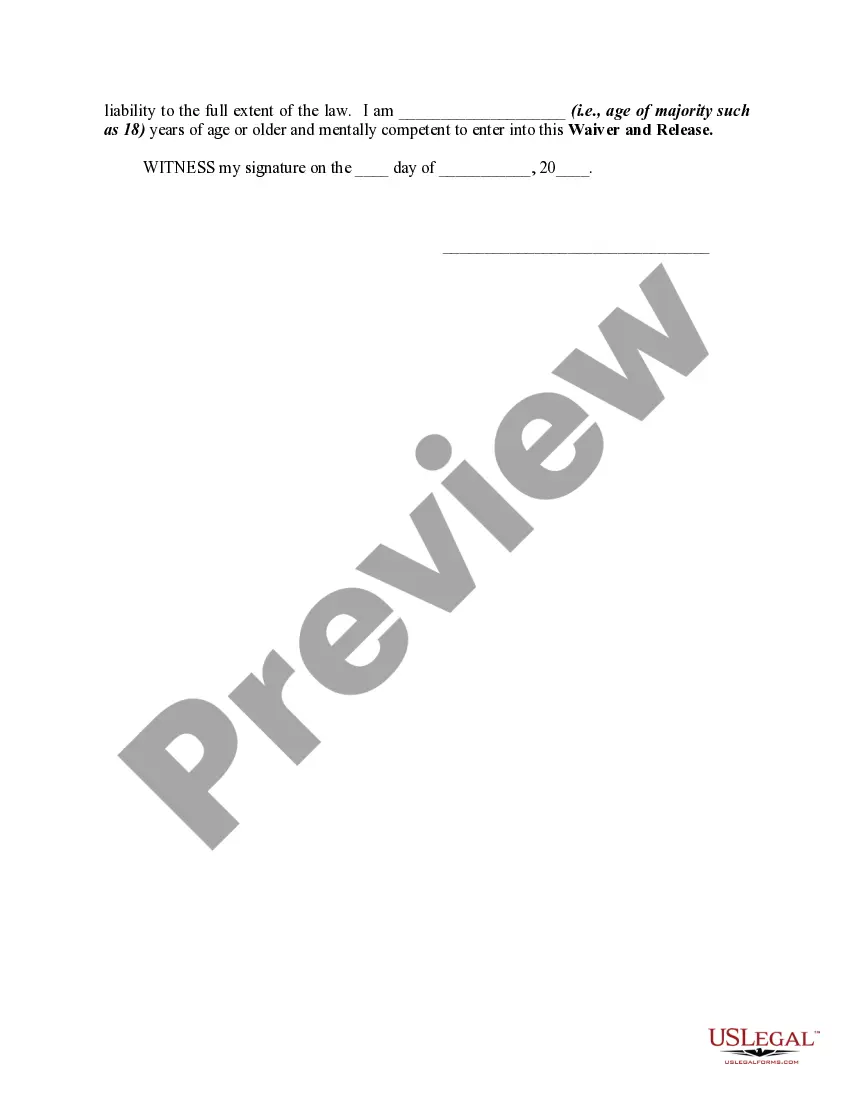
- A statement confirming the student's age and mental competency.
- Signature line for the student and a witness.
When to use this document
This form should be used whenever a student enrolls in an art program or class that involves activities with potential risks, including working with tools, crafts that involve cutting, or any other art-related techniques that could result in personal injury. It is essential for art schools to have this waiver on file to protect themselves from liability claims that may arise from such activities.
Who should use this form
This waiver is intended for:
- Art schools offering hands-on classes.
- Instructors providing instruction that may involve physical activities.
- Students aged 18 years or older enrolling in these classes.
- Parents or guardians of underage students (if applicable) to sign on behalf of their child.
Completing this form step by step
- Identify and enter the name of the student and their address.
- Fill out the details of the art school, including its name and address.
- Read through the waiver carefully to ensure understanding of its terms.
- Sign and date the waiver, confirming the student's age and mental competency.
- Have a witness sign the form to validate the agreement.
Does this document require notarization?
This form does not typically require notarization to be legally valid. However, some jurisdictions or document types may still require it. US Legal Forms provides secure online notarization powered by Notarize, available 24/7 for added convenience.
Get your form ready online
Our built-in tools help you complete, sign, share, and store your documents in one place.
Make edits, fill in missing information, and update formatting in US Legal Forms—just like you would in MS Word.
Download a copy, print it, send it by email, or mail it via USPS—whatever works best for your next step.
Sign and collect signatures with our SignNow integration. Send to multiple recipients, set reminders, and more. Go Premium to unlock E-Sign.
If this form requires notarization, complete it online through a secure video call—no need to meet a notary in person or wait for an appointment.
We protect your documents and personal data by following strict security and privacy standards.

Make edits, fill in missing information, and update formatting in US Legal Forms—just like you would in MS Word.

Download a copy, print it, send it by email, or mail it via USPS—whatever works best for your next step.

Sign and collect signatures with our SignNow integration. Send to multiple recipients, set reminders, and more. Go Premium to unlock E-Sign.

If this form requires notarization, complete it online through a secure video call—no need to meet a notary in person or wait for an appointment.

We protect your documents and personal data by following strict security and privacy standards.
Mistakes to watch out for
- Failing to read the entire waiver before signing.
- Not including witness signatures, if required.
- Ignoring the age requirement for signing the waiver.
- Leaving out essential information, such as names and addresses.
Benefits of using this form online
- Easy access for students to download and complete from home.
- Time-saving, as it can be filled out quickly without in-person visits.
- Editable formats allow for customization specific to each art school.
- Reduces administrative burden on art schools by streamlining waiver collection.
Legal use & context
- The waiver protects the art school from claims related to injuries sustained during classes.
- It is enforceable as long as it does not cover acts of gross negligence or intentional misconduct.
- Students should be informed of the risks associated with artistic activities prior to signing.
Summary of main points
- The waiver helps protect art schools from liability for injuries.
- Students must be aware of the risks involved in their activities.
- Proper completion and understanding of the waiver is crucial.
Looking for another form?
Form popularity
FAQ
Waivers should only be signed before participating in an activity, not after you are hurt. If you are injured and given papers to sign, immediately call a personal injury attorney. You can find a personal injury lawyer by contacting your state or local bar association.
A liability waiver, or release of liability, is a legal document that a company or organization has you sign in order to protect them from being sued in the event that you are injured.
3. How long do I keep signed waivers? The sponsoring unit is required to retain the waiver for six (6) years after the end of the event or activity for which the waiver was signed.
The General Release is a broad release from all possible civil claims resulting from a dispute. Since the Releasing Party is giving up all known and unknown claims against the other party, care should be taken to ensure that the Releasor is fully aware of their rights.
In California, a liability waiver must be clear, unambiguous, and explicit. In other words, waivers cannot be printed in faded ink, in small font, on the back of a paper, or in an otherwise ambiguous form. If the waiver that you sign is not represented clearly, it may not hold up in the event of a lawsuit.
Get help. Writing a waiver should not be complicated. Use the correct structure. Proper formatting. Include a subject line. Include a caution! Talk about the activity risks. Do not forget an assumption of risk. Hold harmless.
200bStart the letter off with a clear explanation regarding your request. For instance, explain that you're requesting certain fees or charges to be waived or to be released from a previous engagement. Communicate any supporting or relative dates, names of parties, monetary figures, or venues as facts.
In many cases, the waiver is not enforceable.If you've been injured due to negligent actions, you can sue even if you signed a waiver. Winning a lawsuit concerning negligence is not uncommon. Many celebrities have sued for negligence even though they signed documents stating they understood the risks.