Waiver and Release from Liability for Personal Injuries Sustained in Art School
Understanding this form
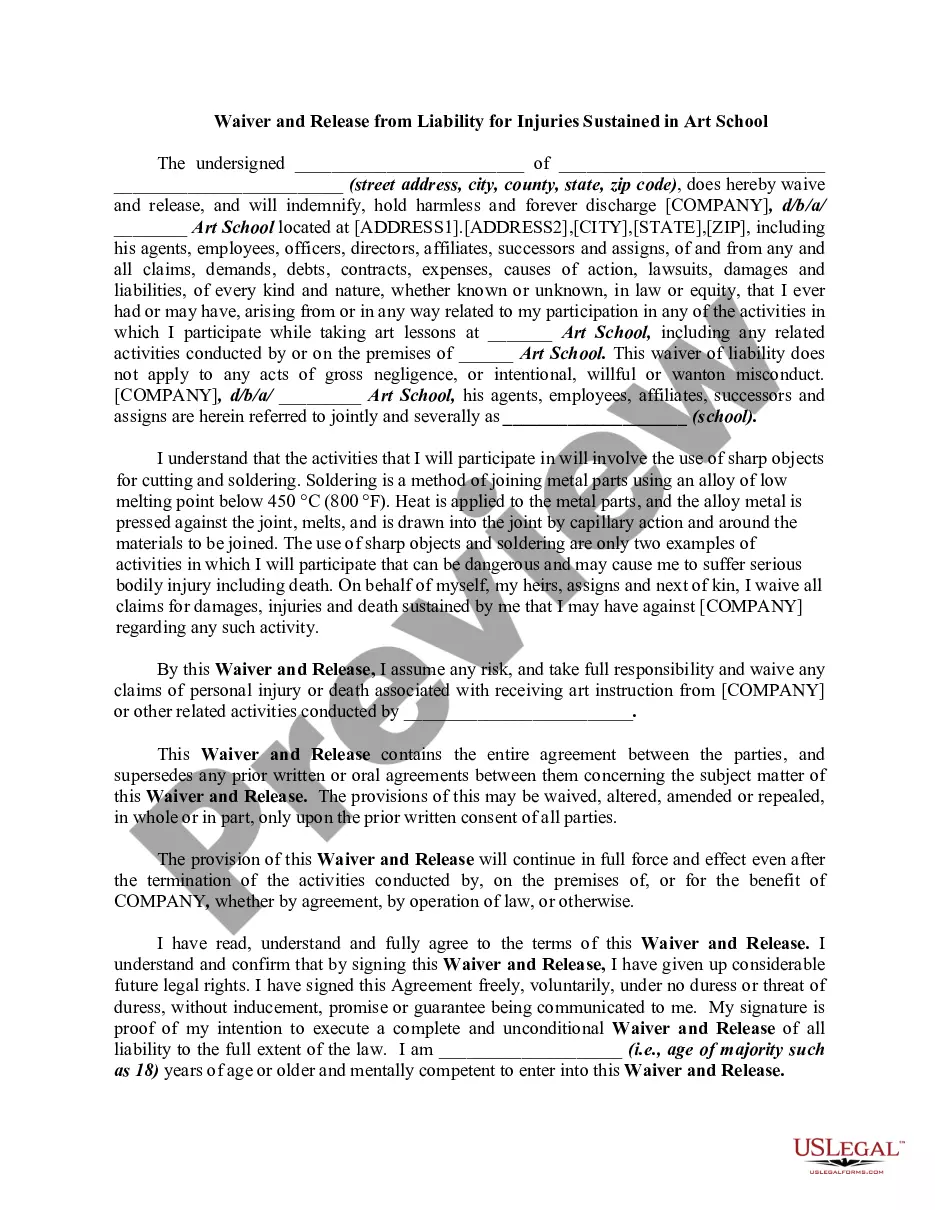
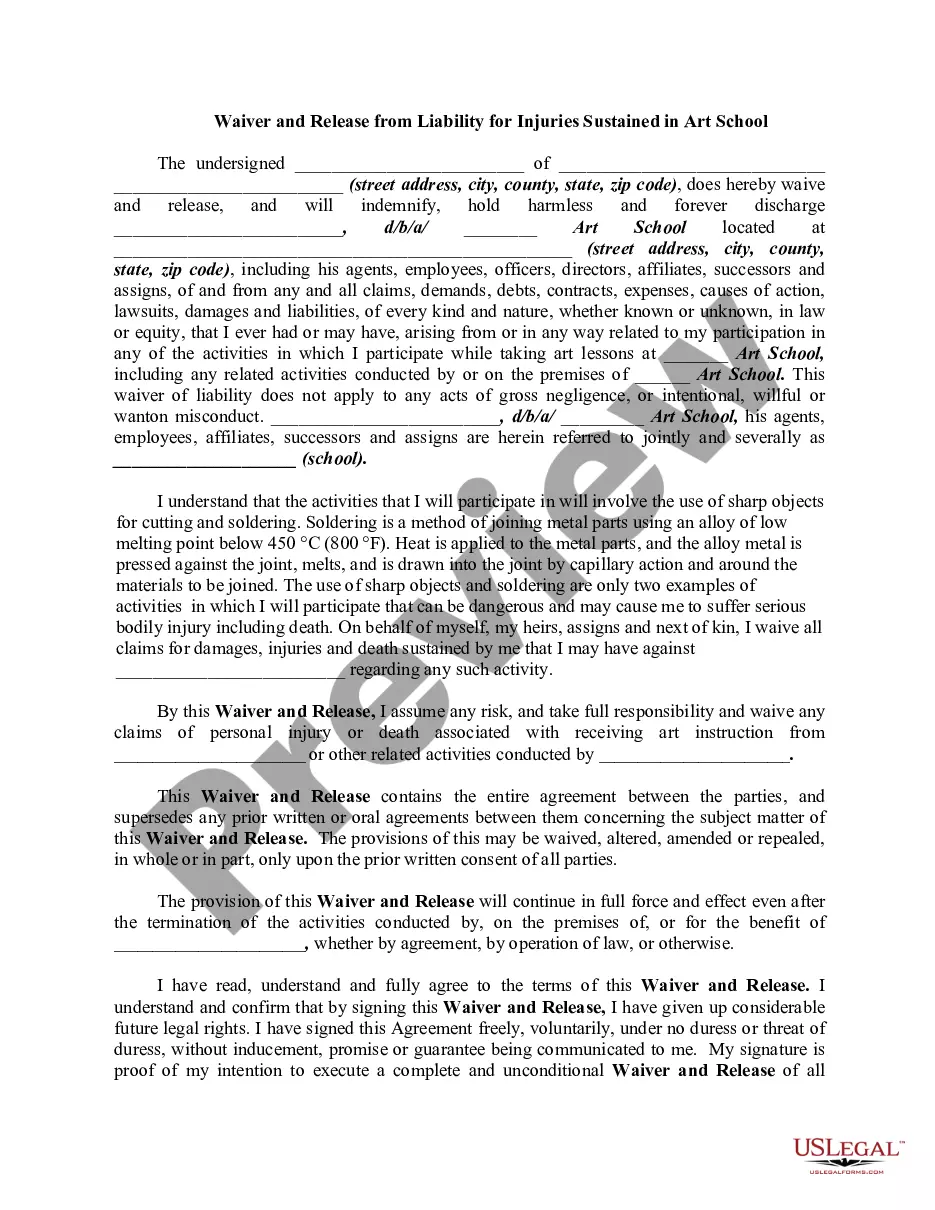
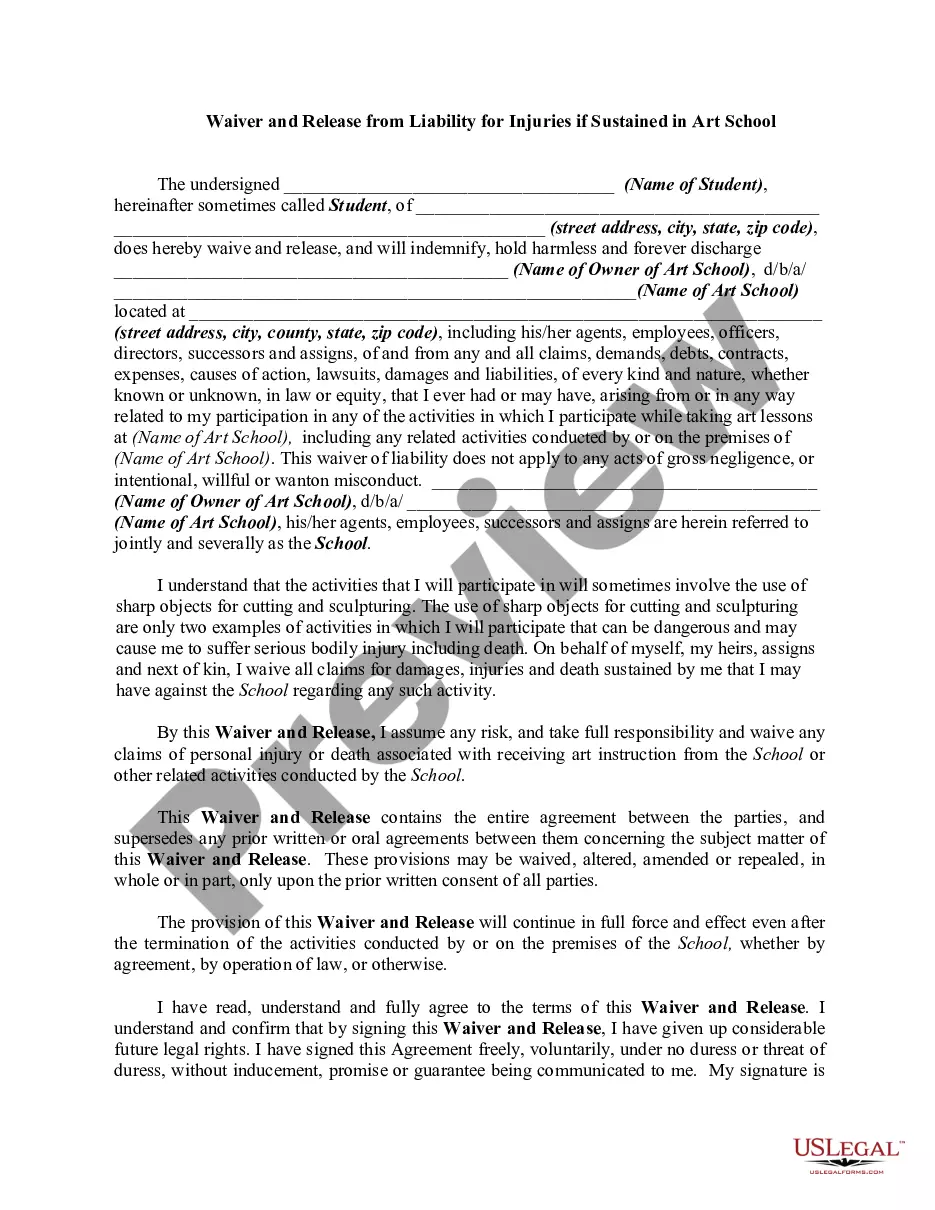
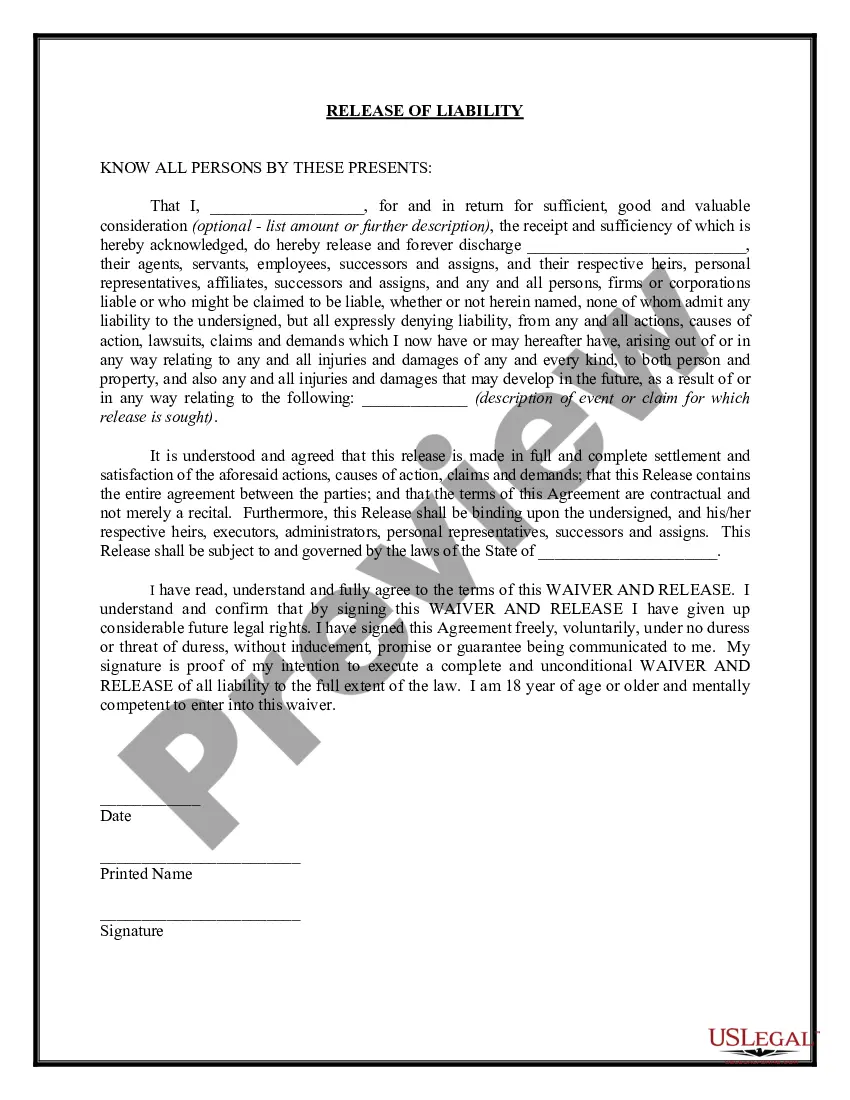
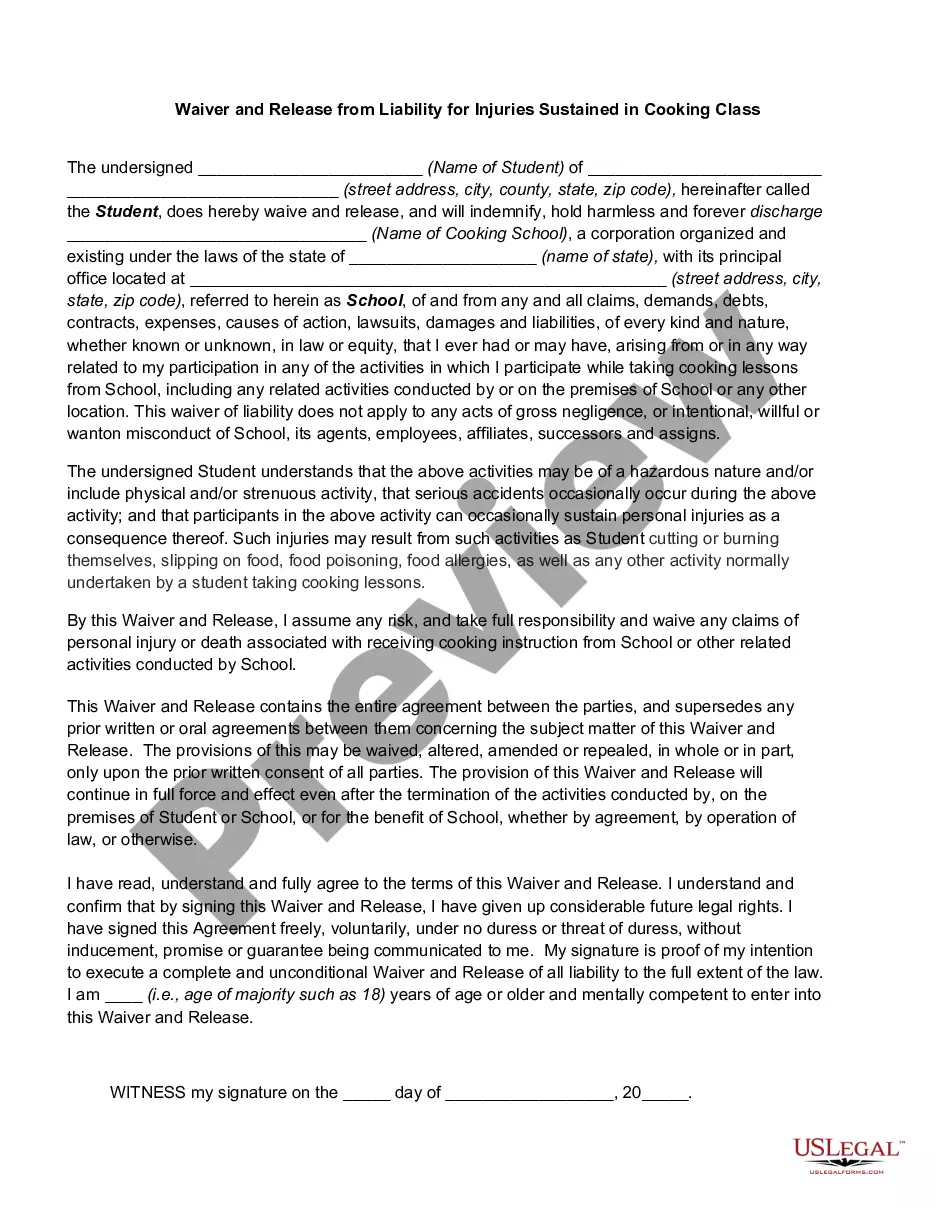
The Waiver and Release from Liability for Personal Injuries Sustained in Art School is a legal document that protects an art school from liability for any injuries a student might incur while participating in art instruction or related activities. This waiver is specifically tailored to address the risks associated with creative practices, such as working with sharp objects and soldering, which are common in art classes. By signing this form, students acknowledge and accept these risks, differentiating it from general liability waivers that may not cover such specific activities.
Main sections of this form
- Identification of the student and their address.
- Release of the art school's liability for personal injuries.
- Acknowledgment of the inherent risks involved in certain art activities, including the use of sharp objects.
- Assumption of risk and full responsibility for injuries sustained.
- Confirmation that the waiver is legally binding and supersedes previous agreements.
- Signature section confirming the student's age and mental competence.

Situations where this form applies
This waiver should be used when a student enrolls in an art school and participates in classes or workshops that involve potentially hazardous activities. It is particularly important when the curriculum includes the use of tools for cutting, soldering, or other creative techniques that could result in personal injury. By having students sign this waiver, the school can ensure clear communication of risks and protect itself from liability claims.
Who this form is for
- Students who are registering for art classes.
- Parents or guardians signing on behalf of minors.
- Art school administrators responsible for student safety and liability management.
- Instructors leading hands-on art lessons involving equipment and tools.
Instructions for completing this form
- Identify the student by filling in their full name and address.
- Clearly state the name of the art school and its location.
- Read the waiver thoroughly to understand the commitments and risks involved.
- Sign and date the waiver to confirm acceptance of its terms.
- Ensure the signature confirms that the signer is of legal age or that a guardian is signing for a minor.
Does this document require notarization?
Notarization is not commonly needed for this form. However, certain documents or local rules may make it necessary. Our notarization service, powered by Notarize, allows you to finalize it securely online anytime, day or night.
Get your form ready online
Our built-in tools help you complete, sign, share, and store your documents in one place.
Make edits, fill in missing information, and update formatting in US Legal Forms—just like you would in MS Word.
Download a copy, print it, send it by email, or mail it via USPS—whatever works best for your next step.
Sign and collect signatures with our SignNow integration. Send to multiple recipients, set reminders, and more. Go Premium to unlock E-Sign.
If this form requires notarization, complete it online through a secure video call—no need to meet a notary in person or wait for an appointment.
We protect your documents and personal data by following strict security and privacy standards.

Make edits, fill in missing information, and update formatting in US Legal Forms—just like you would in MS Word.

Download a copy, print it, send it by email, or mail it via USPS—whatever works best for your next step.

Sign and collect signatures with our SignNow integration. Send to multiple recipients, set reminders, and more. Go Premium to unlock E-Sign.

If this form requires notarization, complete it online through a secure video call—no need to meet a notary in person or wait for an appointment.

We protect your documents and personal data by following strict security and privacy standards.
Mistakes to watch out for
- Failing to fully read the waiver before signing, leading to misunderstanding of the terms.
- Not providing complete contact information for the student.
- Forgetting to date the waiver on the day of signing.
- Allowing a minor to sign without parental or guardian consent.
Benefits of completing this form online
- Immediate access to a professionally drafted legal document.
- Convenient downloading options that allow for easy printing and sharing.
- Flexibility to fill in details electronically before printing.
- Access to updates and revisions in response to changing legal standards.
- Reduced time and stress associated with traditional paperwork.
Legal use & context
- This waiver is generally enforceable as long as the risks are clearly communicated and the student freely chooses to sign it.
- Specific state laws may affect the enforceability of liability waivers, so local regulations should be considered.
- It does not protect against gross negligence or intentional misconduct by the school.
Summary of main points
- Completing the waiver is essential for engaging safely in art activities.
- Understanding your rights and responsibilities outlined in the waiver can prevent future claims.
- Ensure that all necessary details are completed accurately to avoid issues.
- This waiver serves as a legal safeguard for both students and the art school.
Looking for another form?

Form popularity
FAQ
How to Write a Release of Liability Form Fill in the information of both parties, including each person's name and address. Include the details of the event.Add if there is a payment required by the releasee.Write a section for signatures, which will contain the names and dates of both parties.
The purpose of a liability waiver form. Once signed, it prevents the participant from opening a lawsuit against the company in the event of damage or loss, effectively shifting responsibility for injuries from the company to the customer.
The most significant reason to use a liability waiver is that businesses can protect themselves from damages claims and lawsuits associated with inherently risky activities. This level of protection can shield your profitability and company reputation as well as avoid unnecessary legal disputes.
You might think that since you signed a waiver acknowledging the risks of the activity, you have no legal leg to stand on to file a personal injury lawsuit. Waivers can make personal injury lawsuits more complex, but you can still seek damages for injuries that could have and should have been prevented.
A liability waiver, or release waiver, is a legal document that a company or organization requires members of the public to sign in order to protect their organization from being sued if you sustain an injury.
Members of the public who participate in any University sponsored activities that are subject to personal injury or property loss should sign a release of liability. For any activity where sports or physical activities are involved or which presents a danger to the participant, releases are required.
4. When is a liability waiver enforceable in California? Liability waivers are enforceable in California solely to the extent they shift to you the risk of ordinary negligence.
For the most part, the signing of a waiver is going to hold up in court as a binding document. That does not mean, however, that you are out of options if you sign a release of liability waiver and then sustain an injury while participating in the activity the business offered.