Mutual Agreement for Termination of an Agency Agreement
What is this form?
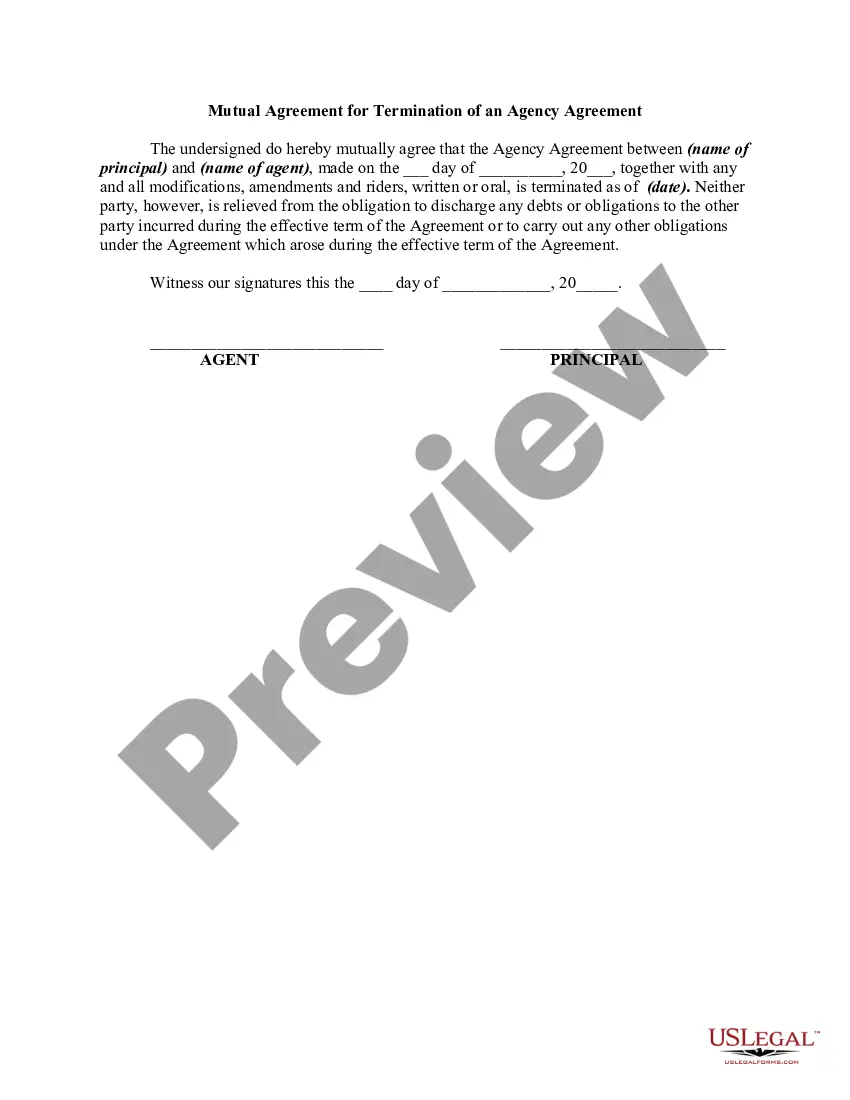
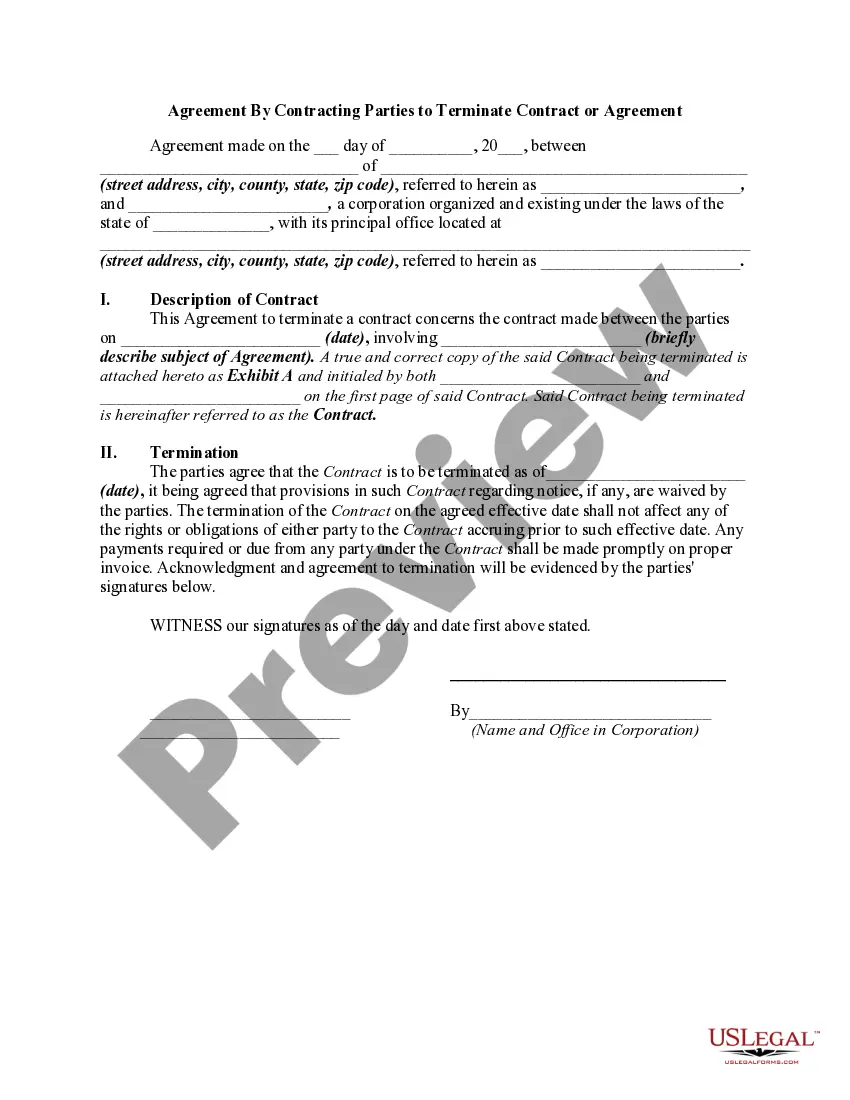
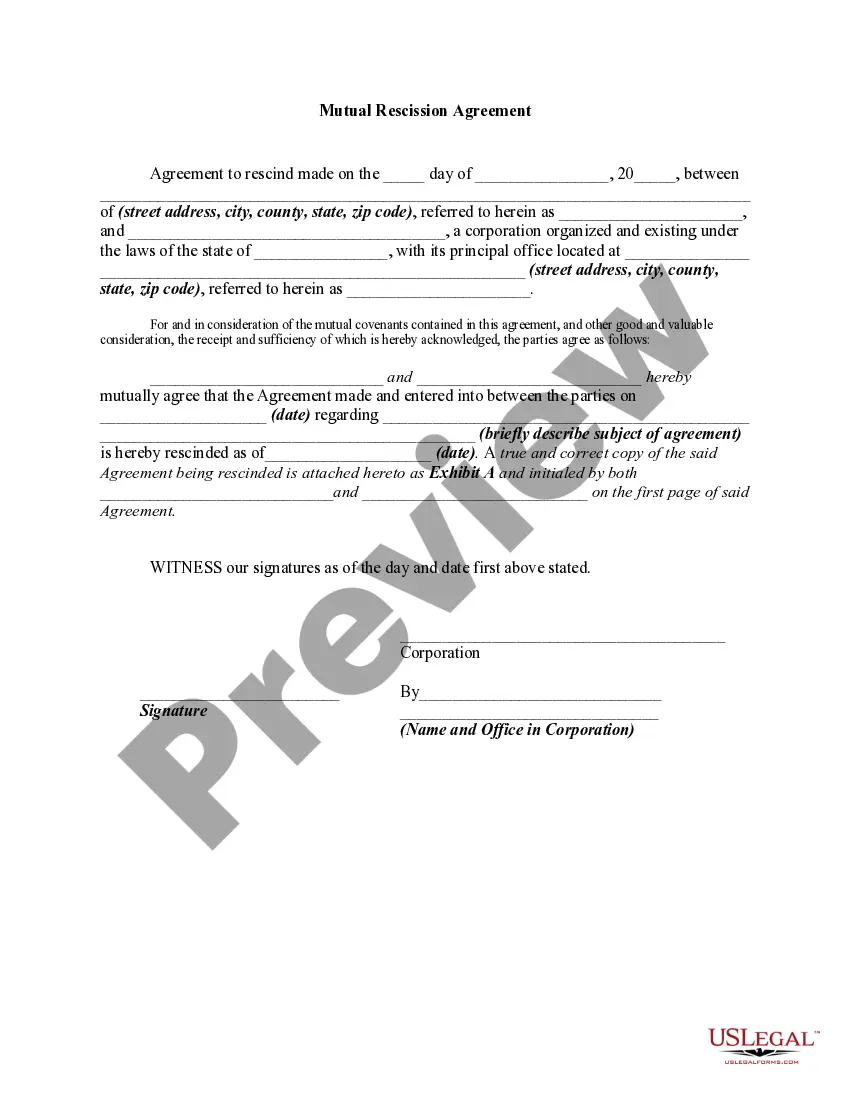
The Mutual Agreement for Termination of an Agency Agreement is a legal document that enables both the principal and the agent to officially end their agency relationship. This form serves as a clear and mutual consent between the two parties, contrasting with unilateral termination forms that allow only one party to end the agreement. By using this mutual agreement, both parties acknowledge the termination date and affirm their responsibilities regarding any lingering obligations or debts incurred during the agency term.
Main sections of this form
- Name of the principal and agent.
- Date of the original Agency Agreement.
- Effective termination date of the agreement.
- Statement regarding ongoing obligations and debts.
- Signatures of both the agent and principal, along with the date of signing.
When this form is needed
This form is necessary when both the principal and the agent mutually agree to terminate their agency relationship. Common scenarios include the completion of a specific project, dissatisfaction with the working relationship, or changes in business direction. By formalizing the termination with this document, both parties ensure clarity regarding their remaining obligations to one another.
Who should use this form
This form is intended for:
- Principals who have engaged an agent for goods or services and wish to end the agency.
- Agents who have represented a principal and have both parties' consent to terminate the agency arrangement.
- Business owners and entrepreneurs looking to clarify their legal standing after ending an agency relationship.
How to complete this form
- Identify both parties: Clearly write the names of the principal and agent at the top of the document.
- Enter the date of the original Agency Agreement: Specify when the agency relationship officially began.
- Fill in the termination date: State when the agency agreement will end.
- Include any outstanding obligations: Acknowledge any debts or responsibilities that remain due as a result of the agreement.
- Have both parties sign and date the document: Ensure both the principal and agent sign the agreement to validate it.
Does this form need to be notarized?
Notarization is generally not required for this form. However, certain states or situations might demand it. You can complete notarization online through US Legal Forms, powered by Notarize, using a verified video call available anytime.
Get your form ready online
Our built-in tools help you complete, sign, share, and store your documents in one place.
Make edits, fill in missing information, and update formatting in US Legal Forms—just like you would in MS Word.
Download a copy, print it, send it by email, or mail it via USPS—whatever works best for your next step.
Sign and collect signatures with our SignNow integration. Send to multiple recipients, set reminders, and more. Go Premium to unlock E-Sign.
If this form requires notarization, complete it online through a secure video call—no need to meet a notary in person or wait for an appointment.
We protect your documents and personal data by following strict security and privacy standards.

Make edits, fill in missing information, and update formatting in US Legal Forms—just like you would in MS Word.

Download a copy, print it, send it by email, or mail it via USPS—whatever works best for your next step.

Sign and collect signatures with our SignNow integration. Send to multiple recipients, set reminders, and more. Go Premium to unlock E-Sign.

If this form requires notarization, complete it online through a secure video call—no need to meet a notary in person or wait for an appointment.

We protect your documents and personal data by following strict security and privacy standards.
Typical mistakes to avoid
- Failing to include the effective termination date.
- Not ensuring both parties sign the document.
- Omitting references to any ongoing obligations or debts.
- Neglecting to check local laws regarding agency termination.
Why use this form online
- Instant download: Get the form immediately upon completion of your order.
- Editability: Customize the document as needed to fit your specific situation.
- Convenience: Complete the form at your own pace, anytime, without needing to visit a lawyer.
- Reliability: Forms provided by licensed attorneys ensure legal compliance and validity.
Looking for another form?
Form popularity
FAQ
Employee name. Company name. Name of the manager overseeing the termination. Date of letter. Date of termination. Reason for termination. List of verbal and written warnings. List of items to be handed in before leaving (company laptop, keys, etc.)
Yes, the parties can mutually agree on a date of separation when the employment will end, which can be on a date before the expiry of the contractual notice period.
Advantages and disadvantages to termination by mutual agreement. As an alternative to being fired or quitting, both parties who signed an employment contract can also agree to terminate their employment relationship together with a termination agreement. This has several advantages for both parties involved.
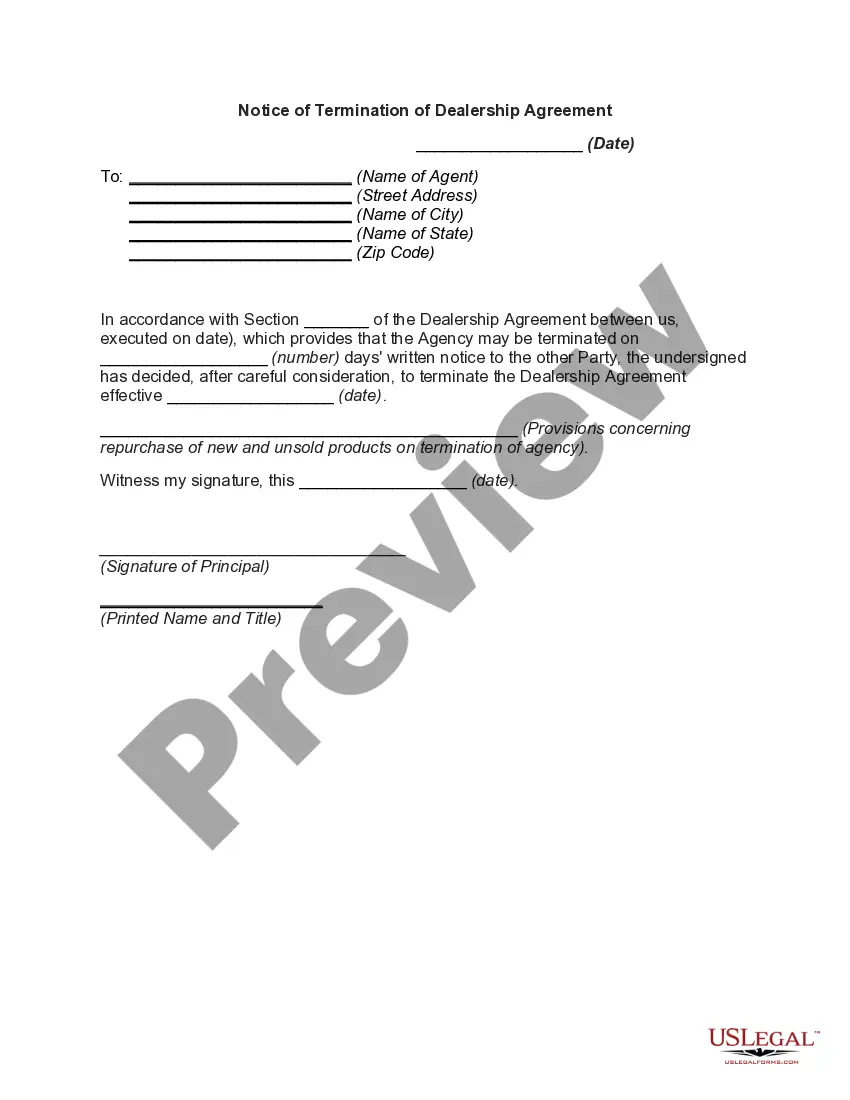
Certain events: An agency relationship will automatically terminate upon the occurrence of certain events. Such events include death, insanity, or bankruptcy of either the principal or agent. A court of law will usually step in and terminate the agency relationship if one of the parties refuses to do so.
Add the employee name, ID number, position, and department. Add the name of manager or supervisor handling termination. Include any severance, benefits, and compensation the employee is entitled to. Detail any company property employee is expected to return.
Termination By Mutual Agreement: Termination by mutual agreement covers situations where both the employer and employee consent to a separation. Examples include contract employees at the end of their agreement, retirement, and forced resignation.Employees terminated with prejudice are ineligible for rehire.
Related. Parties to an agreement always have the option of terminating the agreement by mutual assent. If the contract is no longer being followed, if the parties have ceased business operations or if the contract can no longer be faithfully performed, the parties may wish to formally terminate the agreement in writing
It is always open to parties to agree to variations to their contractual arrangements. That includes terminating it by agreement. Both parties are able to consent to termination of a contract. When they do, the mutual obligations to perform contractual obligations come to an end.
Termination By Mutual Agreement: Termination by mutual agreement covers situations where both the employer and employee consent to a separation. Examples include contract employees at the end of their agreement, retirement, and forced resignation.Employees terminated with prejudice are ineligible for rehire.