Restricted Endowment to Religious Institution
What is this form?
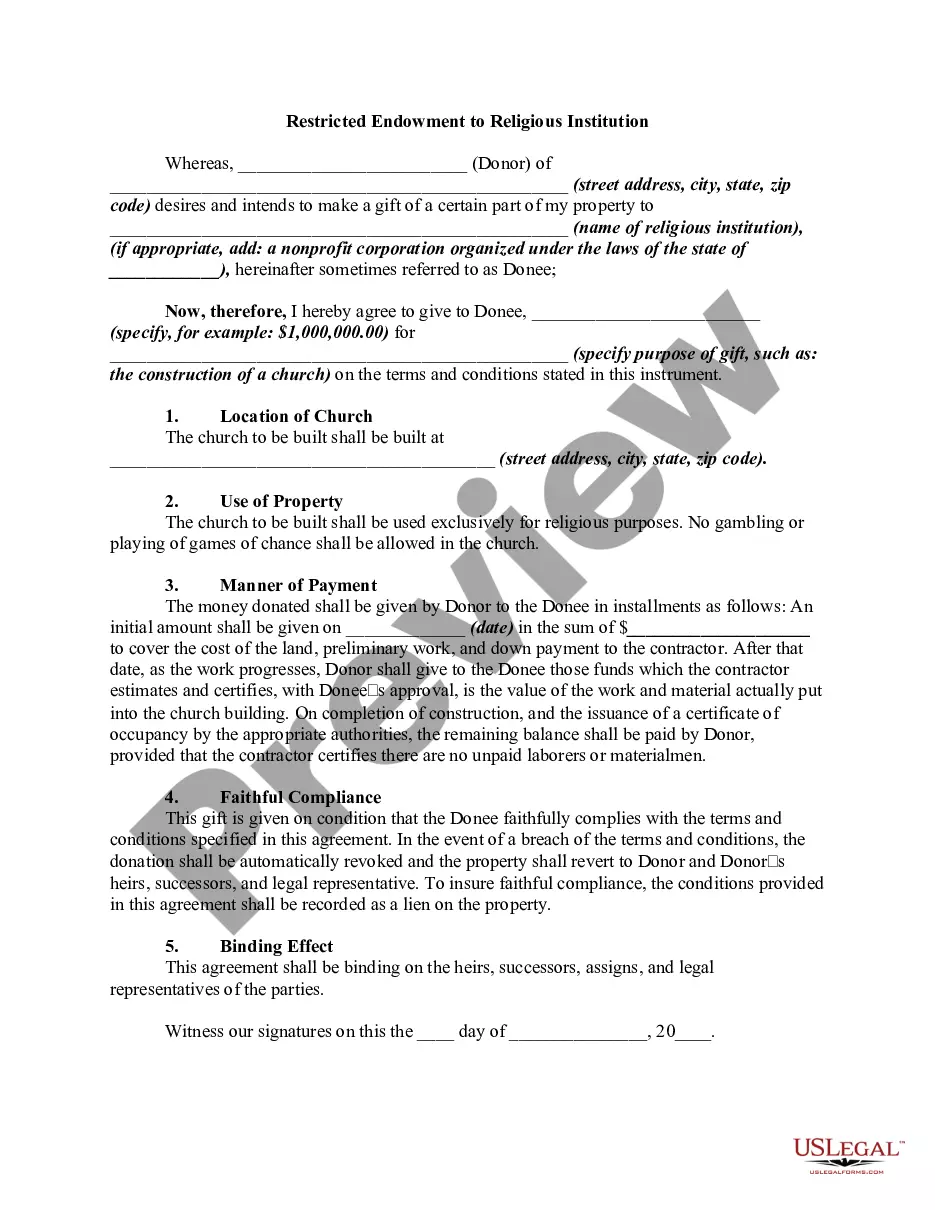
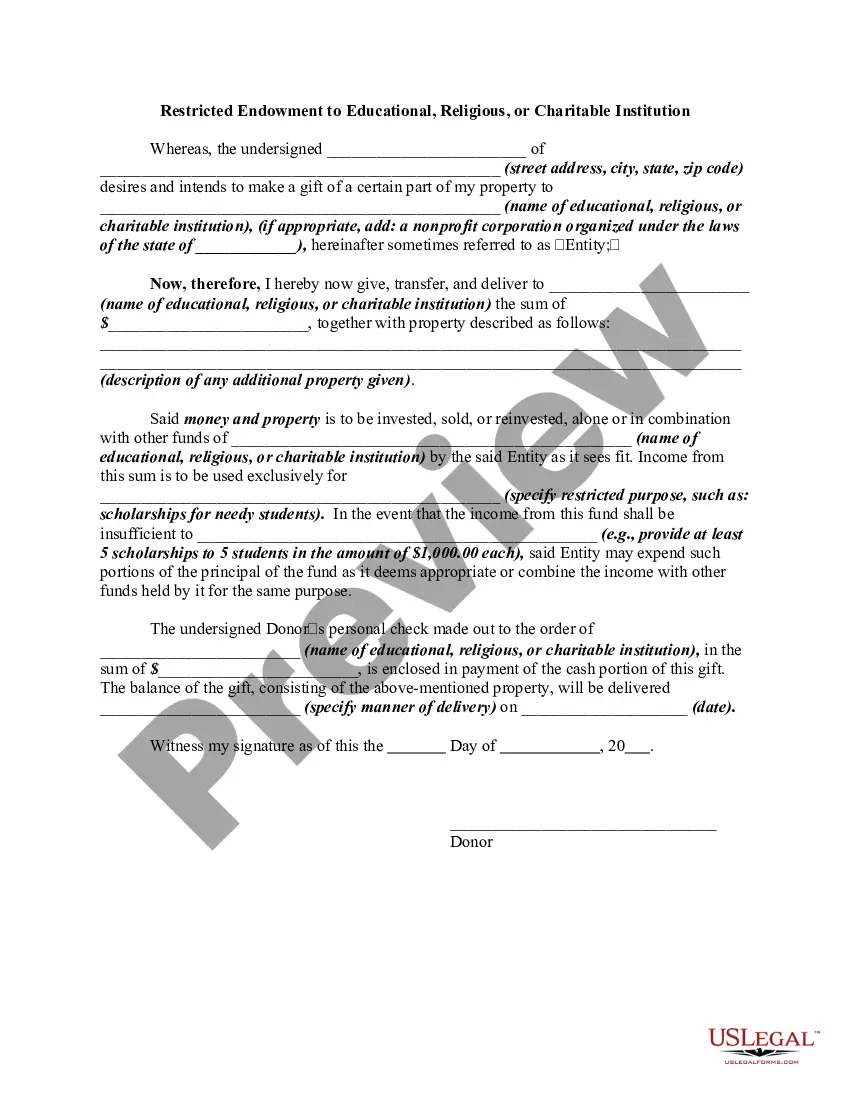
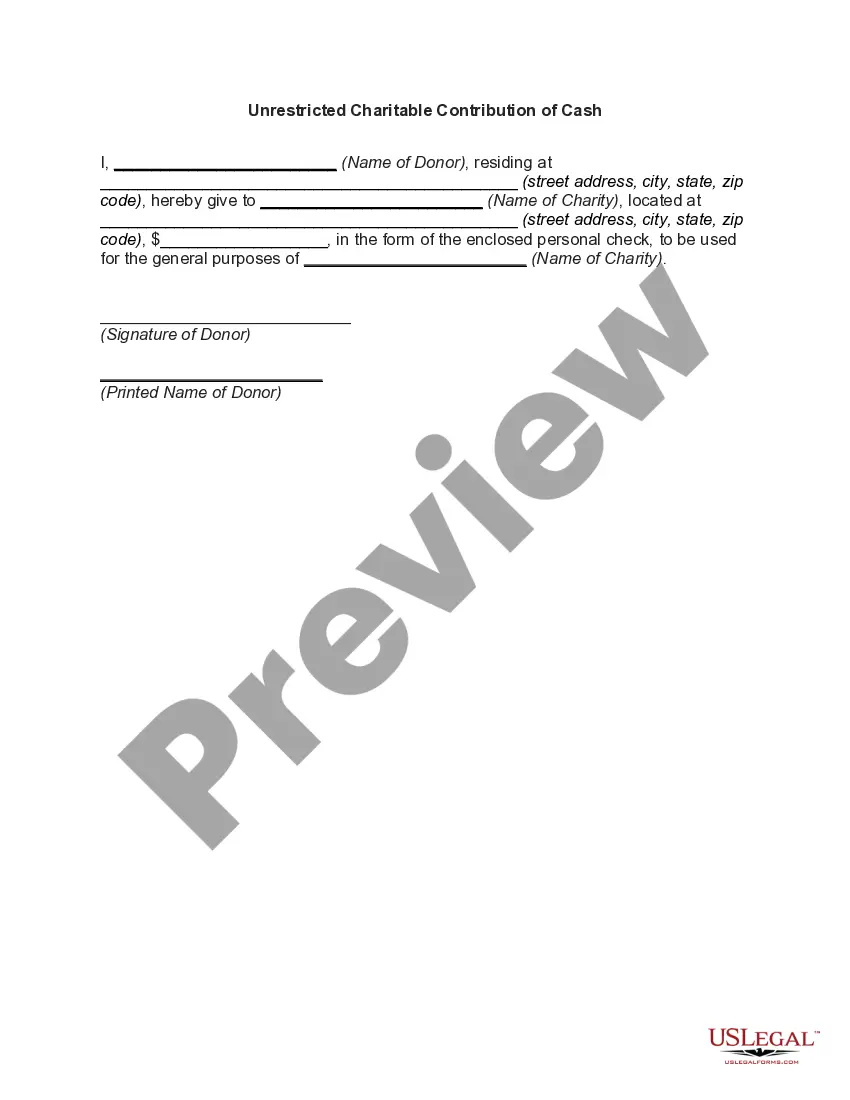
The Restricted Endowment to Religious Institution form is a legal document that facilitates a donor's intention to make a specific financial gift to a religious entity, earmarked for a designated purpose. Unlike general donations, this form includes terms regarding the use of the funds, ensuring they are strictly allocated to defined religious initiatives, such as the construction of a church. It establishes clear conditions for compliance and accountability between the donor and the religious institution.
Main sections of this form
- Donor and Donee identification: Details of the person making the gift and the religious institution receiving it.
- Gift amount: Specification of the monetary value being donated.
- Purpose of the gift: Clear declaration of how the funds will be used, ensuring they serve religious purposes only.
- Manner of payment: Outline of how and when the donation will be delivered, including installment arrangements.
- Conditions for compliance: Stipulations that require adherence to the agreement's terms, including a reversion clause if conditions are breached.


Situations where this form applies
This form should be used when an individual or entity wishes to donate a specific sum of money to a religious institution for a defined purpose, such as building infrastructure or funding programs. It is especially relevant when the donor wants to ensure that their contribution is utilized for a particular intention and under specific conditions, safeguarding their interests and the intended use of their gift.
Who should use this form
- Individuals looking to make a substantial charitable contribution to a religious institution.
- Philanthropists who have specific projects in mind requiring funding within a religious context.
- Legal representatives of donors who facilitate charitable gifts.
- Religious institutions receiving donations that need to manage financial gifts with clear stipulations.
Completing this form step by step
- Identify the parties: Fill in the names and contact information for both the donor and the religious institution.
- Specify the gift amount: Clearly indicate the monetary donation to be made.
- Define the purpose: State the specific religious use for the funds, such as building a church.
- Detail the payment schedule: Outline the timing and amounts for any installments of the donation.
- Include signatures: Ensure both parties sign and date the form to validate the agreement.
Does this form need to be notarized?
This form does not typically require notarization unless specified by local law. However, it is advisable to confirm with local regulations to ensure validity.
Get your form ready online
Our built-in tools help you complete, sign, share, and store your documents in one place.
Make edits, fill in missing information, and update formatting in US Legal Forms—just like you would in MS Word.
Download a copy, print it, send it by email, or mail it via USPS—whatever works best for your next step.
Sign and collect signatures with our SignNow integration. Send to multiple recipients, set reminders, and more. Go Premium to unlock E-Sign.
If this form requires notarization, complete it online through a secure video call—no need to meet a notary in person or wait for an appointment.
We protect your documents and personal data by following strict security and privacy standards.
Make edits, fill in missing information, and update formatting in US Legal Forms—just like you would in MS Word.
Download a copy, print it, send it by email, or mail it via USPS—whatever works best for your next step.
Sign and collect signatures with our SignNow integration. Send to multiple recipients, set reminders, and more. Go Premium to unlock E-Sign.

If this form requires notarization, complete it online through a secure video call—no need to meet a notary in person or wait for an appointment.
We protect your documents and personal data by following strict security and privacy standards.
Common mistakes
- Failing to specify the intended purpose of the gift, leading to potential misuse of funds.
- Not including all required signatures, which can invalidate the agreement.
- Making vague payment terms instead of clearly defining the amount and schedule.
- Neglecting to include compliance conditions, which may lead to issues later on.
Why complete this form online
- Convenience of accessing and downloading the form from anywhere at any time.
- Editability allows for customization to fit specific situations without needing to start from scratch.
- Reliable legal templates are drafted by licensed attorneys, ensuring compliance with relevant laws.
Legal use & context
- This form acts as a binding legal agreement between the donor and the donee, outlining expectations and responsibilities.
- The specified conditions for use of the gift help protect the donorâs interests in how the funds will be utilized.
- Local laws may impose additional requirements, so consult legal counsel for compliance with state regulations.
Key takeaways
- The Restricted Endowment to Religious Institution form is essential for ensuring that donations are used for specific religious purposes.
- Properly filling out this form protects both the donor's interests and the legal obligations of the religious institution.
- Complete the form carefully to avoid common mistakes and ensure its enforceability.
Looking for another form?



Form popularity
FAQ
HOW ENDOWMENTS WORK. Endowed funds differ from others in that the total amount of the gift is invested. Each year, only a portion of the income earned is spent while the remainder is added to the principal for growth. In this respect, an endowment is a perpetual gift.
What are Permanently Restricted Assets. Permanently restricted assets are funds of a nonprofit organization that must be used in designated ways and whose principal cannot be touched. The income that the principal amount earns goes toward funding the stated wishes of the donor(s).
Definition. Restricted funds are monies set aside for a particular purpose as a result of designated giving. They are permanently restricted to that purpose and cannot be used for other expenses of the nonprofit. By contrast, unrestricted funds may be used for any legal purpose appropriate to the organization.
If your endowment is a true endowment without a time restriction, the version of the Act adopted in your state will govern what you can or can't do with endowment funds and you generally can't change it without the Donor's approval or a Court order.Delegation of management and investment of charitable funds.
True endowment (also called Permanent Endowment). The UPMIFA definition of endowment describes true endowment in most states. Quasi-endowment (also known as Funds Functioning as EndowmentFFE). Term endowment.
An endowment is a fund set up by a church to receive gifts and bequests from multiple donors and is intended to be maintained on a long-term basis, providing support of the church's mission into the future. A church can set up an endowment in one of four ways: 2022 It may establish, invest and manage its own fund.
Usually, endowments are considered restricted funds. Their principal usually cannot be spent, and only a specified percent of the interest they earn can be spent per year. Furthermore, there are restrictions on how the interest can be spent. For example, it may be used only to fund scholarships and professorships.
The importance of drawing a distinction between a true endowment and a fund functioning as an endowment is that while the board can remove funds functioning as endowments and spend them at any time, true endowment funds, permanently restricted by the donor, can never be spent.
An endowment comprises gifts that the donor requires to be invested in perpetuity or for a specific period of time.Since board designations are voluntary and may be reversed at any time, an endowment established by a board is not considered restricted and is sometimes referred to as quasi-endowments.