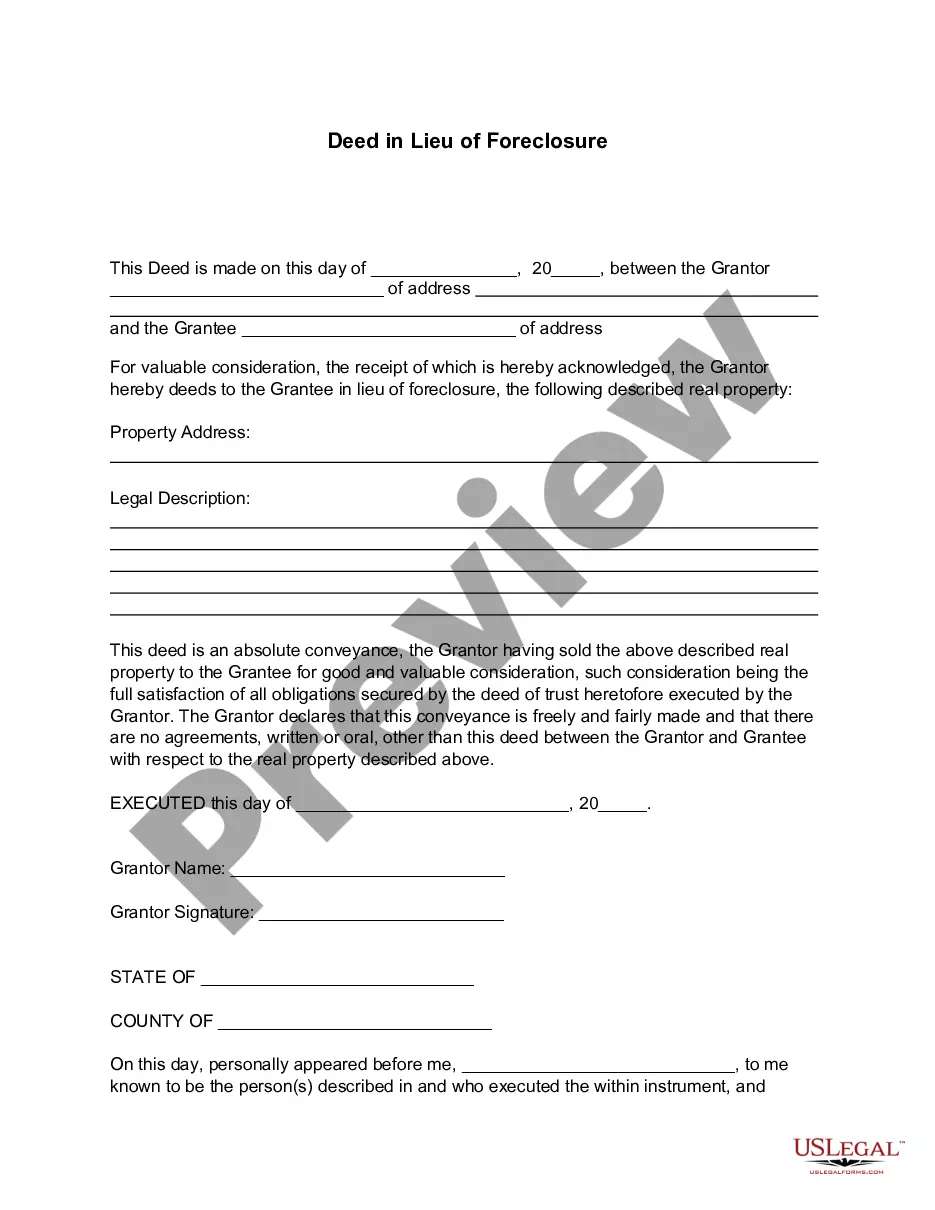
Trade Secret and Nondisclosure Agreement for a Newly Hired Employee
What this document covers
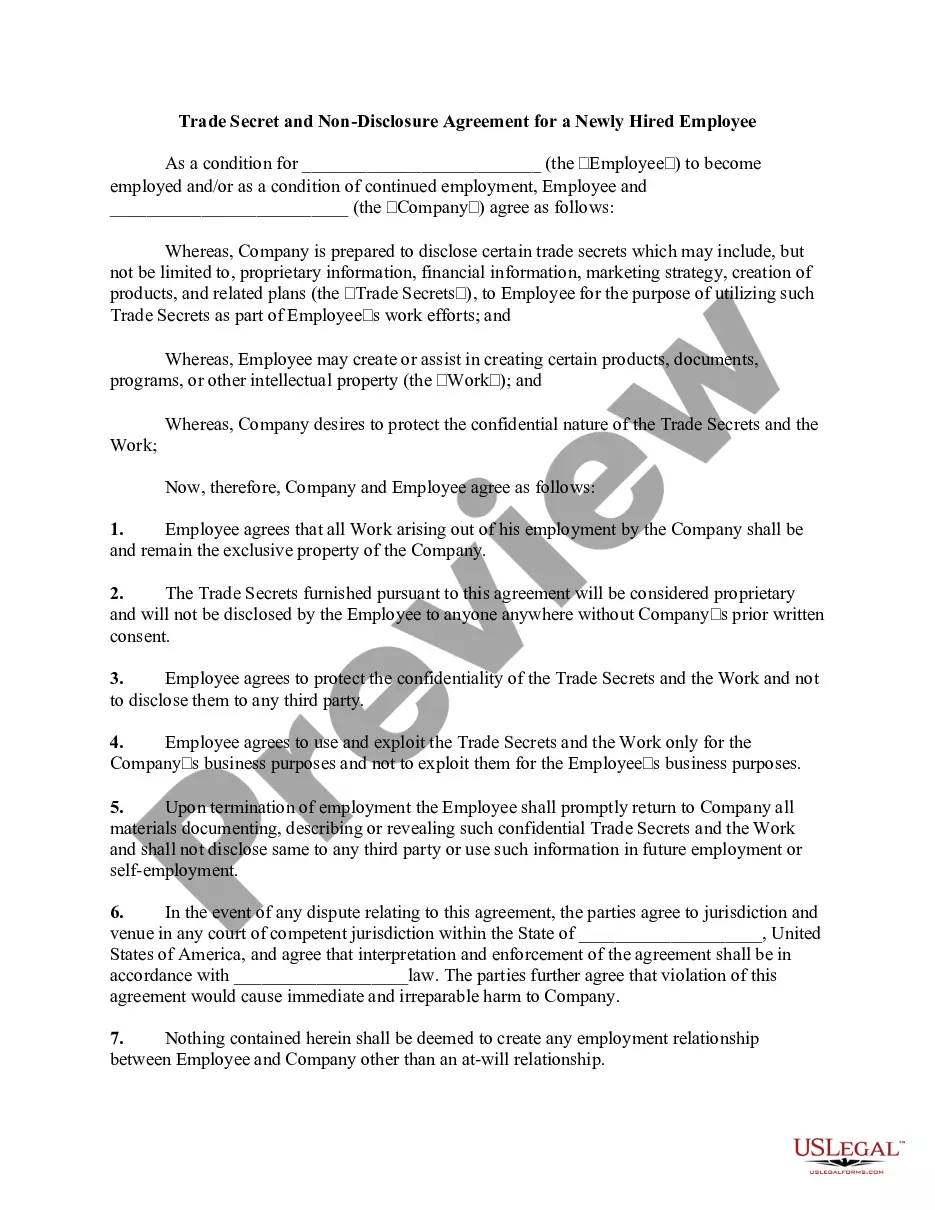
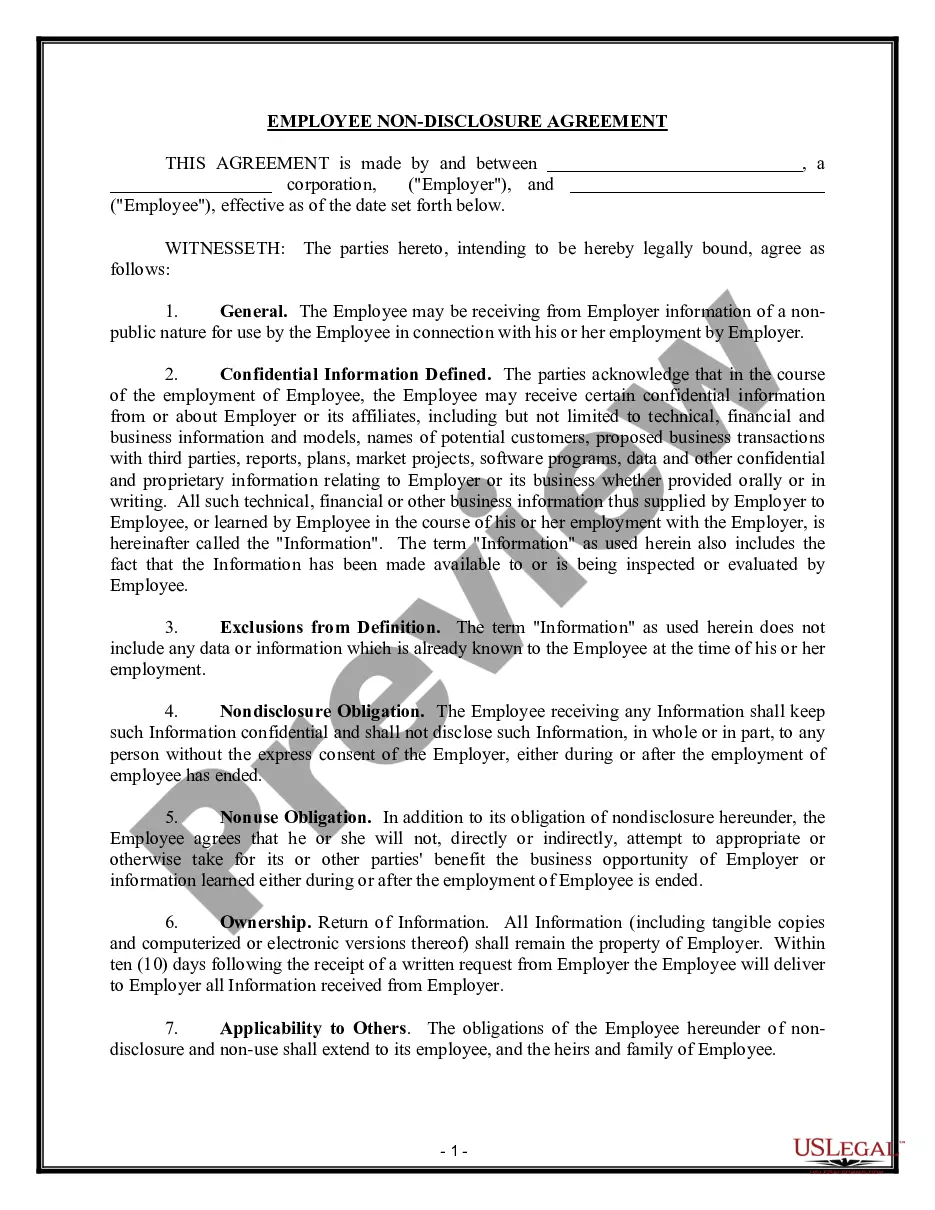
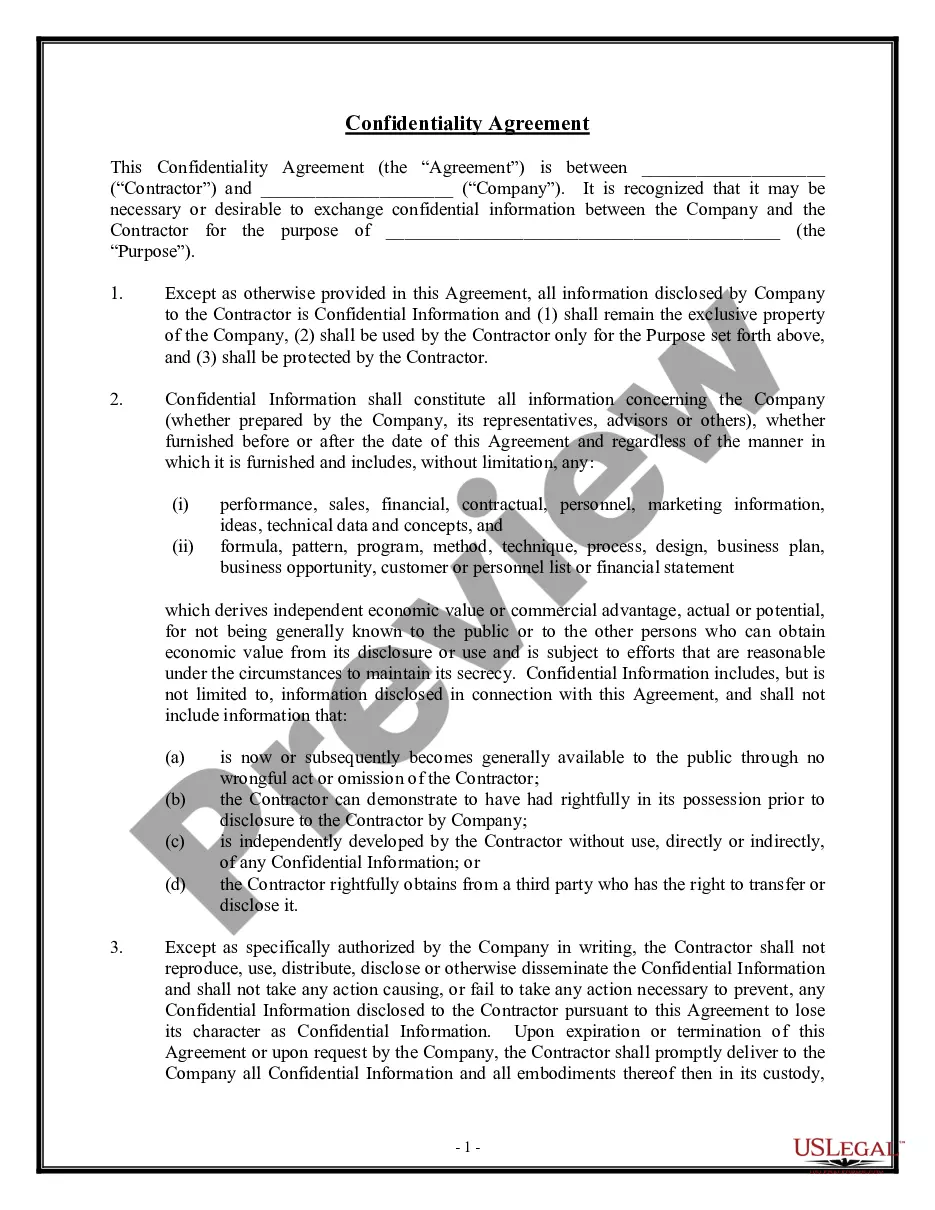
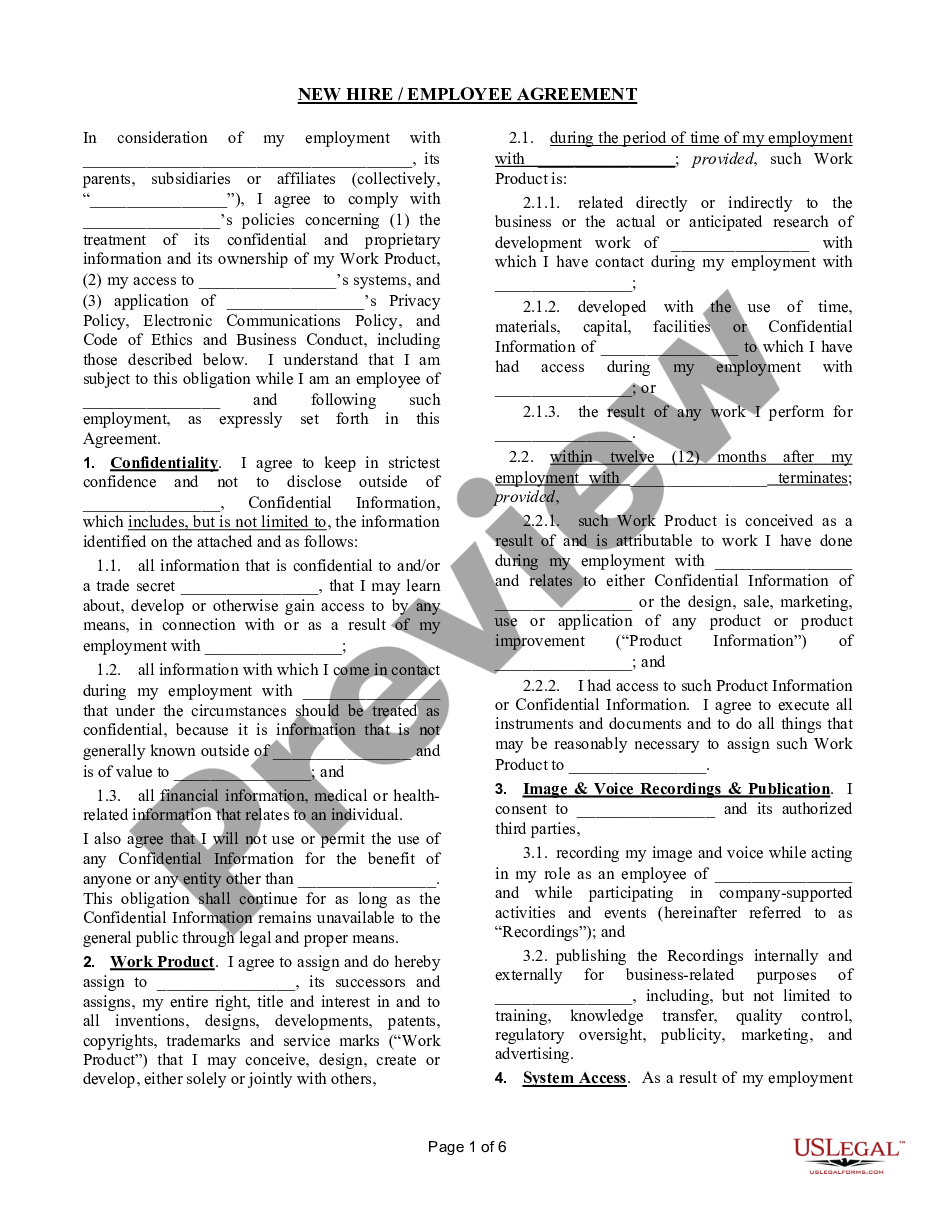
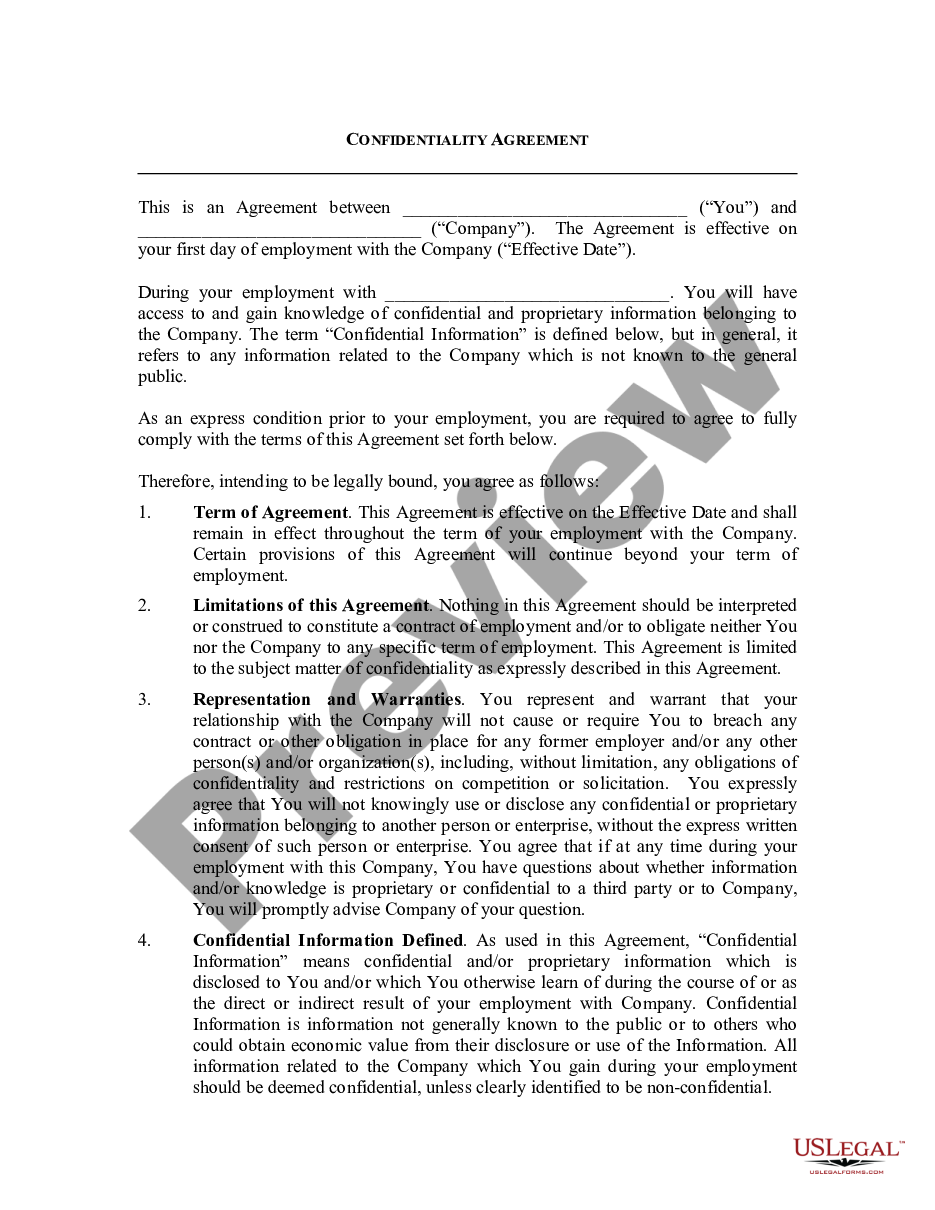
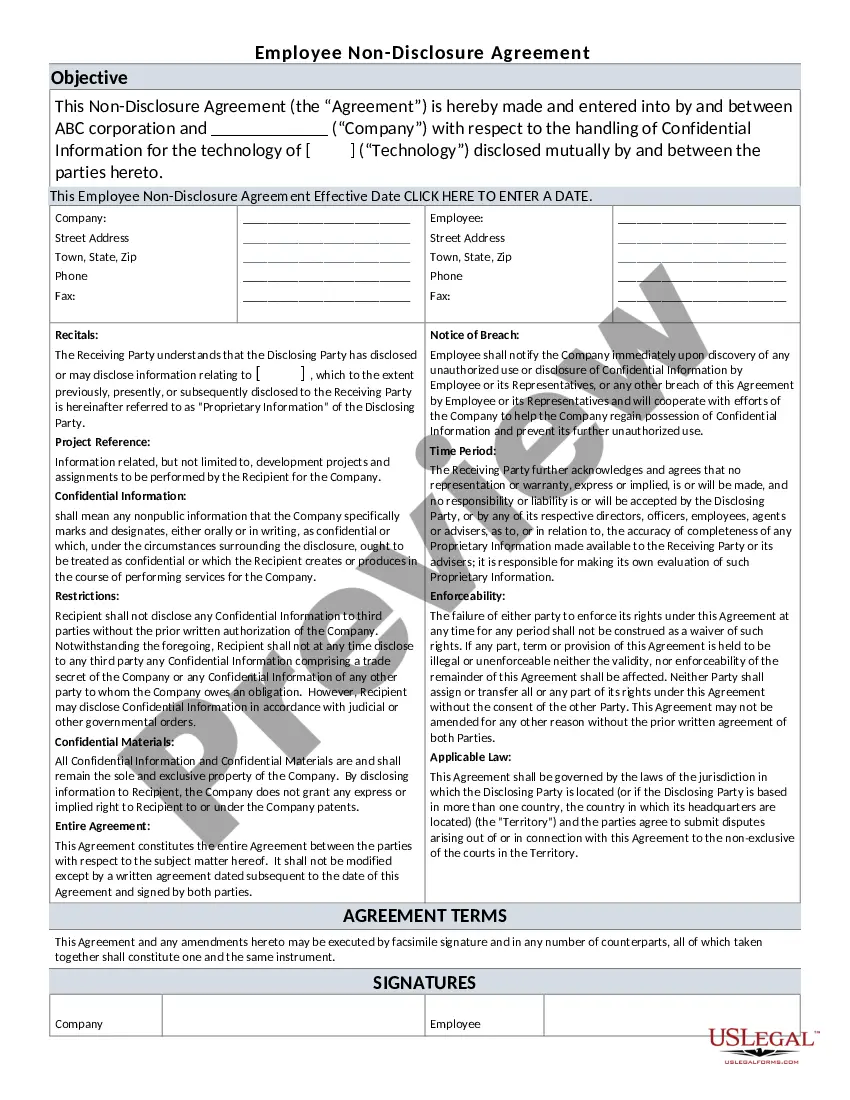
The Trade Secret and Nondisclosure Agreement for a Newly Hired Employee is a legal document designed to protect a company's confidential information and trade secrets when hiring new employees. This agreement ensures that employees cannot disclose sensitive information they gain during their employment. Unlike standard employment contracts, this agreement specifically focuses on safeguarding proprietary information and outlines the obligations of the employee regarding confidentiality and the use of that information.
What’s included in this form
- Definition of Trade Secrets and Work: Clarifies the nature of confidential information and intellectual property covered by the agreement.
- Employee Obligations: Outlines the employee's duty to maintain confidentiality and not to disclose trade secrets.
- Ownership Rights: States that all work created during employment belongs exclusively to the company.
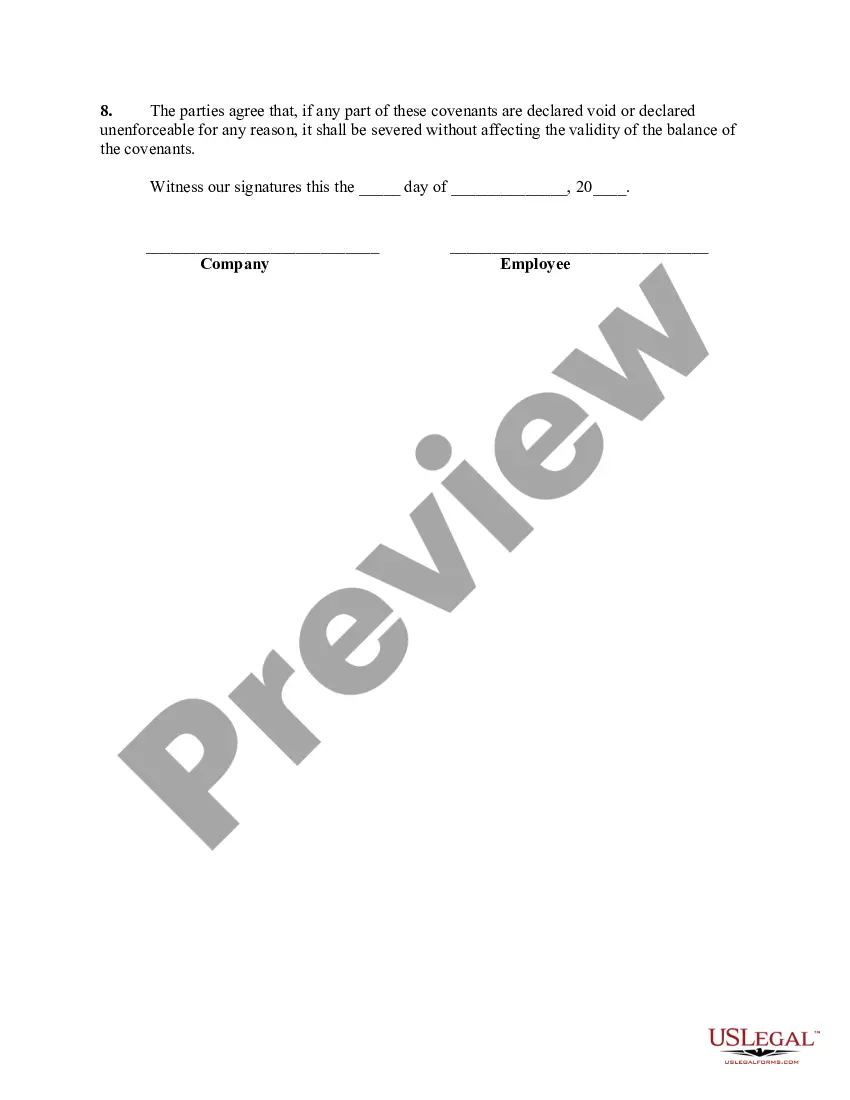
- Return of Materials: Requires the employee to return all company-related confidential materials upon termination of employment.
- Irreparable Harm Clause: Establishes that any breach of the agreement may cause significant damage to the company.
- Jurisdiction and Governing Law: Specifies the legal framework and jurisdiction applicable to the agreement.
When to use this form
This agreement should be used when hiring a new employee who will have access to sensitive company information or intellectual property. It is particularly pertinent for roles involving innovation, research, or any work that may generate proprietary information. Using this form helps establish clear expectations and legal protections regarding confidentiality from the outset of employment.
Who needs this form
- Employers hiring new employees, particularly in fields where trade secrets and proprietary information are prevalent.
- Human Resource professionals looking to safeguard their organization against potential information leakage.
- Business owners who want to ensure that their competitive edge remains protected through legal agreements with new hires.
Completing this form step by step
- Identify the parties: Fill in the names of the employee and the employer (company).
- Define the Trade Secrets: Clearly specify what constitutes trade secrets and proprietary information within the context of your organization.
- State employee obligations: Ensure the employee understands and agrees to protect the confidentiality of the information.
- Include the return of materials clause: State the requirement for the employee to return all company materials upon termination.
- Finalize the agreement: Both parties should sign and date the form to make it legally binding.
Is notarization required?
This form does not typically require notarization unless specified by local law. Ensure you verify any local requirements that may necessitate notarization for enforceability.
Get your form ready online
Our built-in tools help you complete, sign, share, and store your documents in one place.
Make edits, fill in missing information, and update formatting in US Legal Forms—just like you would in MS Word.
Download a copy, print it, send it by email, or mail it via USPS—whatever works best for your next step.
Sign and collect signatures with our SignNow integration. Send to multiple recipients, set reminders, and more. Go Premium to unlock E-Sign.
If this form requires notarization, complete it online through a secure video call—no need to meet a notary in person or wait for an appointment.
We protect your documents and personal data by following strict security and privacy standards.

Make edits, fill in missing information, and update formatting in US Legal Forms—just like you would in MS Word.

Download a copy, print it, send it by email, or mail it via USPS—whatever works best for your next step.

Sign and collect signatures with our SignNow integration. Send to multiple recipients, set reminders, and more. Go Premium to unlock E-Sign.

If this form requires notarization, complete it online through a secure video call—no need to meet a notary in person or wait for an appointment.

We protect your documents and personal data by following strict security and privacy standards.
Mistakes to watch out for
- Failing to define what constitutes trade secrets can lead to ambiguity and enforceability issues.
- Not obtaining the employee's signature promptly can weaken the agreement's enforceability.
- Overlooking the need for employee training on confidentiality can lead to unintentional disclosures.
Why complete this form online
- Convenience: Easily download and customize the form according to your specific needs.
- Editability: Quickly make changes to suit particular circumstances or updates in the law.
- Reliability: Access forms that have been carefully drafted by licensed attorneys to ensure compliance and enforceability.
- The Trade Secret and Nondisclosure Agreement is essential for protecting sensitive business information.
- Completing the agreement accurately and ensuring both parties sign it are critical for legal enforceability.
- Understanding when to use this form can bolster an employer's legal protections against unauthorized disclosure of confidential information.
Looking for another form?


Form popularity
FAQ
Yes, and no! When drafting the employment agreement, it is wise to include a clause requiring the employee to execute such further documents and agreements as the employer deems reasonably necessary - and then, when they sign those documents, remember to give some fresh consideration with the agreement.
Set the date of the agreement. Describe the two parties, sometimes called the Disclosing Party and the Receiving Party.7feff Include names and identification, so there can be no misunderstanding about who signed the agreement.
Identify each party in the first section of the form. The NDA form will start by declaring it to be an agreement and identifying who the agreement is between. Whoever is disclosing the information to be protected is the "disclosing party"; write his or her name on this space.
While an employer has the right to demand its employees sign a NDA when those employees have access to valuable company data (e.g. product formulas, private customer lists, financial reports, etc.), the employer should not ask an employee to sign a confidentiality agreement if the purpose is to protect information that
An employer will often require an employee to sign an NDA because it allows their company to operate at a higher level, with less risk.Understand, your employer is not asking you to sign an NDA out of mistrust, they are asking you to sign one because it is essential to conducting business smoothly and efficiently.
Trade secrets are intellectual property (IP) rights on confidential information which may be sold or licensed. In general, to qualify as a trade secret, the information must be: commercially valuable because it is secret, be known only to a limited group of persons, and.
There are no formal requirements or applications to file in order to obtain a trade secret it exists if there is confidential information that a company takes reasonable steps to protect from public acquisition.
The secret formula for Coca-Cola, which is locked in a vault, is an example of a trade secret that is a formula or recipe. Since it has not been patented, it has never been revealed. The New York Times Bestseller list is an example of a process trade secret.
Contrary to patents, trade secrets are protected without registration, that is, trade secrets require no procedural formalities for their protection. A trade secret can be protected for an unlimited period of time, unless it is discovered or legally acquired by others and disclosed to the public.