Affidavit of Self-Employed Independent Contractor regarding Loss of Wages as Proof of Damages in Personal Injury Suit
About this form
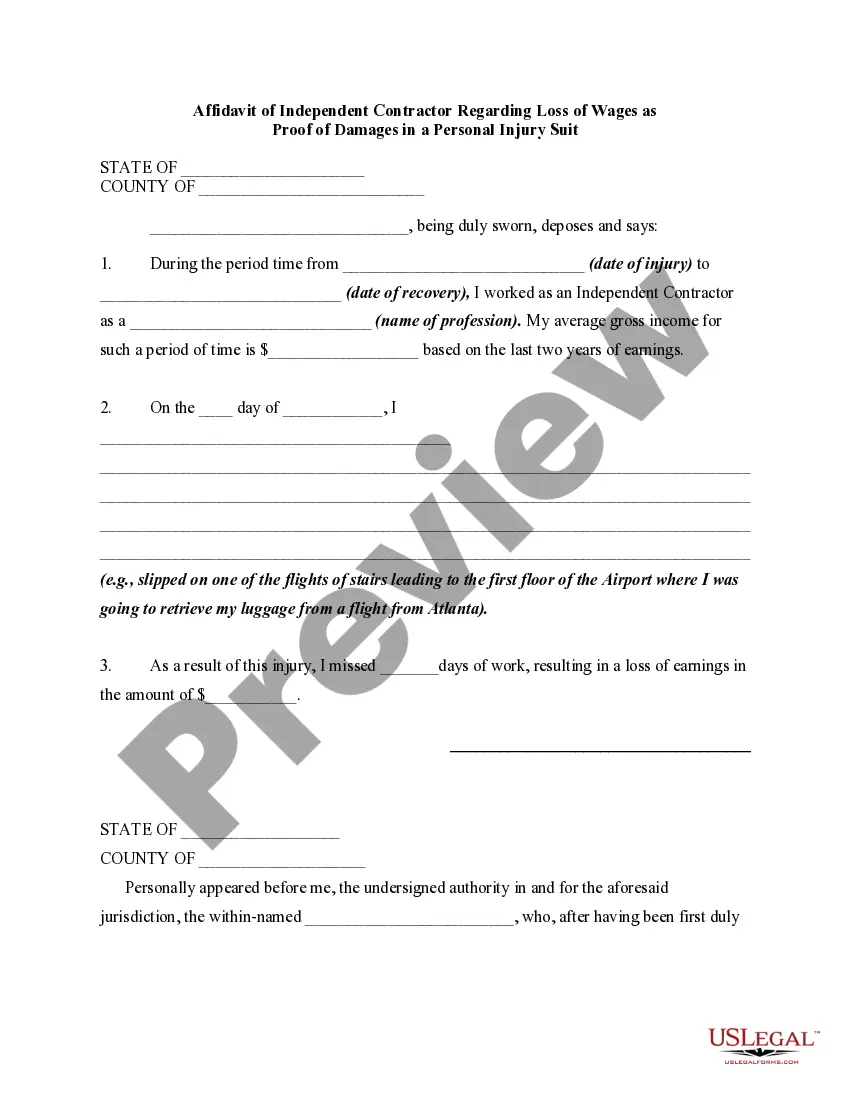
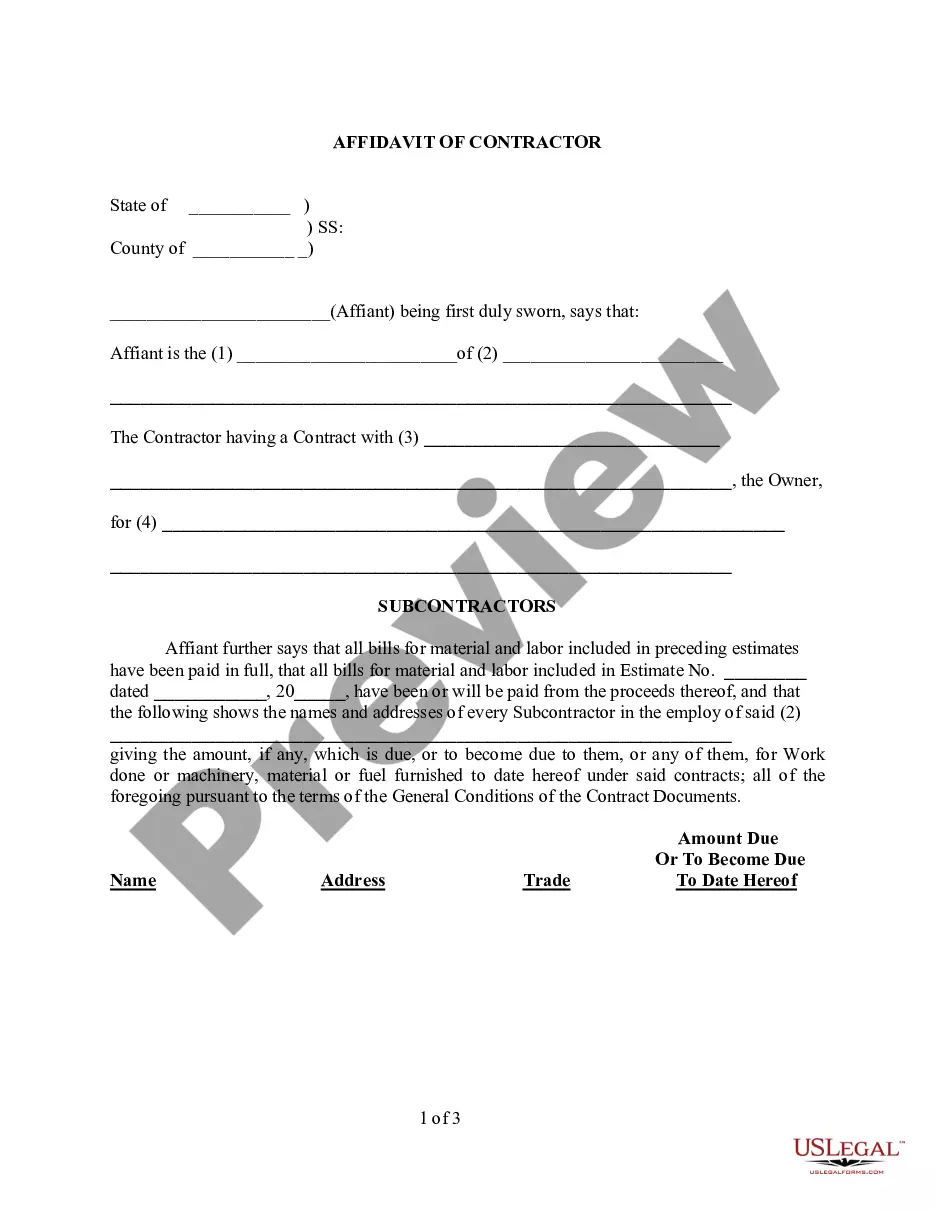
The Affidavit of Self-Employed Independent Contractor regarding Loss of Wages serves as a formal declaration by a plaintiff in a personal injury lawsuit. This form specifically details damages incurred due to lost income resulting from an injury while working as an independent contractor. It provides essential proof of damages, distinguishing it from other affidavits by focusing on self-employment earnings and losses.
Form components explained
- Personal information of the affiant including name, profession, and income details.
- Specific dates of the injury and recovery period.
- A detailed account of the incident leading to the injury.
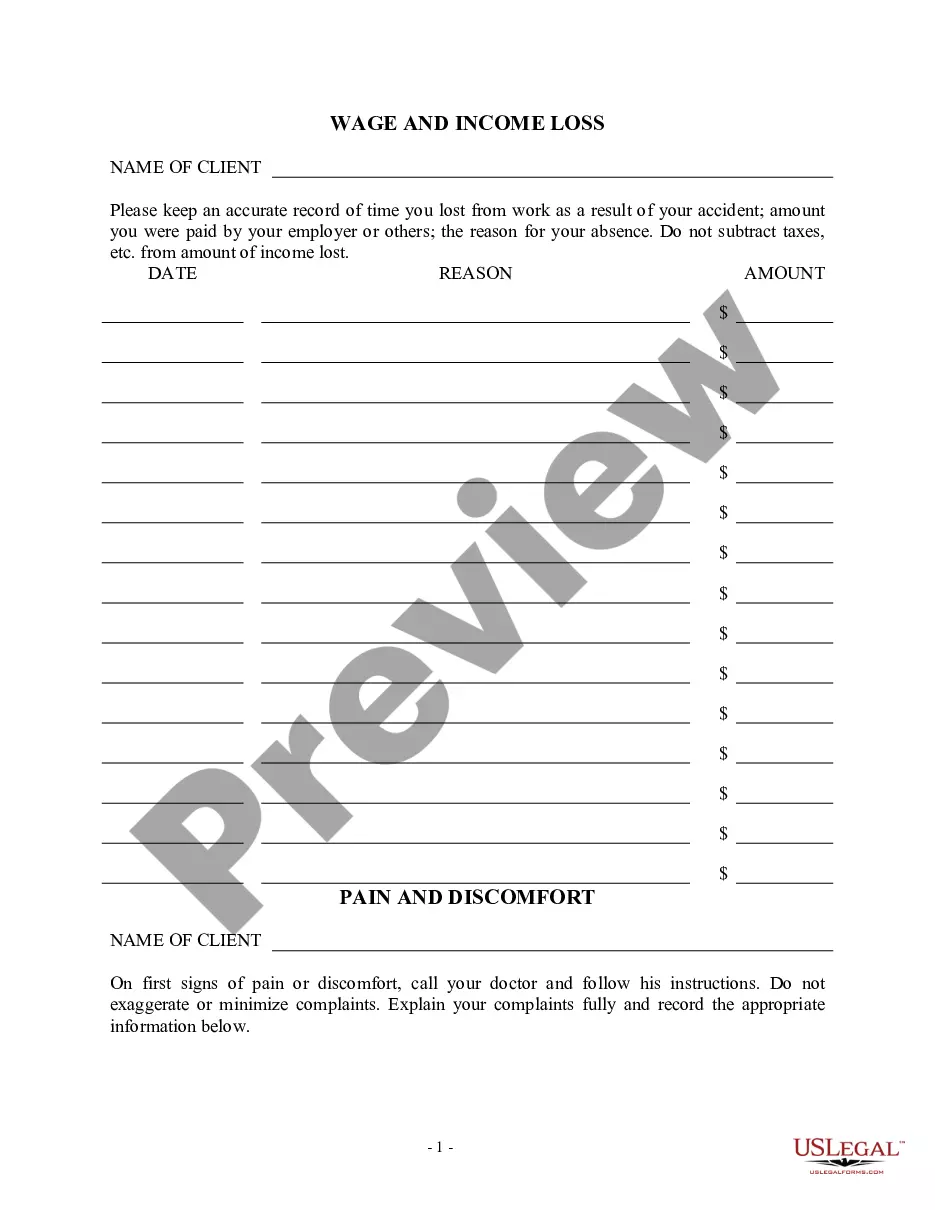
- Record of missed workdays and the corresponding loss of earnings.
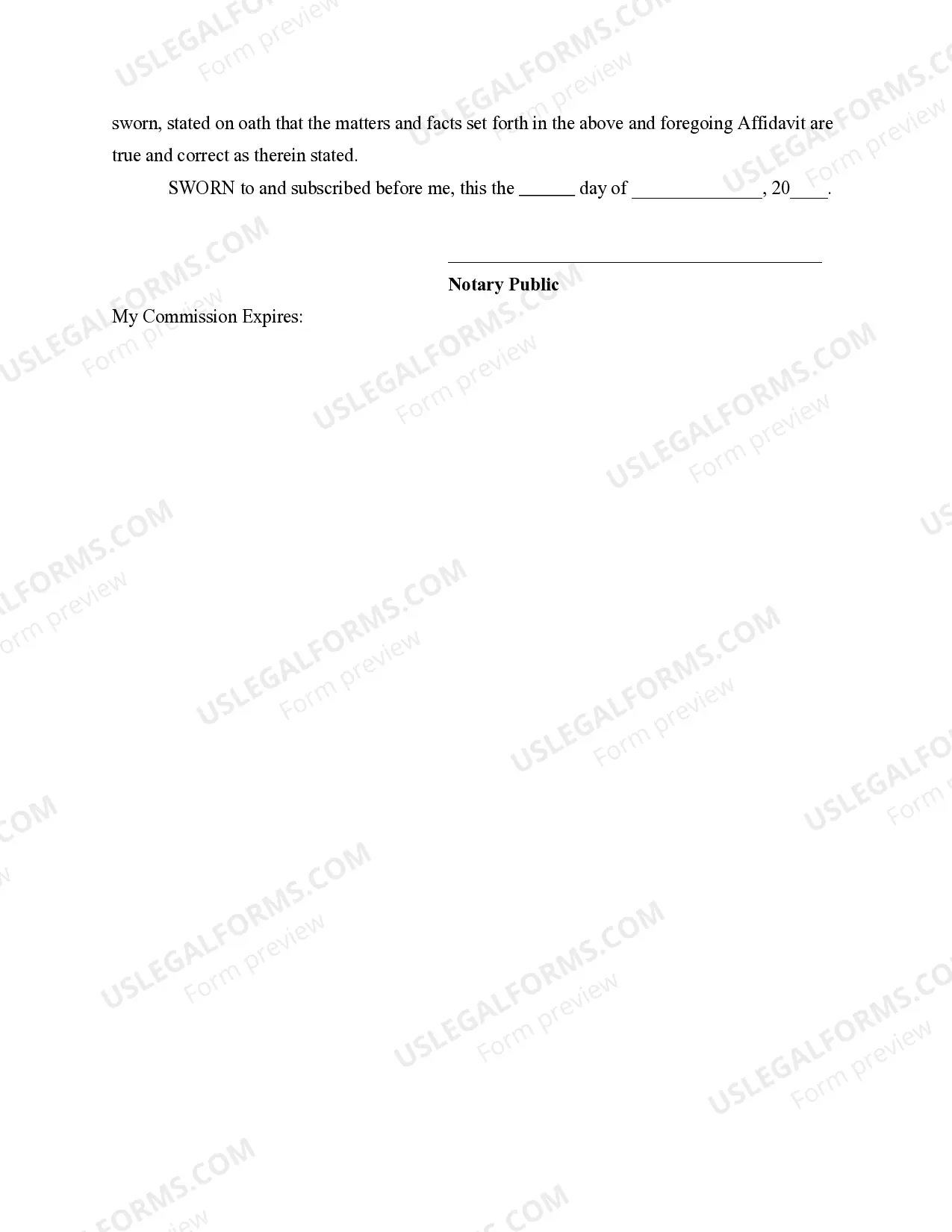
- Notary section for legal validation of the affidavit.
Common use cases
This affidavit should be used when an independent contractor has sustained an injury that has directly resulted in lost wages during a particular timeframe. It is most relevant in legal situations where the contractor seeks compensation for damages in a personal injury lawsuit, especially when proof of income loss is required to substantiate claims.
Who needs this form
- Independent contractors who have experienced a loss of income due to personal injury.
- Individuals involved in a personal injury lawsuit seeking damages related to missed work.
- Plaintiffs needing to provide proof of economic damages in legal proceedings.
Completing this form step by step
- Enter your personal information, including your name and profession.
- Clearly state the dates of your injury and recovery period.
- Describe the incident that caused your injury in detail.
- List the number of workdays missed and calculate your total loss of earnings.
- Sign the affidavit in the presence of a notary public.
Is notarization required?
This form must be notarized to be legally valid. US Legal Forms provides secure online notarization powered by Notarize, allowing you to complete the process through a verified video call.
Get your form ready online
Our built-in tools help you complete, sign, share, and store your documents in one place.
Make edits, fill in missing information, and update formatting in US Legal Forms—just like you would in MS Word.
Download a copy, print it, send it by email, or mail it via USPS—whatever works best for your next step.
Sign and collect signatures with our SignNow integration. Send to multiple recipients, set reminders, and more. Go Premium to unlock E-Sign.
If this form requires notarization, complete it online through a secure video call—no need to meet a notary in person or wait for an appointment.
We protect your documents and personal data by following strict security and privacy standards.

Make edits, fill in missing information, and update formatting in US Legal Forms—just like you would in MS Word.

Download a copy, print it, send it by email, or mail it via USPS—whatever works best for your next step.

Sign and collect signatures with our SignNow integration. Send to multiple recipients, set reminders, and more. Go Premium to unlock E-Sign.

If this form requires notarization, complete it online through a secure video call—no need to meet a notary in person or wait for an appointment.

We protect your documents and personal data by following strict security and privacy standards.
Common mistakes
- Failing to provide complete and accurate financial information.
- Not including specific details about the injury incident.
- Neglecting to have the form notarized, if required by local law.
Benefits of completing this form online
- Instant access to a legally vetted template, ensuring reliability and accuracy.
- Editable format allows you to customize the affidavit to your specific situation.
- Convenient download ensures you can complete your form from anywhere, anytime.
Looking for another form?





Form popularity
FAQ
To claim loss of earnings, you'll need to be able to produce evidence of the money you've lost as a result of your injury. The best way to do this is to provide payslips for an extended period of time, normally around six months pre-injury, to show a detailed history of your earnings.
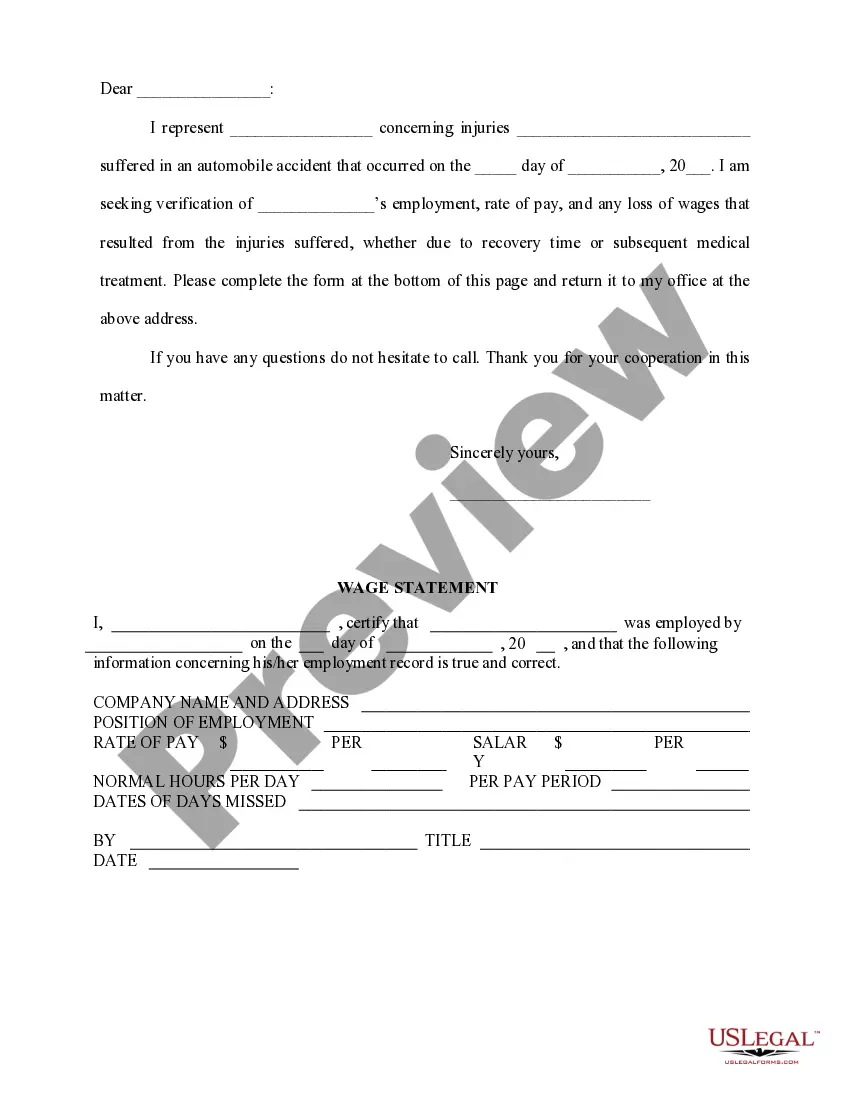
Make a list of the lost income and wages to get an accurate total. Ask the treating physician for a letter stating the dates you could not work. Ask your employer for a lost wage and income statement if possible. Describe the accident in the first section of the letter.
Loss of earnings can often form a large part of a personal injury claims and if you are able to document your earnings and prove, by way of medical evidence, that you were justified in taking time off work following your accident, then you should be able to recover earnings lost as a result of your inability to work if
Employed Loss of Earnings Claim Courts usually calculate your average salary through your net monthly wages for the past three months. This will be multiplied by the amount of time you have been absent from work, to assess your loss of earning claim.
The Lost Wages Assistance (LWA) program, authorized by the Presidential Memorandum, provides eligible claimants a supplemental payment of $300 per week, for up to six weeks, in addition to their weekly unemployment benefit amount. The LWA program will expire on Saturday, December 26, 2020.
How will my injury compensation be calculated? Your compensation will be calculated by adding together: General damages - awarded for pain, suffering and loss of amenity (PSLA), and; Special damages - awarded for any financial losses or costs you have incurred.
How Much Compensation Is Typical in Personal Injury Cases? More than half of our readers received payouts ranging from just $3,000 to $25,000. But another 26% of readers received over $25,000, making the overall average $52,900.
Many plaintiffs' attorneys were trained to use one of two methods for calculating pain and suffering. The first method is to multiply the plaintiff's actual damages (medical bills and lost wages) by a certain number, generally between 1 and 5 (depending on the severity of the injury).
To prove lost wages and income, you will need to support your claim by providing documents and evidence: Proof of lost income and opportunity: The key is to show how much you would have earned from the date of the accident to the time of full recovery.