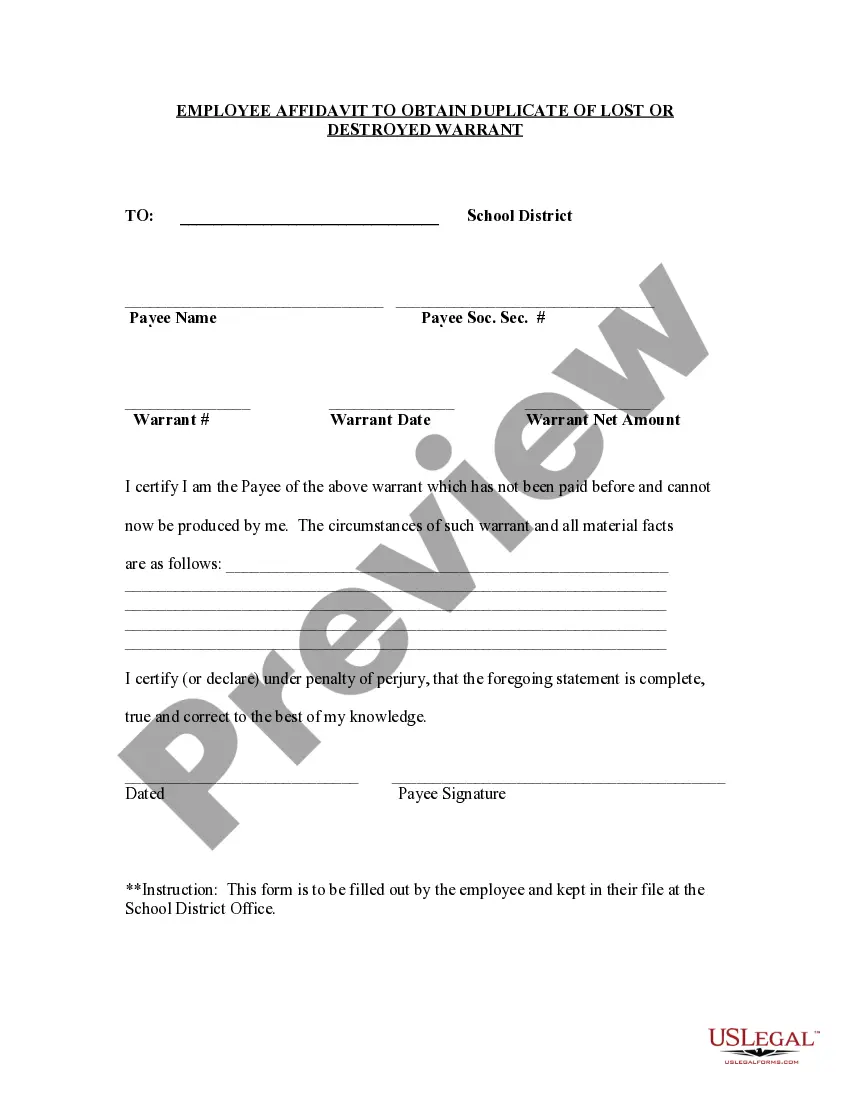
Employee Affidavit to Obtain Duplicate of Lost or Destroyed Warrant is a document that certifies that an employee has either lost or destroyed their warrant and is requesting a duplicate from their employer. The affidavit is completed by the employee and notarized by a notary public. It outlines the employee’s name, job title, and the company they work for, as well as the details of the warrant that was lost or destroyed, such as the date, amount, and other pertinent information. The affidavit also states that the employee has made reasonable attempts to locate the original warrant, but has been unsuccessful. It is signed and dated by the employee and witnessed by a notary public. The affidavit serves as a legal document and is used by employers to issue replacement warrants to employees who have lost or destroyed their original warrant. There are two types of Employee Affidavit to Obtain Duplicate of Lost or Destroyed Warrants: the General Affidavit and the Specific Affidavit. The General Affidavit is used when the employee does not know the exact details of the warrant that was lost or destroyed, such as the amount, date, or other pertinent information. The Specific Affidavit is used when the employee has all the necessary details of the warrant and is requesting a duplicate from their employer.
Employee Affidavit to Obtain Duplicate of Lost or Destroyed Warrant
Description
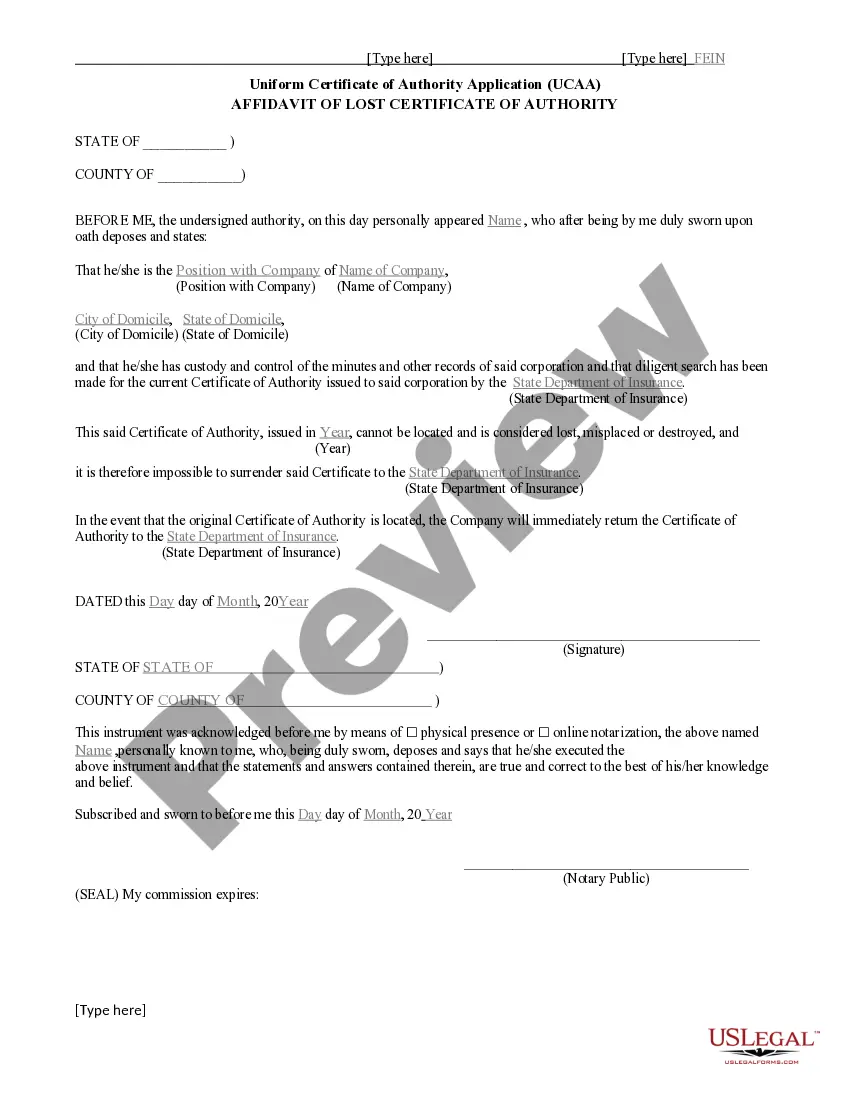
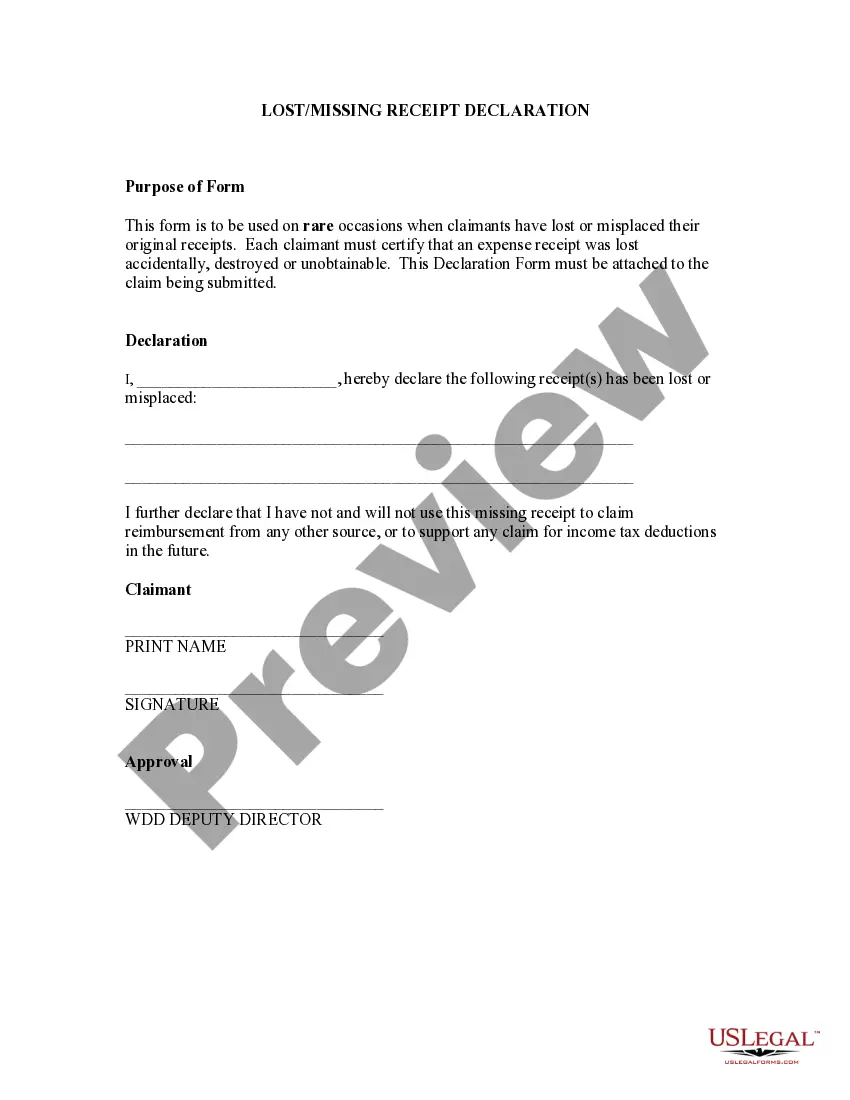
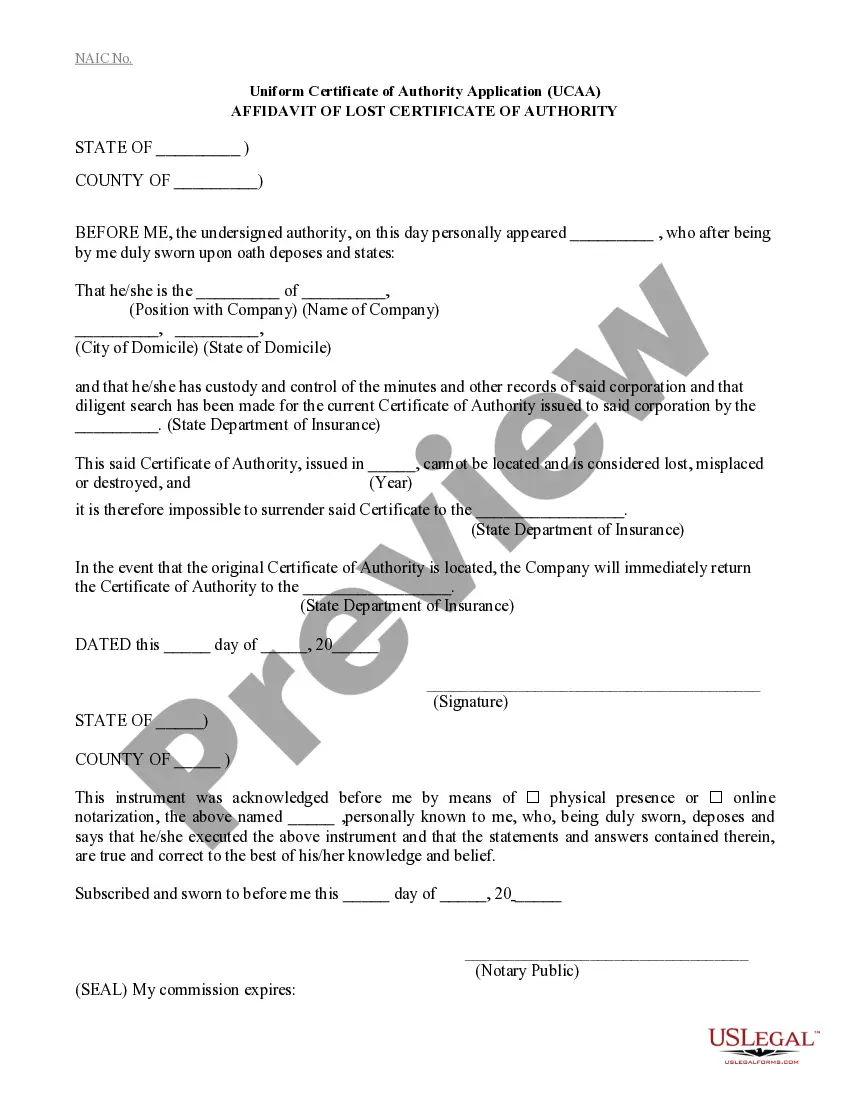
How to fill out Employee Affidavit To Obtain Duplicate Of Lost Or Destroyed Warrant?
If you’re looking for a way to appropriately prepare the Employee Affidavit to Obtain Duplicate of Lost or Destroyed Warrant without hiring a lawyer, then you’re just in the right place. US Legal Forms has proven itself as the most extensive and reliable library of formal templates for every personal and business scenario. Every piece of documentation you find on our online service is designed in accordance with nationwide and state regulations, so you can be certain that your documents are in order.
Adhere to these straightforward guidelines on how to acquire the ready-to-use Employee Affidavit to Obtain Duplicate of Lost or Destroyed Warrant:
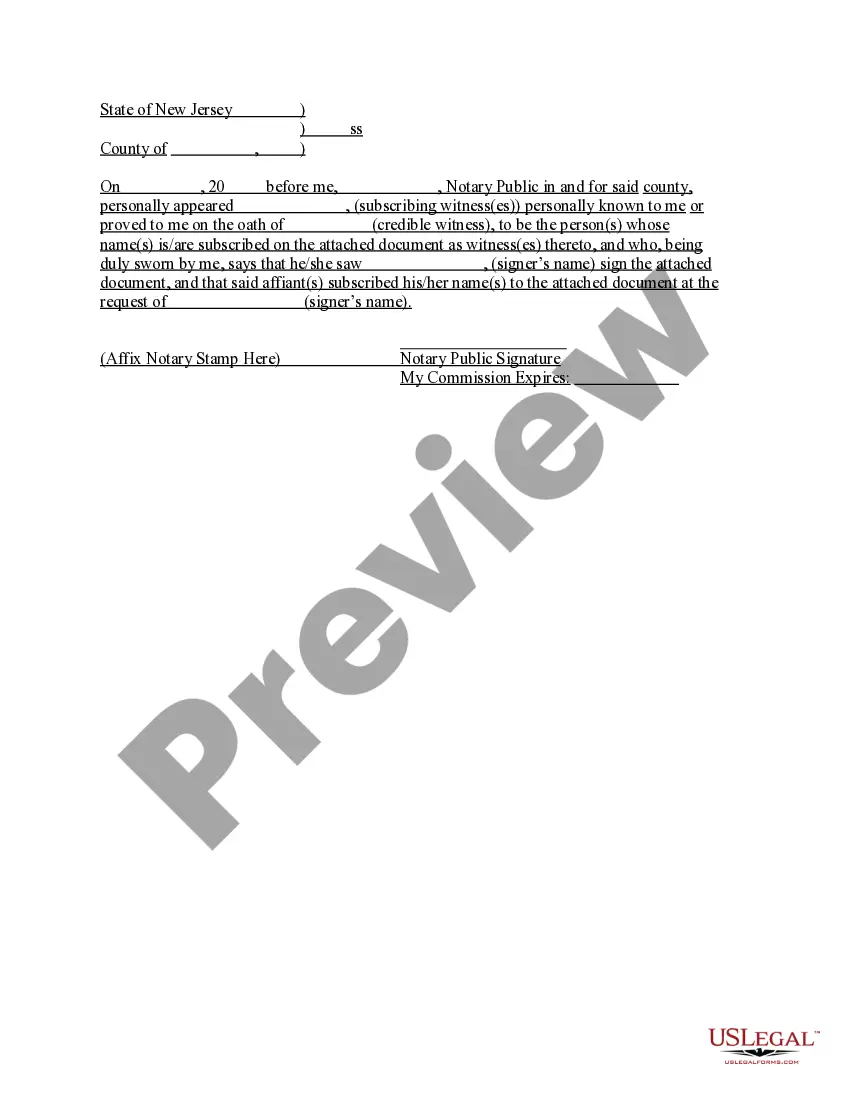
- Make sure the document you see on the page meets your legal situation and state regulations by checking its text description or looking through the Preview mode.
- Type in the form name in the Search tab on the top of the page and select your state from the list to find another template if there are any inconsistencies.
- Repeat with the content check and click Buy now when you are confident with the paperwork compliance with all the demands.
- Log in to your account and click Download. Create an account with the service and choose the subscription plan if you still don’t have one.
- Use your credit card or the PayPal option to purchase your US Legal Forms subscription. The document will be available to download right after.
- Choose in what format you want to get your Employee Affidavit to Obtain Duplicate of Lost or Destroyed Warrant and download it by clicking the appropriate button.
- Add your template to an online editor to fill out and sign it quickly or print it out to prepare your paper copy manually.
Another wonderful thing about US Legal Forms is that you never lose the paperwork you acquired - you can pick any of your downloaded blanks in the My Forms tab of your profile whenever you need it.
Form popularity
FAQ
How to Get? The legal name of the affiant and other crucial details concerning them, for example, nationality, residential address, date of birth, etc. A brief description of the lost or damaged asset. The purpose of executing the affidavit. An explanation of how the property got lost, stolen, or damaged.
Affidavit of Loss Full legal name of the affiant; Date of birth of the affiant; Address of the affiant; Identifying details of the lost item; The date of loss or discovery of loss; An explanation of the circumstances surrounding the loss; and. The signature and notarization.
Ideally, an affidavit for one and the same person should include the following details: The original name of the deponent. Changed name of the deponent. Document in which the change occurs. Deponent's relevant personal details. Declaration stating that there is no fraud or misrepresentation in the affidavit.
An affidavit is a sworn statement put in writing. When you use an affidavit, you're claiming that the information within the document is true and correct to the best of your knowledge. Like taking an oath in court, an affidavit is only valid when you make it voluntarily and without any coercion.
What is an Affidavit of Lost Document? An Affidavit of Lost Document is a sworn statement that is used to confirm that a document was lost and to request a replacement. Losing an important document is stressful, but the recovery process doesn't have to be.
Example: I, Jane Smith, swear that the information in my sworn statement is truthful to the best of my knowledge and understanding. Your statement of truth must be in the first person and you need to identify yourself in it. Keep it short and sweet.