Release from Personal Injury Liability by Adult Regarding Participation in a Dance and Fitness Program or School - Personal Trainer Waiver
Overview of this form
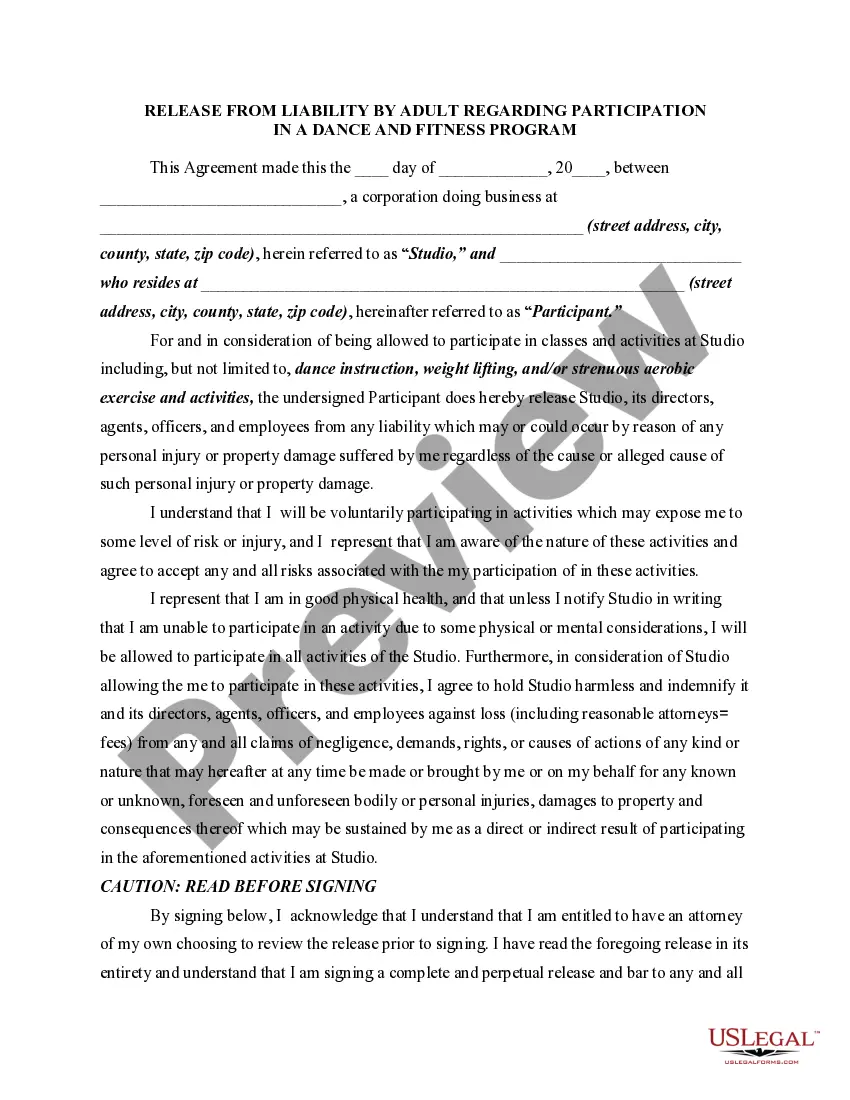
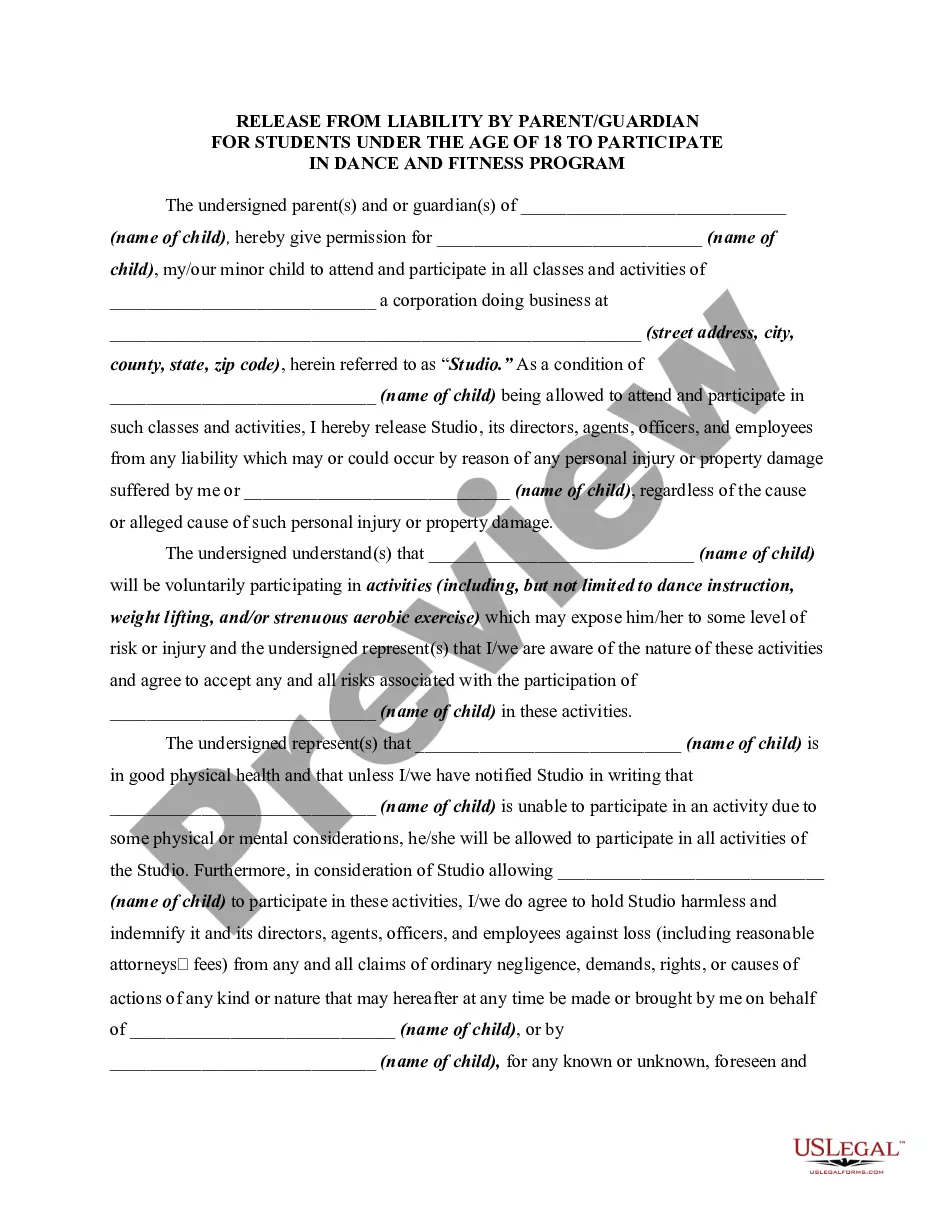
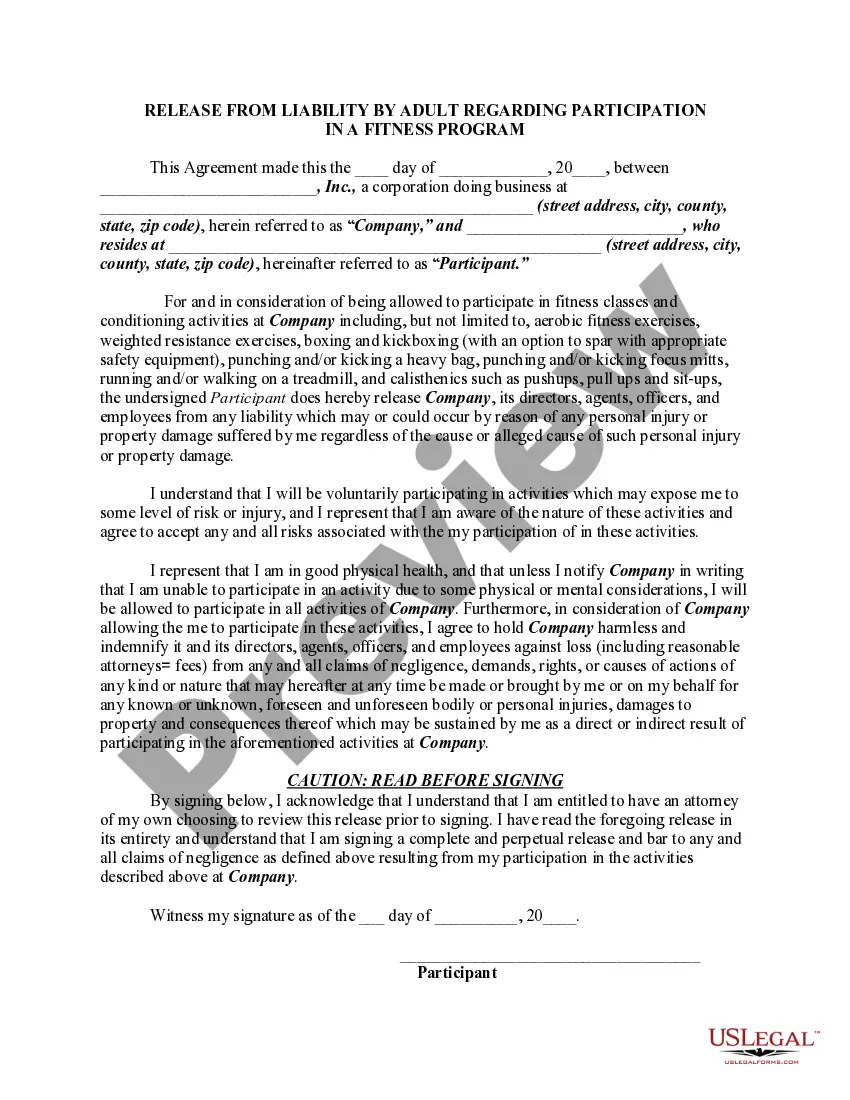
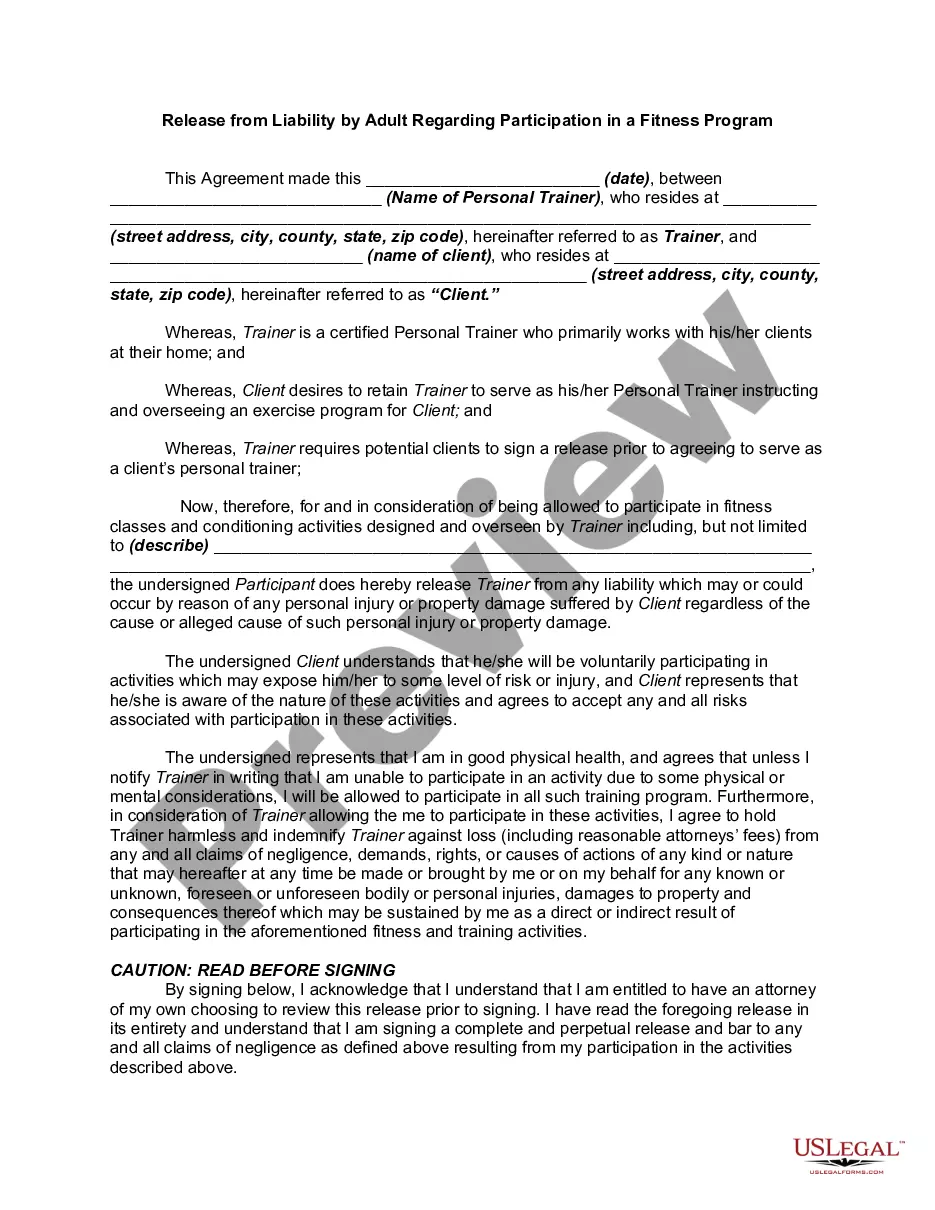
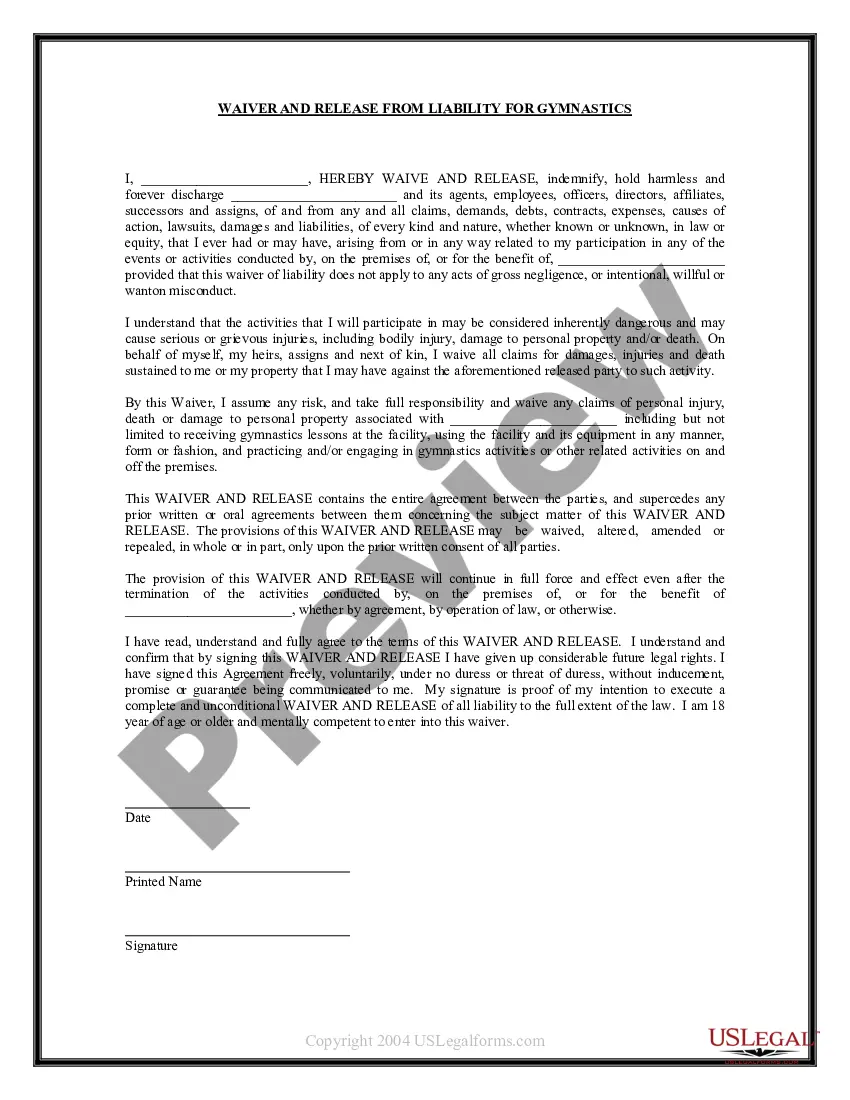
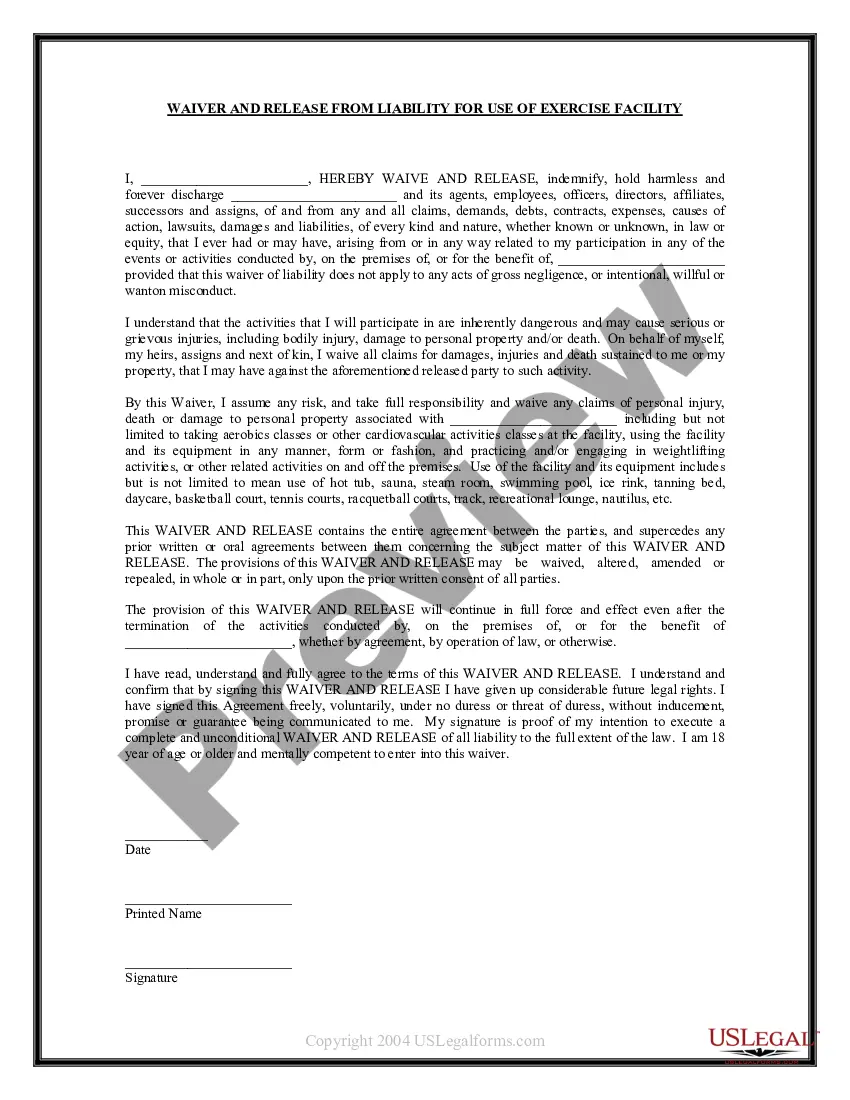
This form, known as the Release from Personal Injury Liability by Adult Regarding Participation in a Dance and Fitness Program or School - Personal Trainer Waiver, is a legal waiver that releases a dance or fitness studio from liability when an adult participates in its programs. This form helps to ensure that participants understand and accept the risks involved in such activities, which may include dance instruction and strenuous exercises. It differs from other liability waivers as it specifically addresses the dance and fitness context, protecting both the participant and the studio from potential legal claims arising from injuries or damages incurred during activities.
Form components explained
- Identification of the studio and participant, including addresses.
- A release of liability clause, which absolves the studio from responsibility for injuries.
- A statement of awareness regarding the risks associated with participation in physical activities.
- A clause that requires participants to hold the studio harmless from potential claims.
- Acknowledgment of the right to consult an attorney before signing.
- Signature area for the participant to confirm acceptance of the terms.

Situations where this form applies
This waiver should be used when an adult is signing up to participate in any dance or fitness program at a studio. It is particularly important if the activities are physically demanding, such as dance classes, aerobics, or personal training sessions. Using this form helps to protect the studio from liability in case of accidents or injuries that may occur during these activities.
Who should use this form
- Adults participating in dance and fitness programs.
- Dance and fitness studios wishing to protect themselves from liability.
How to complete this form
- Identify the studio and participant by filling in the names and addresses as required.
- Review the waiver's terms and confirm understanding of the risks involved.
- Sign and date the form to indicate agreement to the release of liability.
- Consider consulting with an attorney for legal advice before signing.
Is notarization required?
This form does not typically require notarization to be legally valid. However, some jurisdictions or document types may still require it. US Legal Forms provides secure online notarization powered by Notarize, available 24/7 for added convenience.
Get your form ready online
Our built-in tools help you complete, sign, share, and store your documents in one place.
Make edits, fill in missing information, and update formatting in US Legal Forms—just like you would in MS Word.
Download a copy, print it, send it by email, or mail it via USPS—whatever works best for your next step.
Sign and collect signatures with our SignNow integration. Send to multiple recipients, set reminders, and more. Go Premium to unlock E-Sign.
If this form requires notarization, complete it online through a secure video call—no need to meet a notary in person or wait for an appointment.
We protect your documents and personal data by following strict security and privacy standards.

Make edits, fill in missing information, and update formatting in US Legal Forms—just like you would in MS Word.

Download a copy, print it, send it by email, or mail it via USPS—whatever works best for your next step.

Sign and collect signatures with our SignNow integration. Send to multiple recipients, set reminders, and more. Go Premium to unlock E-Sign.

If this form requires notarization, complete it online through a secure video call—no need to meet a notary in person or wait for an appointment.

We protect your documents and personal data by following strict security and privacy standards.
Typical mistakes to avoid
- Failing to read the entire waiver before signing.
- Not specifying any pre-existing conditions that may affect the ability to participate.
- Assuming the waiver is unnecessary for low-risk activities.
Benefits of completing this form online
- Convenient access to the form anytime, anywhere.
- Editable format allows for customization to fit specific studio requirements.
- Reliable templates drafted by licensed attorneys ensure legal compliance.
Legal use & context
- This waiver generally serves to protect dance and fitness studios from negligence claims.
- It is enforceable as long as it is clear, unambiguous, and not against public policy.
- Participants should be aware that they are giving up certain legal rights by signing this document.
Key takeaways
- The waiver protects studios from liability for injuries sustained during classes.
- Understanding the risks associated with physical activities is crucial before signing.
- Consulting an attorney for clarity can be beneficial.
Looking for another form?

Form popularity
FAQ
You can sue your trainer for a personal injury.As long as all the elements of a personal injury claim can be proven, damage caused by your trainer's negligence can be treated like any other personal injury matter.
1) Be honest. Even if it may hurt to hear it, personal trainers want to know why you're ending the relationship. 2) Don't cheat on us. 3) A compliment or two couldn't hurt. 4) As a client, be in control. 5) Show some respect for us, too. 6) Go to management.
Selling or Suggesting Supplements. Body Shaming to Motivate. Only Promoting One Training Style. Don't Properly Develop Workouts. Promote Weight Loss Before or Instead of Muscle Building. Focus on Intensity Over Form. Trainers that don't Educate or Empower Clients.
Best Overall National Academy of Sports Medicine (NASM) Why We Chose It: NASM is one of the most respected personal training certifications around. Its thorough study materials and well-designed exam make it the best choice for any serious personal trainer.
There are currently no national or state licensing requirements for working as a personal trainer like there are for doctors, chiropractors, massage therapists, physical therapists, and athletic trainers. With no licensing requirements, anyone can claim to be a fitness professional and offer personal training services.
CIMSPA is also responsible for setting the standards for professionals to become chartered in the fitness industry. As the governing body, it determines what personal trainers and other fitness professionals need to do to achieve chartered status.
If you're a qualified Fitness Instructor or Personal Trainer, with an ABN who runs a sole trading fitness business then you can register as a Sole Trading Business.If you're a qualified Fitness Instructor or Personal Trainer without an ABN or business then you'll need to apply for Exercise Professional Registration.
According to a recent survey from TreadmillReviews, 44% of more than 500 trainers from various fitness backgrounds said they've judged a client for their behavior or appearance. (If you do CrossFit, instructors are even judgier, with more than 50% saying they've thought worse of a client for their bad behavior.)
Personal training is not regulated in any jurisdiction in the United States except for Washington D.C. which adopted registration requirements for personal fitness trainers in February 2014. Some employers, such as gyms require personal trainers to be certified.