Release of Claims Against an Estate By Creditor
Overview of this form
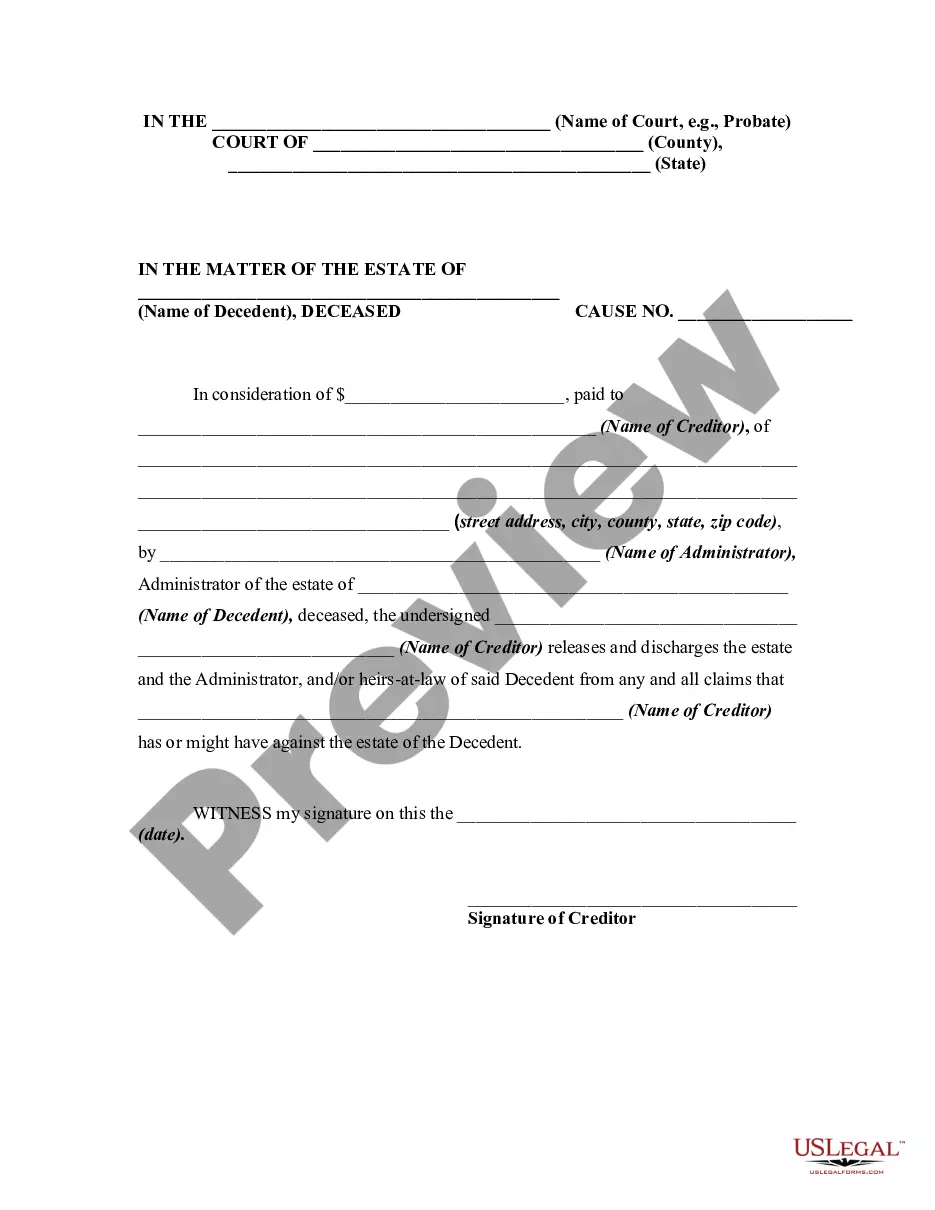
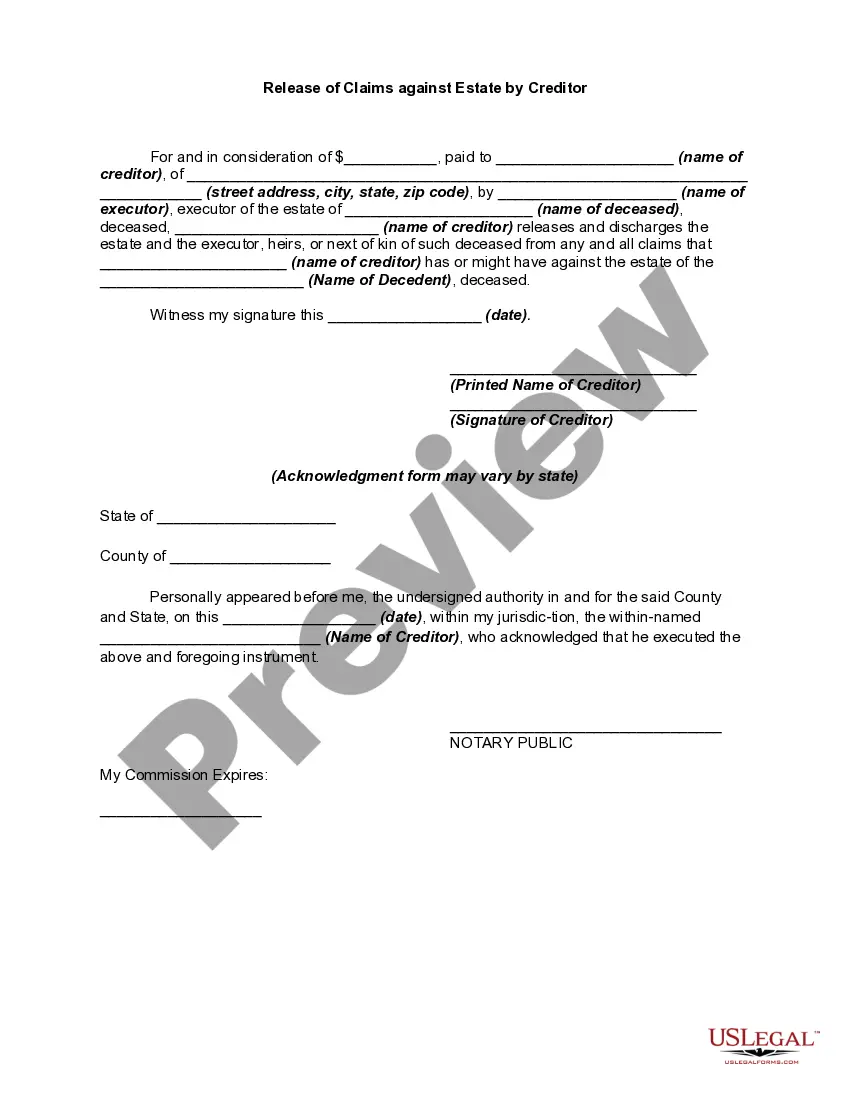
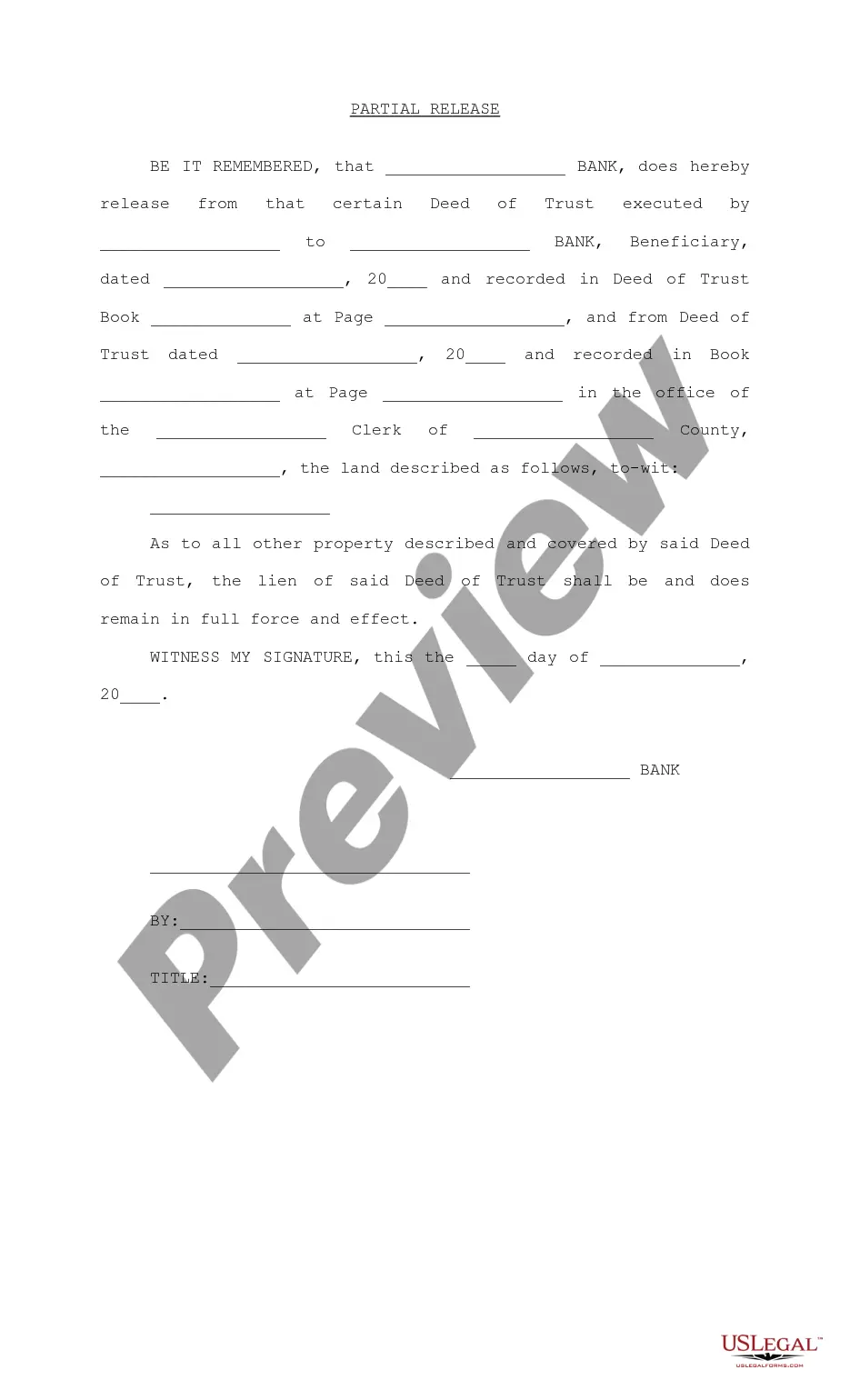
The Release of Claims Against an Estate By Creditor is a legal document used by creditors to formally release any claims they may have against the estate of a deceased individual. This form is essential in concluding financial matters related to the deceased's estate, differentiating it from similar forms by its specific focus on creditor claims. By completing this form, creditors acknowledge receipt of payment and relieve the estate from any further obligations concerning their claims.
Main sections of this form
- Name of the deceased individual (decedent).
- Name and address of the creditor.
- Details of the payment received from the estate administrator.
- Specific release statement discharging all claims against the estate.
- Date of execution and signature of the creditor.
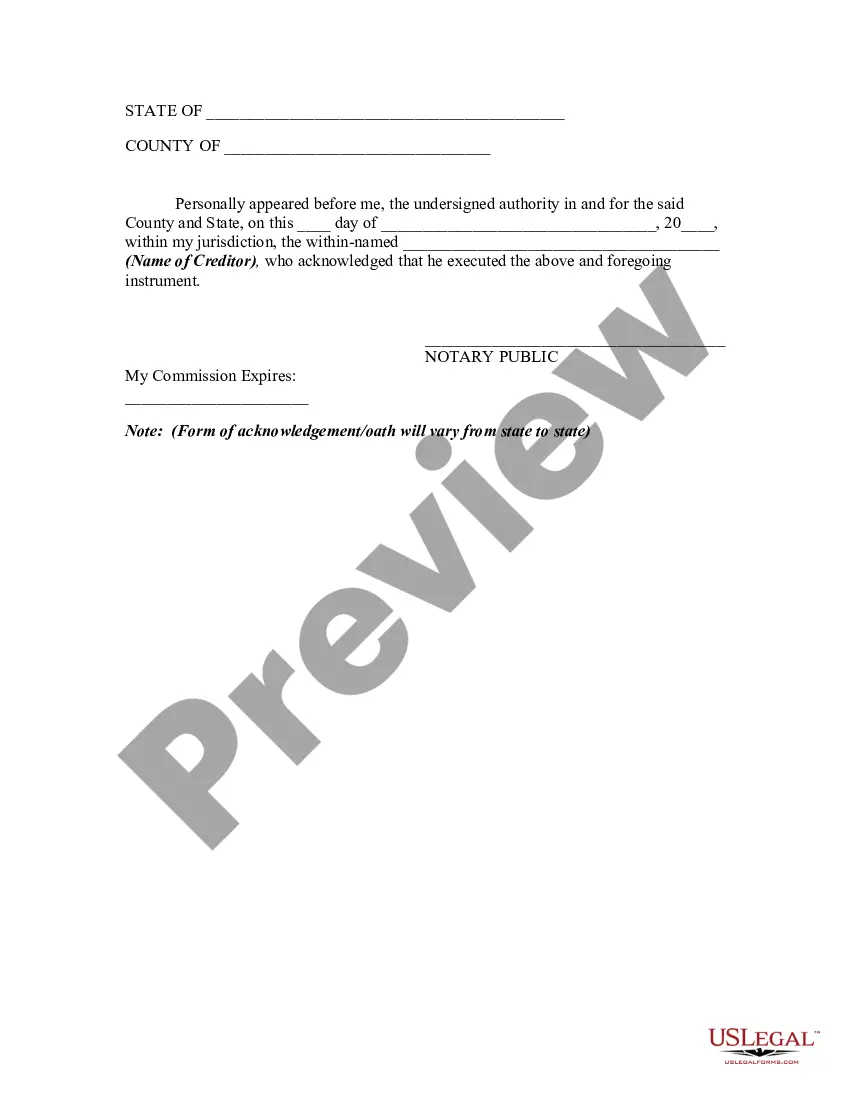
- Notary acknowledgment section, if required by local law.
Common use cases
This form should be used when a creditor has received payment from the estate of a deceased individual and wishes to formally relinquish their claims against that estate. It is particularly relevant when the estate is near closure, and the creditor needs to clarify that no further claims will be made. This helps to protect the interests of both the creditor and the estate from future disputes.
Intended users of this form
- Creditors who have outstanding claims against a deceased person's estate.
- Estate administrators or executors who need to finalize financial matters with creditors.
- Individuals consulting with a legal representative regarding estate claims.
How to complete this form
- Identify the decedent by filling in their full name.
- Enter the creditor's name and complete contact address.
- Specify the amount and details of the payment received from the estate administrator.
- Include a clear statement releasing the estate from any claims.
- Sign and date the form in the designated areas.
- If required, have the signature notarized by an authorized notary public.
Does this form need to be notarized?
This form must be notarized to be legally valid. US Legal Forms provides secure online notarization powered by Notarize, allowing you to complete the process through a verified video call.
Get your form ready online
Our built-in tools help you complete, sign, share, and store your documents in one place.
Make edits, fill in missing information, and update formatting in US Legal Forms—just like you would in MS Word.
Download a copy, print it, send it by email, or mail it via USPS—whatever works best for your next step.
Sign and collect signatures with our SignNow integration. Send to multiple recipients, set reminders, and more. Go Premium to unlock E-Sign.
If this form requires notarization, complete it online through a secure video call—no need to meet a notary in person or wait for an appointment.
We protect your documents and personal data by following strict security and privacy standards.

Make edits, fill in missing information, and update formatting in US Legal Forms—just like you would in MS Word.

Download a copy, print it, send it by email, or mail it via USPS—whatever works best for your next step.

Sign and collect signatures with our SignNow integration. Send to multiple recipients, set reminders, and more. Go Premium to unlock E-Sign.

If this form requires notarization, complete it online through a secure video call—no need to meet a notary in person or wait for an appointment.

We protect your documents and personal data by following strict security and privacy standards.
Typical mistakes to avoid
- Failing to include the exact name of the decedent.
- Not providing complete contact information for the creditor.
- Omitting the signature or date.
- Neglecting to have the form notarized if required by state law.
Benefits of using this form online
- Convenient access to legally vetted templates at any time.
- Editability allows customization to reflect specific circumstances.
- Reliable source with forms drafted by licensed attorneys.
- Quick download and immediate accessibility for use.
Legal use & context
- This form aids in legally discharging claims against an estate, which can prevent future disputes.
- It is enforceable upon proper completion and notarization, adhering to local laws.
- Understanding the legal implications of the release is crucial for both creditors and estates.
Quick recap
- The Release of Claims Against an Estate By Creditor form is essential for creditors settling debts with an estate.
- It requires notarization for legal validity and must be accurately completed to ensure enforceability.
- Always consider local laws and consult legal advice for specific requirements based on jurisdiction.
Looking for another form?
Form popularity
FAQ
Is there a time limit for a claim against a deceased estate? Yes, there is. You have only 6 months from the date of the grant of probate to make a claim. In some very limited circumstances, an extension of this time frame may be granted.
Find the Correct Probate Court. The probate court handles issues involving a deceased person's estate, along with potential disputes regarding outstanding debts, issues with heirs, etc. Confirm the Debt. Complete the Claim Form. File the Claim Form.
Timespan for Creditors to Make Claim For unsecured debts, the time limit ranges from 3-6 months in most states. State laws require executors to post notice of the death, either in a newspaper or directly to known creditors to give them a chance to file a claim. No claims are accepted after the time frame has expired.
N. upon the death of a person and beginning of probate (filing of will, etc), a person believing he/she is owed money should file a written claim (statement) promptly with the executor or administrator of the estate, who will then approve it, in whole or in part, or deny the claim.
Lessons for Creditors and Beneficiaries However, until the petition is granted and an executor or personal representative is appointed, the creditor will not be able to sue the decedent's estate and in the interim the available assets may be dissipated.
The statute of limitations for filing a claim against an estate is a strict one year from the date of the debtor's death (pursuant to California Code of Civil Procedure Section 366.2). This limitation period applies regardless of whether the judgment creditor knew the judgment debtor had died!
Find the Correct Probate Court. The probate court handles issues involving a deceased person's estate, along with potential disputes regarding outstanding debts, issues with heirs, etc. Confirm the Debt. Complete the Claim Form. File the Claim Form.
Godoy. After someone dies, anyone who thinks they are owed money or property by the deceased can file a claim against the estate. Estate claims range from many different types of debts, such as mortgages, credit card debt, loans, unpaid wages, or breach of contract.