Personal Injury Waiver, Release, and Consent to Tattoo
What this document covers
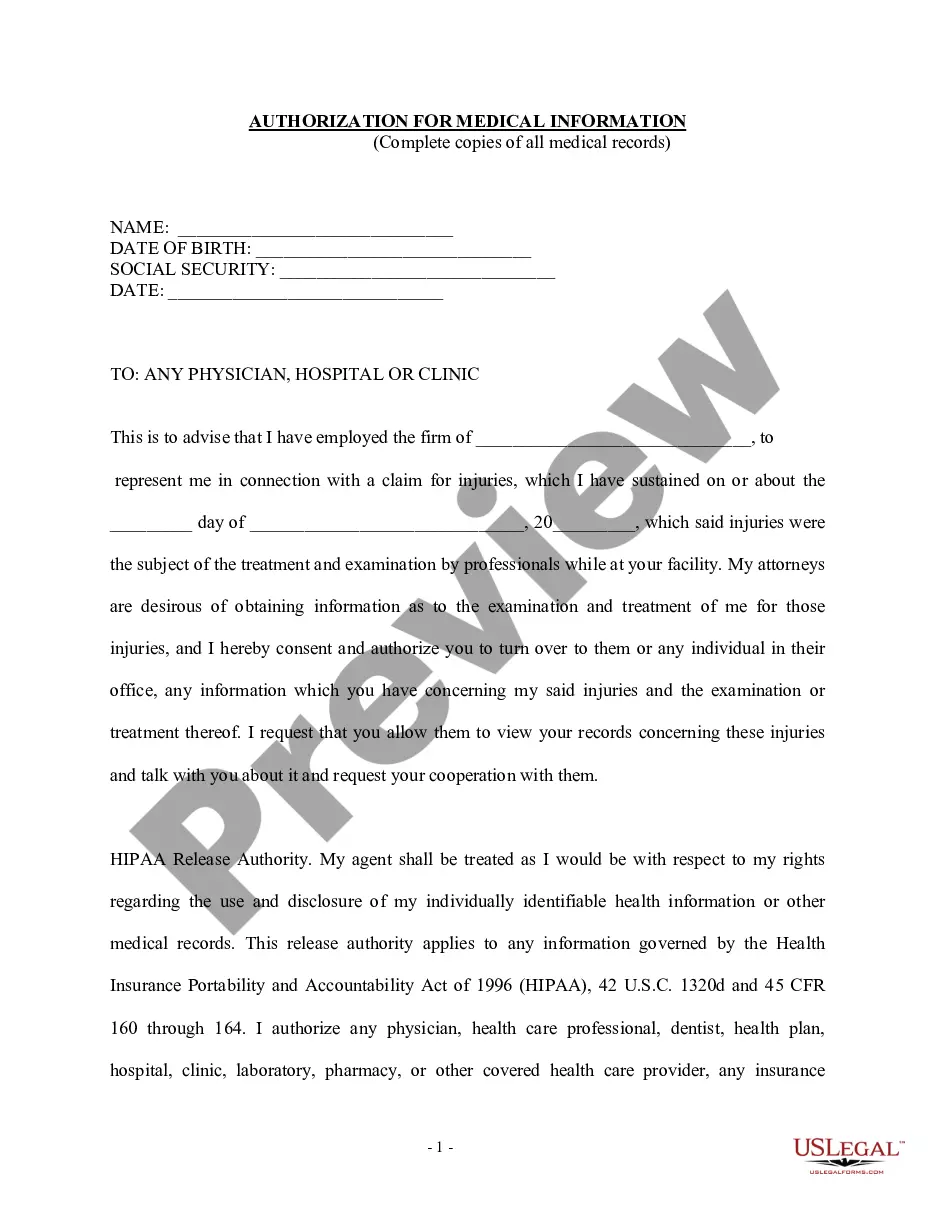
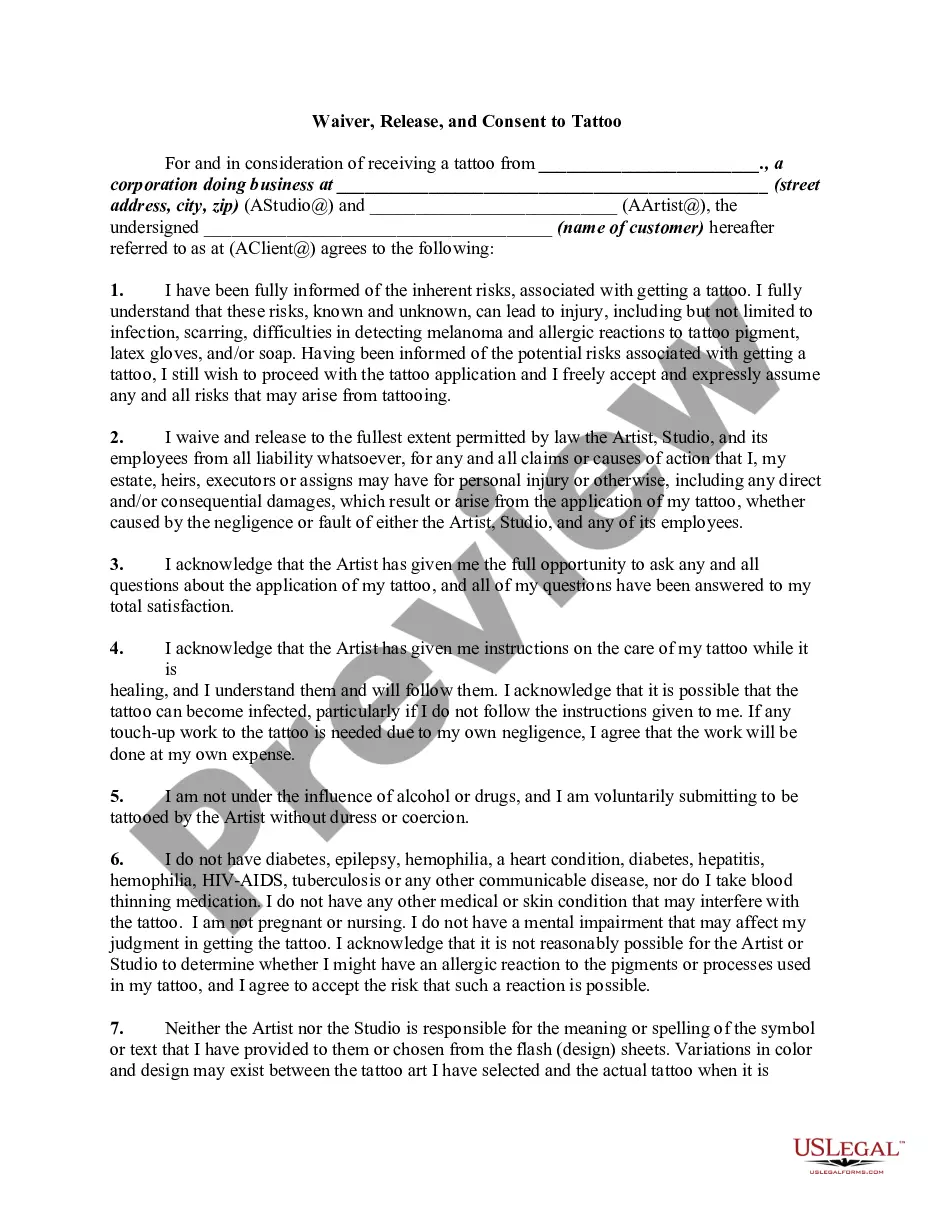
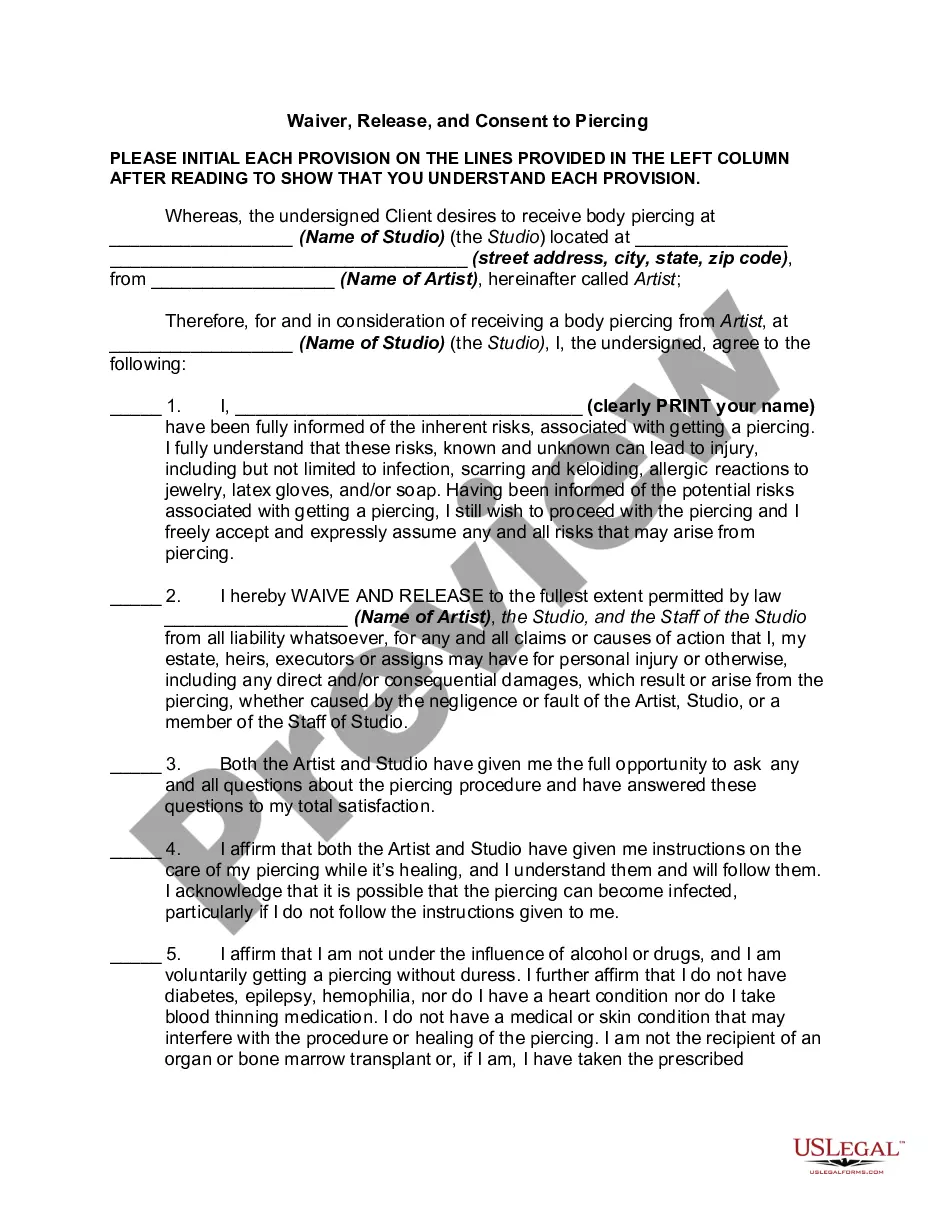
The Personal Injury Waiver, Release, and Consent to Tattoo is a legal document that serves as a consent form for receiving a tattoo. This form not only acknowledges the inherent risks associated with tattooing but also allows the client to assume those risks explicitly. It acts as a waiver to release the tattoo artist and studio from liability for potential injuries arising from the procedure. This form is essential for both the client and the studio to ensure understanding and acceptance of the risks involved, distinguishing it from other general consent forms by its specific risk-related clauses.
What’s included in this form
- Identification of parties involved: Client, Artist, and Studio.
- Acknowledgment of inherent risks related to tattooing, including health concerns.
- Release of liability for the Artist and Studio in case of injuries.
- Instructions for tattoo care and acknowledgment of possible complications.
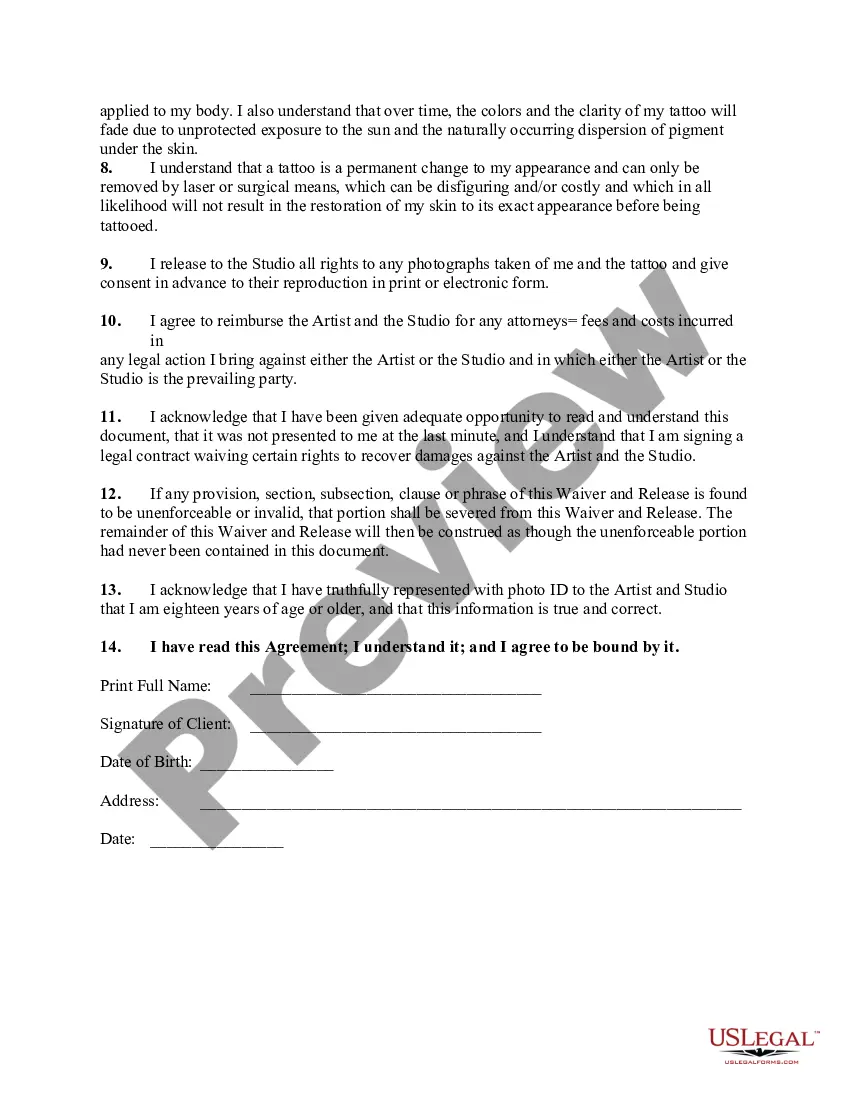
- Verification of age and health status of the Client.
- Consent for the use of photographs taken during the tattoo session.
Situations where this form applies
This form should be used when a client intends to receive a tattoo at a professional studio. It is crucial for the client to complete this form prior to undergoing any tattooing services. This ensures that both the client and the studio are aware of the risks involved and have a mutual agreement regarding liability. It may also be necessary when the studio has specific policies on health and safety that need to be acknowledged before the tattooing process begins.
Who this form is for
- Individuals aged eighteen or older seeking a tattoo.
- Clients who want to acknowledge the risks associated with tattooing.
- Persons who wish to release the tattoo artist and studio from liability.
- Individuals not under the influence of drugs or alcohol and in good health.
How to prepare this document
- Identify the parties: Fill in the names and addresses for the Client, Artist, and Studio.
- Acknowledge the risks: Read through and understand the risks associated with getting a tattoo.
- Fill out your personal information: Include your full name, date of birth, and current address.
- Sign the waiver: Provide your signature, indicating your agreement to the terms stated in the form.
- Review the instructions: Understand the aftercare instructions provided by the Artist to ensure a proper healing process.
Notarization guidance
In most cases, this form does not require notarization. However, some jurisdictions or signing circumstances might. US Legal Forms offers online notarization powered by Notarize, accessible 24/7 for a quick, remote process.
Get your form ready online
Our built-in tools help you complete, sign, share, and store your documents in one place.
Make edits, fill in missing information, and update formatting in US Legal Forms—just like you would in MS Word.
Download a copy, print it, send it by email, or mail it via USPS—whatever works best for your next step.
Sign and collect signatures with our SignNow integration. Send to multiple recipients, set reminders, and more. Go Premium to unlock E-Sign.
If this form requires notarization, complete it online through a secure video call—no need to meet a notary in person or wait for an appointment.
We protect your documents and personal data by following strict security and privacy standards.

Make edits, fill in missing information, and update formatting in US Legal Forms—just like you would in MS Word.

Download a copy, print it, send it by email, or mail it via USPS—whatever works best for your next step.

Sign and collect signatures with our SignNow integration. Send to multiple recipients, set reminders, and more. Go Premium to unlock E-Sign.

If this form requires notarization, complete it online through a secure video call—no need to meet a notary in person or wait for an appointment.

We protect your documents and personal data by following strict security and privacy standards.
Typical mistakes to avoid
- Not completing all required fields, such as names and addresses.
- Failing to read and understand the inherent risks before signing.
- Signing under the influence of alcohol or drugs.
- Neglecting to ask questions about the tattooing process before agreeing.
Benefits of completing this form online
- Convenient access to a comprehensive waiver without needing to visit a lawyer.
- Editable format allows for customization based on personal information and specific studio requirements.
- Reliable legal templates drafted by licensed attorneys to ensure compliance.
Legal use & context
- This form is designed to protect the tattoo artist and studio from legal claims due to personal injuries.
- Clients should be aware that waiving their rights may limit their ability to sue for damages.
Key takeaways
- The form serves as both a waiver of liability and a consent to receive a tattoo.
- It is essential for clients to be fully aware of the risks involved in tattooing.
- Proper completion ensures legal protection for both the client and the artist.
Looking for another form?
Form popularity
FAQ
Marines have the opportunity to receive waivers for cosmetic tattoos that cover up scars and other body disfigurements. A waiver is granted by a commanding officer and offered on a case-by-case basis.
Licensure. States regulate tattooing in one of two primary ways.It is illegal for a licensed tattoo artist to perform tattoos in unlicensed locations, such at his or her home. It is also illegal for a licensed tattoo establishment to allow someone who is not licensed to give tattoos at that location.
Alabama. Minors must have parental permission. Alaska. Must be 18. Arizona. If a minor, guardian has to be present. Arkansas. Minor must have parental consent. California. Must be 18. Colorado. No minimum age. Connecticut. Minors must have parent consent. Delaware. Minors must have parent consent.
Marines are prohibited from getting tattoos on the head, neck, inside the mouth, wrists, knees, elbows and hands with the exception of a single band tattoo of no more than three-eighths of an inch in width on one finger.
It is illegal for people under the age of 18 to get a tattoo. This legislation was brought in under the Tattooing Of Minors Act 1969. This is the case even if the minor is accompanied by their parents. However, teens can get inked in several European countries from the age of 16 - as long as they have parental consent.
Army Tattoo PolicyIf you have tattoos on your hands, wrist face, neck(above the t-shirt line) or head, you'll need to have those tattoos removed to join the Army. Additionally, the Army will not accept you if you have tattoos inside your mouth, ears, or eyelids.
California. It is illegal to tattoo a minor. The presence or notarized consent of a parent or legal guardian is required to receive a piercing other than an ear-piercing.
Tattoos No, a minor may not be tattooed unless for medical reasons. Allowed if the parent or guardian gives their consent and is present during the tattooing/piercing. Piercings Allowed if the minor is accompanied by his/her parent or guardian during the procedure and if the parent or guardian gives their consent.
The law is very clear. There is a parental consent form that must be filled out and tattoo artists can lose their license for tattooing minors without parental consent.