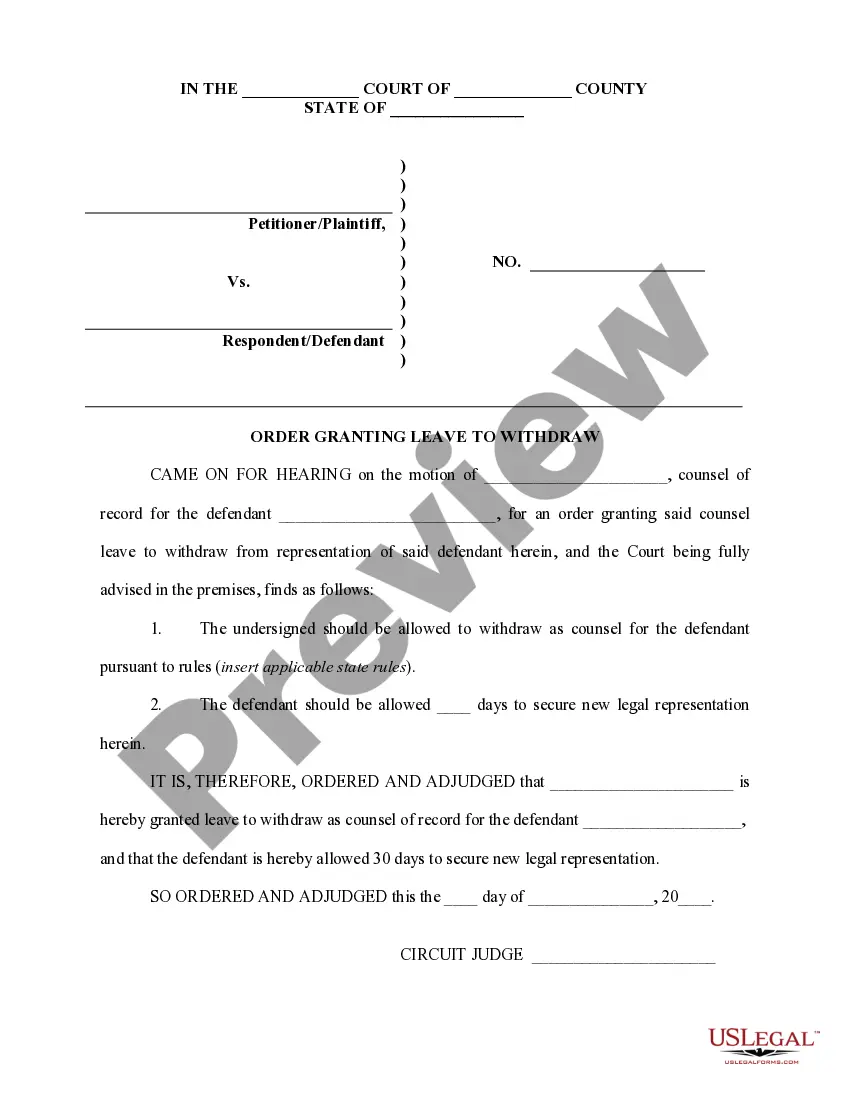
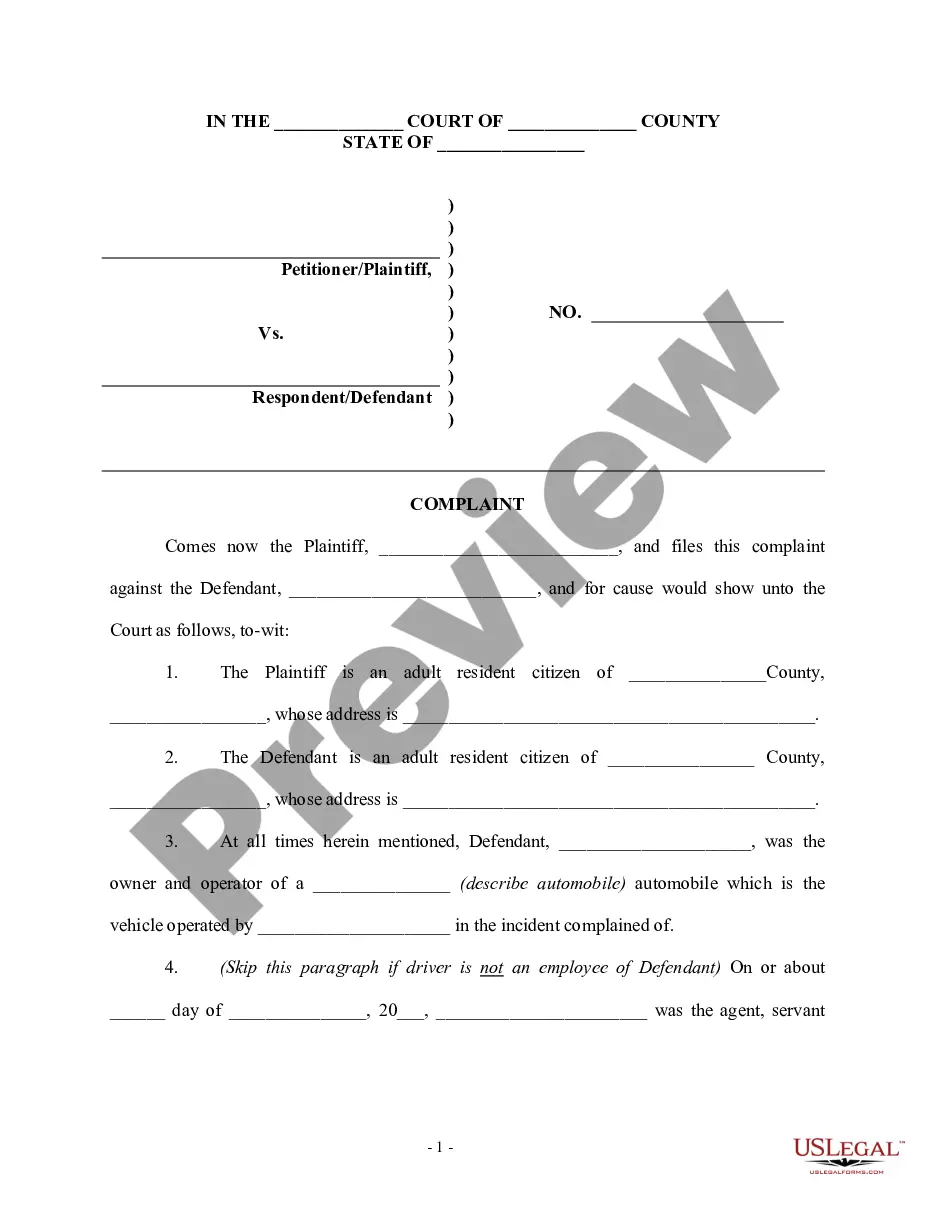
Release of Landlord, Waiver of Liability, and Assumption of all Risks of Personal Bodily Injury Regarding a Trampoline Owned by Tenant and Located on Landlord's Property
Understanding this form
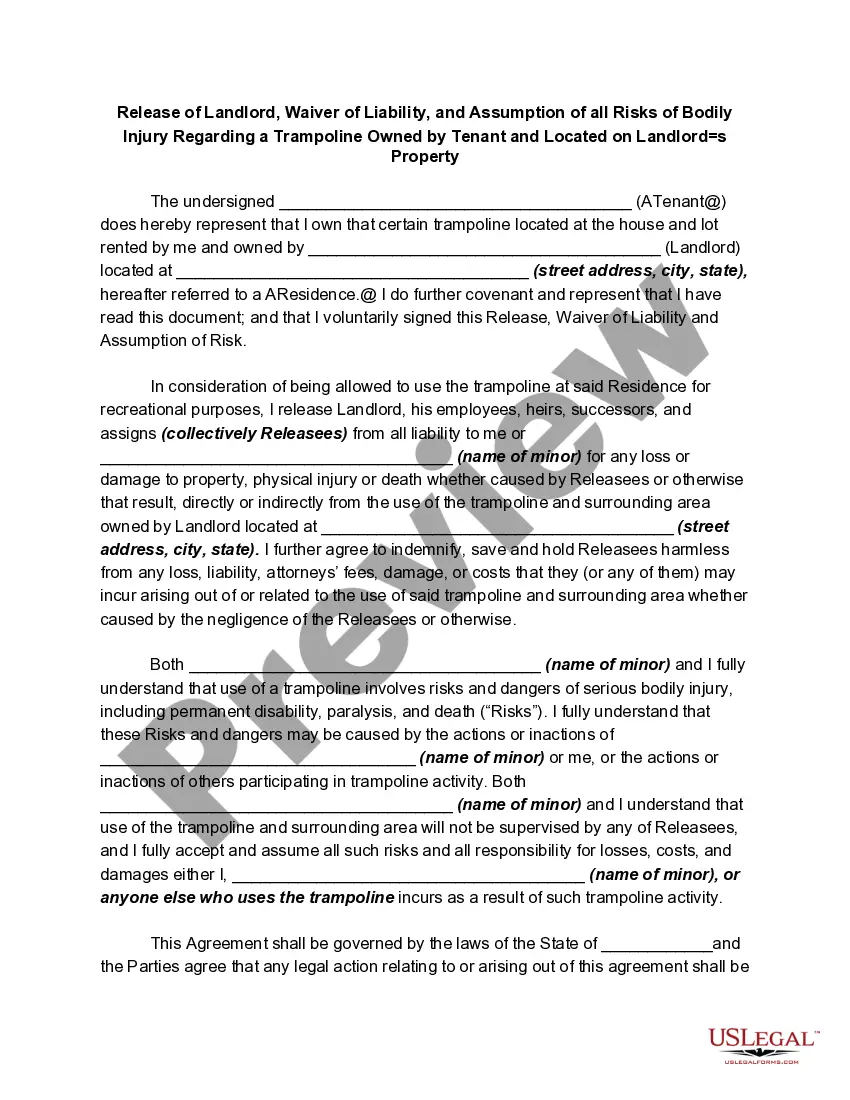
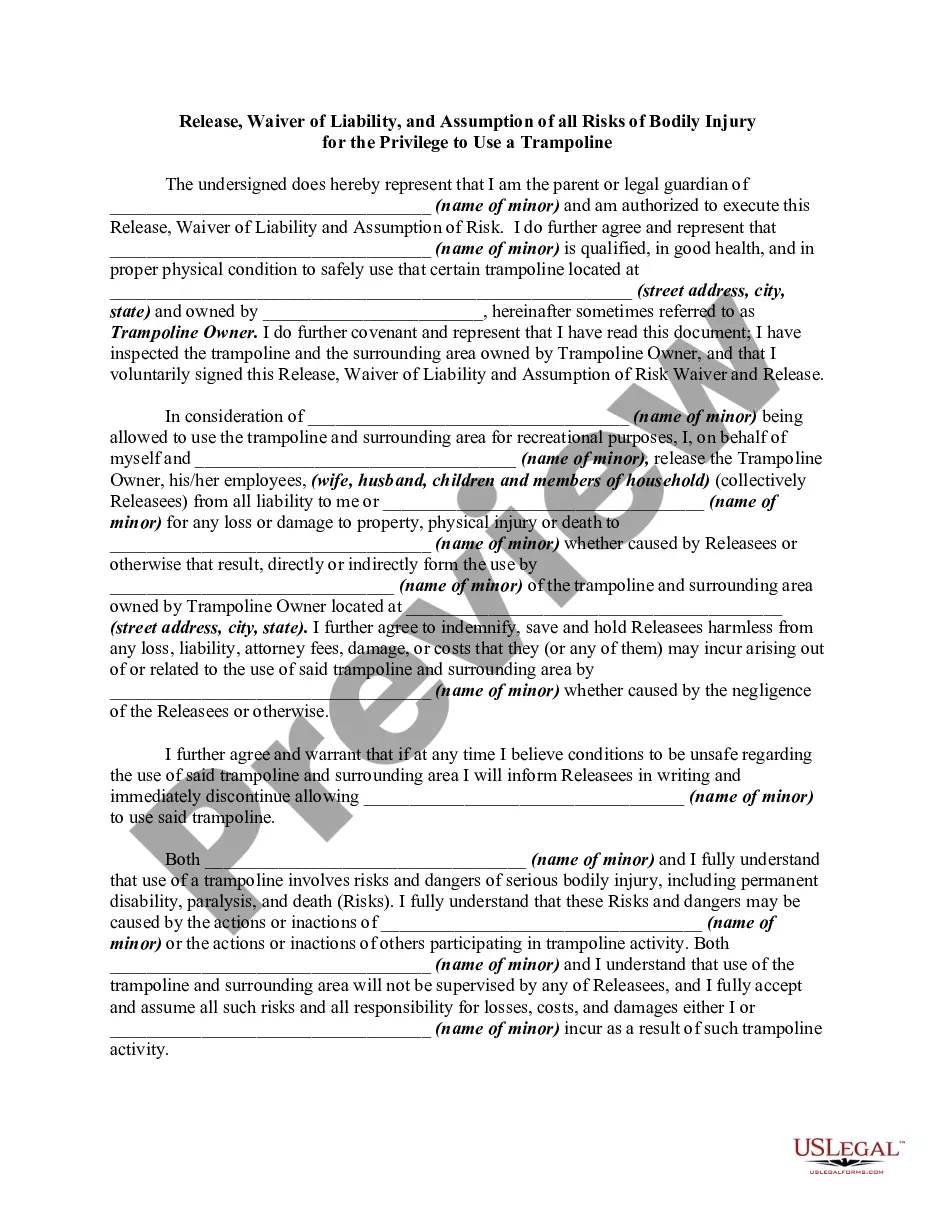
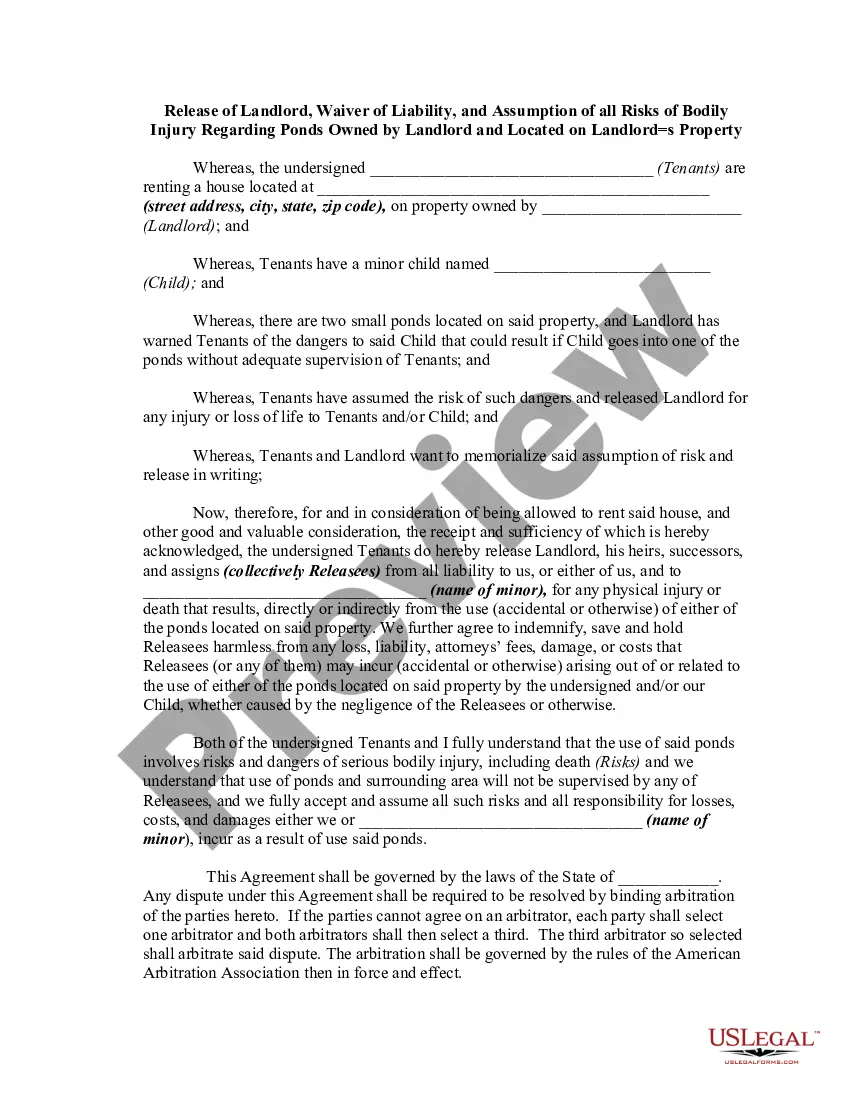
This form is a Release of Landlord, Waiver of Liability, and Assumption of all Risks of Personal Bodily Injury regarding a trampoline owned by the tenant and located on the landlord's property. It is designed to protect the landlord from liability for injuries or damages that may occur while using the trampoline, particularly when it comes to minors. This form is essential for tenants who wish to allow the use of a trampoline on rented premises, ensuring that all parties are aware of the associated risks and responsibilities.
What’s included in this form
- Identification of the tenant and landlord, including their names and address of the rented property.
- Statement of ownership regarding the trampoline.
- Release of liability for the landlord and associates against claims for injury or damage resulting from trampoline use.
- Assumption of risks associated with trampoline activity, acknowledging potential serious bodily injuries.
- Indemnification clause protecting the landlord from losses related to trampoline use.
- Governing law and jurisdiction for legal disputes.

When to use this form
This form should be used when a tenant with ownership of a trampoline wishes to let minors or others use it on a property they are renting. It is particularly useful in situations where the landlord is not supervising trampoline activities, as it outlines the potential risks and liabilities involved. Use this form to formalize the understanding between the tenant and landlord regarding who bears responsibility in case of accidents.
Who needs this form
- Tenants who own a trampoline and are renting a property.
- Landlords looking to limit their liability regarding recreational activities on their property.
- Parents or guardians of minors who will be using the trampoline.
Instructions for completing this form
- Identify the parties involved: enter the names of the tenant and landlord.
- Specify the address of the rented property and the location of the trampoline.
- Include any names of minors who will be using the trampoline.
- Read the document carefully before signing to ensure all terms are understood.
- Sign and date the form in the designated area, ensuring a parent or legal guardian signs for minors.
Is notarization required?
In most cases, this form does not require notarization. However, some jurisdictions or signing circumstances might. US Legal Forms offers online notarization powered by Notarize, accessible 24/7 for a quick, remote process.
Get your form ready online
Our built-in tools help you complete, sign, share, and store your documents in one place.
Make edits, fill in missing information, and update formatting in US Legal Forms—just like you would in MS Word.
Download a copy, print it, send it by email, or mail it via USPS—whatever works best for your next step.
Sign and collect signatures with our SignNow integration. Send to multiple recipients, set reminders, and more. Go Premium to unlock E-Sign.
If this form requires notarization, complete it online through a secure video call—no need to meet a notary in person or wait for an appointment.
We protect your documents and personal data by following strict security and privacy standards.

Make edits, fill in missing information, and update formatting in US Legal Forms—just like you would in MS Word.

Download a copy, print it, send it by email, or mail it via USPS—whatever works best for your next step.

Sign and collect signatures with our SignNow integration. Send to multiple recipients, set reminders, and more. Go Premium to unlock E-Sign.

If this form requires notarization, complete it online through a secure video call—no need to meet a notary in person or wait for an appointment.

We protect your documents and personal data by following strict security and privacy standards.
Common mistakes
- Failing to include the correct address of the rented property.
- Not listing all individuals who will use the trampoline, especially minors.
- Neglecting to read the form fully before signing.
- Overlooking the need for signatures from both the tenant and legal guardian, where applicable.
Why use this form online
- Convenience of downloading and completing the form at your pace.
- Enhanced reliability as the forms are drafted by licensed attorneys.
- Easy to customize according to your specific situation and needs.
Looking for another form?




Form popularity
FAQ
Writing your own release of liability waiver As tempting as it may be, you should never write your own liability waiver. Unless you're a fully qualified lawyer with experience in this area, it's likely that you'll omit critical language that puts your business at risk for lawsuits.
Again, this is up to your specific insurance company and whether or not they'll cover it under your personal property coverage. Do you really need to tell your insurance company if you get a trampoline? Absolutely. You'll want to inform your agent that you have a trampoline for a couple of reasons.
Your trampoline is covered under specific circumstances It may also be possible for your insurance company to increase your monthly or annual premiums if you own a trampoline. However, this option isn't likely, as a nominal increase in premiums won't come close to covering your insurer's potential liability expenses.
Waiver is defined as follows: When the landlord knows that the tenant is breaching the lease, yet conducts the landlord-tenant relationship in the normal course (for example, accepts rent and otherwise does nothing to object to the violation of the lease), then the court may infer that the owner has waived, or forgiven
Your trampoline doesn't physically affect or change the property. Unlike, say, a basketball hoop on a pole that's cemented into the ground, the trampoline can be placed and removed without disturbing the landlord's property. Tenants normally don't need permission to place portable items like this on the property.
As a landlord, should I allow my tenants to get a trampoline? Most likely not. If someone is injured on a tenant's trampoline and sues, you will also most likely be named in the lawsuit, given that you own the property.If it does not offer coverage for trampolines, you will be responsible for the costs on your own.
The statistics show that having a trampoline increases the likelihood that someone will be injured on your property. Therefore, it increases your chances of having a liability or medical payments claim by your homeowners insurance company.