Agreement and License for Harvesting Timber
What is this form?
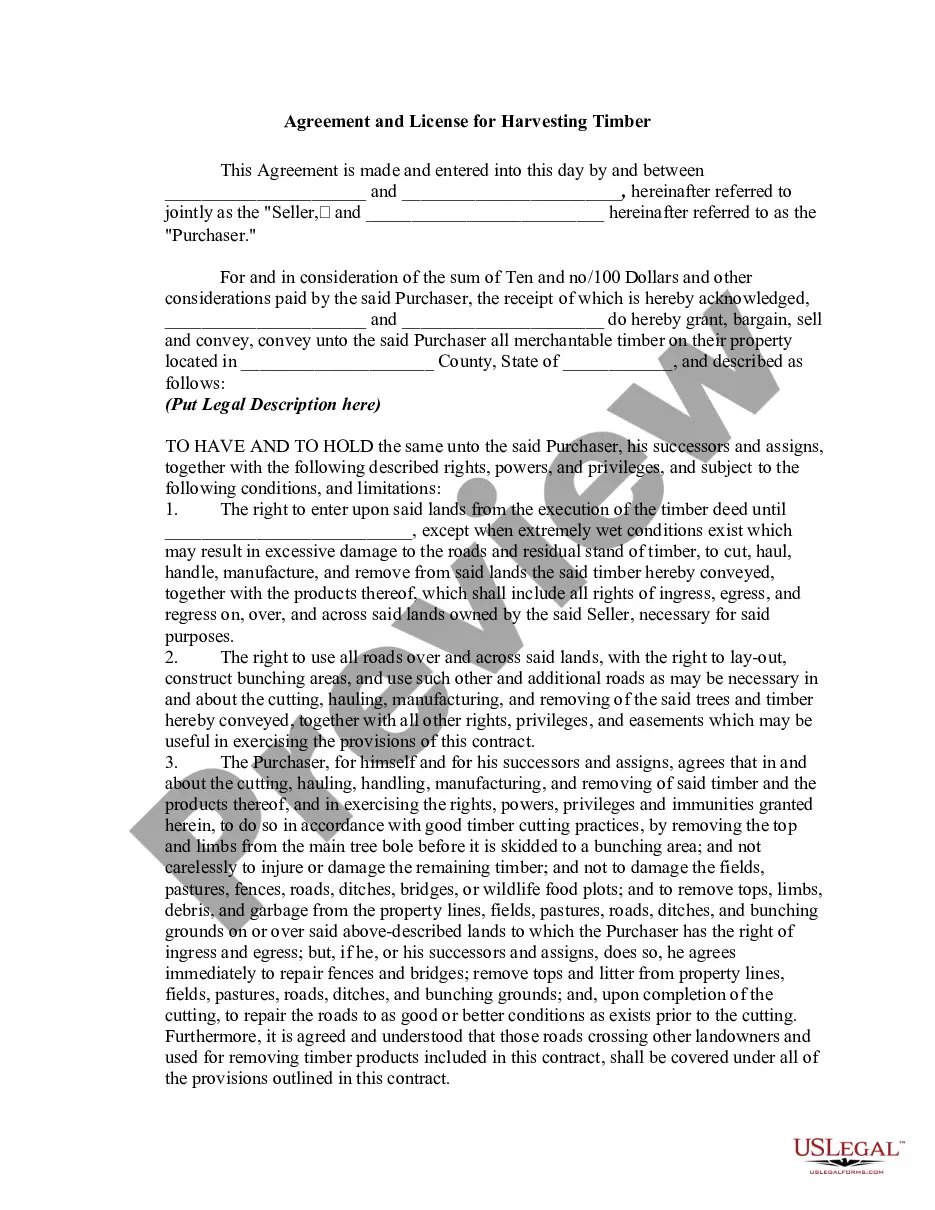
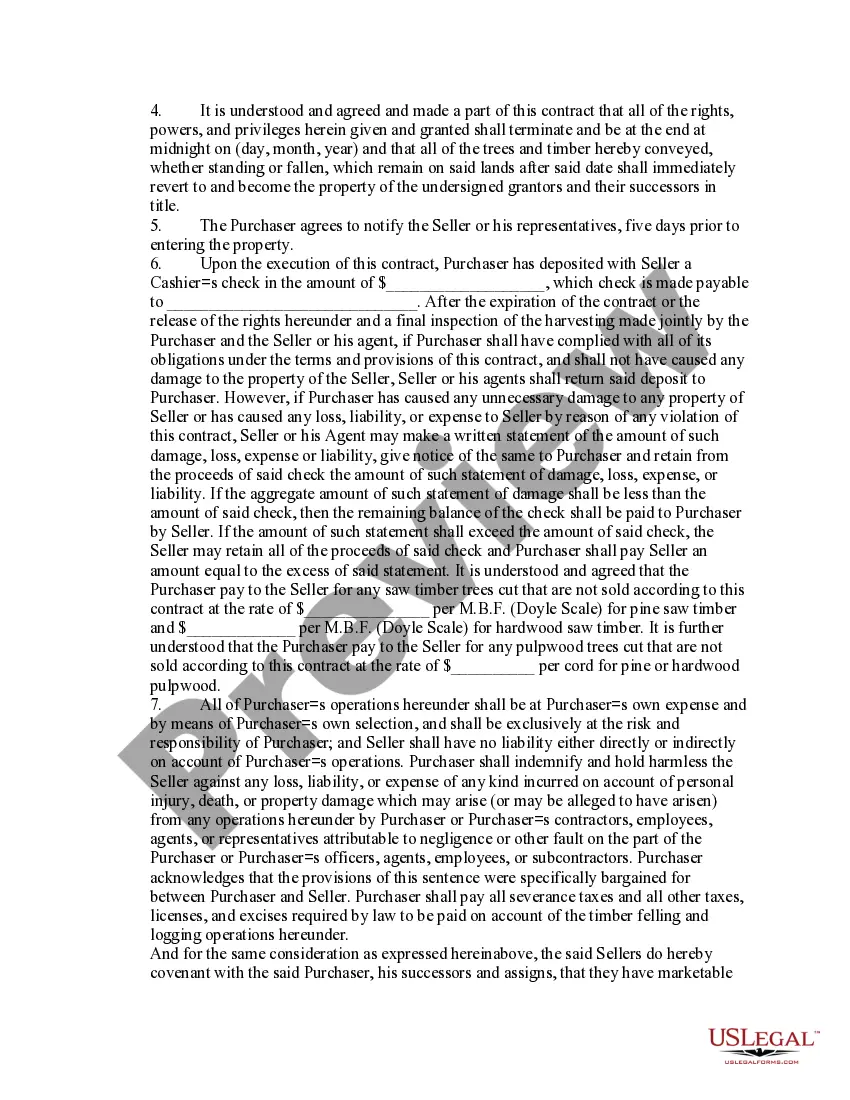
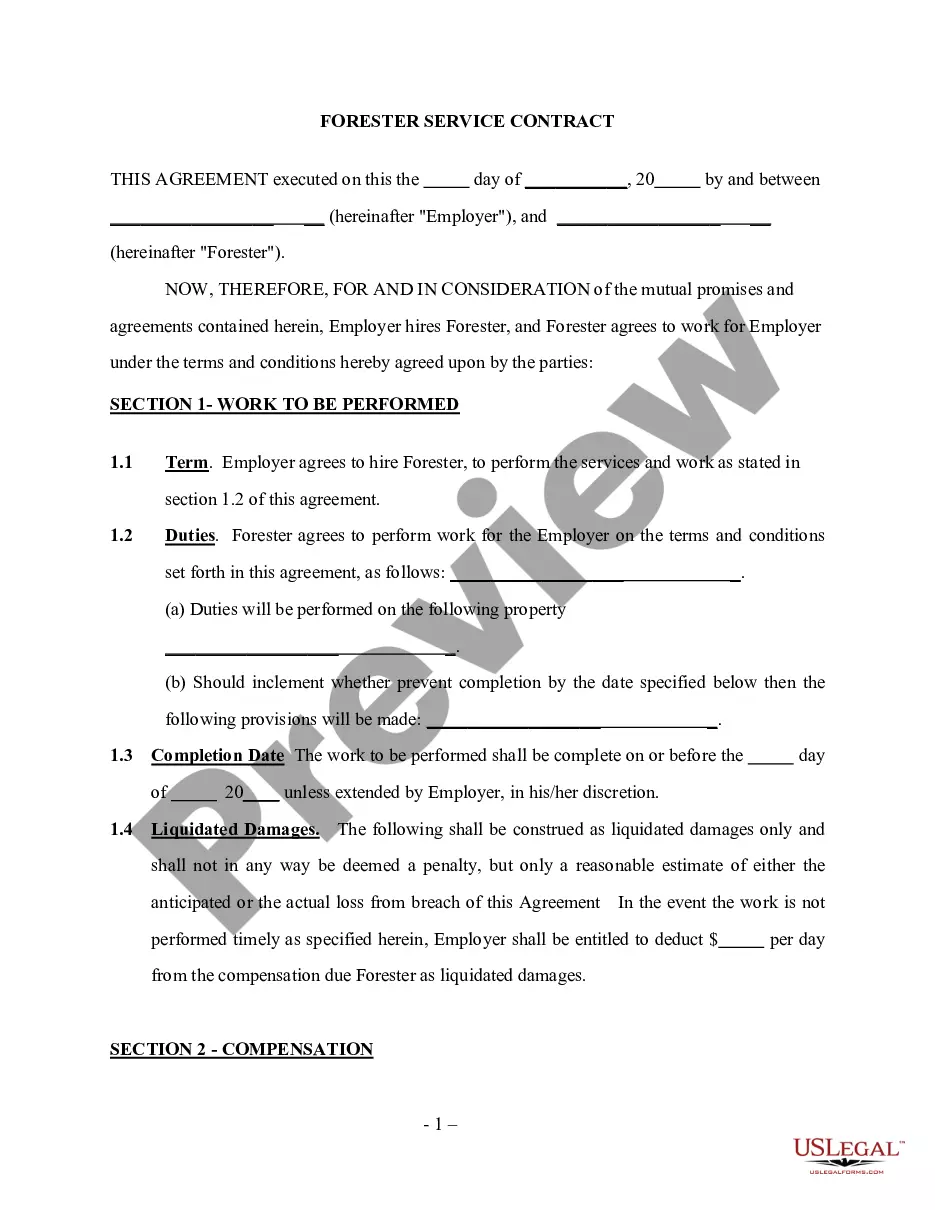
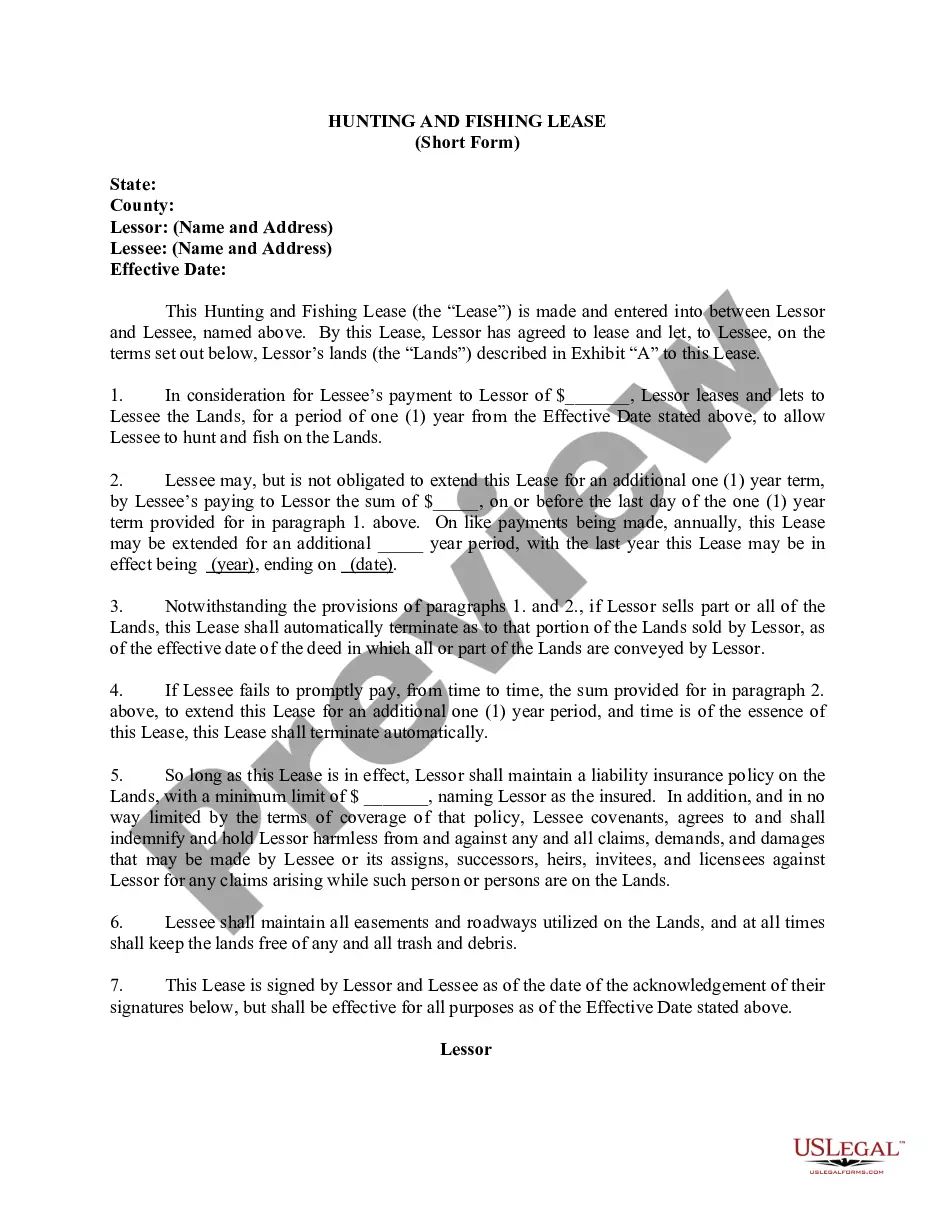
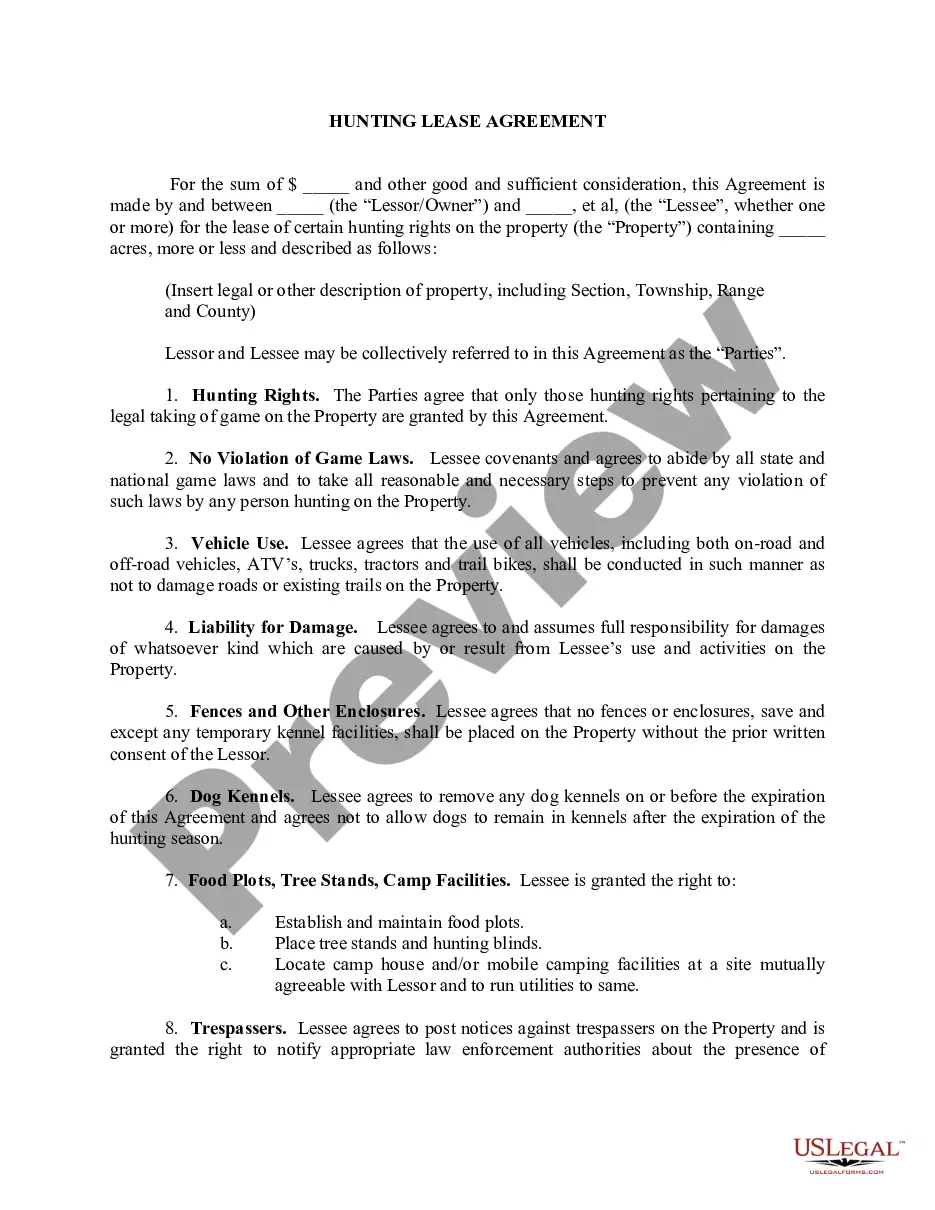
The Agreement and License for Harvesting Timber is a legal document that outlines the terms under which a Purchaser can buy and remove timber from a Seller's property. This contract grants the Purchaser rights of access to harvest specified timber while setting forth obligations to ensure minimal environmental impact and proper handling of the land. Unlike general purchase agreements, this form explicitly addresses the rights and responsibilities associated with timber harvesting, making it essential for both parties involved in such transactions.
Key parts of this document
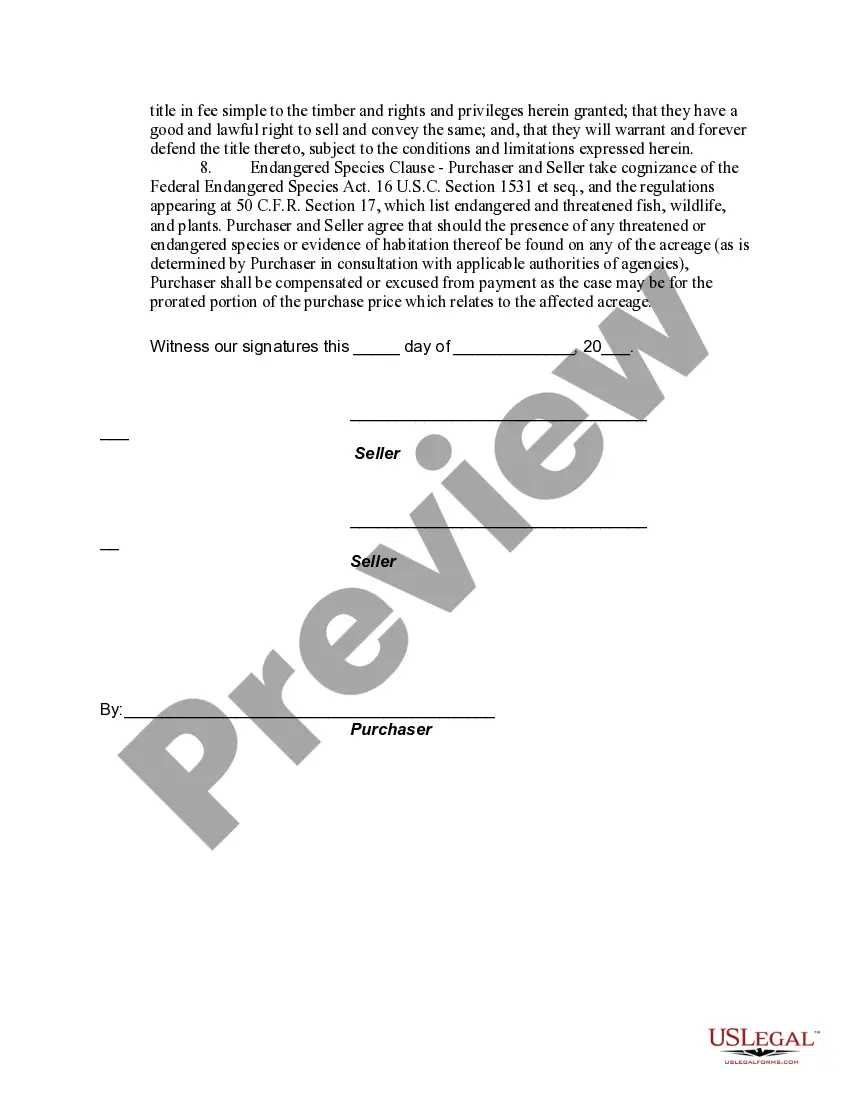
- Identification of the Seller and Purchaser.
- Legal description of the property and timber included in the agreement.
- Rights of ingress, egress, and usage of access roads for timber removal.
- Terms regarding the restoration of property following timber harvesting.
- Deposit requirements and conditions for its return after harvesting completion.
- Indemnification clauses related to liability and damages.
When this form is needed
This form should be used when a property owner (Seller) wishes to sell standing timber or timber products to a Purchaser. It is ideal in situations where the Seller needs to grant specific rights for the harvesting of timber while ensuring proper practices are followed, such as minimizing damage to the property and complying with environmental regulations. Typical scenarios include commercial logging operations or individual agreements between timber owners and logging companies.
Who can use this document
- Property owners who wish to sell timber from their land.
- Logging companies or individuals looking to purchase timber rights.
- Real estate professionals dealing with timberland transactions.
- Landowners managing their land for timber production.
Completing this form step by step
- Identify all parties involved: list the full names of the Seller(s) and Purchaser.
- Provide a detailed legal description of the property where the timber is located.
- Specify the payment amount and any deposit details.
- Determine the dates for commencement and completion of timber harvesting.
- Include any conditions or limitations regarding timber harvesting practices.
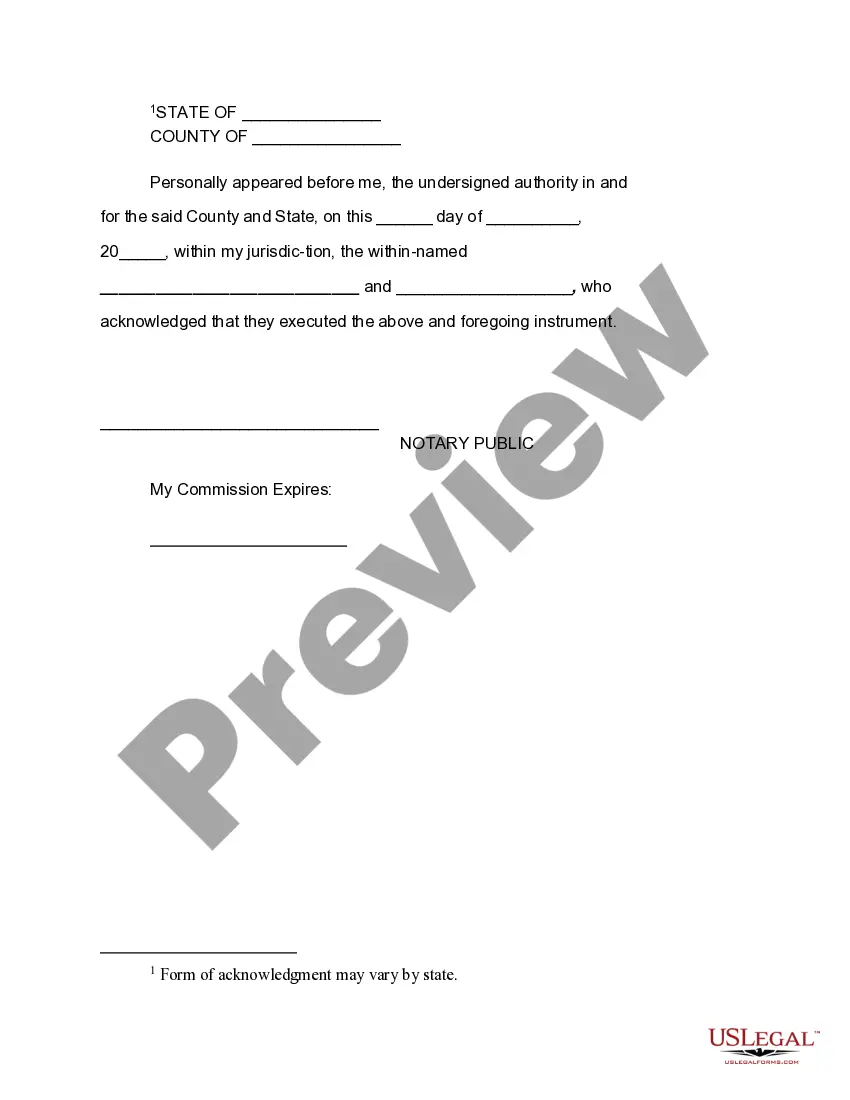
- Ensure both parties sign the document and have it notarized if required.
Is notarization required?
Yes, this form must be notarized to be legally valid. This ensures that the identities of the parties involved are verified and that the document is executed correctly. US Legal Forms offers integrated online notarization, allowing for secure video calls to complete the notarization process conveniently, without the need for travel.
Get your form ready online
Our built-in tools help you complete, sign, share, and store your documents in one place.
Make edits, fill in missing information, and update formatting in US Legal Forms—just like you would in MS Word.
Download a copy, print it, send it by email, or mail it via USPS—whatever works best for your next step.
Sign and collect signatures with our SignNow integration. Send to multiple recipients, set reminders, and more. Go Premium to unlock E-Sign.
If this form requires notarization, complete it online through a secure video call—no need to meet a notary in person or wait for an appointment.
We protect your documents and personal data by following strict security and privacy standards.

Make edits, fill in missing information, and update formatting in US Legal Forms—just like you would in MS Word.

Download a copy, print it, send it by email, or mail it via USPS—whatever works best for your next step.

Sign and collect signatures with our SignNow integration. Send to multiple recipients, set reminders, and more. Go Premium to unlock E-Sign.

If this form requires notarization, complete it online through a secure video call—no need to meet a notary in person or wait for an appointment.

We protect your documents and personal data by following strict security and privacy standards.
Common mistakes to avoid
- Failing to provide a complete legal description of the property.
- Not detailing the specific rights granted for access and operations.
- Omitting the requirements for environmental compliance and damage mitigation.
- Neglecting to specify the timing and methods of timber harvesting.
- Not properly notarizing the agreement when required by state law.
Advantages of online completion
- Convenient access to professionally drafted legal templates at any time.
- Easy editing and customization to meet the specific needs of your transaction.
- Instant downloading to expedite the legal process.
- Reliable and standardized format that helps prevent legal misunderstandings.
Legal use & context
- This agreement is legally binding and enforces the rights granted to the Purchaser for timber harvesting.
- Local laws may impose additional requirements or conditions on the use of this form.
- Proper execution and notarization are critical to avoid disputes and ensure enforceability.
- Failure to adhere to the agreed terms may result in legal action or financial penalties.
Quick recap
- The Agreement and License for Harvesting Timber is essential for formalizing timber sales and harvesting rights.
- Clear identification of all parties and property details is crucial to the accuracy of the agreement.
- Compliance with local regulations and responsible harvesting practices are necessary to protect both parties' interests.
- Notarization of the document is required to ensure its legal validity.
Key terms explained
- Ingress and egress: The rights to enter and exit the property.
- Merchantable timber: Trees that are suitable for sale or harvesting due to their size, species, and health.
- Indemnify: To compensate for harm or loss, ensuring protection against legal claims.
- Legal description: A detailed description of property boundaries that legally defines the land.
Looking for another form?
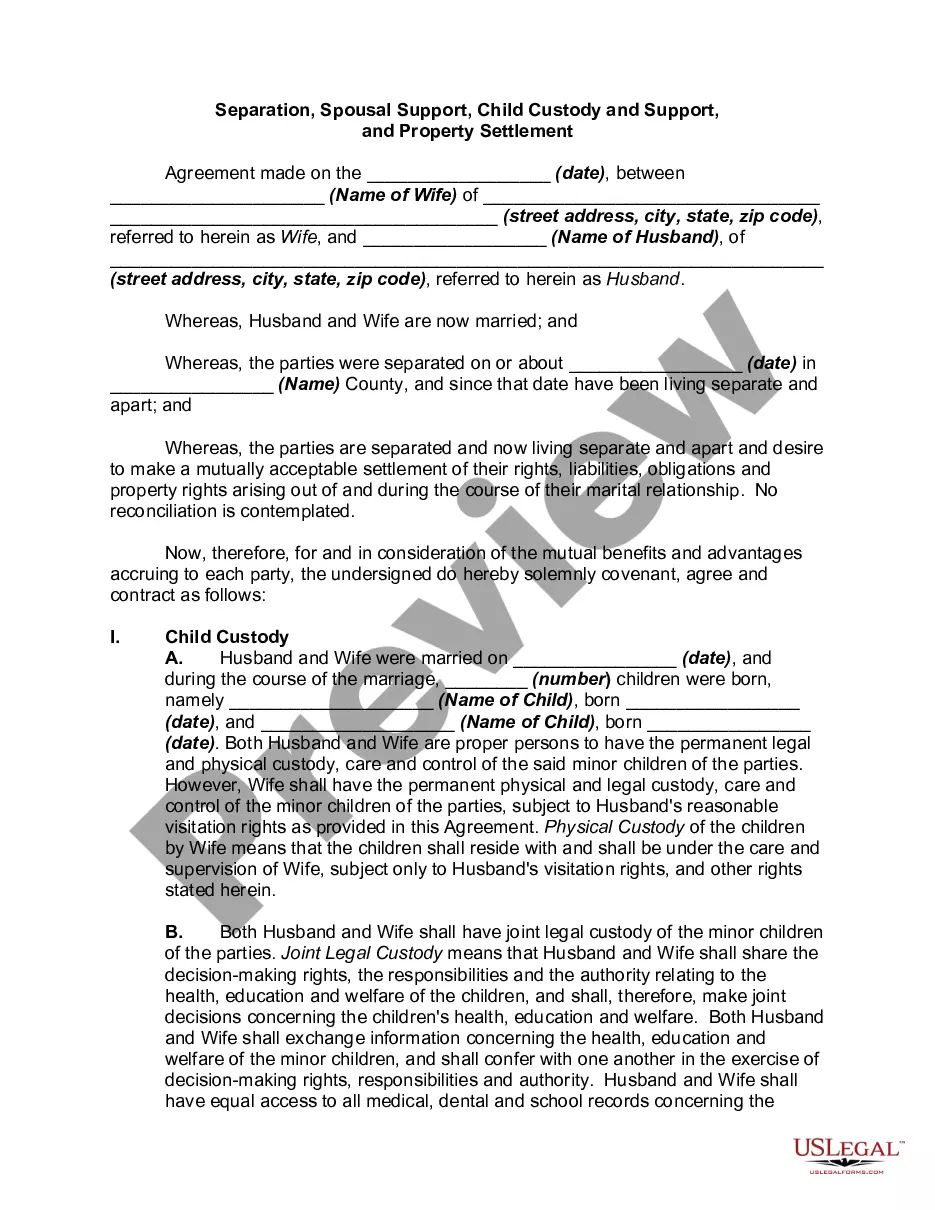
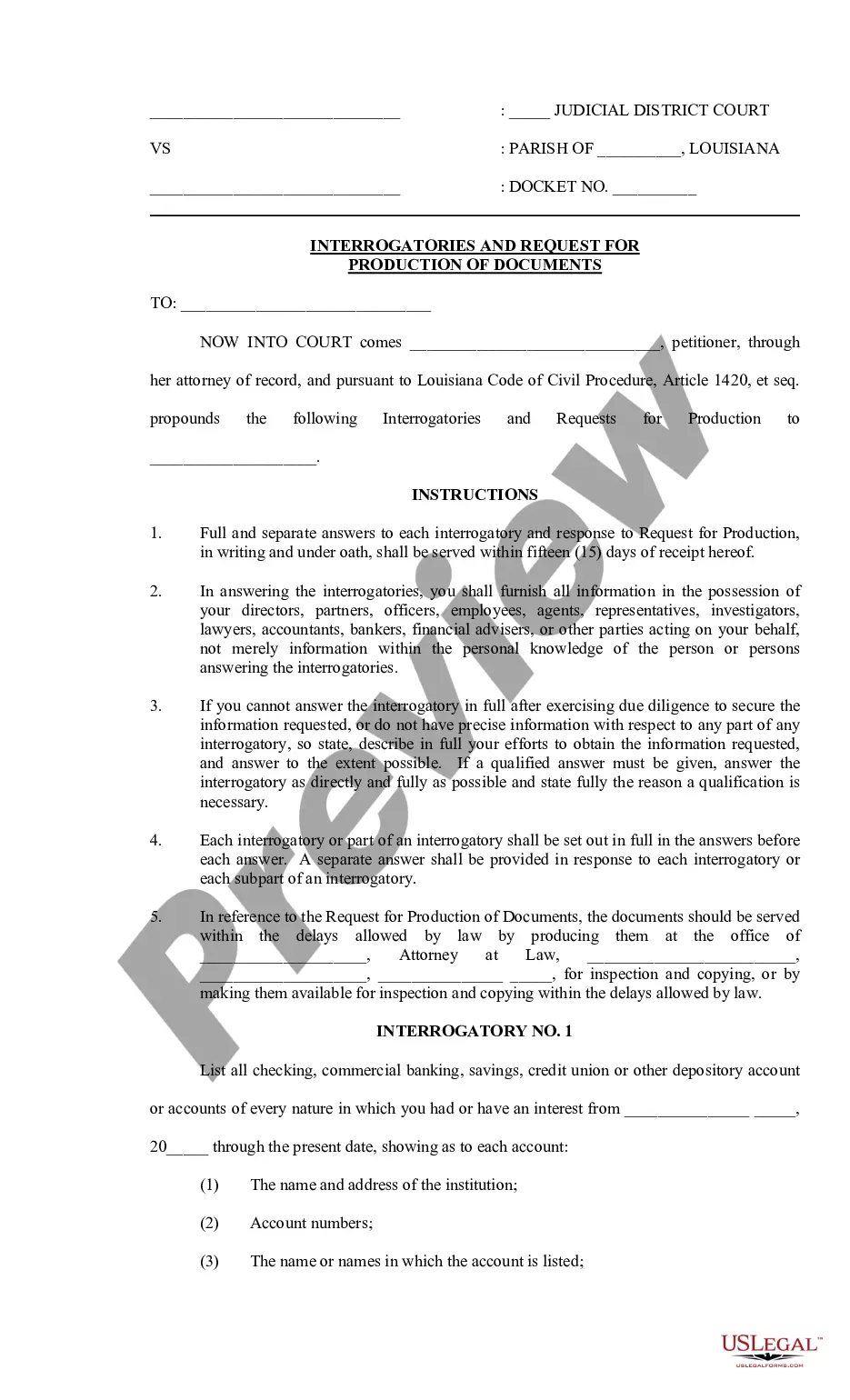
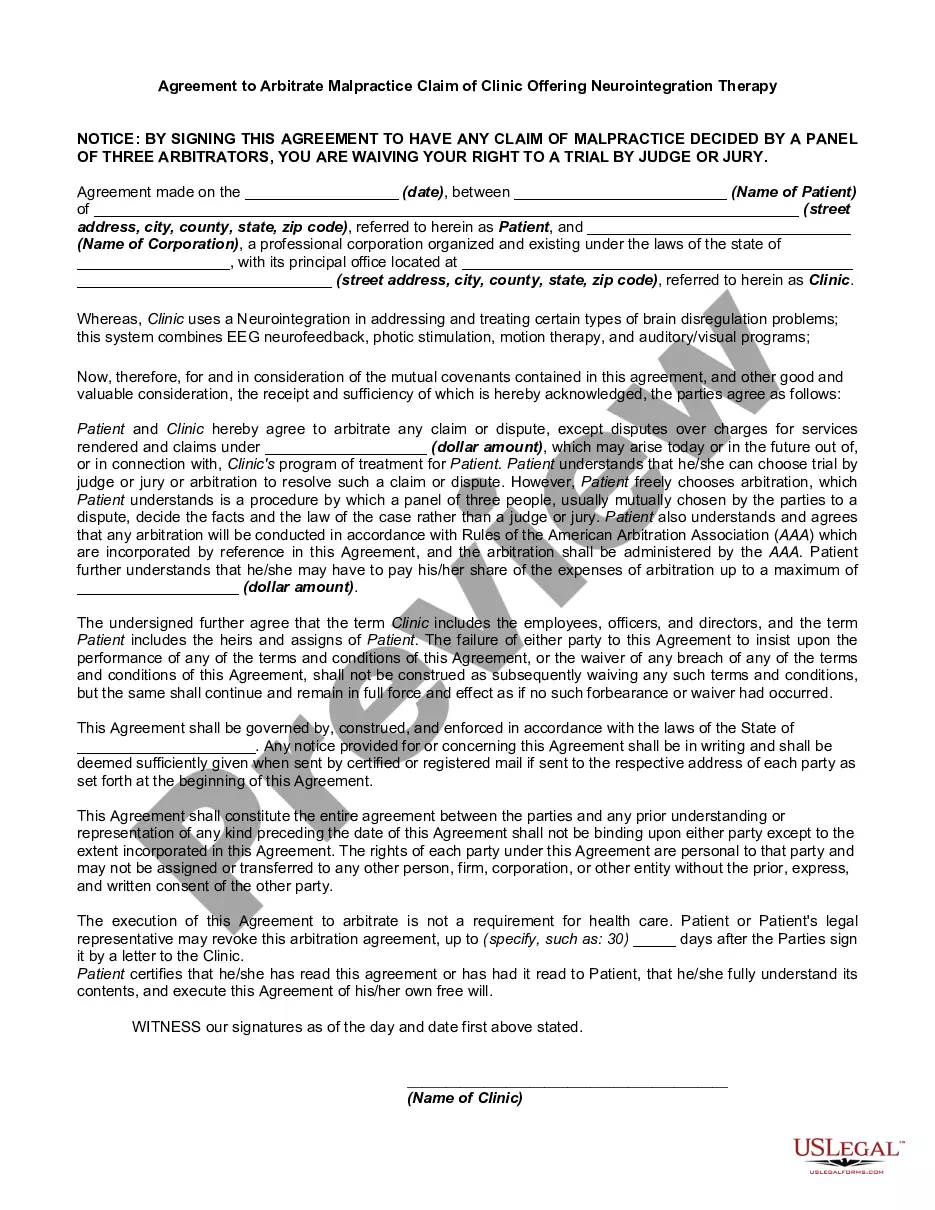
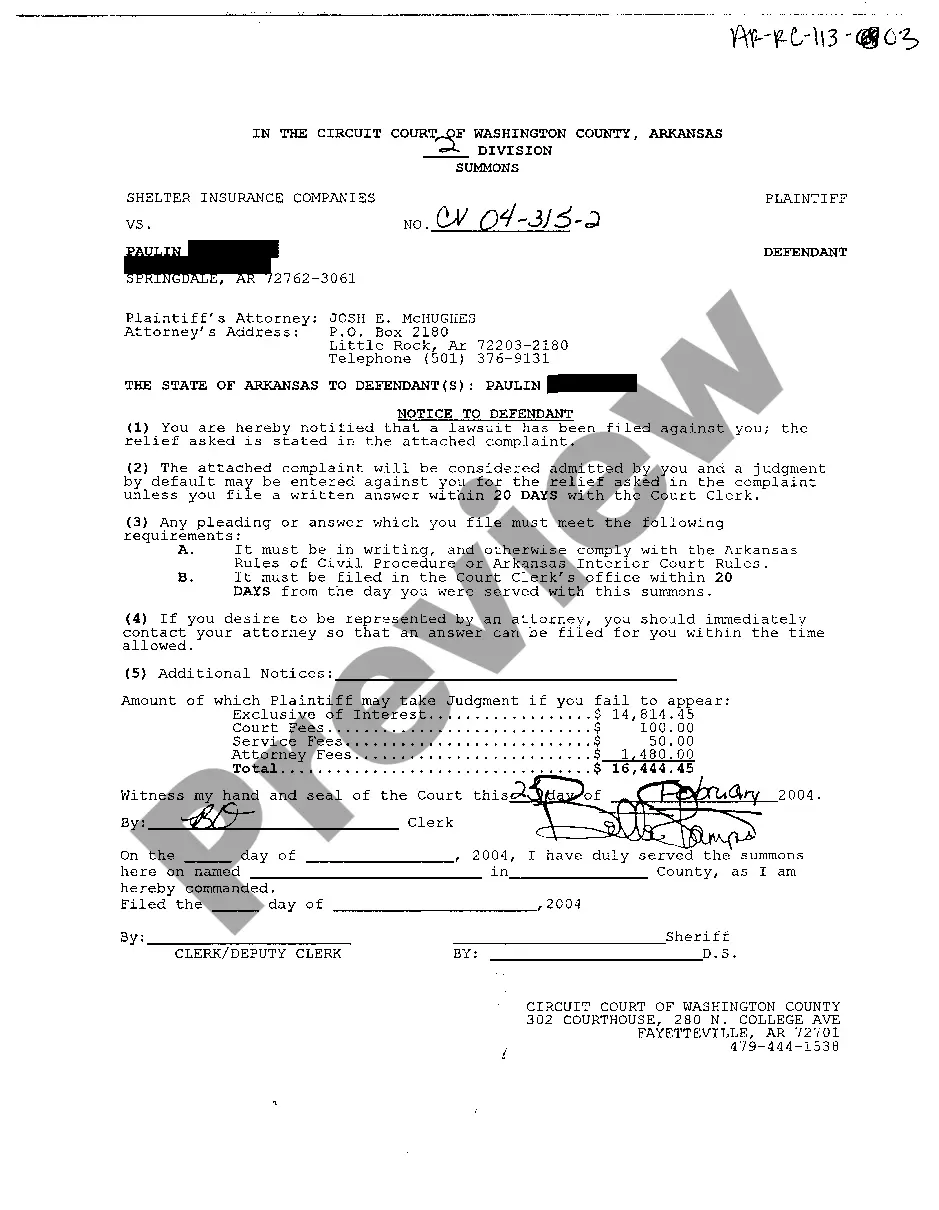
Form popularity
FAQ
The harvest plans provide crews with clear instructions that ensure each operation meets the strict environmental guidelines and any other considerations identified during the planning process. The plans are comprised of maps, site specific information and instruction on issues like: safety.
The Timber Harvesting Plan (THP) is the environmental review documents submitted by landowners to CAL FIRE outlining what timber he or she wants to harvest, how it will be harvested, and the steps that will be taken to prevent damage to the environment.
Manual reaping and mechanical threshing. - manual harvesting by hand; uses portable thresher or small stationary machine threshers.Reaping followed by machine threshing. - uses a reaper, threshing by a thresher, and cleaning either manually or by machine.
ArboristSite Member An average trailer load of softwood logs would be around $1,900. Hardwood pulp would be around a thousand. High grade hardwood logs would be much higher.
Timber harvesting involves planning harvest and reforestation; cutting trees and moving them to a landing; processing, sorting and loading; and transporting materials.
There are three major groups of timber harvest practices; clearcutting, shelterwood and selection systems. While each are different and are applied to specific forest types, they have three things in common: They provide wood fiber for thousands of every-day products.
Proper timber harvesting promotes biodiversity of tree species and wildlife because it allows for the selection of which trees to be removed and which to be favored. When marking and harvesting timber, favorable trees can be left to continue growing and act as a seed source for reproduction and regeneration.