Contractor's Affidavit of Payment to Subs
About this form
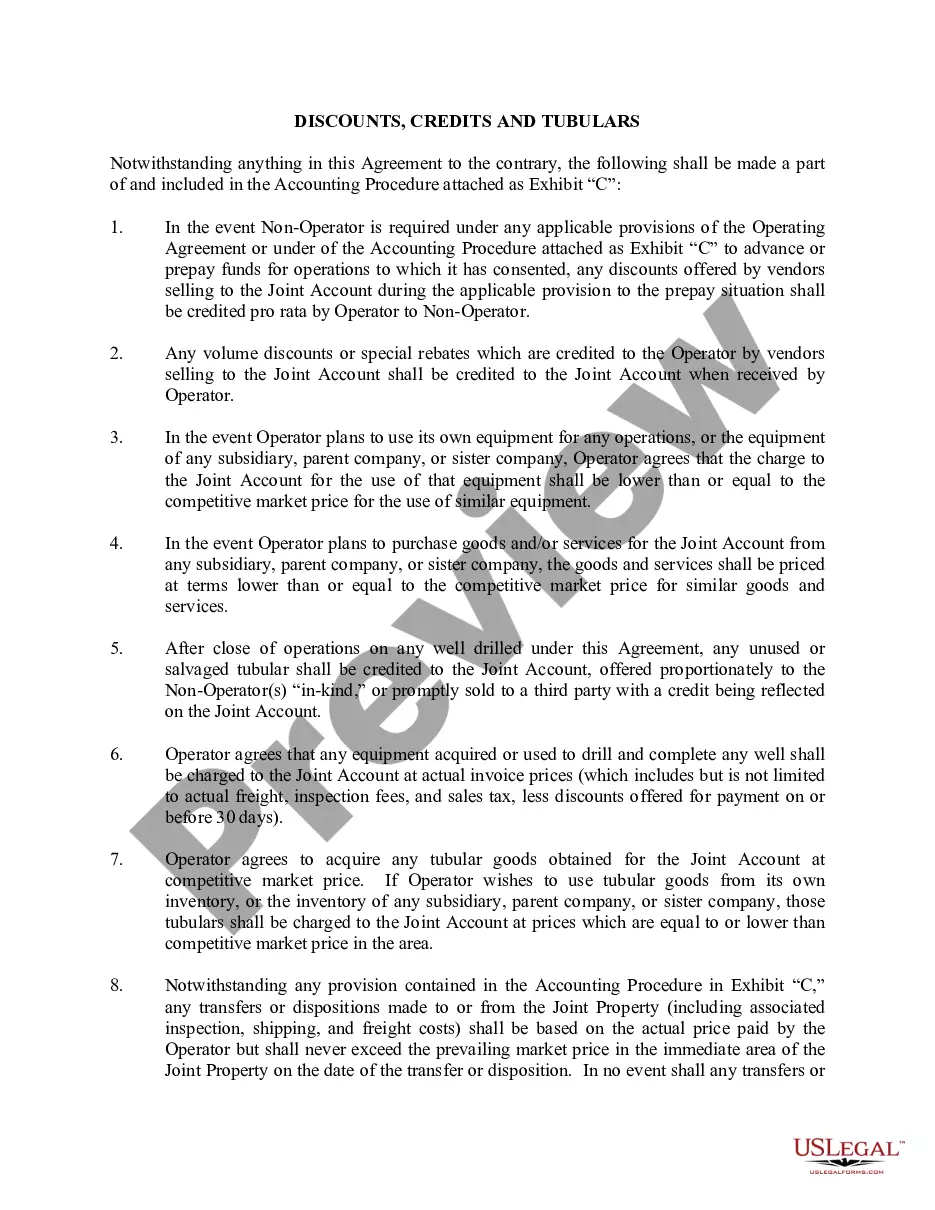
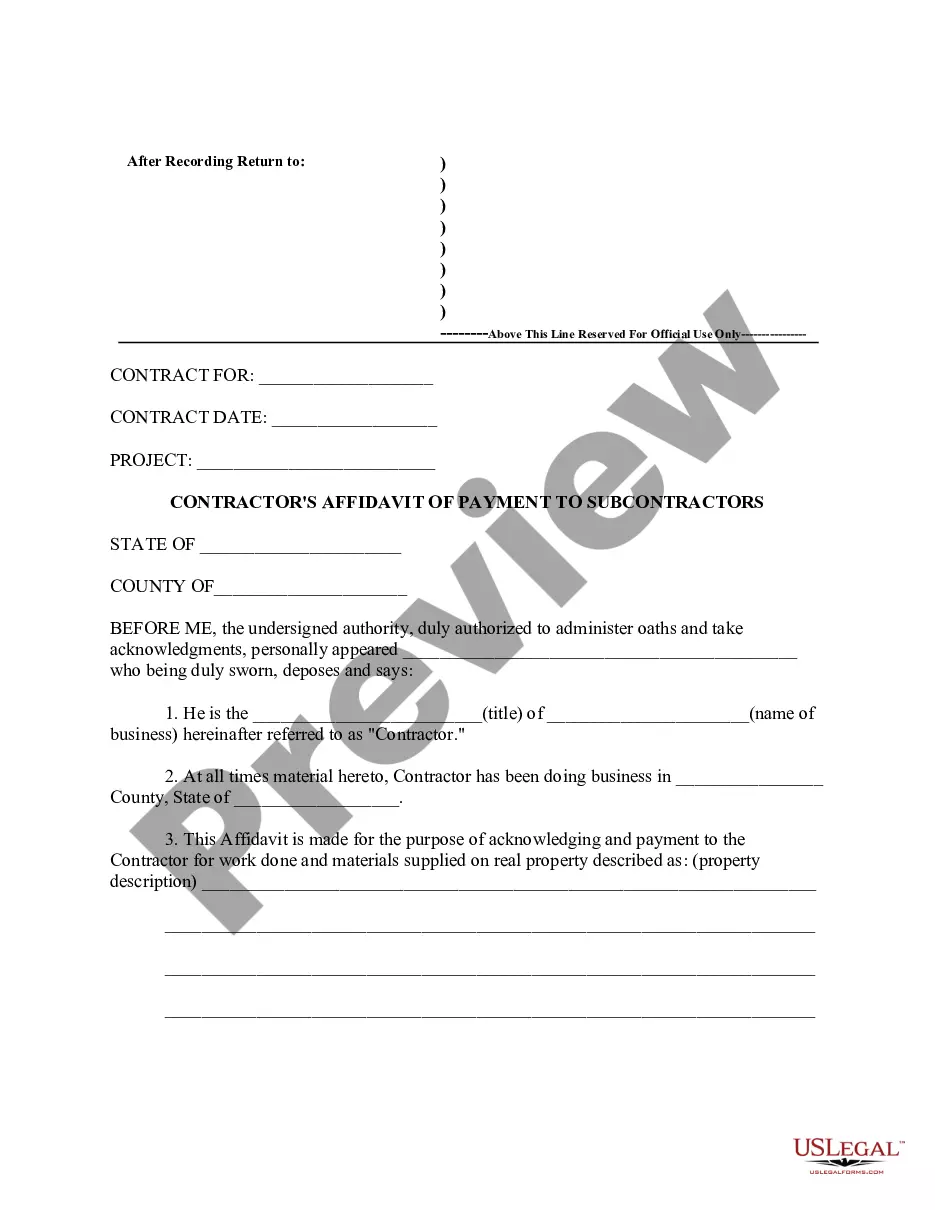
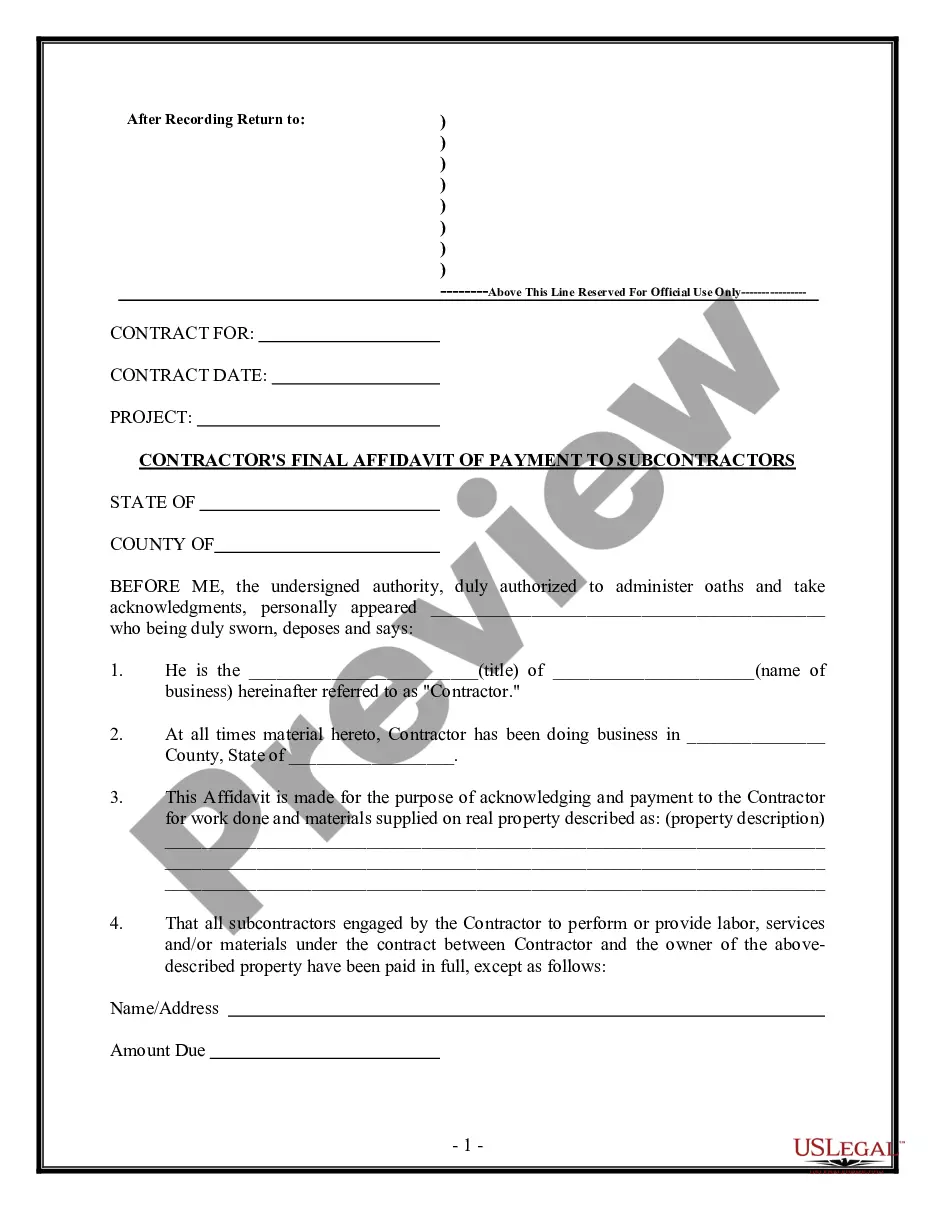
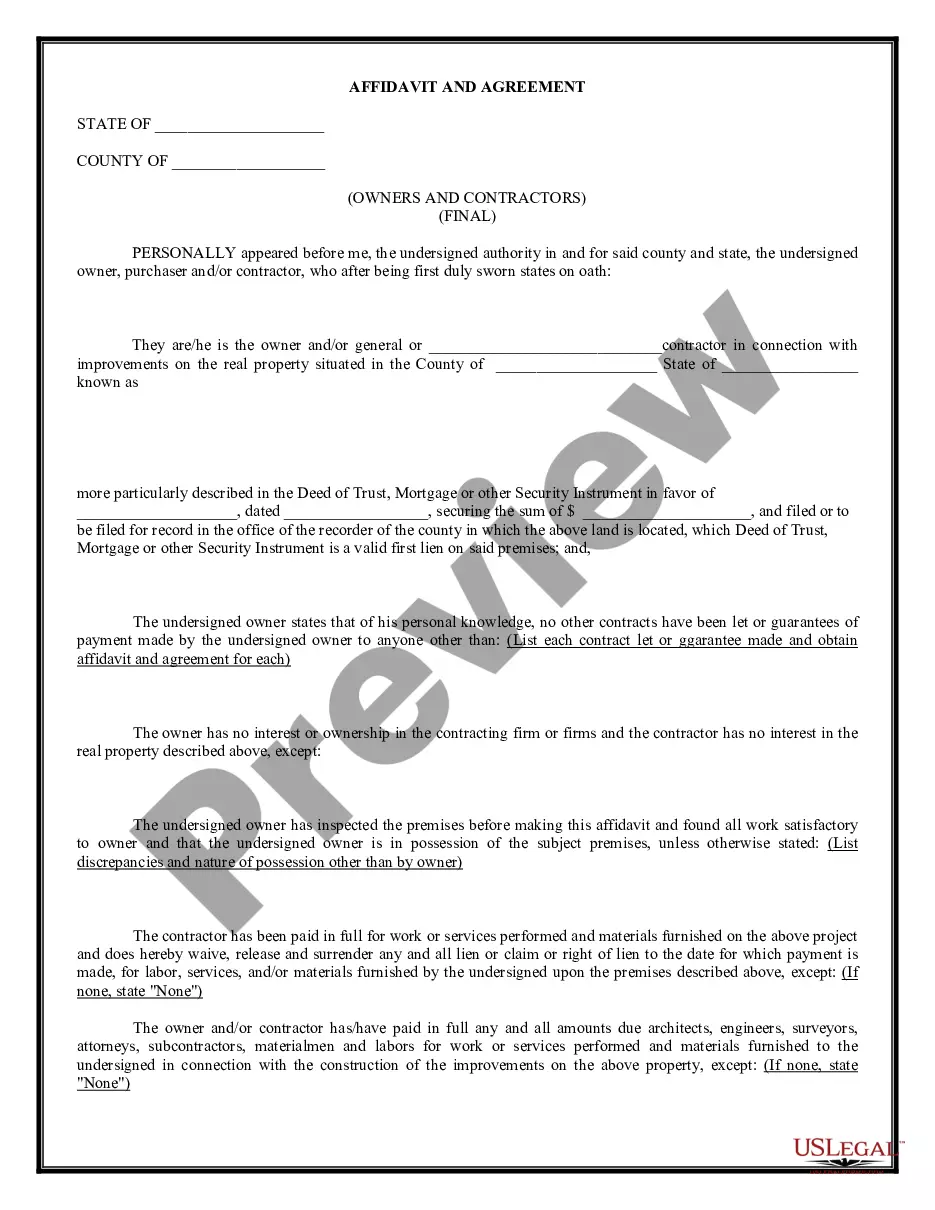
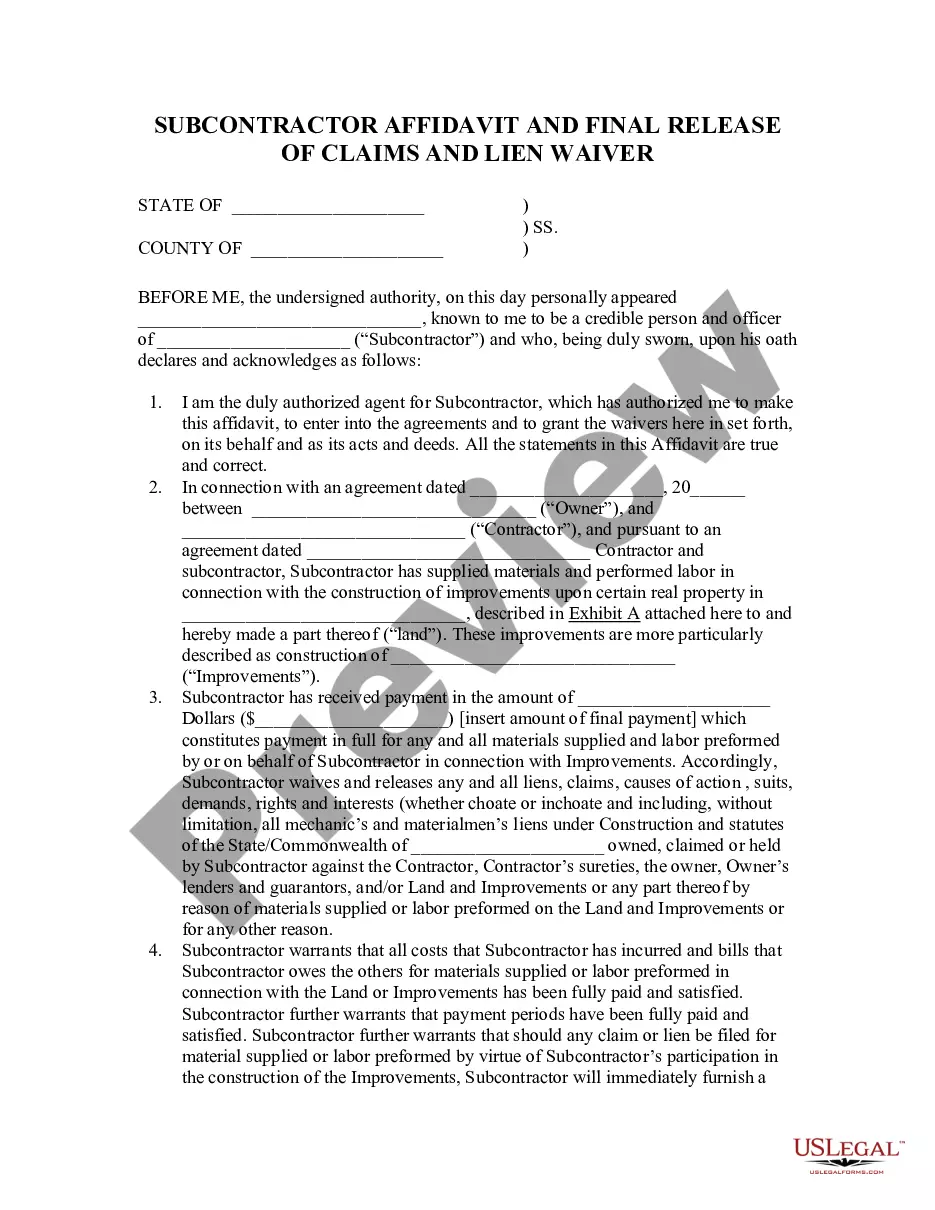
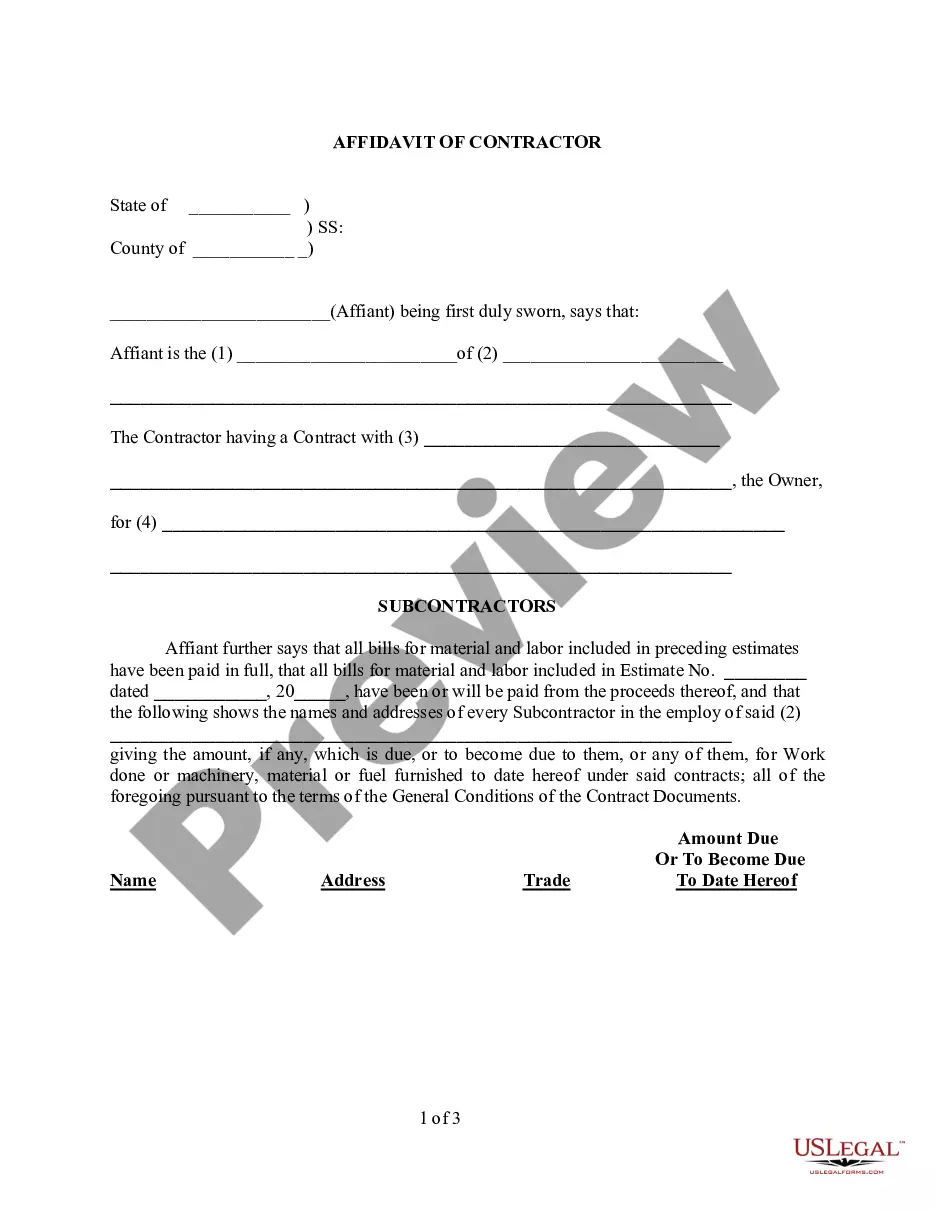
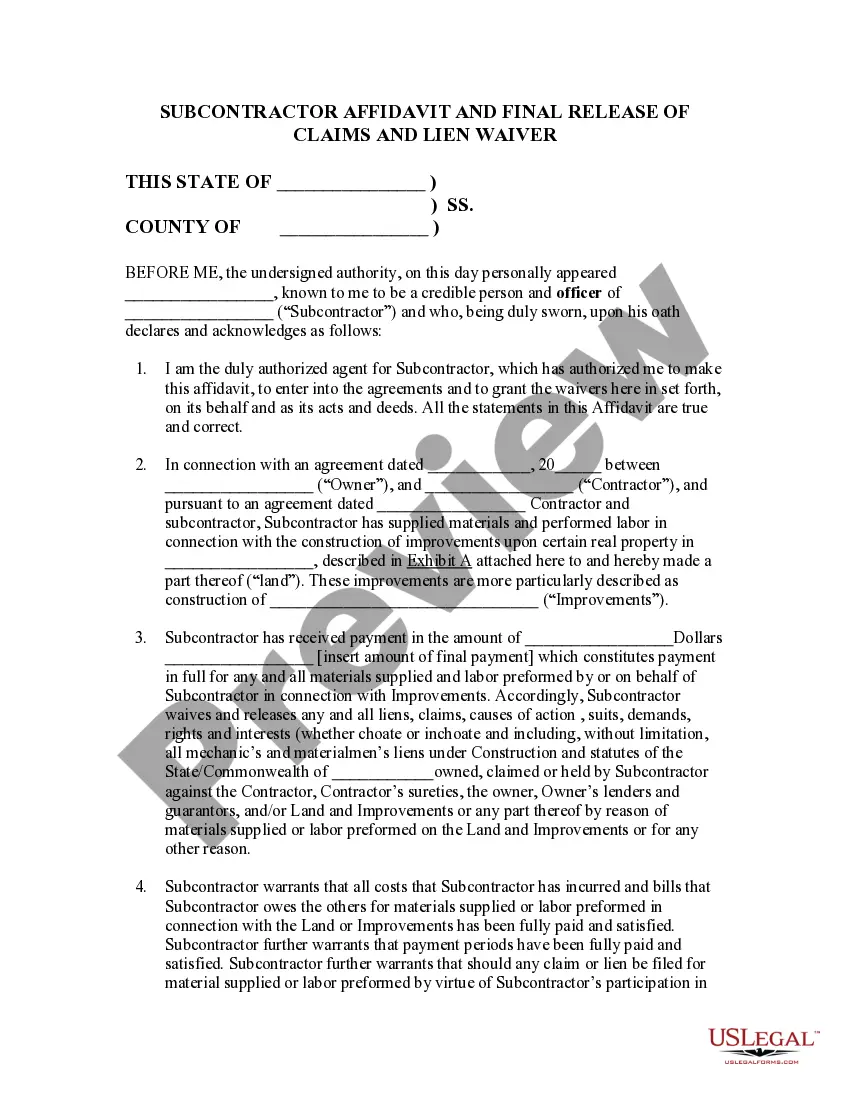
The Contractor's Affidavit of Payment to Subs is a legal document used by contractors to confirm that all subcontractors have been paid for their work up to a specified date before the completion of a construction project. This form is essential for maintaining transparency in financial transactions between contractors and subcontractors, ensuring all parties are compensated fairly. Unlike other affidavits, this document specifically addresses payments made to subcontractors, safeguarding against potential liens and disputes over unpaid services or materials.
Main sections of this form
- Contractor's name and title
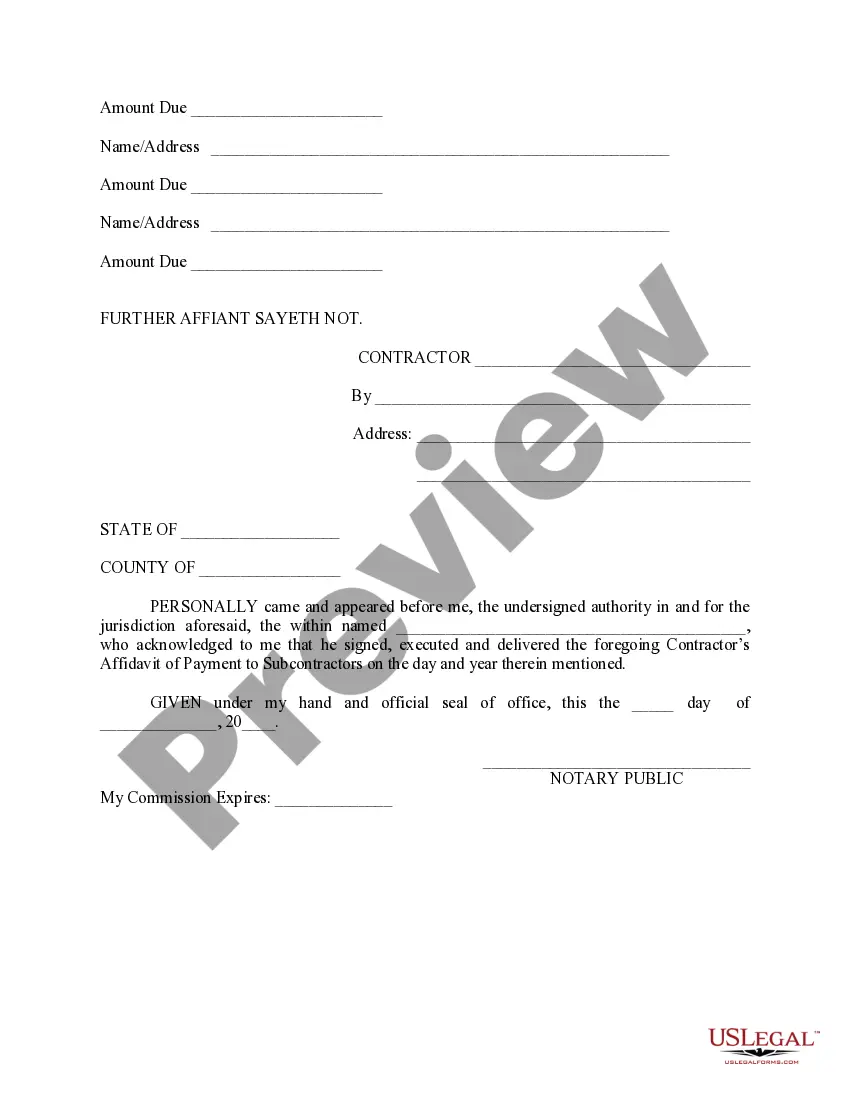
- Audit of subcontractor payments, including amounts due
- Description of the project and property involved
- Signature of the contractor
- Notarization section to verify the authenticity of the document
Situations where this form applies
This affidavit should be used whenever a contractor needs to verify that all subcontractors have been paid for their work prior to the project's completion. It is commonly employed in construction projects to avoid disputes related to unpaid work and to establish a clear record of payments made. Instances might include finalizing project funding or securing releases from subcontractors before proceeding to the next phase of construction.
Who needs this form
This form is intended for:
- Contractors overseeing construction projects
- Subcontractors seeking verification of payment
- Property owners wanting assurance that their contractors are paying subcontractors
Instructions for completing this form
- Identify the contractor by entering their name and title in the designated section.
- Specify the property involved in the project, providing a detailed description.
- List all subcontractors and confirm that they have been paid in full; include any outstanding amounts.
- Sign the form in front of a notary public to validate the affidavit.
- Ensure the document is correctly dated and includes relevant details for record-keeping.
Does this form need to be notarized?
To make this form legally binding, it must be notarized. Our online notarization service, powered by Notarize, lets you verify and sign documents remotely through an encrypted video session.
Get your form ready online
Our built-in tools help you complete, sign, share, and store your documents in one place.
Make edits, fill in missing information, and update formatting in US Legal Forms—just like you would in MS Word.
Download a copy, print it, send it by email, or mail it via USPS—whatever works best for your next step.
Sign and collect signatures with our SignNow integration. Send to multiple recipients, set reminders, and more. Go Premium to unlock E-Sign.
If this form requires notarization, complete it online through a secure video call—no need to meet a notary in person or wait for an appointment.
We protect your documents and personal data by following strict security and privacy standards.

Make edits, fill in missing information, and update formatting in US Legal Forms—just like you would in MS Word.

Download a copy, print it, send it by email, or mail it via USPS—whatever works best for your next step.

Sign and collect signatures with our SignNow integration. Send to multiple recipients, set reminders, and more. Go Premium to unlock E-Sign.

If this form requires notarization, complete it online through a secure video call—no need to meet a notary in person or wait for an appointment.

We protect your documents and personal data by following strict security and privacy standards.
Common mistakes
- Failing to include all subcontractors who need to be acknowledged.
- Not providing an accurate property description.
- Overlooking the notary signature requirement, which can render the document invalid.
- Leaving amounts owed blank or incorrectly stated.
- Not completing the form in a timely manner before project completion dates.
Benefits of completing this form online
- Convenience of immediate access to editable templates.
- Ability to correct and customize the affidavit as needed.
- Quick download and printing options for fast execution.
- Secure way to handle sensitive financial transactions through integrated notarization services.
What to keep in mind
- The Contractor's Affidavit of Payment to Subs ensures that subcontractors are paid and protects against liens.
- This form must be notarized to be effective.
- Complete the form carefully to avoid common mistakes such as omitting contractor details or property descriptions.
Looking for another form?

Form popularity
FAQ
State and county; address of the project. General contractor name and address. Subcontractor/supplier name and address (if this person is filling out the sworn statement). Brief description of the contract. A table that lists:
In the mechanics lien process, a lien waiver is a document from a contractor, subcontractor, materials supplier, equipment lessor or other party to the construction project (the claimant) stating they have received payment and waive any future lien rights to the property (of the owner) for the amount paid.
What is a contractor's sworn statement? A sworn statement is a construction document that lists the contractors and suppliers that provide material or labor to a construction project. It includes information about who is owed money, how much they are owed, and the remaining balance on their contract.
Signing an unconditional lien waiver is enforceable even before you get paid. This means that if you sign an unconditional lien waiver before receiving the money and the property owner ends up not paying up, you have already waived your lien rights because you signed the unconditional lien waiver.
The law allows the government, contractors, and subcontractors to include a retainage provision in the contract that retains a specific amount from progress payments. However, the party must pay retainage within 30 days of final acceptance.
A contractor who has been paid for a project and refuses to pay a subcontractor shall as a penalty, pay 2 percent of the amount due per month every month that the payment is not made. In addition, the prevailing party shall be entitled to his attorney's fees and costs.
If the contractor defaults or otherwise doesn't take care of your wages, you can file a claim with the surety company to get at least part of your money. The surety company then takes the contractor to court to recover the amount.
1Why Subcontractors Don't Get Paid. What makes a general contractor neglect to pay the subs?2Create a Rock-Solid Contract. Before you sign a contract with the GC, try to think of everything that needs to be in it.3Check for Payment Bonds.4Place a Mechanic's Lien.5Suspend Work.6Report or Sue the General Contractor.
Yes you can sue the subcontractor directly. You don't need a contract with someone to sue them for negligence. You can probably also sue them as a third party beneficiary of their contract with the general contractor.