Agreement for the Dissolution of a Partnership
About this form
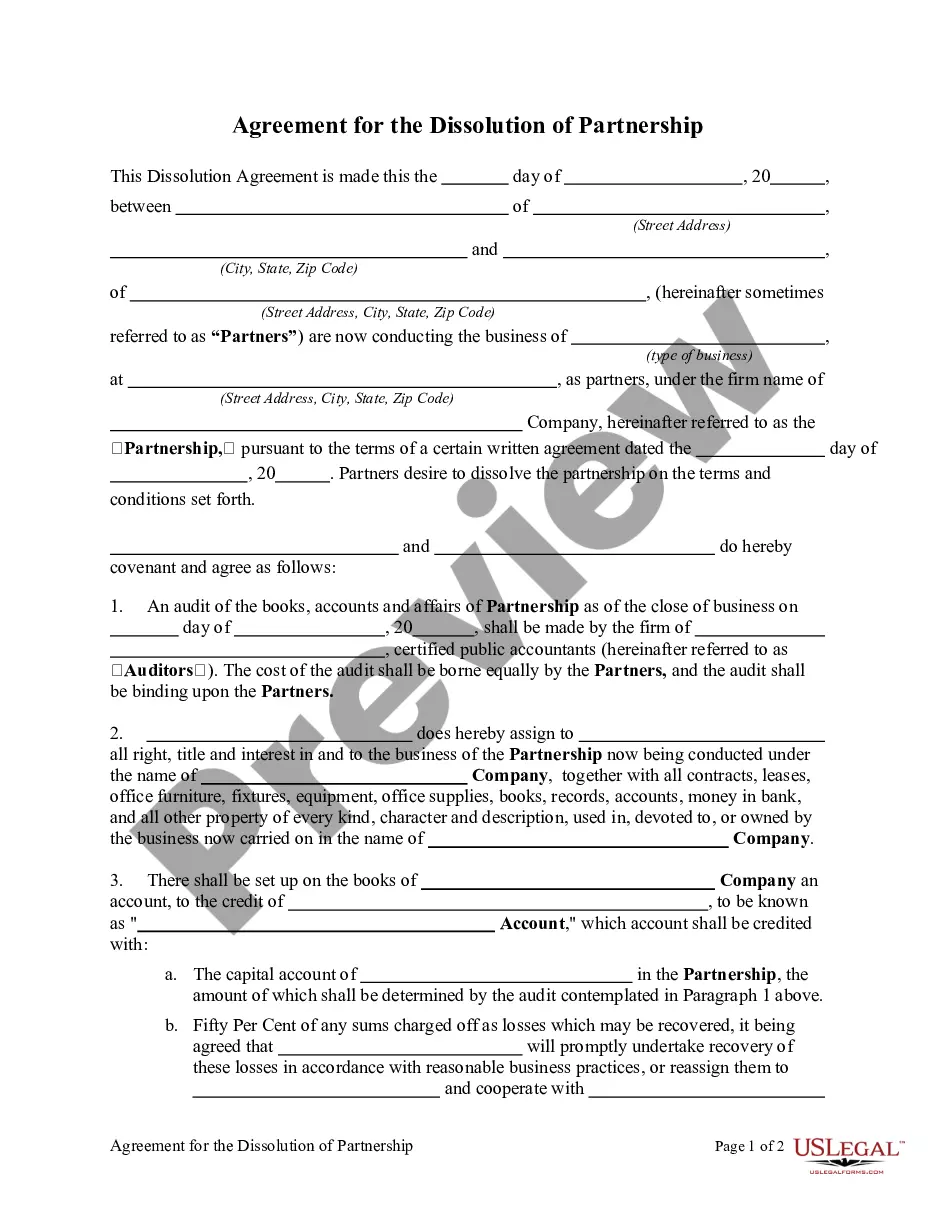
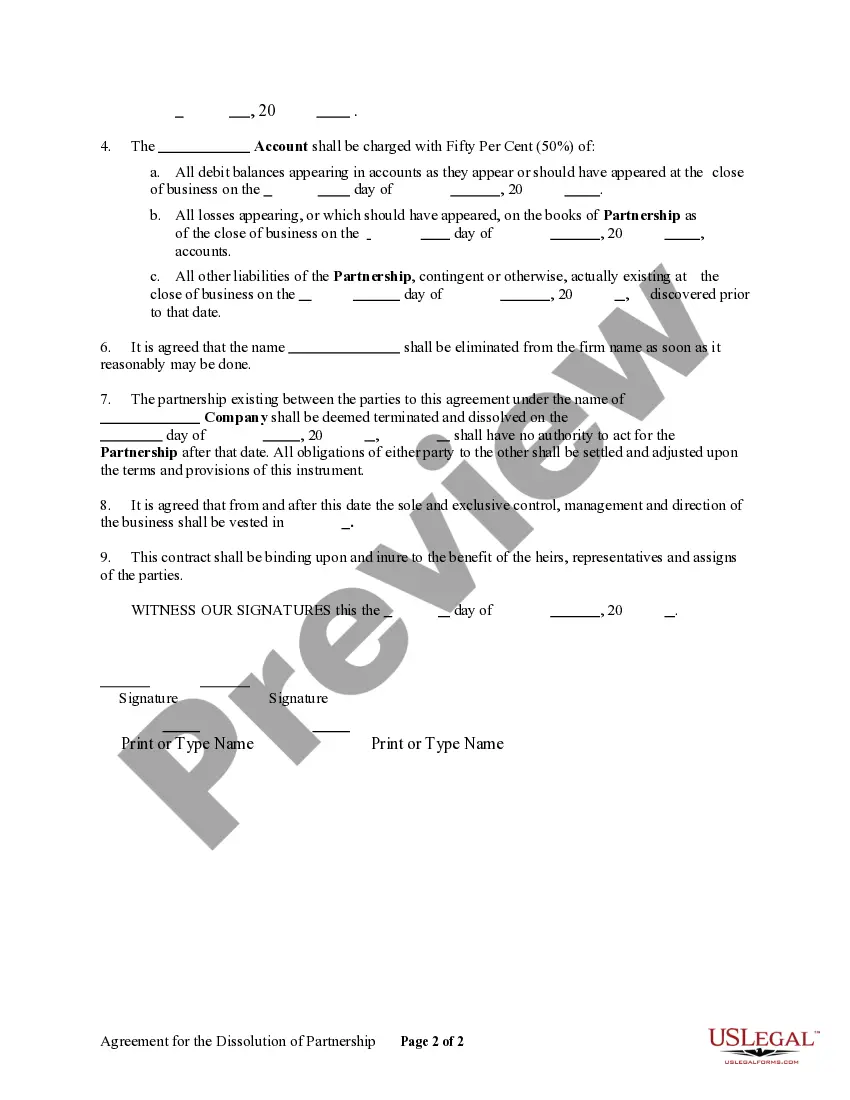
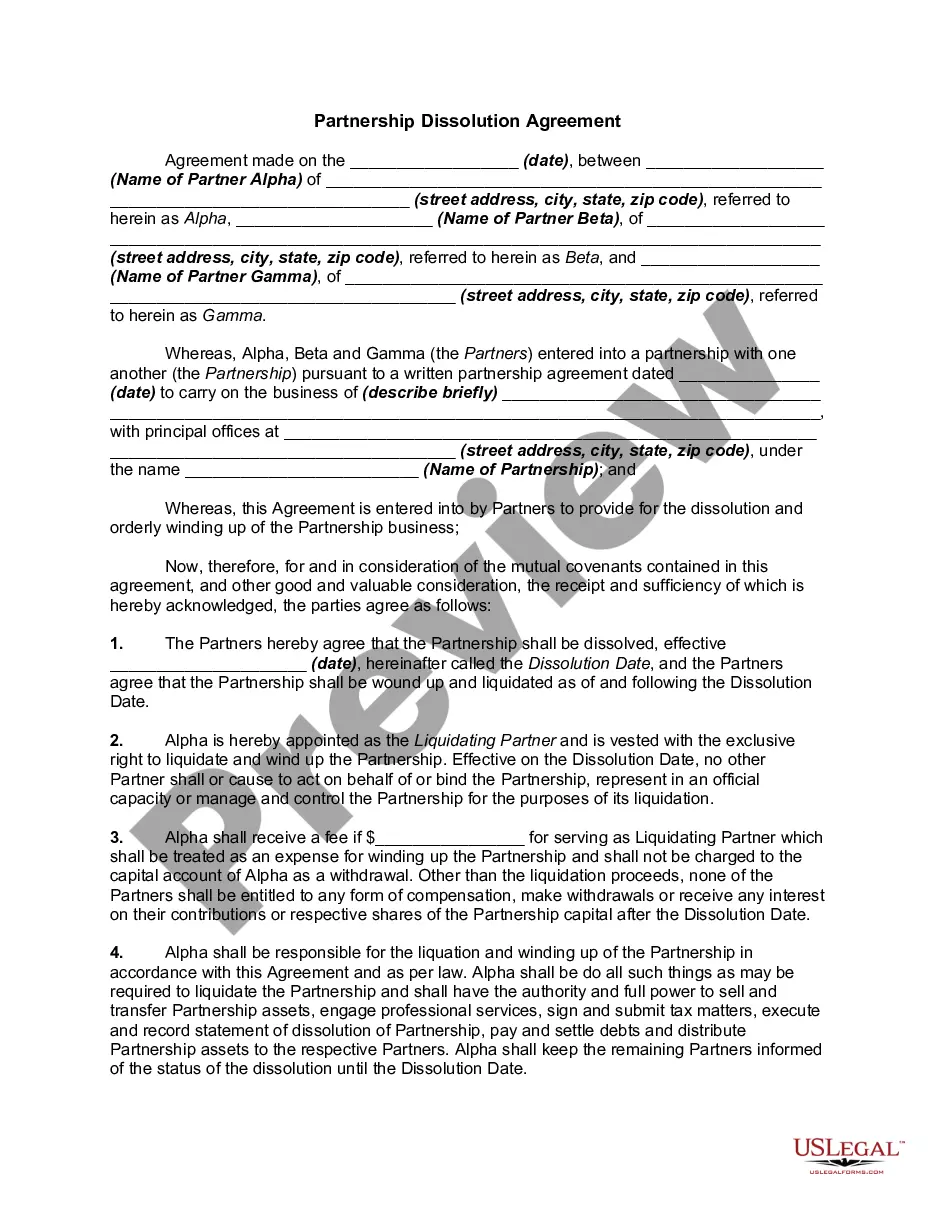
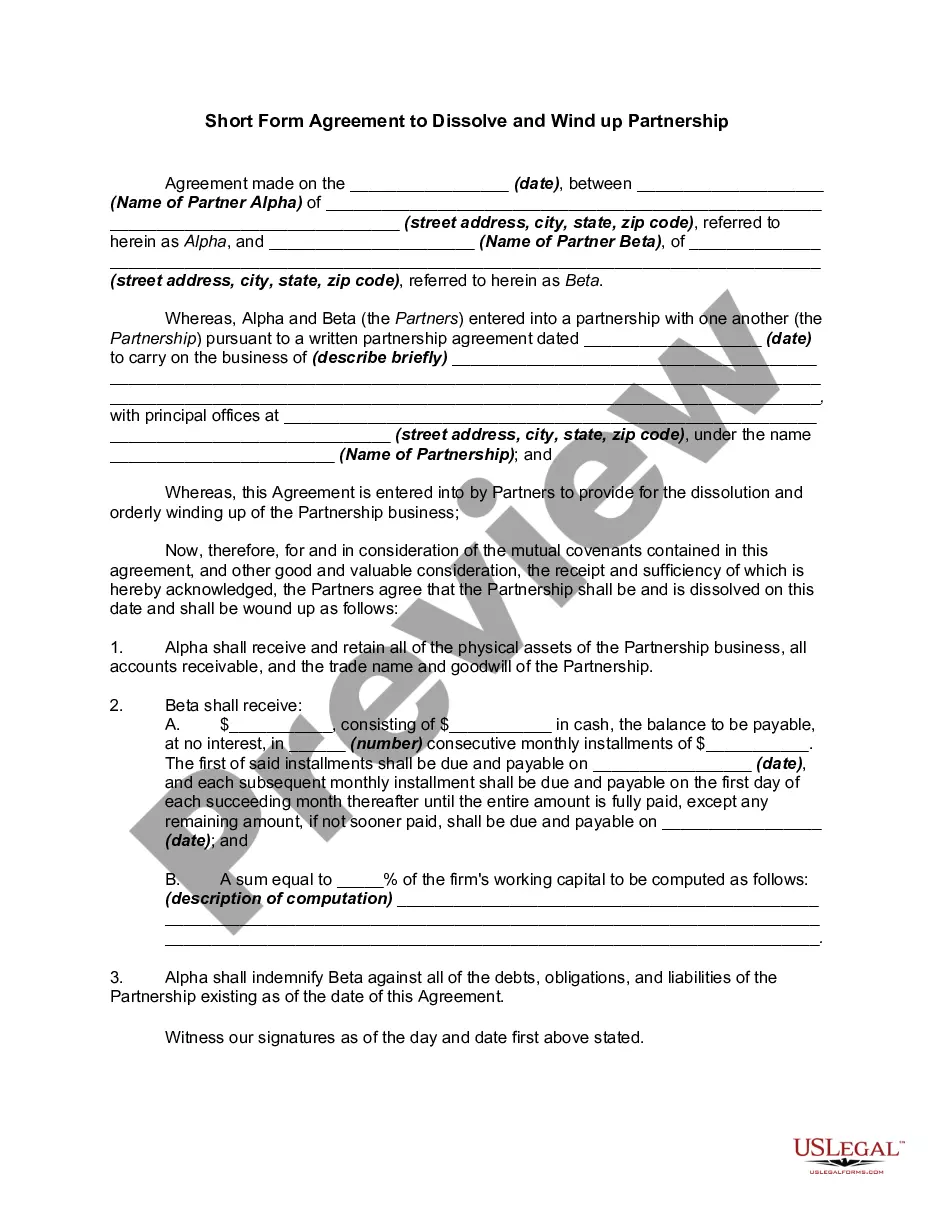
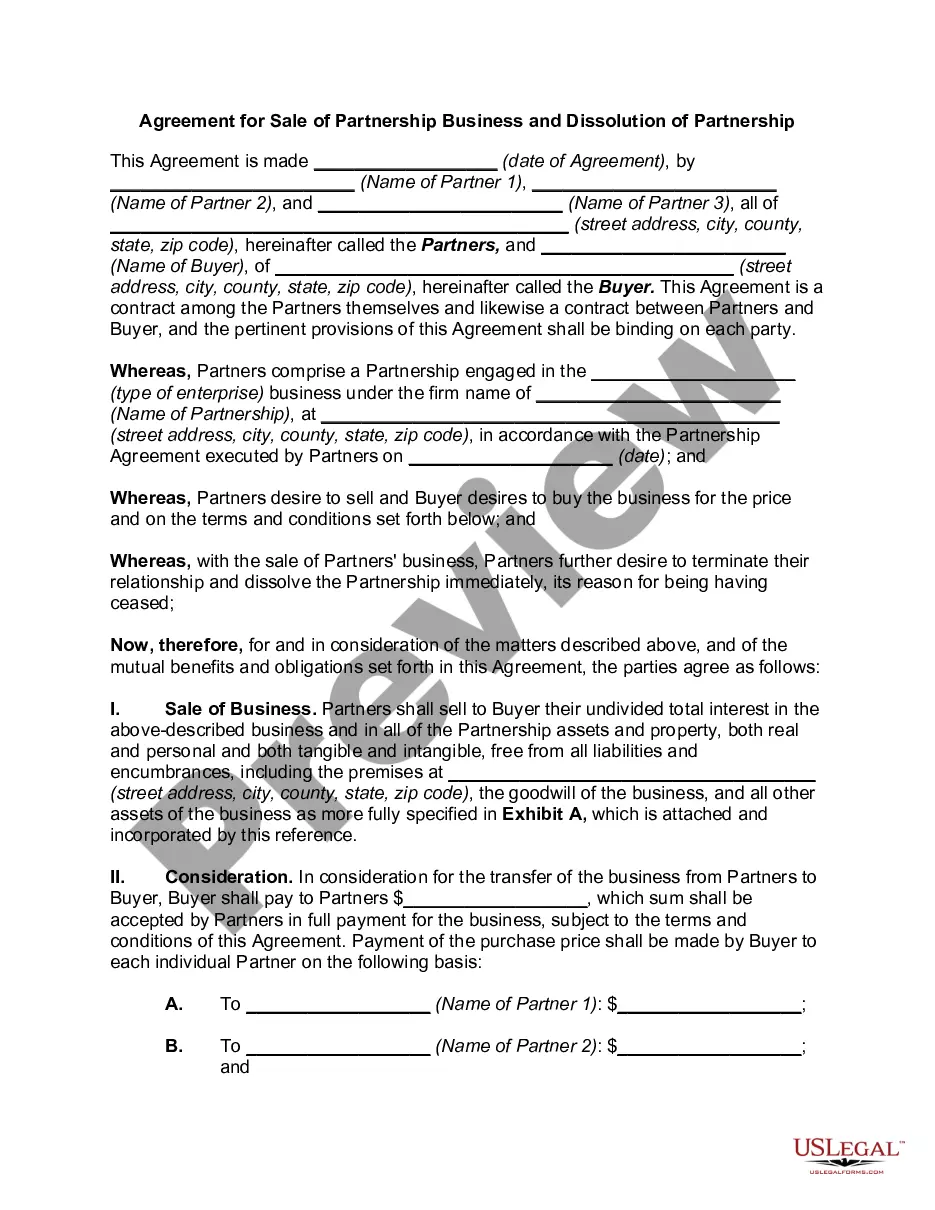
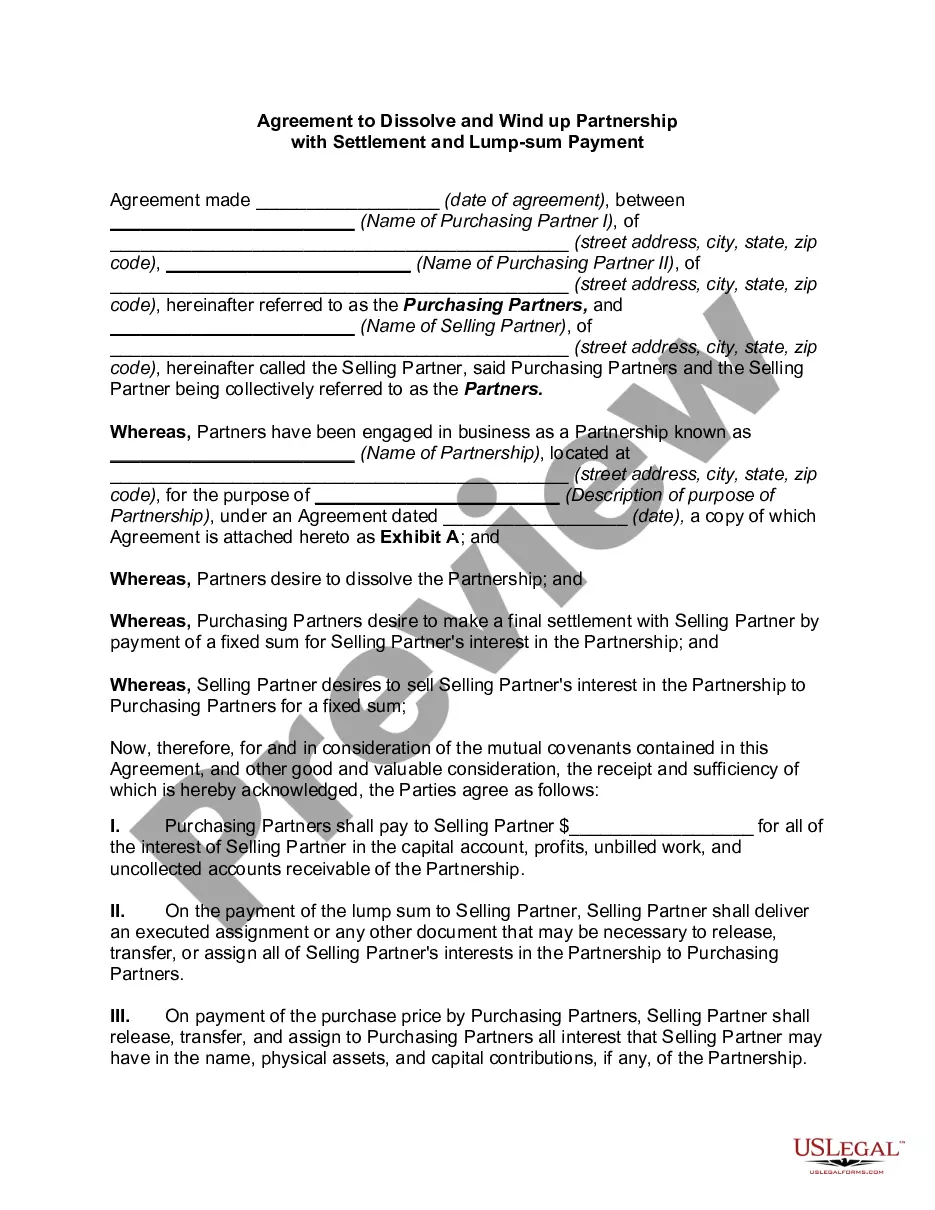
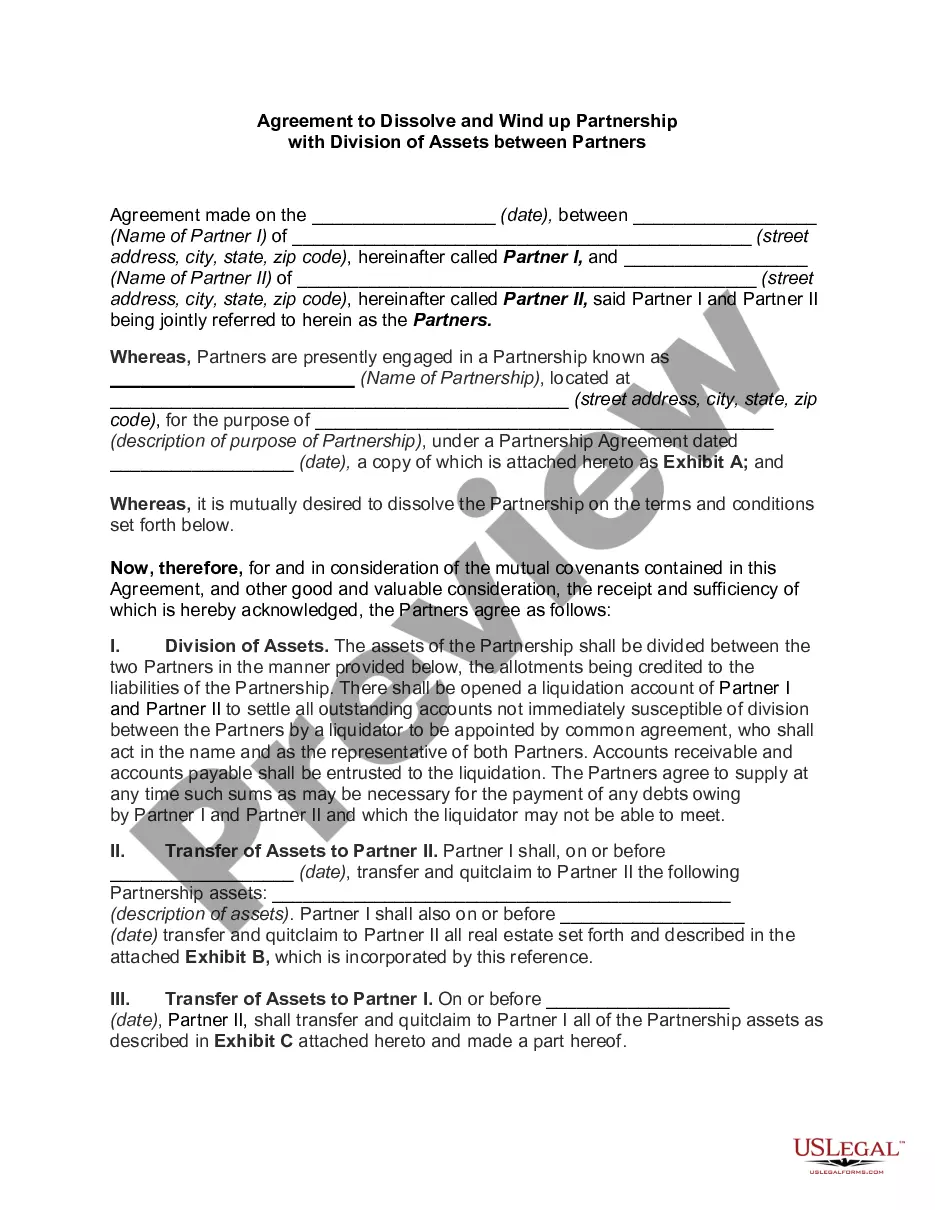
The Agreement for the Dissolution of a Partnership is a legal document used to formally end a partnership. This form outlines the terms and conditions under which a partnership is dissolved and clarifies the responsibilities of each partner following the dissolution. It is essential for partners to ensure an organized and legally compliant termination of their business relationship, differentiating it from other partnership-related forms, such as the Partnership Agreement, which is used to establish a partnership instead of dissolving it.
Form components explained
- Names and addresses of the partners involved in the dissolution.
- Date of the dissolution agreement.
- Details on how debts and assets will be handled post-dissolution.
- Signatures of all partners agreeing to the dissolution.
- Any provisions regarding the winding up of partnership affairs.
When to use this form
This form is necessary when all partners decide to terminate their partnership formally. It is useful in various situations, including when partners mutually agree to end their business, when a predetermined time for the partnership has expired, or when a partner needs to withdraw. Using this agreement ensures that all legal and financial matters are settled properly, minimizing potential disputes among partners.
Who needs this form
This form is intended for:
- Business partnerships looking to dissolve their agreement.
- Partners wishing to clear legal obligations and liabilities after stunning their partnership.
- Any partner who has decided to withdraw and needs to document their departure.
Completing this form step by step
- Identify and list the names and contact details of all partners.
- Clearly state the date of the dissolution agreement.
- Include provisions for how the assets and liabilities of the partnership will be divided.
- Ensure all partners sign the document to indicate their agreement to the terms.
- Keep copies of the completed form for all involved parties.
Is notarization required?
Notarization is not commonly needed for this form. However, certain documents or local rules may make it necessary. Our notarization service, powered by Notarize, allows you to finalize it securely online anytime, day or night.
Get your form ready online
Our built-in tools help you complete, sign, share, and store your documents in one place.
Make edits, fill in missing information, and update formatting in US Legal Forms—just like you would in MS Word.
Download a copy, print it, send it by email, or mail it via USPS—whatever works best for your next step.
Sign and collect signatures with our SignNow integration. Send to multiple recipients, set reminders, and more. Go Premium to unlock E-Sign.
If this form requires notarization, complete it online through a secure video call—no need to meet a notary in person or wait for an appointment.
We protect your documents and personal data by following strict security and privacy standards.

Make edits, fill in missing information, and update formatting in US Legal Forms—just like you would in MS Word.

Download a copy, print it, send it by email, or mail it via USPS—whatever works best for your next step.

Sign and collect signatures with our SignNow integration. Send to multiple recipients, set reminders, and more. Go Premium to unlock E-Sign.

If this form requires notarization, complete it online through a secure video call—no need to meet a notary in person or wait for an appointment.

We protect your documents and personal data by following strict security and privacy standards.
Common mistakes
- Failing to obtain all partners' signatures, which can invalidate the agreement.
- Not including specific details about asset and debt allocations.
- Using outdated or incorrect form versions for the jurisdiction.
Benefits of completing this form online
- Convenient access to professionally drafted legal templates.
- Easy to edit and customize for specific partnership dissolution needs.
- Quick download options to expedite the process.
What to keep in mind
- The Agreement for the Dissolution of a Partnership is essential for formalizing the termination of a partnership.
- This document protects the interests of all partners involved during the dissolution process.
- Completing the form accurately helps prevent future disputes and ensures clarity regarding asset distribution.
Looking for another form?


Form popularity
FAQ
It is a formal legal document used to end a partnership and set how debts and assets will be handled after the break‑up. It records the partners’ names and addresses, the dissolution date, the signatures of all partners, and any winding‑up provisions. It’s used when all partners agree to terminate the partnership.
During a dissolution, the partnership winds up its affairs and settles debts and assets in accordance with the dissolution agreement. The form governs how these matters are handled and typically requires the signatures of all partners to confirm their agreement to terminate the partnership.
This form requires the names and addresses of all partners, the date of dissolution, details on how debts and assets will be handled post-dissolution, signatures of all partners, and provisions related to winding up the partnership’s affairs.
Dissolution ends the partnership as a business entity and triggers the winding up of affairs. It clarifies ongoing obligations, settles liabilities, and distributes any remaining assets, all under the terms of the dissolution agreement.
Execution involves obtaining the signatures of all partners named in the agreement and dating the document at signing. Once signed, the agreement formalizes the dissolution and the steps to wind up debts, assets, and business affairs.
This dissolution agreement ends an existing partnership and sets how debts, assets, and partner obligations will be handled during winding up. A Partnership Agreement, by contrast, creates and governs a partnership from the start, outlining ongoing terms and relationships.