Agreement to Lease Condominium Unit - Condo Rental
Understanding this form
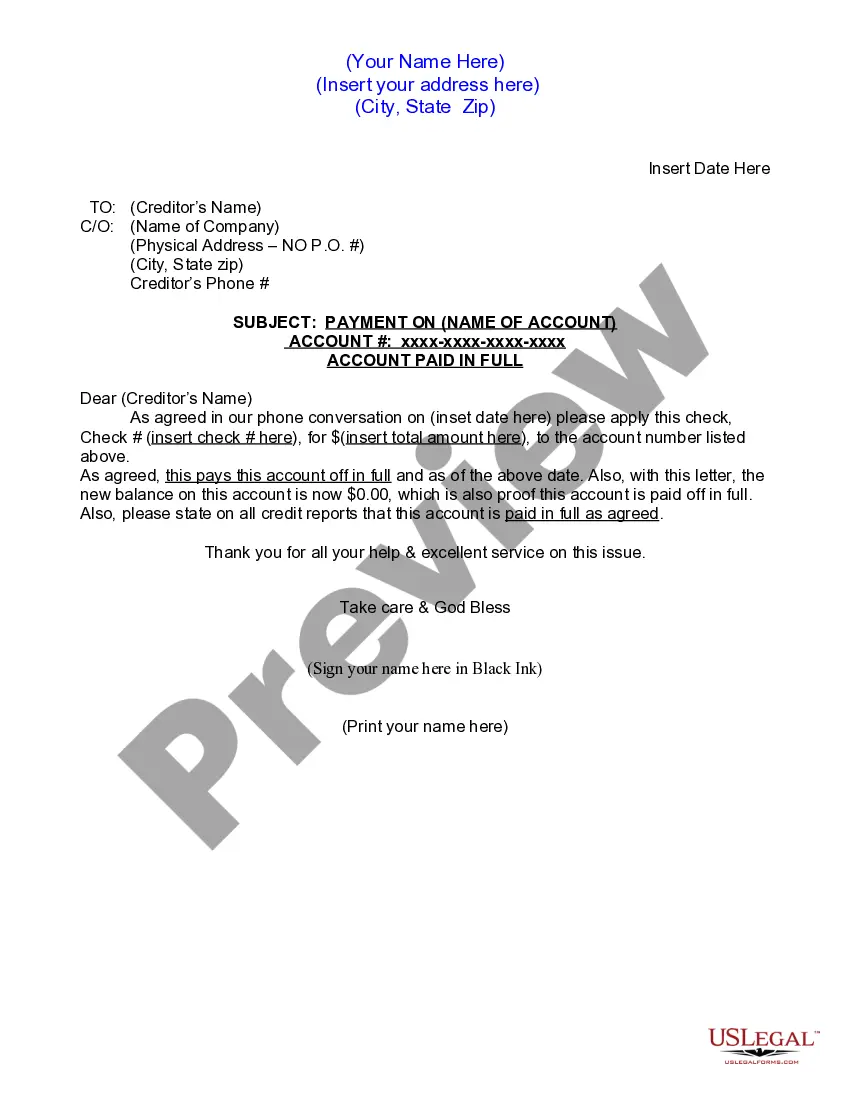
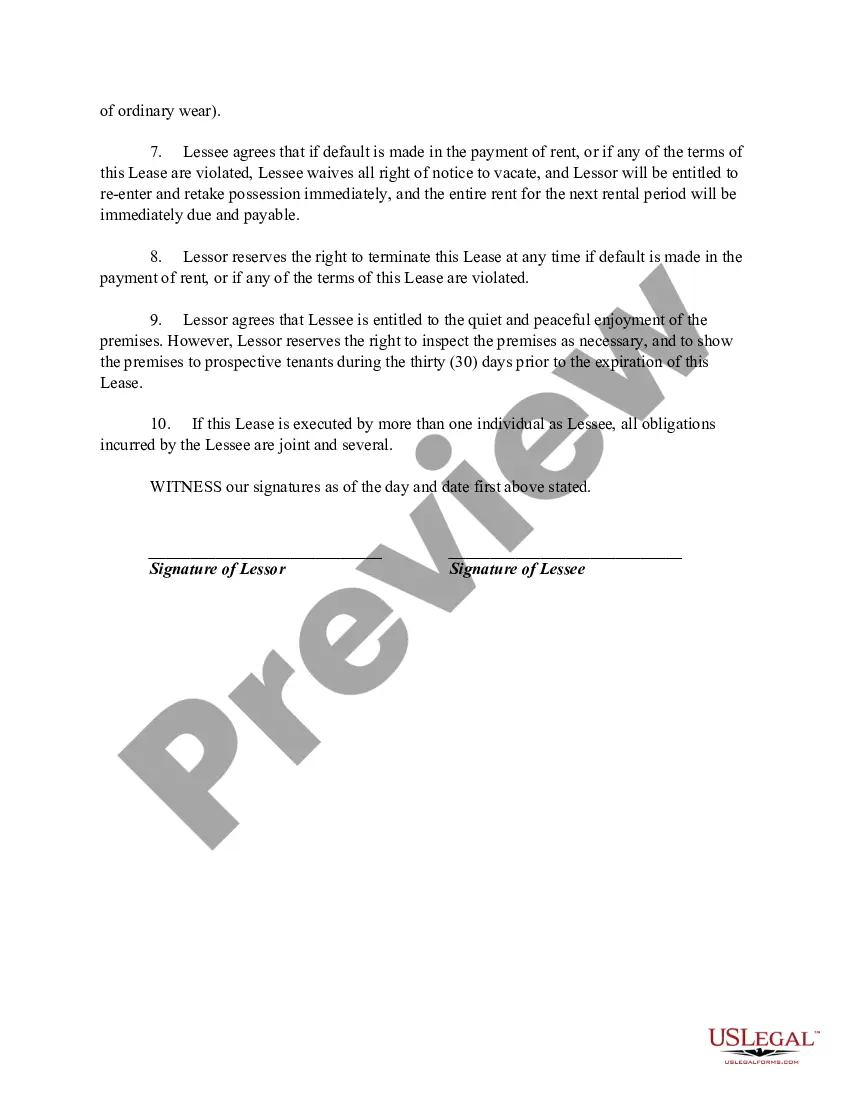
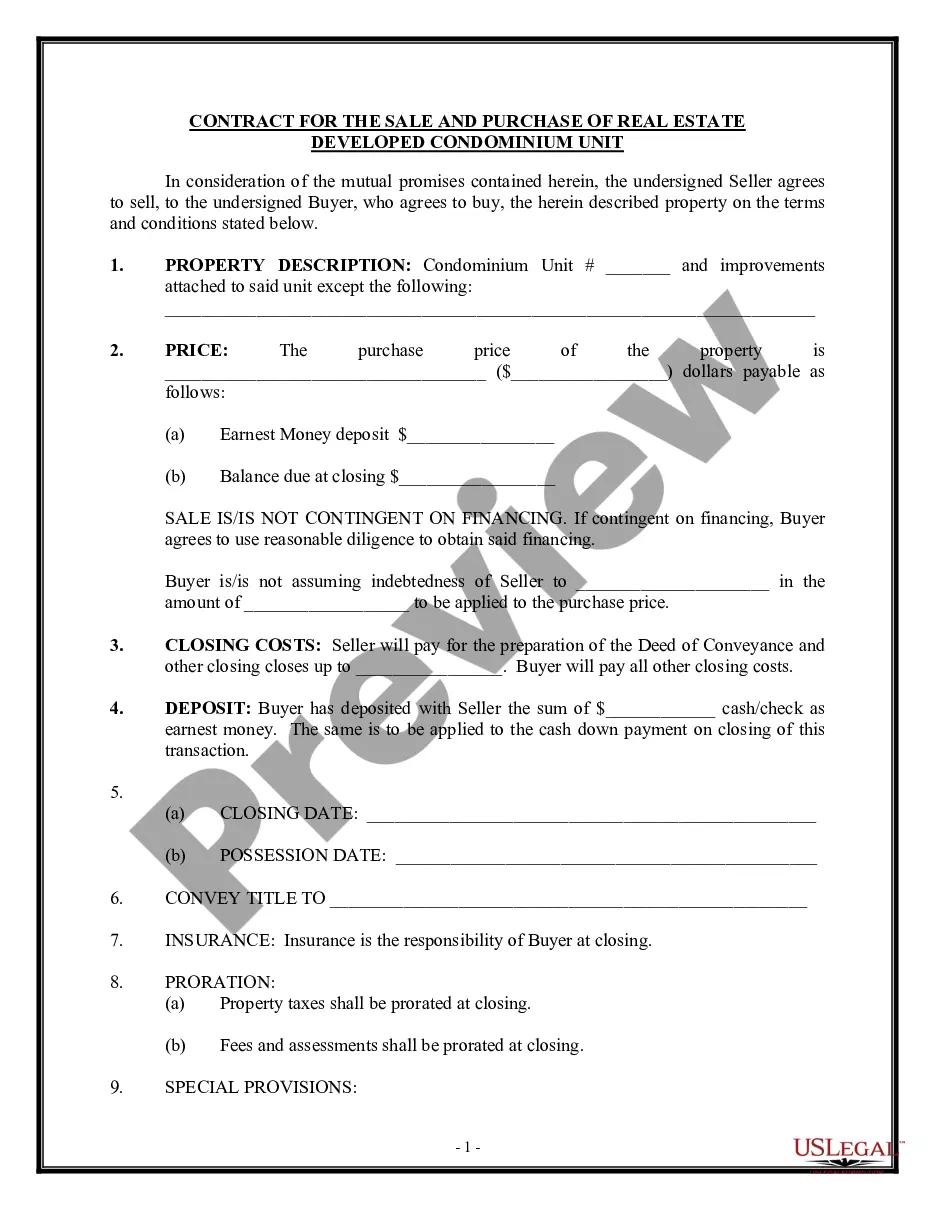
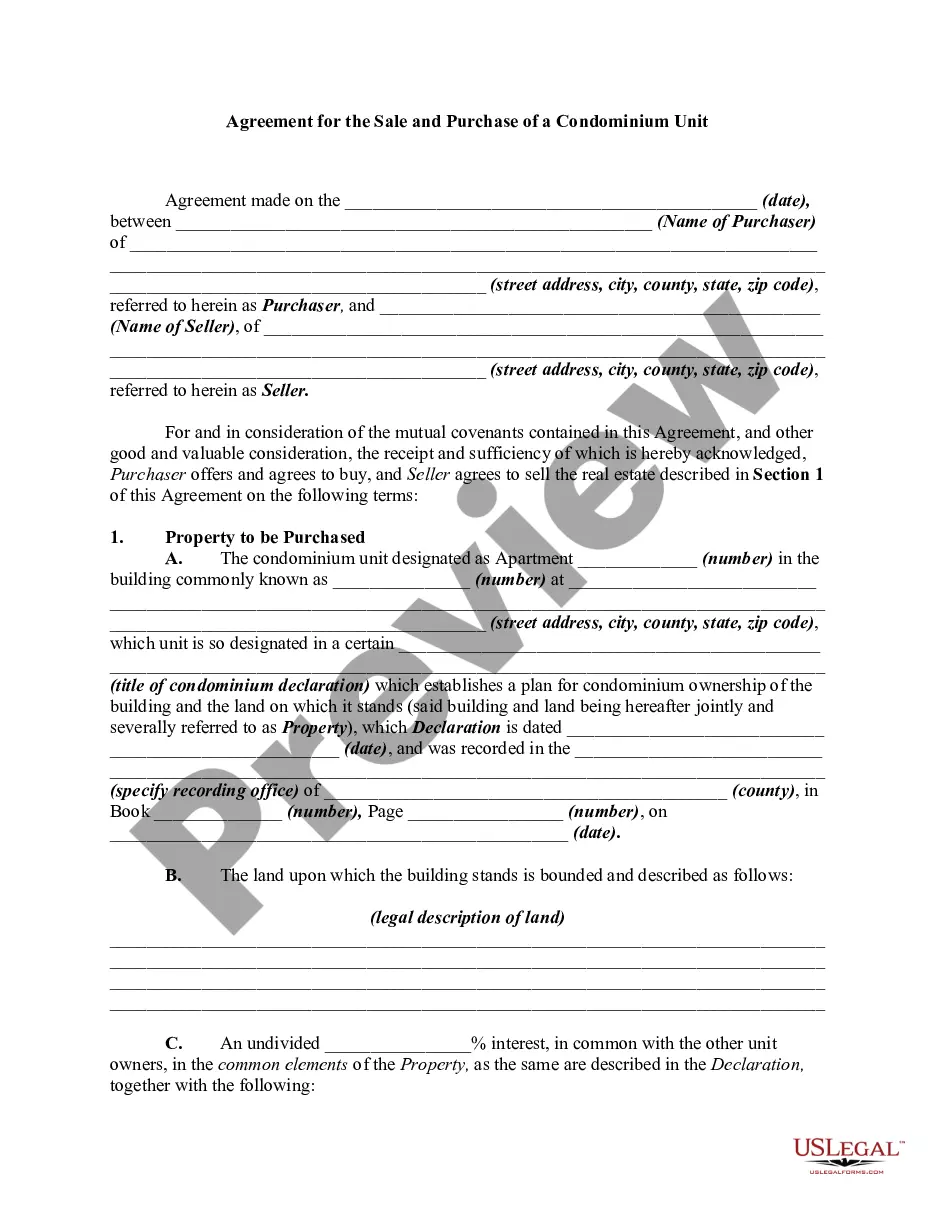
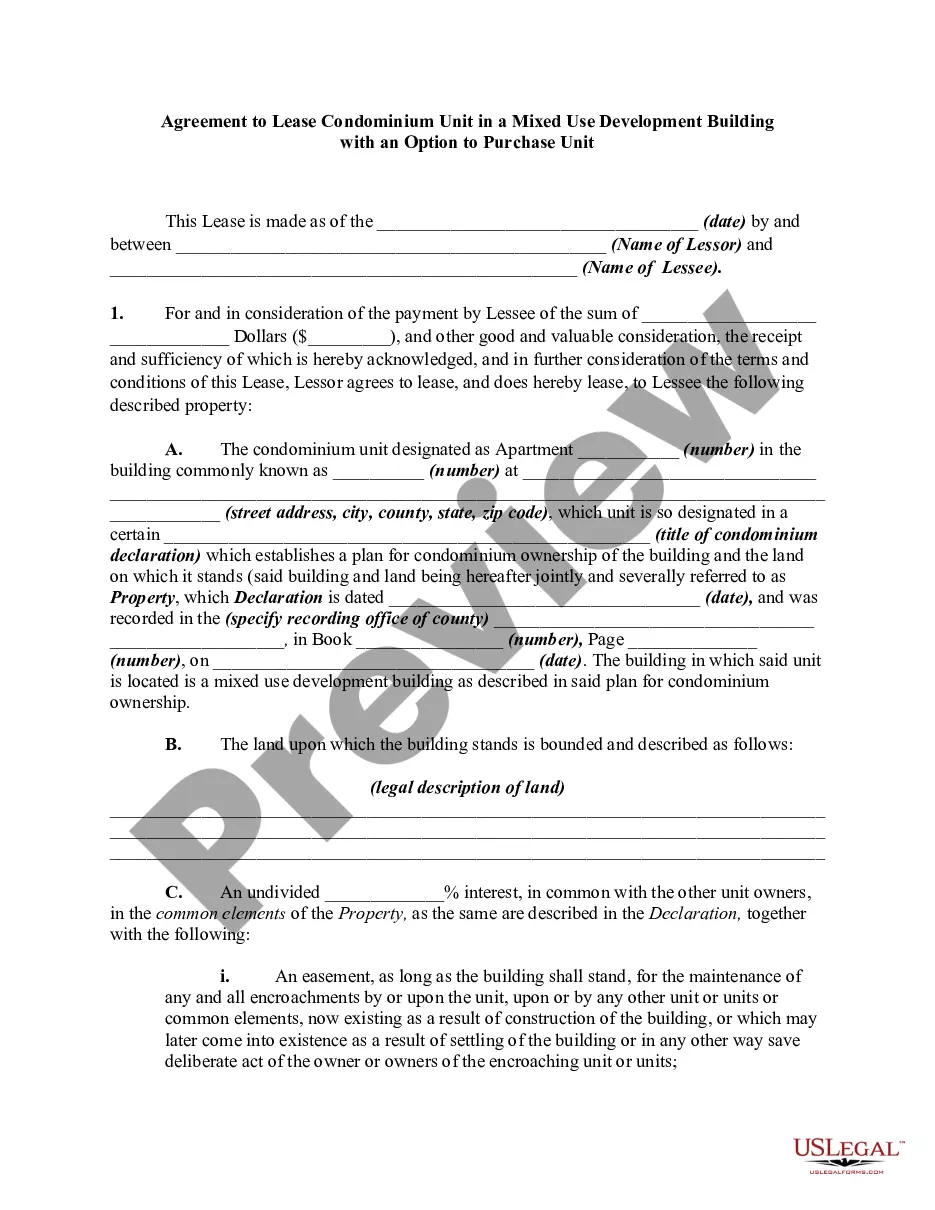
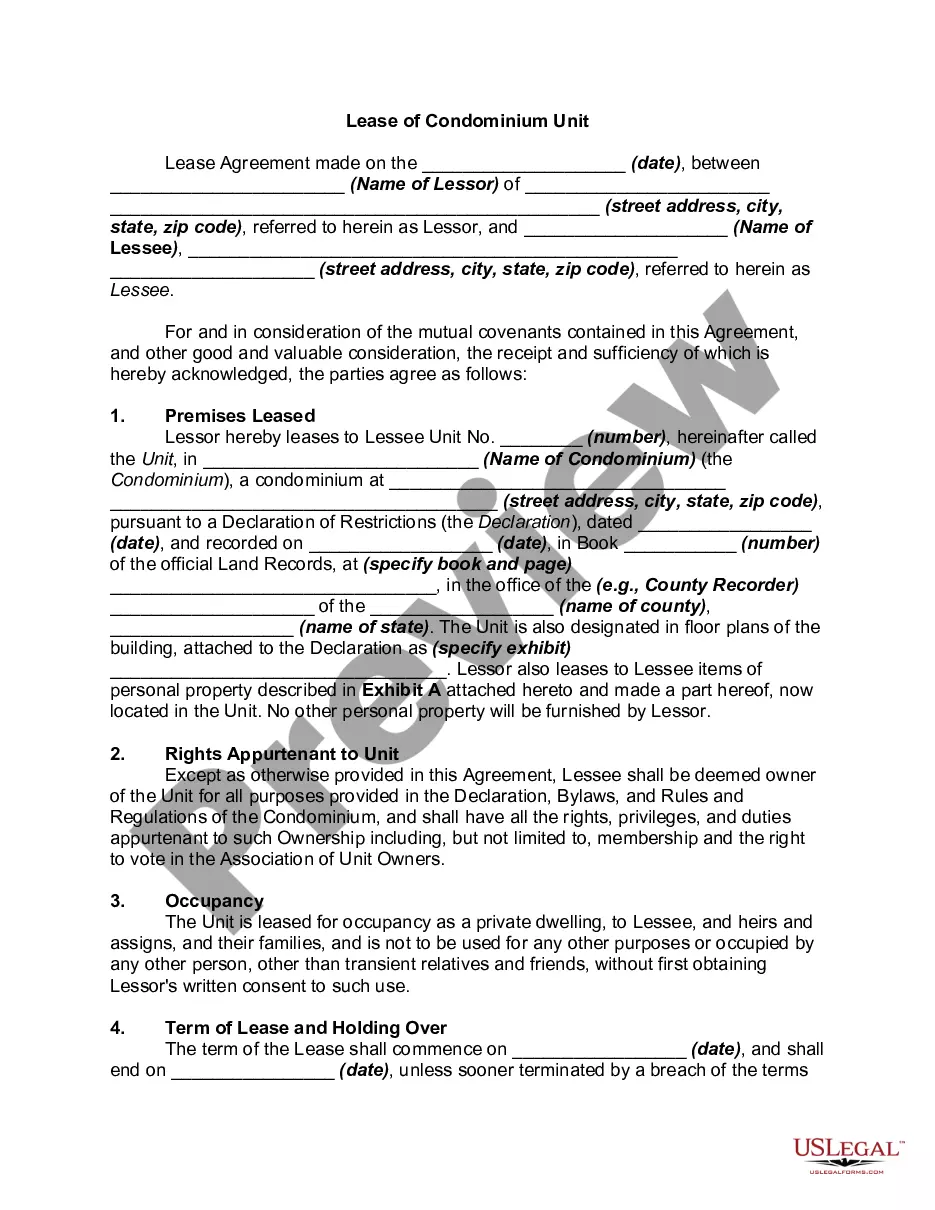
The Agreement to Lease Condominium Unit is a legal document that outlines the terms under which a condominium unit is rented. This form is similar to standard rental leases but is specifically tailored for condominium properties, taking into account shared ownership and common areas. It establishes the rights and responsibilities of both the lessor (property owner) and lessee (tenant), ensuring clarity in their agreement regarding the rented space and its associated amenities.
Form components explained
- The identification of the lessor and lessee, including their contact details.
- The description of the condominium unit being leased and the common areas shared by all unit owners.
- The lease term, including start and end dates, along with total rent details.
- Rent payment schedule and responsibilities for maintenance fees.
- Conditions regarding use of the property, including limitations and restrictions.
- Provisions for handling damage and termination of the lease.

When this form is needed
This form is necessary when a property owner wants to rent out their condominium unit to a tenant. It is ideal for situations where the owner intends to formalize the leasing arrangement, detailing expectations regarding rent payments, maintenance responsibilities, and conduct during the lease period. This agreement helps prevent disputes by providing a clear understanding of both parties' obligations.
Who needs this form
- Condominium owners (lessors) looking to rent out their unit.
- Renters (lessees) seeking to lease a condominium unit.
- Real estate agents involved in the rental process of condominium properties.
How to prepare this document
- Identify the parties involved: the lessor and lessee with their addresses.
- Describe the condominium unit, including its number and any associated storage or parking spaces.
- Specify the lease term, including the start and end dates and total rent amount.
- Outline the payment schedule, including monthly rent and any additional maintenance fees.
- Review and sign the lease with all parties present, ensuring all necessary conditions are met.
Notarization guidance
In most cases, this form does not require notarization. However, some jurisdictions or signing circumstances might. US Legal Forms offers online notarization powered by Notarize, accessible 24/7 for a quick, remote process.
Get your form ready online
Our built-in tools help you complete, sign, share, and store your documents in one place.
Make edits, fill in missing information, and update formatting in US Legal Forms—just like you would in MS Word.
Download a copy, print it, send it by email, or mail it via USPS—whatever works best for your next step.
Sign and collect signatures with our SignNow integration. Send to multiple recipients, set reminders, and more. Go Premium to unlock E-Sign.
If this form requires notarization, complete it online through a secure video call—no need to meet a notary in person or wait for an appointment.
We protect your documents and personal data by following strict security and privacy standards.

Make edits, fill in missing information, and update formatting in US Legal Forms—just like you would in MS Word.

Download a copy, print it, send it by email, or mail it via USPS—whatever works best for your next step.

Sign and collect signatures with our SignNow integration. Send to multiple recipients, set reminders, and more. Go Premium to unlock E-Sign.

If this form requires notarization, complete it online through a secure video call—no need to meet a notary in person or wait for an appointment.

We protect your documents and personal data by following strict security and privacy standards.
Avoid these common issues
- Failing to provide complete contact information for both parties.
- Omitting to detail any restrictions on the use of the property.
- Neglecting to specify the procedure for handling damages or repairs.
- Inaccurate rent payment figures or failure to outline maintenance fee responsibilities.
Benefits of using this form online
- Convenience: Download the form from the comfort of your home.
- Editability: Customize the template as per your specific lease terms.
- Reliability: Forms are drafted by licensed attorneys ensuring legal validity.
Main things to remember
- This form is essential for legally binding a lease agreement for a condominium unit.
- It outlines the rights and obligations of both the owner and tenant.
- Always ensure to comply with state-specific rules and regulations when completing the form.
Looking for another form?




Form popularity
FAQ
Collect each party's information. Include specifics about your property. Consider all of the property's utilities and services. Know the terms of your lease. Set the monthly rent amount and due date. Calculate any additional fees. Determine a payment method. Consider your rights and obligations.
The Lease Must be in Writing It does not matter if the lease is handwritten or typed. If the lease is for more than one year, it must be in written form and contain the following terms.
A written agreement can act as a roadmap for the landlord-tenant relationship, especially if a dispute arises. Also, real estate (land) leases for more than one year must be in writing. If a lease for over one year is not in writing, it will generally not be enforceable in court.
The lease becomes legally binding when all parties have signed: the landlord and all tenants living in the unit who are 18 and older. If you're worried about situations where a lease needs to end early, learn about breaking a lease and grounds for eviction.
The Lease Must be in Writing It does not matter if the lease is handwritten or typed.
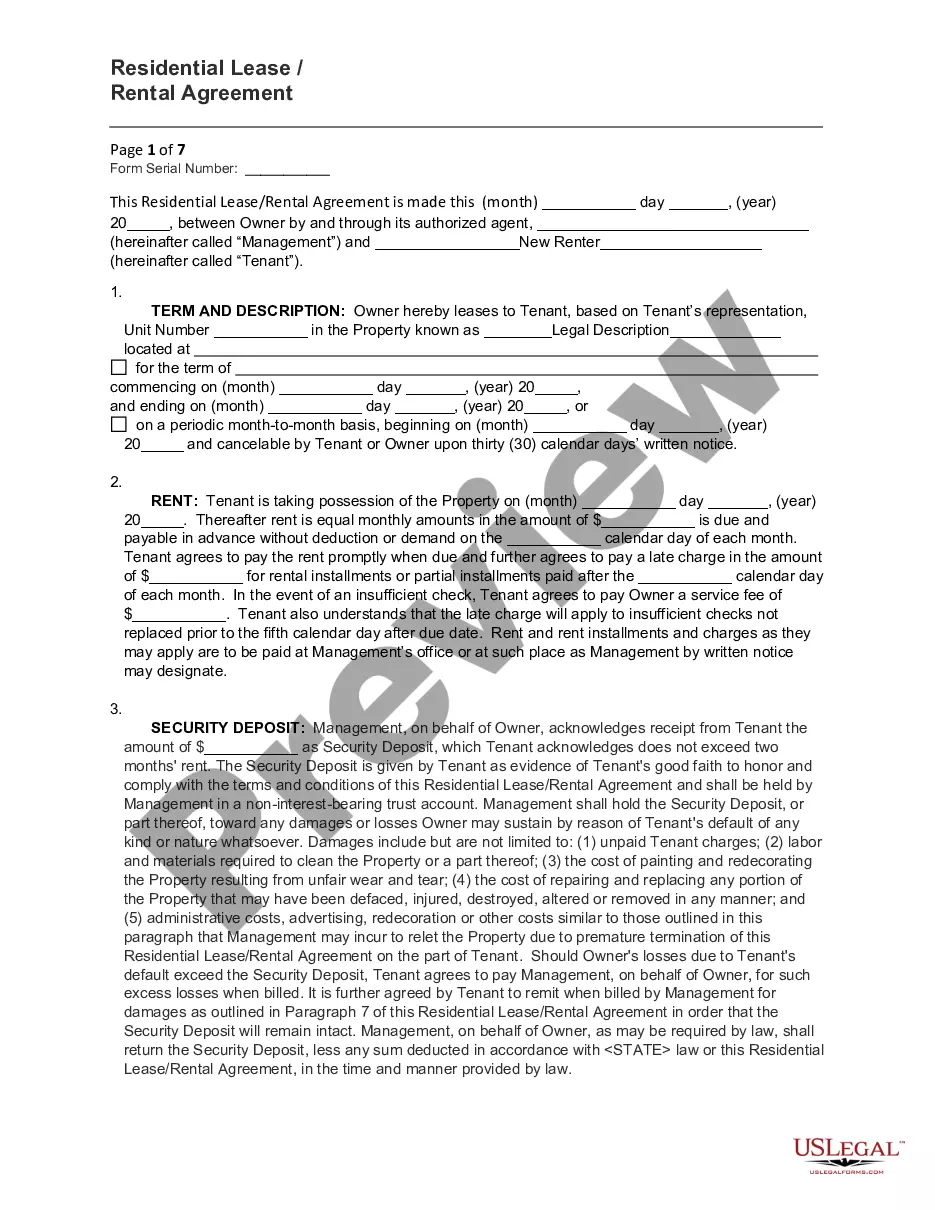
Names of all tenants. Limits on occupancy. Term of the tenancy. Rent. Deposits and fees. Repairs and maintenance. Entry to rental property. Restrictions on tenant illegal activity.
Original copy of ownership proof or a copy of the title to the property. Two passport size photographs (tenant, landlord, and two witnesses) Aadhar card. A government authorized ID proof (voter ID, passport, and driving license)
Step 1: Obtain a Written Request. Invite the tenant to submit in writing the request to add another person to the lease. Step 2: Check the Property's Occupancy Limit. Step 3: Acquire a Completed Rental Application. Step 4: Make a Decision. Step 5: Review the Details With the Tenants.
1Names of all tenants.2Limits on occupancy.3Term of the tenancy.4Rent.5Deposits and fees.6Repairs and maintenance.7Entry to rental property.8Restrictions on tenant illegal activity.Ten Terms To Include In Your Lease Agreement - Forbes\nwww.forbes.com > realestate-landlord-lease-ent-law-cx_nl_0921nolo