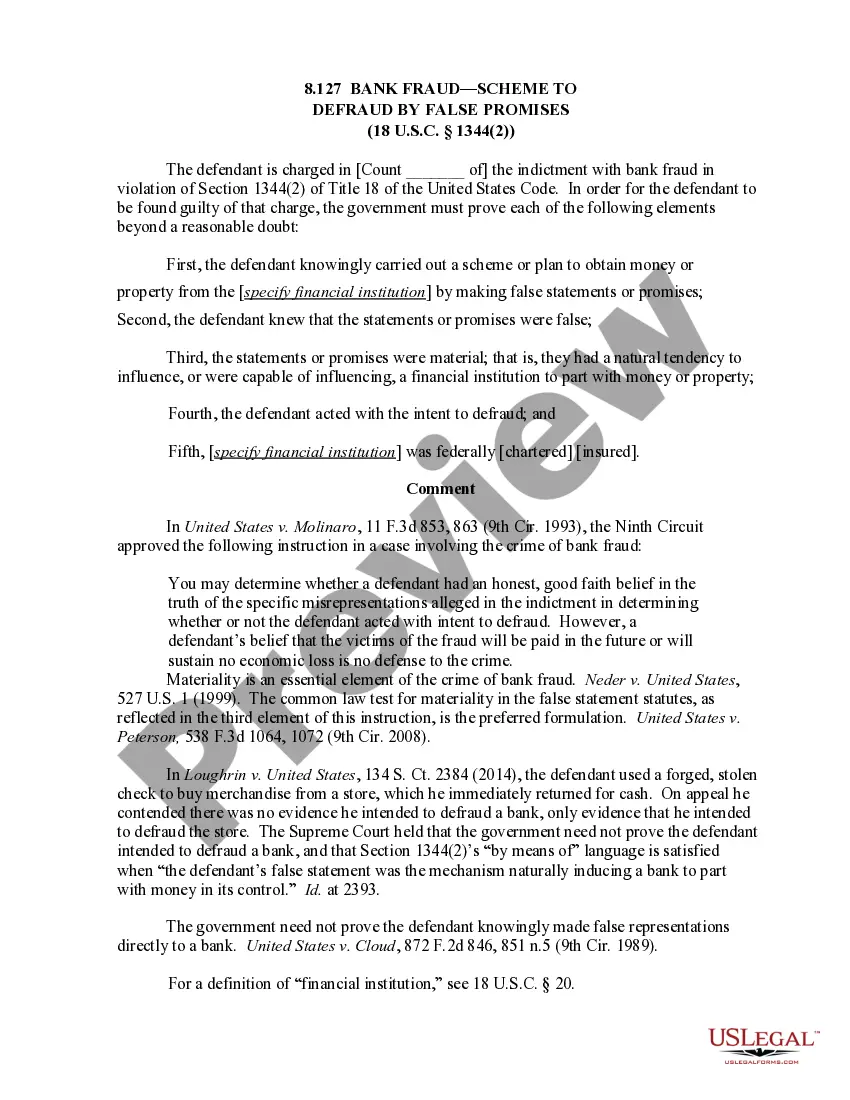
USLF Multistate Patent and Trademark Law Handbook - Guide
What is this form?
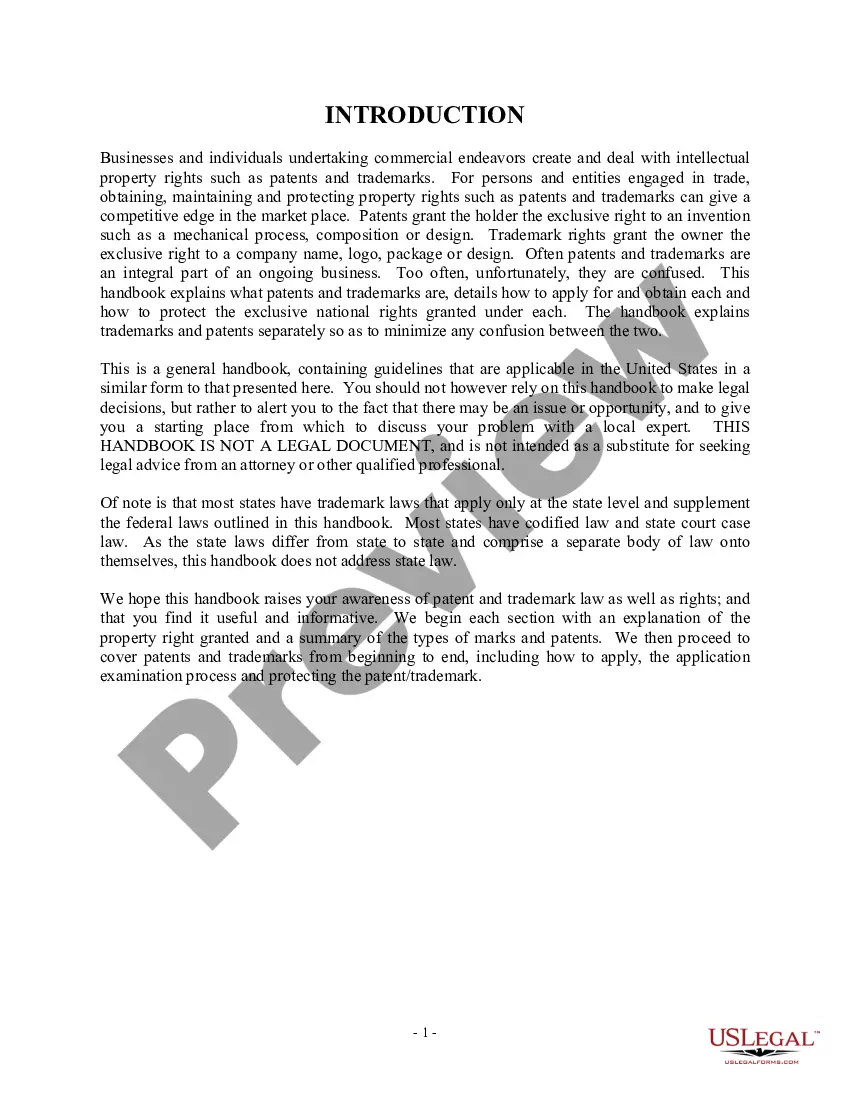
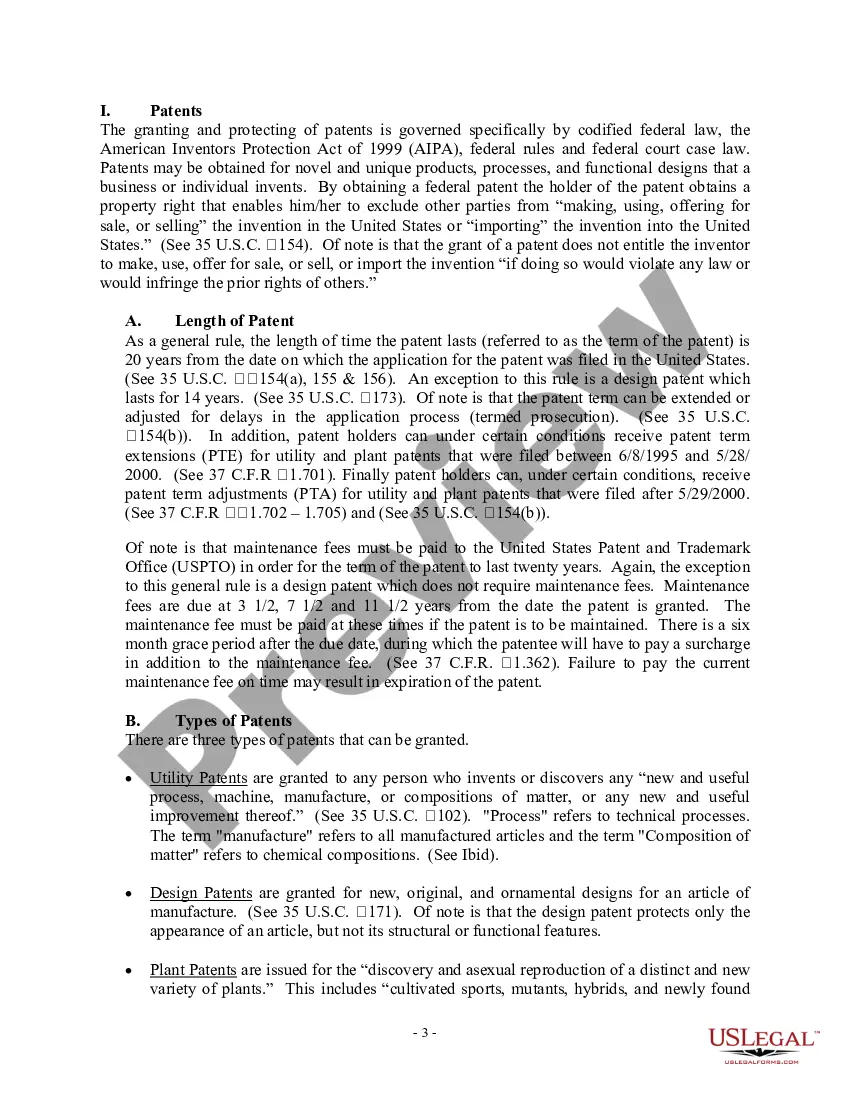
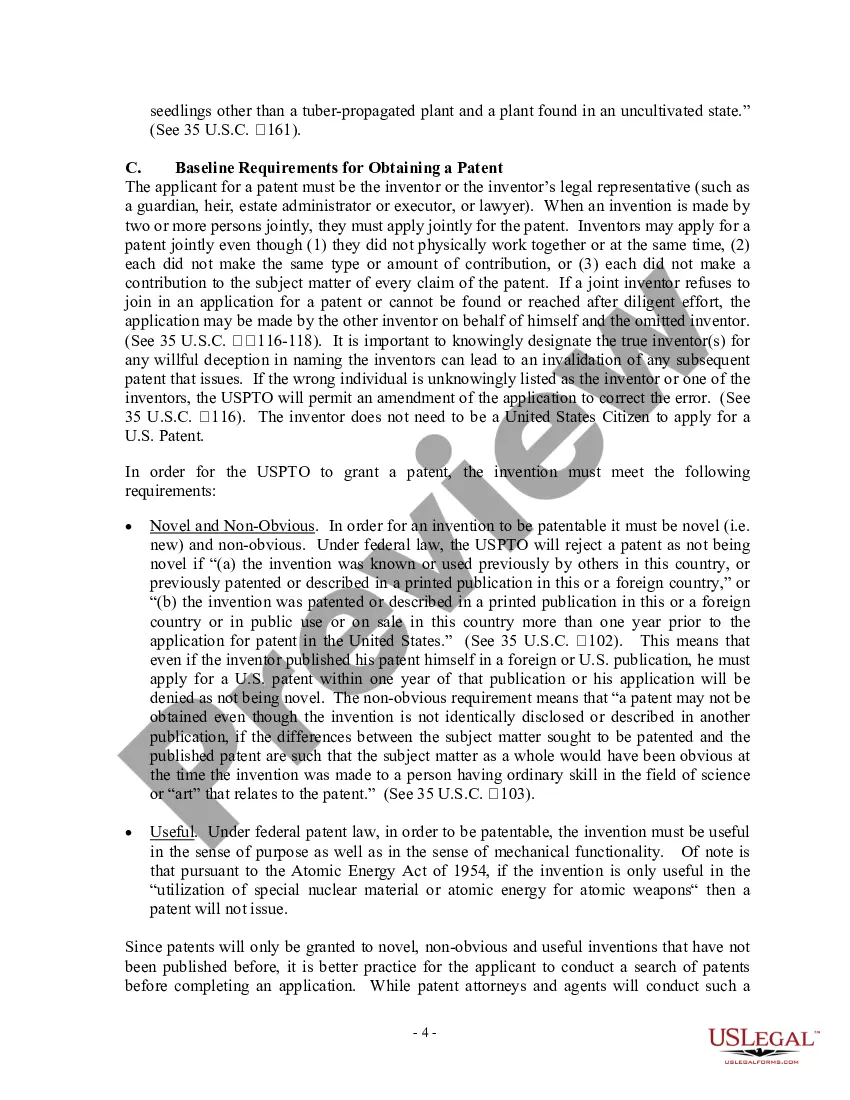
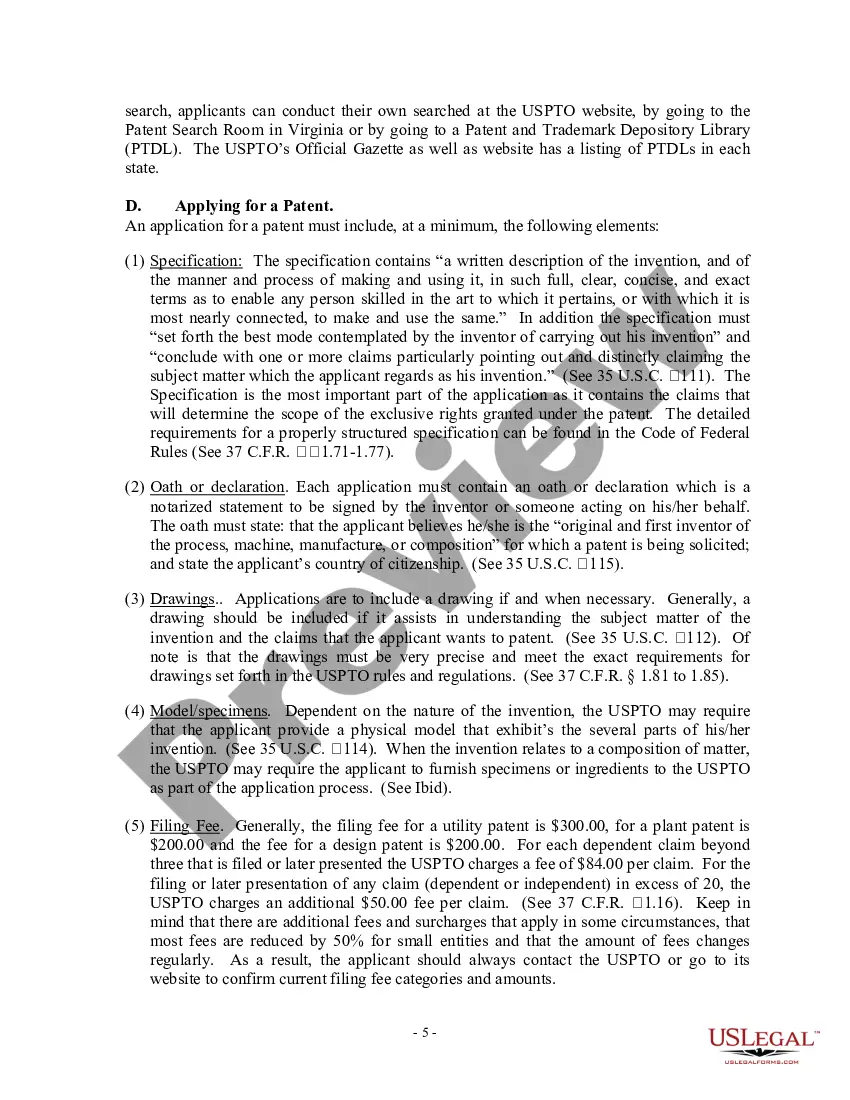
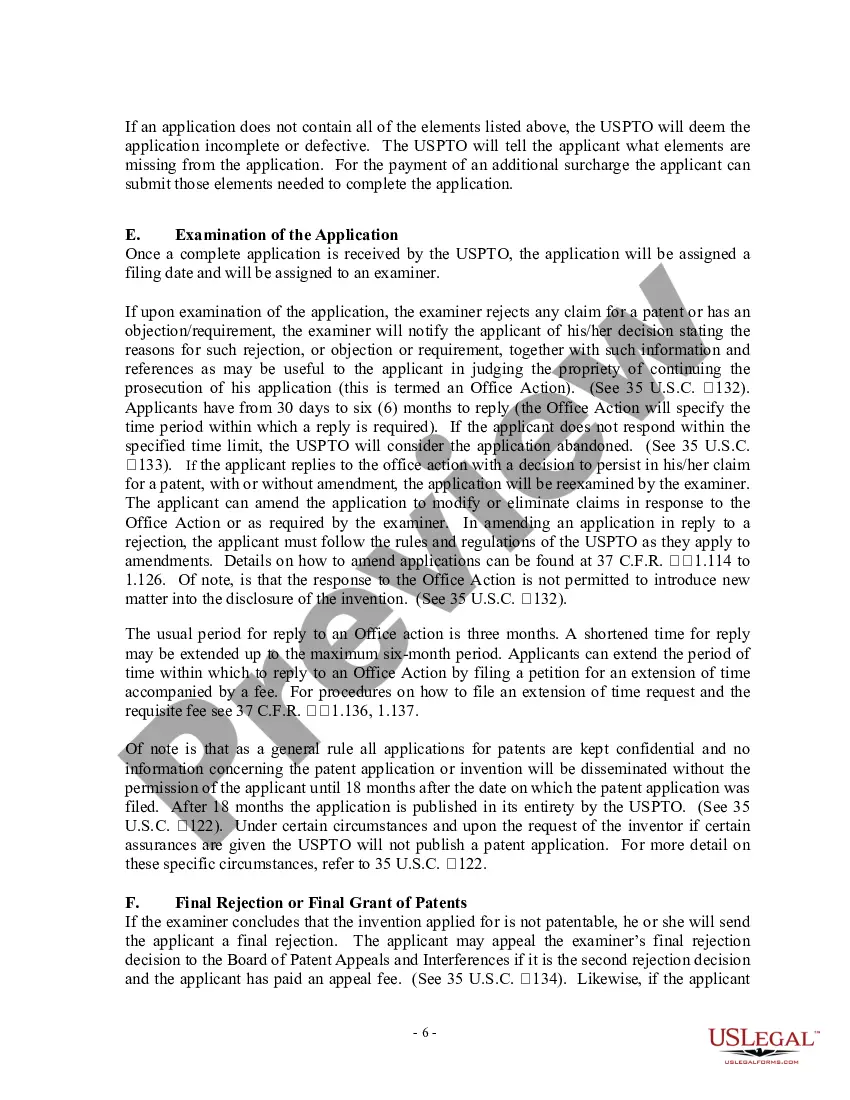
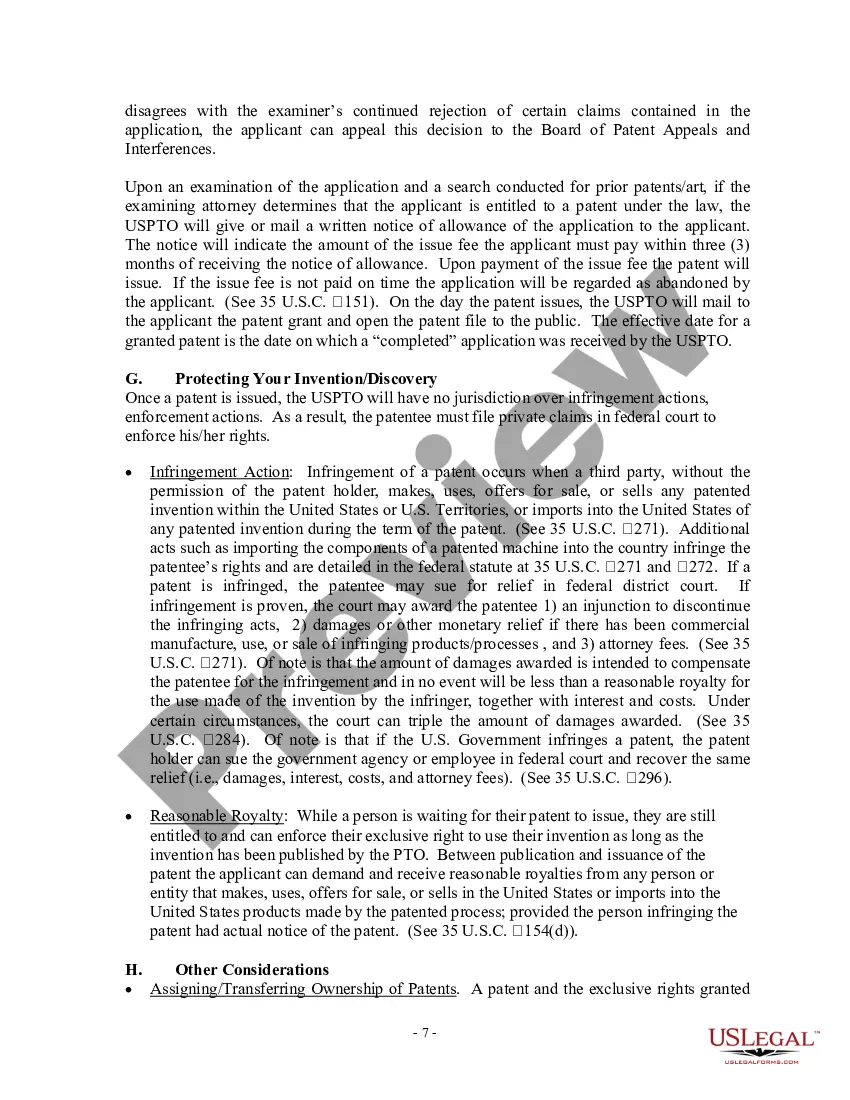
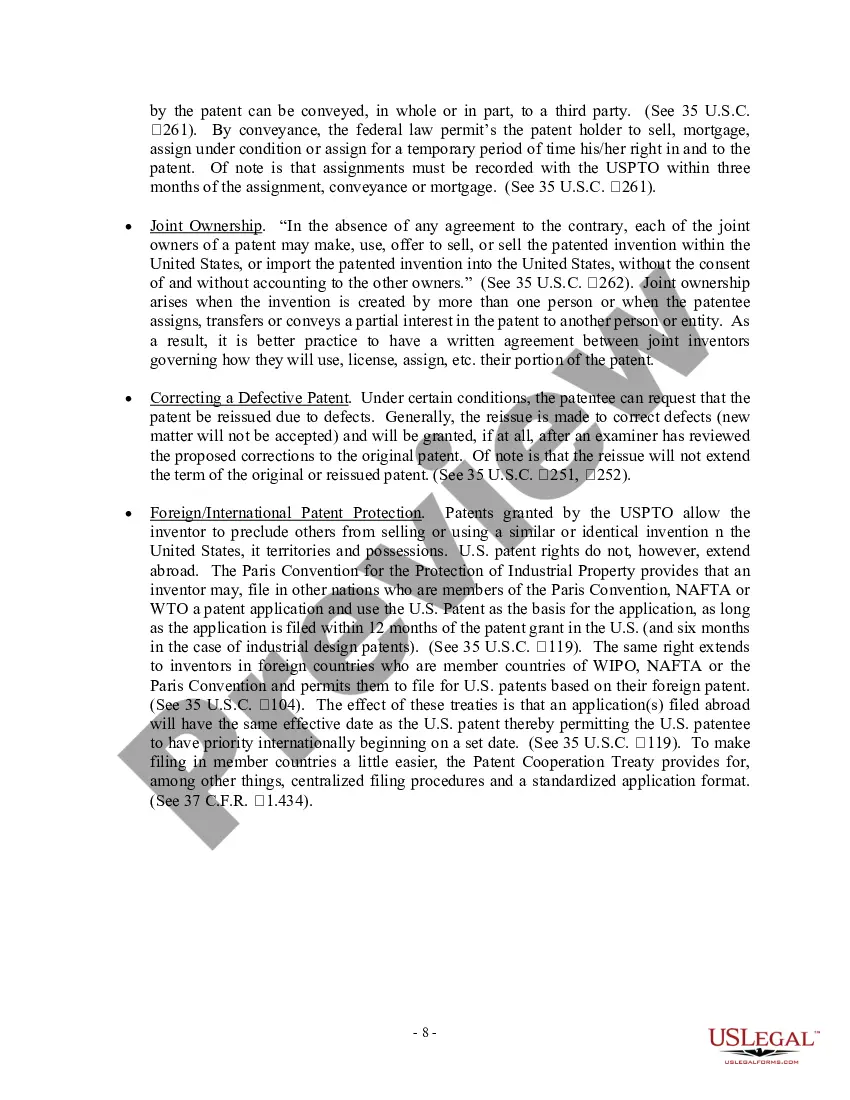
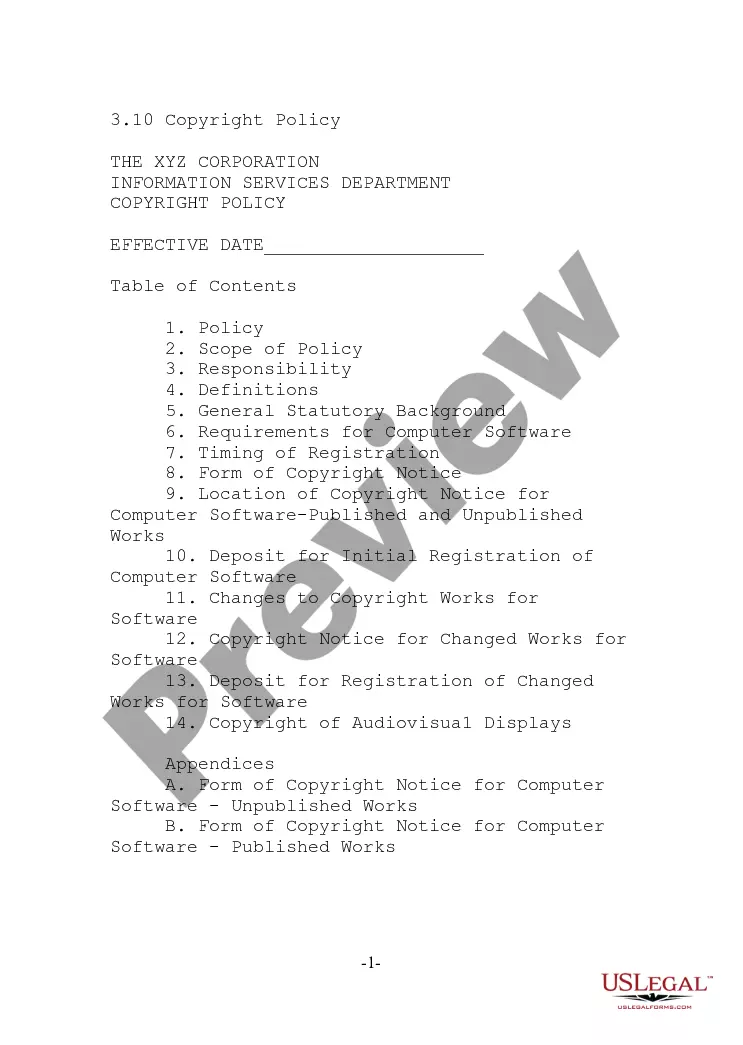
The USLF Multistate Patent and Trademark Law Handbook is a comprehensive guide that provides an overview of federal patent and trademark law in the United States. This handbook covers essential topics such as types of patents and trademarks, the application process, registration duration, and protection measures. It serves as a valuable resource for individuals and businesses seeking to understand their intellectual property rights and navigate the complexities of patent and trademark law.
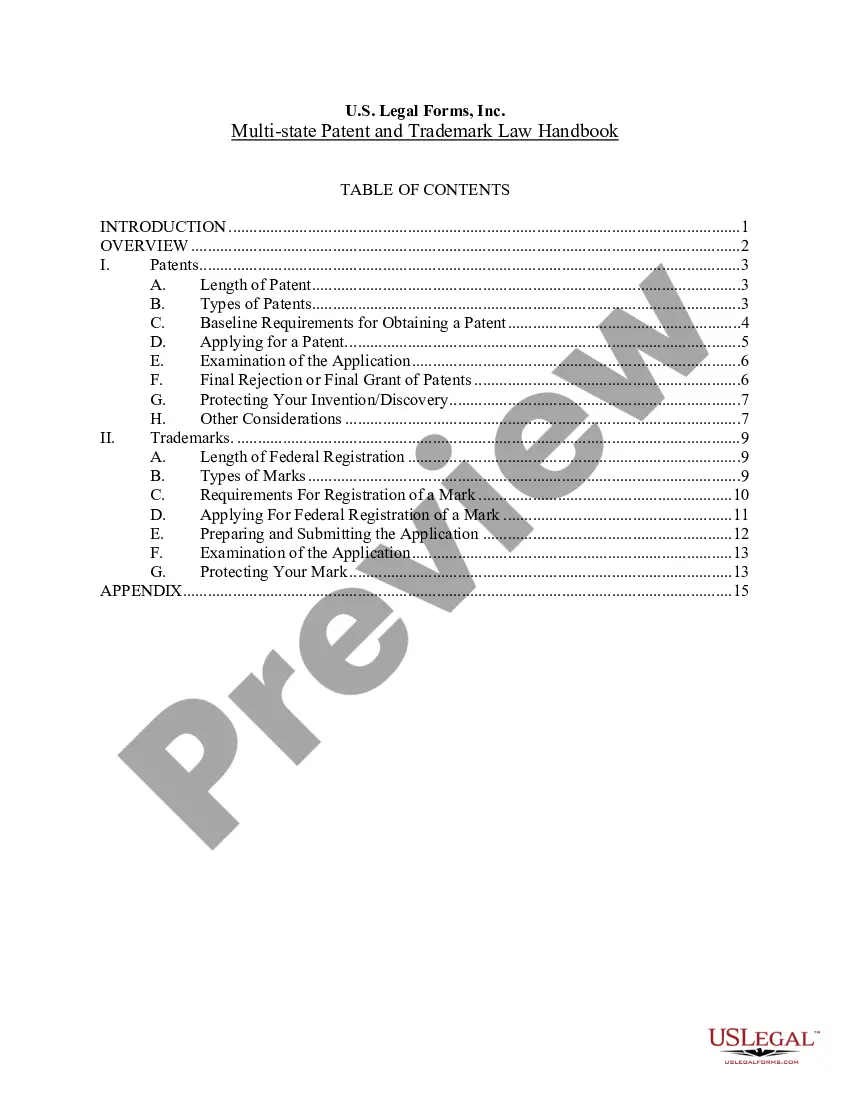
Main sections of this form
- Introduction to patents and trademarks
- Detailed sections on patents, including types, application process, and protection
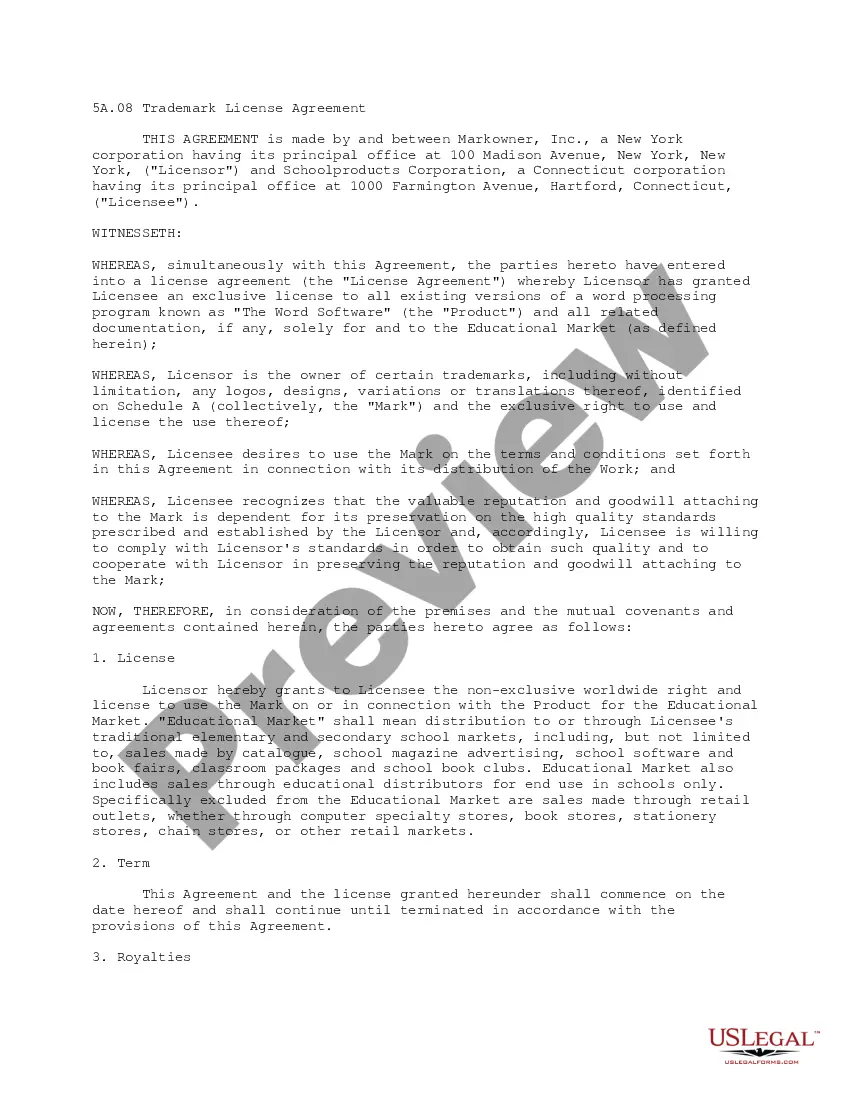
- In-depth information on trademarks, including registration requirements and protection
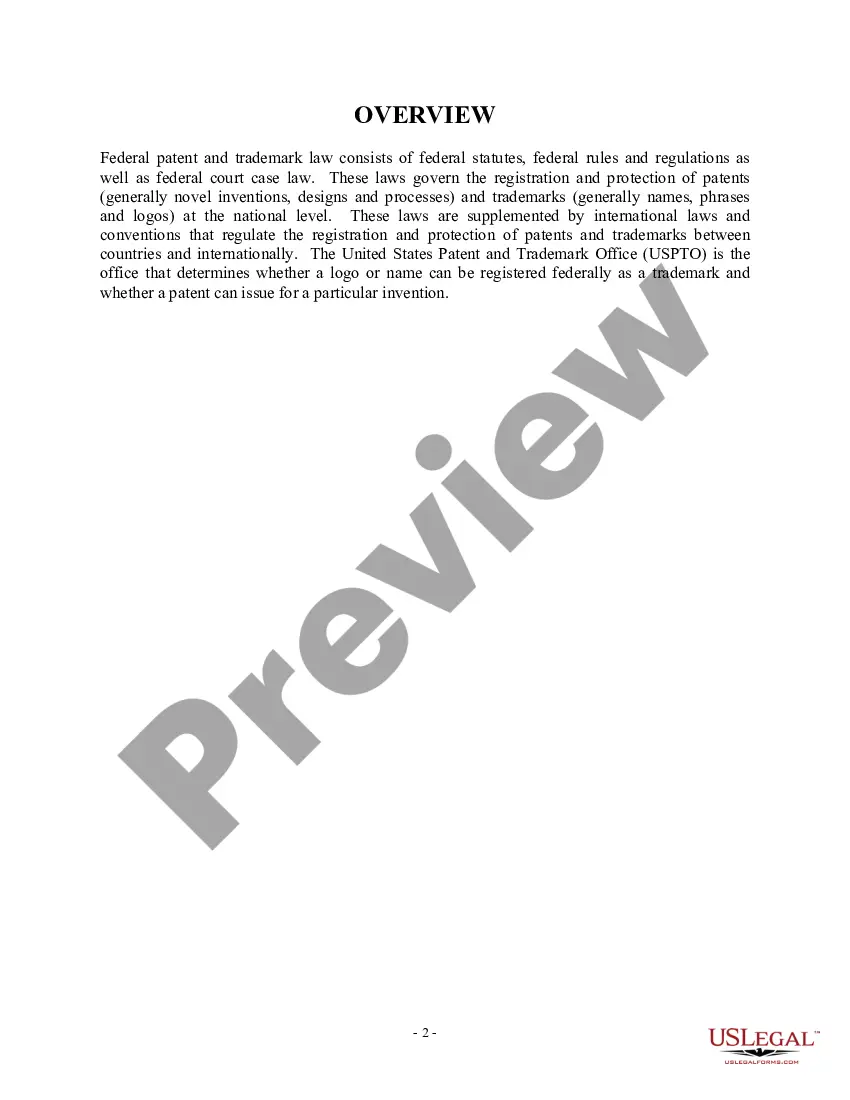
- Overview of the federal laws governing patents and trademarks
- Appendix containing additional resources for further assistance




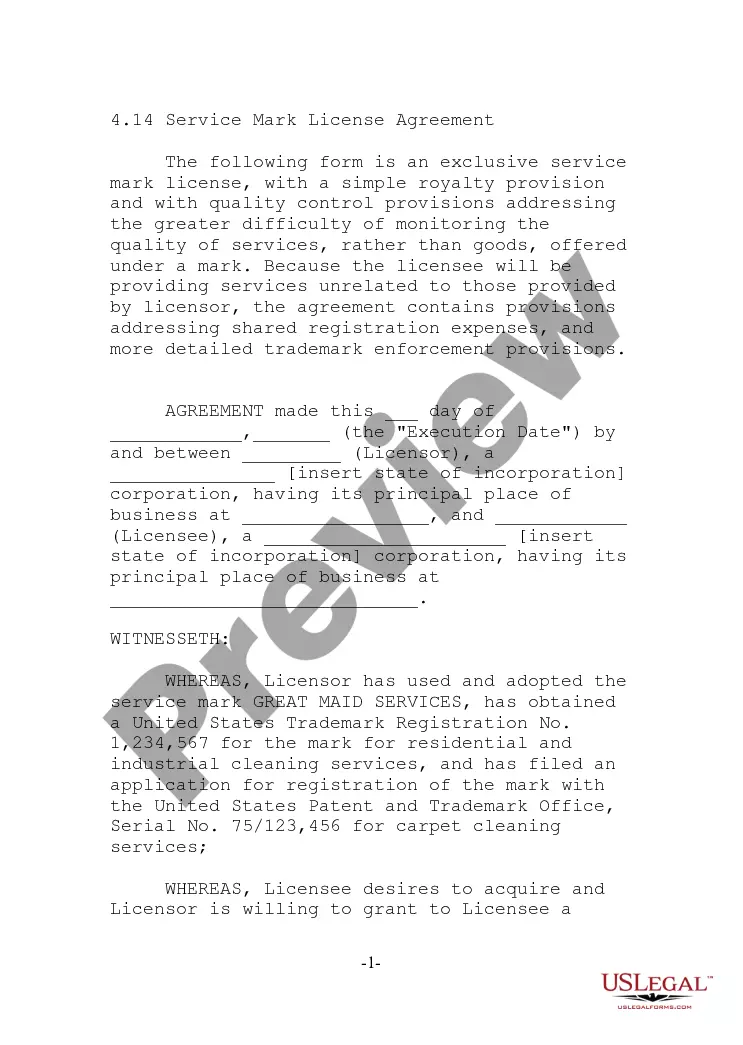
When to use this form
This handbook is useful when you need guidance on obtaining, maintaining, and protecting your intellectual property rights related to patents and trademarks. It is particularly beneficial when you want to understand the federal legal framework, apply for a patent or trademark, or assess the protection of your inventions and branding.
Who this form is for
- Inventors seeking to protect their inventions through patents
- Business owners interested in trademark registration to protect their brand
- Legal professionals needing a reference for patent and trademark law
- Individuals or entities involved in trade and commerce
Steps to complete this form
- Read the handbook thoroughly to understand the distinctions between patents and trademarks.
- Identify the type of protection you need for your invention or brand.
- Gather the necessary information for application, including descriptions and drawings of the invention or logo.
- Follow the guidelines outlined in the handbook to complete the application process.
- Consult with a qualified attorney if needed, especially for specific legal advice.
Notarization guidance
This form needs to be notarized to ensure legal validity. US Legal Forms provides secure online notarization powered by Notarize, allowing you to complete the process through a verified video call, available anytime.
Get your form ready online
Our built-in tools help you complete, sign, share, and store your documents in one place.
Make edits, fill in missing information, and update formatting in US Legal Forms—just like you would in MS Word.
Download a copy, print it, send it by email, or mail it via USPS—whatever works best for your next step.
Sign and collect signatures with our SignNow integration. Send to multiple recipients, set reminders, and more. Go Premium to unlock E-Sign.
If this form requires notarization, complete it online through a secure video call—no need to meet a notary in person or wait for an appointment.
We protect your documents and personal data by following strict security and privacy standards.

Make edits, fill in missing information, and update formatting in US Legal Forms—just like you would in MS Word.

Download a copy, print it, send it by email, or mail it via USPS—whatever works best for your next step.

Sign and collect signatures with our SignNow integration. Send to multiple recipients, set reminders, and more. Go Premium to unlock E-Sign.

If this form requires notarization, complete it online through a secure video call—no need to meet a notary in person or wait for an appointment.

We protect your documents and personal data by following strict security and privacy standards.
Mistakes to watch out for
- Failure to understand the difference between patents and trademarks.
- Neglecting to conduct prior searches for existing patents or trademarks.
- Submitting incomplete applications to the USPTO.
- Ignoring state laws that may apply alongside federal regulations.
Benefits of completing this form online
- Convenient access to essential legal information anytime, anywhere.
- Easier to navigate compared to traditional printed materials.
- Up-to-date resources reflecting current federal patent and trademark law.
- Permission to download and save for future reference.
Legal use & context
- This handbook is an informational resource and not a substitute for legal advice.
- While it provides a general overview of patent and trademark laws, specific cases may vary.
- Users should consult legal professionals for personalized guidance based on their unique circumstances.
Summary of main points
- The handbook serves as a valuable resource for understanding and navigating patent and trademark law.
- It is essential to differentiate between types of intellectual property rights for successful registrations.
- Proper preparation and understanding of the application process can significantly affect the outcomes of patent and trademark filings.
- Always consider seeking legal advice for complex issues that arise during the patent and trademark processes.
Looking for another form?

Form popularity
FAQ
The USLF Multistate Patent and Trademark Law Handbook is a comprehensive, federally oriented guide that consolidates essential information on patents and trademarks applicable across multiple states. It helps inventors and businesses understand patent and trademark types, their duration, and the basic application requirements, and explains how state and federal law interact to protect intellectual property.
The handbook covers introductory material on patent and trademark law, detailed sections on patents (types, duration, and application processes), detailed sections on trademarks (types, registration requirements, and application processes), guidance on protecting intellectual property rights, and an overview of how state and federal law interact in practice.
It explains the steps involved in patent and trademark applications and the requirements for obtaining protection, with sections dedicated to applying for patents and applying for trademarks. The guidance helps readers understand how to pursue protection across multiple states under federal law.
The handbook provides practical guidance on protecting intellectual property rights, including strategies aligned with federal patent and trademark law and how to enforce rights across state boundaries. The guidance emphasizes practical steps readers can take to protect innovations and brands within a multi-jurisdiction framework.
Inventors, businesses seeking to register trademarks, entrepreneurs starting new ventures, legal professionals assisting with filings, and individuals seeking to learn about IP rights should use the handbook. It is designed for readers needing a broad, federal-oriented overview across multiple states.
It differs by consolidating essential federal information applicable across multiple states and by providing an overview of how state and federal law interact in patent and trademark matters, rather than focusing on a single state's procedures.