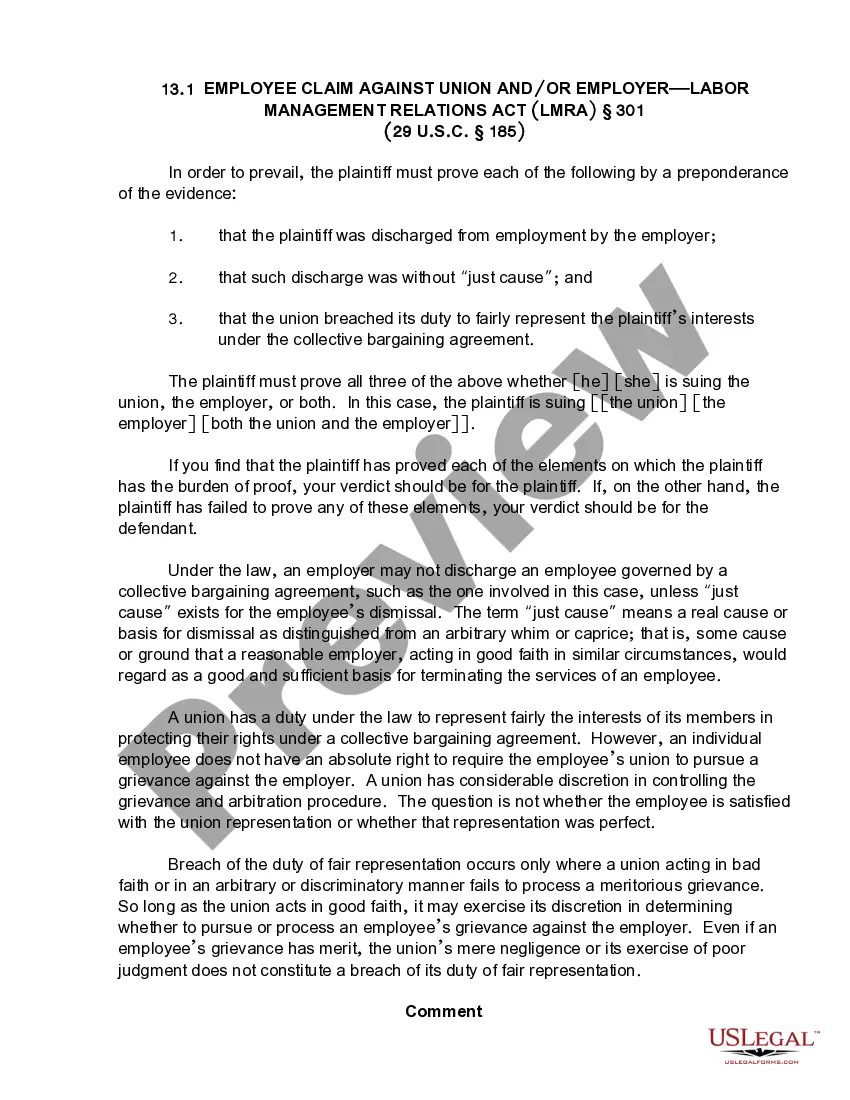
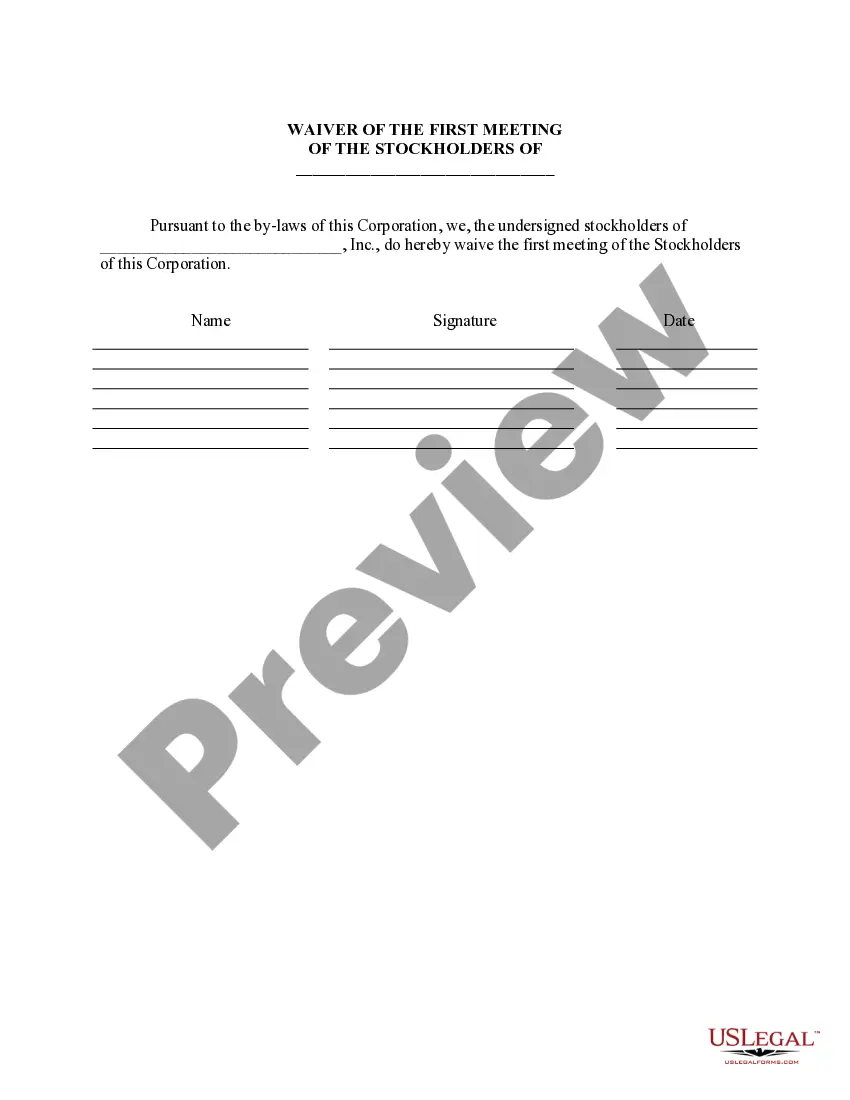
Waiver of 1st Meeting of Stockholders - Corporate Resolutions
What is this form?
The Waiver of 1st Meeting of Stockholders is a legal document that allows stockholders of a corporation to forgo the requirement of holding the first meeting. This form is essential for streamlining corporate governance while ensuring compliance with legal standards. By using this waiver, stockholders can agree to make decisions without convening in person, which can be particularly beneficial for small or newly formed corporations.
Main sections of this form
- Corporation name: Indicates the official name of the corporation.
- Stockholder signatures: Each stockholder must sign to acknowledge their consent.
- Date: Specifies when the waiver is executed, which is important for legal records.

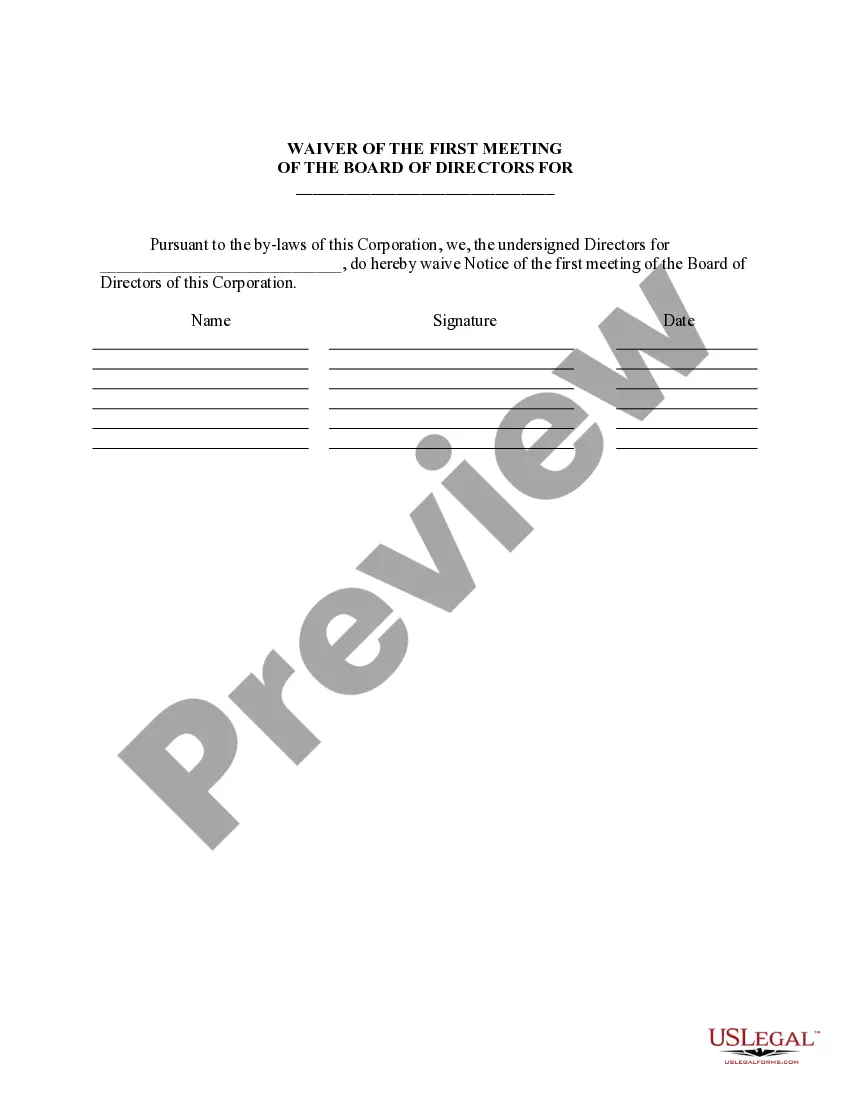


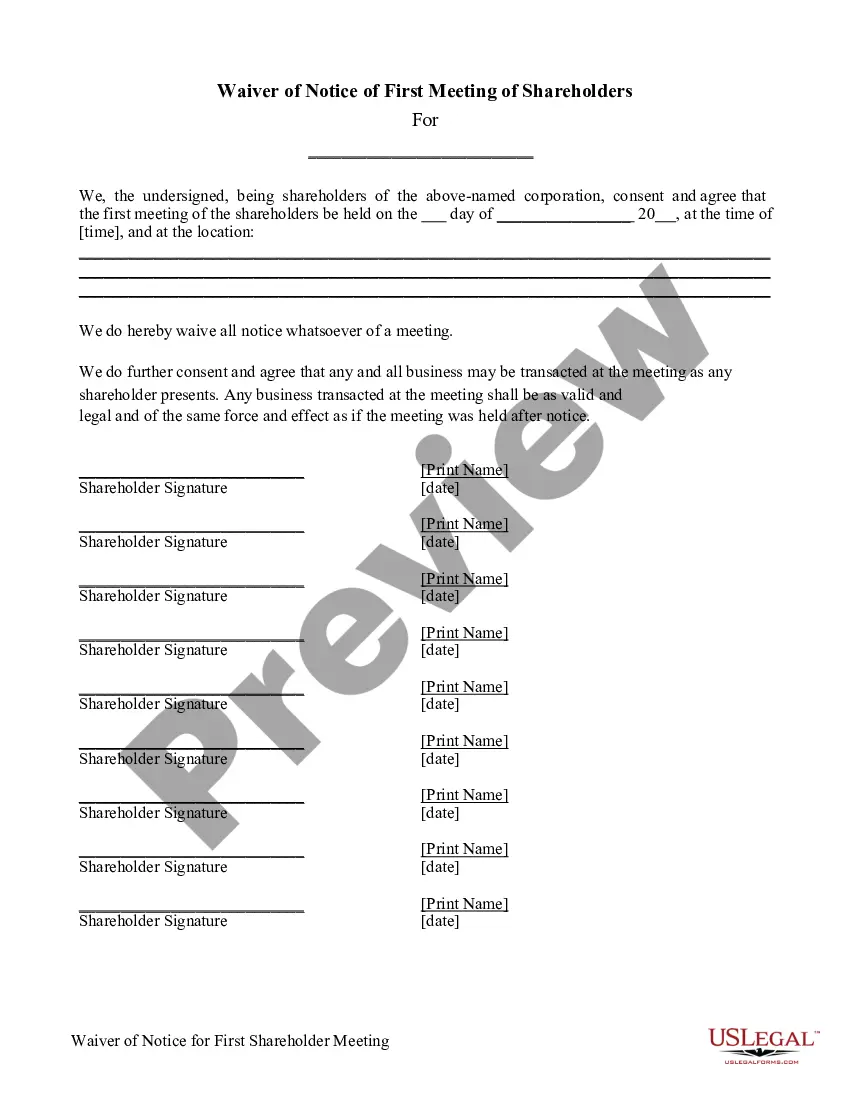
Situations where this form applies
This form should be used when the stockholders of a corporation wish to waive the first formal meeting as stipulated by corporate bylaws. It is beneficial in situations such as newly established corporations or when all stockholders agree to bypass the meeting due to scheduling conflicts or other reasons. Using this waiver helps to facilitate swift decision-making without the need for physical attendance.
Intended users of this form
- Corporation founders and initial stockholders who need to organize their governance.
- Shareholders wishing to streamline decision-making processes.
- Corporate officers responsible for maintaining compliance with corporate governance requirements.
Instructions for completing this form
- Identify the corporation by entering its name at the top of the document.
- Gather all relevant stockholders who will participate in signing the waiver.
- Each stockholder should sign the document in the designated signature area.
- Include the date of signature next to each stockholder's name to ensure accurate record-keeping.
- Retain the completed waiver with corporate records for future reference and compliance checks.
Notarization requirements for this form
Notarization is not commonly needed for this form. However, certain documents or local rules may make it necessary. Our notarization service, powered by Notarize, allows you to finalize it securely online anytime, day or night.
Get your form ready online
Our built-in tools help you complete, sign, share, and store your documents in one place.
Make edits, fill in missing information, and update formatting in US Legal Forms—just like you would in MS Word.
Download a copy, print it, send it by email, or mail it via USPS—whatever works best for your next step.
Sign and collect signatures with our SignNow integration. Send to multiple recipients, set reminders, and more. Go Premium to unlock E-Sign.
If this form requires notarization, complete it online through a secure video call—no need to meet a notary in person or wait for an appointment.
We protect your documents and personal data by following strict security and privacy standards.

Make edits, fill in missing information, and update formatting in US Legal Forms—just like you would in MS Word.

Download a copy, print it, send it by email, or mail it via USPS—whatever works best for your next step.

Sign and collect signatures with our SignNow integration. Send to multiple recipients, set reminders, and more. Go Premium to unlock E-Sign.

If this form requires notarization, complete it online through a secure video call—no need to meet a notary in person or wait for an appointment.

We protect your documents and personal data by following strict security and privacy standards.
Mistakes to watch out for
- Failing to include the corporation name accurately.
- Leaving the signature or date fields blank.
- Not obtaining signatures from all necessary stockholders.
Advantages of online completion
- Convenience of downloading and printing the form as needed.
- Editability allows for customization to fit specific corporate needs.
- Reliable templates created by licensed attorneys ensure legal compliance.
Legal use & context
- Understanding corporate governance structures and requirements.
- Ensuring that all stockholders are in agreement about foregoing the first meeting.
- Facilitating smoother operations for newly formed corporations.
What to keep in mind
- The Waiver of 1st Meeting of Stockholders allows corporations to streamline their initial governance process.
- It is important for all stockholders to sign the waiver for it to be valid.
- Review state laws to ensure compliance before using this form.
Looking for another form?
Form popularity
FAQ
Taking Meeting Notes. Type Meeting Notes - Type up a full version of the meeting minutes. Circulate a Draft - Follow your corporation's policy about who must review the draft notes. Distribute Minutes to Board - Usually in advance of the next meeting.
If you run an S corporation, you are not required by law to keep meeting minutes. However, they can be a good way to record the progress your company makes toward meeting corporate objectives. Minutes can also be useful as a legal record of corporate activities in the event of a lawsuit or tax audit.
A resolution is written documentation describing an action authorized by the board of directors of a corporation. The minutes are a written document that describes items discussed by the directors during a board meeting, including actions taken and resolutions passed.
A waiver of notice is an agreement that allows people to conduct certain legal procedures without giving formal notification that he or she is going to do so.
Taking Meeting Notes. Type Meeting Notes - Type up a full version of the meeting minutes. Circulate a Draft - Follow your corporation's policy about who must review the draft notes. Distribute Minutes to Board - Usually in advance of the next meeting.
All states require corporations to take and distribute minutes of meetings, and all states require that boards of directors keep meeting minutes. But there are no specific rules about what to include in board meeting minutes and how to take these minutes.
In general, however, most corporations are required to have at least one shareholders' meeting per year. Corporations are also required to prepare and retain minutes of these meeting. There is often a legally based recordkeeping requirement for meeting minutes, but the exact length of time will vary by state.
The waiver of notice of annual meeting is the form needed to document that all stockholders agree to actions in a held meeting without notice.
A business should keep its minutes for at least seven years, and make them available to members of the corporation (e.g., shareholders, directors, and officers) who make a reasonable request to review them. There is no requirement to file annual stockholder meeting minutes with the state or other government agency.