Sample Letter for Entrance of Default Judgments
What this document covers
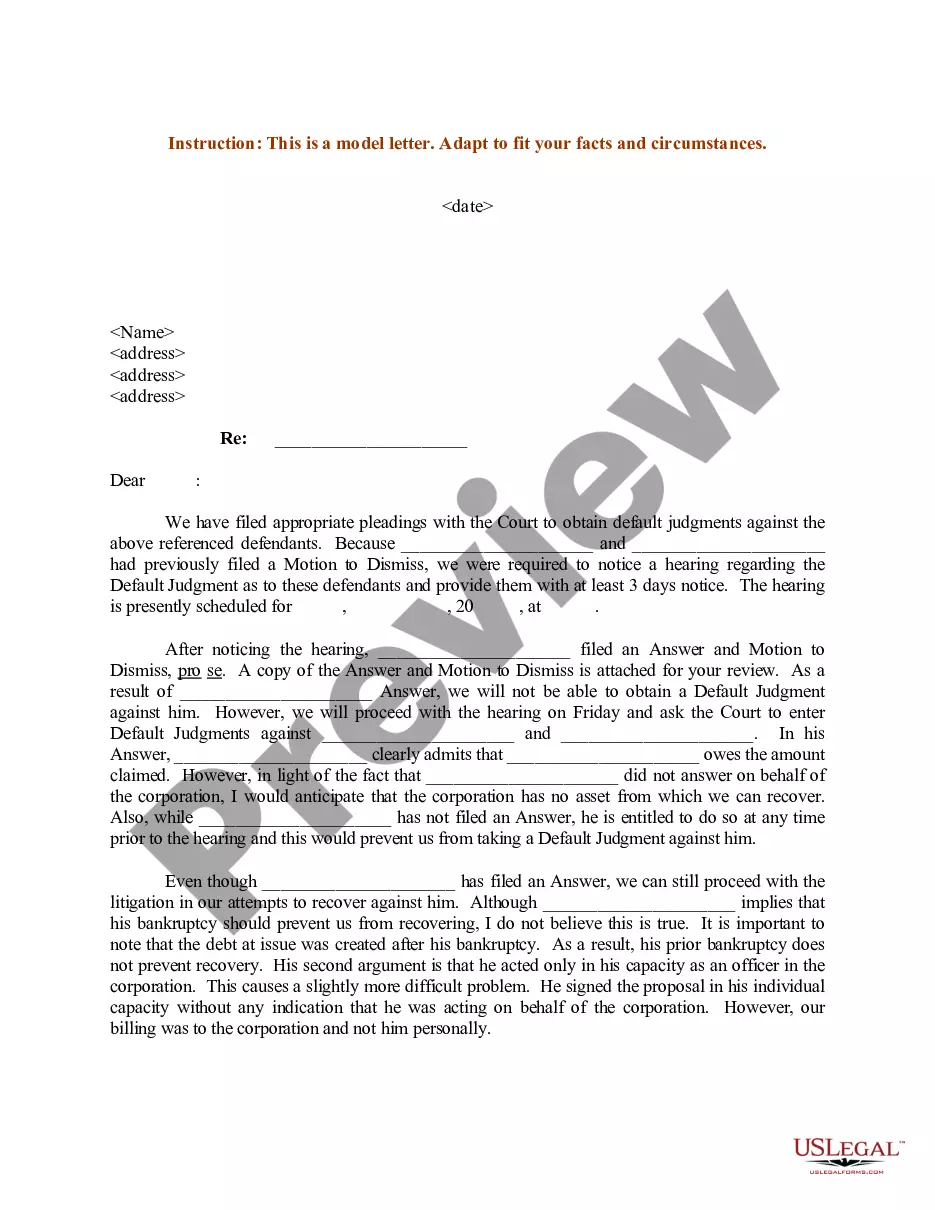
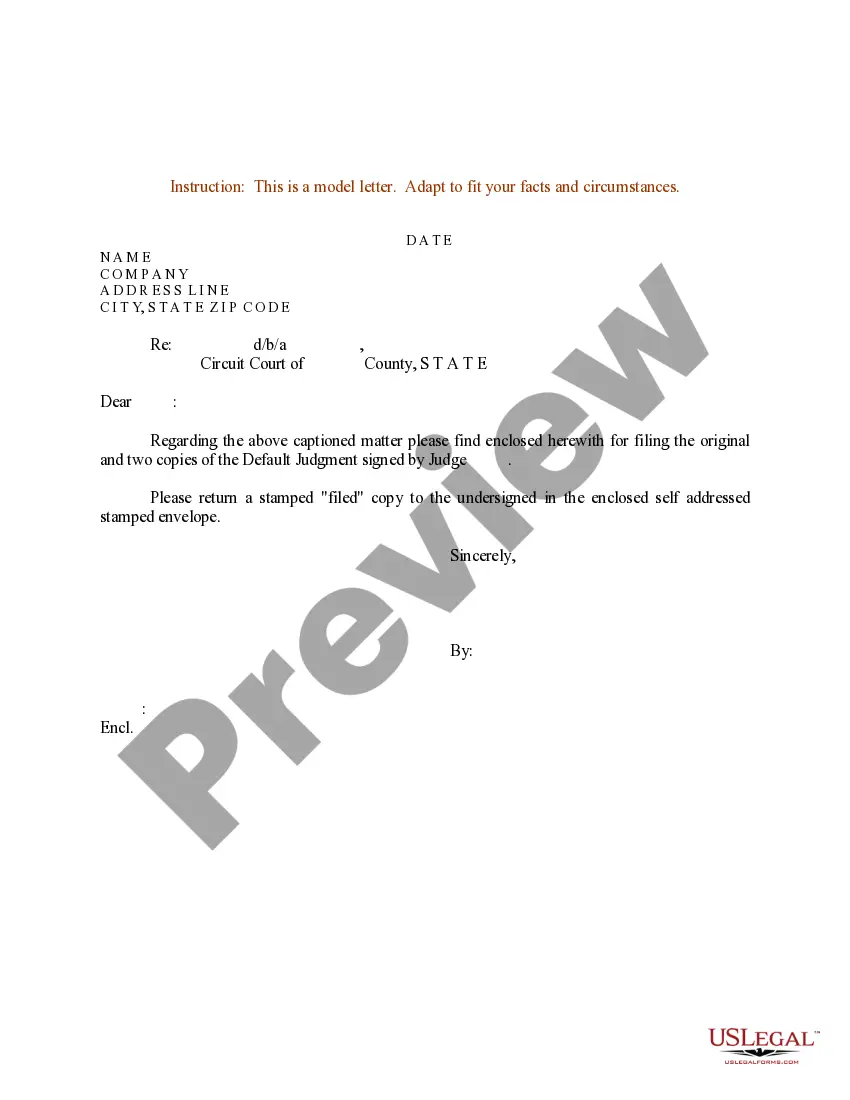
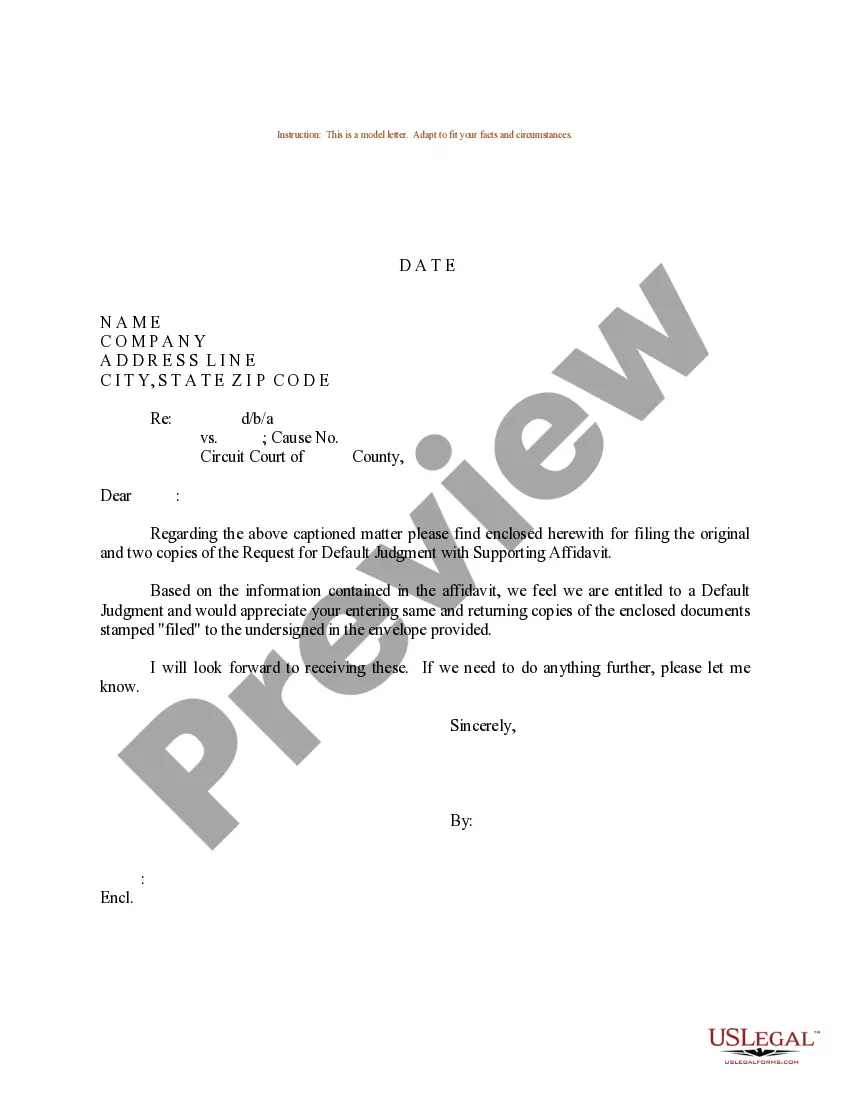
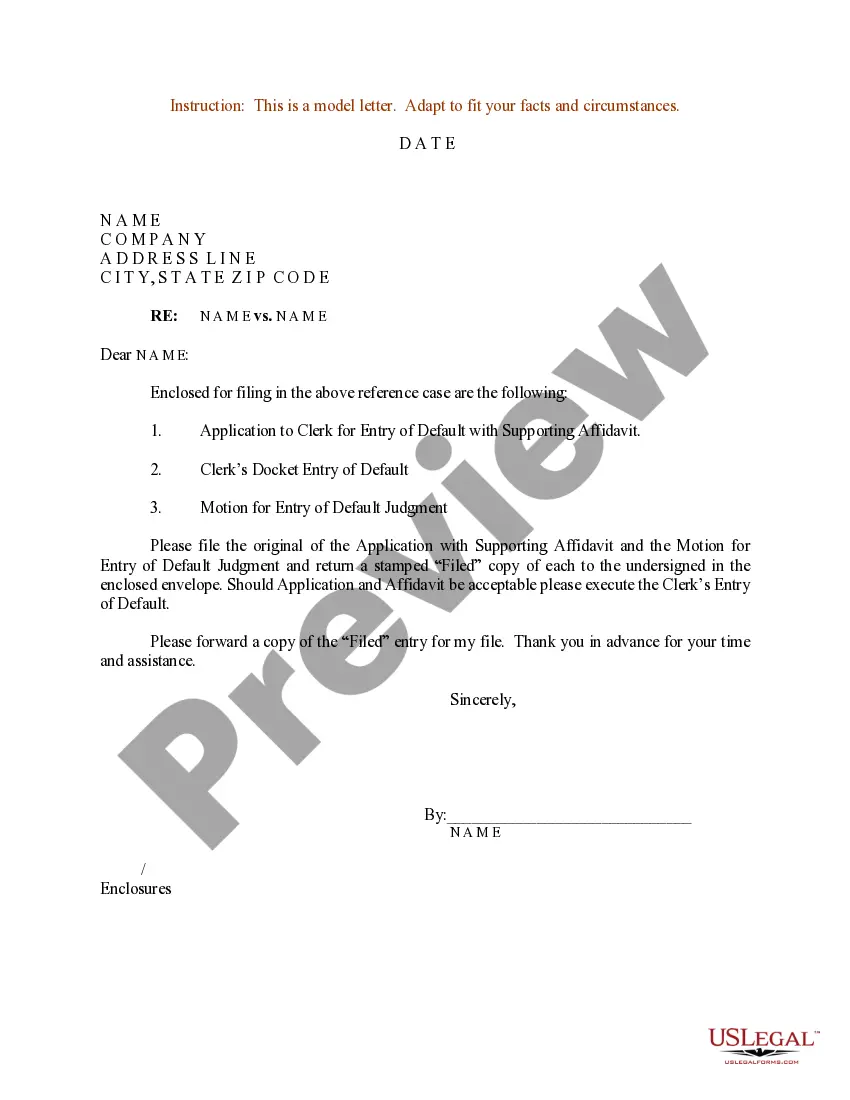
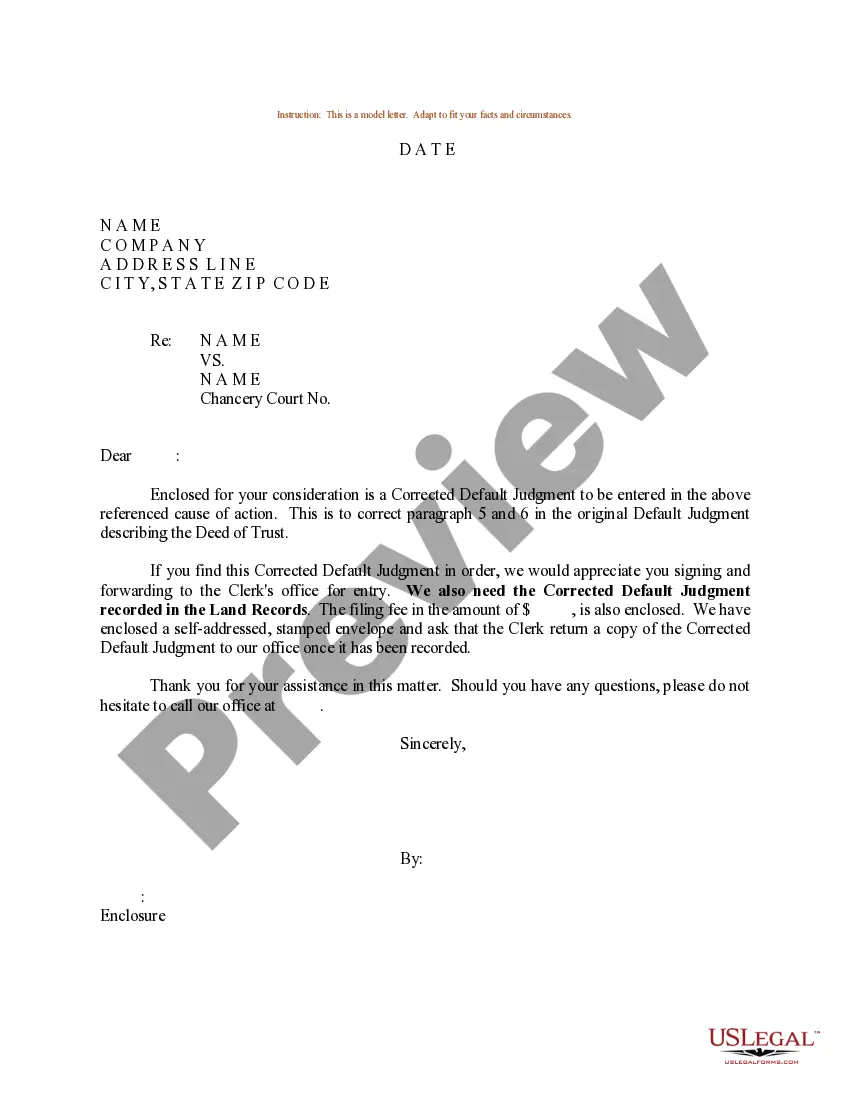
The Sample Letter for Entrance of Default Judgments is a template letter designed to notify relevant parties of a hearing concerning default judgments. This form stands out from other legal documents as it specifically addresses the procedural aspect of obtaining judgments against corporations or individuals who have failed to respond to legal actions.
What’s included in this form
- Date: Space to write the date of the letter.
- Recipient's name and address: Identify the parties involved.
- Subject line: Clearly state the purpose of the letter.
- Hearing details: Indicate the scheduled hearing date and the intent to obtain default judgments.
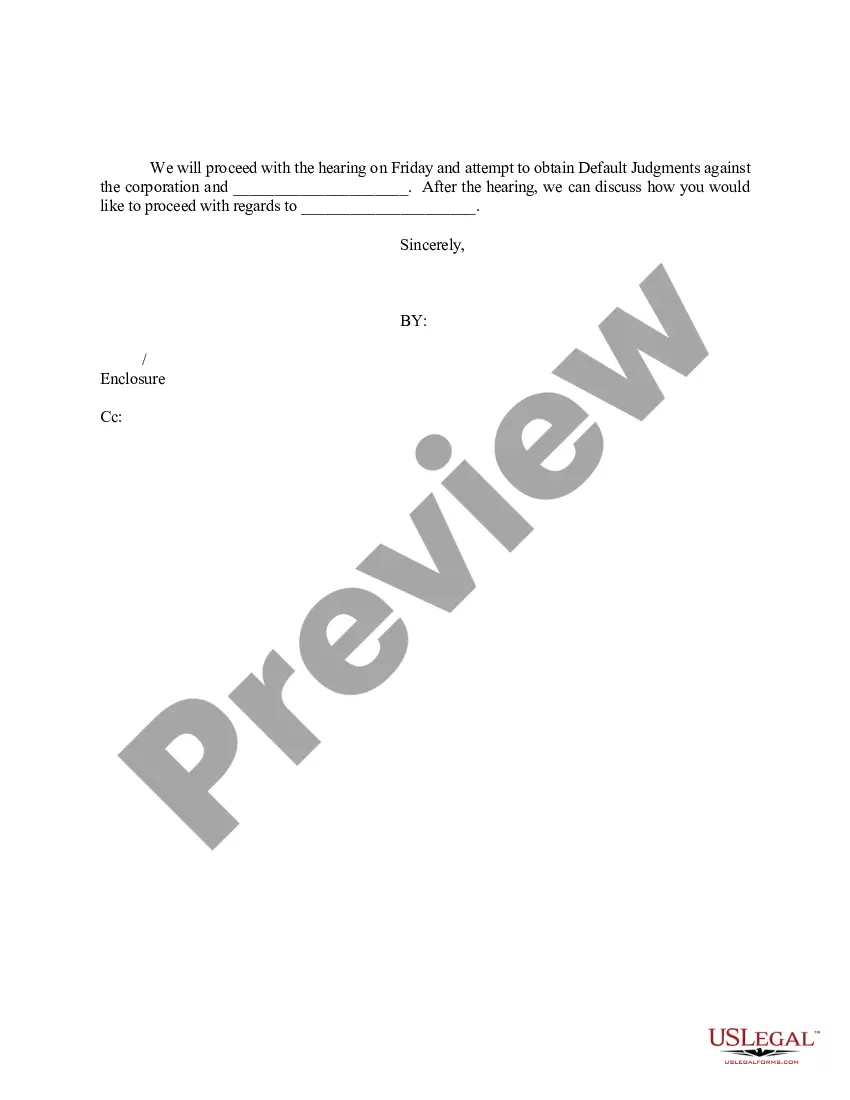
- Discussion follow-up: Mention the opportunity to discuss next steps post-hearing.
- Signature line: A place for signing off the letter.
Situations where this form applies
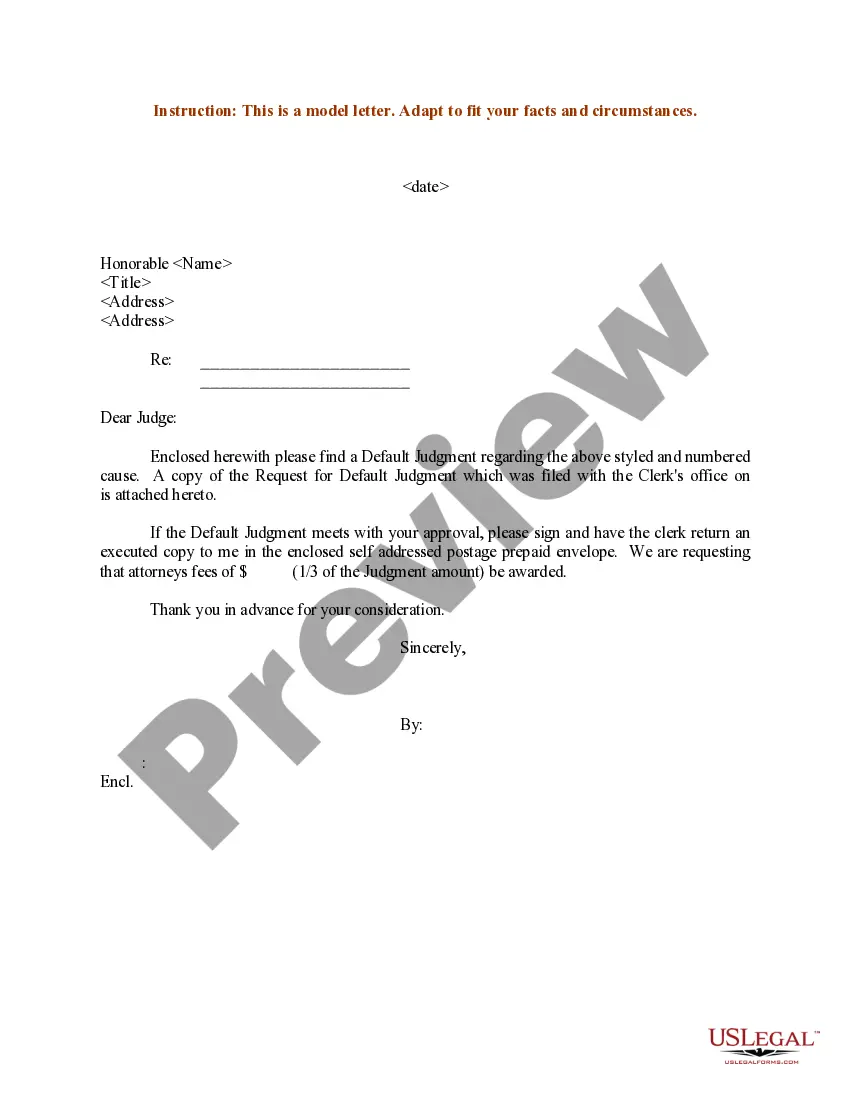
This form should be used when you are initiating proceedings to obtain a default judgment against a party who has not responded to legal actions filed against them. It is applicable in scenarios where a hearing has been scheduled, and communication with involved parties is necessary to inform them of the proceedings.
Who this form is for
- Individuals or businesses looking to pursue legal action against a party that has failed to respond.
- Attorneys and legal representatives drafting formal communication for default judgments.
- Individuals who need a structured template for legal correspondence.
Instructions for completing this form
- Identify the date: Enter the current date at the top of the letter.
- Fill in recipient details: Enter the name and address of the party receiving the notice.
- Write the subject line: Clearly state the purpose of the letter related to default judgments.
- Include hearing information: Specify the date of the hearing and the parties involved in the default judgments.
- Note follow-up actions: Indicate a desire to discuss further steps after the hearing.
- Sign the letter: Ensure the letter is signed before sending it out.
Notarization guidance
This form does not typically require notarization to be legally valid. However, some jurisdictions or document types may still require it. US Legal Forms provides secure online notarization powered by Notarize, available 24/7 for added convenience.
Get your form ready online
Our built-in tools help you complete, sign, share, and store your documents in one place.
Make edits, fill in missing information, and update formatting in US Legal Forms—just like you would in MS Word.
Download a copy, print it, send it by email, or mail it via USPS—whatever works best for your next step.
Sign and collect signatures with our SignNow integration. Send to multiple recipients, set reminders, and more. Go Premium to unlock E-Sign.
If this form requires notarization, complete it online through a secure video call—no need to meet a notary in person or wait for an appointment.
We protect your documents and personal data by following strict security and privacy standards.

Make edits, fill in missing information, and update formatting in US Legal Forms—just like you would in MS Word.

Download a copy, print it, send it by email, or mail it via USPS—whatever works best for your next step.

Sign and collect signatures with our SignNow integration. Send to multiple recipients, set reminders, and more. Go Premium to unlock E-Sign.

If this form requires notarization, complete it online through a secure video call—no need to meet a notary in person or wait for an appointment.

We protect your documents and personal data by following strict security and privacy standards.
Typical mistakes to avoid
- Failing to include the correct date of the hearing.
- Omitting essential recipient details, such as the full name and address.
- Being unclear about the intent of the letter in the subject line.
- Not signing the letter before sending it.
Why use this form online
- Convenience: Easily downloadable and editable to fit your specific needs.
- Accessibility: Obtainable from any location at any time.
- Reliability: Templates are drafted by licensed attorneys, ensuring legal adequacy.
Looking for another form?
Form popularity
FAQ
Step 1: Make Sure You've Met the Requirements for a Default. Step 2: Decide How You Wish to Proceed. Step 3: Complete the Necessary Forms. Step 4: Complete Your Declaration in Support of Default Judgment. Step 5: Calculate Prejudgment Interest, if Appropriate. Step 6: Copy and Assemble Your Documents.
Obtaining a default judgment is a two-step process that begins with asking the clerk of the court to enter the default.The party seeking the default judgment can apply to the clerk of the court for entry of a default judgment. Otherwise, the request must be made by motion to the district court judge.
A simple default doesn't mean you legally owe a certain amount of money. A default judgment identifies the amount you owe the plaintiff. You don't want this to happen because a default judgment makes you a judgment debtor. Plaintiff may use all sorts of legal procedures to legally take your money and property.
Generally, if a defendant fails to respond to a complaint you can get a default judgment after 45 days. However, the court system is very slow these days and it can take several months to get the court to issue the default judgment.
The danger of allowing a default judgment against you is once this occurs the debt buyer can garnish your wages and your bank accounts.If you don't submit a written answer to the lawsuit the court can enter a default judgment giving the debt buyer everything they are asking for.
Typically, a court's rules governing enforcement of default judgments include procedures for wage garnishments, attachment of bank accounts and seizure of assets. The plaintiff can usually pursue more than one of these enforcement mechanisms simultaneously.
Default judgments happen when you don't respond to a lawsuit often from a debt collector and a judge resolves the case without hearing your side. In effect, you're found guilty because you never entered a defense. Default judgments are sometimes called automatic judgments because of how fast they can happen.
A simple default doesn't mean you legally owe a certain amount of money. A default judgment identifies the amount you owe the plaintiff. You don't want this to happen because a default judgment makes you a judgment debtor. Plaintiff may use all sorts of legal procedures to legally take your money and property.
A default judgment means that the court has decided that you owe money. This a result of the person suing you in small claims court and you failed to appear at the hearing.