Land Deed of Trust
What this document covers
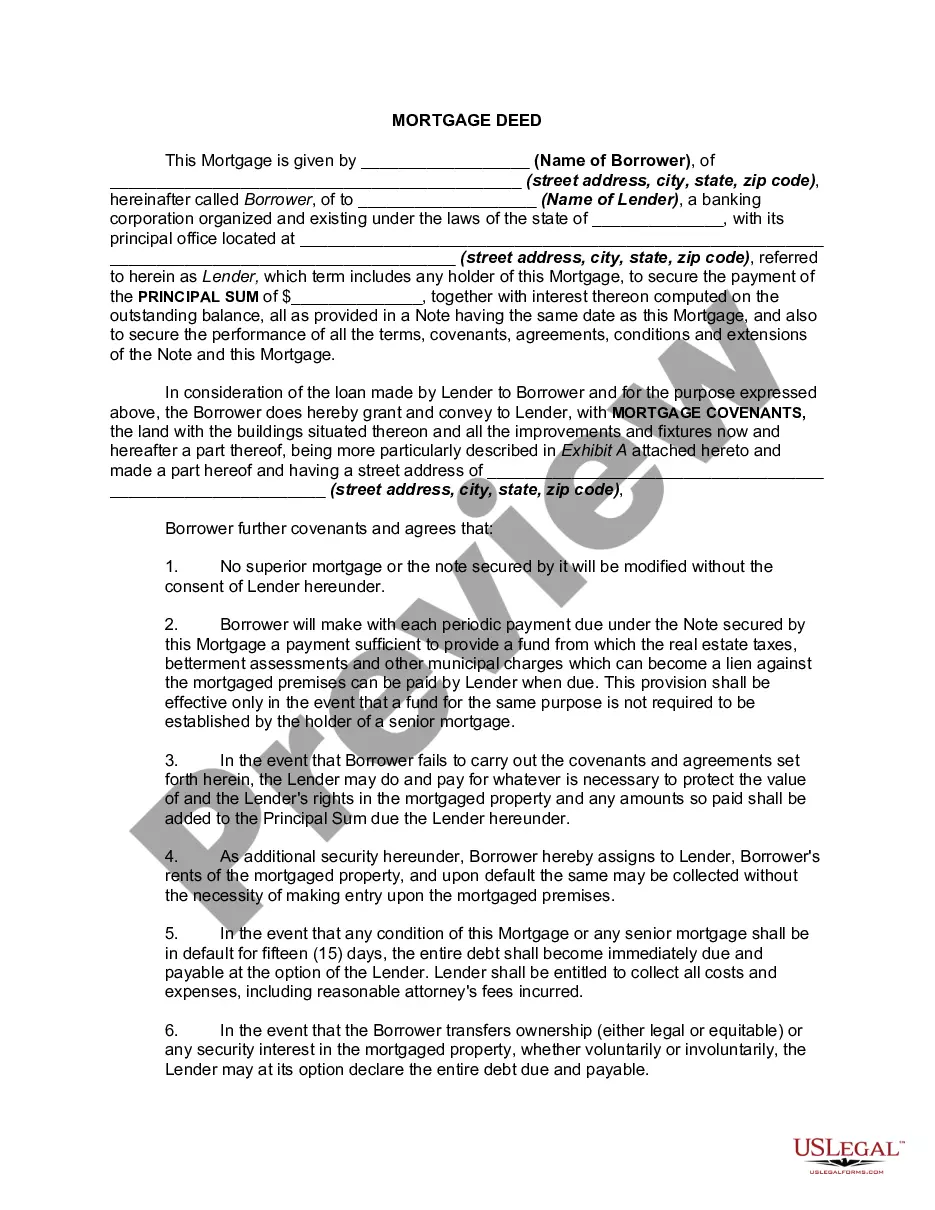
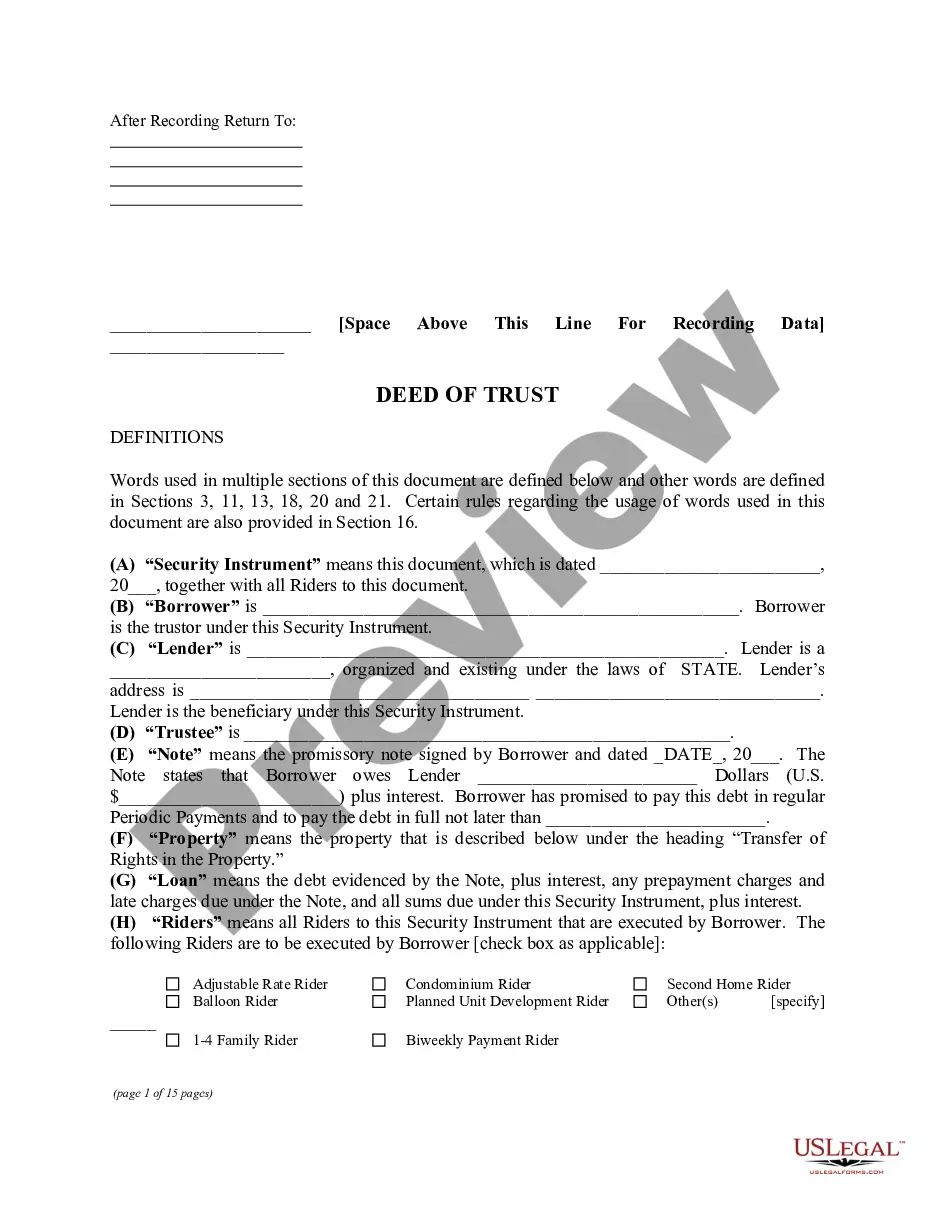
The Land Deed of Trust is a legal document that establishes a trust arrangement involving real property to secure a loan or debt. It allows the debtor to convey their property to a trustee on behalf of the secured party. This form is distinct from a standard mortgage as it involves three parties: the debtor, the trustee, and the secured party, thus offering a heightened level of security for the lender.
What’s included in this form
- Identification of parties: The form identifies the grantor (debtor), trustee, and beneficiary (secured party).
- Legal description of property: It includes a detailed description of the property being secured.
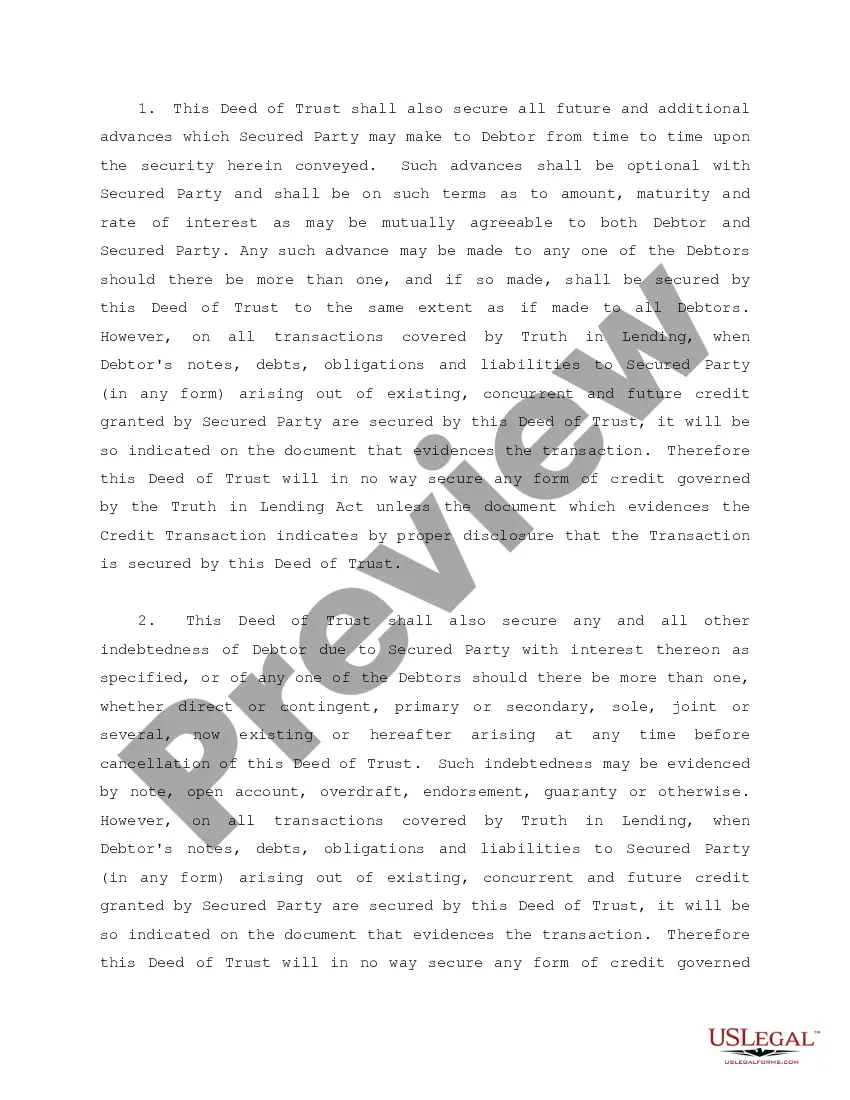
- Indebtedness clauses: Specifies the amounts owed, payment terms, and conditions for additional advances.
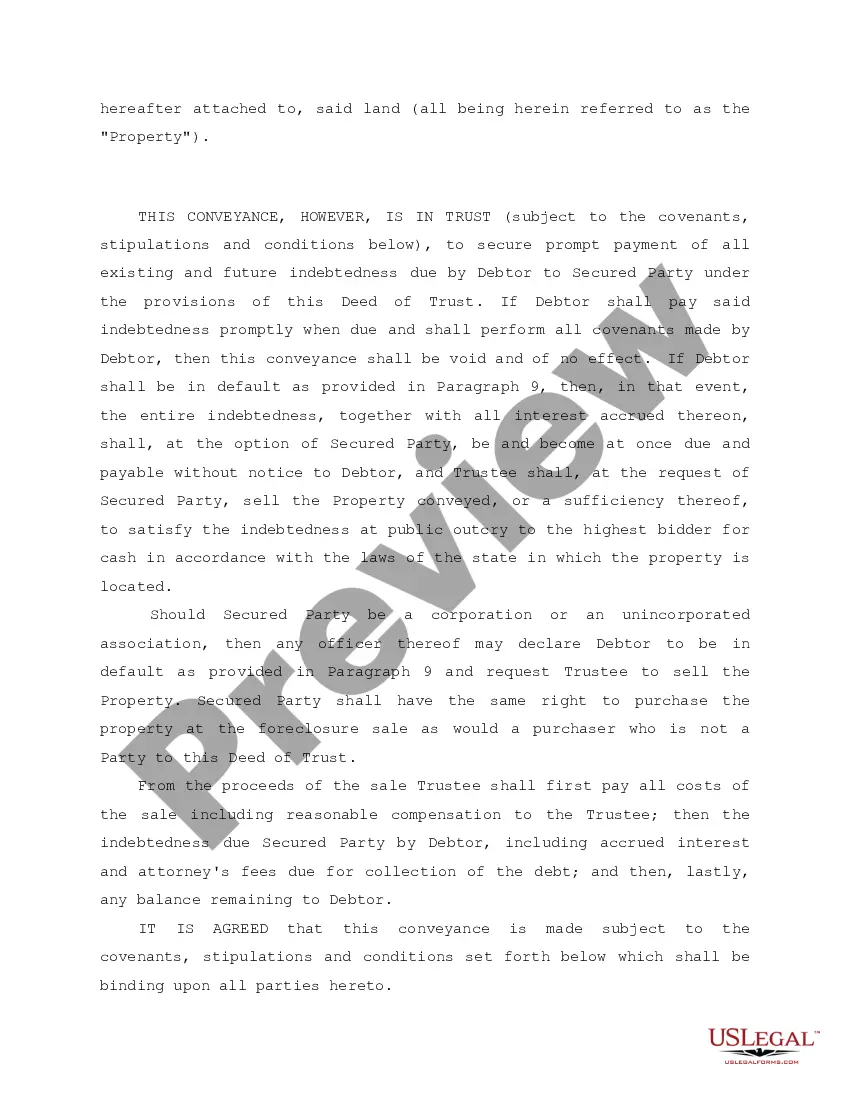
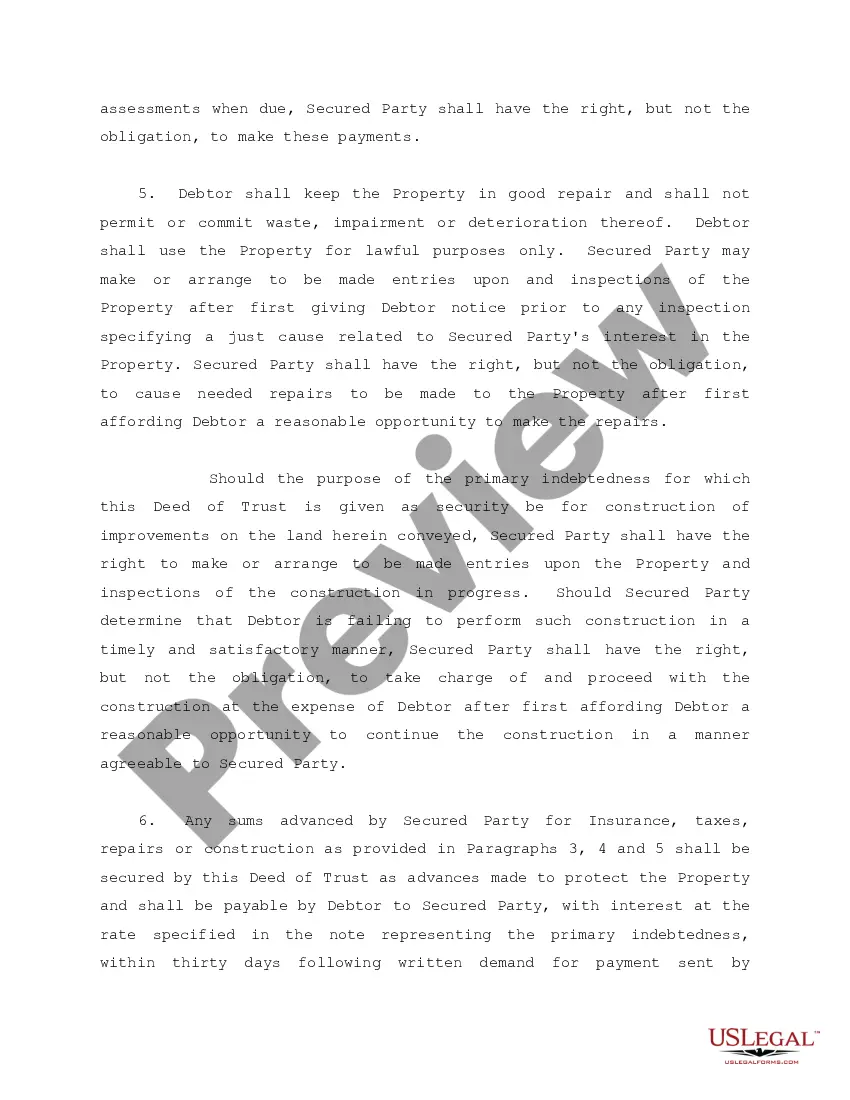
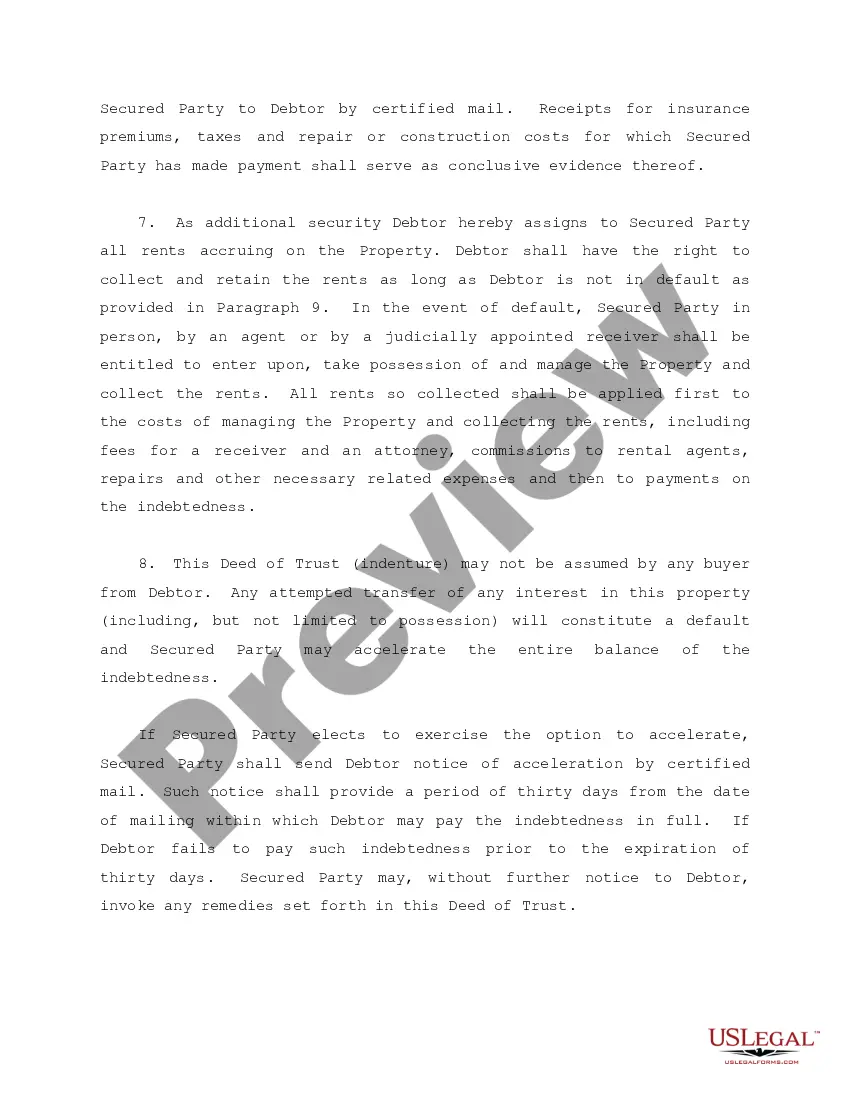
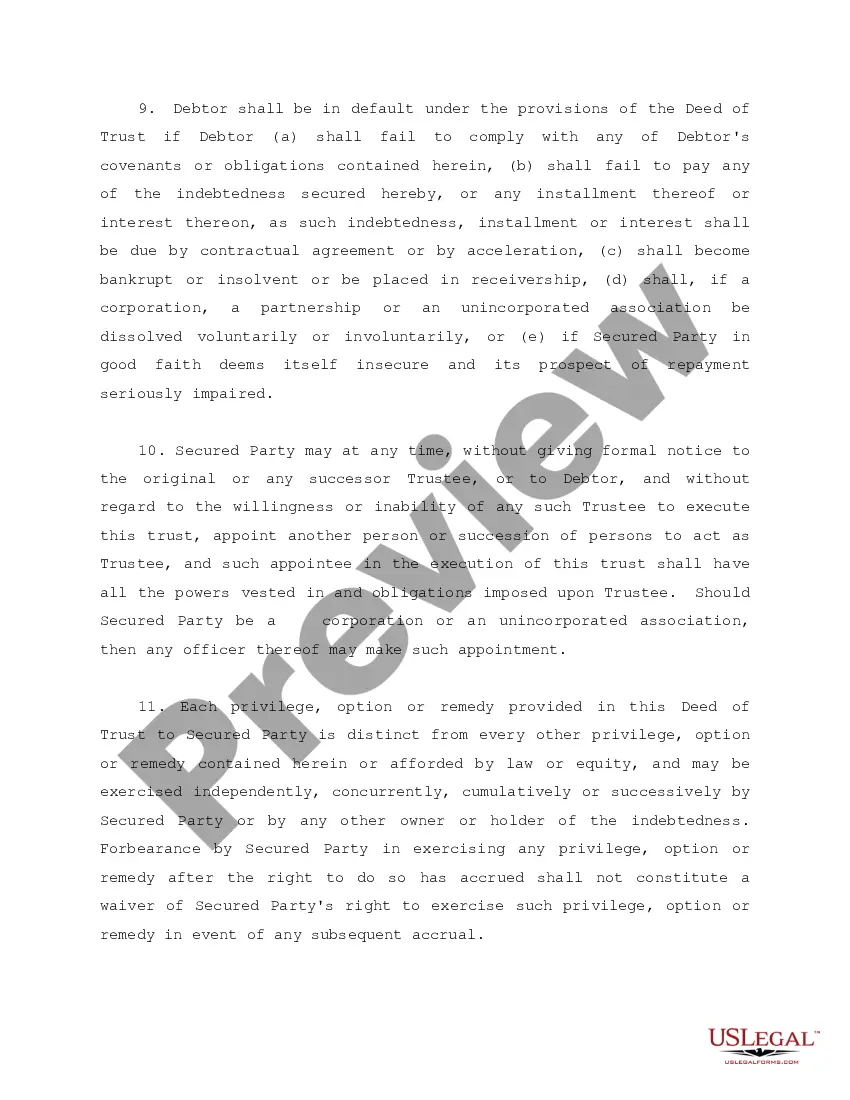
- Default provisions: Outlines what constitutes a default and the actions the secured party may take in that event.
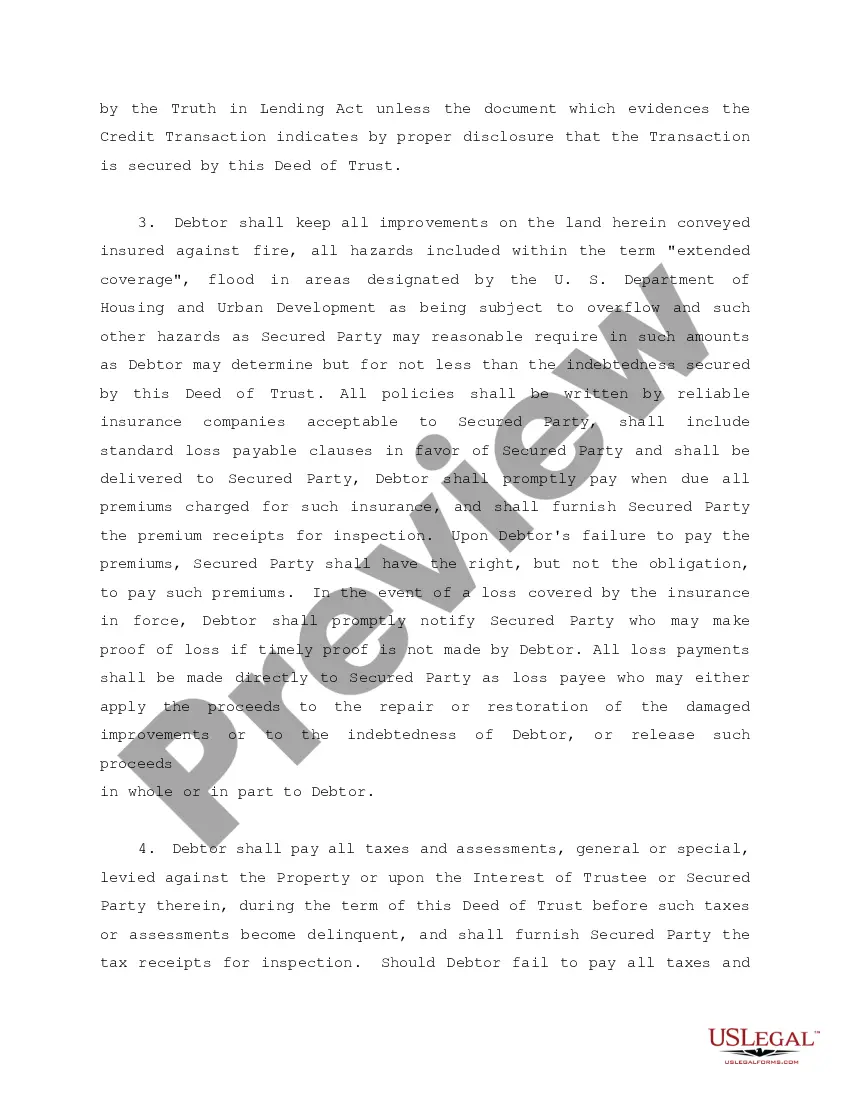
- Insurance and maintenance responsibilities: Details obligations of the debtor regarding property insurance and upkeep.
- Sale and foreclosure procedures: Describes how the property may be sold to satisfy debts if the debtor defaults.



When to use this document
This form should be used when a borrower wishes to secure a loan with real estate. It is appropriate in scenarios such as purchasing a home or refinancing an existing mortgage. The Land Deed of Trust provides a legal framework for the lender to claim the property in case the borrower defaults on the loan agreement.
Who needs this form
This form is suitable for:
- Individuals or entities acting as borrowers who need to secure a loan with their property.
- Lenders requiring a formal and enforceable security interest in real estate.
- Real estate professionals navigating transaction financing and securing debts.
- Trustees responsible for managing the property on behalf of the lender.
How to prepare this document
Follow these steps to complete the Land Deed of Trust:
- Identify the parties involved: Enter the names and addresses of the grantor (debtor), trustee, and beneficiary (secured party).
- Specify the property: Fill in the legal description of the property being conveyed.
- Include financial details: Enter the amount of the loan, payment schedule, and any related terms.
- Outline covenants: State the duties and obligations of the debtor regarding taxes, insurance, and maintenance.
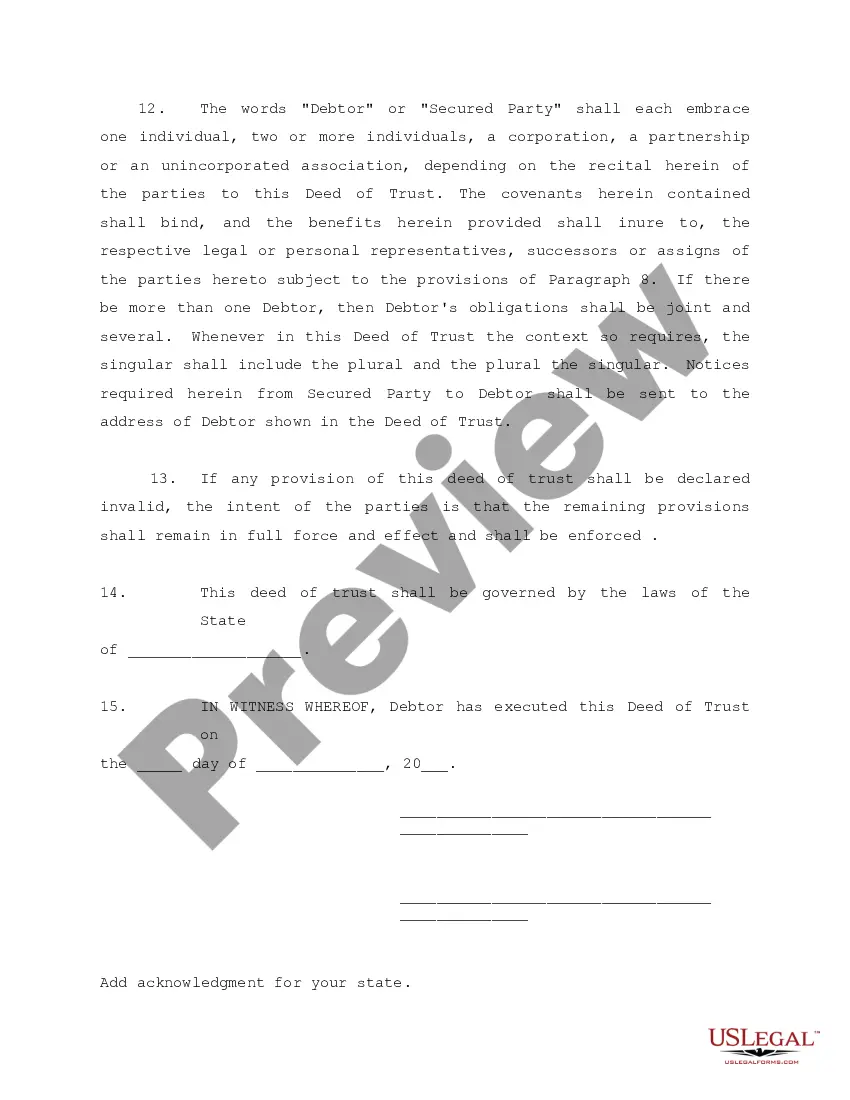
- Sign and date the form: Ensure all parties sign and date the document to finalize the agreement.
Does this document require notarization?
Yes, this form must be notarized to be legally valid. Notarization adds an extra layer of authenticity, ensuring that the identities of the signers are verified. US Legal Forms offers integrated online notarization services with 24/7 availability, secure video calls, and legal equivalence, eliminating the need for physical travel.
Get your form ready online
Our built-in tools help you complete, sign, share, and store your documents in one place.
Make edits, fill in missing information, and update formatting in US Legal Forms—just like you would in MS Word.
Download a copy, print it, send it by email, or mail it via USPS—whatever works best for your next step.
Sign and collect signatures with our SignNow integration. Send to multiple recipients, set reminders, and more. Go Premium to unlock E-Sign.
If this form requires notarization, complete it online through a secure video call—no need to meet a notary in person or wait for an appointment.
We protect your documents and personal data by following strict security and privacy standards.

Make edits, fill in missing information, and update formatting in US Legal Forms—just like you would in MS Word.

Download a copy, print it, send it by email, or mail it via USPS—whatever works best for your next step.

Sign and collect signatures with our SignNow integration. Send to multiple recipients, set reminders, and more. Go Premium to unlock E-Sign.

If this form requires notarization, complete it online through a secure video call—no need to meet a notary in person or wait for an appointment.

We protect your documents and personal data by following strict security and privacy standards.
Typical mistakes to avoid
- Neglecting to include all necessary parties in the document.
- Failing to provide a complete legal description of the property.
- Not clearly defining all terms of the indebtedness and repayment structure.
- Overlooking necessary signatures or dates, which may invalidate the document.
Benefits of completing this form online
- Convenience of online access: Users can download and complete the form anytime.
- Editability: Easily customizable for specific needs or circumstances.
- Reliability: Professional templates drafted by licensed attorneys ensure compliance.
Legal use & context
- Land Deeds of Trust are commonly used in real estate financing to secure loans.
- This document creates a legally binding obligation between the debtor and the secured party.
- In case of non-compliance or default, it facilitates the pursuit of foreclosure remedies.
Quick recap
- The Land Deed of Trust secures a loan with real property through a trust arrangement.
- It involves three main parties: the debtor, the trustee, and the secured party.
- Clear guidelines for property management and obligations are included in the form.
- Notarization is required for the document to be legally effective.
Looking for another form?









Form popularity
FAQ
The Land Deed of Trust is a legal document used to secure a loan by placing a lien on real estate. It involves three parties—the debtor (borrower), the trustee (holding the title), and the secured party (lender)—and it outlines loan terms, the property description, default conditions, and the trustee’s power to act if there’s a default. It’s used for purchase, refinancing, or equity loans.
Under this form, the three parties are the debtor, the trustee (who holds the title), and the secured party. It details the debt—loan amount, payment terms, and related costs—plus the property description. It also defines default conditions and gives the trustee the right to sell the property if the borrower defaults, along with covenants and warranties.
Someone would use the Land Deed of Trust to secure a loan with real estate as collateral. The form provides a clear framework: identification of the debtor and lender, the loan terms, the property description, default conditions, and the trustee’s power to sell if default occurs, along with required covenants and warranties.
One consideration is that the Land Deed of Trust relies on a trustee to enforce the loan by selling the property if default occurs, which can limit the borrower’s direct remedies. The form also anticipates costs tied to debt terms, such as loan amounts, payment terms, and attorney fees.
The Land Deed of Trust describes the security arrangement and names a trustee who holds title to the property on behalf of the lender. It does not by itself certify the borrower's ownership, but it records the lien and security interest tied to the loan and the property's description.
Compared with a standard mortgage, the Land Deed of Trust involves a trustee who holds the title and a three-party arrangement (debtor, trustee, secured party). If the borrower defaults, the trustee has authority to sell the property, providing a distinct mechanism for enforcing the loan.