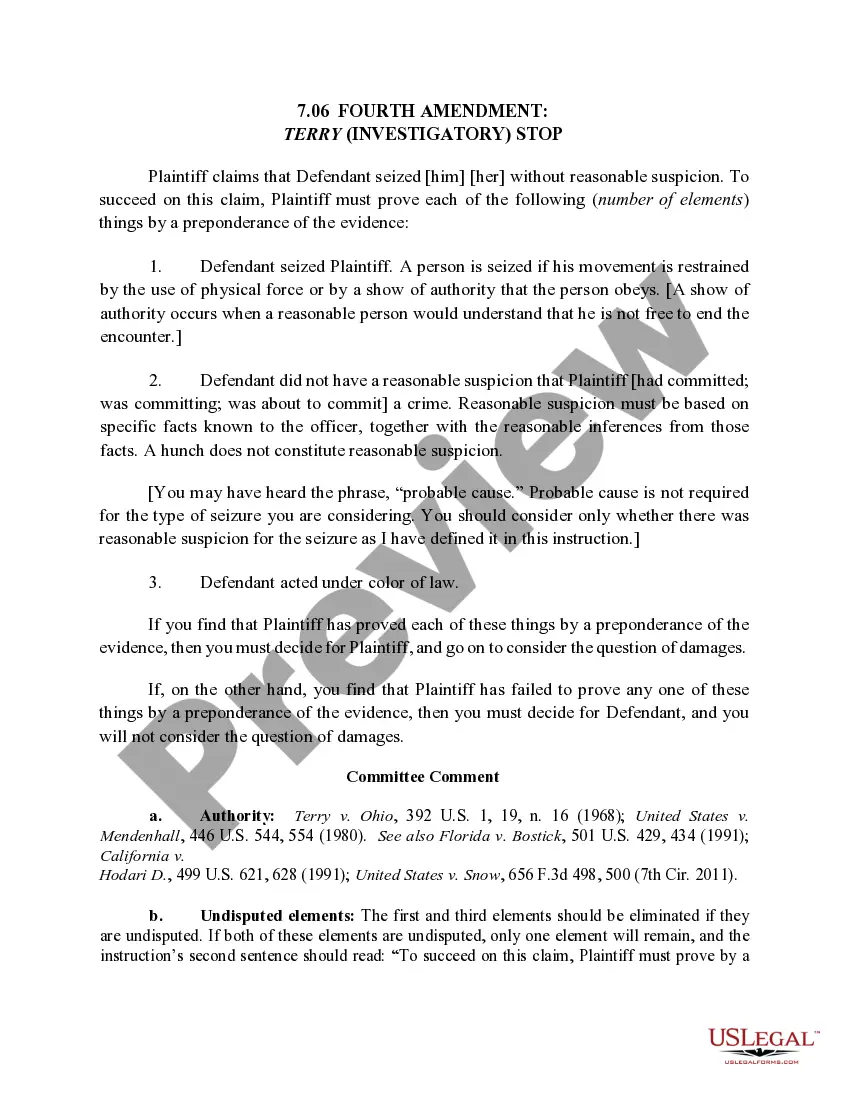
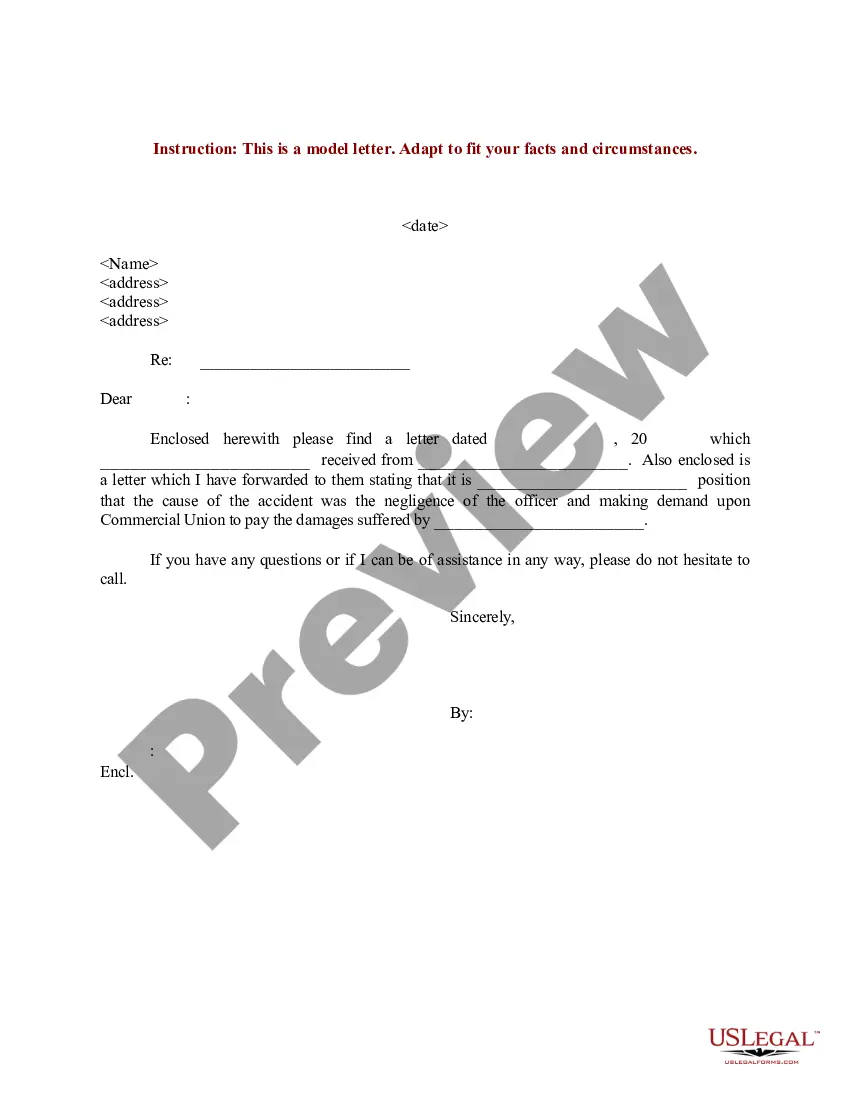
Sample Letter for Sample Letters Forwarded by Attorney to Insurance Company
Overview of this form
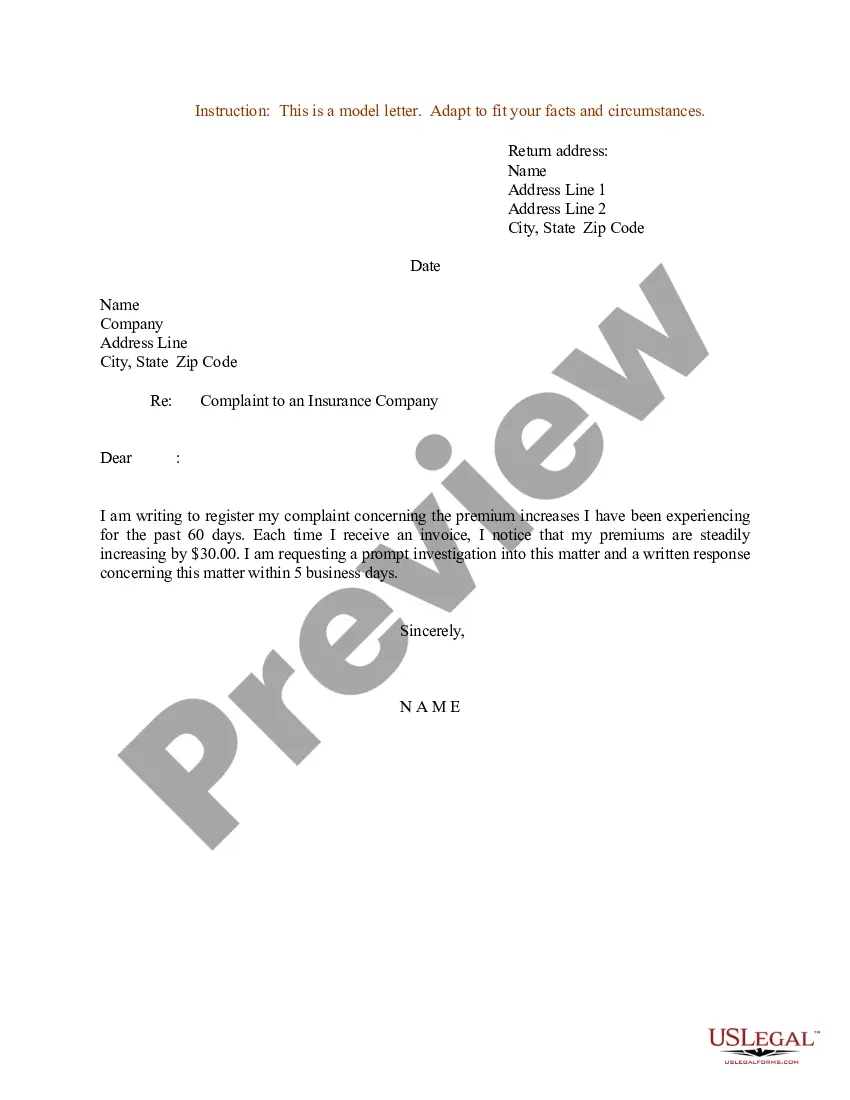
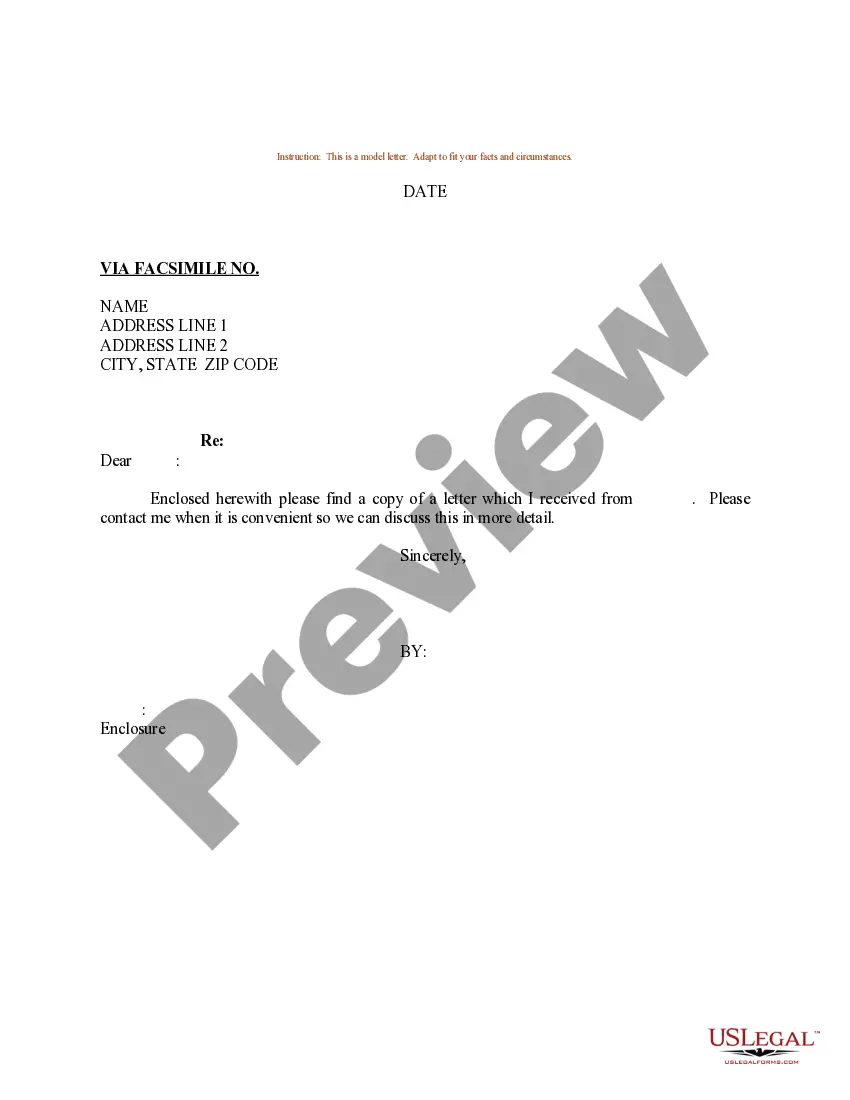
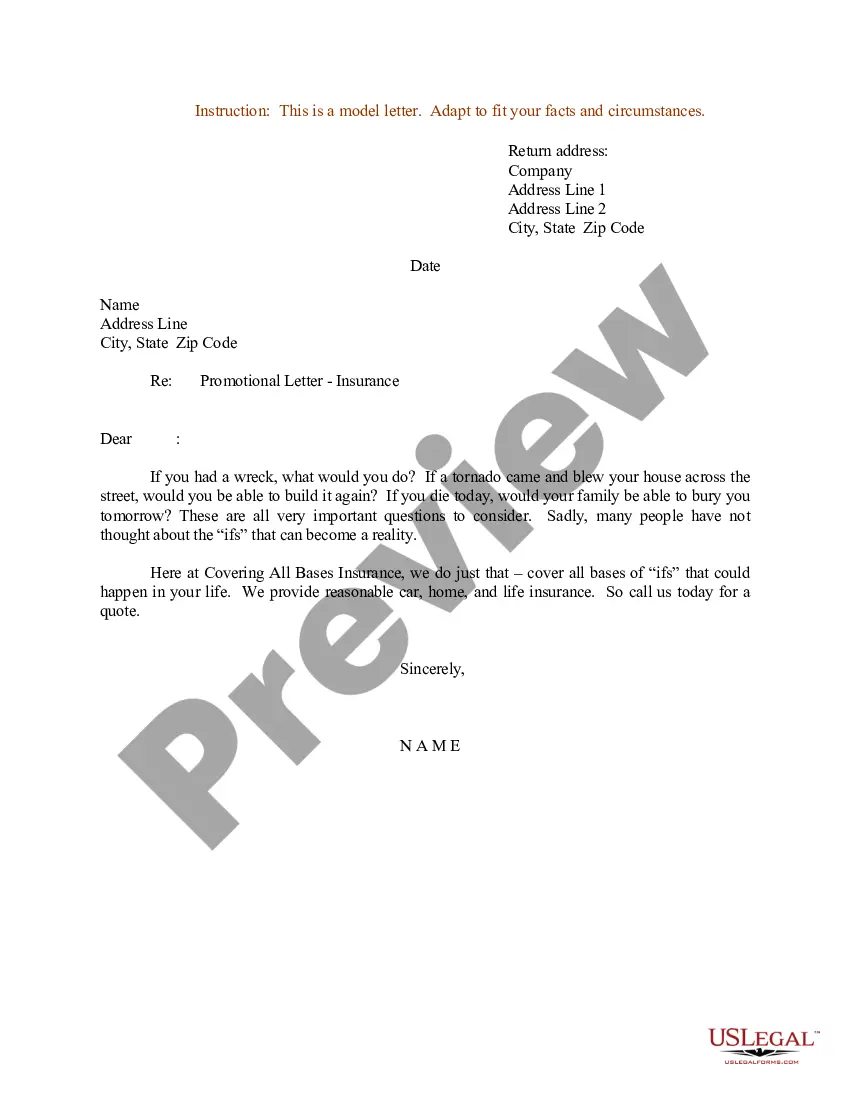
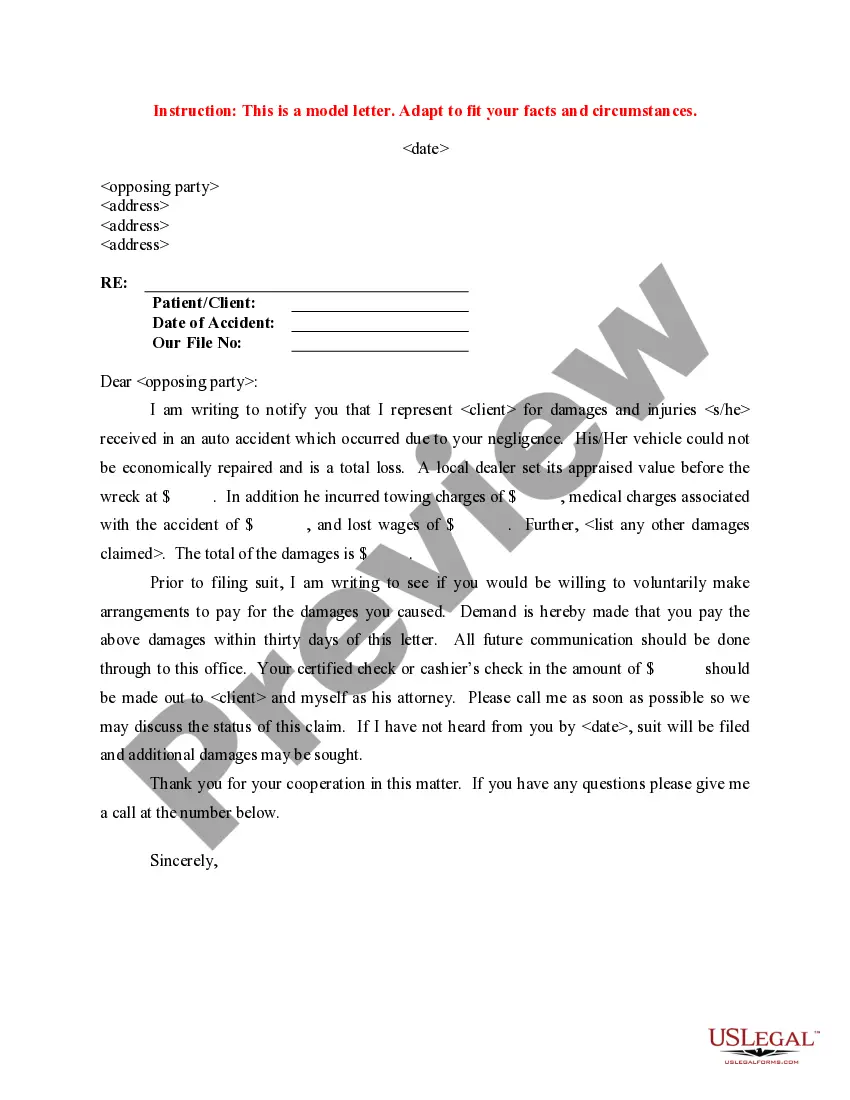
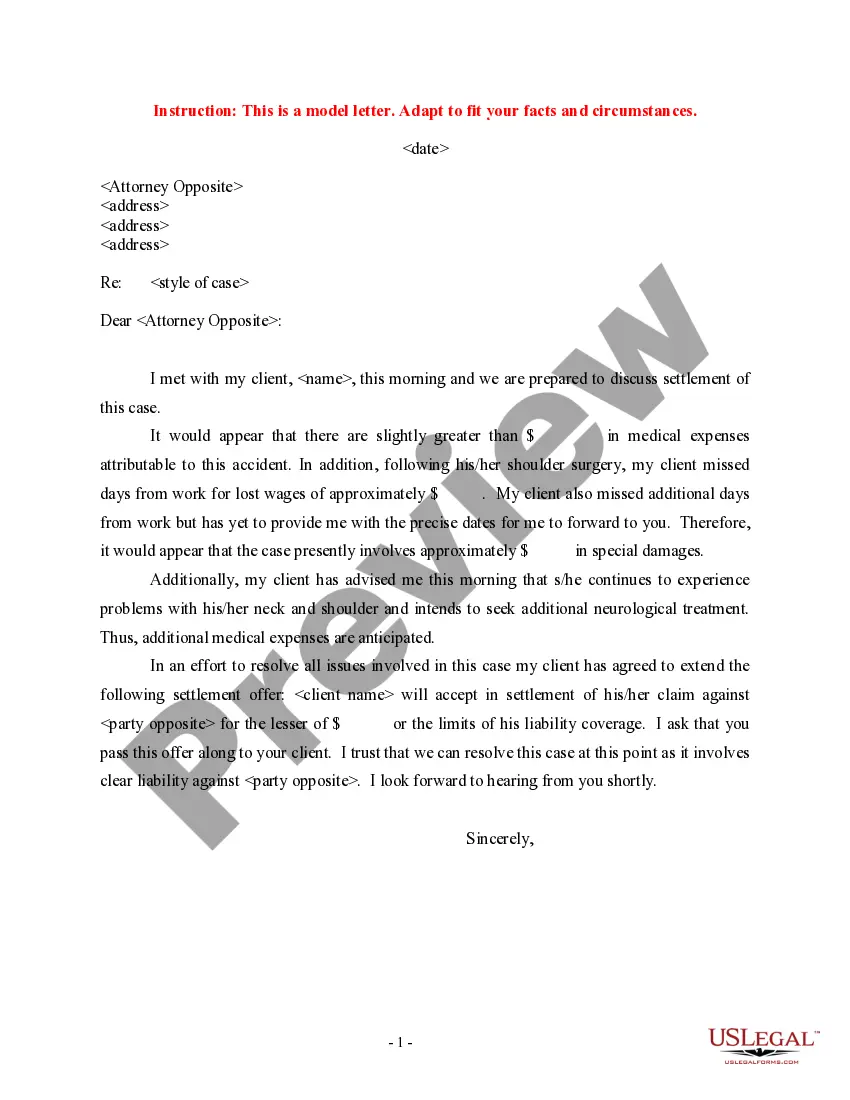
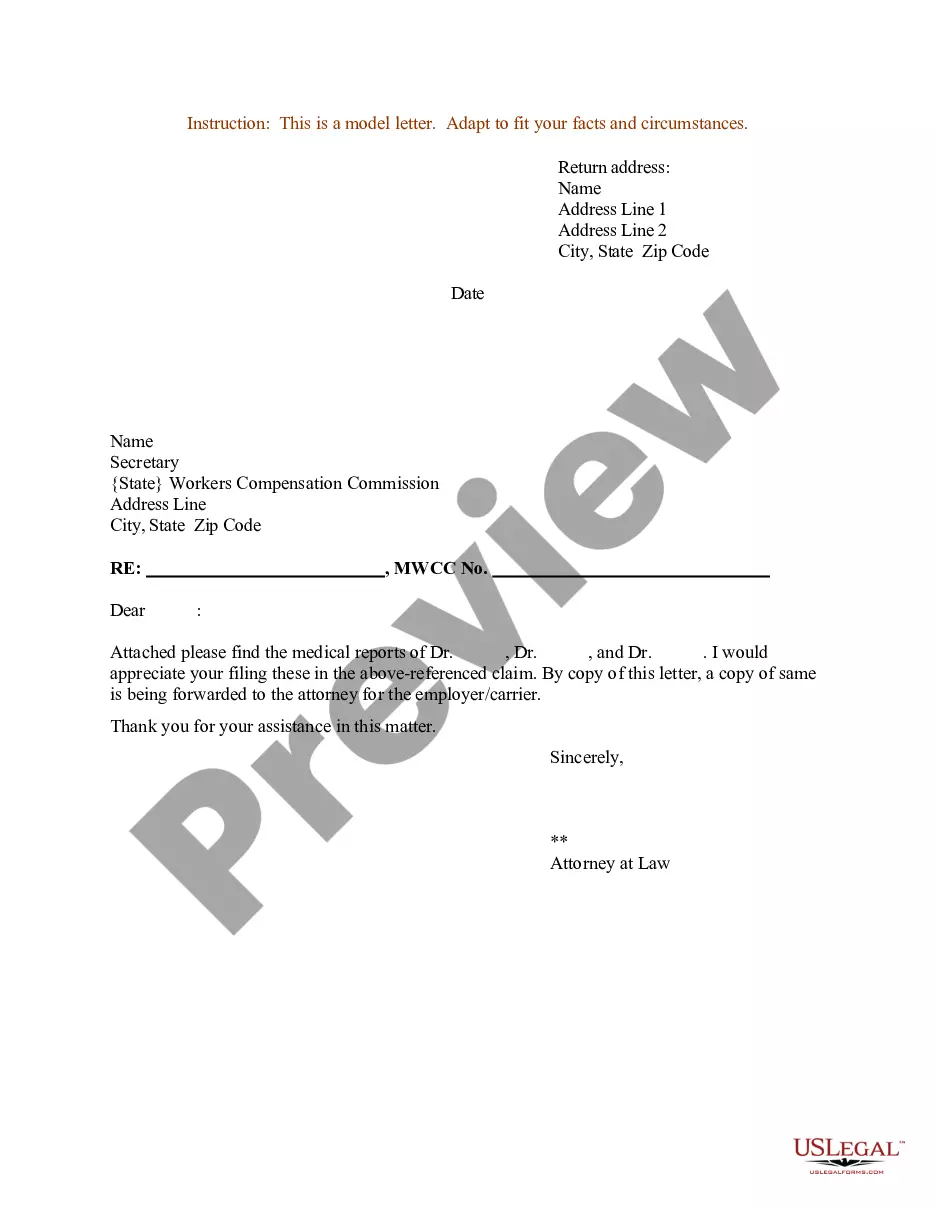
This Sample Letter for Sample Letters Forwarded by Attorney to Insurance Company is a template designed to assist individuals in communicating with insurance companies regarding legal matters. This form simplifies the process by providing a model letter that users can adapt to their specific circumstances, ensuring compliance with legal requirements and enhancing clarity in correspondence.
Main sections of this form
- Date: The date when the letter is written.
- Recipient Information: Includes the name and address of the insurance company.
- Subject Line: A space to specify the subject of the letter.
- Content Body: The main section where the details of the correspondence are outlined.
- Signature: A space for the sender to sign and date the letter.
When this form is needed
This letter should be used when you need to forward important information or documents from your attorney to your insurance company. It is appropriate in situations such as filing a claim, supplying additional evidence, or addressing any disputes related to your insurance policy.
Who needs this form
- Individuals who have retained an attorney for legal matters involving insurance.
- Policyholders who need to communicate effectively with their insurance provider.
- Attorneys seeking to outline relevant information to be forwarded to their client's insurance company.
How to prepare this document
- Identify the date on which the letter is being written.
- Fill in the name and address of the insurance company as the recipient.
- Specify the subject of the letter to summarize the matter at hand.
- Draft the body of the letter to include necessary details and context.
- Sign the letter and date it before sending.
Notarization requirements for this form
This form does not typically require notarization unless specified by local law.
Get your form ready online
Our built-in tools help you complete, sign, share, and store your documents in one place.
Make edits, fill in missing information, and update formatting in US Legal Forms—just like you would in MS Word.
Download a copy, print it, send it by email, or mail it via USPS—whatever works best for your next step.
Sign and collect signatures with our SignNow integration. Send to multiple recipients, set reminders, and more. Go Premium to unlock E-Sign.
If this form requires notarization, complete it online through a secure video call—no need to meet a notary in person or wait for an appointment.
We protect your documents and personal data by following strict security and privacy standards.

Make edits, fill in missing information, and update formatting in US Legal Forms—just like you would in MS Word.

Download a copy, print it, send it by email, or mail it via USPS—whatever works best for your next step.

Sign and collect signatures with our SignNow integration. Send to multiple recipients, set reminders, and more. Go Premium to unlock E-Sign.

If this form requires notarization, complete it online through a secure video call—no need to meet a notary in person or wait for an appointment.

We protect your documents and personal data by following strict security and privacy standards.
Typical mistakes to avoid
- Forgetting to include the date on the letter.
- Neglecting to address the letter to the correct department or individual.
- Omitting important information that might impact the insurance claim.
- Failing to sign and date the letter before sending.
Why use this form online
- Convenient access to a customizable template.
- Edit the letter easily to suit your needs without needing legal expertise.
- Reliable format drafted by attorneys to ensure legal soundness.
Key takeaways
- The letter serves as a professional means to communicate with insurance companies.
- It is flexible enough to be adapted to different scenarios involving legal and insurance matters.
- Ensure all information is accurately included and tailored to your situation.
Looking for another form?
Form popularity
FAQ
Letter date. Your full name and contact information. Injury date and location. Brief description of the incident, such as car accident or slip and fall The at-fault party's name and contact information. The at-fault party's insurance policy number, if available.
Specify the purpose of the letter. Introduction: introduce yourself. Mention your personal details as well as the policy number. Describe the incident in details. Make your claim and request for reimbursement.
An attorney letter of representation is correspondence, usually a letter, sent by the victim's attorney to the defendant or an insurance company advising that the victim is represented by an attorney.
Typically, a lawyer must get the judge's permission before he or she can withdraw from a case.He or she cannot simply refuse to pass along information or act on the client's behalf simply because the judge has not yet granted the motion. The court can refuse to honor the request to withdraw.
Date. The very part of the letter is Date. From. One should write the sender's name and address after mentioning the date. To. Below the sender's details, one should write the receiver's name and address. Subject. Salutation. Content or Body of the Letter. Opening Part. Main Part.
How to Write Claim letter. While writing the claim letter ensure that it should be successful in producing the intended result. All data should be clearly mentioned such as policy number, date and the policy amount. Finally the claim amount should be mentioned.
An attorney letter of representation is a document sent from a lawyer (lawyer) to an adverse party (party) advising that party that the lawyer represents a specific person, persons or business. A letter of representation is an initial correspondence to begin seeking damages or the resolution of a matter.
This letter is usually a form letter that is sent out before litigation has begun. It costs money to file a lawsuit and collection firms do not want to pay it right away; they would rather reach out to you and see if a payment plan can be reached.
The claimant should write the letter as early as possible after the occurrence of the incidence. Mention the intend of writing your claim letter. State the incident clearly with the date of occurrence. Most importantly mention your Policy number and Your Identity.