Conveyance of Hunting Rights
What this document covers
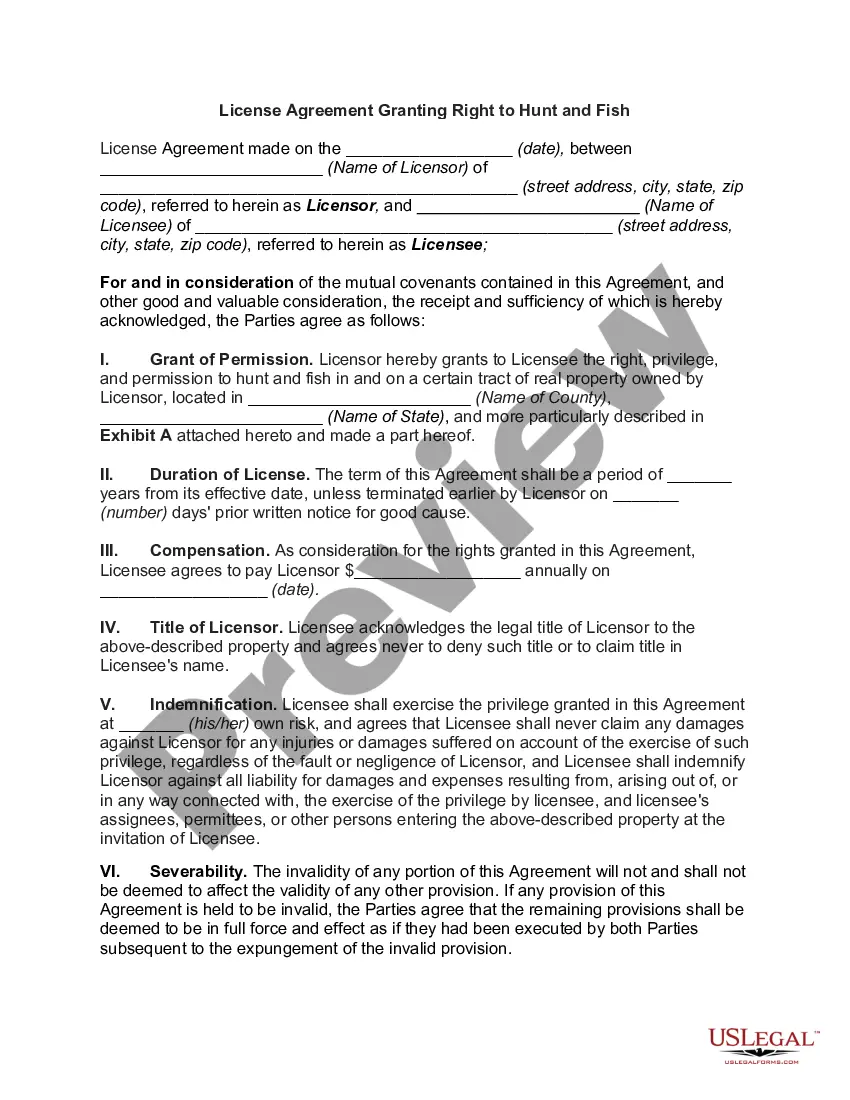
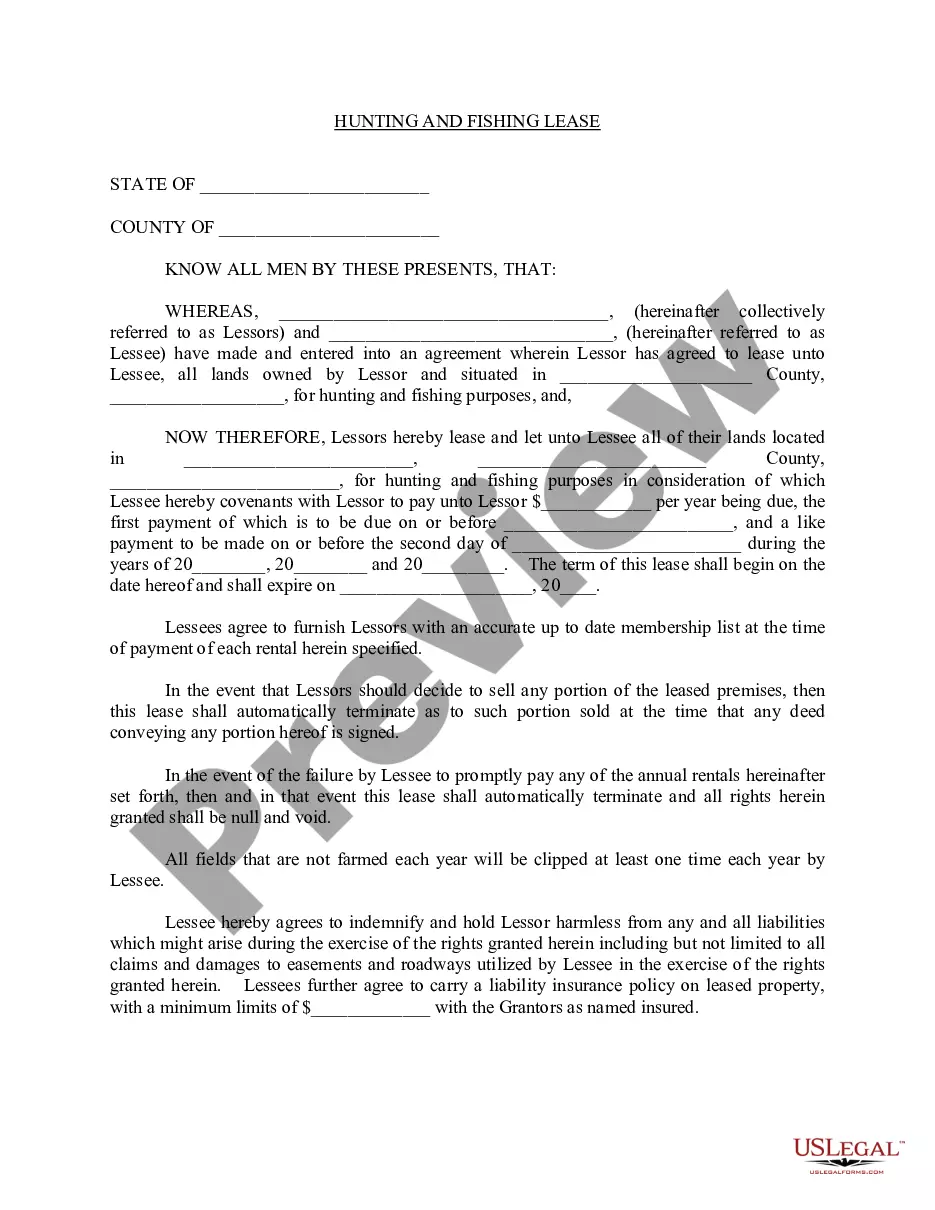
The Conveyance of Hunting Rights form is a legal document used to grant an individual or group the exclusive right to hunt on specified land. This form outlines the permissions granted to the grantee and ensures that the landowner's hunting rights are clearly defined while providing liability protection. This document is particularly useful for landowners looking to monetize their property by allowing hunting access or for hunting enthusiasts seeking formal permission to hunt on private lands. Unlike other property agreements, this form is specifically tailored for hunting rights and the related responsibilities of both parties involved.
Form components explained
- Consideration: Specifies the monetary and non-monetary compensation for the hunting rights.
- Grantee Identification: Includes space to identify the individual or group receiving the hunting rights.
- Property Description: Demarcates the specific land where hunting rights are granted.
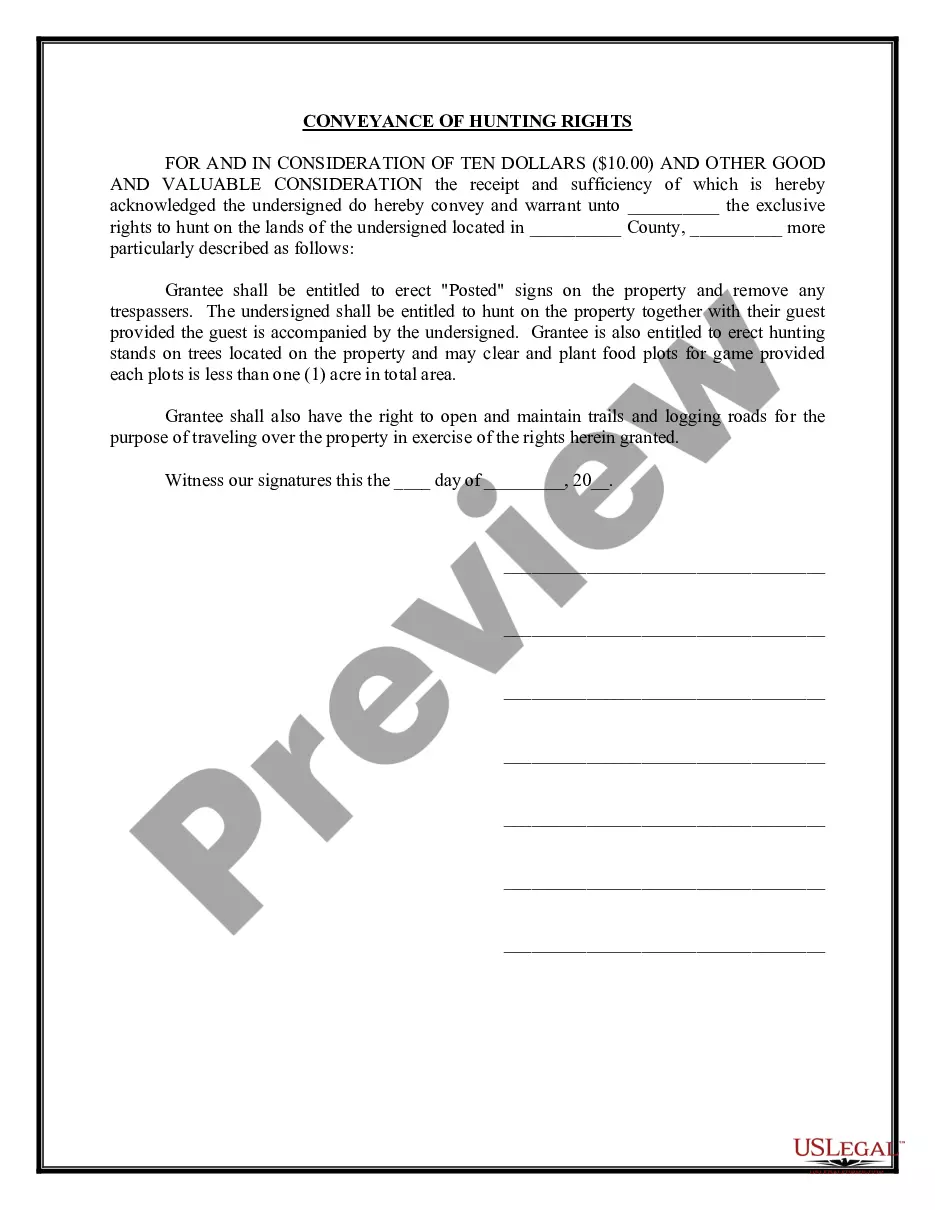
- Rights and Limitations: Details what the grantee can do, including erecting signs, removing trespassers, and clearing land for hunting.
- Landowner Rights: States that the landowner retains the right to hunt on the property with guests.
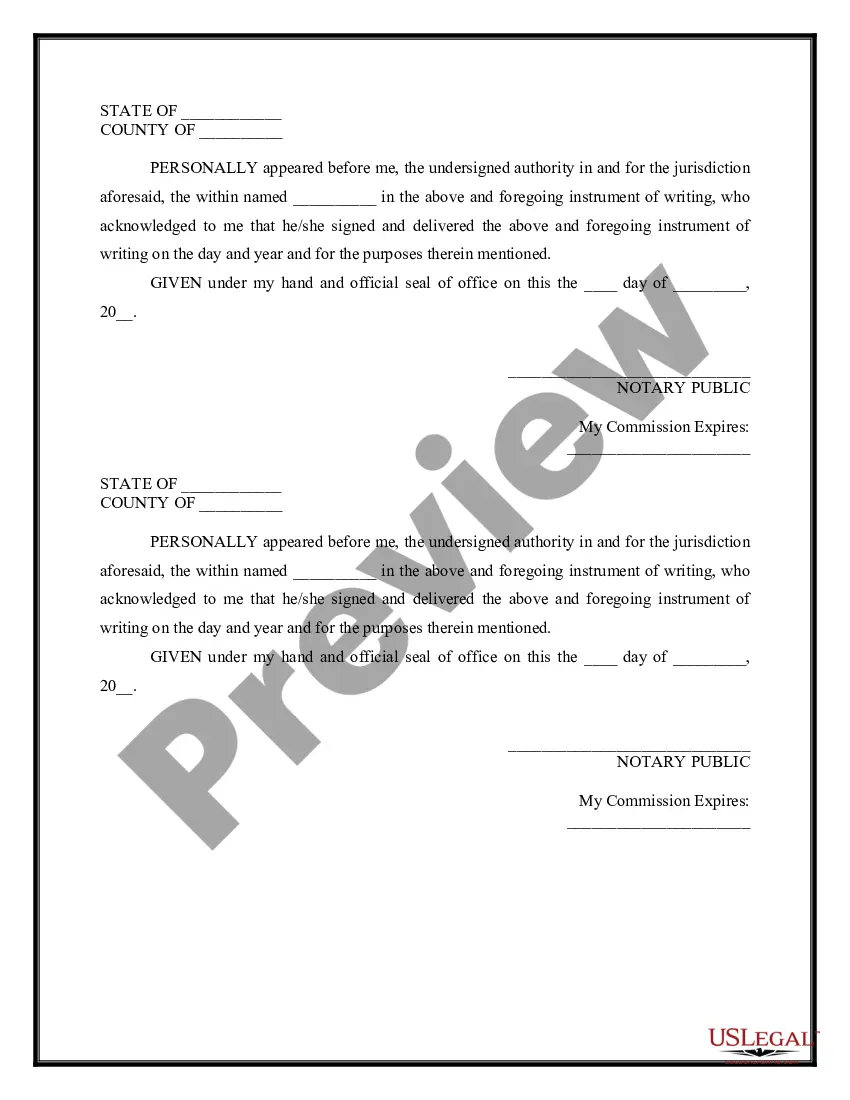
- Notarization: Provides requirements for official verification of the document.
When this form is needed
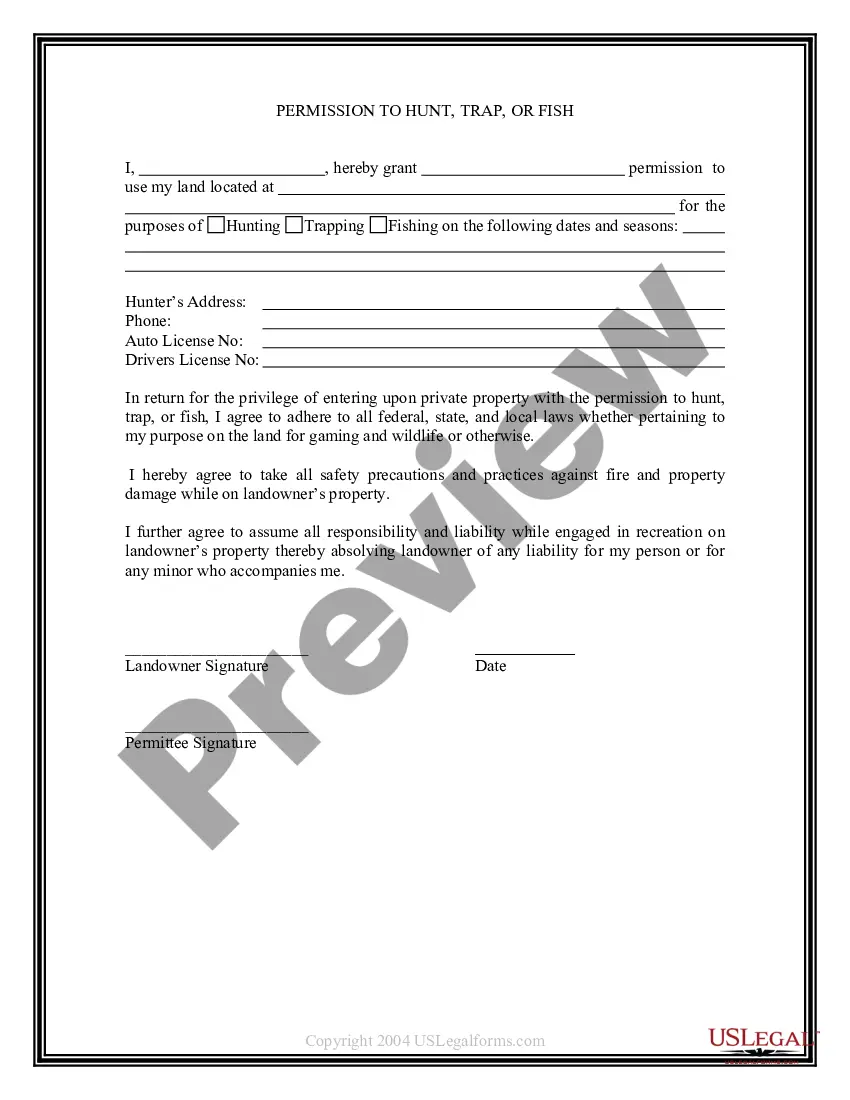
This form should be used when a landowner wishes to formally grant hunting rights to another party, whether for compensation or for recreation. Common scenarios include allowing friends or family to hunt on the property, leasing hunting rights to hunting clubs, or monetizing land during hunting seasons. It may also be necessary in situations where there is a need to clarify hunting rights, such as for shared family properties or lands near established hunting zones.
Who can use this document
This form is intended for:
- Landowners who want to grant access to their property for hunting.
- Hunters seeking permission to hunt on private lands.
- Individuals or groups interested in leasing hunting rights.
- Real estate professionals managing properties with hunting potential.
Steps to complete this form
To complete the Conveyance of Hunting Rights form, follow these steps:
- Identify the parties involved, including the landowner and the grantee.
- Specify the lands where the hunting rights will be granted, including the county and a detailed description.
- Fill in the amount of consideration being exchanged, typically a nominal fee.
- State the rights granted to the grantee, including any limitations or conditions.
- Enter the date and obtain signatures from both the landowner and the grantee.
- Have the document notarized to ensure its legal validity.
Notarization guidance
Yes, this form must be notarized to be legally valid. The notarization process ensures that the identities of the parties involved are verified and that the document is executed in accordance with legal standards. US Legal Forms provides integrated online notarization services, allowing users to complete the process conveniently via secure video calls at any time.
Get your form ready online
Our built-in tools help you complete, sign, share, and store your documents in one place.
Make edits, fill in missing information, and update formatting in US Legal Forms—just like you would in MS Word.
Download a copy, print it, send it by email, or mail it via USPS—whatever works best for your next step.
Sign and collect signatures with our SignNow integration. Send to multiple recipients, set reminders, and more. Go Premium to unlock E-Sign.
If this form requires notarization, complete it online through a secure video call—no need to meet a notary in person or wait for an appointment.
We protect your documents and personal data by following strict security and privacy standards.

Make edits, fill in missing information, and update formatting in US Legal Forms—just like you would in MS Word.

Download a copy, print it, send it by email, or mail it via USPS—whatever works best for your next step.

Sign and collect signatures with our SignNow integration. Send to multiple recipients, set reminders, and more. Go Premium to unlock E-Sign.

If this form requires notarization, complete it online through a secure video call—no need to meet a notary in person or wait for an appointment.

We protect your documents and personal data by following strict security and privacy standards.
Mistakes to watch out for
- Failing to accurately describe the property where rights are granted, which could lead to disputes.
- Not specifying the rights and limitations clearly, leading to misunderstandings between parties.
- Neglecting to notarize the document, which can affect its enforceability.
- Forgetting to indicate the consideration exchanged, which is essential for the validity of the form.
Benefits of completing this form online
- Convenience: Downloadable and easy to access, allowing for immediate use.
- Editability: Editable fields allow users to tailor the document to their specific situation quickly.
- Legal reliability: Drafted by licensed attorneys to ensure compliance with applicable laws.
- Time-saving: Eliminates the need for expensive consultations while still providing legally sound documentation.
Summary of main points
- The Conveyance of Hunting Rights transfers hunting privileges on specified land.
- Clarity in the granted rights is essential to prevent future disputes.
- Notarization is necessary to ensure the document's validity.
- Using this form online saves time and provides legal assurance.
Looking for another form?
Form popularity
FAQ
"You have to have landowner permission." You can't hunt in a subdivision on lots of 10 acres or less in an unincorporated area of a county if the commissioners court prohibits the use of a firearm in those areas.
Every hunter (including out-of-state hunters) born on or after Sept. 2, 1971, must successfully complete a Hunter Education Training Course. Proof of certification or deferral is required to be on your person while hunting. Minimum age of certification is 9 years and cost is $15.
In Texas, getting caught fishing or hunting without a license puts a person at risk of a criminal fine of as much as $500. Then there's the civil restitution for any fish or game taken while fishing or hunting without a license.
A hunting license is still required on public land and allowing others to hunt on your private property for financial consideration requires a hunting lease license.The law, TPWD said, "exempts any person (resident or nonresident), with landowner consent, from a hunting license requirement to hunt feral hogs."
The same deer will hit your feeder 200 yards off the fence. There is no law or regulation about how close feeders or deer stands can be to a fence. However everyone is responsible for their bullet and bullets can't legally cross a fence.
A hunter must be 600 feet from the nearest private property line.
More than 95% of the land in Texas is privately owned or managed. You can hunt on the private land that you own or get permission from the landowner to hunt as a guest or pay the landowner to hunt on that land.
Non-game animals include (but are not limited to) the following: armadillos, bobcats coyotes, flying squirrels, frogs, ground squirrels, mountain lions, porcupines, prairie dogs, rabbits, and turtles. There is no closed season on these animals and a valid hunting license is required.
In California, hunting coyotes and foxes are only legal on private hunting grounds if the owner deems it so. Hunting on certain public areas are illegal. Night visions are allowed but any electronic viewing equipment that uses infrared or light-amplifying circuits are prohibited. In Colorado, night hunting is allowed.