Purchase Order with Terms and Conditions for Medical Supplies
About this form
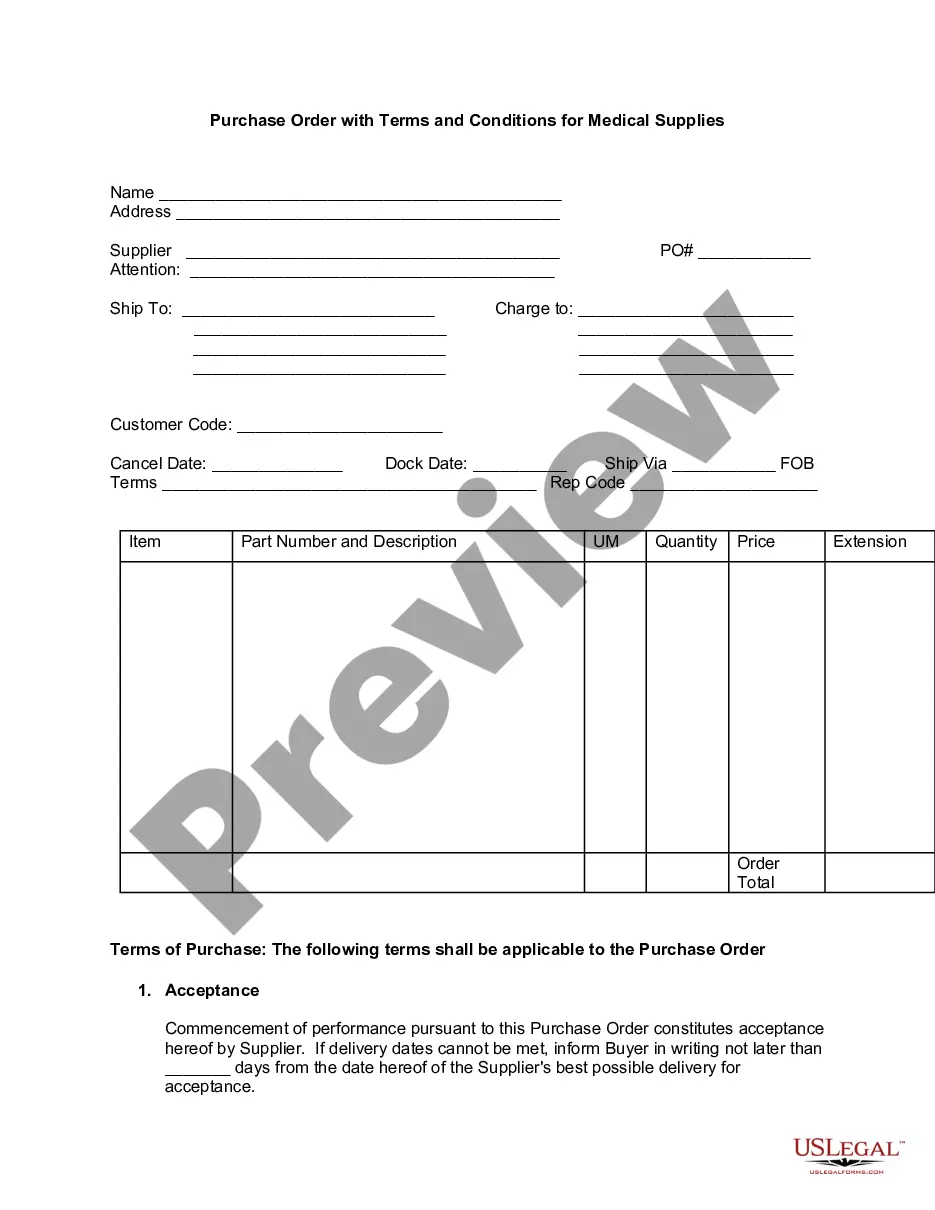
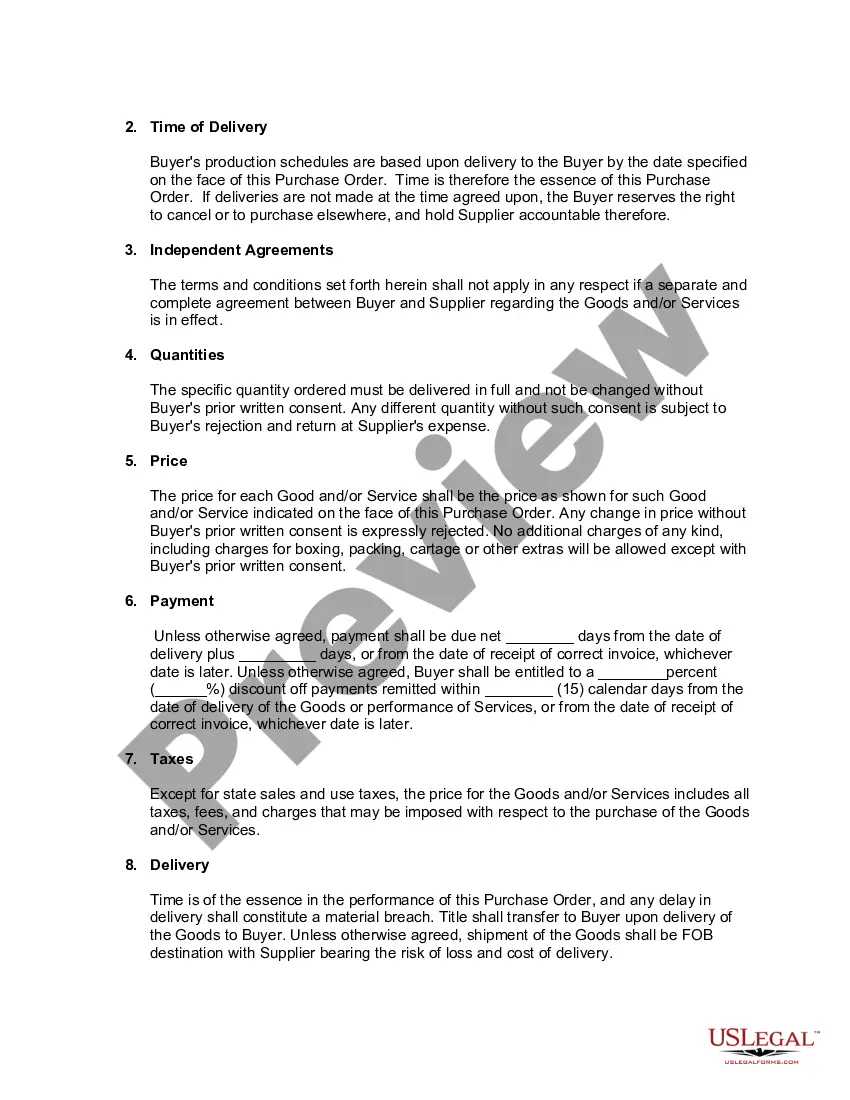
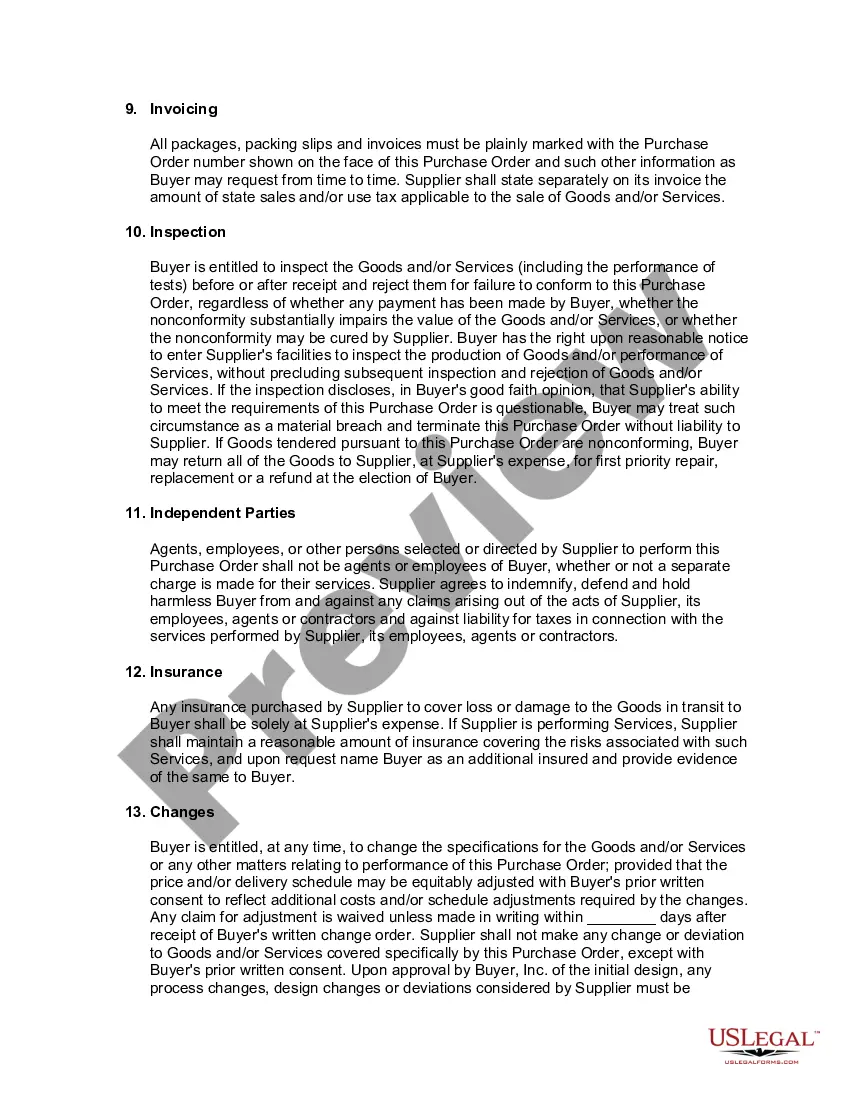
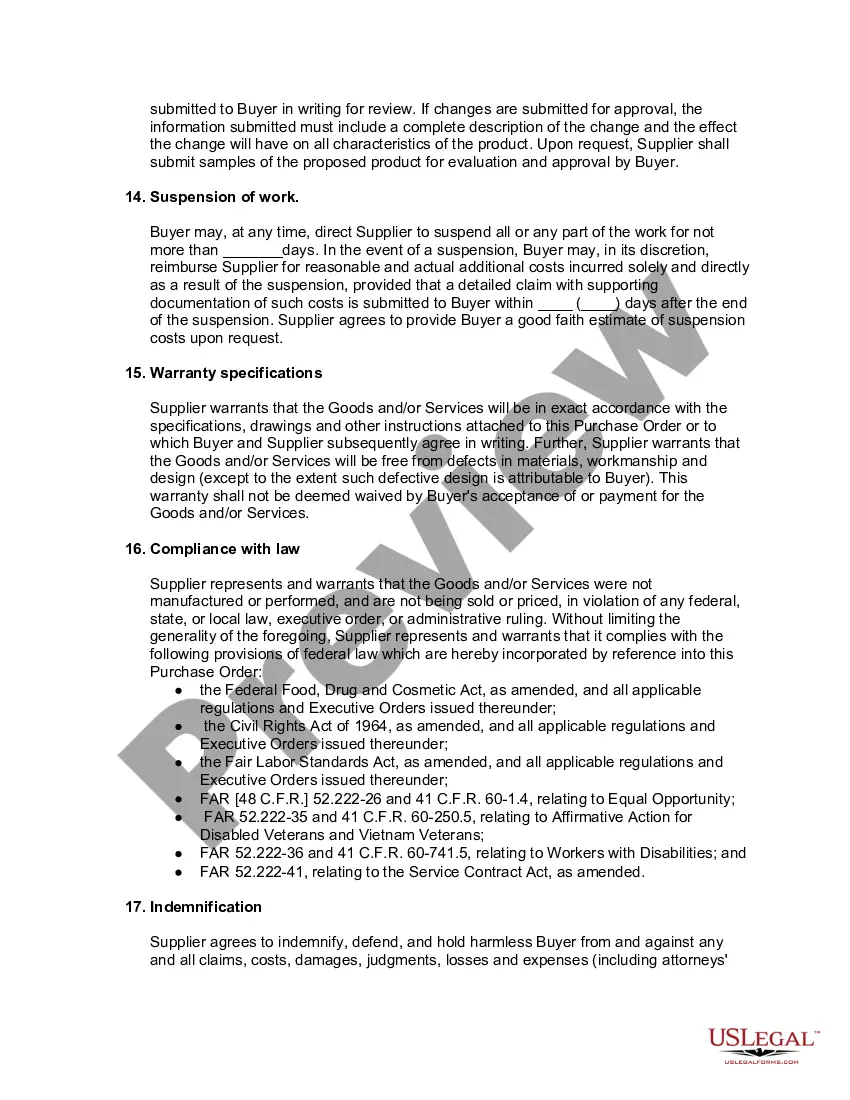
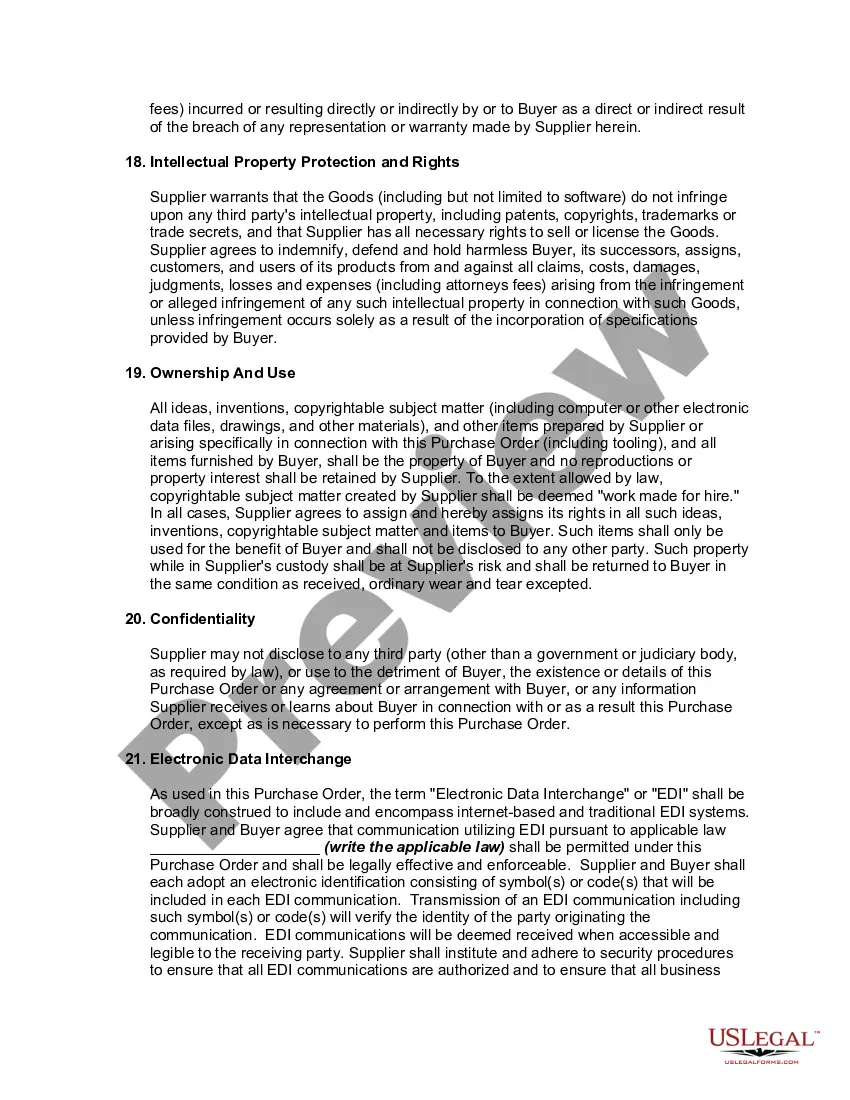
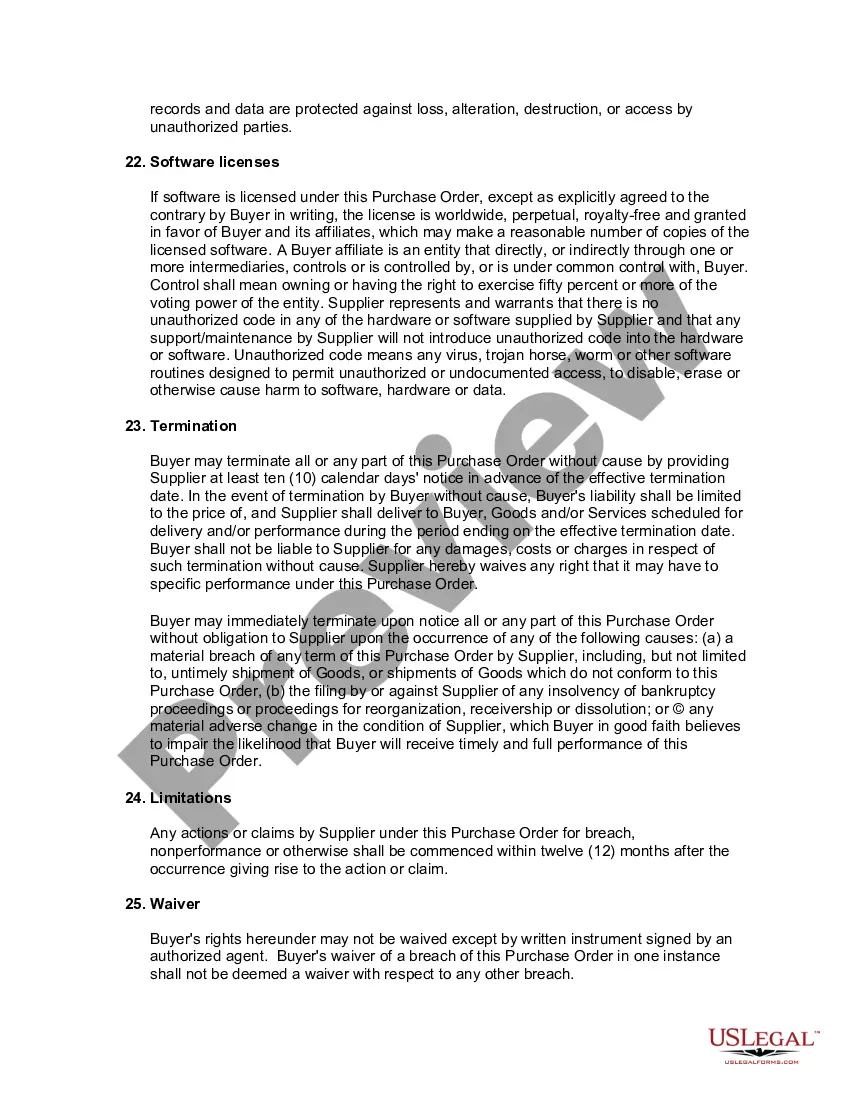
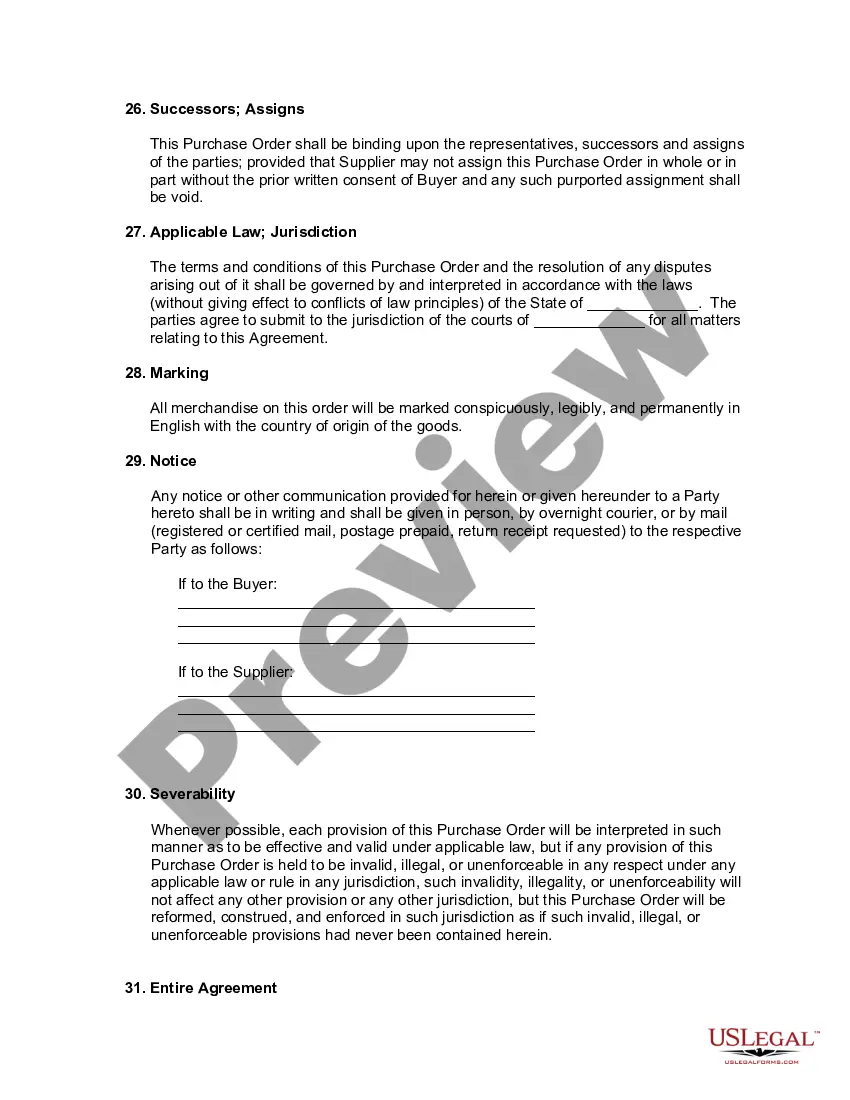
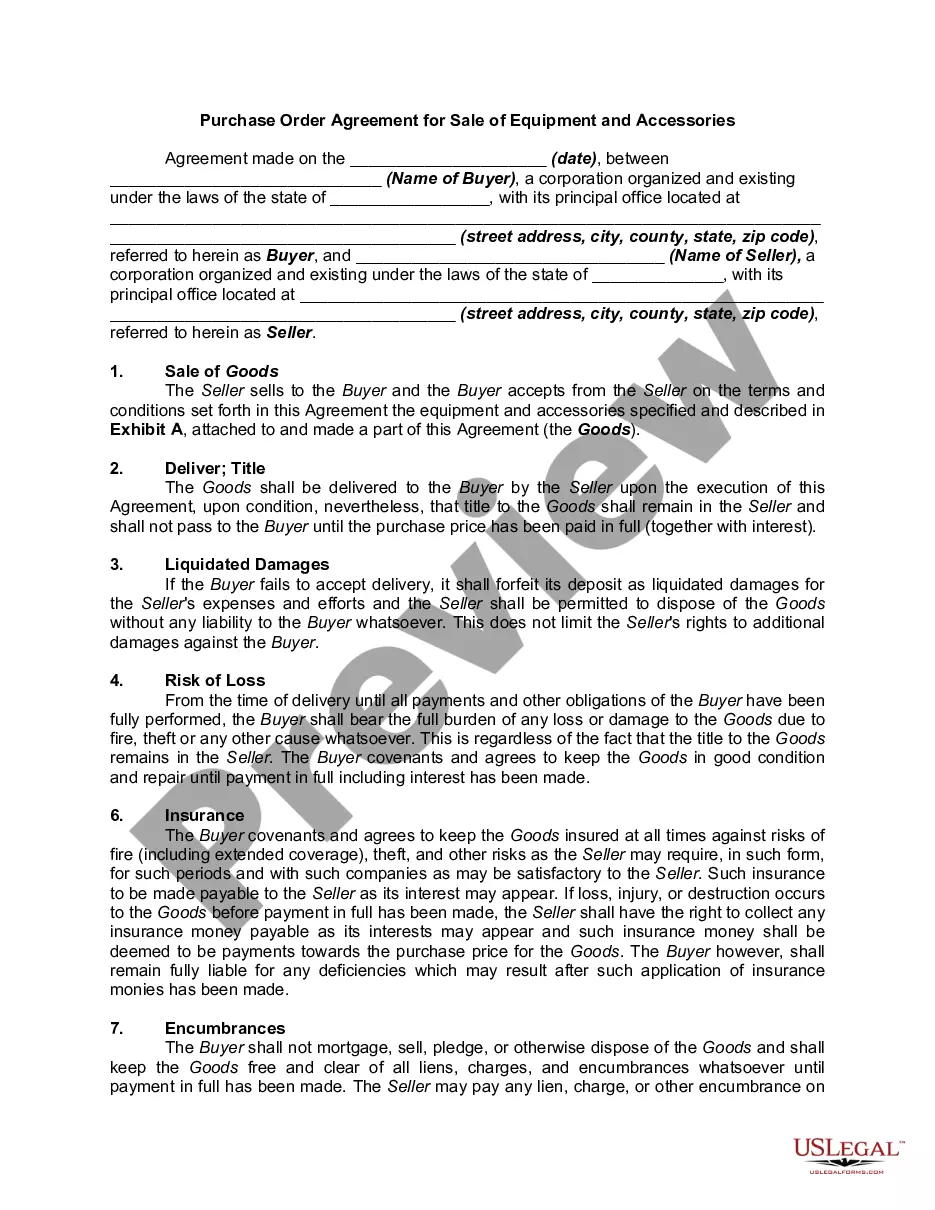
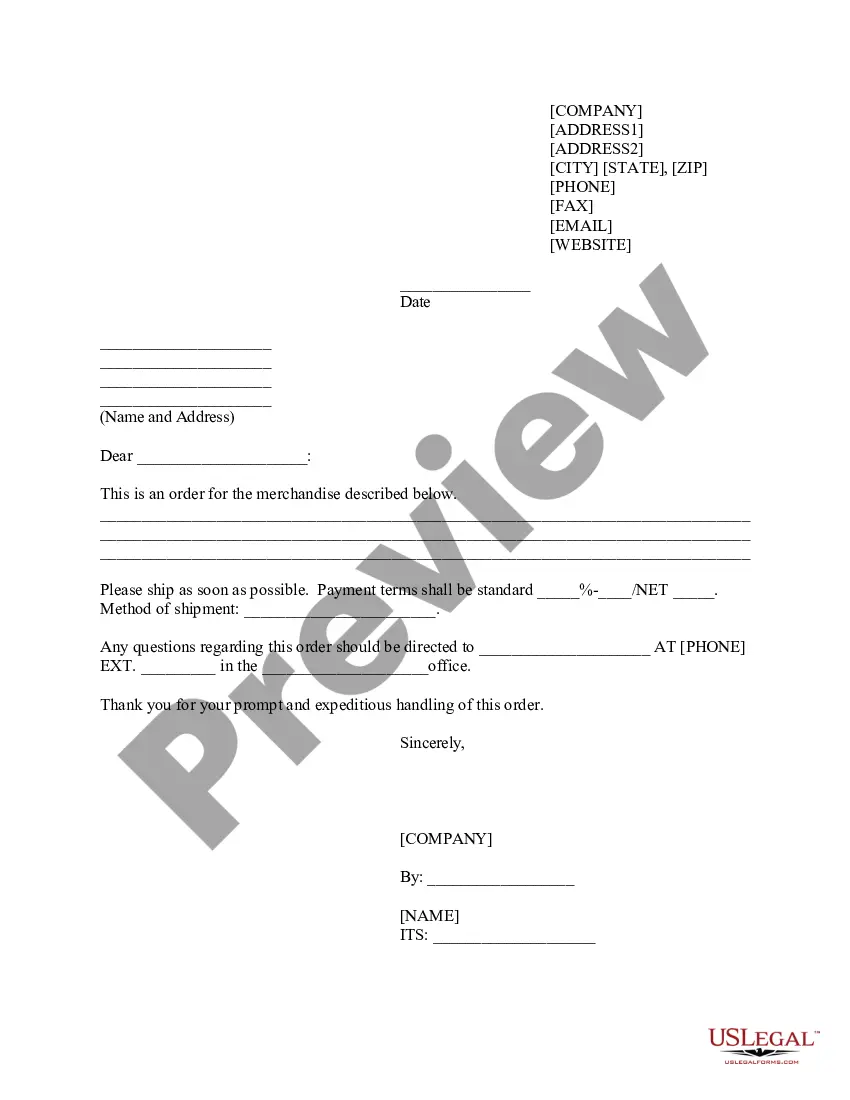
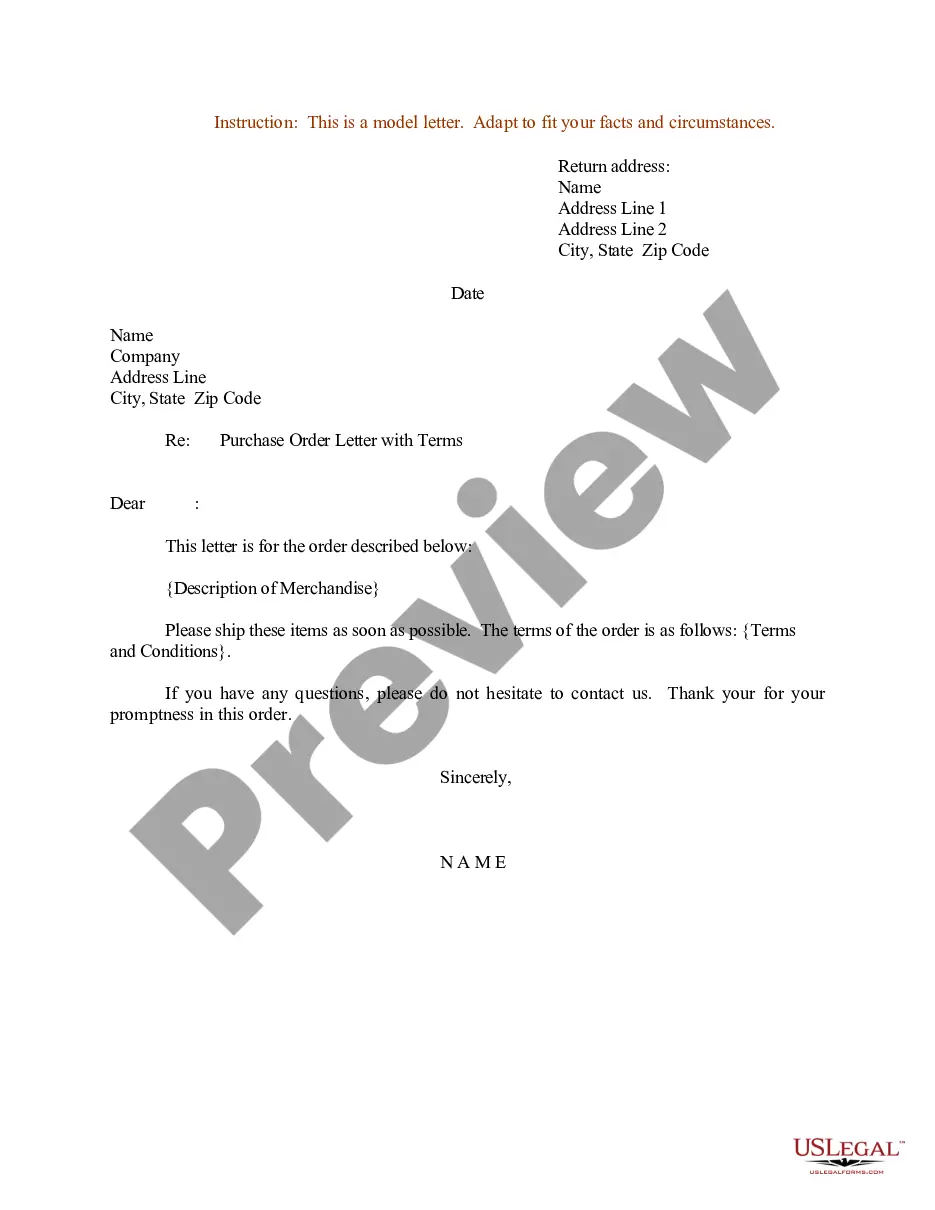
A Purchase Order with Terms and Conditions for Medical Supplies is a formal document that authorizes a supplier to deliver specified medical products at an agreed-upon price. This purchase order functions as a legally binding contract once accepted by the supplier. Unlike informal orders or agreements, this form clearly outlines terms regarding pricing, delivery timelines, and the obligations of both the buyer and the supplier. It is essential for ensuring both parties understand their rights and responsibilities in the purchasing process.
Key components of this form
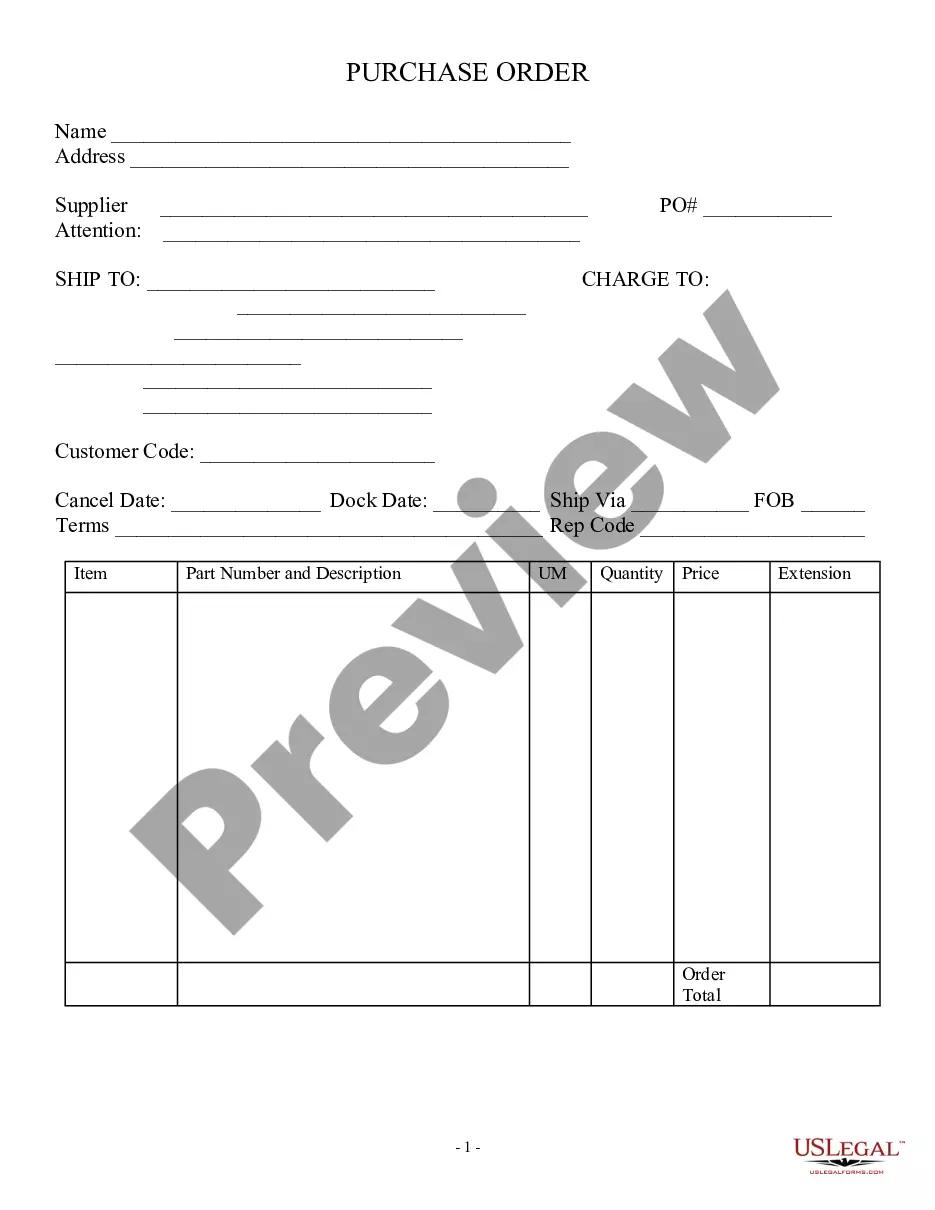
- Buyer and supplier details, including name and address.
- Purchase Order number and customer code to track the transaction.
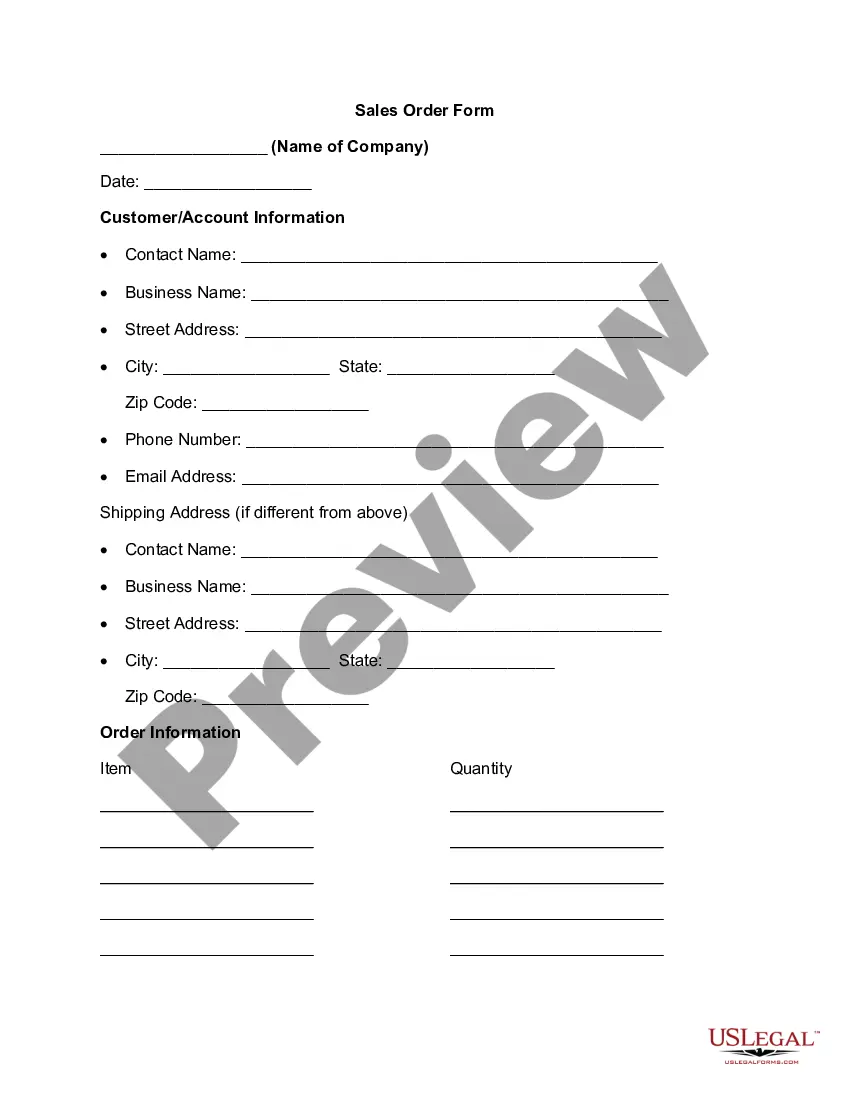
- Itemized list of medical supplies including part numbers, descriptions, quantities, and prices.
- Terms of purchase that define payment conditions and delivery expectations.
- Warranty and compliance clauses to assure the quality and legality of supplies.
- Indemnification provisions to protect the buyer from claims related to the products supplied.
Situations where this form applies
This purchase order form should be used when a buyer needs to formally request medical supplies from a supplier. It is especially useful in healthcare settings where accurate documentation is critical. Scenarios for use include placing orders for hospitals, clinics, pharmacies, or any healthcare provider that requires consistent and reliable medical supplies. It ensures clarity in transactions and helps in adherence to accounting practices.
Intended users of this form
- Healthcare providers looking to procure medical supplies from vendors.
- Administrative personnel responsible for managing supply orders.
- Purchasing agents seeking to ensure compliance with procurement policies.
- Businesses involved in the medical supply industry needing formal agreements.
Steps to complete this form
- Identify the buyer and supplier by entering their respective names and addresses at the top of the form.
- Fill in the purchase order number and customer code for tracking purposes.
- List each medical supply item with its part number, description, quantity, and price in the designated fields.
- Specify the payment terms, including any discounts for early payment.
- Review warranty and compliance information and include any necessary acknowledgments from the supplier.
- Ensure all parties sign the document to finalize the agreement.
Notarization requirements for this form
This form usually doesn’t need to be notarized. However, local laws or specific transactions may require it. Our online notarization service, powered by Notarize, lets you complete it remotely through a secure video session, available 24/7.
Get your form ready online
Our built-in tools help you complete, sign, share, and store your documents in one place.
Make edits, fill in missing information, and update formatting in US Legal Forms—just like you would in MS Word.
Download a copy, print it, send it by email, or mail it via USPS—whatever works best for your next step.
Sign and collect signatures with our SignNow integration. Send to multiple recipients, set reminders, and more. Go Premium to unlock E-Sign.
If this form requires notarization, complete it online through a secure video call—no need to meet a notary in person or wait for an appointment.
We protect your documents and personal data by following strict security and privacy standards.

Make edits, fill in missing information, and update formatting in US Legal Forms—just like you would in MS Word.

Download a copy, print it, send it by email, or mail it via USPS—whatever works best for your next step.

Sign and collect signatures with our SignNow integration. Send to multiple recipients, set reminders, and more. Go Premium to unlock E-Sign.

If this form requires notarization, complete it online through a secure video call—no need to meet a notary in person or wait for an appointment.

We protect your documents and personal data by following strict security and privacy standards.
Common mistakes
- Failing to include all necessary details about the items being ordered.
- Not specifying the delivery dates or terms clearly.
- Leaving payment terms ambiguous.
- Neglecting to obtain signatures from both parties.
Benefits of completing this form online
- Easy access and quick download from any device, saving time.
- Editable fields allow for customization specific to each order.
- Instant legal compliance as forms are drafted by licensed attorneys.
- Secure storage helps prevent loss of important documents.
Key takeaways
- This Purchase Order formalizes the procurement of medical supplies between Buyer and Supplier.
- Clear terms and conditions help prevent misunderstandings during transactions.
- Utilizing this form streamlines the purchasing process within healthcare settings.
Looking for another form?
Form popularity
FAQ
COMPANY DETAILS. These are the details of our organisation. PURCHASE ORDER NO. This is often printed on the document. DATE OF ORDER. Always write in the current date. DATE REQUIRED. TO. SHIP TO. QUANTITY ORDERED, PART NUMBER, DESCRIPTION, UNIT PRICE AND TOTAL. ADDITIONAL PURCHASES.
The purchase request/requisition form. copy of the request for quotes sent out to prospective vendors. listing of vendors to whom such requests were sent out. copies of bids. summary of bid analysis.
Most modern-day businesses use an online invoicing tool (like ZipBooks) to send invoices and receive payment from customers. Invoices are created in response to a purchase order (whether formally processed or informally settled). In other words, purchase orders typically come before invoices.
For example: Maria's company needs to purchase new materials from a supplier to create their products. The company then creates a purchase order to present to the supplier from which they wish to order materials.When Maria's company receives the goods and the invoice, they compare them to the purchase order.
COMPANY DETAILS. These are the details of our organisation. PURCHASE ORDER NO. This is often printed on the document. DATE OF ORDER. Always write in the current date. DATE REQUIRED. TO. SHIP TO. QUANTITY ORDERED, PART NUMBER, DESCRIPTION, UNIT PRICE AND TOTAL. ADDITIONAL PURCHASES.
1Quantity of goods or services purchased.2A description of the product or good purchased.3Brand names or model numbers.4Price.5Delivery date.6Location.7Name and billing address of the buyer.8Name and payment receipt address of the seller.How to Write a Purchase Order - Bizfluent\nbizfluent.com > how-4913862-write-purchase-order
Purchase orders are standardized across the entire company and contain, at the very least, information about: the purchaser and vendor (names, addresses), the order itself (product description, technical specs, price, quantity), and payment terms (due date and form of payment, eg.
Create a purchase order. Send out multiple requests for quotation(RFQ) Analyze and select a vendor. Negotiate contract and send PO. Receive goods/services. Receive and check invoice (3-Way Matching) Authorize invoice and pay the vendor. Record keeping.
Step 0: Needs Recognition. Step 1: Purchase Requisition. Step 2: Requisition review. Step 3: Solicitation process. Step 4: Evaluation and contract. Step 5: Order management. Step 6: Invoice approvals and disputes. Step 7: Record Keeping.