Complaint For Negligence - Fraud and Deceptive Trade Practices in Sale of Insurance - Jury Trial Demand
About this form
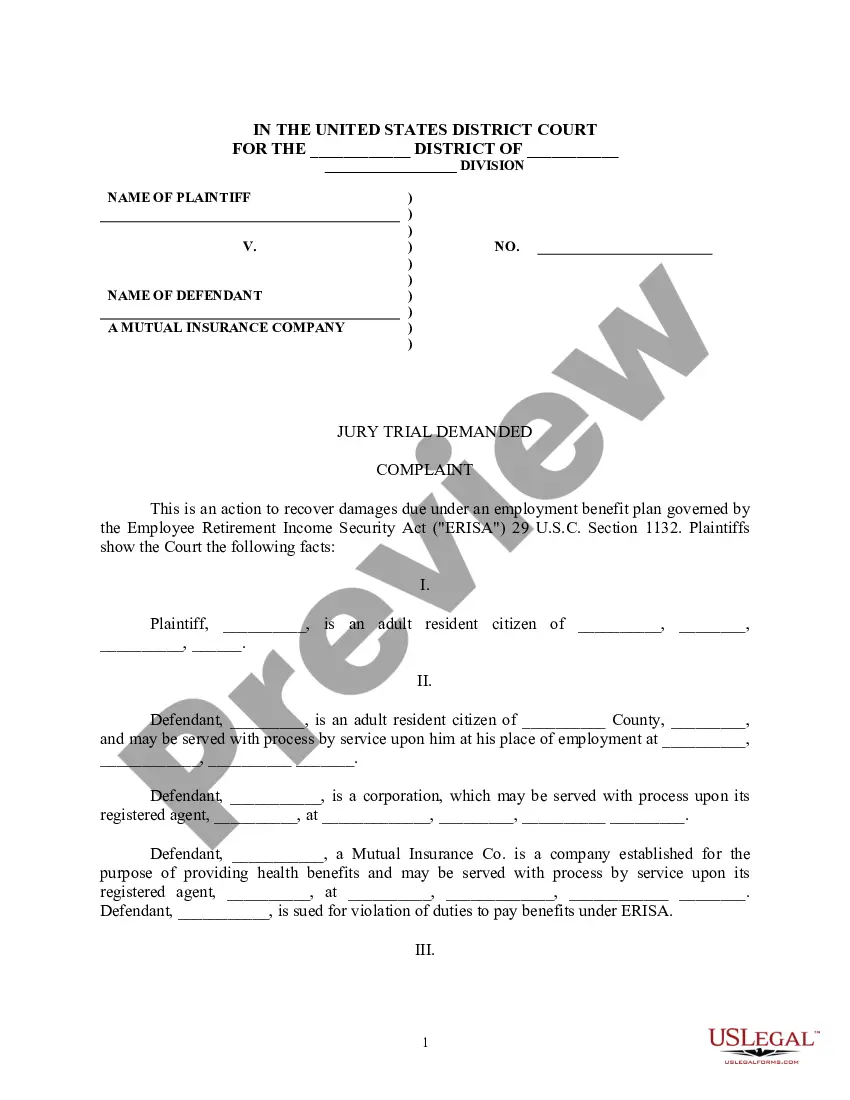
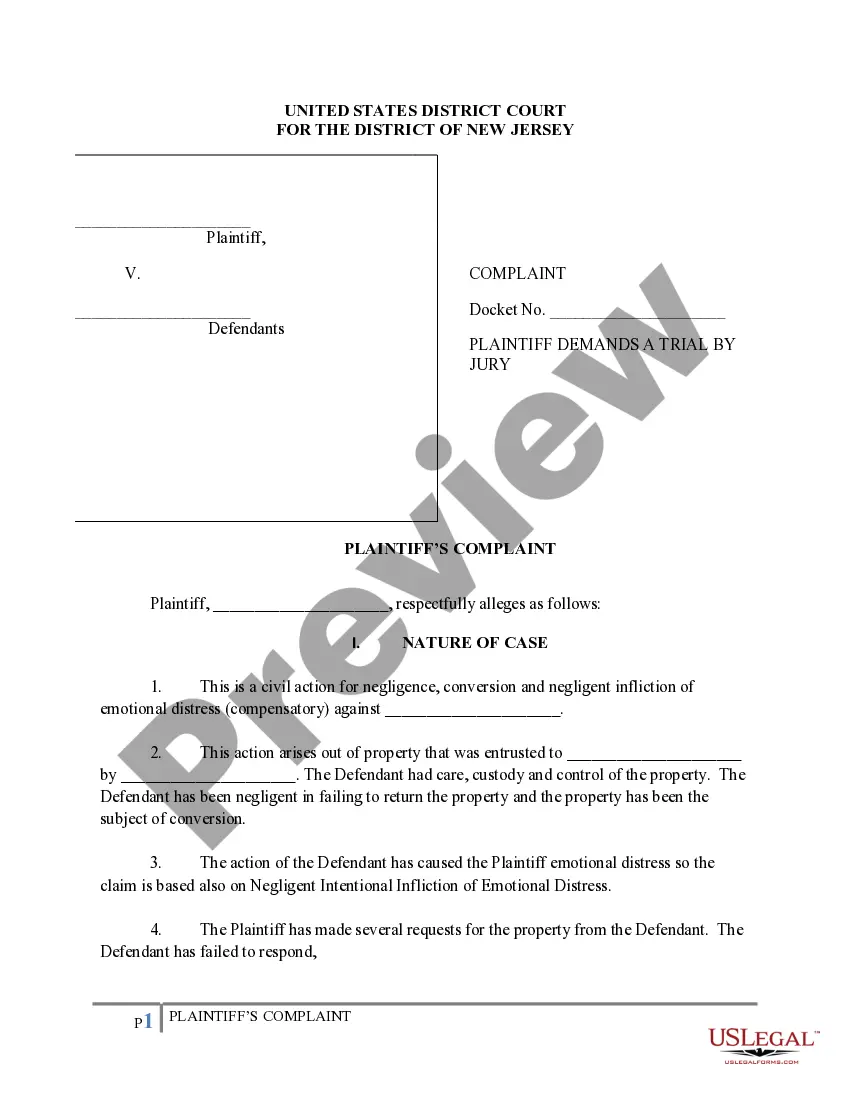
The Complaint for Negligence, specifically regarding Fraud and Deceptive Trade Practices in the Sale of Insurance, is a legal document used to initiate a court case. It outlines allegations against an insurance company for fraudulent practices that misled the plaintiff, resulting in financial damages. This form is specifically designed for cases where a jury trial is demanded, differentiating it from standard complaint forms that may not include a jury request.
Key components of this form
- Identification of the parties involved: names and addresses of the plaintiff and defendants.
- Details of the insurance policy in question including application date and coverage amount.
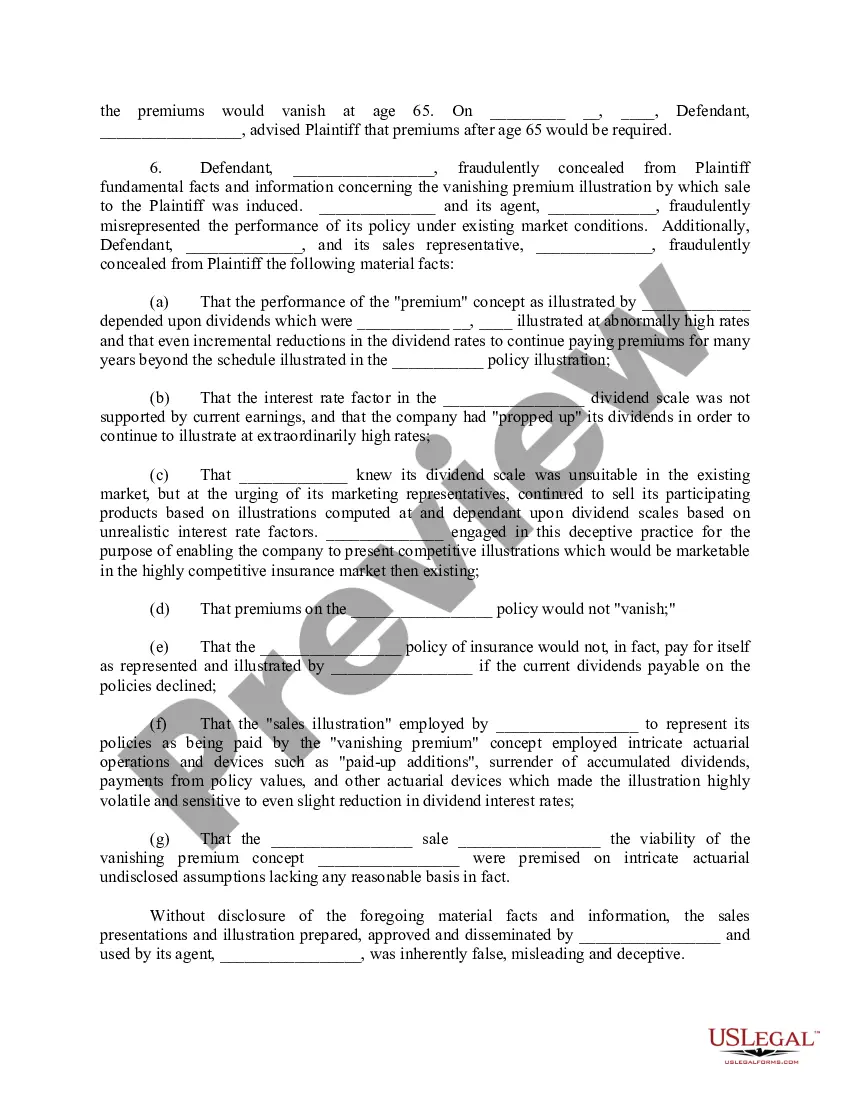
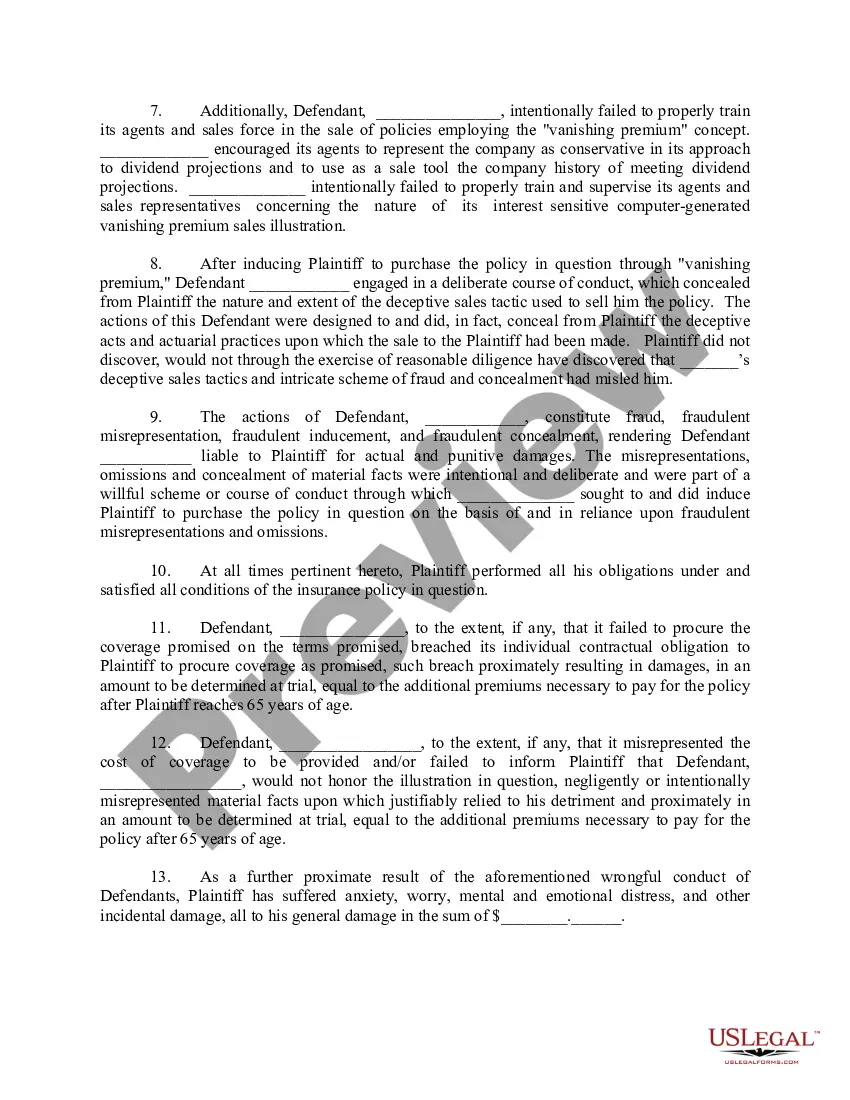
- Specific allegations of fraudulent practices and misrepresentations made by the defendants.
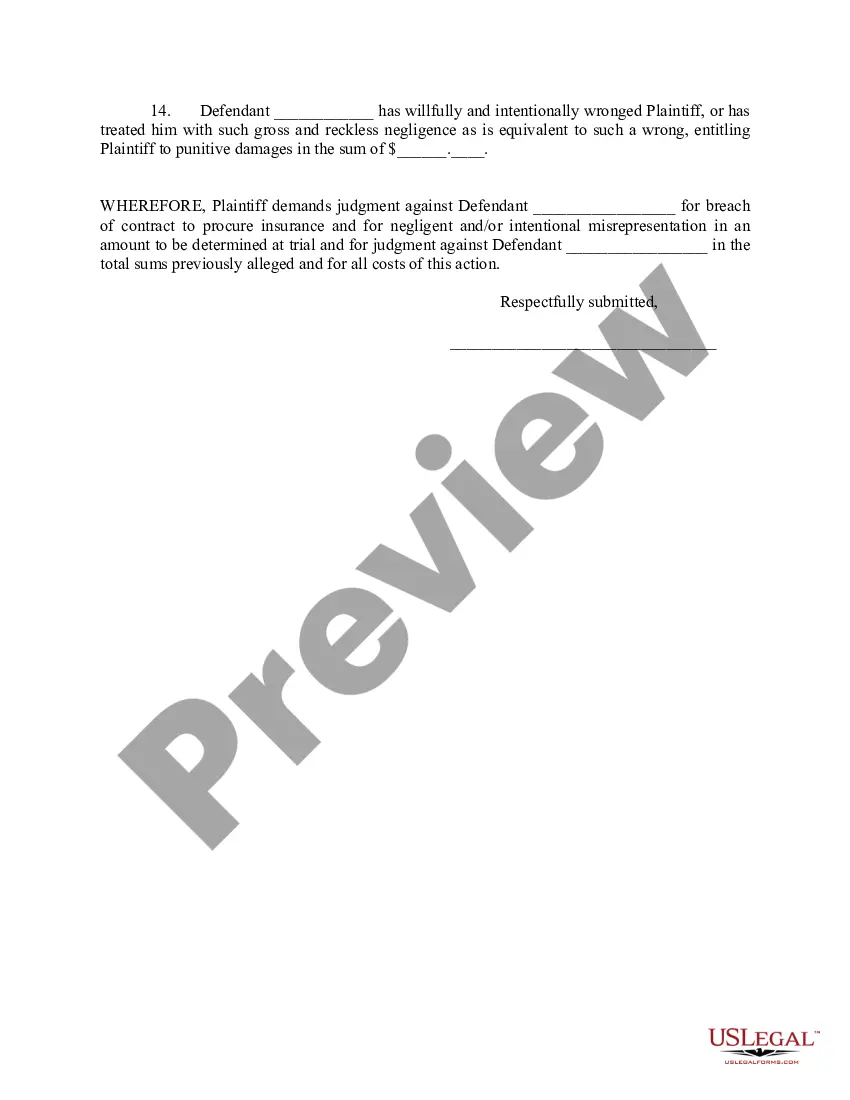
- Claims for damages, including actual and punitive damages, resulting from the defendants' actions.
- A demand for judgment regarding breach of contract and misrepresentation.




Common use cases
This form should be used when an individual has been misled by an insurance company's deceptive sales tactics, resulting in a purchase that does not meet the promised terms. It is particularly applicable when the plaintiff has incurred additional costs due to the failure of the insurance policy to perform as illustrated at the time of sale.
Intended users of this form
- Individuals who believe they have been misled by insurance agents or companies.
- Anyone seeking to pursue legal action regarding a fraudulent life insurance policy.
- Individuals who wish to demand a jury trial for their claim of negligence and fraud.
- Legal representatives acting on behalf of a client facing similar issues.
How to complete this form
- Begin by entering the names and contact information for both the plaintiff and defendants at the top of the form.
- Specify the insurance policy details, including the application date and amount of coverage sought.
- Clearly state the allegations of fraud and deception faced, detailing the misrepresentations made by the defendants.
- Calculate and enter the amount of damages sought, including any emotional distress or additional financial burdens incurred.
- Sign and date the form at the end, attesting to the accuracy of the information provided.
Is notarization required?
Notarization is generally not required for this form. However, certain states or situations might demand it. You can complete notarization online through US Legal Forms, powered by Notarize, using a verified video call available anytime.
Get your form ready online
Our built-in tools help you complete, sign, share, and store your documents in one place.
Make edits, fill in missing information, and update formatting in US Legal Forms—just like you would in MS Word.
Download a copy, print it, send it by email, or mail it via USPS—whatever works best for your next step.
Sign and collect signatures with our SignNow integration. Send to multiple recipients, set reminders, and more. Go Premium to unlock E-Sign.
If this form requires notarization, complete it online through a secure video call—no need to meet a notary in person or wait for an appointment.
We protect your documents and personal data by following strict security and privacy standards.

Make edits, fill in missing information, and update formatting in US Legal Forms—just like you would in MS Word.

Download a copy, print it, send it by email, or mail it via USPS—whatever works best for your next step.

Sign and collect signatures with our SignNow integration. Send to multiple recipients, set reminders, and more. Go Premium to unlock E-Sign.

If this form requires notarization, complete it online through a secure video call—no need to meet a notary in person or wait for an appointment.

We protect your documents and personal data by following strict security and privacy standards.
Typical mistakes to avoid
- Failing to include all relevant parties in the complaint.
- Not clearly articulating specific claims of fraud and misrepresentation.
- Neglecting to specify the damages sought, which can lead to complications in obtaining a judgment.
- Overlooking state-specific requirements when submitting the form.
Benefits of completing this form online
- Convenience of downloading and filling out the form from home.
- Editability allows users to customize the form to their specific case details easily.
- Access to reliable legal templates drafted by licensed attorneys.
Legal use & context
- The complaint outlines the legal framework for alleging fraud in insurance sales, which is generally recognized across jurisdictions.
- Enforcement of this form will depend upon the evidence presented and the court's interpretation of the claims made.
- Being thorough in documenting the allegations and damages will enhance the enforceability of your complaint in court.
Summary of main points
- This complaint addresses serious allegations against insurance companies regarding deceptive practices.
- Clear documentation of the claims and damages is essential for the success of the case.
- Adapting the form to meet state-specific laws is crucial for legal compliance.
- Using this form online offers convenience and access to professionally drafted templates.
Looking for another form?

Form popularity
FAQ
A DTPA lawsuit generally must be filed within two years after the date on which the false, misleading, or deceptive act or practice occurred. If the deceptive act took place over a period of time, then, to be safe, you should begin suit two years from the date of the first such action.
Unfair trade practices include false representation of a good or service, targeting vulnerable populations, false advertising, tied selling, false free prize or gift offers, false or deceptive pricing, and non-compliance with manufacturing standards.
DEFINITION OF A CONSUMER: Section 17.45(4) of the DTPA defines consumer as an individual, partnership, corporation, this state, or a subdivision or agency of this state who seeks or acquires by purchase or lease, any goods or services, except that the term does not include a business consumer that has assets of $25
In 2011, the Texas Legislature amended DTPA to provide an exemption for real estate license holders so that they would not be held liable for innocent acts of omission or for advice and opinions given without an attempt to defraud or deceive.
The DTPA protects consumers from false, misleading, and deceptive statements or business practices.The causation standard that a DTPA consumer must prove is that the representations were a producing cause of their injuries. Additionally, the DTPA defendant's actions must be in connection with the transaction.
When a DTPA lawsuit is found to be groundless, the law allows for which of the following? The person initiating the lawsuit is responsible for the defendant's attorney fees and court costs. At least 60 days prior to filing a lawsuit under DTPA, what is the consumer required to do?
Under the DTPA, a consumer that prevails may recover her economic damages which are damages for pecuniary loss, as well as court costs and reasonable attorney's fees. If the consumer proves knowingly, the consumer can recover up to three times economic damages and damages for mental anguish.