Texas Warranty Deed for Individual to Individual - Subject to Retained Life Estate
About this form
The Warranty Deed for Individual to Individual - Subject to Retained Life Estate is a legal document used to transfer property ownership from one individual to another while allowing the original owner (grantor) to retain a life estate in the property. This means the grantor can continue to live on or use the property for the duration of their life. This form is distinct from standard warranty deeds as it incorporates the concept of a retained life estate, providing specific rights and responsibilities for both the grantor and grantee.
Key components of this form
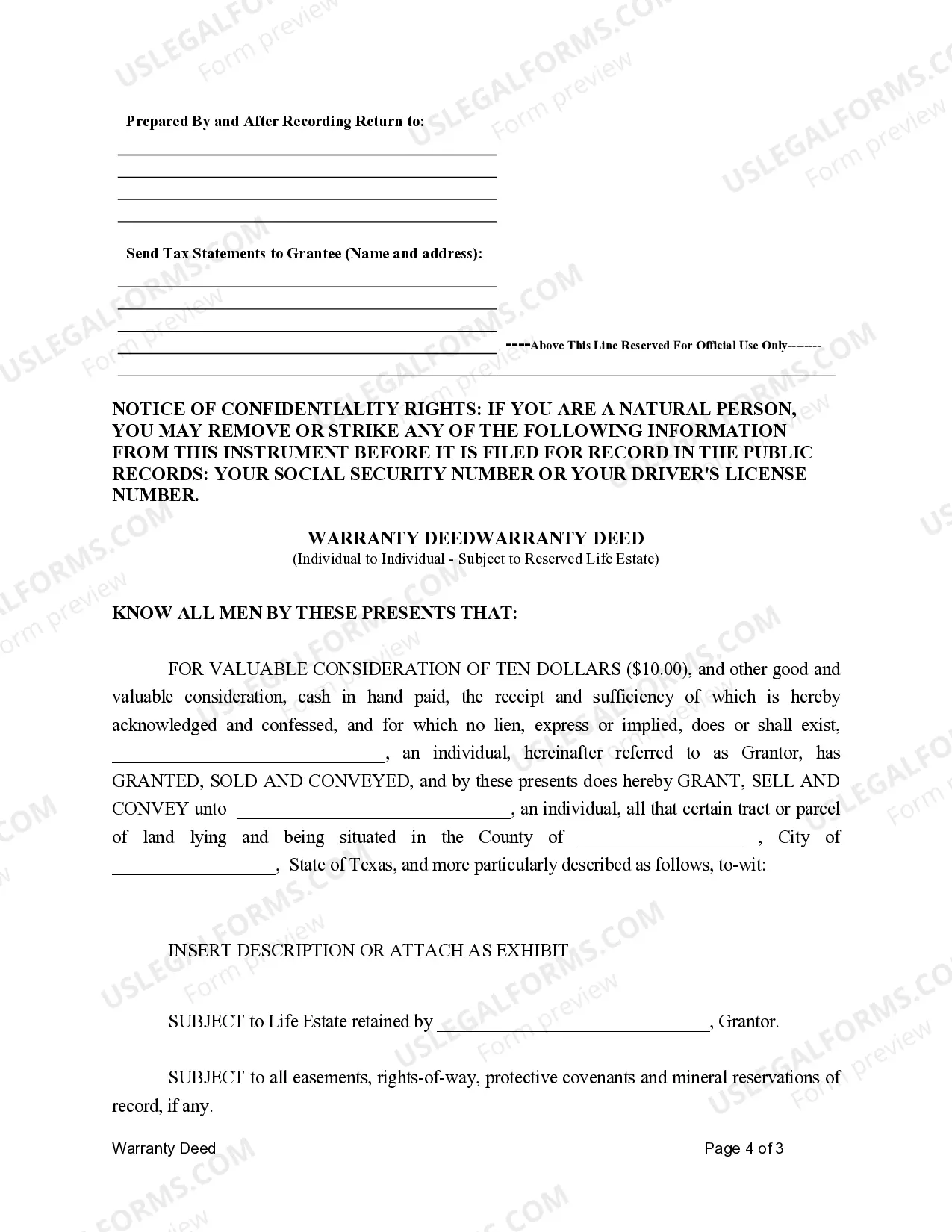
- Names of the grantor and grantee: Clearly identify both parties involved in the transaction.
- Description of the property: Specify the exact location and details of the property being conveyed.
- Life estate clause: Include language that retains the life estate for the grantor.
- Consideration amount: State the financial consideration involved in the transfer, typically a nominal value.
- Additional exceptions: Note any easements, covenants, or reservations affecting the property.
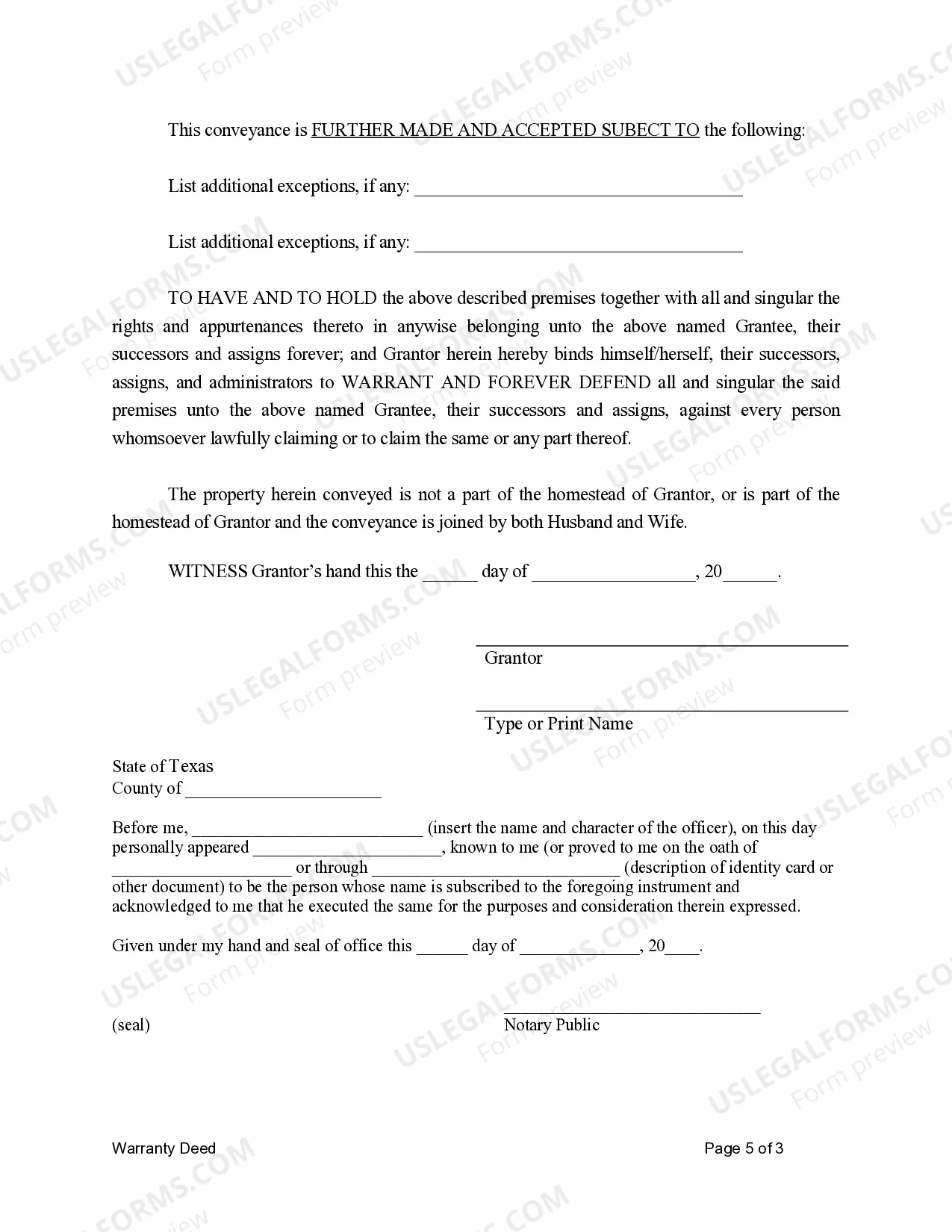
- Signature and acknowledgment: Require signatures from both parties and notarization for legal validity.




When this form is needed
This form is ideal when an individual wants to transfer ownership of real property to another individual while retaining the right to use the property for life. It is commonly used among family members, such as transferring property to children while allowing the parents to continue living on the property. This arrangement can help with estate planning, allowing for a smoother transition of property without immediate conveyance of full ownership.
Who this form is for
This form is suitable for:
- Individuals wishing to transfer property ownership while retaining a right to live in it for their lifetime.
- Property owners looking to facilitate estate planning for their heirs.
- Family members involved in property transfers where maintaining residency is a priority.
Completing this form step by step
- Identify the parties: Fill in the full names of the grantor (seller) and grantee (buyer).
- Specify the property: Provide a detailed description of the property, including address and legal description.
- Insert the consideration amount: State the amount being exchanged for the property, typically ten dollars.
- Include life estate details: Clearly state the retained life estate for the grantor within the property description.
- List any exceptions: Note any known encumbrances or restrictions affecting the property.
- Sign and notarize: Ensure both parties sign the document and have it notarized to confirm its validity.
Is notarization required?
This form must be notarized to be legally valid. US Legal Forms provides secure online notarization powered by Notarize, allowing you to complete the process through a verified video call.
Get your form ready online
Our built-in tools help you complete, sign, share, and store your documents in one place.
Make edits, fill in missing information, and update formatting in US Legal Forms—just like you would in MS Word.
Download a copy, print it, send it by email, or mail it via USPS—whatever works best for your next step.
Sign and collect signatures with our SignNow integration. Send to multiple recipients, set reminders, and more. Go Premium to unlock E-Sign.
If this form requires notarization, complete it online through a secure video call—no need to meet a notary in person or wait for an appointment.
We protect your documents and personal data by following strict security and privacy standards.

Make edits, fill in missing information, and update formatting in US Legal Forms—just like you would in MS Word.

Download a copy, print it, send it by email, or mail it via USPS—whatever works best for your next step.

Sign and collect signatures with our SignNow integration. Send to multiple recipients, set reminders, and more. Go Premium to unlock E-Sign.

If this form requires notarization, complete it online through a secure video call—no need to meet a notary in person or wait for an appointment.

We protect your documents and personal data by following strict security and privacy standards.
Typical mistakes to avoid
- Failing to provide a complete property description can lead to legal issues.
- Not including the life estate clause, which is essential for this type of transfer.
- Neglecting to notarize the deed, which is often a requirement for it to be legally binding.
- Forgetting to specify exceptions, which can lead to disputes over property rights later.
Why use this form online
- Convenience: Complete the form at your own pace, from the comfort of your home.
- Editability: Make necessary adjustments easily before finalizing the document.
- Reliability: Access attorney-drafted templates that meet legal standards.
Looking for another form?


Form popularity
FAQ
Fill out the "grantor" section of the warranty deed. The grantors are the givers, or current owners, of the property. Use the legal name of each grantor and insert current addresses after each grantor's name.
Write the county where the property is located on line provided next to the words "County of" beneath the words "The State of Texas." Write the name and address of the grantor on the lines provided after the words "Know all men by these presents, That I."
The answer is yes. Parties to a transaction are always free to prepare their own deeds. If you do so, be sure your deed measures up to your state's legal regulations, to help avert any legal challenge to the deed later.
A person owns property in a life estate only throughout their lifetime. Beneficiaries cannot sell property in a life estate before the beneficiary's death. One benefit of a life estate is that property can pass when the life tenant dies without being part of the tenant's estate.
Contrary to normal expectations, the Deed DOES NOT have to be recorded to be effective or to show delivery, and because of that, the Deed DOES NOT have to be signed in front of a Notary Public. However, if you plan to record it, then it does have to be notarized as that is a County Recorder requirement.
It's important to note that a warranty deed does not actually prove the grantor has ownership (a title search is the best way to prove that), but it is a promise by the grantor that they are transferring ownership and if it turns out they don't actually own the property, the grantor will be responsible for compensating
The Texas warranty deed is a form of deed that provides an unlimited warranty of title.In Texas, warranty deeds are often used: When a buyer is purchasing residential property from a seller for full value; When the buyer does not intend to purchase title insurance; or.
The date the deed was made; The name of the party granting the life estate and their address; The name of the grantee and their address; The address and a legal description of the property that is subject to the life estate;