Texas Statutory Declaration of Appointment of Guardian for My Child in the Event of My Death or Incapacity
What is this form?
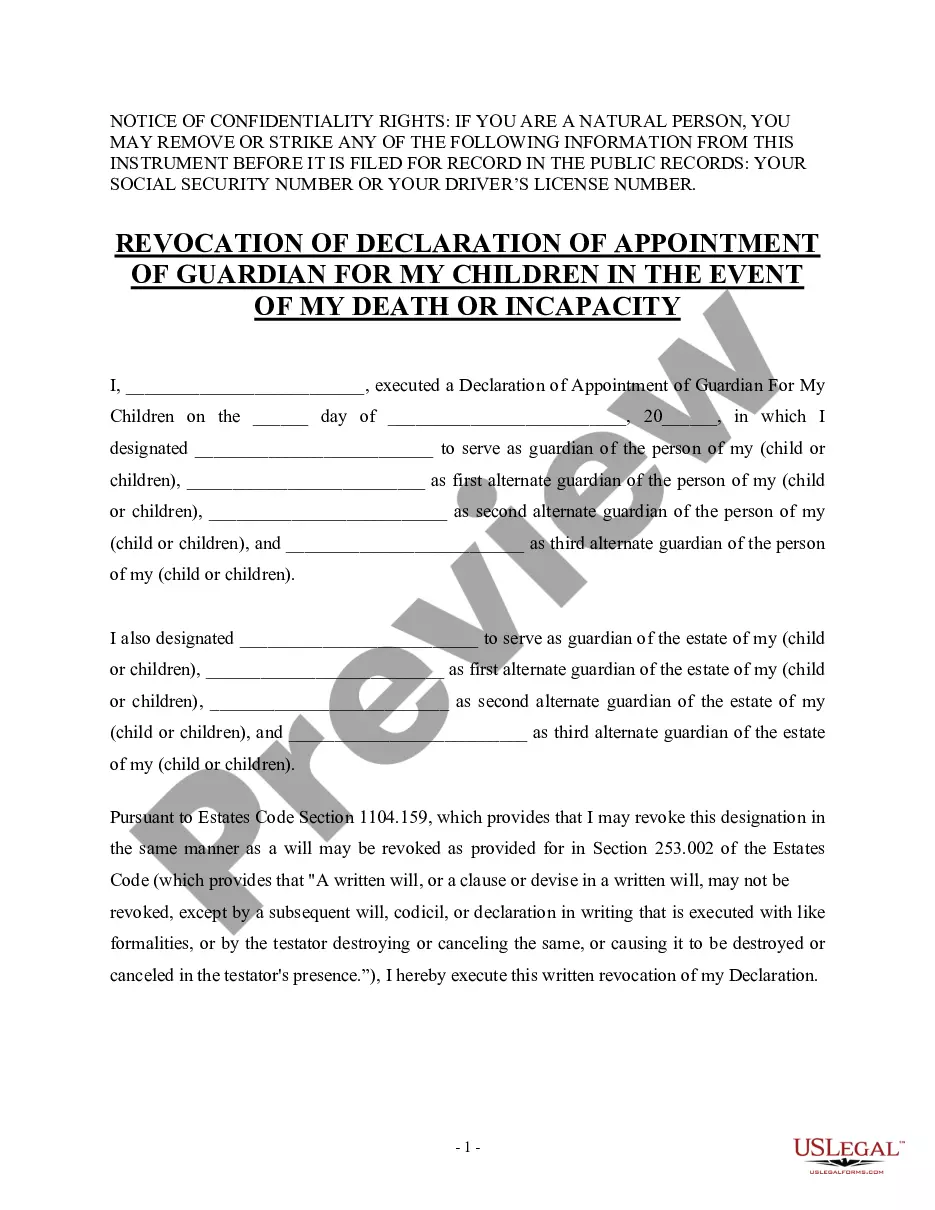
The Statutory Declaration of Appointment of Guardian for My Child in the Event of My Death or Incapacity is a legal document that allows a parent or guardian to designate individuals to care for their child(ren) in case of their death or incapacity. This form is specific to the Texas Probate Code and is essential for ensuring that your parenting choices are honored when you can no longer make decisions for your children. Unlike a will, which may cover broader estate matters, this declaration specifically focuses on the appointment of guardianship for your dependents.
Main sections of this form
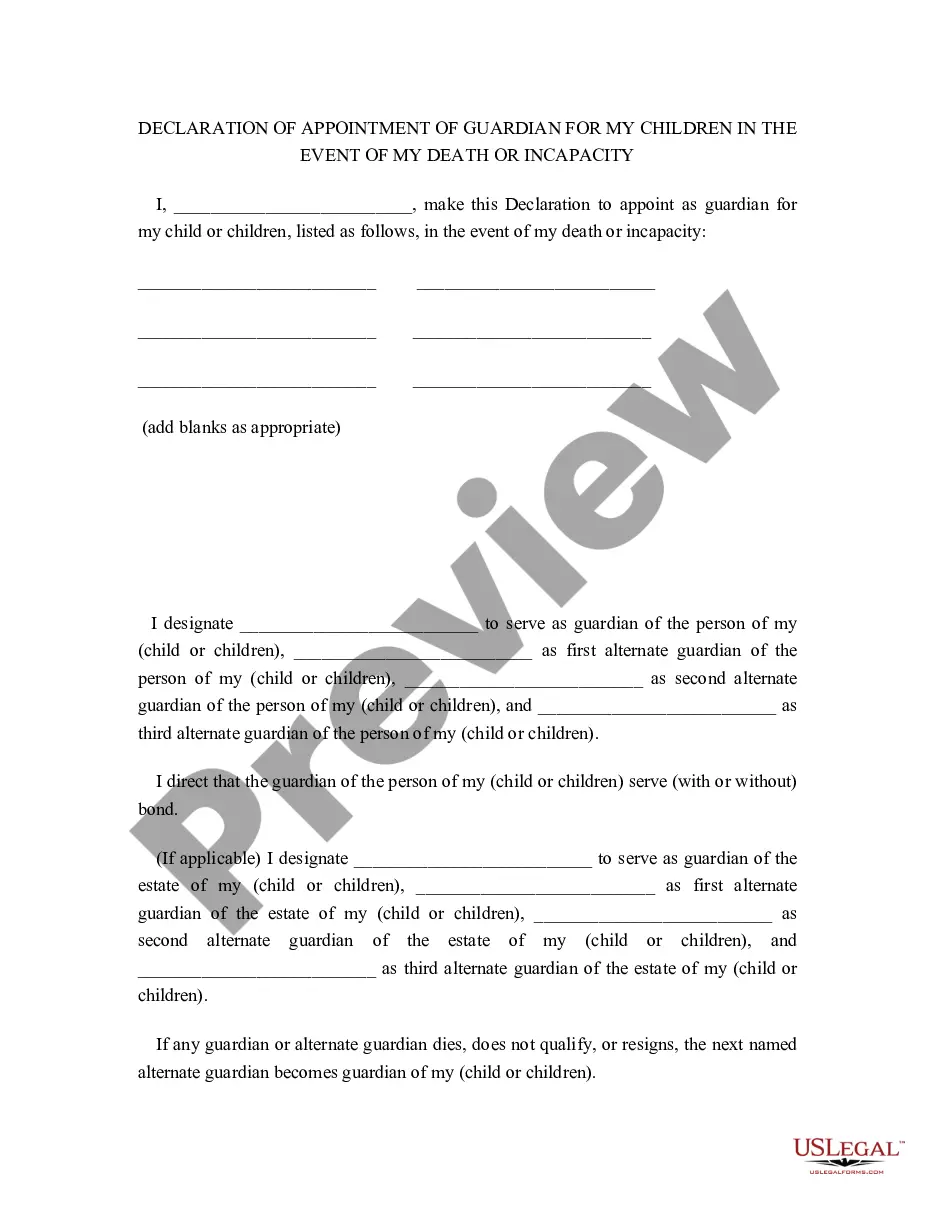
- Declarant's name and details about the children being protected.
- Primary guardian and alternate guardians' names, in case the primary is unable to serve.
- Specification of whether the guardian needs to serve with or without a bond.
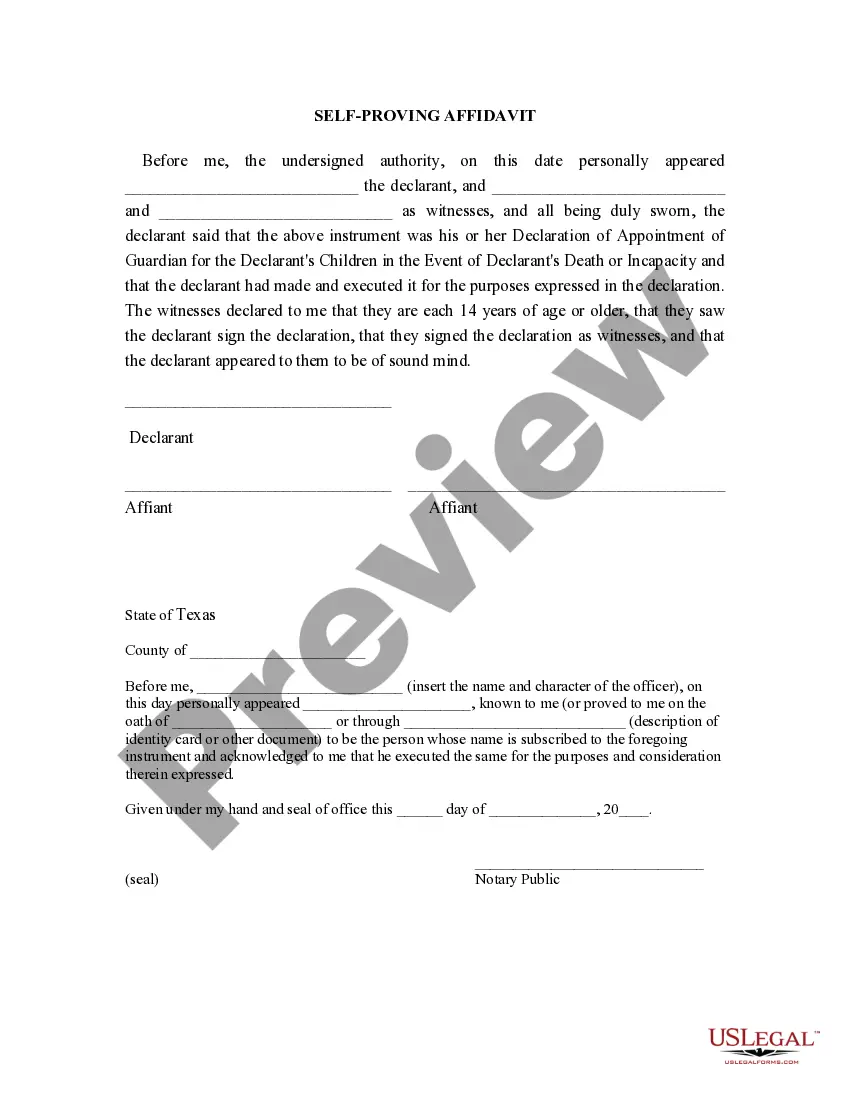
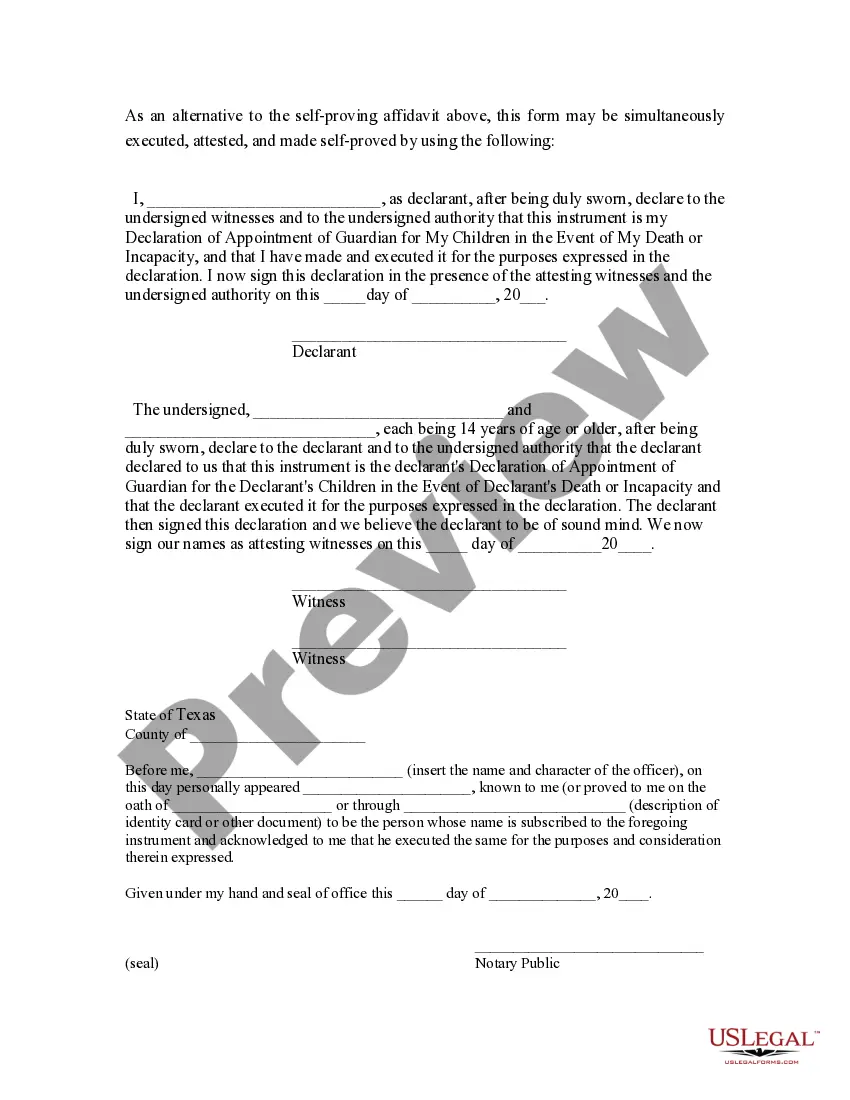
- Sections for notarization and witness signatures to validate the document.
- Self-proving affidavit to confirm the authenticity of the declaration.

Common use cases
This form is used when a parent or legal guardian wishes to ensure that their child(ren) are taken care of by trusted individuals in the event they pass away or become incapacitated. It is particularly important for single parents, or those who may not have a partner or family member to assume guardianship automatically. Having this form in place helps avoid court intervention and ensures your wishes are fulfilled promptly.
Intended users of this form
- Parents or guardians of minor children.
- Individuals who want to plan for the future care of their children.
- Single parents without a designated support system.
- Guardians involved in joint custody arrangements.
Completing this form step by step
- Enter your name as the declarant and the names of your child(ren) in the designated fields.
- Specify the primary guardian and up to three alternate guardians for your child or children.
- Indicate whether the guardian should serve with or without a bond.
- Sign the declaration in the presence of witnesses who are at least fourteen years old.
- Ensure that a notary public witnesses your signature and the signatures of any witnesses to validate the document.
Notarization guidance
Yes, this form must be notarized to be legally valid. Notarization helps confirm that you are the person making the declaration and that all signatures are authentic. US Legal Forms provides an integrated online notarization service, allowing you to get your document notarized via a secure video call, ensuring 24/7 availability without the need to travel.
Get your form ready online
Our built-in tools help you complete, sign, share, and store your documents in one place.
Make edits, fill in missing information, and update formatting in US Legal Forms—just like you would in MS Word.
Download a copy, print it, send it by email, or mail it via USPS—whatever works best for your next step.
Sign and collect signatures with our SignNow integration. Send to multiple recipients, set reminders, and more. Go Premium to unlock E-Sign.
If this form requires notarization, complete it online through a secure video call—no need to meet a notary in person or wait for an appointment.
We protect your documents and personal data by following strict security and privacy standards.

Make edits, fill in missing information, and update formatting in US Legal Forms—just like you would in MS Word.

Download a copy, print it, send it by email, or mail it via USPS—whatever works best for your next step.

Sign and collect signatures with our SignNow integration. Send to multiple recipients, set reminders, and more. Go Premium to unlock E-Sign.

If this form requires notarization, complete it online through a secure video call—no need to meet a notary in person or wait for an appointment.

We protect your documents and personal data by following strict security and privacy standards.
Avoid these common issues
- Failing to specify alternate guardians, which can lead to complications.
- Not obtaining the necessary witness signatures or notarization.
- Leaving blank fields, which may render the form incomplete.
- Not updating the form if guardians or circumstances change over time.
Why use this form online
- Convenience of filling out the form at your own pace.
- Easy access to templates that have been prepared by licensed attorneys.
- Ability to edit and customize the document to fit your specific needs.
- Secure storage and quick downloads for future reference.
What to keep in mind
- This form facilitates the appointment of guardians for minor children in the event of a parent's death or incapacity.
- Proper completion includes designating primary and alternate guardians, signing in front of witnesses, and obtaining notarization.
- Using this form ensures your wishes are honored and helps avoid legal battles regarding guardianship during challenging times.
Looking for another form?
Form popularity
FAQ
Guardianship is a legal process used to protect individuals who are unable to care for their own well-being due to infancy, incapacity or disability. A court will appoint a legal guardian to care for an individual, known as a ward, who is in need of special protection.
To appoint legal guardians for your children, you must name them as your chosen guardians in your Will. Before doing this you will need to approach the people you would like to appoint as guardians to find out whether they are willing and able to take on this responsibility.
Fill out your forms. Have your forms reviewed. Make at least 3 copies of all your forms. File your forms with the court clerk. Give notice. Get completed proof of services forms from the server and file them with the court. Get everyone who agrees to sign a consent and waiver of notice.
You can write a letter naming a guardian for your children and keep it with your important papers or write in your will who you want to be the guardian of your children when you pass away. But if both parents are dead, the court will decide who the guardian is. The court will try to appoint the person you wanted.
There is no legal significance to someone being named a Godparent. If you want to name her as the person to be named the child's custodian in the event of your death, you can do that through a will. You need to consult with a local attorney.
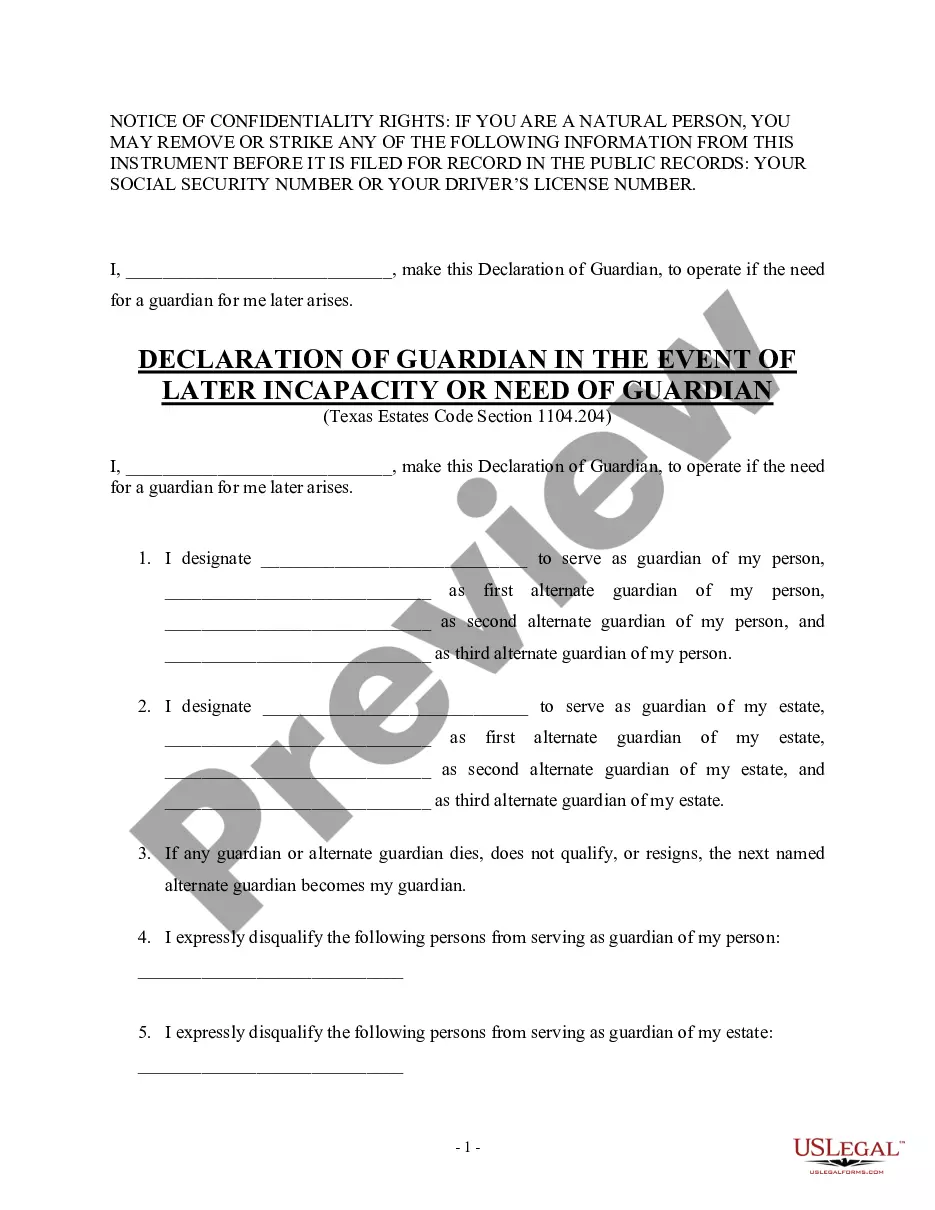
A Declaration of Guardian is a legal document where you tell the court who you want to serve as your guardian if there is ever a guardianship proceeding for you. There are two types of guardians: Guardian of your estate, and guardian of your person.
There are two types of guardianships, a full guardianship and a limited guardianship.
GUARDIAN: In the event I shall die as the sole parent of minor children, then I appoint ____________________________________ as Guardian of said minor children. If this named Guardian is unable or unwilling to serve, then I appoint ____________________________________ as alternate Guardian.
(a) A guardianship terminates upon the death of the ward or upon order of the court. (b) On petition of any person interested in the ward's welfare the court may terminate a guardianship if the ward no longer needs the assistance or protection of a guardian.