Texas Letter from Landlord to Tenant about Intent to increase rent and effective date of rental increase
What this document covers
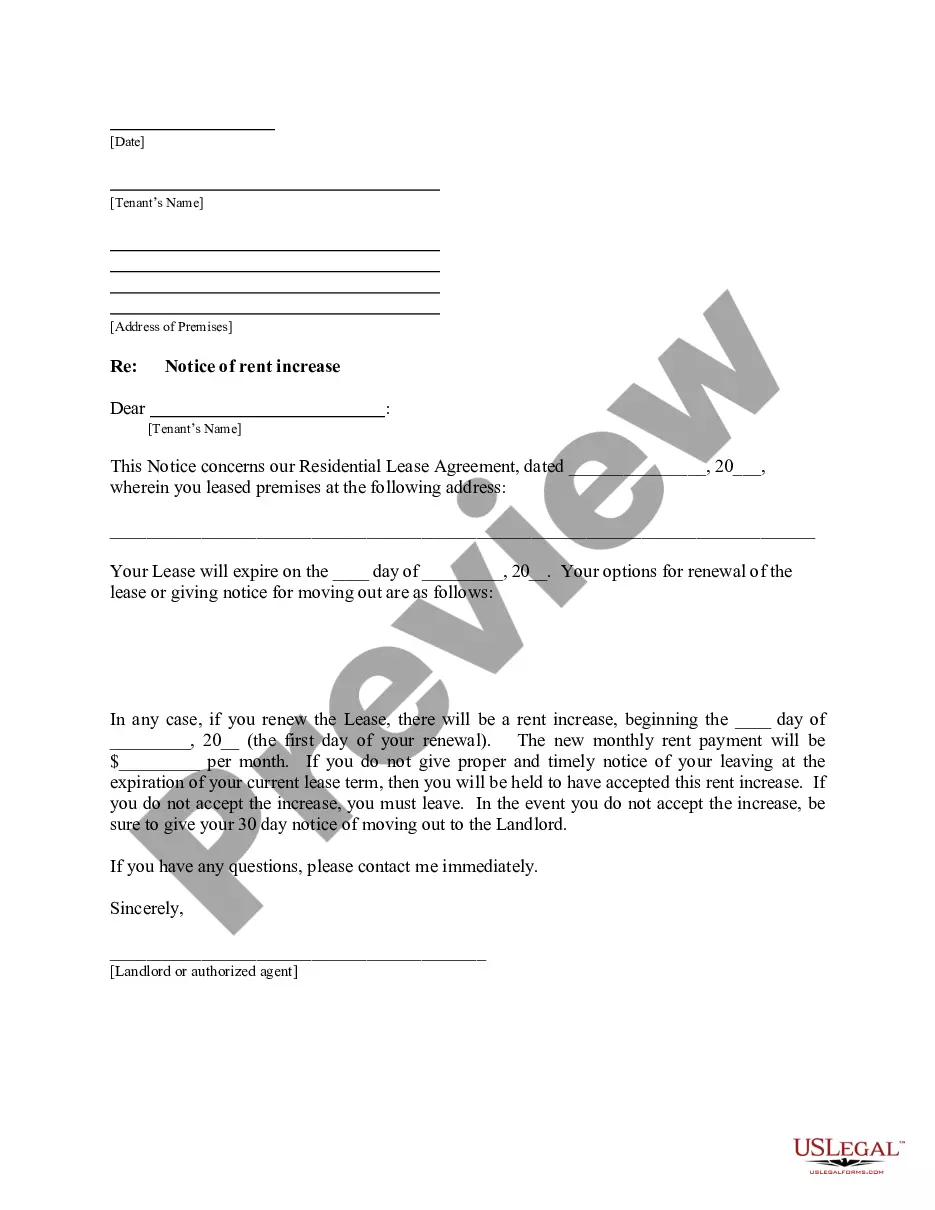
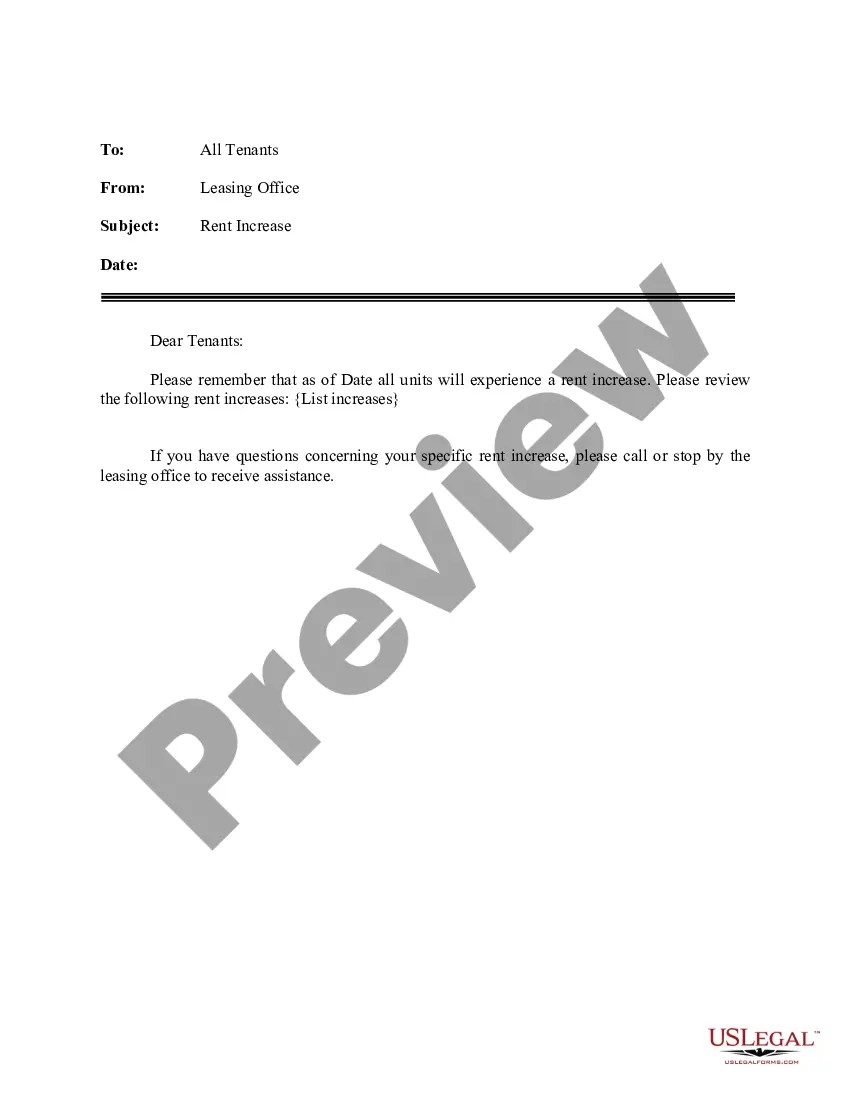
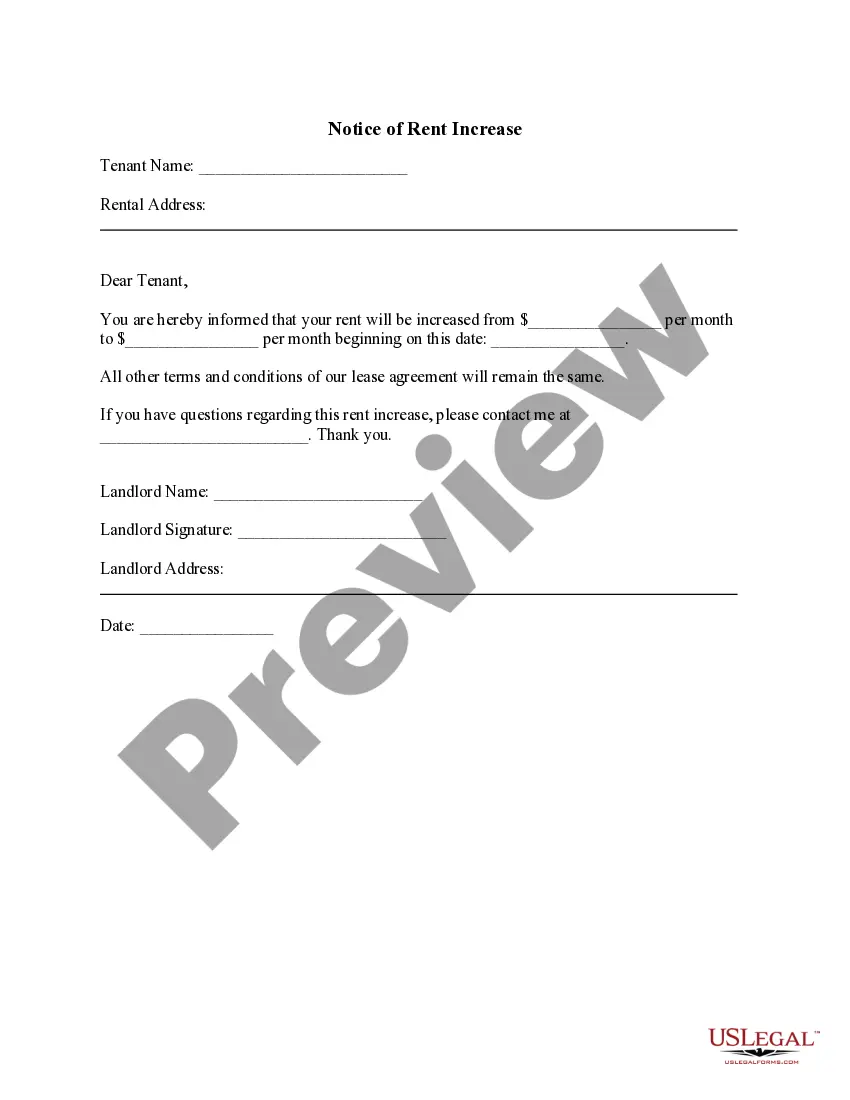
This letter from a landlord to tenant serves as a formal notification about the intent to increase rent and the effective date of that increase. It is essential for establishing clear communication regarding lease terms and how they may change after the expiration of a lease agreement. This form is distinct from other rental notices as it specifically addresses rent adjustments, allowing tenants to understand their options moving forward.
Main sections of this form
- Date of notice.
- Reference to the original lease agreement and its expiration date.
- Details of the rental increase and new rent amount.
- Options available to the tenant (vacate or renew with the new rent).
- Contact information for the landlord or authorized agent.
When to use this document
This form should be used when a landlord intends to notify a tenant of a rent increase once the current lease term ends. It is appropriate to use this form if you are looking to inform your tenant about their options for either renewing the lease with the new rental amount or vacating the premises. Utilizing this notice helps to maintain transparency and sets clear expectations for both parties.
Who this form is for
- Landlords seeking to communicate a rent increase to their tenants.
- Property managers overseeing rental properties on behalf of landlords.
- Tenants who want to understand their rights regarding a rental increase.
How to prepare this document
- Identify the date on which the notice is being sent.
- Reference the original lease agreement by stating its date and the tenantâs leased address.
- State the expiration date of the lease agreement.
- Clearly indicate the new rent amount along with the effective date.
- Provide your contact information for any queries from the tenant.
Notarization guidance
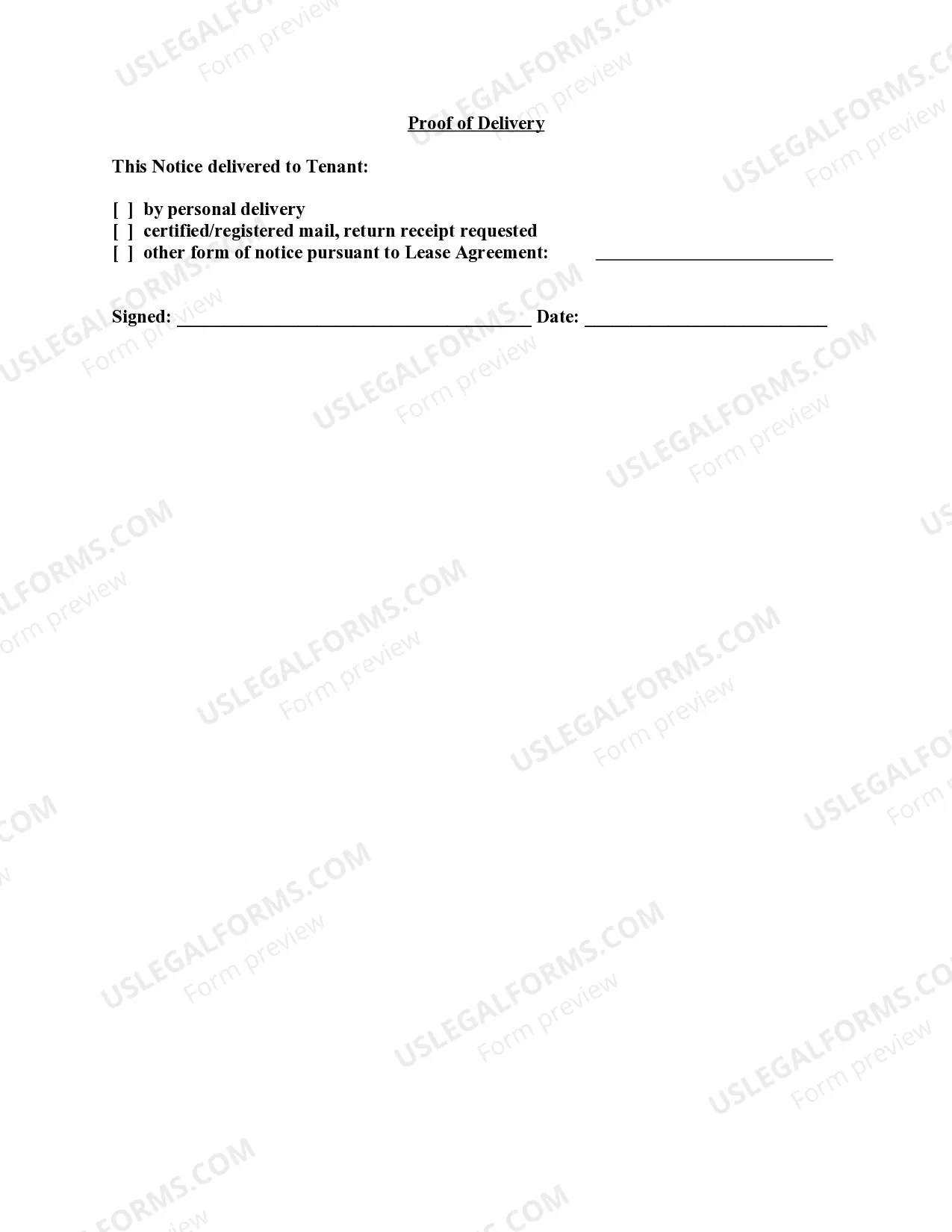
This form does not typically require notarization unless specified by local law. However, ensuring proper delivery methods and receipt confirmation is recommended for legal validity.
Get your form ready online
Our built-in tools help you complete, sign, share, and store your documents in one place.
Make edits, fill in missing information, and update formatting in US Legal Forms—just like you would in MS Word.
Download a copy, print it, send it by email, or mail it via USPS—whatever works best for your next step.
Sign and collect signatures with our SignNow integration. Send to multiple recipients, set reminders, and more. Go Premium to unlock E-Sign.
If this form requires notarization, complete it online through a secure video call—no need to meet a notary in person or wait for an appointment.
We protect your documents and personal data by following strict security and privacy standards.

Make edits, fill in missing information, and update formatting in US Legal Forms—just like you would in MS Word.

Download a copy, print it, send it by email, or mail it via USPS—whatever works best for your next step.

Sign and collect signatures with our SignNow integration. Send to multiple recipients, set reminders, and more. Go Premium to unlock E-Sign.

If this form requires notarization, complete it online through a secure video call—no need to meet a notary in person or wait for an appointment.

We protect your documents and personal data by following strict security and privacy standards.
Typical mistakes to avoid
- Failing to provide sufficient notice before the lease expiration.
- Not stating the new rent clearly or omitting the effective date.
- Using vague language that may lead to misunderstandings about tenant rights.
Why use this form online
- Convenience in filling out and accessing the form from anywhere.
- Editable templates to suit specific situations and requirements.
- Reliability in the legal language drafted by licensed attorneys.
Summary of main points
- Use this letter to formally notify tenants about a rent increase.
- Make sure to follow local laws regarding notice periods.
- Clearly outline the tenant's options in the letter.
Looking for another form?


Form popularity
FAQ
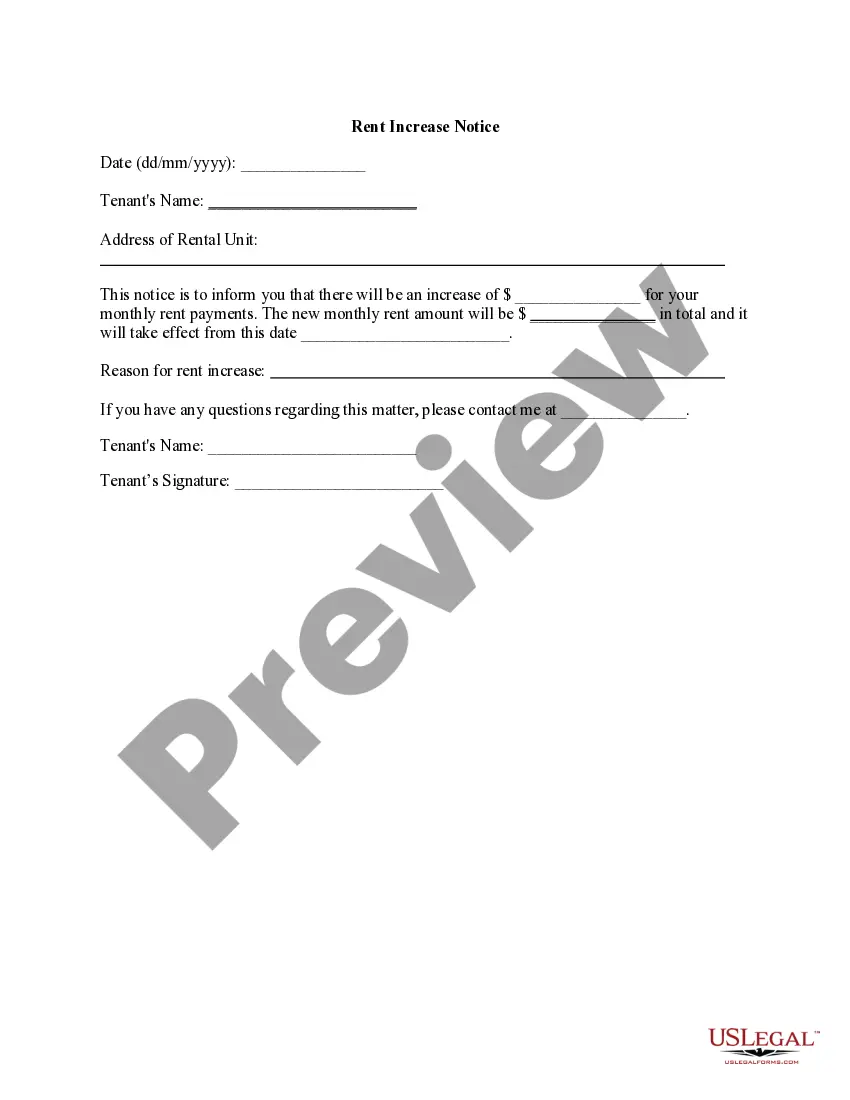
Tenant's name. Property address. Landlord name and contact information. Date the letter is written. Date the rent increase will take effect. Amount of rent increase. Current cost of rent.
A typical rent increase is around 3-5% annually.
As there are no rent stabilization or rent control laws in Texas, landlords can raise the rent by as much as they wish. That said, if you have signed a fixed-term lease with your tenant, then you'll need to wait for the existing lease to expire before you can adjust the rent price.
But remember: if you have a fixed-term lease, your landlord can't increase the rent until your lease expires. If you're on a month-to-month lease, then your landlord can increase your rent any time (as long as they give you 30 days' notice).
The name of your tenant. The date. The property address. The lease expiration date. The date the rent increase will take effect. The amount of the increase. The current rental amount. Date the new rent will be due.
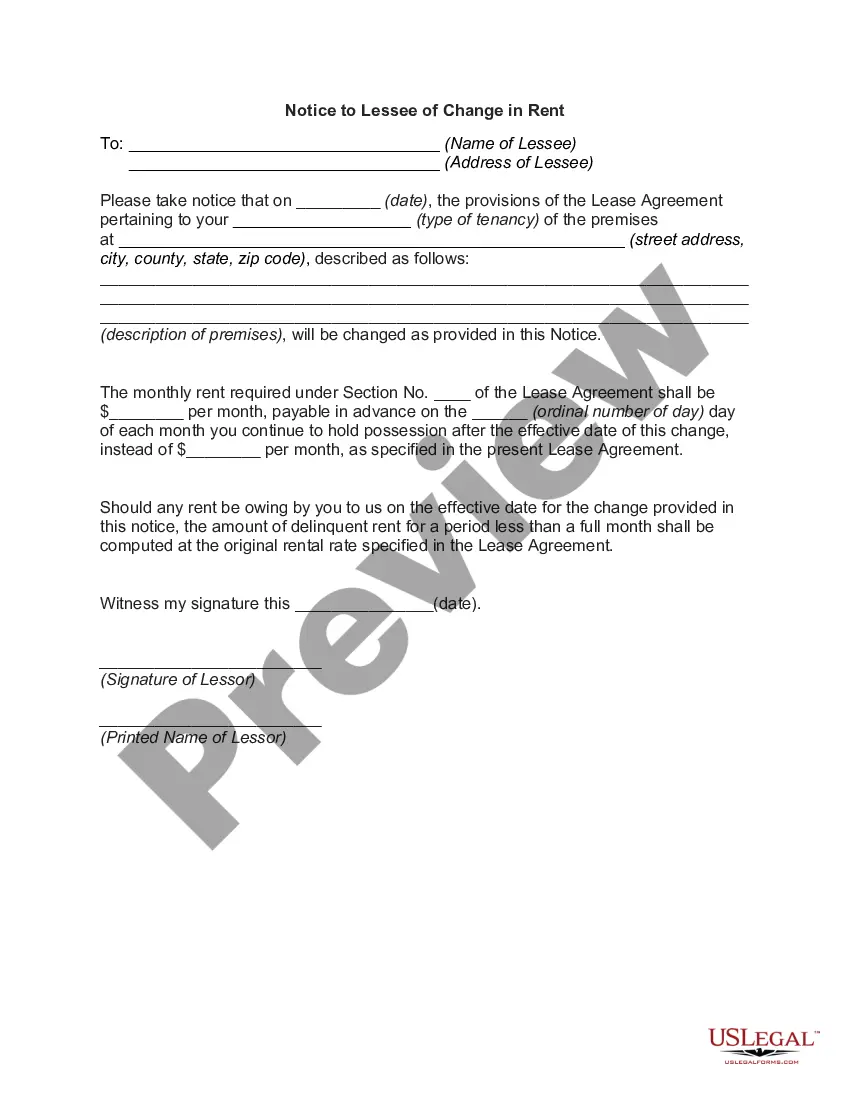
The full names of both landlord and tenant. The type of property you are leasing. The location of the property. The type of tenancy (fixed term or periodic) Details about the rent (current rent vs. new rent and effective dates) Details about the lease (start date and signing date)
Tenant's name. Property address. Landlord's name and contact info. Date the letter was written. Date the rent increase will take effect. Rent increase amount. Current rental amount. Date the new rent will be due.
Remember you're a business. Do your research. Raise the rent all at once or incrementally. Don't negotiate or ask tenants what they think a fair rent increase would be. Be courteous and firm. Find a template you like. Send a formal letter by certified mail. Give the tenant notice.