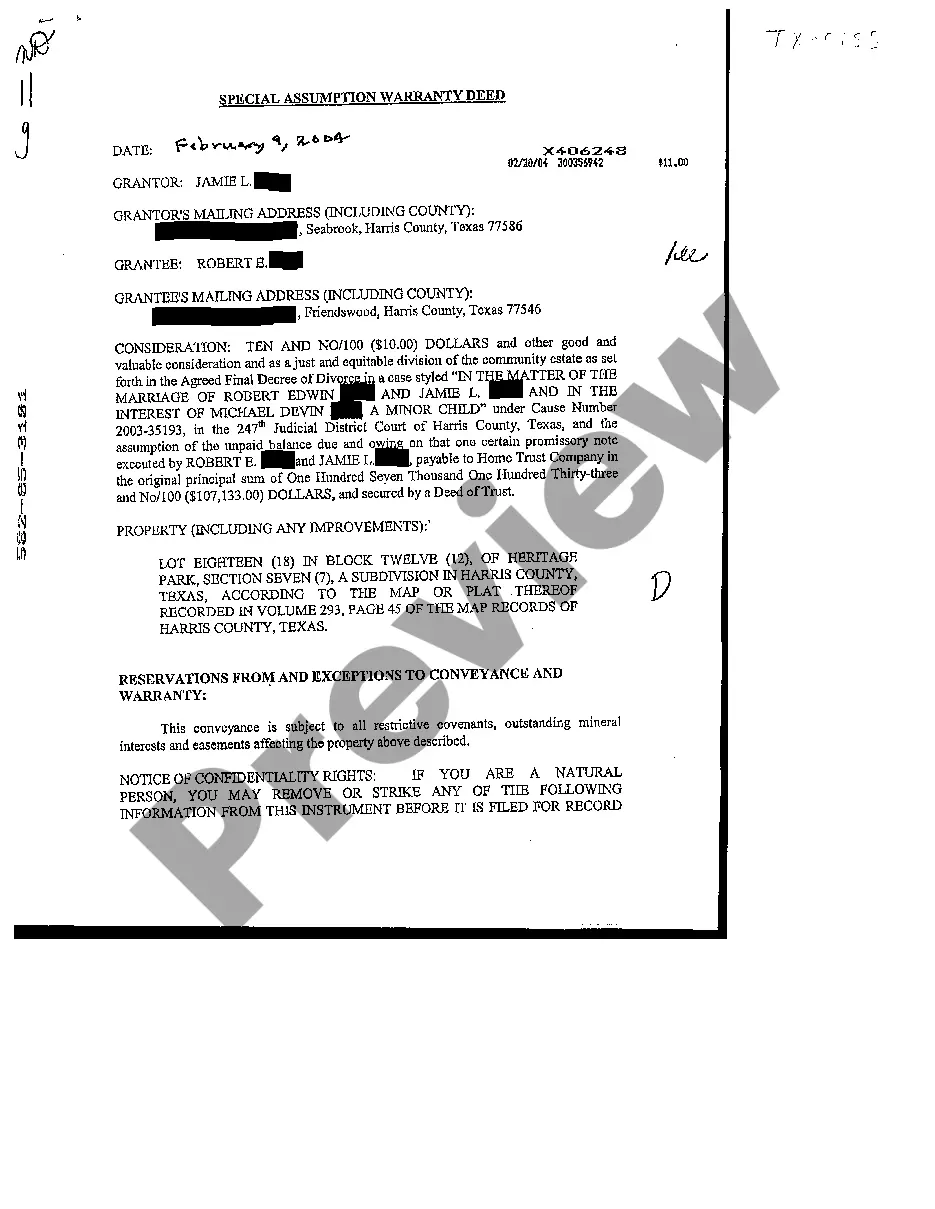
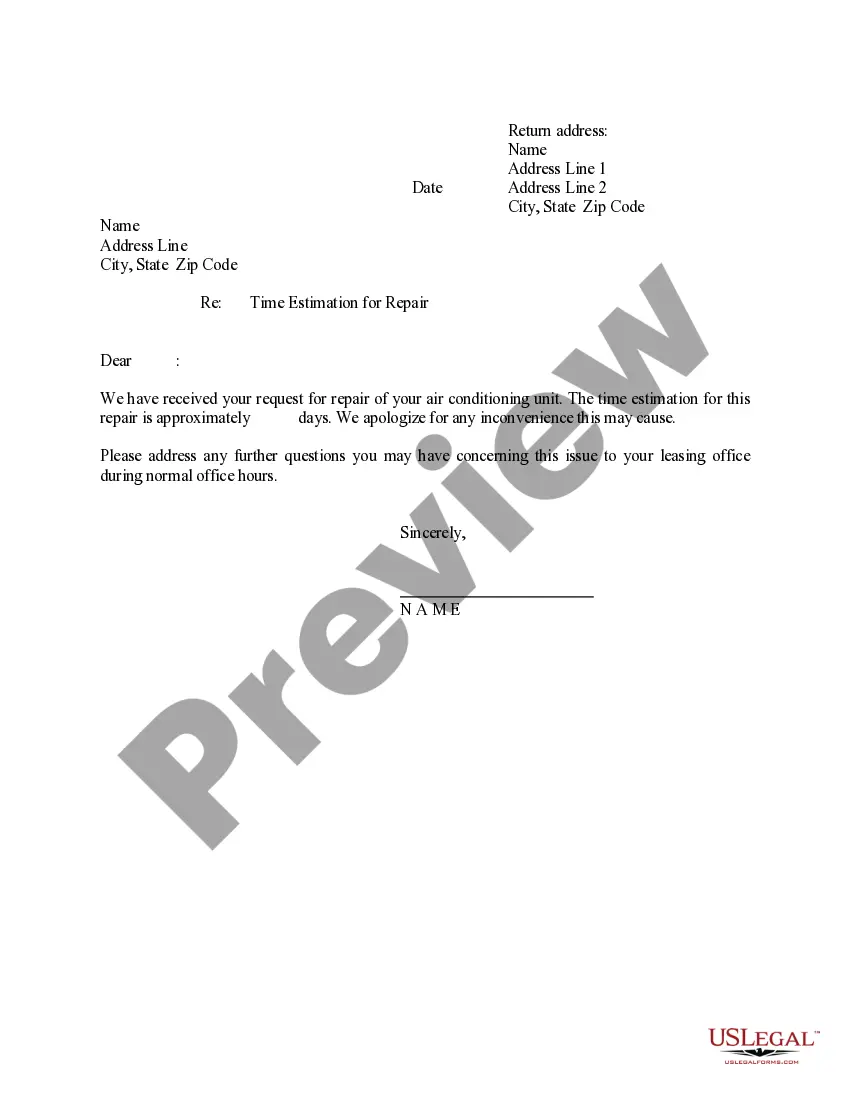
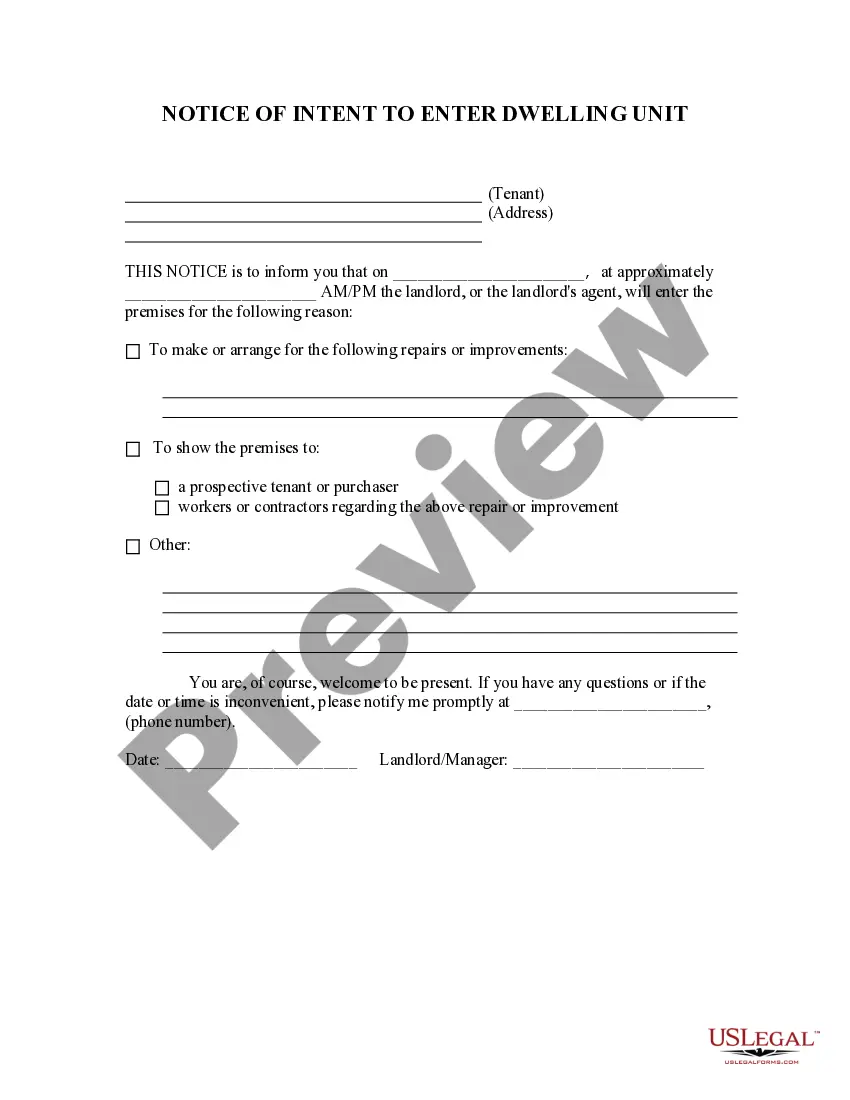
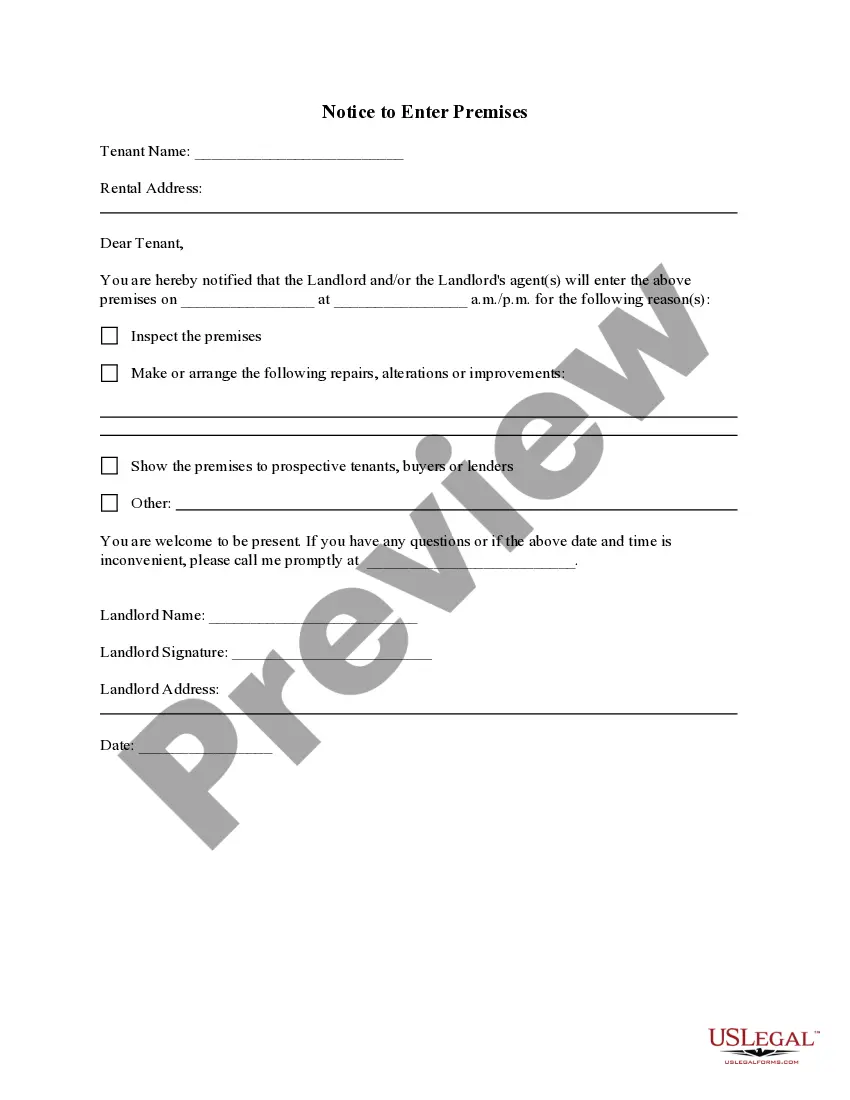
Texas Letter from Landlord to Tenant about time of intent to enter premises
Overview of this form
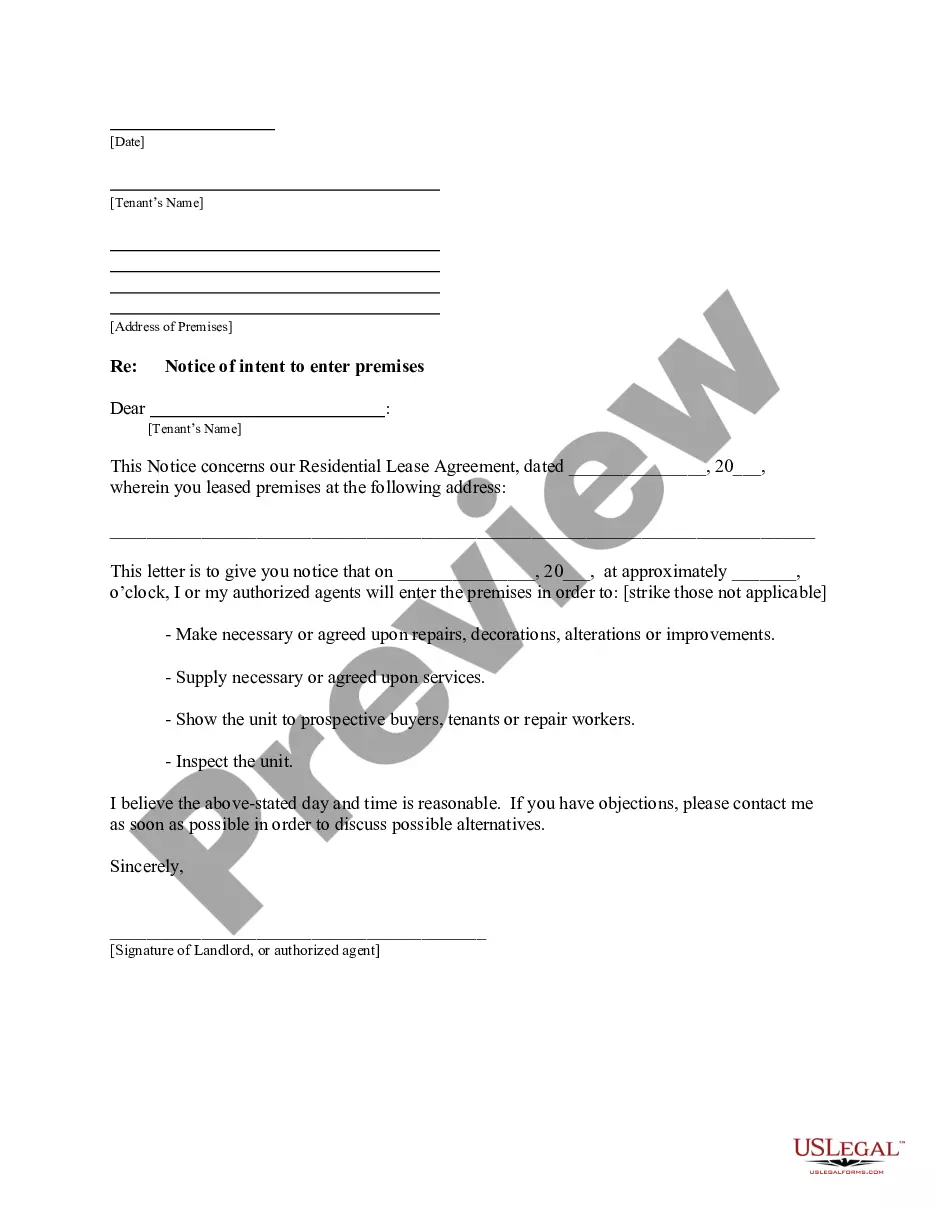
This form is a Letter from Landlord to Tenant regarding the landlord's intent to enter the leased premises. It serves to officially notify the tenant of the planned entry and the reasons for it, distinguishing it from other notices related to tenant rights or rental agreements. This form is crucial for maintaining clear communication and complying with local landlord-tenant laws.
Key parts of this document
- Date of notice and lease agreement.
- Property address.
- Specific date and time of entry.
- Authorized reasons for entering the premises.
- Contact information for objections or discussions.
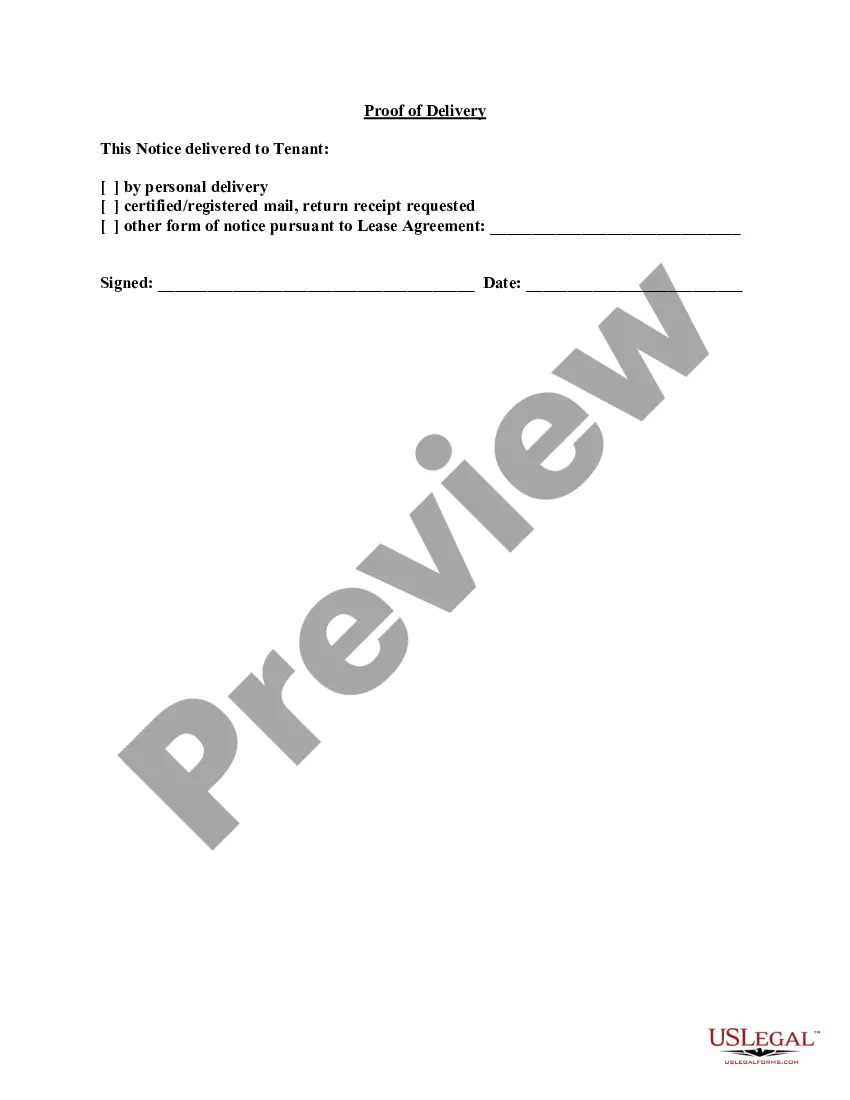
- Proof of delivery method and landlordâs signature.
When this form is needed
Who this form is for
- Landlords managing residential properties.
- Property managers acting on behalf of landlords.
- Tenants who wish to understand their rights regarding property access.
How to complete this form
- Provide the date of the lease agreement.
- Insert the complete address of the leased property.
- Specify the date and time of entry.
- List the intended reasons for entering the premises.
- Sign the letter as the landlord or authorized agent.
- Indicate the method of delivery to the tenant.
Is notarization required?
This form does not typically require notarization unless specified by local law. Ensure you check the legal requirements in your state before finalizing the document.
Get your form ready online
Our built-in tools help you complete, sign, share, and store your documents in one place.
Make edits, fill in missing information, and update formatting in US Legal Forms—just like you would in MS Word.
Download a copy, print it, send it by email, or mail it via USPS—whatever works best for your next step.
Sign and collect signatures with our SignNow integration. Send to multiple recipients, set reminders, and more. Go Premium to unlock E-Sign.
If this form requires notarization, complete it online through a secure video call—no need to meet a notary in person or wait for an appointment.
We protect your documents and personal data by following strict security and privacy standards.

Make edits, fill in missing information, and update formatting in US Legal Forms—just like you would in MS Word.

Download a copy, print it, send it by email, or mail it via USPS—whatever works best for your next step.

Sign and collect signatures with our SignNow integration. Send to multiple recipients, set reminders, and more. Go Premium to unlock E-Sign.

If this form requires notarization, complete it online through a secure video call—no need to meet a notary in person or wait for an appointment.

We protect your documents and personal data by following strict security and privacy standards.
Common mistakes to avoid
- Failing to provide adequate notice time.
- Not including all required reasons for entry.
- Forget to obtain tenant acknowledgment of receipt.
- Using vague language that could lead to misunderstandings.
Advantages of online completion
- Quick download and easy access to the form.
- Editable templates to fit specific tenant situations.
- Drafted by attorneys to ensure legal validity.
Legal use & context
- This form is legally recognized as a formal notice under landlord-tenant laws.
- Provides essential documentation in case of disputes regarding property access.
- Helps to maintain an amicable relationship between tenants and landlords by ensuring transparency.
Quick recap
- Use this form to notify tenants of entry into the leased property.
- Include specific details such as the date, time, and reasons for entry.
- Adhere to state laws regarding notification to ensure compliance and protect tenant rights.
Looking for another form?
Form popularity
FAQ
Let's be clear, other than in emergency it's illegal for a landlord or agent to enter a property without agreement from the tenant. The golden rule to abide by is always to provide your tenants with written notice at least 24 hours before any planned visits.
Notice of Entry Law in Texas We recommend that landlords provide at least 24 hours notice before entering a unit, and based on other states' models, reasonable times are defined as Monday-Friday between 8am and 6pm.
No Texas statute addresses landlord's entry, but Texas courts have held that a landlord may not enter the rental property unless entry is authorized by the lessee. Once a residential property is leased, the landlord's ability to enter the rental unit is diminished.
Your rights as a tenant include the right to "quiet enjoyment," a legal term. This means your landlord cannot evict you without cause or otherwise disturb your right to live in peace and quiet. If other tenants in your building are disturbing you, you should complain to the landlord.
Dear (Name of landlord or manager), This letter constitutes my written (number of days' notice that you need to give based on your lease agreement)-day notice that I will be moving out of my apartment on (date), the end of my current lease. I am leaving because (new job, rent increase, etc.)
The landlord must give at least 7 days notice. Show to Prospective Tenants: reasonable notice - the landlord can access the premises a reasonable number of times during the 14 days before the end of the tenancy agreement to show the premises to prospective tenants.
Your landlord or their representatives may be allowed reasonable access to carry out inspections or repairs, but must first get your permission. According to Section 11, from The Landlord and Tenant Act 1985, your landlord needs to give you at least 24 hour notice before they come around and visit for any reason.
Texas has no statute that governs when landlords can enter occupied rental units. So theoretically, that means you could enter residences any time you wish. But if you're concerned about maintaining good relationships with your tenants, that's not a good idea.