Texas Warranty Deed from Individual to Individual
What this document covers
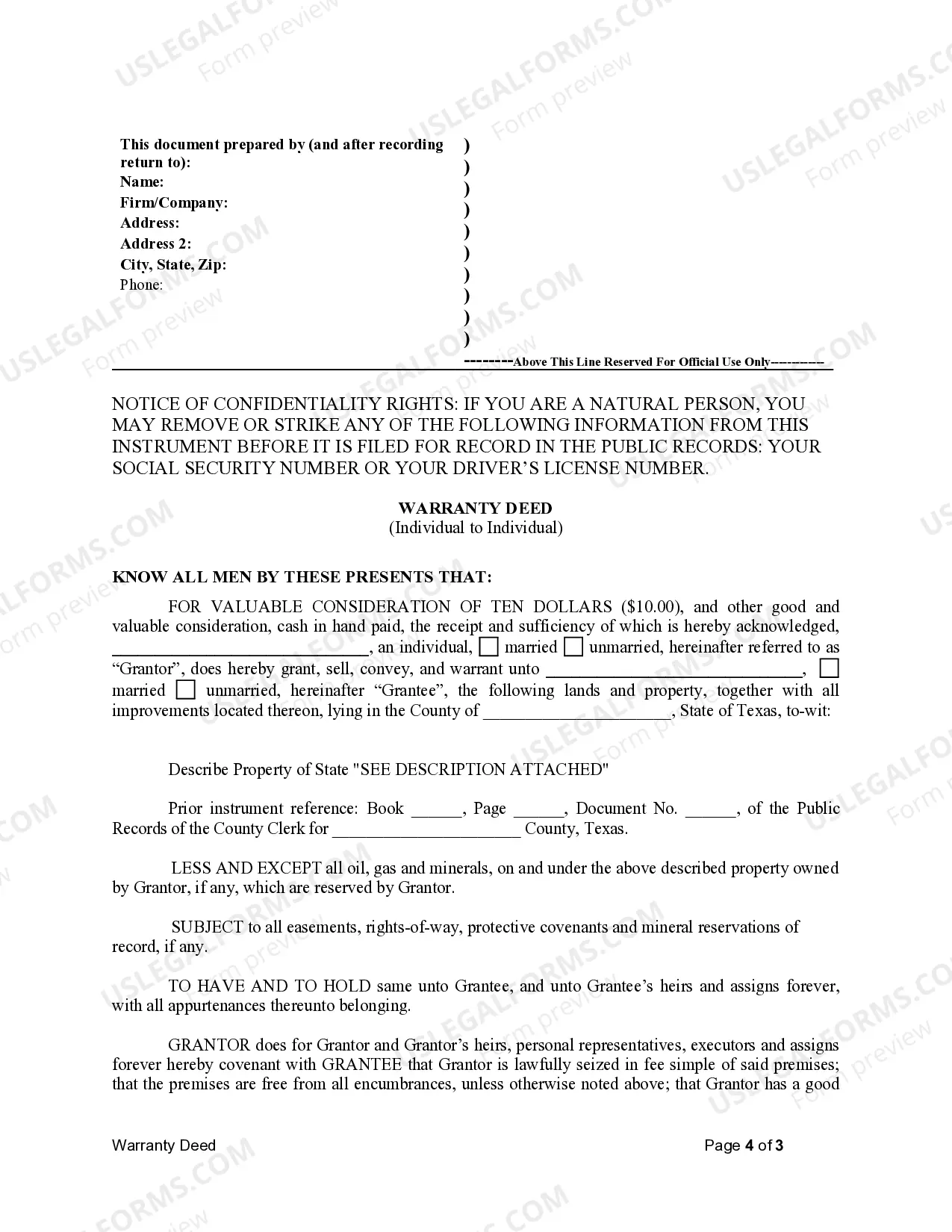
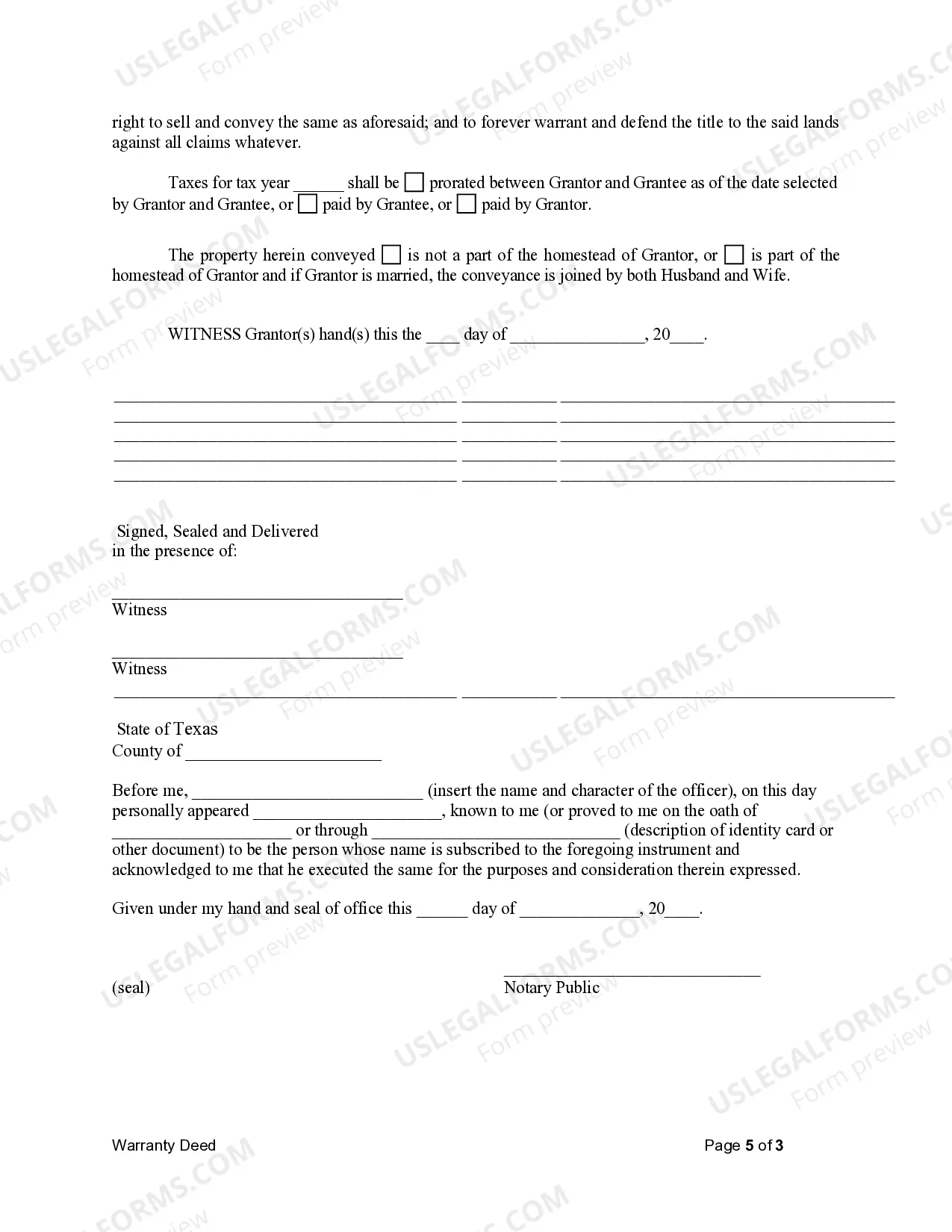
The Warranty Deed from Individual to Individual is a legal document used to transfer property ownership between two individuals. This deed ensures that the Grantor conveys the property to the Grantee while warranting the title against future claims. Unlike other types of deeds, this warranty deed specifically conveys title assurances and excludes any oil, gas, and mineral rights owned by the Grantor. It complies with Texas statutory laws, making it suitable for property transactions within the state.
Key parts of this document
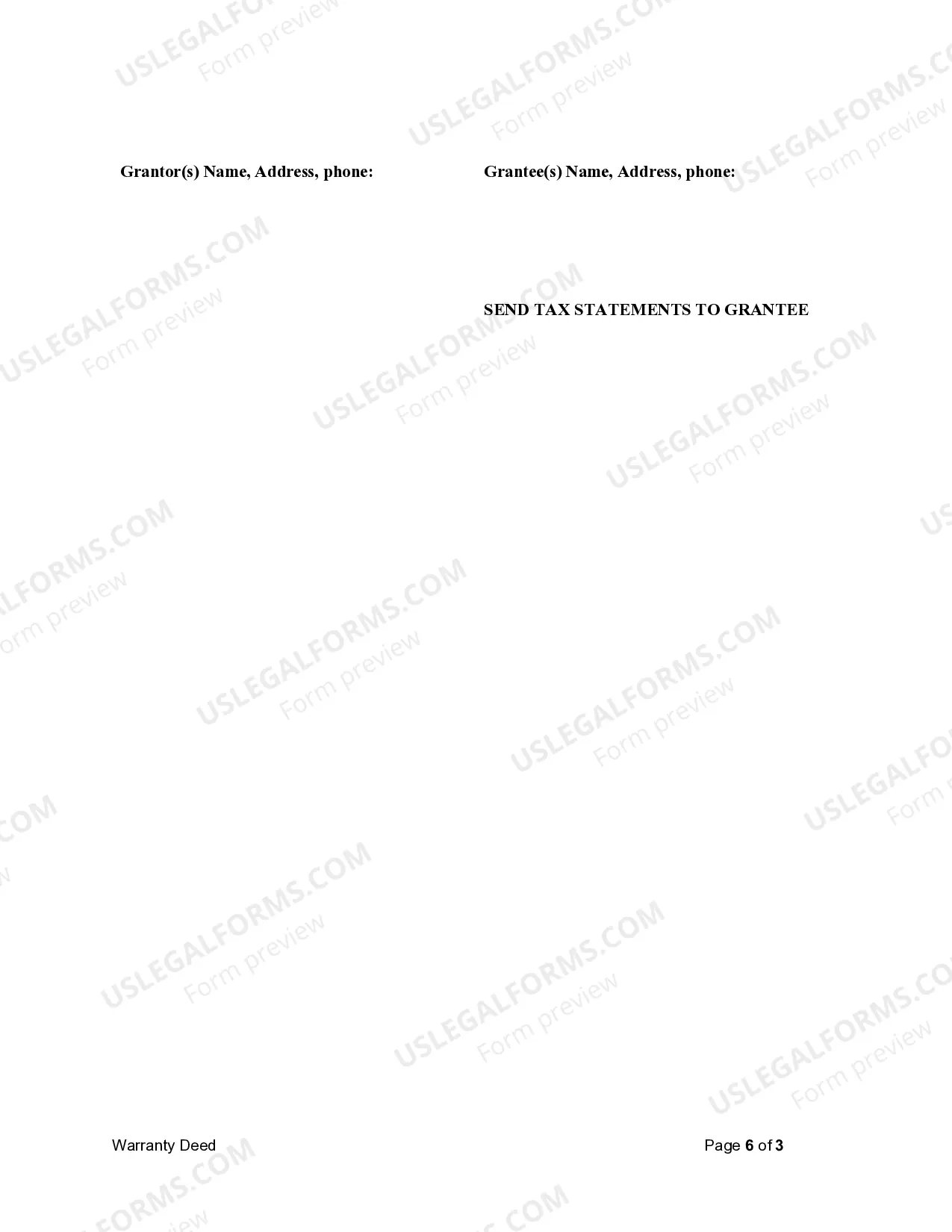
- Identification of the Grantor and Grantee
- Description of the property being conveyed
- Details of the reservation of oil, gas, and mineral rights
- Covenants regarding ownership and encumbrances
- Tax responsibilities between the parties
- Notary acknowledgment for validation




Situations where this form applies
You should use the Warranty Deed from Individual to Individual when transferring ownership of real estate between individuals. This form is applicable in situations such as selling a home, gifting property, or dividing inherited property. It is particularly relevant when the seller (Grantor) wants to ensure that the buyer (Grantee) receives clear title to the property without any claims from the Grantor.
Intended users of this form
This Warranty Deed is intended for:
- Individuals who are selling or transferring property to another individual
- People involved in a gift of property between family or friends
- Heirs distributing real estate assets among family members
- Individuals looking to ensure clear title protections for the Grantee
Steps to complete this form
- Identify the Grantor and Grantee, including their marital status.
- Clearly describe the property being transferred, including its location and any existing encumbrances.
- Specify the reservation of oil, gas, and mineral rights if applicable.
- Determine and indicate the tax responsibilities concerning the property.
- Obtain signatures from both parties and ensure the form is notarized.
Does this form need to be notarized?
Yes, this form must be notarized to be legally valid. The signature of the Grantor must be acknowledged by a notary public, ensuring the authenticity of the document. US Legal Forms offers integrated online notarization services for convenience, allowing users to complete this step securely via a video call without the need to travel.
Get your form ready online
Our built-in tools help you complete, sign, share, and store your documents in one place.
Make edits, fill in missing information, and update formatting in US Legal Forms—just like you would in MS Word.
Download a copy, print it, send it by email, or mail it via USPS—whatever works best for your next step.
Sign and collect signatures with our SignNow integration. Send to multiple recipients, set reminders, and more. Go Premium to unlock E-Sign.
If this form requires notarization, complete it online through a secure video call—no need to meet a notary in person or wait for an appointment.
We protect your documents and personal data by following strict security and privacy standards.

Make edits, fill in missing information, and update formatting in US Legal Forms—just like you would in MS Word.

Download a copy, print it, send it by email, or mail it via USPS—whatever works best for your next step.

Sign and collect signatures with our SignNow integration. Send to multiple recipients, set reminders, and more. Go Premium to unlock E-Sign.

If this form requires notarization, complete it online through a secure video call—no need to meet a notary in person or wait for an appointment.

We protect your documents and personal data by following strict security and privacy standards.
Common mistakes
- Failing to accurately describe the property.
- Omitting signs from both parties or not having the notarization completed.
- Not addressing tax responsibilities which can lead to disputes.
- Incorrectly categorizing the marital status of the Grantor or Grantee.
Why complete this form online
- Convenient access to legal documentation without needing to visit a law office.
- Editable form fields ensure accuracy and reduce errors when filling out information.
- Downloadable format allows you to save and print multiple copies as needed.
- Clear instructions simplify the completion process for users with varying levels of legal knowledge.
Looking for another form?





Form popularity
FAQ
Typically, the lender will provide you with a copy of the deed of trust after the closing. The original warranty deeds are often mailed to the grantee after they are recorded. These are your original copies and should be kept in a safe place, such as a fireproof lockbox or a safe deposit box at a financial institution.
To officially prove ownership of a property, you will require Official Copies of the register and title plan; these are what people commonly refer to as title deeds because they are the irrefutable proof of ownership of a property. Note, this only applies to registered property.
A warranty deed guarantees that: The grantor is the rightful owner of the property and has the legal right to transfer the title.The title would withstand third-party claims to ownership of the property. The grantor will do anything to ensure the grantee's title to the property.
Retrieve your original deed. Get the appropriate deed form. Draft the deed. Sign the deed before a notary. Record the deed with the county recorder. Obtain the new original deed.
Find the most recent deed to the property. It is best to begin with a copy of the most recent deed to the property (the deed that transferred the property to the current grantor). Create a new deed. Sign and notarize the deed. File the documents in the county land records.
A personal representative deed and warranty deed are the same only in that they both convey ownership of land. The types of title assurance that the different deeds provide to the new owner are very different.
It's important to note that a warranty deed does not actually prove the grantor has ownership (a title search is the best way to prove that), but it is a promise by the grantor that they are transferring ownership and if it turns out they don't actually own the property, the grantor will be responsible for compensating
A property deed, or house deed, is a legal document that transfers ownership of real estate from the grantor (seller) to the grantee (buyer). Property deeds are the legal tool of defining ownership. When a property or house is sold, the buyer and seller sign the deed to transfer ownership.