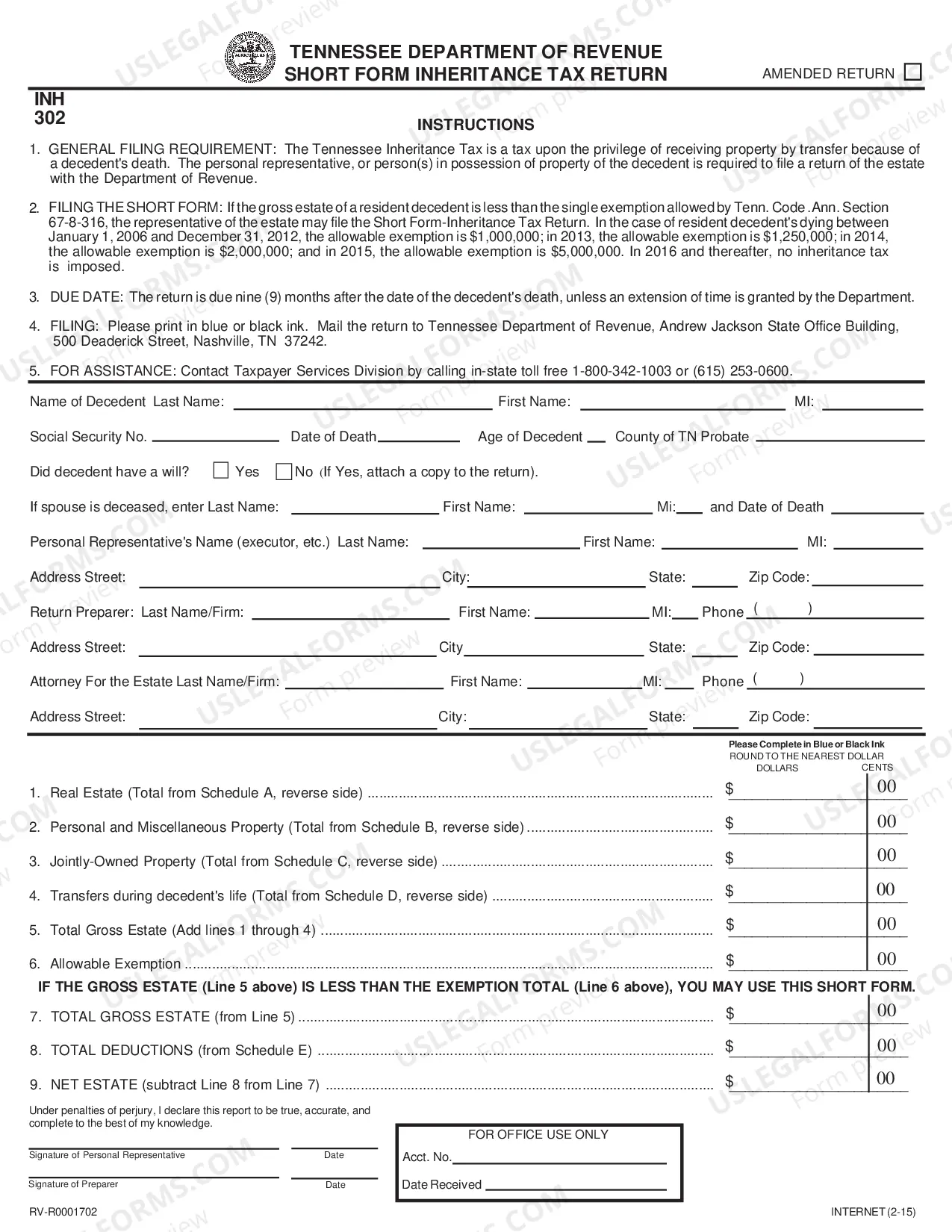
Texas Assignment of Contract for Deed by Seller
Overview of this form
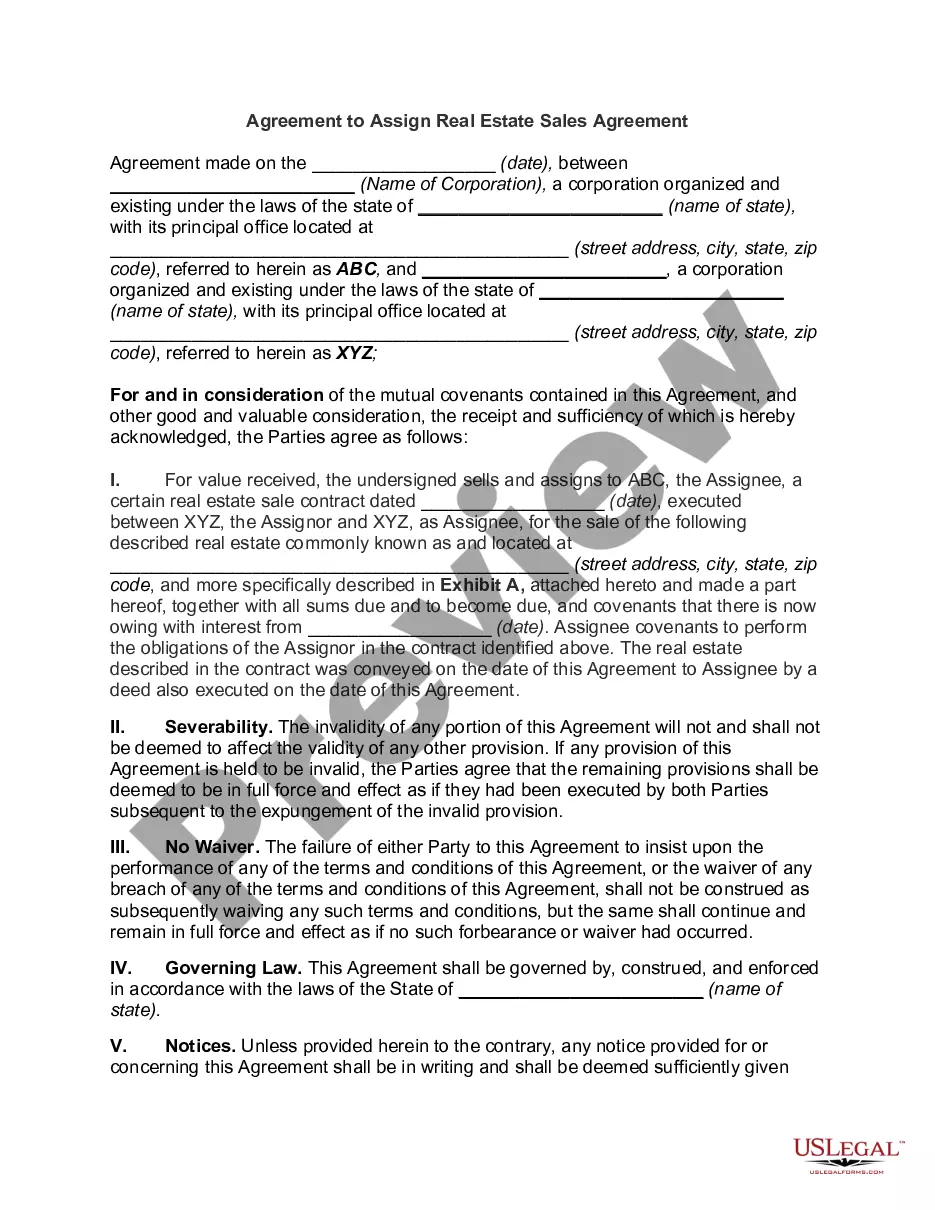
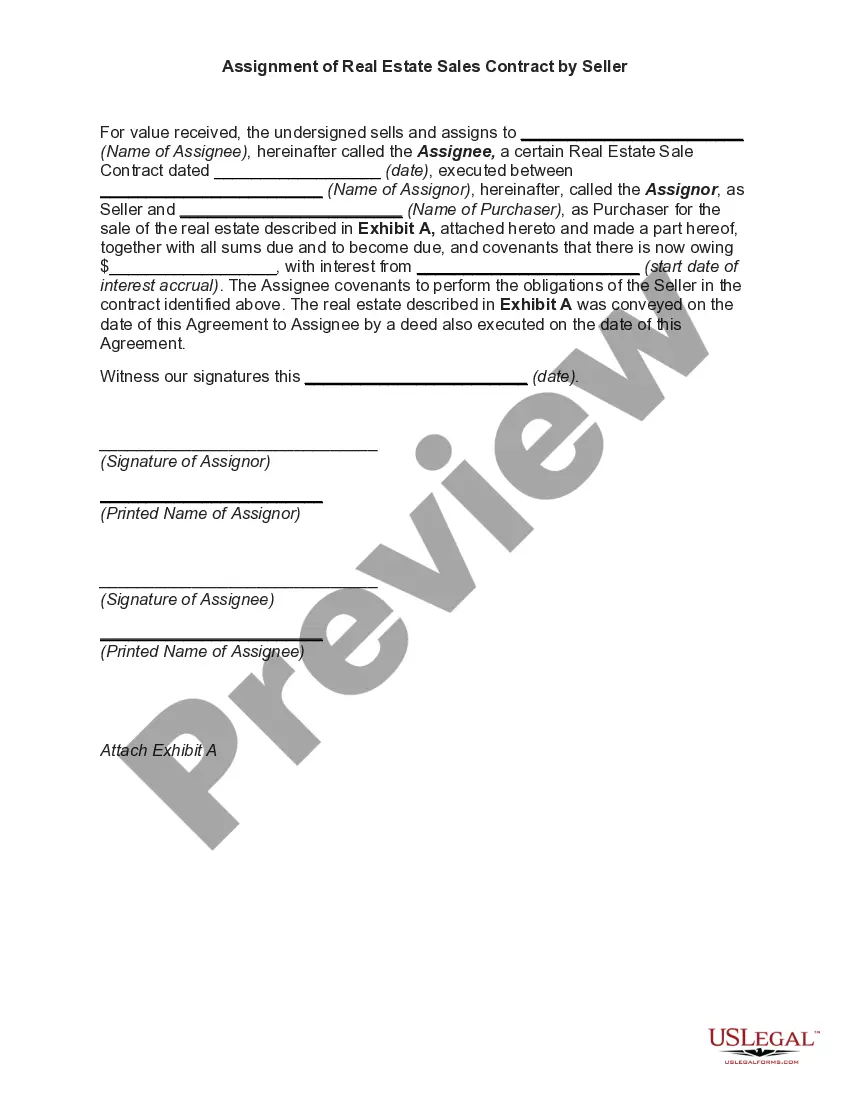
The Assignment of Contract for Deed by Seller is a legal document allowing a seller to transfer their rights and obligations under an existing contract for deed to a third party, known as the assignee. This form is typically used when a seller wants to assign the contract in exchange for a discounted cash value, enabling the assignee to receive future payments from the buyer. Unlike other forms of property transfer, this document focuses specifically on the assignment of existing contracts rather than the outright sale of real estate.
Key parts of this document
- Identification of Seller(s) or Assignor(s)
- Identification of Assignee
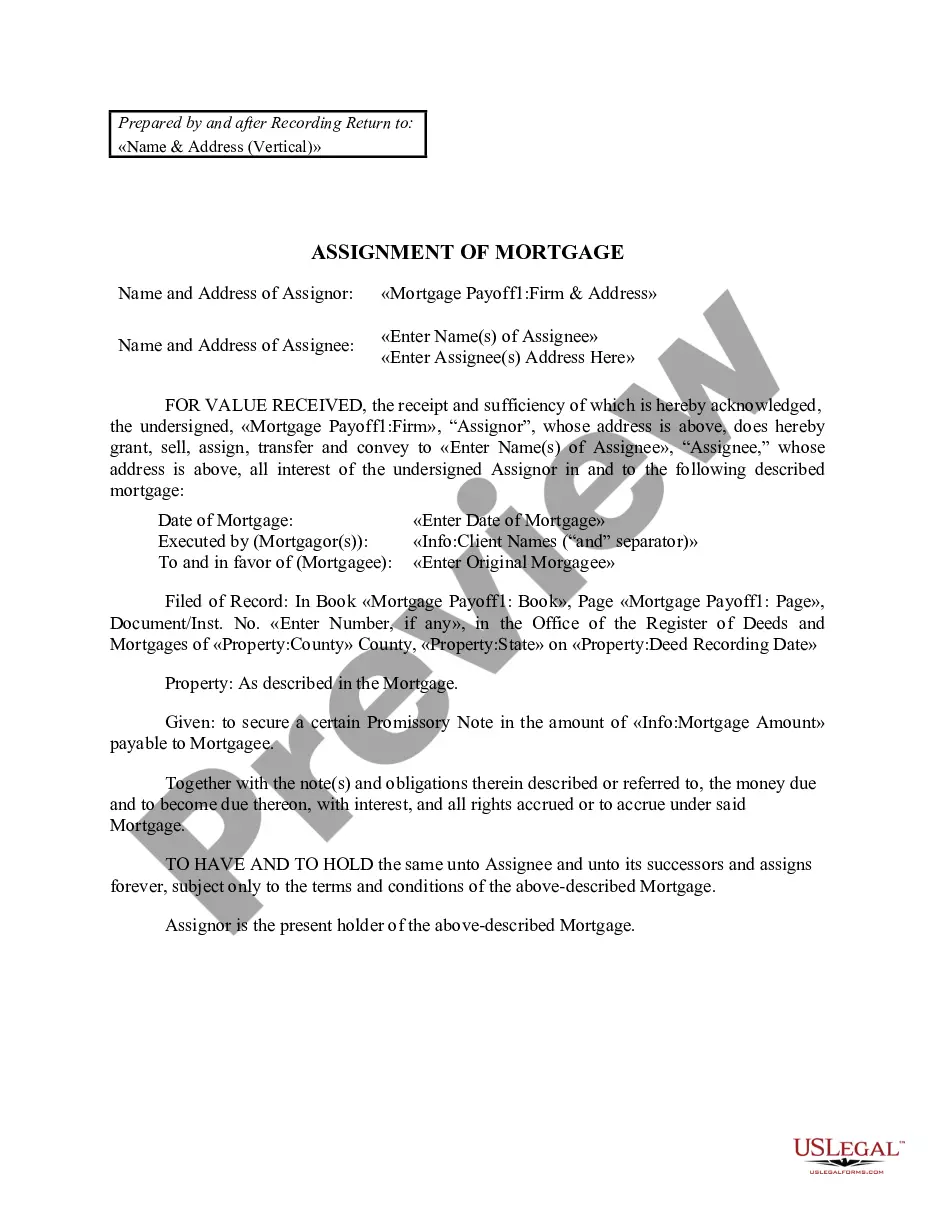
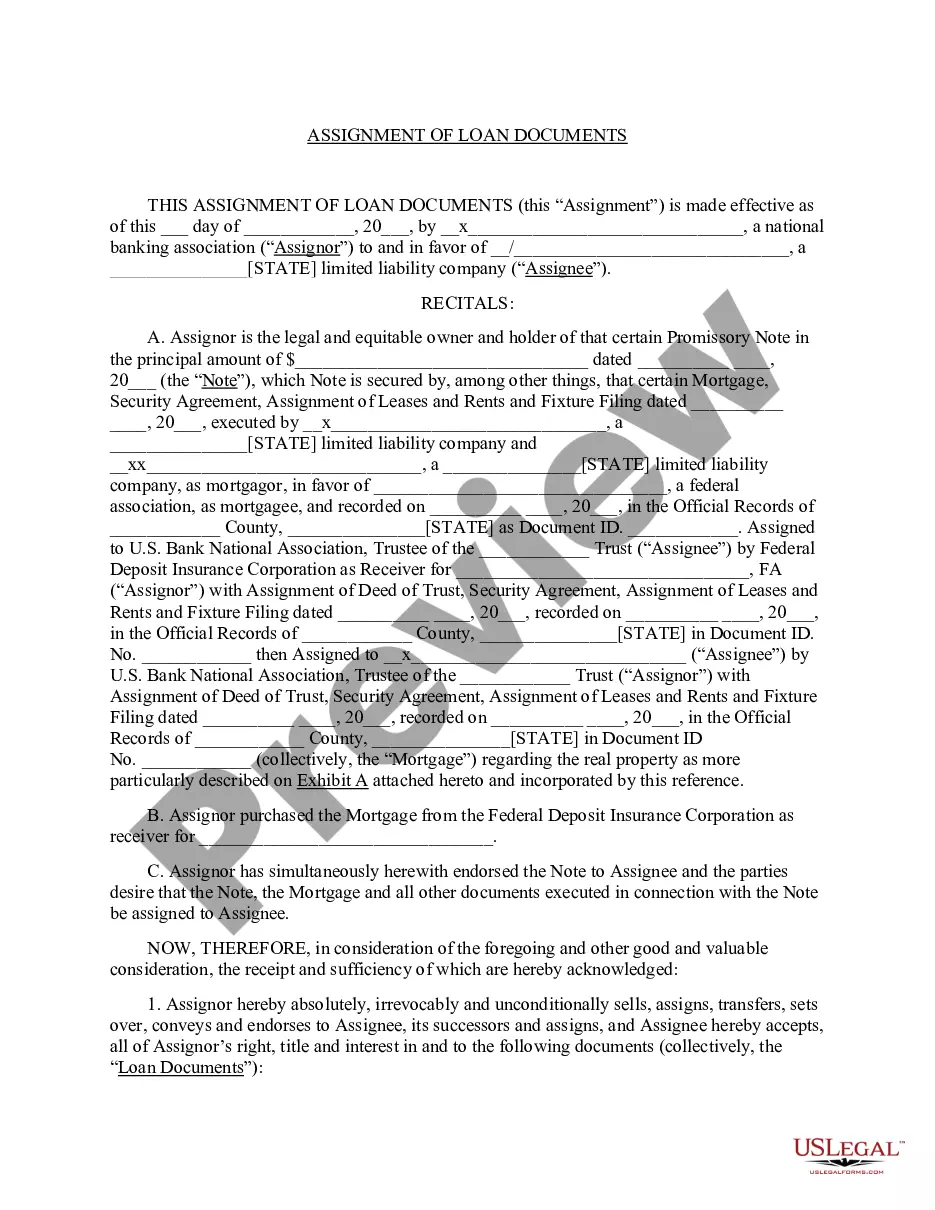
- Description of the Contract for Deed being assigned, including recording details
- Statement of the assignment being without recourse
- Signature fields for Seller(s) and Notary acknowledgment
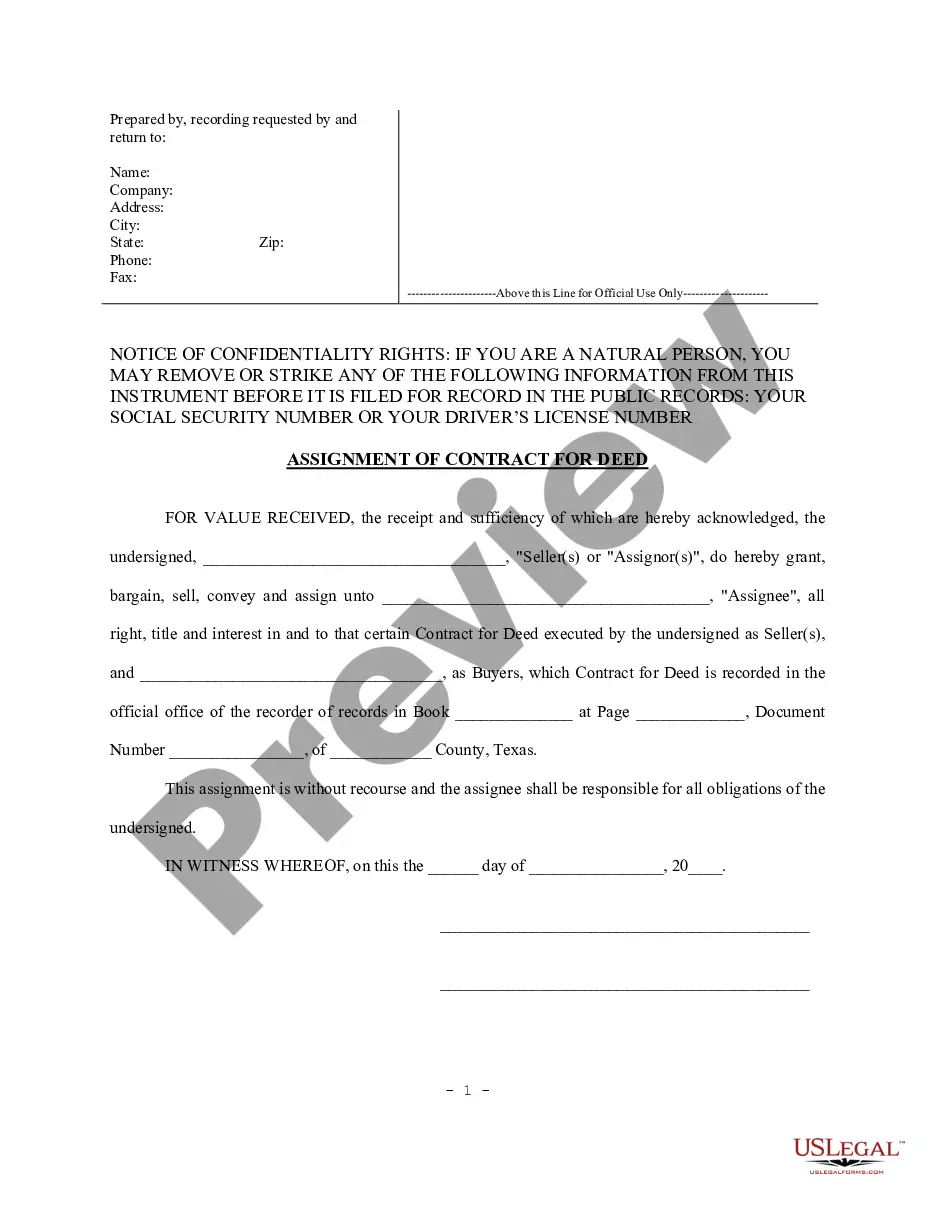
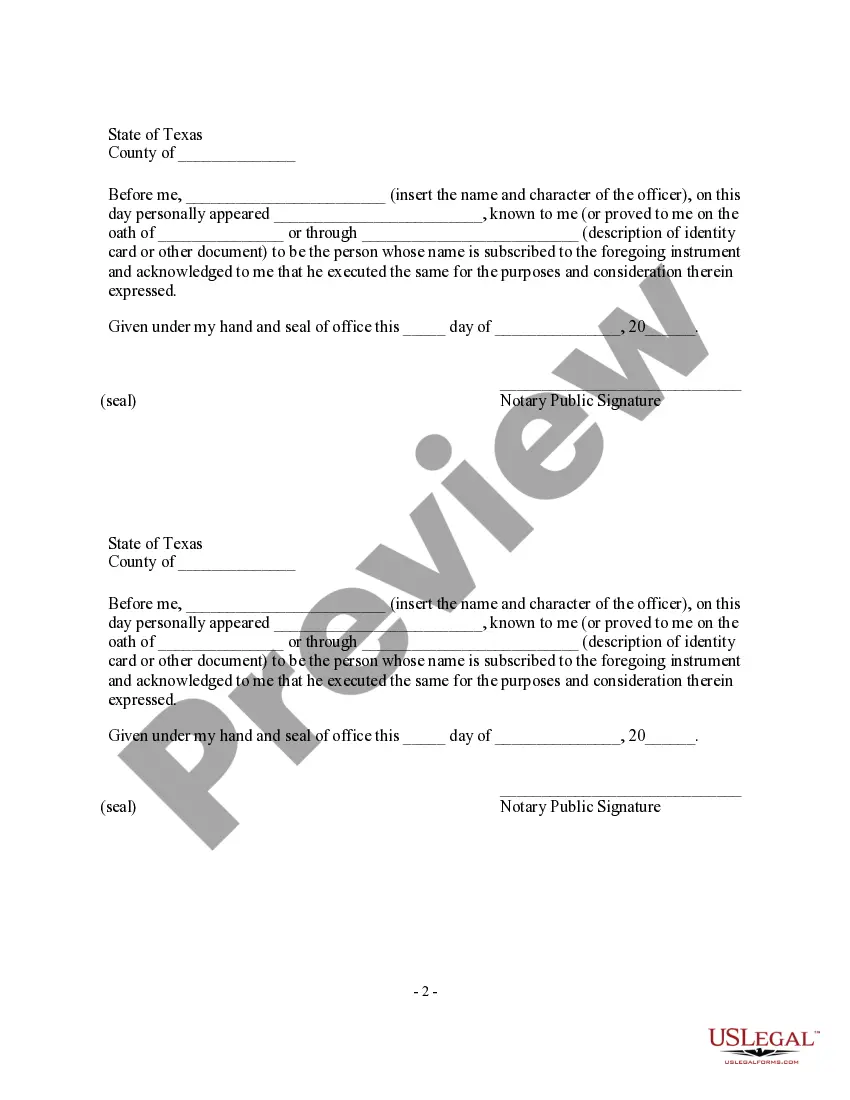
When to use this form
This form is useful in various situations, such as when a seller needs to liquidate their investment by assigning their rights to another party. It might also apply when the seller is unable or unwilling to fulfill the terms of the contract for deed themselves, allowing the assignee to take over the financial responsibilities and rights associated with the property.
Who needs this form
- Real estate sellers interested in assigning their existing contract for deed.
- Assignees looking to take over the rights and obligations of a property contract.
- Property owners seeking to manage their financial commitments through contract assignment.
Completing this form step by step
- Identify the Seller(s) or Assignor(s) by name.
- Specify the Assignee's name in the designated section.
- Provide details of the original Contract for Deed, including the recorded book and page number.
- Complete the date of execution for the assignment.
- Ensure all parties sign the form in the presence of a notary public.
Notarization guidance
To make this form legally binding, it must be notarized. Our online notarization service, powered by Notarize, lets you verify and sign documents remotely through an encrypted video session.
Get your form ready online
Our built-in tools help you complete, sign, share, and store your documents in one place.
Make edits, fill in missing information, and update formatting in US Legal Forms—just like you would in MS Word.
Download a copy, print it, send it by email, or mail it via USPS—whatever works best for your next step.
Sign and collect signatures with our SignNow integration. Send to multiple recipients, set reminders, and more. Go Premium to unlock E-Sign.
If this form requires notarization, complete it online through a secure video call—no need to meet a notary in person or wait for an appointment.
We protect your documents and personal data by following strict security and privacy standards.

Make edits, fill in missing information, and update formatting in US Legal Forms—just like you would in MS Word.

Download a copy, print it, send it by email, or mail it via USPS—whatever works best for your next step.

Sign and collect signatures with our SignNow integration. Send to multiple recipients, set reminders, and more. Go Premium to unlock E-Sign.

If this form requires notarization, complete it online through a secure video call—no need to meet a notary in person or wait for an appointment.

We protect your documents and personal data by following strict security and privacy standards.
Typical mistakes to avoid
- Failing to fill out the complete and correct details of the original contract.
- Not obtaining the necessary signatures from all parties involved.
- Overlooking the notary requirement, leading to potential invalidity.
Why complete this form online
- Convenient access to a legally vetted template.
- Edit the form easily to fit your specific circumstances.
- Reliable and up-to-date legal language drafted by licensed attorneys.
Quick recap
- The Assignment of Contract for Deed allows for the transfer of contract rights to another party.
- This form is specifically designed for use in Texas.
- Completion requires accurate information, signatures, and notarization.
Looking for another form?



Form popularity
FAQ
The Texas Assignment of Contract for Deed by Seller is a legal form that lets a seller transfer their rights and obligations under an existing contract for deed to a third party (the assignee) instead of transferring title. It’s used to liquidate the seller’s position for discounted cash value. Key parts include seller and assignee identification, contract description (with recording details), a no-recourse statement, and signer/notary blocks.
Yes. In Texas, assigning an existing contract for deed to another party is permitted when the original contract allows assignment and all parties consent. This form creates a structured assignment to an assignee and includes a no-recourse clause, limiting the seller’s liability after the assignment, along with identification and signing blocks.
An invalid contract in Texas typically lacks essential elements such as a valid offer and acceptance, consideration, or a lawful purpose, or involves parties unable to contract. For this form, the assignment cannot cure a contract for deed that is inherently invalid; the underlying agreement must be valid for the assignment to be enforceable.
Texan contracts can be voided if they lack a legal subject, involve fraud or misrepresentation, duress, or are otherwise unconscionable, or if essential terms are missing. For this form, if the contract being assigned is void, the assignment would be unenforceable because it transfers rights in that specific contract.
Risks include disputes over who holds enforceable rights under the contract for deed if the assignment or recording details are incorrect. Errors in identifying parties, the contract being assigned, or recording information can delay or prevent future payments and undermine the enforceability of the agreement.
Unlike an outright property sale, this form transfers only the seller’s rights and obligations under an existing contract for deed to an assignee, not title to the property. It also includes a no-recourse clause and requires accurate contract description and recording details to be enforceable.