Tennessee Residential Landlord Tenant Rental Lease Forms and Agreements Package

About this form package
The Tennessee Residential Landlord Tenant Rental Lease Forms and Agreements Package includes essential documents for landlords and tenants in Tennessee. This package is tailored specifically to facilitate the landlord-tenant relationship in the state, providing legal forms that cover applications, leases, disclosures, notices, and more. By using this comprehensive form package, both landlords and tenants can efficiently manage their agreements while ensuring compliance with Tennessee laws.
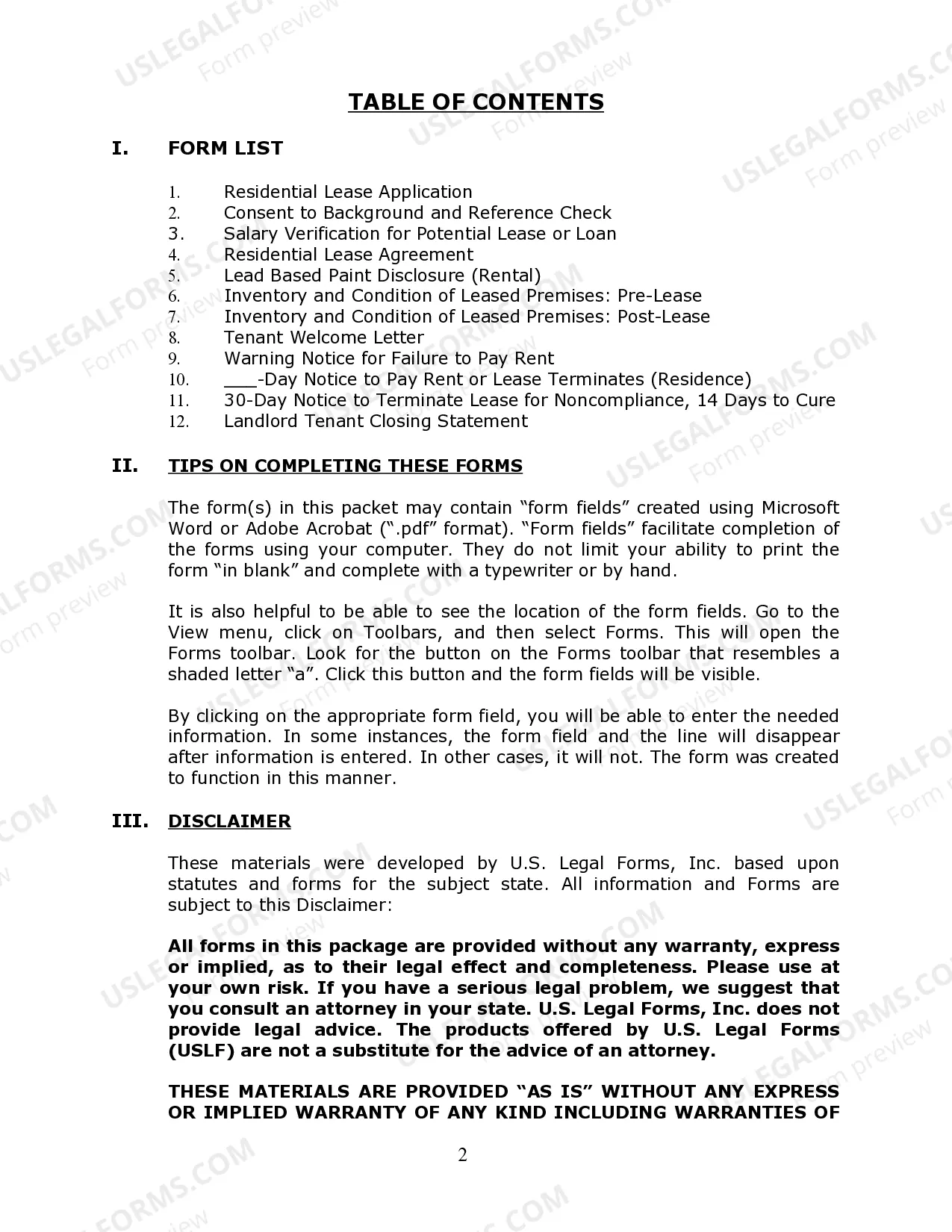
Forms included in this package
- 30 day Notice to Terminate for Material Noncompliance with Lease - 14 Days to Cure for Residential from Landlord to Tenant
- 14 Day Notice to Terminate for Nonpayment of Rent - Residential
- Notice of Default in Payment of Rent as Warning Prior to Demand to Pay or Terminate for Residential Property
- Residential Rental Lease Application
- Salary Verification form for Potential Lease
- Inventory and Condition of Leased Premises for Pre Lease and Post Lease
- Tenant Consent to Background and Reference Check
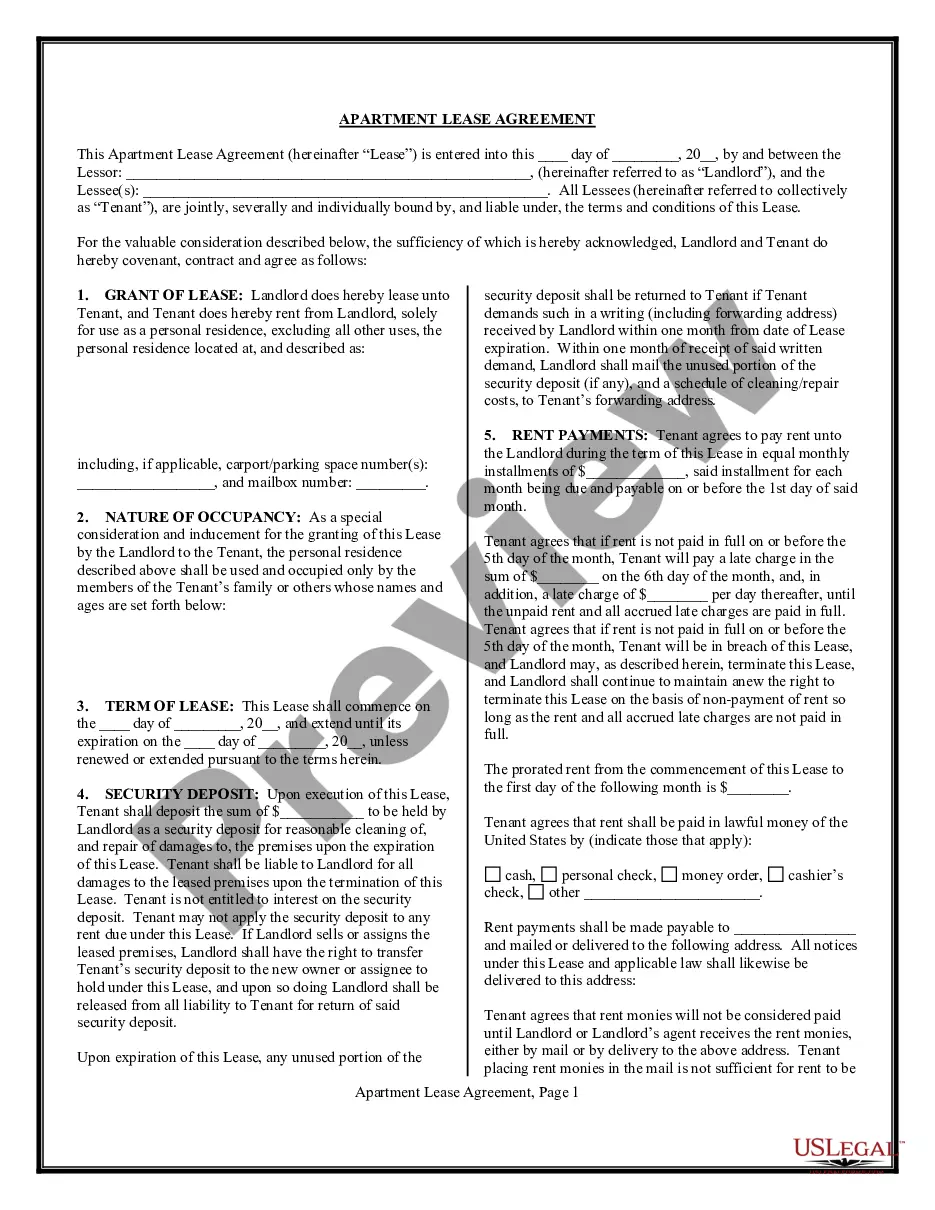
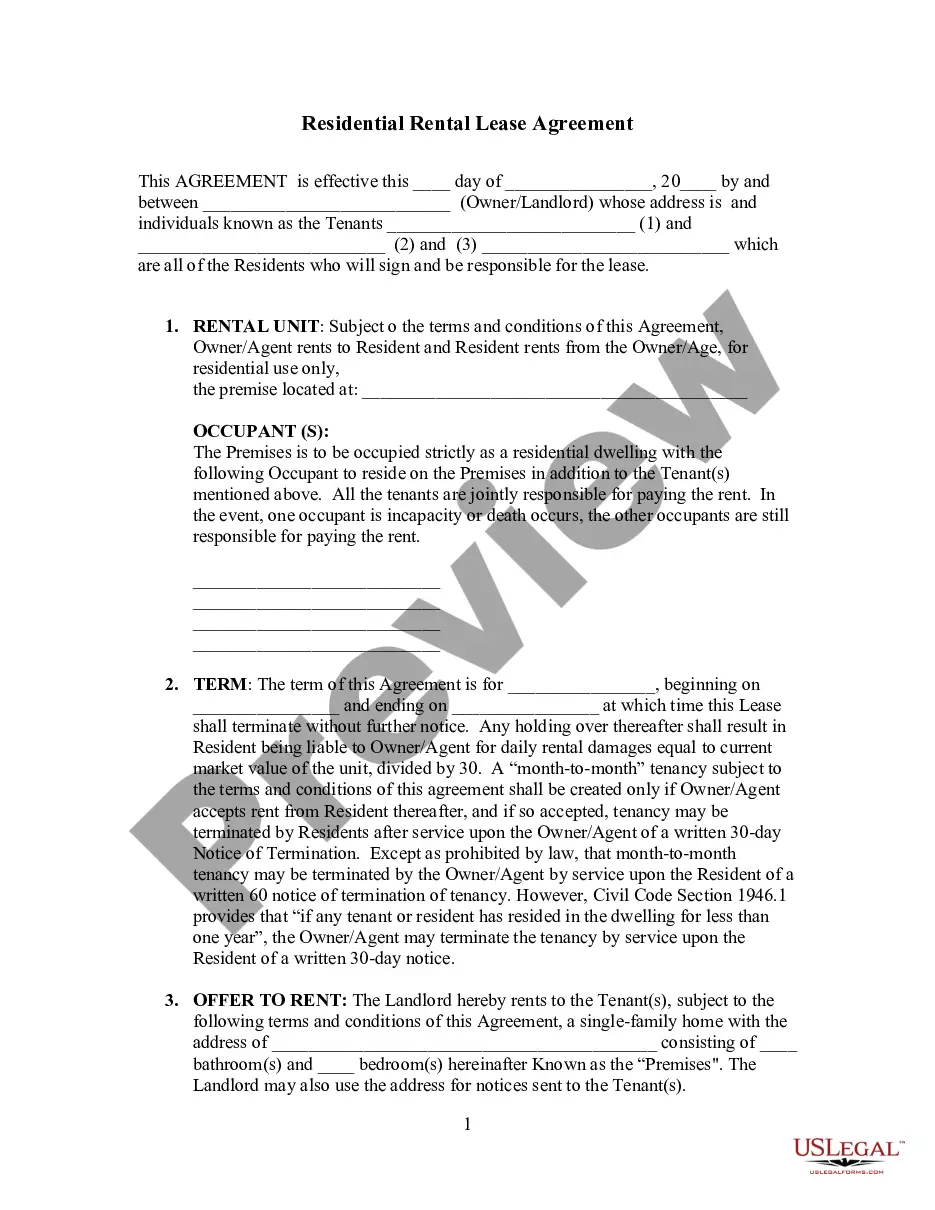
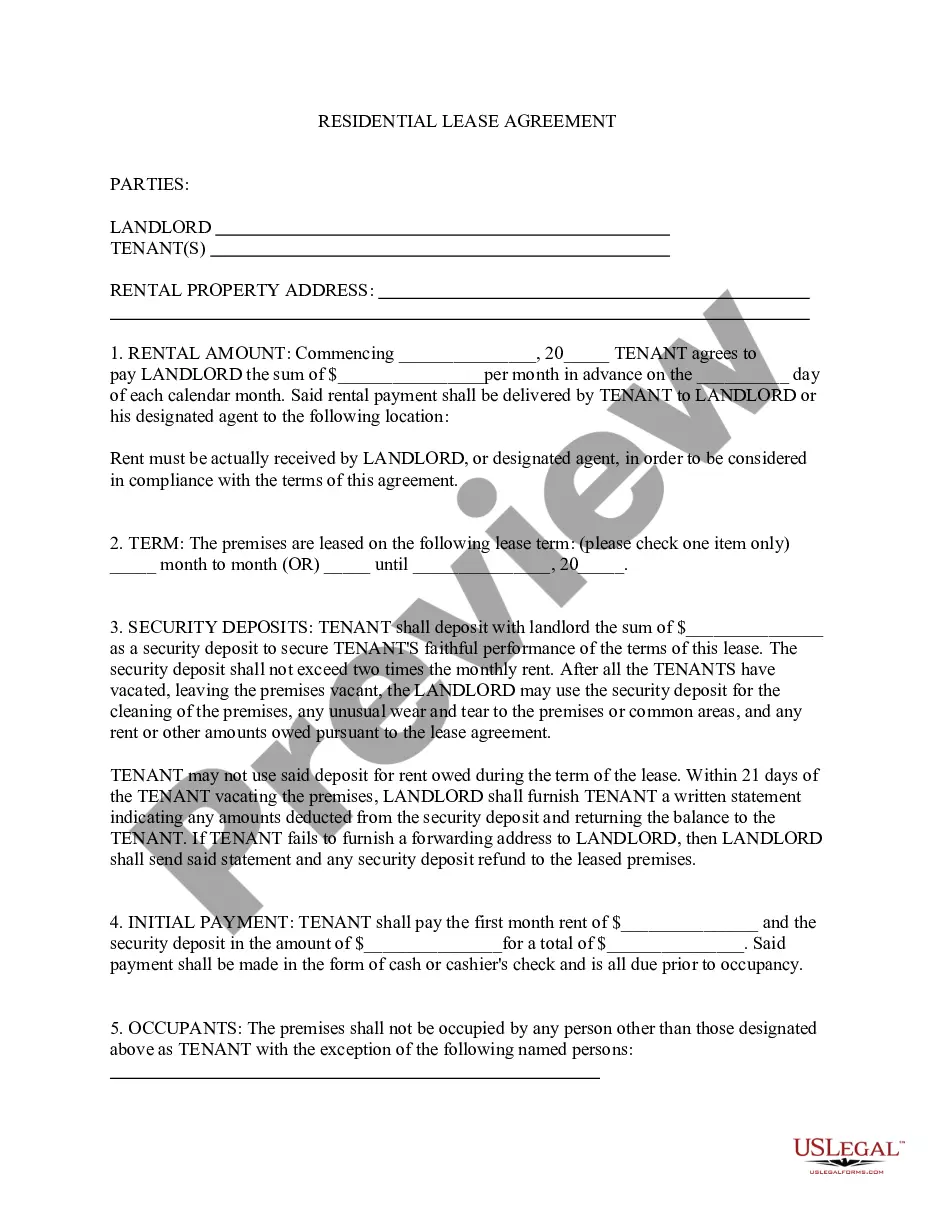
- Residential Rental Lease Agreement
- Tenant Welcome Letter
- Landlord Tenant Closing Statement to Reconcile Security Deposit
- Lead Based Paint Disclosure for Rental Transaction

When this form package is needed
This form package is useful in various scenarios, including:
- When a landlord seeks to rent a property and needs a formal lease agreement.
- When a tenant applies for rental housing and requires consent forms for background checks.
- When disclosures regarding lead paint or other pertinent information must be provided.
- When either party needs documentation for terminating a lease or addressing non-payment of rent.
- When both landlords and tenants wish to document the condition of the property through an inventory report.
Who should use this form package
- Residential landlords operating rental properties in Tennessee.
- Tenants seeking to rent residential properties in Tennessee.
- Property managers overseeing rental properties in Tennessee.
- Anyone involved in landlord-tenant disputes requiring formal documentation.
Instructions for completing these forms
- Review the included forms to understand their purpose and required information.
- Identify the parties involved in the rental agreement (landlord and tenant).
- Complete the Residential Lease Application and attach necessary documents for verification.
- Draft the Residential Lease Agreement, ensuring all terms are clear and agreed upon.
- Fill out the Inventory Reports to accurately document the property's condition before and after the lease term.
Do documents in this package require notarization?
Forms in this package typically do not require notarization. However, certain states or document types may still need it. US Legal Forms provides online notarization powered by Notarize, available 24/7 for your convenience.
Get your form ready online
Our built-in tools help you complete, sign, share, and store your documents in one place.
Make edits, fill in missing information, and update formatting in US Legal Forms—just like you would in MS Word.
Download a copy, print it, send it by email, or mail it via USPS—whatever works best for your next step.
Sign and collect signatures with our SignNow integration. Send to multiple recipients, set reminders, and more. Go Premium to unlock E-Sign.
If this form requires notarization, complete it online through a secure video call—no need to meet a notary in person or wait for an appointment.
We protect your documents and personal data by following strict security and privacy standards.

Make edits, fill in missing information, and update formatting in US Legal Forms—just like you would in MS Word.

Download a copy, print it, send it by email, or mail it via USPS—whatever works best for your next step.

Sign and collect signatures with our SignNow integration. Send to multiple recipients, set reminders, and more. Go Premium to unlock E-Sign.

If this form requires notarization, complete it online through a secure video call—no need to meet a notary in person or wait for an appointment.

We protect your documents and personal data by following strict security and privacy standards.
Avoid these common issues
- Failing to review all forms before signing.
- Not providing required disclosures, such as Lead Paint Disclosure.
- Inaccurate or incomplete information in the lease application.
- Neglecting to document the condition of the premises accurately.
- Not providing proper termination notices when needed.
Why use this package online
- Accessible for immediate download and editing from the comfort of your home.
- Documents are formatted to comply with Tennessee laws, ensuring legal validity.
- Customizable fields that allow easy entry of tenant and property information.
- Cost-effective alternative to hiring an attorney for basic rental agreements.
Legal use & context
- All forms are created to comply with Tennessee legal standards, ensuring they can be enforced in court.
- Use of these forms can help both landlords and tenants establish clear agreements, minimizing disputes.
- Consult a legal professional for further guidance if complex issues arise or for specific legal advice.
Summary of main points
- The Tennessee Residential Landlord Tenant Rental Lease Forms and Agreements Package provides essential documents for effective landlord-tenant management.
- Understanding when and how to use these forms can prevent legal complications.
- All forms are tailored to meet Tennessee's legal requirements, enhancing their validity.
Looking for another form?
Form popularity
FAQ
If you are a landlord who is looking to write up a rental agreement, then you don't need to spend $250 an hour at your local lawyers office to get a contract written up. You can write up a rental agreement from your own home.
Details to include: Tenant/Buyer: The name and address of the party who is leasing the property and obtaining the option to purchase. Property: The address and legal description of the property. Rent Payments: The amount of the monthly rent payments and any late fees.
Names of all tenants. Limits on occupancy. Term of the tenancy. Rent. Deposits and fees. Repairs and maintenance. Entry to rental property. Restrictions on tenant illegal activity.
Name the parties. A simple rental agreement form needs to name the parties signing the lease and where they live. Describe the premises. Define the term of the lease. Set how much rent is owed. Assign a security deposit amount. Finalize the lease.
As long as the contract spells out specific details and both parties have signed that they agree to the contract's terms, a handwritten contract is legally binding and enforceable in court.
A simple (1 page) lease agreement is a legally binding form used for renting out residential real estate.Unlike a standard residential lease, the form contains the bare-minimum for being an effective lease, foregoing many of the clauses found in standard leases.
Terms. The lease should state the length of the agreement. Rent. The amount of rent and when it is due. Deposits and fees. The names of all tenants. Occupancy limits. Restrictions on disruptive activity. Pets. Maintenance and repairs.
The Lease Must be in Writing It does not matter if the lease is handwritten or typed. If the lease is for more than one year, it must be in written form and contain the following terms.
Collect each party's information. Include specifics about your property. Consider all of the property's utilities and services. Know the terms of your lease. Set the monthly rent amount and due date. Calculate any additional fees. Determine a payment method. Consider your rights and obligations.