Tennessee Warning of Default on Commercial Lease
Overview of this form
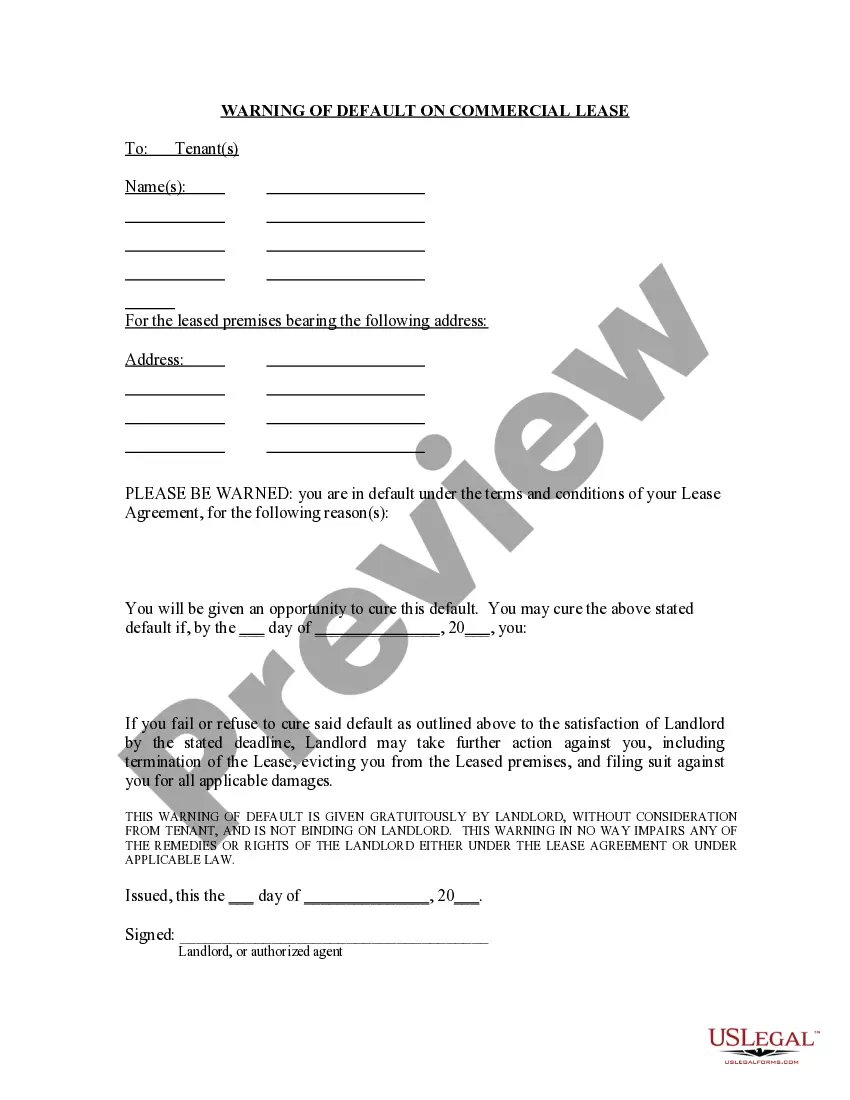
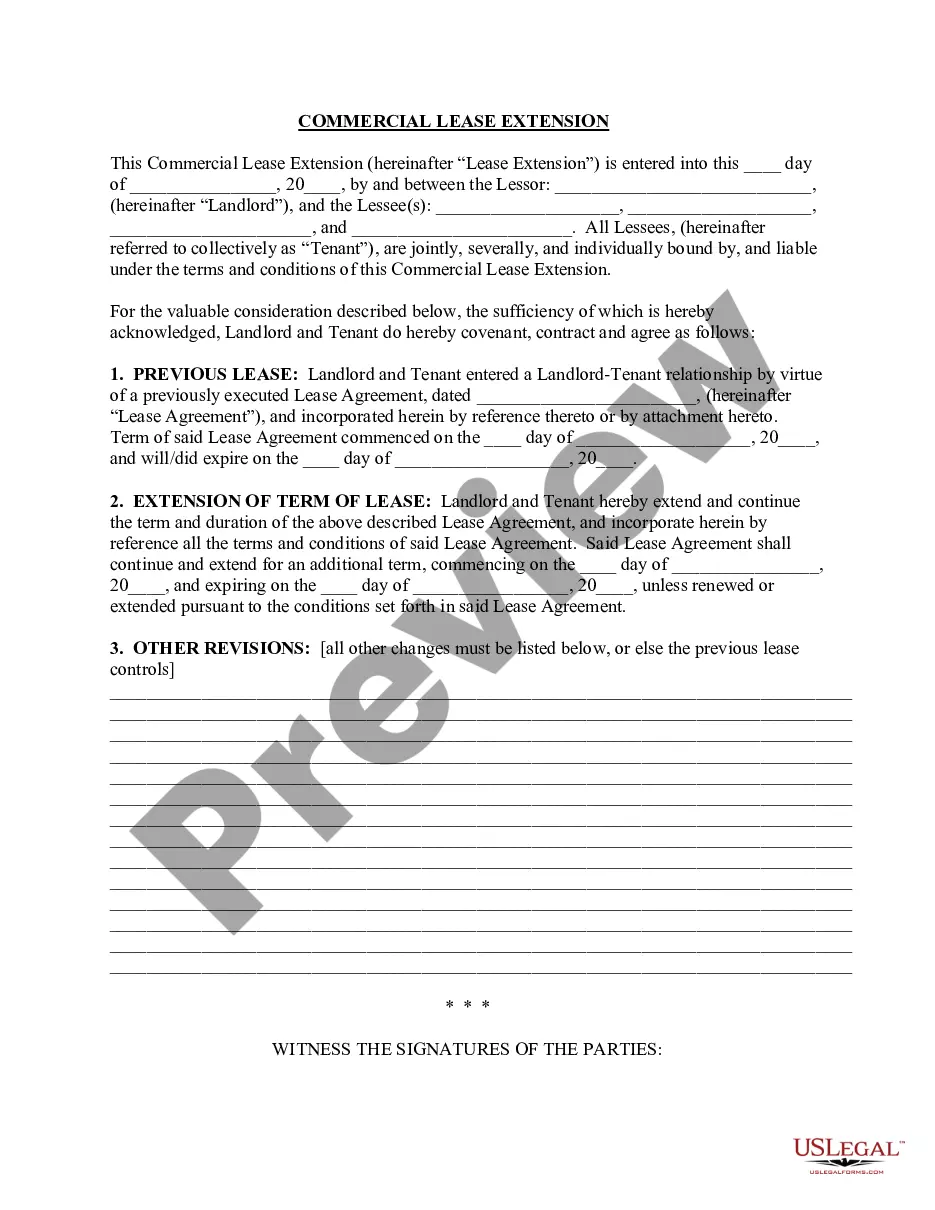
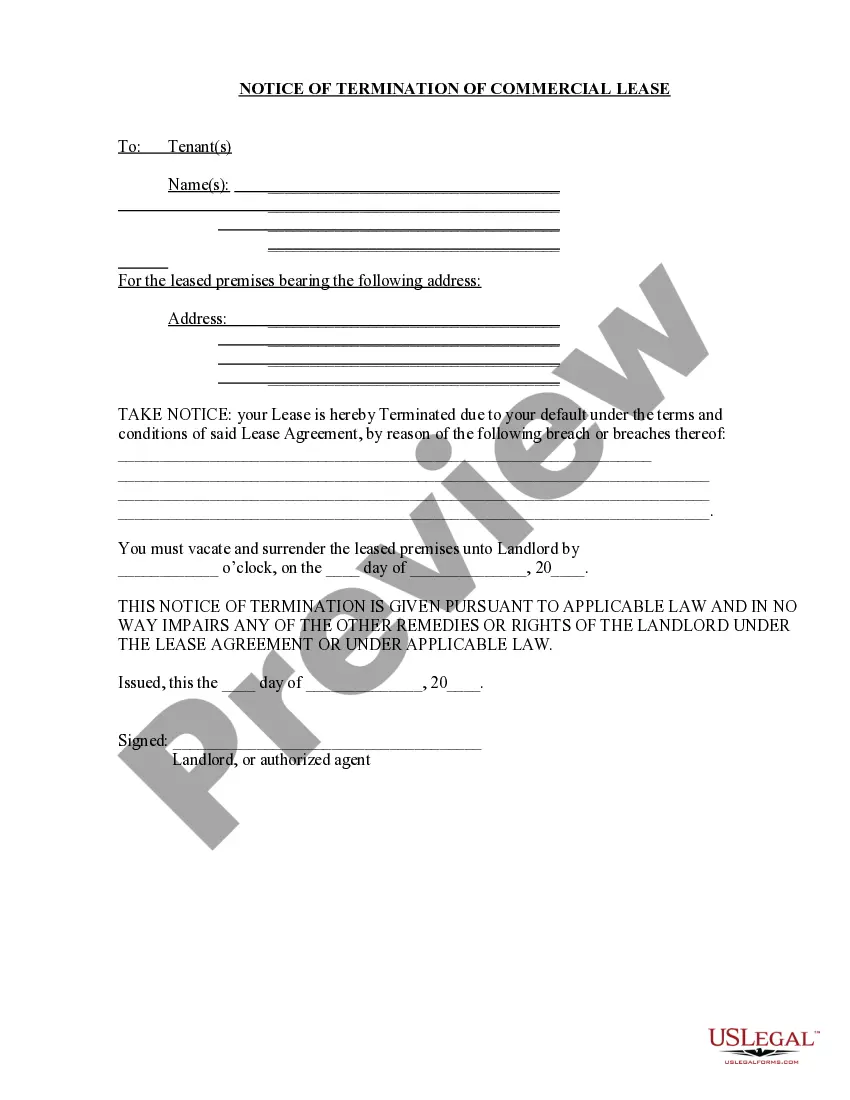
The Warning of Default on Commercial Lease is a letter issued by a landlord to notify a tenant of potential default under a lease agreement. This form is essential in landlord-tenant law as it formally alerts the tenant that if specific conditions are not met, the landlord may consider them in default. Unlike other legal notices, this form serves as a preliminary warning, allowing tenants an opportunity to remedy their shortcomings before facing further legal action.
Form components explained
- A clear statement of the warning being issued by the landlord.
- Details on the tenant's obligations that are in question.
- Space for the date when the warning is issued.
- Signature line for the landlord or authorized agent.
- Disclaimer stating that the warning is given gratuitously and non-binding on the landlord.

Situations where this form applies
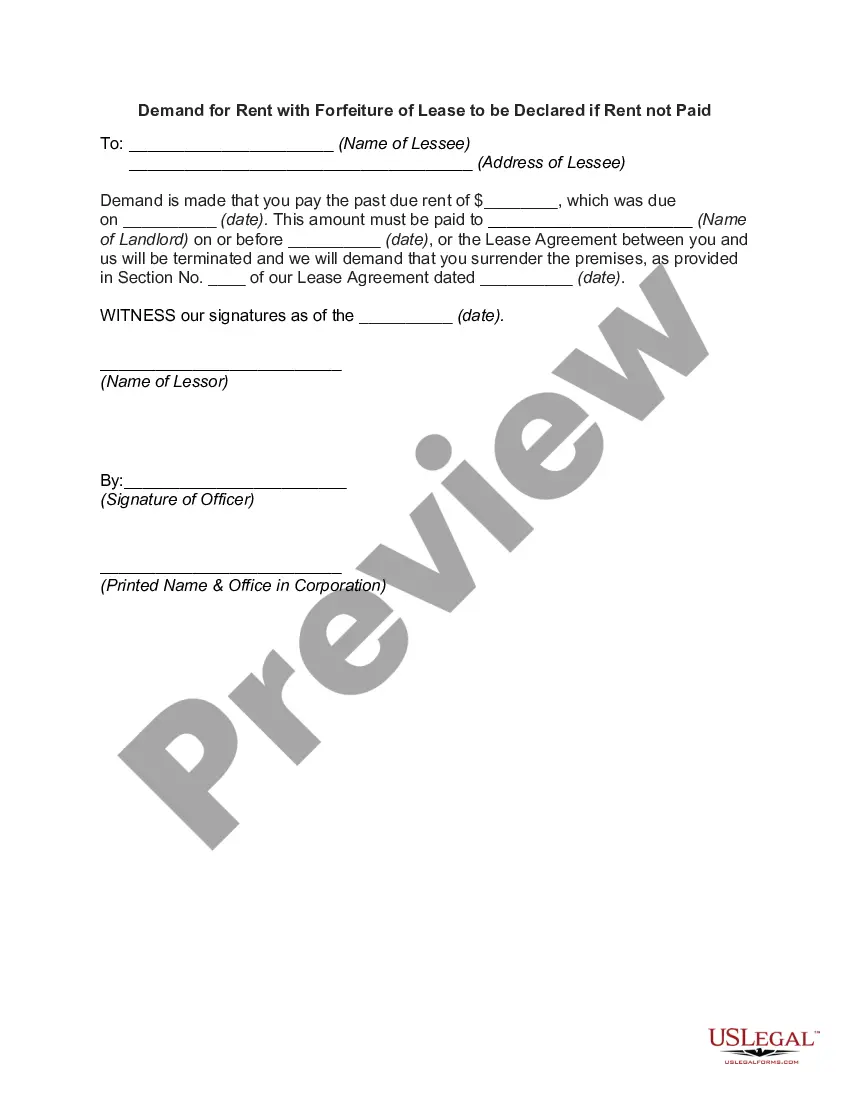
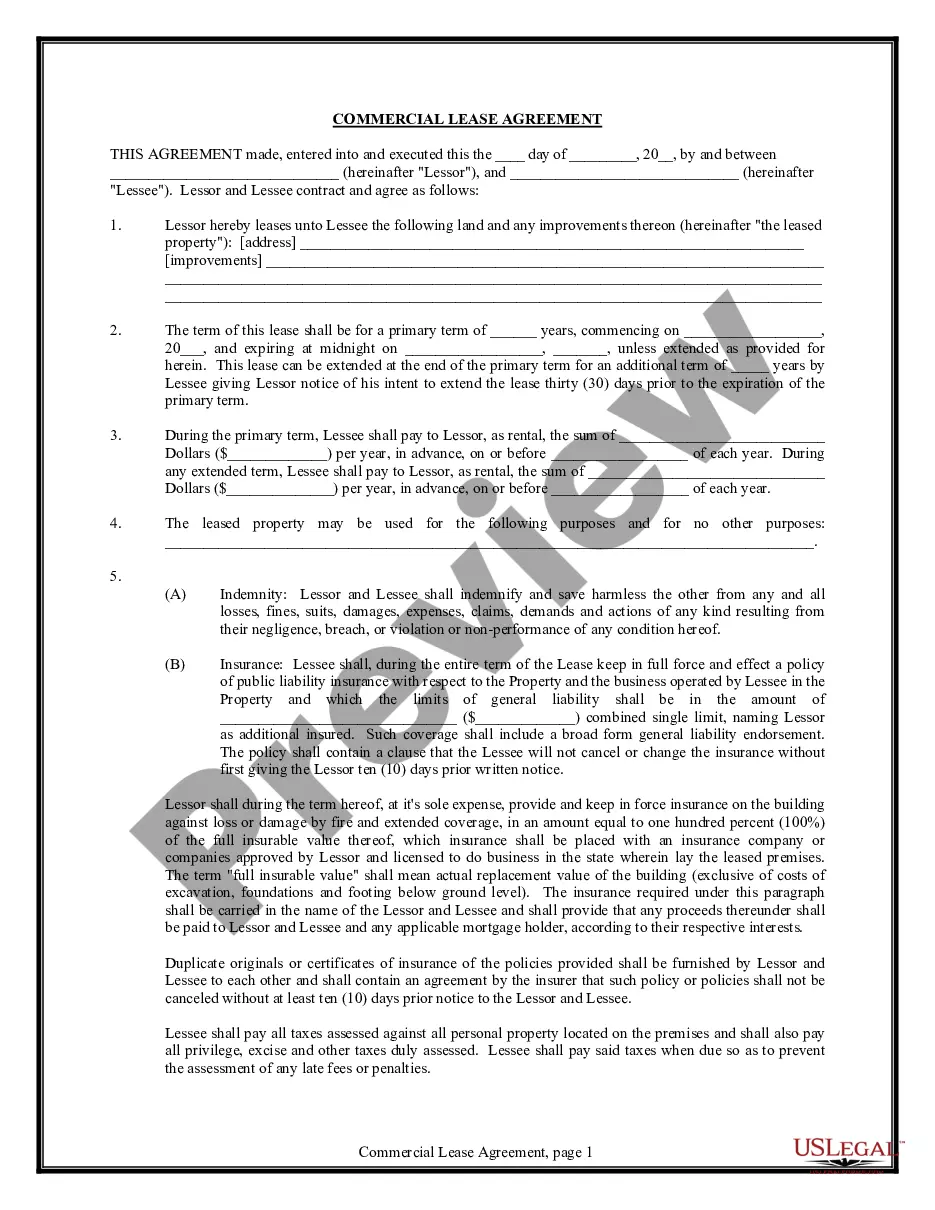
This form should be used when a landlord identifies potential defaults by a tenant, particularly related to rent payments. It is crucial in situations where the landlord wishes to formally document their concerns about non-compliance with lease terms. Using this warning allows tenants a chance to address their issues before eviction proceedings or the application of security deposits.
Who can use this document
- Landlords who manage commercial properties and need to address tenant non-compliance.
- Property managers acting on behalf of landlords to notify tenants of potential defaults.
- Tenants who have received a warning and need to understand their obligations and rights.
How to prepare this document
- Enter the date the warning is issued.
- Clearly identify the tenant by including their name and address.
- Specify the lease agreement terms that the tenant is allegedly violating.
- Sign the form as the landlord or authorized agent.
- Provide a copy to the tenant for their records.
Notarization guidance
In most cases, this form does not require notarization. However, some jurisdictions or signing circumstances might. US Legal Forms offers online notarization powered by Notarize, accessible 24/7 for a quick, remote process.
Get your form ready online
Our built-in tools help you complete, sign, share, and store your documents in one place.
Make edits, fill in missing information, and update formatting in US Legal Forms—just like you would in MS Word.
Download a copy, print it, send it by email, or mail it via USPS—whatever works best for your next step.
Sign and collect signatures with our SignNow integration. Send to multiple recipients, set reminders, and more. Go Premium to unlock E-Sign.
If this form requires notarization, complete it online through a secure video call—no need to meet a notary in person or wait for an appointment.
We protect your documents and personal data by following strict security and privacy standards.

Make edits, fill in missing information, and update formatting in US Legal Forms—just like you would in MS Word.

Download a copy, print it, send it by email, or mail it via USPS—whatever works best for your next step.

Sign and collect signatures with our SignNow integration. Send to multiple recipients, set reminders, and more. Go Premium to unlock E-Sign.

If this form requires notarization, complete it online through a secure video call—no need to meet a notary in person or wait for an appointment.

We protect your documents and personal data by following strict security and privacy standards.
Common mistakes
- Failing to clearly state the specific violation or default.
- Not providing adequate time for the tenant to remedy the situation.
- Omitting signatures or proper identification of the lease agreement.
Why complete this form online
- Convenient access allows landlords to issue warnings quickly and efficiently.
- Editability ensures that all relevant information can be tailored to specific situations.
- Reliability of legal content prepared by licensed attorneys reduces the risk of errors.
Legal use & context
- The Warning of Default on Commercial Lease is enforceable in court if properly executed and delivered.
- Failure to provide this form may weaken a landlord's position in eviction proceedings.
- This form should be part of a larger strategy in managing tenant relations and lease enforcement.
What to keep in mind
- The Warning of Default serves as an essential communication tool for landlords.
- It gives tenants a chance to rectify defaults before facing eviction.
- Using this form helps comply with legal requirements in landlord-tenant relationships.
Looking for another form?

Form popularity
FAQ
Tenants also have certain rights under federal, state, and some local laws. These include the right to not be discriminated against, the right to a habitable home, and the right to not be charged more for a security deposit than is allowed by state law, to name just a few.
If the landlord fails to maintain the rental unit in a habitable condition, the tenant can write a complaint to the appropriate city or county building inspector. The building inspector will inspect and give the landlord thirty days to make any required corrections to the building's condition.
Landlords are prohibited from harassing or retaliating against tenants who exercise their legal rights. In Tennessee, the landlord must not terminate, refuse to renew a lease, or fine a tenant for complaining to the landlord regarding the deposit, complaining to a government agency, or exercising a legal right.
Title 66 - Property. Chapter 28 - Uniform Residential Landlord and Tenant Act. (b) The landlord may enter the premises without consent of the tenant in case of emergency.
You are responsible for: paying your rent on time, paying any late fees, keeping the place clean and safe, not letting anyone else damage it, not breaking the law, disposing of your garbage, and following your landlord's rules. If you break your lease, then it may become a legal issue.
Notice Requirements for Tennessee Landlords A landlord can simply give you a written notice to move, allowing you 30 days as required by Tennessee law and specifying the date on which your tenancy will end.
The Tennessee Landlord and Tenant Act requires landlords to give tenants at least 30-days to leave the dwelling after the lease is broken. For example, if you give written notice to your landlord on Oct. 1 that you intend to break the lease and move out, he cannot evict you from the premises until Oct.